
Toyota Yaris Cross vs RAV4 Australia: Which Toyota SUV Should We Buy?

Choosing between the Toyota Yaris Cross and Toyota RAV4 in Australia sounds straightforward until we actually start comparing them. Both wear the Toyota badge. Both offer hybrid technology. Both can be ordered with all-wheel drive in selected grades. Both seat five people.
Yet these two SUVs live in rather different worlds.
The Yaris Cross is a compact urban SUV designed to make city life easy. It slips through traffic, fits into awkward parking spaces and uses remarkably little fuel. The RAV4, meanwhile, is the bigger sibling—the family-oriented SUV with more power, substantially more cargo room and far greater towing ability.
So, is paying extra for the RAV4 worth it? Or does the Yaris Cross deliver everything most Australians actually need?
We’re going to compare them across price, dimensions, fuel economy, performance, interior space, boot capacity, AWD capability, towing, technology and everyday ownership to find out.
- Toyota Yaris Cross vs RAV4 Australia: Quick Comparison
- What Is the Main Difference Between the Yaris Cross and RAV4?
- Toyota Yaris Cross vs RAV4 Price in Australia
- Yaris Cross vs RAV4 Dimensions
- Toyota Yaris Cross vs RAV4 Interior Space
- Toyota Yaris Cross vs RAV4 Boot Space
- Yaris Cross vs RAV4 Hybrid Engines
- Which One Feels Faster?
- Toyota Yaris Cross vs RAV4 Fuel Economy
- Fuel Tank and Driving Range
- Toyota Yaris Cross AWD vs RAV4 AWD
- Toyota Yaris Cross vs RAV4 Towing Capacity
- Ride Comfort and Highway Driving
- Technology and Infotainment
- Safety
- Yaris Cross vs RAV4 for City Driving
- Yaris Cross vs RAV4 for Families
- Yaris Cross vs RAV4 Running Costs
- Toyota Yaris Cross vs RAV4 Reliability
- Which Yaris Cross Grade Makes the Most Sense?
- Which RAV4 Grade Makes the Most Sense?
- What About the RAV4 Plug-in Hybrid?
- Should We Upgrade From a Yaris Cross to a RAV4?
- Who Should Buy the Toyota Yaris Cross?
- Who Should Buy the Toyota RAV4?
- Toyota Yaris Cross vs RAV4 Australia: Pros and Cons
- Toyota Yaris Cross vs RAV4: Our Verdict
- Frequently Asked Questions
- Final Thoughts
Toyota Yaris Cross vs RAV4 Australia: Quick Comparison
Before diving deeper, here is the basic picture.
| Specification | Toyota Yaris Cross | Toyota RAV4 |
|---|---|---|
| SUV category | Light/compact SUV | Medium SUV |
| Engine | 1.5L 3-cylinder hybrid | 2.5L 4-cylinder hybrid |
| Hybrid output | 85kW | 143kW |
| Drive | 2WD / AWD | 2WD / AWD |
| Fuel economy | 3.8–4.0L/100km | Approx. 4.5–4.6L/100km |
| Length | 4,180mm | Approx. 4,600mm |
| Width | 1,765mm | Approx. 1,855mm |
| Boot capacity | Up to 390L | Up to 705L |
| Braked towing | 400kg | 800kg 2WD / 1,500kg AWD |
| Seats | 5 | 5 |
Toyota lists the current Yaris Cross hybrid system at 85kW combined, with official combined fuel consumption of 3.8L/100km for 2WD versions and 4.0L/100km for AWD versions. Its cargo capacity reaches 390 litres in 2WD models, dropping to 314 litres in AWD versions.
The sixth-generation Australian RAV4 takes a considerable step upward, using a 2.5-litre hybrid system producing 143kW. Toyota quotes combined fuel consumption starting around 4.5L/100km, cargo space of up to 705 litres and a maximum 1,500kg braked towing capacity for AWD versions.
That already tells us something important: the Yaris Cross wins on compactness and fuel efficiency, while the RAV4 dominates practically everywhere space or muscle matters.
What Is the Main Difference Between the Yaris Cross and RAV4?
The biggest difference is simply size.
The Yaris Cross belongs to Toyota's smaller SUV family. Think of it as an elevated city hatchback with SUV styling and additional practicality.
The RAV4 is a proper medium SUV.
That distinction affects virtually everything else.
The RAV4 has:
- More passenger room
- A substantially larger boot
- A stronger hybrid powertrain
- Better towing capacity
- Greater long-distance comfort
- More family-friendly practicality
The Yaris Cross counters with:
- Lower purchase cost
- Better fuel efficiency
- Easier parking
- Smaller exterior dimensions
- Lower weight
- Excellent urban manoeuvrability
It's rather like comparing a good backpack with a suitcase. The smaller option can be brilliant when we don't need the extra capacity—but once we start carrying more, size becomes valuable very quickly.
Toyota Yaris Cross vs RAV4 Price in Australia
Price may be the decisive factor for many buyers.
Toyota's published pricing for the updated Yaris Cross has started at $30,900 before on-road costs for the GX FWD, with higher grades including GXL, Urban and GR Sport, while AWD is available on several grades. Toyota has listed the Urban AWD at $39,880 before on-road costs.
The sixth-generation 2026 RAV4 begins significantly higher.
Toyota lists its Australian RAV4 range from:
- GX 2WD Hybrid: $45,990
- GX AWD Hybrid: $49,340
- GXL 2WD Hybrid: $48,990
- GXL AWD Hybrid: $52,340
- Edge AWD Hybrid: $55,340
- XSE AWD Hybrid: $58,340
- Cruiser 2WD Hybrid: $56,990
- Cruiser AWD Hybrid: $60,340
The RAV4 range also now includes plug-in hybrid versions, culminating in the GR Sport AWD. These prices exclude applicable on-road costs and options.
Is the RAV4 Worth the Extra Money?
That depends heavily on how we're going to use the vehicle.
If we're usually travelling alone or as a couple, spending well over $10,000 more simply to obtain additional space may be unnecessary.
For a family, however, the RAV4's extra cost becomes easier to justify.
We aren't simply paying for a larger badge.
We're buying significantly more luggage capacity, more rear-seat room, another level of performance and considerably greater towing ability.
Yaris Cross vs RAV4 Dimensions
Here is where the difference becomes obvious.
The regular Yaris Cross measures approximately:
- Length: 4,180mm
- Width: 1,765mm
- Height: 1,590mm
- Wheelbase: 2,560mm
The GR Sport is slightly longer at 4,185mm and slightly lower at 1,580mm.
The latest RAV4 is approximately:
- Length: 4,600mm depending on variant
- Width: 1,855mm depending on variant
- Height: around 1,680mm
- Wheelbase: 2,690mm
Certain RAV4 versions have slightly different dimensions, including Edge and GR Sport variants.
How Much Bigger Is the RAV4?
We're talking about roughly 420mm of additional length in a typical comparison.
That's more than 40 centimetres.
The RAV4 is also around 90mm wider.
Those numbers sound abstract until we're trying to squeeze into a tight underground car park in Sydney, Melbourne or Brisbane.
In that situation, the Yaris Cross suddenly feels wonderfully sensible.
Parking Advantage: Yaris Cross
For city dwellers, we'd give the Yaris Cross a decisive victory.
It is simply easier to position.
Tight supermarket spaces, narrow suburban streets and crowded apartment car parks feel less intimidating.
The RAV4 isn't enormous by Australian standards, but there's no escaping physics: a 4.6-metre SUV needs more room.
Toyota Yaris Cross vs RAV4 Interior Space
Things reverse once we climb inside.
The Yaris Cross uses its footprint cleverly. Front-seat accommodation is generally comfortable for adults, and there is enough rear space for normal daily trips.
But it remains a small SUV.
This content may interest you!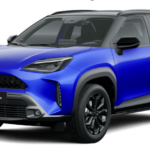 Toyota Yaris Cross vs Renault Captur Australia: Which Small SUV Wins?
Put two tall adults in the back and suddenly the walls feel a little closer.
The RAV4 provides substantially more breathing room.
Which Is Better for Families?
The RAV4 wins easily.
Parents dealing with child seats will appreciate the larger rear doors and greater cabin dimensions.
That extra width also matters when we're trying to accommodate passengers across the rear bench.
If our family includes:
- Two adults and young children
- Teenagers
- Regular rear-seat passengers
- Bulky child seats
- Frequent road trips
the RAV4 will generally feel more natural.
The Yaris Cross can absolutely function as a small family SUV, but it asks us to pack more intelligently.
The RAV4 simply gives us more margin.
Toyota Yaris Cross vs RAV4 Boot Space
This may be the biggest practical difference of all.
Toyota lists the Yaris Cross at up to 390 litres of VDA cargo capacity in 2WD form, while AWD models provide up to 314 litres.
The latest RAV4 can offer up to 705 litres of cargo space, depending on configuration and powertrain.
That's not a small advantage.
That's enormous.
Yaris Cross Boot: Who Is It For?
The Yaris Cross boot should comfortably deal with everyday needs such as groceries, gym bags, backpacks and smaller luggage.
For two people heading away for a weekend? Easy.
A family heading on holiday with several suitcases?
Now we're playing automotive Tetris.
RAV4 Boot: The Family Winner
The RAV4 gives us considerably more freedom.
Prams, camping equipment, sports bags, supermarket shopping and luggage can coexist without requiring a master's degree in packing geometry.
For people who regularly carry bulky gear, we'd choose the RAV4 without hesitation.
Yaris Cross vs RAV4 Hybrid Engines
Both SUVs embrace Toyota hybrid technology, but their powertrains are very different.
Yaris Cross Hybrid
The Yaris Cross uses a 1.5-litre three-cylinder Toyota Hybrid Electric system producing 85kW combined.
It's not designed to pin us into our seats.
Instead, the system prioritises efficiency.
Around town, that's perfectly appropriate. The electric assistance helps the Yaris Cross move smoothly from traffic lights, while its relatively low weight means it doesn't need enormous power.
RAV4 Hybrid
The current RAV4 uses a 2.5-litre four-cylinder hybrid system producing 143kW combined in Australian hybrid versions.
That's nearly 60kW more combined system output.
And we can feel the difference.
The RAV4 is heavier, obviously, but it has much more performance in reserve.
Highway overtaking, merging and climbing hills feel less demanding.
Which One Feels Faster?
The RAV4.
Clearly.
The Yaris Cross feels lively enough at lower urban speeds, particularly because hybrid assistance responds quickly when moving away from a stop.
Push harder, though, and the smaller drivetrain has to work.
The RAV4 feels considerably more relaxed when we're asking for sustained acceleration.
That's particularly noticeable when carrying four people plus luggage.
The Yaris Cross gets the job done.
The RAV4 does it without sounding like it's negotiating overtime.
Toyota Yaris Cross vs RAV4 Fuel Economy
Now the smaller Toyota strikes back.
Official combined consumption for the Yaris Cross is approximately:
- 2WD: 3.8L/100km
- AWD: 4.0L/100km
Toyota's figures are laboratory results, so real-world consumption will vary according to traffic, climate, driving style and other conditions.
For the current RAV4 Hybrid, Toyota quotes approximately:
This content may interest you!Toyota Yaris Cross or Similar Australia: What Are the Best Alternatives?- 2WD Hybrid: 4.5L/100km
- AWD Hybrid: 4.6L/100km
Again, these are official laboratory figures rather than guaranteed real-world results.
Fuel Economy Winner: Yaris Cross
The difference looks modest on paper, but regular urban drivers can benefit from the smaller vehicle's exceptional efficiency.
A 3.8L/100km official figure for a petrol-electric SUV is impressive.
The RAV4 isn't exactly thirsty, though.
Getting around 4.5L/100km from a much larger and more powerful medium SUV is precisely why the RAV4 Hybrid has become such an attractive proposition.
Fuel Tank and Driving Range
The Yaris Cross has a 36-litre fuel tank.
The RAV4 Hybrid uses a 55-litre tank.
So although the Yaris Cross consumes less fuel, the RAV4 carries considerably more of it.
For interstate touring and long Australian road trips, that additional capacity can be useful.
The Yaris Cross is the efficiency champion.
The RAV4 feels more like the long-distance traveller.
Toyota Yaris Cross AWD vs RAV4 AWD
Both SUVs offer all-wheel-drive options, but we shouldn't assume they're intended for identical jobs.
The Yaris Cross AWD adds an electric rear motor. Toyota also gives AWD Yaris Cross models a Trail Mode designed to improve traction on slippery or loose surfaces.
That's handy for gravel roads, slippery conditions and light weekend adventures.
But this isn't a LandCruiser hiding in a small suit.
RAV4 AWD Is the More Capable Choice
The RAV4 AWD system is paired with considerably greater power, stronger towing specifications and a larger chassis.
For snow trips, gravel touring, country travel or carrying plenty of equipment, the RAV4 is the more convincing package.
Neither should automatically be treated as a hardcore off-roader, but the RAV4's broader capability gives it the advantage.
Toyota Yaris Cross vs RAV4 Towing Capacity
If towing matters, this comparison ends quickly.
Toyota lists the Yaris Cross with a 400kg braked towing capacity in applicable versions.
The latest RAV4 offers:
- 2WD: 800kg braked
- AWD: 1,500kg braked
Toyota specifies these capacities for the current Australian RAV4 range.
Towing Winner: RAV4
By a landslide.
The Yaris Cross's 400kg figure makes it suitable only for relatively light towing tasks.
The RAV4 AWD's 1,500kg rating opens the door to significantly heavier trailers.
Anyone seriously considering towing should examine not just maximum trailer capacity but also payload, towball limits, axle loads and the loaded weight of the vehicle and trailer.
Still, purely from a capability standpoint, there is no contest.
Ride Comfort and Highway Driving
The Yaris Cross is happiest in urban environments.
Its compact dimensions make it nimble, while its hybrid system works beautifully in stop-start traffic.
At motorway speeds, however, the difference in vehicle class becomes apparent.
The RAV4's longer wheelbase and larger body tend to make it better suited to extended cruising.
There is also more power available when overtaking.
Which Would We Choose for Australian Road Trips?
The RAV4.
Imagine driving from Melbourne to Adelaide, Sydney to Brisbane or across long stretches of regional Western Australia.
After several hours, additional seat room, cargo capacity and power reserves matter.
The Yaris Cross can absolutely make those journeys.
The RAV4 simply feels like it was built with them more prominently in mind.
Technology and Infotainment
The exact equipment depends heavily on the grade selected.
Current Yaris Cross models can include features such as wireless Apple CarPlay and Android Auto, embedded satellite navigation on applicable versions, Toyota Connected Services and, depending on grade, equipment such as a panoramic-view monitor or power tailgate.
The new-generation RAV4 takes Toyota's technology offering considerably further, with its latest multimedia architecture and a broader selection of equipment as we move through GXL, Edge, XSE and Cruiser grades. Higher variants can offer features including larger multimedia displays, powered seats, panoramic-view monitoring, heated and ventilated front seats, digital rear-view technology and premium JBL audio, depending on grade.
Which Has the Better Interior?
The RAV4 has the advantage if we're comparing equivalent positioning within their respective ranges.
That's hardly surprising considering its higher price.
But buyers mainly interested in smartphone integration, navigation and everyday convenience may find the Yaris Cross perfectly adequate without paying for the larger vehicle.
This content may interest you!Toyota Yaris Cross vs Corolla Cross Australia: Which Toyota SUV Should We Buy?Safety
Both models belong to a modern Toyota range heavily focused on active driver-assistance technology.
The Yaris Cross includes Toyota Safety Sense technology, with equipment varying by grade and specification. Current GX specifications also advertise features such as blind-spot monitoring, reversing camera assistance and parking-support braking.
The sixth-generation RAV4 introduces Toyota's newer-generation safety suite with features including autonomous emergency braking, emergency steering assistance, active cruise control, front and rear cross-traffic alert, lane-trace assistance, blind-spot monitoring and safe-exit assistance among its available standard systems.
We'd recommend checking the exact specification sheet for the particular grade before purchase rather than assuming every feature is identical across every version.
Yaris Cross vs RAV4 for City Driving
Here, the Yaris Cross shines.
Suppose our daily life consists primarily of commuting, shopping, school runs and navigating dense suburban roads.
Do we really need 4.6 metres of SUV?
Perhaps not.
The Yaris Cross:
- Takes up less road space
- Fits smaller parking spots
- Uses less fuel
- Feels easier in narrow streets
- Costs substantially less to buy
For a single driver, couple or small household based in a large Australian city, it may actually be the smarter vehicle.
More car isn't automatically better car.
Yaris Cross vs RAV4 for Families
This time, the pendulum swings toward the RAV4.
The more people and possessions we add, the more useful its dimensions become.
A couple with one toddler may manage perfectly well with the Yaris Cross.
Add another child, a large pram, sports equipment, school bags and holiday luggage, and suddenly that RAV4 boot looks very attractive.
Growing Families Should Think Five Years Ahead
This is something worth considering before purchase.
We often choose a vehicle based on what we need today.
But cars tend to stay with us for years.
If our household is likely to grow, buying slightly more space now can prevent us from needing to replace the vehicle sooner than expected.
Yaris Cross vs RAV4 Running Costs
The Yaris Cross should generally have the advantage here.
Why?
It's smaller, lighter and more fuel efficient.
Tyre and insurance costs vary enormously according to model, grade, driver and location, so we'd never assume the cheapest outcome without obtaining actual quotes.
Fuel consumption, however, is easier to compare.
At the official figures, the Yaris Cross uses less petrol.
Toyota has also advertised capped-price servicing arrangements for the Yaris Cross, though terms and costs should always be confirmed when buying because programs can change over time.
The RAV4's financial equation is different.
We spend more to obtain more capability.
Whether that's worthwhile comes down to whether we use it.
Toyota Yaris Cross vs RAV4 Reliability
Toyota has built much of its reputation around durable, relatively uncomplicated ownership, while its hybrid systems have been sold globally at enormous scale.
Still, we'd avoid declaring that either vehicle will be problem-free.
Every modern vehicle can experience faults.
What matters more when buying is:
- Service history
- Warranty coverage
- Correct maintenance
- Condition
- Recall status
- Previous accident history when buying used
For a brand-new vehicle, both models come within Toyota Australia's current warranty framework, subject to Toyota's applicable terms and conditions.
Which Yaris Cross Grade Makes the Most Sense?
The answer depends on priorities.
The GX is the value-focused model.
The GXL moves into a stronger equipment level.
Urban adds a more premium flavour, while GR Sport targets buyers wanting sportier styling and chassis tuning.
If we simply want efficient urban transport, we'd start with a GX or GXL 2WD.
Why add AWD unless we genuinely need it?
Remember that choosing Yaris Cross AWD also reduces maximum cargo capacity from 390L to 314L according to Toyota's specifications.
That's a surprisingly important compromise.
Which RAV4 Grade Makes the Most Sense?
For many buyers, the GX or GXL Hybrid is likely to cover the essentials.
This content may interest you!Toyota Yaris Cross vs Hyundai Kona Australia: Which Small SUV Wins?The GXL adds desirable comfort and convenience equipment without reaching the pricing heights of the flagship variants.
AWD is worth considering for anyone who:
- Frequently travels on loose surfaces
- Visits alpine regions
- Wants stronger traction
- Needs the 1,500kg braked towing capacity
The Edge, XSE and Cruiser then appeal to buyers wanting more equipment or specific styling.
And the current range expands even further with plug-in hybrid options.
What About the RAV4 Plug-in Hybrid?
This changes the comparison dramatically.
Australia's current-generation RAV4 introduces Toyota plug-in hybrid technology to the local model range.
The AWD PHEV produces 227kW combined, compared with 143kW for regular hybrid models. Toyota also quotes an NEDC electric-only driving range of up to 144km for selected AWD versions, while the 2WD PHEV specification lists up to 154km under the same testing framework. Real-world EV range can be significantly lower depending on conditions.
That's another universe compared with the Yaris Cross.
But so is the price.
If we're cross-shopping a basic Yaris Cross against a RAV4 PHEV, we're probably no longer solving the same problem.
Should We Upgrade From a Yaris Cross to a RAV4?
We would upgrade if we regularly find ourselves wishing the Yaris Cross had:
- More boot room
- More rear passenger space
- Better highway performance
- Greater towing capability
- More long-distance comfort
Otherwise, there may be little reason.
A larger SUV also means carrying additional vehicle size and cost everywhere we go—even when we're driving alone to buy a loaf of bread.
Sometimes smaller really is smarter.
Who Should Buy the Toyota Yaris Cross?
We'd recommend putting the Yaris Cross high on the shortlist if we're:
- Primarily city drivers
- Couples or singles
- Small families
- Focused on fuel economy
- Limited by parking space
- Looking for a lower purchase price
- Rarely towing anything
- Happy with modest performance
It behaves like the Swiss Army knife of Toyota's compact SUV range: small, efficient and useful enough for an enormous number of everyday tasks.
Who Should Buy the Toyota RAV4?
The RAV4 is the stronger choice if we're:
- A growing family
- Carrying passengers regularly
- Taking frequent road trips
- Carrying prams or sports gear
- Towing trailers
- Wanting stronger acceleration
- Seeking significantly more cargo capacity
- Comfortable paying more for greater versatility
The RAV4's appeal comes from its ability to handle almost everything without feeling absurdly large.
Toyota Yaris Cross vs RAV4 Australia: Pros and Cons
Toyota Yaris Cross Pros
- Excellent fuel economy
- Much cheaper entry point
- Compact dimensions
- Easy city parking
- Hybrid standard across the current range
- AWD available on selected grades
- Practical enough for smaller households
Toyota Yaris Cross Cons
- Modest 85kW output
- Rear space can feel tight
- Smaller boot
- AWD versions lose cargo capacity
- Only 400kg towing capacity
- Less suited to heavily loaded long-distance travel
Toyota RAV4 Pros
- Powerful 143kW standard hybrid system
- Huge cargo advantage
- Excellent family practicality
- 1,500kg braked towing on AWD versions
- Better highway performance
- AWD widely available
- Plug-in hybrid variants available
- More premium equipment available
Toyota RAV4 Cons
- Considerably more expensive
- Larger footprint
- Harder to park in confined spaces
- Slightly higher fuel consumption
- More vehicle than some urban drivers need
Toyota Yaris Cross vs RAV4: Our Verdict
So, which Toyota should we buy?
For urban life, affordability and maximum fuel efficiency, we'd choose the Toyota Yaris Cross.
It's compact without being microscopic, economical without being painfully slow in normal traffic and practical enough for singles, couples and smaller families.
But if we're looking for a vehicle to serve as the main family car, the Toyota RAV4 is the stronger all-rounder.
Its larger interior, dramatically bigger cargo area, stronger 143kW hybrid powertrain and much higher towing capacity transform what the vehicle can realistically do.
Think of the Yaris Cross as the nimble city apartment and the RAV4 as the suburban house.
The apartment is cheaper, easier to maintain and may be all the space we need.
But when children, luggage, trailers and long road trips enter the picture, those extra rooms begin looking pretty appealing.
Our Winner: Toyota RAV4 for Versatility
If budget isn't the overriding factor, the RAV4 wins the overall comparison because it covers a broader range of situations.
However, that doesn't automatically make it the better purchase.
For buyers who rarely fill the rear seats or boot, the Yaris Cross can save thousands upfront while using less fuel every week.
And that's perhaps the most important lesson here.
We shouldn't buy the biggest SUV we can afford.
We should buy the smallest SUV that comfortably does everything we need.
Frequently Asked Questions
1. Is the Toyota Yaris Cross better than the RAV4?
The Yaris Cross can be better for city driving because it is smaller, cheaper and more fuel efficient. The RAV4 is better for families, long-distance travel, cargo carrying and towing because it provides considerably more space and power.
2. Is a RAV4 much bigger than a Yaris Cross?
Yes. A typical Yaris Cross is around 4,180mm long, while the current RAV4 is approximately 4,600mm long depending on variant. The RAV4 is also wider and has a longer wheelbase.
3. Which has better fuel economy, Yaris Cross or RAV4?
The Yaris Cross wins. Toyota quotes combined consumption of 3.8L/100km for the 2WD Yaris Cross Hybrid and 4.0L/100km for AWD versions. The RAV4 Hybrid begins around 4.5L/100km for 2WD and approximately 4.6L/100km for AWD, depending on variant.
4. Which has more boot space, Yaris Cross or RAV4?
The RAV4 has substantially more cargo capacity. The Yaris Cross provides up to 390L in 2WD configuration and 314L in AWD form, while Toyota advertises up to 705L of cargo capacity for the latest RAV4, depending on configuration.
5. Which Toyota is better for a family, Yaris Cross or RAV4?
For most families, we'd choose the RAV4. Its greater rear-seat room, much larger cargo area, stronger powertrain and superior towing capacity make it considerably more versatile. The Yaris Cross remains a compelling choice for smaller families prioritising price, efficiency and easy city driving.
Final Thoughts
The Toyota Yaris Cross vs RAV4 Australia comparison isn't really about discovering which vehicle is universally superior.
It's about understanding how much SUV we genuinely need.
The Yaris Cross is the clever minimalist. It gives us hybrid efficiency, SUV practicality and Toyota familiarity in a compact package that fits naturally into Australian city life.
The RAV4 takes almost everything the Yaris Cross offers and stretches it—more room, more power, more luggage capacity and far more towing ability.
If we're driving mainly around town with one or two people aboard, we'd save the money and seriously consider the Yaris Cross.
If we're packing the family, heading down the highway and wondering whether another suitcase will fit, we'd take the RAV4.
This content may interest you!Toyota Yaris Cross vs C-HR Australia: Which Toyota Hybrid SUV Should We Buy?Sometimes the better car isn't the larger one.
But when space matters, there's no substitute for having it.
Leave a Reply