
Is the Kia EV5 a Good Car in Australia? An Honest 2026 Review

The Australian electric SUV market has become increasingly competitive, and the Kia EV5 is one of the most interesting options for families considering the switch to electric driving. With its spacious interior, distinctive design, impressive safety equipment and competitive driving range, it promises plenty.
But is the Kia EV5 actually a good car in Australia, or are there better electric SUVs for the money?
The short answer is yes. The Kia EV5 is a good electric SUV, particularly for Australian families wanting a comfortable, practical and well-equipped vehicle without paying luxury-car prices.
However, it isn't perfect. Its DC charging speeds are relatively modest compared with some competitors, certain driver-assistance warnings can become irritating, and its driving dynamics aren't equally impressive across every variant.
In this detailed Kia EV5 review, we'll examine its strengths, weaknesses, reliability, real-world range, running costs and overall value to help determine whether it's worth buying in Australia in 2026.
- Is the Kia EV5 a Good Car? Quick Verdict
- Kia EV5 Australia Specifications
- What Makes the Kia EV5 a Good Car?
- Is the Kia EV5 Good for Australian Roads?
- Kia EV5 Real-World Range in Australia
- Is the Kia EV5 Fast to Charge?
- Is the Kia EV5 Interior Good?
- Is the Kia EV5 Safe in Australia?
- Is the Kia EV5 Reliable?
- Is the Kia EV5 Expensive to Maintain?
- How Much Does It Cost to Run a Kia EV5 in Australia?
- Kia EV5 Pros and Cons
- Kia EV5 vs Other Electric SUVs in Australia
- Which Kia EV5 Model Is Best in Australia?
- Is the Kia EV5 Worth Buying in Australia in 2026?
- Who Should Buy the Kia EV5?
- Frequently Asked Questions About the Kia EV5 in Australia
- Final Verdict: Is the Kia EV5 a Good Car in Australia?
Is the Kia EV5 a Good Car? Quick Verdict
Yes, the Kia EV5 is a very capable electric family SUV that deserves serious consideration in Australia.
Its biggest strengths are practicality, safety, interior space and everyday usability.
Unlike some electric SUVs that prioritise futuristic styling over functionality, the EV5 feels like a conventional family vehicle that happens to run on electricity.
That is particularly appealing to drivers buying their first EV.
Here's our overall assessment:
| Category | Our assessment |
|---|---|
| Interior space | Excellent |
| Comfort | Very good |
| Real-world driving range | Good to very good |
| Charging speed | Average |
| Performance | Good |
| Safety | Excellent |
| Technology | Very good |
| Long-term reliability | Still developing |
| Value for money | Very good |
| Family practicality | Excellent |
We believe the EV5 makes the most sense for drivers who can charge at home, regularly transport passengers and want an electric SUV from an established manufacturer.
For buyers who frequently travel long distances and prioritise the fastest possible charging, alternatives may be more suitable.
Kia EV5 Australia Specifications
Before discussing how good the Kia EV5 is, it's worth understanding what Australian buyers actually get.
The 2026 Australian range includes four main variants:
- Kia EV5 Air Standard Range
- Kia EV5 Air Long Range
- Kia EV5 Earth AWD Long Range
- Kia EV5 GT-Line AWD Long Range
All four use lithium iron phosphate (LFP) battery technology.
Kia EV5 Battery, Range and Performance
| Specification | Air Standard Range | Air Long Range | Earth AWD | GT-Line AWD |
|---|---|---|---|---|
| Battery capacity | 64.2 kWh | 88.1 kWh | 88.1 kWh | 88.1 kWh |
| Driving range (WLTP) | 400 km | 555 km | 500 km | 470 km |
| Power | 160 kW | 160 kW | 230 kW | 230 kW |
| Torque | 310 Nm | 310 Nm | 480 Nm | 480 Nm |
| Drivetrain | FWD | FWD | AWD | AWD |
| 0–100 km/h | 8.5 seconds | 8.9 seconds | 6.1 seconds | 6.3 seconds |
These figures reveal an important difference between the models.
The Air Long Range offers the greatest official driving range, while the Earth and GT-Line prioritise performance and all-wheel-drive capability.
For most Australian motorists, the Air Long Range probably delivers the best balance.
What Makes the Kia EV5 a Good Car?
Several characteristics make the EV5 particularly attractive.
1. A Spacious Interior for Australian Families
One of the EV5's greatest advantages is its interior packaging.
It measures approximately:
- 4,615 mm long
- 1,875 mm wide
- 1,715 mm high
- 2,750 mm between the axles
These dimensions place it firmly within the medium SUV category.
However, the electric platform helps create a spacious cabin with generous passenger accommodation.
Rear-seat passengers benefit from good legroom and headroom, while the relatively flat floor makes the second row more comfortable.
This is particularly useful for families with teenagers, child seats or regularly travelling adults.
The boxy exterior also provides excellent usable interior height.
2. Practical Boot Space
The Kia EV5 offers 513 litres of rear luggage capacity with the seats upright.
Folding the rear seats expands the available cargo volume to approximately 1,714 litres.
There's also a useful 67-litre front storage compartment, commonly called a frunk.
That front compartment is ideal for keeping charging cables separate from luggage.
For Australian families, this combination works well for:
- Weekly supermarket shopping
- Children's sports equipment
- Holiday luggage
- Prams and baby accessories
- Camping supplies
- Everyday commuting equipment
The EV5 is not a seven-seater, but its practicality is impressive for a five-seat electric SUV.
3. Comfortable and Quiet Driving
Electric vehicles are naturally quiet because they don't use conventional combustion engines.
The Kia EV5 takes advantage of this with a relatively refined cabin and smooth power delivery.
Acceleration is linear, and the lack of traditional gear changes makes driving particularly relaxing in stop-start traffic.
This suits busy Australian cities such as Sydney, Melbourne, Brisbane and Perth.
Kia has also undertaken local suspension tuning for Australian roads.
However, comfort varies somewhat between versions.
The Air Long Range has received particularly positive feedback for its balanced ride quality, while some independent testing of the Earth AWD has identified less convincing suspension behaviour.
We would therefore recommend testing the exact variant you're considering rather than assuming every EV5 drives identically.
Is the Kia EV5 Good for Australian Roads?
The Kia EV5 is well suited to everyday Australian driving.
Its suspension, visibility and relatively conventional driving characteristics make it easy to transition from a petrol or hybrid SUV.
City Driving
In urban conditions, the EV5 feels particularly comfortable.
The electric motor provides immediate torque, making it easy to move away from traffic lights and merge into traffic.
Regenerative braking also helps recover energy during deceleration.
Drivers can choose different regeneration settings, including Kia's i-Pedal system, which allows substantial vehicle control using the accelerator pedal.
Once familiar with it, this can reduce the amount of conventional braking required during everyday driving.
Highway Driving
The EV5 is also a capable highway cruiser.
Its cabin remains reasonably quiet at Australian freeway speeds, and its driver-assistance technologies can help reduce fatigue on longer journeys.
The Long Range models are especially appealing because they provide greater flexibility between charging stops.
However, the EV5 is relatively heavy, and sustained high-speed driving increases electricity consumption.
We also wouldn't describe it as a particularly sporty SUV.
Its strengths are comfort and predictability rather than sharp handling.
Country Roads and Rough Surfaces
The EV5 can handle normal sealed country roads and maintained gravel roads, but it's not a dedicated off-road vehicle.
Ground clearance ranges from approximately 161 to 175 mm depending on the variant.
The Earth and GT-Line models provide all-wheel drive, which can improve traction on slippery roads.
Nevertheless, they shouldn't be confused with traditional four-wheel-drive vehicles designed for serious off-road conditions.
Kia EV5 Real-World Range in Australia
Driving range is one of the most important considerations when buying an electric vehicle.
The Kia EV5 offers official WLTP ranges between 400 and 555 kilometres, depending on the model.
But how much distance can Australian owners realistically expect?
Real-World Range Estimates
Actual range depends on several variables, including driving speed, temperature, air conditioning, tyres, terrain and passenger load.
For planning purposes, the following estimates provide a reasonable illustration of what mixed driving might look like:
| Kia EV5 variant | Official WLTP range | Illustrative real-world range |
|---|---|---|
| Air Standard Range | 400 km | 320–380 km |
| Air Long Range | 555 km | 440–520 km |
| Earth AWD | 500 km | 390–470 km |
| GT-Line AWD | 470 km | 370–440 km |
These are broad planning estimates, not guaranteed test results. Individual vehicles may achieve more or less.
In fact, independent testing of the Air Long Range has recorded efficiency better than its official combined consumption figure under favourable mixed-driving conditions.
Is the Kia EV5 Range Enough for Australia?
For most drivers, absolutely.
Consider someone travelling 50 kilometres daily.
Even the Standard Range model could cover several days of commuting before requiring a substantial recharge.
The Long Range model provides considerably more flexibility.
For road trips between major Australian cities, drivers will still need to plan charging stops, but the larger battery makes longer journeys manageable.
We would favour the Air Long Range for people who regularly travel beyond metropolitan areas.
Is the Kia EV5 Fast to Charge?
Charging performance is one area where the Kia EV5 isn't a class leader.
Despite supporting connections to both 400V and 800V charging infrastructure, it doesn't deliver the ultra-fast charging performance found in some more expensive electric vehicles.
DC Fast Charging
According to Kia's Australian specifications, approximate charging times from 10% to 80% at a suitable high-power DC station are:
| Variant | Approximate 10–80% charging time |
|---|---|
| Air Standard Range | 36 minutes |
| Air Long Range | 38 minutes |
| Earth AWD | 38 minutes |
| GT-Line AWD | 38 minutes |
Actual charging times depend on battery temperature, charge level, charger availability and other conditions.
These figures are perfectly usable, but competitors with more advanced high-power charging capabilities can complete comparable charging sessions faster.
Home Charging
The EV5 becomes much more convenient when charged at home.
The Standard Range model supports up to 6.6 kW AC charging, while Long Range versions support up to 11 kW with appropriate three-phase equipment.
Using a suitable dedicated home charger, overnight charging is practical.
For many Australian owners, plugging in at home will eliminate the need to visit public charging stations during normal weekly driving.
This is one of the strongest arguments for choosing the EV5.
Is the Kia EV5 Interior Good?
The EV5's cabin is another major selling point.
It combines modern technology with a relatively practical layout.
Rather than relying entirely on an oversized central touchscreen, Kia provides several displays and physical controls.
Infotainment and Technology
The integrated panoramic display includes:
- A 12.3-inch digital instrument cluster
- A 12.3-inch infotainment touchscreen
- A 5-inch climate-control display
Depending on the model, features include wireless Apple CarPlay, Android Auto, connected services, satellite navigation and premium comfort equipment.
The system looks modern without making the driving experience unnecessarily complicated.
However, the climate-control screen can be partly obscured by the steering wheel from certain seating positions.
Some frequently used functions also require navigating touchscreen menus.
Seating Comfort
The EV5 offers supportive front seats, good visibility and generous space.
Depending on the grade, buyers can access heated seats, ventilated front seats, massage functions and upgraded upholstery.
The GT-Line is particularly appealing to drivers wanting a premium interior experience.
However, we think the lower grades already deliver much of the EV5's essential practicality.
Spending extra on luxury equipment won't necessarily improve the everyday ownership experience enough to justify the difference for every buyer.
Is the Kia EV5 Safe in Australia?
Safety is one of the strongest reasons to consider the Kia EV5.
It achieved a five-star ANCAP safety rating under the testing criteria applicable in 2024.
Its assessment scores were:
| Safety category | Score |
|---|---|
| Adult occupant protection | 88% |
| Child occupant protection | 86% |
| Vulnerable road user protection | 74% |
| Safety assist | 82% |
This is reassuring for buyers using the vehicle as their primary family car.
Safety Features
The Australian EV5 includes a comprehensive selection of driver-assistance technologies, including:
- Autonomous emergency braking
- Adaptive cruise control
- Lane-keeping assistance
- Blind-spot collision avoidance
- Rear cross-traffic assistance
- Driver attention monitoring
- Multiple airbags
- Highway Driving Assist
The systems generally provide a useful safety net.
However, one common criticism concerns the speed-limit warning system.
Some drivers find its audible alerts excessive, especially when road-sign recognition doesn't match the actual road conditions.
Although certain alerts can be adjusted, the process may become frustrating during everyday use.
Is the Kia EV5 Reliable?
Reliability is an important consideration, particularly for anyone purchasing an electric vehicle for long-term ownership.
The Kia EV5 has promising fundamentals, but its long-term reliability record is still developing.
The model entered the Australian market in October 2024, meaning there is not yet the same depth of long-term ownership data available for older, established SUVs.
LFP Battery Technology
One encouraging characteristic is the EV5's lithium iron phosphate battery.
LFP batteries are generally known for good thermal stability and durability.
They also avoid some of the expensive materials commonly used in other lithium-ion battery chemistries.
However, battery chemistry alone cannot guarantee reliability.
Long-term performance depends on thermal management, charging practices, manufacturing quality and software.
Kia EV5 Problems Reported by Owners
Some early owner discussions and reviews have mentioned concerns involving:
This content may interest you!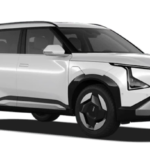 Hyundai Equivalent to Kia EV5 in Australia: Which Hyundai Electric SUV Is the Closest Match?
- Occasional 12V battery problems
- Software behaviour and infotainment quirks
- Persistent speed-warning alerts
- Ride-quality concerns on certain variants
- Higher-than-expected energy consumption during highway driving
These complaints shouldn't automatically be interpreted as widespread defects.
At this stage, there isn't enough long-term Australian evidence to make confident claims about the EV5's reliability over 10 or 15 years.
We recommend checking the vehicle's software version, service history and any applicable recalls before purchasing.
Kia EV5 Warranty in Australia
Kia provides a seven-year, unlimited-kilometre vehicle warranty.
The high-voltage battery has separate coverage of seven years or 150,000 kilometres, subject to warranty conditions.
That's a reassuring ownership benefit, although some competing EV manufacturers offer longer battery warranties.
For buyers intending to keep the vehicle for several years, Kia's established dealer and service network is another advantage.
Is the Kia EV5 Expensive to Maintain?
Electric vehicles generally have fewer routine maintenance requirements than conventional petrol vehicles.
There are no engine oil changes, spark plugs or traditional exhaust systems to maintain.
However, electric cars still require scheduled servicing.
Kia EV5 Service Schedule
In Australia, the EV5 has scheduled servicing every 12 months or 15,000 kilometres, whichever comes first.
Typical maintenance requirements may include:
- Tyre inspections and rotation
- Brake system inspections
- Cabin air filter replacement
- Suspension checks
- Coolant and fluid inspections
- Software and electronic system checks
Kia offers capped-price servicing arrangements.
For the Air Long Range, published seven-year capped-price servicing costs have been around $2,892, although actual applicable pricing should be confirmed when purchasing.
That works out to an average of approximately $413 annually.
The AWD versions can cost more to service.
Overall, the EV5's routine maintenance costs are reasonable for a medium electric SUV.
How Much Does It Cost to Run a Kia EV5 in Australia?
Electricity costs depend heavily on where and how you charge.
Home charging is generally more economical than relying exclusively on public DC fast chargers.
Let's consider an example using the Air Long Range.
Assume:
- Average electricity consumption: 18 kWh/100 km
- Home electricity price: $0.30 per kWh
- Annual driving distance: 15,000 km
The estimated energy cost would be approximately $5.40 per 100 kilometres, or $810 annually.
| Annual distance | Estimated home electricity cost |
|---|---|
| 10,000 km | $540 |
| 15,000 km | $810 |
| 20,000 km | $1,080 |
| 25,000 km | $1,350 |
These calculations exclude charging losses, electricity plan variations, public charging premiums and other ownership expenses.
Nevertheless, they demonstrate why home charging can make an electric SUV attractive.
Public DC charging can be substantially more expensive, so your charging habits will strongly influence the EV5's financial advantages.
Kia EV5 Pros and Cons
Before making a purchase decision, we think it's worth looking at the advantages and disadvantages together.
Advantages of the Kia EV5
1. Excellent interior practicality
The spacious cabin and generous boot make it suitable for everyday family use.
2. Good driving range
The Air Long Range's 555 km WLTP rating is particularly appealing.
3. Strong safety credentials
A five-star ANCAP rating and extensive safety equipment provide reassurance.
4. Comfortable driving experience
The EV5 is generally quiet, smooth and easy to drive.
5. Useful battery technology
The LFP battery offers promising durability characteristics.
6. Established dealership network
Kia has an extensive presence throughout Australia.
7. Comprehensive warranty
The seven-year vehicle warranty is an attractive feature.
Disadvantages of the Kia EV5
1. Charging speed isn't class-leading
Some rivals recharge significantly faster at suitable DC chargers.
2. Driver-assistance warnings can be annoying
The speed-limit alerts may frustrate certain owners.
3. Some variants have less convincing ride quality
Independent evaluations have identified differences in suspension behaviour.
4. Limited long-term reliability evidence
The EV5 is still relatively new.
5. Not particularly sporty in front-wheel-drive form
The Air models prioritise practicality over rapid acceleration.
6. Equipment varies significantly between grades
Some desirable convenience features are reserved for more expensive versions.
Kia EV5 vs Other Electric SUVs in Australia
The EV5 competes in a crowded segment.
Several alternatives deserve attention before committing to a purchase.
Kia EV5 vs Tesla Model Y
The Tesla Model Y remains one of the EV5's most important competitors.
Tesla offers a highly developed software experience, an extensive charging ecosystem and strong electric drivetrain efficiency.
The Kia EV5 counters with a more conventional interior layout, useful physical controls and a familiar ownership experience.
We would consider the EV5 if family comfort and traditional usability are priorities.
The Model Y deserves attention if technology integration and charging convenience matter most.
Kia EV5 vs BYD Sealion 7
The BYD Sealion 7 is another strong alternative.
It offers competitive pricing, substantial performance and generous standard equipment.
The Kia EV5 distinguishes itself through its boxier, practical interior and more familiar dealership experience.
The better choice will depend heavily on current dealer offers and which vehicle feels more comfortable during a test drive.
Kia EV5 vs Hyundai Ioniq 5
The Hyundai Ioniq 5 has one particularly important advantage: rapid DC charging capability.
Its 800V architecture allows substantially faster charging under suitable conditions.
However, the EV5 may appeal more to drivers wanting a traditional SUV appearance and straightforward family practicality.
For frequent Australian highway trips, the Ioniq 5's charging performance is worth considering.
Kia EV5 vs XPeng G6
The XPeng G6 brings strong technology, impressive charging capabilities and competitive equipment.
The EV5 instead offers a familiar Kia driving experience and the reassurance of an established Australian dealership network.
We recommend driving both, especially if fast charging and technology are important factors.
Which Kia EV5 Model Is Best in Australia?
We believe the Kia EV5 Air Long Range is the best overall choice for most Australian buyers.
It combines the largest official driving range in the lineup with a sensible equipment package.
The front-wheel-drive layout also avoids the extra weight and energy consumption of the AWD models.
Kia EV5 Air Standard Range: Best for Budget Buyers
Choose the Standard Range if you mostly drive around town and can charge at home.
Its 400 km official range should be sufficient for many everyday situations.
It can also be attractive as a second household vehicle.
Kia EV5 Air Long Range: Best Overall
This is our preferred option.
The 555 km WLTP range offers greater flexibility, particularly for families who occasionally travel between cities.
It also avoids the higher purchase price of the more expensive AWD versions.
Kia EV5 Earth AWD: Best for Additional Traction
The Earth provides stronger acceleration and all-wheel drive.
It may appeal to buyers wanting extra traction or those who regularly encounter slippery conditions.
However, we recommend assessing its ride comfort carefully during a test drive.
The GT-Line is the most luxurious option.
Its upgraded seating, technology and styling create a more premium experience.
However, its higher price and lower official driving range make it less compelling for value-focused buyers.
Is the Kia EV5 Worth Buying in Australia in 2026?
For the right buyer, yes.
The Kia EV5 combines many of the qualities Australian families expect from a conventional medium SUV with the advantages of an electric drivetrain.
Its cabin is spacious, its safety credentials are impressive, and its driving range is competitive.
The Air Long Range is particularly appealing because it provides enough battery capacity for commuting and occasional extended trips without requiring the costlier AWD models.
However, value depends on the purchase price.
For context, Australian 2026 list prices before on-road costs have been approximately:
| Variant | Indicative list price (AUD) |
|---|---|
| Air Standard Range | $56,770 |
| Air Long Range | $61,170 |
| Earth AWD | $64,770 |
| GT-Line AWD | $71,770 |
Promotional drive-away prices can be considerably lower.
For example, advertised 2026 offers have included an Air Standard Range around $49,990 drive-away and an Air Long Range around $59,990 drive-away.
These figures are indicative rather than guaranteed current offers.
We would strongly recommend comparing actual drive-away quotes before purchasing because discounts can materially change which model represents the best value.
Who Should Buy the Kia EV5?
We think the EV5 is particularly suitable for:
- Families replacing a petrol-powered medium SUV.
- First-time electric vehicle buyers.
- Drivers who can install a home charger.
- Commuters wanting quiet and comfortable transport.
- Buyers who value safety and interior space.
- Motorists looking for an established automotive brand.
On the other hand, it may not be the ideal choice for drivers who regularly travel extremely long distances, rely almost entirely on public fast charging or prioritise sporty handling.
Those buyers should compare alternatives carefully.
Frequently Asked Questions About the Kia EV5 in Australia
1. Is the Kia EV5 a reliable car?
The Kia EV5 appears promising, but it's too early to establish its long-term reliability with confidence. Its LFP battery technology and seven-year vehicle warranty are encouraging, although owners should monitor software updates, recalls and emerging reliability information.
2. Is the Kia EV5 better than the Tesla Model Y?
Neither is universally better. The Kia EV5 offers a practical, conventional SUV interior and comfortable everyday driving. The Tesla Model Y may be more appealing for drivers prioritising software integration, charging infrastructure and drivetrain efficiency. We recommend comparing the exact variants and prices.
3. How far can a Kia EV5 travel on one charge in Australia?
The Australian Kia EV5 has an official WLTP range of 400 to 555 kilometres, depending on the model. Real-world distance varies with speed, temperature, driving style, terrain and other conditions. The Air Long Range delivers the highest official range.
4. Is the Kia EV5 good for long-distance driving?
Yes, particularly the Long Range versions. The EV5 provides comfortable seating, good highway refinement and sufficient range for many Australian road trips. However, its charging speed is only average compared with some competitors, so longer journeys require sensible planning.
5. Which Kia EV5 should I buy in Australia?
For most buyers, we recommend the Kia EV5 Air Long Range. It offers the best combination of driving range, practicality, features and value. The Standard Range is suitable for shorter daily journeys, while the Earth AWD and GT-Line are worth considering if additional traction or premium equipment are priorities.
Final Verdict: Is the Kia EV5 a Good Car in Australia?
Yes, the Kia EV5 is a good car and one of the more sensible electric family SUVs available in Australia.
It succeeds by focusing on the features that matter most to everyday drivers: comfort, space, practicality, safety and usable electric range.
We particularly appreciate the roomy cabin, convenient storage compartments, comprehensive safety equipment and familiar driving experience.
The EV5 isn't the fastest-charging electric SUV, and its software alerts and varying ride quality leave room for improvement.
Long-term reliability also remains something to monitor as more Australian vehicles accumulate higher kilometres.
Nevertheless, those drawbacks don't outweigh its strengths for most family buyers.
Our preferred version is the Kia EV5 Air Long Range, especially when available at a competitive drive-away price.
If you're looking for a comfortable, well-equipped electric SUV that can handle daily commuting, school runs, shopping and occasional road trips, the Kia EV5 absolutely deserves a place on your shortlist.
This content may interest you!Kia EV5 vs BYD Sealion 7 Australia: Which Electric SUV Should You Buy in 2026?For Australian drivers who can charge at home and prioritise practicality over outright performance, it's a compelling electric vehicle in 2026.
Leave a Reply