
Mazda CX-30 Fuel Tank Size: How Many Litres Does It Hold?

The Mazda CX-30 fuel tank size is an important detail for Australian drivers who want to understand how far this compact SUV can travel before needing to refuel. Whether you're commuting through Melbourne, navigating Sydney traffic or planning a long road trip across Australia, knowing the fuel capacity can help you estimate running costs and plan your journeys.
The Mazda CX-30 combines a relatively compact petrol tank with efficient Skyactiv-G engines. However, not every version has the same fuel capacity.
In Australia, the Mazda CX-30 has a 51-litre fuel tank in front-wheel-drive (FWD) models and a 48-litre fuel tank in all-wheel-drive (AWD) models.
This difference might seem minor, but it can influence how frequently you visit petrol stations and the distance you can cover between fill-ups.
In this guide, we'll explain the Mazda CX-30 fuel tank capacity by engine and drivetrain, calculate its potential driving range, examine fuel consumption and discuss whether the tank is large enough for everyday Australian driving.
- What Is the Mazda CX-30 Fuel Tank Size?
- Mazda CX-30 Fuel Tank Capacity by Model in Australia
- How Far Can a Mazda CX-30 Travel on a Full Tank?
- Mazda CX-30 Fuel Consumption in City and Highway Driving
- Is the Mazda CX-30 Fuel Tank Too Small?
- How Much Does It Cost to Fill a Mazda CX-30 in Australia?
- What Fuel Does the Mazda CX-30 Use in Australia?
- When Should You Refuel Your Mazda CX-30?
- How to Improve Mazda CX-30 Fuel Range
- Does the Mazda CX-30 Fuel Tank Size Change Between Model Years?
- Mazda CX-30 Fuel Tank Size in Litres and Gallons
- Is the Mazda CX-30 Good for Long Road Trips?
- Frequently Asked Questions About Mazda CX-30 Fuel Tank Size
- Conclusion: Is the Mazda CX-30 Fuel Tank Big Enough?
What Is the Mazda CX-30 Fuel Tank Size?
The Mazda CX-30 is available with different petrol engines and drivetrain configurations, which determine its fuel tank capacity.
For Australian models, the specifications are straightforward:
| Mazda CX-30 Version | Fuel Tank Capacity |
|---|---|
| G20 2.0L Petrol FWD | 51 litres |
| G25 2.5L Petrol FWD | 51 litres |
| G25 2.5L Petrol AWD | 48 litres |
The main factor determining fuel tank size is the drivetrain rather than the engine displacement.
Both the 2.0-litre and 2.5-litre front-wheel-drive models have a 51-litre petrol tank. The all-wheel-drive configuration has a slightly smaller 48-litre tank.
Why Does the AWD Mazda CX-30 Have a Smaller Fuel Tank?
The AWD version has a fuel tank that is three litres smaller than the front-wheel-drive models.
This difference is associated with the packaging requirements of the all-wheel-drive system, which includes additional drivetrain components.
Although three litres might not sound particularly significant, the AWD model also consumes slightly more fuel than the equivalent G25 FWD version.
Consequently, drivers choosing AWD can expect a shorter driving range under comparable conditions.
Nevertheless, the AWD configuration offers additional traction benefits, particularly on slippery roads and when driving in challenging conditions.
Mazda CX-30 Fuel Tank Capacity by Model in Australia
Understanding the different Mazda CX-30 versions is useful because the model name alone does not always indicate the tank capacity.
Mazda CX-30 G20 Pure Fuel Tank Size
The Mazda CX-30 G20 Pure is an entry-level version equipped with a 2.0-litre Skyactiv-G petrol engine.
Its fuel tank capacity is 51 litres.
With its relatively efficient engine and front-wheel-drive layout, the G20 Pure offers a good balance between fuel economy and everyday practicality.
For drivers who spend most of their time commuting, shopping and travelling around urban areas, this configuration provides a useful amount of driving range without requiring an especially large tank.
Mazda CX-30 G20 Evolve and Touring Fuel Tank Size
The G20 Evolve and G20 Touring also use the 2.0-litre petrol engine with front-wheel drive.
Both versions have a 51-litre fuel tank.
Although these variants may include additional comfort, technology and convenience features, their petrol tank capacity remains unchanged.
This means that choosing a more generously equipped G20 version does not automatically reduce fuel capacity.
Mazda CX-30 G25 Fuel Tank Size
Australian Mazda CX-30 G25 models feature a larger 2.5-litre Skyactiv-G petrol engine.
Front-wheel-drive G25 variants have a 51-litre fuel tank.
This includes the G25 Evolve SP, G25 GT, G25 GT SP and G25 Astina FWD configurations listed in Mazda Australia's specifications.
The larger engine provides additional performance, but fuel consumption is generally slightly higher than that of the G20 engine.
As a result, the G25 FWD usually has a somewhat shorter theoretical driving range despite carrying the same amount of petrol.
Mazda CX-30 G25 Astina AWD Fuel Tank Size
The G25 Astina AWD is equipped with Mazda's i-Activ all-wheel-drive system.
Its fuel tank capacity is 48 litres.
This makes it the version with the smallest petrol tank among the Australian configurations discussed here.
The combination of a smaller tank and slightly higher fuel consumption means owners may need to refuel more frequently, especially when driving primarily in the city.
However, for motorists who prioritise traction and the characteristics of all-wheel drive, the difference may be a reasonable compromise.
How Far Can a Mazda CX-30 Travel on a Full Tank?
Fuel tank capacity is only part of the equation. To understand how practical the Mazda CX-30 is on longer journeys, we also need to examine fuel consumption.
The vehicle's driving range depends on the amount of petrol available and how efficiently the engine uses it.
Mazda Australia publishes the following combined fuel consumption figures for the relevant petrol configurations.
| Mazda CX-30 Engine | Combined Consumption | Tank Size | Theoretical Range |
|---|---|---|---|
| G20 2.0L FWD | 6.3 L/100 km | 51 L | 810 km |
| G25 2.5L FWD | 6.6 L/100 km | 51 L | 773 km |
| G25 2.5L AWD | 6.8 L/100 km | 48 L | 706 km |
These ranges are calculated from the official combined consumption figures and the full nominal tank capacities. They are not guaranteed real-world distances or recommended distances to drive before refuelling.
Mazda CX-30 G20 Driving Range
The G20 FWD has the longest theoretical range of the configurations listed.
With a 51-litre tank and official combined consumption of 6.3 L/100 km, the calculation is:
51 ÷ 6.3 × 100 = approximately 810 km
This is an impressive theoretical result for a compact SUV.
However, actual range can be considerably lower depending on traffic, driving conditions, vehicle load and driving habits.
Mazda CX-30 G25 FWD Driving Range
The 2.5-litre front-wheel-drive model has a combined fuel consumption figure of 6.6 L/100 km.
Its estimated full-tank range is:
51 ÷ 6.6 × 100 = approximately 773 km
This represents a reduction of around 37 km compared with the G20 under the respective official combined consumption figures.
For many drivers, that difference will be relatively minor during normal weekly commuting.
Mazda CX-30 G25 AWD Driving Range
The AWD model uses approximately 6.8 litres per 100 km under the official combined test cycle.
With its 48-litre tank, its theoretical driving range is:
48 ÷ 6.8 × 100 = approximately 706 km
Although this is lower than the FWD versions, it still provides a useful theoretical range for regional driving and longer journeys.
We recommend planning fuel stops before the tank approaches empty, particularly in remote parts of Australia where petrol stations may be widely separated.
Mazda CX-30 Fuel Consumption in City and Highway Driving
The Mazda CX-30's actual petrol consumption can vary significantly depending on where and how it is driven.
City Driving
Urban driving generally involves frequent braking, acceleration, traffic lights and periods of idling.
These conditions increase fuel consumption compared with steady highway cruising.
Mazda's published urban test figures for the Australian petrol versions include:
- G20 2.0L FWD: 7.5 L/100 km.
- G25 2.5L FWD: 8.5 L/100 km.
- G25 2.5L AWD: 8.7 L/100 km.
In congested areas such as central Sydney, Melbourne or Brisbane, real-world consumption could be higher.
Driving style also plays a role. Frequent hard acceleration and unnecessary idling can noticeably increase fuel usage.
Highway Driving
The Mazda CX-30 can be more economical during steady highway travel.
Mazda's published extra-urban test figures are:
- G20 2.0L FWD: 5.6 L/100 km.
- G25 2.5L FWD: 5.5 L/100 km.
- G25 2.5L AWD: 5.7 L/100 km.
These figures indicate that the CX-30 can perform efficiently outside heavily congested areas.
However, the extra-urban laboratory test should not be interpreted as a guarantee of fuel consumption at Australian motorway speeds.
Strong headwinds, steep gradients, roof-mounted accessories and travelling at higher speeds can increase consumption.
Is the Mazda CX-30 Fuel Tank Too Small?
One question frequently raised about compact SUVs is whether their fuel tanks provide enough range for everyday use.
The Mazda CX-30's 48–51-litre capacity is not especially large, but it is reasonable for a vehicle in this segment.
Whether it feels sufficient will depend largely on your driving habits.
Advantages of the Mazda CX-30 Fuel Tank
For many Australian owners, the tank provides several practical benefits.
Suitable for regular commuting
Drivers covering moderate daily distances may only need to refuel periodically, depending on their actual fuel consumption.
Reasonable long-distance capability
The CX-30's efficient petrol engines can provide substantial distance between fuel stops under favourable conditions.
Efficient engine options
The G20 engine is particularly attractive for drivers looking to balance everyday performance with lower petrol consumption.
Manageable refuelling costs
A smaller tank generally requires less money for a complete fill than a much larger tank, although actual running costs depend on fuel efficiency and distance travelled.
Disadvantages of the Mazda CX-30 Fuel Tank
There are also some limitations worth considering.
More frequent refuelling for high-mileage drivers
Motorists who cover long distances every week may prefer a vehicle with a larger fuel tank.
AWD models have reduced range
The 48-litre tank and higher combined consumption mean the AWD model has a shorter theoretical range.
Remote travel requires planning
When travelling through regional and remote Australia, relying on the maximum calculated range is not advisable.
Overall, we believe the Mazda CX-30 fuel tank is suitable for its intended role as a compact SUV, although drivers expecting frequent long-distance travel should consider their individual requirements.
This content may interest you!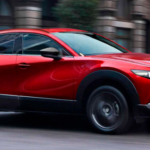 Mazda CX-30 Engine Size: Complete Guide to 2.0L and 2.5L Engines
How Much Does It Cost to Fill a Mazda CX-30 in Australia?
The cost of filling a Mazda CX-30 depends on the petrol price and the amount of fuel required.
Australian petrol prices can vary considerably between cities, suburbs and regional locations.
For illustration, let's assume unleaded petrol costs $1.90 per litre.
| Fuel Tank | Petrol Price | Cost of a Full 51L or 48L Tank |
|---|---|---|
| 51 litres | $1.70/L | $86.70 |
| 51 litres | $1.90/L | $96.90 |
| 51 litres | $2.10/L | $107.10 |
| 48 litres | $1.70/L | $81.60 |
| 48 litres | $1.90/L | $91.20 |
| 48 litres | $2.10/L | $100.80 |
These are illustrative calculations rather than current petrol price quotations.
In practice, the amount paid at the pump will usually be lower than the full-tank calculation because some fuel normally remains when the driver stops to refuel.
How to Calculate Your Refuelling Cost
The formula is simple:
Litres added × Price per litre = Total refuelling cost
For example, adding 40 litres at $1.90 per litre would cost:
40 × $1.90 = $76.00
Keeping track of litres added, distance travelled and the total amount paid can also help you calculate your actual fuel economy.
What Fuel Does the Mazda CX-30 Use in Australia?
The Australian Mazda CX-30 petrol engines are designed to use unleaded petrol.
Mazda Australia's specifications indicate that the G20 and G25 configurations can use:
- Unleaded petrol with an octane rating of at least 91 RON.
- E10 petrol meeting the appropriate fuel requirements.
This means Australian owners do not generally need to purchase premium 95 or 98 RON petrol simply to meet the minimum octane requirement of these specified engines.
Nevertheless, it's important to check the owner's manual and fuel-filler information for your particular model year.
Can You Use 98 Petrol in a Mazda CX-30?
Petrol with a 98 RON rating exceeds the minimum octane requirement of the Australian petrol variants described here.
It can generally be used where the vehicle permits unleaded petrol of that specification.
However, using premium petrol does not necessarily mean you'll achieve a noticeable improvement in economy or performance.
If your CX-30 is designed to operate on 91 RON fuel, higher-priced petrol may not provide enough benefit to offset its additional cost.
Can the Mazda CX-30 Use E10?
Yes, Mazda Australia's specifications list E10 as an acceptable fuel for the relevant Australian CX-30 petrol engines.
E10 contains up to 10% ethanol.
Although E10 may sometimes be cheaper at the pump, its energy content differs slightly from conventional petrol, which may affect fuel consumption.
The most economical option depends on local petrol prices and your actual consumption.
When Should You Refuel Your Mazda CX-30?
Knowing when to refuel is just as important as knowing the tank capacity.
The Mazda CX-30 features a fuel gauge and a remaining-distance estimate that help drivers monitor their available petrol.
However, the displayed distance is an estimate rather than a precise measurement of how far the car will continue operating.
Understanding the Low Fuel Warning
When the low fuel warning appears, you should arrange to refuel promptly.
It does not necessarily mean the tank is completely empty.
The remaining fuel quantity can vary, and the warning should not be treated as confirmation that a specific number of kilometres remains available.
Likewise, the litres needed to refill the tank after the warning may be considerably less than the vehicle's total fuel tank capacity.
Why the Distance-to-Empty Estimate Changes
The CX-30 calculates its estimated remaining range using driving-related information, including recent fuel consumption.
If you have been driving efficiently on a highway, the displayed range may increase or decrease more slowly.
After entering congested city traffic, the estimate may decline faster.
This behaviour is normal because the vehicle continuously adjusts its prediction to reflect changing conditions.
We recommend using the estimate as a planning guide rather than relying on it to drive until the fuel supply is exhausted.
How to Improve Mazda CX-30 Fuel Range
Although you cannot increase the physical size of the fuel tank, you can improve the distance travelled between fill-ups by reducing fuel consumption.
Maintain Correct Tyre Pressure
Underinflated tyres increase rolling resistance, making the engine work harder.
Check tyre pressures regularly and use the recommended values shown on the vehicle's tyre placard.
Proper inflation also supports tyre life and handling.
Avoid Aggressive Acceleration
Rapid acceleration and unnecessary heavy braking can increase petrol consumption.
Smooth driving allows the engine and transmission to operate more efficiently.
This can make a noticeable difference during urban commuting.
Reduce Unnecessary Weight
Carrying unnecessary items increases vehicle weight and can contribute to higher fuel consumption.
Removing heavy equipment that you don't need may help improve efficiency.
Limit Roof Accessories
Roof racks, roof boxes and other external accessories can increase aerodynamic drag.
At highway speeds, additional drag can noticeably affect fuel consumption.
Removing unused accessories can help maintain better efficiency.
Keep Up With Regular Servicing
Routine maintenance helps ensure the engine continues operating as intended.
Following Mazda's recommended servicing schedule, using suitable engine oil and addressing mechanical problems promptly can prevent avoidable efficiency losses.
Plan Longer Journeys
When travelling across Australia, route planning can help reduce unnecessary detours and repeated stops.
Checking petrol availability is especially important when travelling through less populated areas.
Efficient trip planning can make a relatively compact fuel tank much easier to live with.
Does the Mazda CX-30 Fuel Tank Size Change Between Model Years?
The Mazda CX-30 has been sold in Australia since its introduction for the 2020 model year.
Across the Australian petrol configurations covered in this guide, the familiar capacities are 51 litres for FWD and 48 litres for AWD.
However, model availability, engines and equipment have changed over time.
Not every model year offers exactly the same combinations of engine, trim and drivetrain.
When purchasing a used Mazda CX-30, we recommend confirming the specific model year, engine and drivetrain rather than assuming every vehicle has identical specifications.
This is particularly important when comparing imported vehicles or models originally sold in other countries.
Mazda CX-30 Fuel Tank Size in Litres and Gallons
Australian fuel tank specifications are normally expressed in litres, but international vehicle reviews often use gallons.
The difference between US gallons and imperial gallons is important.
| Capacity | US Gallons | Imperial Gallons |
|---|---|---|
| 51 litres | 13.5 gal | 11.2 gal |
| 48 litres | 12.7 gal | 10.6 gal |
This explains why some international Mazda CX-30 reviews refer to a 12.7-gallon or 13.5-gallon petrol tank.
When researching specifications online, always check which gallon measurement is being used and whether the figures refer to an Australian FWD or AWD model.
Is the Mazda CX-30 Good for Long Road Trips?
The Mazda CX-30 can be a practical option for long-distance driving, particularly for motorists who appreciate a compact vehicle with comfortable on-road handling.
Its petrol engines provide useful cruising efficiency, while the FWD models offer the largest fuel tanks.
For example, drivers travelling between major Australian cities may find that the CX-30 provides enough range to make fuel stops relatively convenient.
However, several factors can affect its suitability for a particular journey.
Highway Efficiency
Steady driving can help the CX-30 achieve better fuel economy than frequent stop-start urban driving.
That can increase the distance covered between petrol stations.
Passenger and Luggage Weight
A heavily loaded vehicle may consume more petrol, especially when climbing hills or accelerating.
Drivers travelling with several passengers and luggage should allow for potentially higher consumption.
Remote Australian Roads
Long sections of rural and remote roads may have limited refuelling opportunities.
For these journeys, we recommend maintaining a comfortable fuel reserve and identifying suitable petrol stations in advance.
The maximum theoretical driving range should never be treated as a guaranteed distance.
Frequently Asked Questions About Mazda CX-30 Fuel Tank Size
1. How Many Litres Is the Mazda CX-30 Fuel Tank?
The Mazda CX-30 has a 51-litre fuel tank in Australian front-wheel-drive models and a 48-litre fuel tank in all-wheel-drive models. The capacity depends primarily on the drivetrain configuration.
2. How Far Can a Mazda CX-30 Go on a Full Tank?
Using Mazda Australia's official combined fuel consumption figures, the theoretical range is approximately 810 km for the G20 FWD, 773 km for the G25 FWD and 706 km for the G25 AWD. Actual driving range varies with road conditions, traffic, vehicle load and driving style.
3. Does the Mazda CX-30 AWD Have a Smaller Fuel Tank?
Yes. The Australian Mazda CX-30 AWD has a 48-litre tank, compared with 51 litres in the FWD models. It also has slightly higher official combined fuel consumption than the equivalent G25 front-wheel-drive model.
The Australian G20 and G25 petrol specifications list unleaded or E10 petrol with a minimum rating of 91 RON. Premium petrol is therefore not required merely to satisfy the stated minimum octane requirement. Always confirm the fuel requirements for your specific vehicle.
5. How Much Does It Cost to Fill a Mazda CX-30?
The cost depends on petrol prices and the amount of fuel needed. At an illustrative price of $1.90 per litre, filling a completely empty 51-litre tank would cost $96.90, while filling a 48-litre tank would cost $91.20. Actual refuelling costs vary.
Conclusion: Is the Mazda CX-30 Fuel Tank Big Enough?
The Mazda CX-30 fuel tank size ranges from 48 to 51 litres in Australia, depending on whether the vehicle has front-wheel drive or all-wheel drive.
The G20 and G25 FWD versions have 51-litre tanks, while the G25 AWD uses a smaller 48-litre tank.
Despite these relatively modest capacities, the Mazda CX-30 offers useful driving range thanks to its efficient Skyactiv-G petrol engines.
The G20 FWD achieves the longest theoretical range, while the G25 AWD trades some efficiency and petrol capacity for the benefits of all-wheel drive.
For everyday Australian commuting, weekend trips and regular highway journeys, we consider the Mazda CX-30's petrol tank capacity adequate for most drivers.
However, if you frequently travel long distances or drive through remote regions, planning your refuelling stops and allowing for real-world fuel consumption will be essential.
This content may interest you!Mazda CX-30 Tyre Size: Complete Guide to Wheel Sizes and Tyre SpecificationsUltimately, the Mazda CX-30 proves that a compact SUV does not need an exceptionally large fuel tank to deliver practical everyday driving range.
Leave a Reply