
Why Buy a Mazda CX-30 in Australia? 10 Reasons It’s Worth Considering

The Mazda CX-30 has become a familiar sight on Australian roads, and it is easy to understand why. With its stylish exterior, refined interior, enjoyable driving experience and practical dimensions, this compact SUV offers an appealing alternative to conventional hatchbacks and larger family SUVs.
But why choose a Mazda CX-30 in Australia, especially when there are so many competitors from Toyota, Hyundai, Kia, Subaru and other manufacturers?
For many Australian drivers, the answer comes down to balance. The Mazda CX-30 combines the elevated driving position of an SUV with the handling characteristics of a smaller passenger car. It also offers a surprisingly premium cabin without requiring buyers to move into a luxury brand.
However, it is not perfect. Its relatively compact boot, limited rear-seat space and lack of a hybrid option are worth considering before making a purchase.
In this guide, we'll explore the main reasons to buy a Mazda CX-30 in Australia, examine its disadvantages, compare it with popular alternatives and help you decide whether it suits your lifestyle.
- 1. The Mazda CX-30 Has One of the Most Attractive Designs in Its Class
- 2. The Interior Feels More Premium Than Many Competitors
- 3. The Mazda CX-30 Offers an Enjoyable Driving Experience
- 4. The Mazda CX-30 Has Reliable and Proven Petrol Engine Options
- 5. Fuel Consumption Is Reasonable for Australian Driving
- 6. The Mazda CX-30 Offers Useful Safety Technology
- 7. The Mazda CX-30 Is Well Suited to Australian Urban Lifestyles
- 8. The Mazda CX-30 Offers Attractive Equipment Across Its Range
- 9. Mazda Offers Strong Ownership Support in Australia
- 10. The Mazda CX-30 Offers an Appealing Balance Between Style and Practicality
- What Are the Disadvantages of the Mazda CX-30?
- Mazda CX-30 vs Competitors in Australia
- Is the Mazda CX-30 Worth Buying in Australia in 2026?
- Should You Buy the Mazda CX-30 G20 or G25?
- Frequently Asked Questions About the Mazda CX-30 in Australia
- Conclusion: Why Choose a Mazda CX-30 in Australia?
1. The Mazda CX-30 Has One of the Most Attractive Designs in Its Class
One of the main reasons Australian buyers consider the Mazda CX-30 is its appearance.
Mazda has developed a distinctive design philosophy called Kodo, which focuses on elegant proportions, clean body surfaces and carefully positioned details.
Rather than adopting an excessively aggressive or futuristic appearance, the CX-30 takes a more sophisticated approach.
Exterior Design That Looks More Expensive Than It Is
The Mazda CX-30 features:
- A prominent front grille with slim headlights.
- Sculpted body panels and smooth exterior surfaces.
- A sporty roofline.
- Protective black cladding around the wheel arches.
- Attractive alloy-wheel designs, depending on the variant.
- A compact body that looks balanced from almost every angle.
Its exterior styling helps distinguish it from more conventional small SUVs.
We particularly like how the CX-30 manages to look both sporty and elegant without relying on excessive decorative elements.
A Design That Works Well in Australian Cities
The compact dimensions also make the CX-30 practical for everyday Australian driving.
Whether we're navigating busy streets in Sydney, Melbourne or Brisbane, the CX-30 is easier to manoeuvre than many larger SUVs.
Its relatively short body is useful when parking in shopping centres, apartment buildings and crowded urban streets.
Another major reason to buy the Mazda CX-30 in Australia is its interior quality.
Mazda has clearly focused on materials, ergonomics and overall cabin presentation.
Even comparatively affordable variants offer an interior that feels carefully designed.
High-Quality Materials and a Minimalist Dashboard
Inside the Mazda CX-30, we find:
- A clean dashboard layout.
- Comfortable front seats.
- Soft-touch materials in important areas.
- Well-positioned physical controls.
- An intuitive driving position.
- A modern infotainment display.
- Attractive interior trim combinations.
Higher-specification versions add more luxurious appointments, including leather upholstery and additional comfort features.
The overall result is a cabin that can feel more expensive than the vehicle's price suggests.
Physical Controls Make Everyday Driving Easier
While many manufacturers are moving almost every function onto touchscreens, Mazda continues to prioritise physical controls.
This approach has several advantages.
We can adjust important settings without navigating through numerous digital menus, and the central rotary controller can make infotainment functions easier to operate once familiar.
The CX-30's interior is particularly appealing to drivers who appreciate straightforward controls instead of oversized touchscreens.
3. The Mazda CX-30 Offers an Enjoyable Driving Experience
Driving dynamics are among the strongest reasons to choose a Mazda CX-30.
Mazda has traditionally placed considerable emphasis on making its vehicles enjoyable to drive, and the CX-30 follows that philosophy.
More Engaging Than a Typical Small SUV
The CX-30 offers responsive steering, predictable handling and controlled body movements.
Its driving experience feels more closely related to a conventional hatchback than a large SUV.
This makes it particularly enjoyable on winding Australian roads, suburban streets and highways.
We wouldn't describe the CX-30 as a sports car, but it delivers a reassuring combination of stability and responsiveness.
Comfortable for Everyday Commuting
The suspension generally strikes a reasonable balance between comfort and handling.
It absorbs ordinary road imperfections while maintaining good control through corners.
However, versions fitted with larger wheels can feel firmer over damaged roads and sharp bumps.
For drivers who spend considerable time commuting, a test drive over familiar roads is a useful way to assess ride comfort.
A Conventional Automatic Transmission
Another appealing characteristic is Mazda's six-speed automatic transmission.
Unlike some competitors that use continuously variable transmissions or dual-clutch gearboxes, the CX-30 uses a conventional torque-converter automatic.
It generally provides smooth, predictable shifts and a familiar driving experience.
For Australian buyers who prefer traditional automatic transmissions, this can be an important advantage.
4. The Mazda CX-30 Has Reliable and Proven Petrol Engine Options
Engine simplicity is another reason some buyers prefer the Mazda CX-30.
In Australia, the 2026 range offers naturally aspirated petrol engines rather than relying exclusively on small turbocharged units.
Mazda CX-30 G20: 2.0-Litre Petrol Engine
The G20 uses a 2.0-litre four-cylinder Skyactiv-G petrol engine.
Its key characteristics include:
- Approximately 114 kW of power.
- 200 Nm of torque.
- Six-speed automatic transmission.
- Front-wheel drive.
- Official combined fuel consumption of approximately 6.3 L/100 km.
This engine is suitable for drivers who prioritise everyday practicality and reasonable fuel consumption.
It performs adequately in normal traffic, although acceleration can feel less energetic when the vehicle is fully loaded or overtaking at highway speeds.
Mazda CX-30 G25: 2.5-Litre Petrol Engine
The larger G25 engine is an appealing alternative for drivers who want more performance.
It offers approximately:
- 140 kW of power.
- 252 Nm of torque.
- Stronger acceleration than the G20.
- Better flexibility for highway overtaking.
- Front-wheel drive or all-wheel drive, depending on the variant.
We consider the G25 particularly attractive for drivers who regularly travel on regional highways or encounter hilly terrain.
Its extra torque makes acceleration feel more effortless.
Are Mazda CX-30 Engines Reliable?
The naturally aspirated Skyactiv-G petrol engines have an established history across Mazda's vehicle range.
Their relatively conventional mechanical layout is appealing to buyers concerned about long-term ownership.
However, reliability still depends on maintenance, driving conditions and individual vehicle history.
Regular servicing and correct engine oil are essential, particularly for vehicles frequently driven in stop-start traffic.
5. Fuel Consumption Is Reasonable for Australian Driving
Fuel efficiency is an important consideration for Australian motorists, especially those commuting long distances.
Although the CX-30 does not offer the exceptional economy of a full hybrid, its petrol engines remain reasonably efficient.
Mazda CX-30 Fuel Consumption Australia
| Engine | Drivetrain | Combined fuel consumption |
|---|---|---|
| G20 2.0L | FWD | 6.3 L/100 km |
| G25 2.5L | FWD | Approximately 6.6 L/100 km |
| G25 2.5L | AWD | Approximately 6.8 L/100 km |
Figures are official combined-cycle estimates. Real-world consumption varies with traffic, driving style, vehicle load and road conditions.
What Fuel Economy Can We Expect in Real Life?
Actual consumption will depend on how and where we drive.
Short trips, heavy traffic, air conditioning and frequent acceleration tend to increase fuel consumption.
Highway driving at consistent speeds can produce better results.
For Australians who drive mainly in cities, the G20 is a sensible choice.
However, the G25's stronger performance might justify its additional fuel consumption for drivers who regularly travel between cities.
Does the Mazda CX-30 Have a Hybrid Version in Australia?
The 2026 Australian CX-30 range is petrol-powered, with no conventional full-hybrid option.
This is an important limitation for buyers specifically seeking the lowest possible fuel consumption.
Alternatives such as the Toyota Corolla Cross Hybrid may be more attractive when petrol savings are the main priority.
6. The Mazda CX-30 Offers Useful Safety Technology
Safety is another reason buyers consider the Mazda CX-30.
The model offers numerous driver-assistance systems designed to reduce risk and improve driver awareness.
Depending on the model grade and equipment package, features can include:
- Autonomous emergency braking.
- Adaptive cruise control.
- Lane departure warning.
- Lane-keep assistance.
- Blind-spot monitoring.
- Rear cross-traffic alert.
- Driver attention monitoring.
- Traffic sign recognition.
- Parking sensors.
- A 360-degree camera system.
Higher-specification 2026 variants offer additional technology through Mazda's Vision Technology equipment.
What Is the Mazda CX-30 ANCAP Safety Rating?
There is an important distinction between older and newer models.
Mazda CX-30 vehicles built before January 2026 were covered by a five-star ANCAP rating based on earlier testing.
That rating expired at the end of 2025.
Consequently, Mazda CX-30 vehicles built from January 2026 are currently classified as unrated by ANCAP.
This does not mean the vehicle failed a new crash test. It means the previous rating no longer applies to newly built vehicles.
Buyers should consider the actual safety equipment fitted to their chosen variant rather than relying only on historical ratings.
7. The Mazda CX-30 Is Well Suited to Australian Urban Lifestyles
One of the biggest strengths of the CX-30 is its suitability for daily use.
It occupies an appealing position between a small hatchback and a larger SUV.
Easy to Park and Manoeuvre
The CX-30's compact exterior dimensions make it convenient for urban environments.
It is suitable for:
- Shopping centre car parks.
- Apartment parking spaces.
- Narrow residential streets.
- Busy city traffic.
- Everyday commuting.
- Weekend trips.
Its raised seating position can also make entering and exiting the vehicle more convenient than in some lower passenger cars.
Higher Ground Clearance Than a Conventional Hatchback
The Mazda CX-30 has more ground clearance than the Mazda3.
This can be helpful when negotiating steep driveways, speed bumps and uneven surfaces.
However, it is important to understand that the CX-30 is primarily a road-focused crossover.
Even AWD variants are not substitutes for dedicated off-road vehicles.
Is the Mazda CX-30 Good for Long Australian Road Trips?
Yes, provided its passenger and luggage capacity meets our needs.
The CX-30 offers comfortable front seating, stable highway handling and a reasonably refined driving experience.
This content may interest you!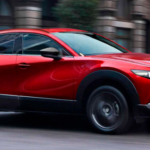 How Long Does a Mazda CX-30 Last in Australia? Lifespan, Reliability and Maintenance Guide
It is well suited to couples or smaller households planning weekend trips.
However, families carrying several large suitcases or significant camping equipment may prefer a larger SUV.
8. The Mazda CX-30 Offers Attractive Equipment Across Its Range
Equipment is another strong argument in favour of the CX-30.
Australian buyers can choose between several grades, allowing them to prioritise affordability, comfort or additional performance.
Mazda CX-30 2026 Prices in Australia
The following figures reflect Mazda Australia's updated 2026 manufacturer's list prices, excluding on-road costs.
| Variant | Starting price (AUD) |
|---|---|
| G20 Pure FWD | $34,760 |
| G20 Evolve FWD | $36,660 |
| G20 Touring FWD | $40,560 |
| G25 Evolve SP Vision FWD | $42,360 |
| G25 GT Vision FWD | $45,360 |
| G20 Astina FWD | $45,960 |
| G25 Astina FWD | $47,460 |
| G25 Astina AWD | $49,460 |
Additional Vision-equipped and GT SP variants are also available.
Prices may vary with optional equipment, dealer charges and applicable on-road costs.
Which Mazda CX-30 Variant Offers the Best Value?
The answer depends on our priorities.
For affordability: The G20 Pure offers the essential CX-30 driving experience at the lowest entry price.
For everyday comfort: The G20 Evolve and Touring offer appealing upgrades without reaching the highest price levels.
For stronger performance: The G25 Evolve SP is worth considering because of its larger engine.
For premium equipment: The G25 GT and Astina versions provide additional luxury and technology.
We would generally recommend comparing the G20 Evolve with the G25 Evolve SP before deciding whether extra performance is worth the price difference.
9. Mazda Offers Strong Ownership Support in Australia
Another reason to consider the Mazda CX-30 is the manufacturer's established Australian presence.
Mazda has an extensive dealership and authorised service network across the country.
This can make servicing, maintenance and access to genuine replacement parts relatively convenient.
Mazda CX-30 Warranty Australia
New Mazda vehicles in Australia are covered by a five-year, unlimited-kilometre factory warranty, subject to Mazda's warranty terms.
This is useful for drivers who accumulate substantial mileage each year.
Mazda also provides roadside assistance benefits for eligible new vehicles.
Mazda CX-30 Service Intervals
For applicable recent Australian petrol CX-30 models, scheduled servicing is generally required every:
- 12 months, or
- 15,000 kilometres.
Whichever occurs first.
Owners should always follow the maintenance schedule applicable to their exact model year and vehicle identification number.
Is the Mazda CX-30 Expensive to Maintain?
Maintenance costs are generally reasonable for a mainstream Japanese compact SUV, although servicing prices vary.
Factors influencing ownership costs include:
- Engine choice.
- Tyre size and replacement cost.
- Brake wear.
- Driving conditions.
- Insurance premiums.
- Scheduled maintenance.
- Unexpected repairs.
Higher-specification variants with larger wheels and additional equipment may cost more to maintain or repair.
Before purchasing, it is worth requesting a servicing estimate covering several years of ownership.
10. The Mazda CX-30 Offers an Appealing Balance Between Style and Practicality
Perhaps the strongest reason to buy the Mazda CX-30 is that it combines several desirable characteristics without becoming excessively large.
It provides much of the driving enjoyment associated with the Mazda3 while offering a higher seating position and SUV-inspired styling.
For buyers who do not need a particularly large boot or spacious rear seats, this balance can be ideal.
Who Should Buy a Mazda CX-30?
We believe the Mazda CX-30 is especially suitable for:
- Singles who want an attractive and comfortable daily driver.
- Couples looking for a premium-feeling compact SUV.
- Commuters who value driving refinement.
- Buyers upgrading from a traditional hatchback.
- Small households that occasionally need rear passenger space.
- Drivers who prefer naturally aspirated engines and conventional automatics.
It is particularly attractive for motorists who prioritise interior quality and enjoyable driving over maximum cargo capacity.
What Are the Disadvantages of the Mazda CX-30?
Despite its strengths, the CX-30 has some weaknesses that buyers should consider.
1. Limited Rear Passenger Space
The rear seats are adequate for occasional passengers, but legroom can feel restricted for taller adults.
Families regularly transporting teenagers or adult passengers may find a larger SUV more comfortable.
2. Small Boot Capacity
The Mazda CX-30 offers approximately 317 litres of luggage capacity with the rear seats in place.
This is enough for grocery shopping, smaller suitcases and everyday belongings.
However, some competitors provide substantially more cargo space.
For households with prams, sports equipment or large luggage, boot capacity could become a significant limitation.
3. Rear Visibility Is Not Ideal
The CX-30's stylish exterior has a practical disadvantage.
Its thick rear pillars and relatively small rear windows can make visibility more restrictive than in some boxier SUVs.
Parking cameras and blind-spot monitoring help, but buyers should assess outward visibility during a test drive.
4. No Full-Hybrid Option
The lack of a full-hybrid powertrain puts the CX-30 at a disadvantage against some fuel-efficient rivals.
Australian drivers covering substantial distances in heavy urban traffic may find a hybrid alternative more economical over time.
5. Higher Grades Can Become Expensive
Although entry-level pricing is competitive within the small-SUV segment, expensive CX-30 variants approach the price of larger vehicles.
At that point, it becomes important to compare the benefits of extra luxury equipment against the practicality of a bigger SUV.
Mazda CX-30 vs Competitors in Australia
The CX-30 competes with several established compact SUVs.
Each alternative offers different strengths.
| Model | Main advantage | Main consideration |
|---|---|---|
| Mazda CX-30 | Interior quality and engaging handling | Small boot and rear seats |
| Toyota Corolla Cross | Hybrid efficiency and practicality | Driving experience may feel less engaging |
| Hyundai Kona | Technology and available electrified options | Styling and controls may not suit everyone |
| Kia Seltos | Interior space and practicality | Less premium cabin presentation in some variants |
| Subaru Crosstrek | Standard AWD and versatile road capability | Fuel efficiency depends on version |
Mazda CX-30 vs Toyota Corolla Cross
The Toyota Corolla Cross is particularly attractive for drivers prioritising fuel efficiency and family practicality.
Its hybrid powertrain is a major advantage in urban traffic.
However, the Mazda CX-30 offers a more premium-feeling interior and a traditionally engaging driving experience.
We would lean towards the Corolla Cross for efficiency-focused family use, but the CX-30 for drivers who prioritise cabin quality and steering feel.
Mazda CX-30 vs Hyundai Kona
The Hyundai Kona offers distinctive styling, modern technology and a practical cabin.
Some variants also provide electrified powertrain options.
The Mazda CX-30 counters with a more traditional interior layout, attractive materials and enjoyable handling.
The better choice depends largely on whether we prefer technology-focused design or Mazda's more understated approach.
Mazda CX-30 vs Kia Seltos
The Kia Seltos is a practical alternative with a roomy cabin and useful cargo capacity.
It may be the better choice for households that regularly transport passengers and luggage.
The CX-30 is more compelling for those who prefer a refined cabin and a more car-like driving experience.
Mazda CX-30 vs Subaru Crosstrek
The Subaru Crosstrek offers standard all-wheel drive in its Australian range and is worth considering for drivers who frequently encounter unsealed roads or challenging weather.
The Mazda CX-30 offers strong interior presentation and a more road-focused character.
For everyday city and highway use, both are worth testing. For buyers specifically seeking standard AWD, the Subaru has a clear equipment advantage.
Is the Mazda CX-30 Worth Buying in Australia in 2026?
For the right buyer, yes.
The 2026 Mazda CX-30 remains an attractive small SUV thanks to its distinctive styling, premium cabin and satisfying driving characteristics.
The updated range also provides more equipment choices, including additional G25 variants.
However, its value depends on how we intend to use it.
If we regularly travel with several passengers or need substantial luggage capacity, a more spacious SUV may be a better investment.
Likewise, motorists seeking maximum fuel efficiency should compare it with available hybrid alternatives.
But if our priority is a comfortable, elegant, enjoyable compact SUV for daily driving, the CX-30 deserves serious consideration.
Should You Buy the Mazda CX-30 G20 or G25?
This is one of the most important decisions for Australian buyers.
Choose the G20 If:
- Most driving takes place in the city.
- Fuel efficiency is a priority.
- We want a lower purchase price.
- We rarely carry heavy loads.
- Moderate acceleration is sufficient.
Choose the G25 If:
- We regularly drive on highways.
- Stronger acceleration matters.
- We frequently travel through hilly regions.
- We want more effortless overtaking performance.
- We are comfortable paying more for additional engine power.
For many drivers, the G20 is sufficient.
However, the G25 provides a noticeable improvement in responsiveness, making it appealing for buyers who enjoy driving.
A back-to-back test drive is the best way to determine whether the extra performance justifies its cost.
Frequently Asked Questions About the Mazda CX-30 in Australia
1. Why Is the Mazda CX-30 Popular in Australia?
The Mazda CX-30 appeals to Australian buyers because it combines attractive styling, a premium-feeling interior, comfortable everyday driving and convenient compact dimensions. It also benefits from Mazda's established dealer network and offers a choice of petrol engines.
2. Is the Mazda CX-30 a Reliable Car in Australia?
The Mazda CX-30 has an appealing mechanical foundation, particularly with its established naturally aspirated Skyactiv-G petrol engines and conventional automatic transmission. However, long-term reliability depends on proper maintenance, vehicle condition and driving habits. Used buyers should check service records, recalls and evidence of previous repairs.
3. Is the Mazda CX-30 Good for Australian Highways?
Yes. The CX-30 offers stable handling, comfortable front seats and a refined driving experience suitable for long highway journeys. The G25 engine is particularly appealing for drivers who want stronger acceleration when overtaking or travelling through hilly areas.
4. Is the Mazda CX-30 Better Than the Mazda CX-5?
Not necessarily. The Mazda CX-30 is more compact, making it convenient for city driving and parking. The CX-5 provides greater passenger and luggage space, making it more suitable for many families. The better choice depends on our space requirements, budget and driving preferences.
5. What Is the Biggest Disadvantage of the Mazda CX-30?
Its relatively limited interior space is arguably the biggest drawback. Although the front cabin is comfortable, the rear seats and 317-litre boot are smaller than those of some competing SUVs. The lack of a full-hybrid option is another disadvantage for fuel-conscious buyers.
Conclusion: Why Choose a Mazda CX-30 in Australia?
The Mazda CX-30 offers a convincing combination of styling, interior quality, driving enjoyment and everyday convenience.
It is particularly appealing to Australian motorists who want something more refined than a basic small SUV without moving into the luxury-car market.
Its naturally aspirated petrol engines, conventional automatic transmission and established Australian dealer network add to its attraction.
Nevertheless, buyers should carefully consider the limited boot space, rear passenger accommodation and absence of a full-hybrid powertrain.
Our verdict: The Mazda CX-30 is worth considering in Australia if we value comfort, premium presentation and enjoyable driving more than maximum interior space.
For most budget-conscious buyers, the G20 Evolve is a sensible starting point, while the G25 Evolve SP deserves attention from drivers seeking stronger performance.
Ultimately, the best reason to buy a Mazda CX-30 is not that it excels in every category, but that it brings together many desirable qualities in a stylish, manageable and enjoyable compact SUV.
This content may interest you!
Leave a Reply