
BYD Sealion 7 vs Sealion 6 Australia: Which SUV Is Better?

The BYD Sealion 7 and BYD Sealion 6 are two attractive electrified SUVs available in Australia. Both offer competitive pricing, modern technology, comfortable interiors and BYD's Blade Battery technology. However, they feature fundamentally different powertrains.
The BYD Sealion 7 is a fully electric SUV, while the BYD Sealion 6 is a plug-in hybrid electric vehicle (PHEV) that combines electric motors with a petrol engine.
The Sealion 7 offers stronger maximum performance, faster charging and more luggage capacity, whereas the Sealion 6 provides greater flexibility for long-distance journeys and a lower starting price.
In this BYD Sealion 7 vs Sealion 6 Australia comparison, we examine their specifications, prices, driving range, performance, practicality, technology and ownership costs to determine which model best suits Australian drivers.
- BYD Sealion 7 vs Sealion 6: Specifications Compared
- BYD Sealion 7 vs Sealion 6 Price in Australia
- BYD Sealion 7 vs Sealion 6: Electric or Plug-In Hybrid?
- BYD Sealion 7 vs Sealion 6 Performance
- BYD Sealion 7 vs Sealion 6 Electric Range
- BYD Sealion 7 vs Sealion 6 Fuel Consumption
- BYD Sealion 7 vs Sealion 6 Running Costs
- BYD Sealion 7 vs Sealion 6 Charging Speed
- BYD Sealion 7 vs Sealion 6 Dimensions
- BYD Sealion 7 vs Sealion 6 Boot Space
- BYD Sealion 7 vs Sealion 6 Interior and Technology
- BYD Sealion 7 vs Sealion 6 Towing Capacity
- BYD Sealion 7 vs Sealion 6 Safety
- BYD Sealion 7 vs Sealion 6 Reliability and Maintenance
- BYD Sealion 7 vs Sealion 6: Pros and Cons
- Which BYD SUV Is Better for Australian Driving?
- Conclusion
- Frequently Asked Questions
BYD Sealion 7 vs Sealion 6: Specifications Compared
| Specification | BYD Sealion 7 | BYD Sealion 6 |
|---|---|---|
| Vehicle type | Fully electric | Plug-in hybrid |
| Starting price | $54,990 | $42,990 |
| Maximum power | 390 kW | 253 kW |
| Battery capacity | 82.56 kWh | 18.3–26.6 kWh |
| Electric range | 456–482 km WLTP | 92–140 km NEDC |
| Drivetrain | RWD or AWD | FWD or AWD |
| Fastest 0–100 km/h | 4.5 seconds | 5.5 seconds |
| Maximum DC charging | 150 kW | 18 kW |
| Maximum AC charging | 11 kW | 6.6 kW |
| Fuel tank | Not applicable | 60 litres |
| Rear boot capacity | 500 litres | 425 litres |
| Front boot | 58 litres | No |
| Maximum braked towing | 1,500 kg | 1,300 kg |
| Seating capacity | 5 | 5 |
| ANCAP safety rating | 5 stars | 5 stars |
| Vehicle warranty | 6 years/150,000 km | 6 years/150,000 km |
| Battery warranty | 8 years/160,000 km | 8 years/160,000 km |
Prices exclude on-road costs and temporary promotional discounts. Specifications reflect Australian-market models, and warranty conditions apply.
BYD Sealion 7 vs Sealion 6 Price in Australia
The Sealion 6 is considerably more affordable, making it particularly appealing to buyers seeking an electrified family SUV without paying a premium for a large fully electric battery.
BYD Sealion 6 Prices
| Variant | Price |
|---|---|
| Essential | $42,990 |
| Dynamic Extended Range | $46,990 |
| Premium Extended Range | $52,990 |
BYD Sealion 7 Prices
| Variant | Price |
|---|---|
| Premium RWD | $54,990 |
| Performance AWD | $63,990 |
The entry-level Sealion 6 costs $12,000 less than the Sealion 7 Premium.
However, the difference between the Sealion 6 Premium Extended Range and Sealion 7 Premium is just $2,000 before on-road costs and incentives.
This makes the Sealion 7 Premium particularly interesting for buyers already considering a higher-specification Sealion 6.
Winner: BYD Sealion 6.
BYD Sealion 7 vs Sealion 6: Electric or Plug-In Hybrid?
The most important difference between these vehicles is how they generate power.
BYD Sealion 7 Electric Powertrain
The Sealion 7 uses electric motors powered entirely by an 82.56 kWh battery. It does not require petrol and produces no tailpipe emissions.
Its main advantages include:
- Quiet electric driving.
- Immediate acceleration.
- No petrol expenses.
- No engine oil changes.
- Regenerative braking.
- Convenient overnight home charging.
- Lower mechanical complexity.
The Sealion 7 is particularly suitable for drivers with access to home charging.
BYD Sealion 6 Plug-In Hybrid Powertrain
The Sealion 6 uses BYD's DM-i Super Hybrid technology, combining a 1.5-litre petrol engine with electric motors and a rechargeable battery.
It can operate using electricity alone for shorter journeys and transition to hybrid operation when necessary.
Its principal advantages include:
- Electric driving for daily commuting.
- Petrol backup for longer journeys.
- Reduced dependence on public charging stations.
- Quick refuelling.
- Greater flexibility in regional Australia.
- Lower initial purchase price.
For drivers who are not ready to rely entirely on electricity, the Sealion 6 offers a practical alternative.
BYD Sealion 7 vs Sealion 6 Performance
Both SUVs deliver competitive performance, particularly in their all-wheel-drive configurations.
| Variant | Maximum power | 0–100 km/h |
|---|---|---|
| Sealion 6 Essential | 160 kW | 8.5 seconds |
| Sealion 6 Dynamic Extended | 160 kW | 8.9 seconds |
| Sealion 6 Premium Extended | 253 kW | 5.5 seconds |
| Sealion 7 Premium | 230 kW | 6.7 seconds |
| Sealion 7 Performance | 390 kW | 4.5 seconds |
The Sealion 7 Performance is the fastest model, delivering 390 kW and 690 Nm through its dual-motor all-wheel-drive system.
Interestingly, the Sealion 6 Premium Extended Range is quicker than the Sealion 7 Premium, despite using a plug-in hybrid powertrain.
For everyday commuting, all five versions provide sufficient performance. However, drivers seeking particularly strong acceleration and a sportier driving experience will appreciate the Sealion 7 Performance.
Winner: BYD Sealion 7.
BYD Sealion 7 vs Sealion 6 Electric Range
Electric driving range differs substantially between these vehicles because of their battery sizes and powertrain configurations.
BYD Sealion 7 Driving Range
| Variant | Official WLTP range |
|---|---|
| Premium RWD | 482 km |
| Performance AWD | 456 km |
The Sealion 7 Premium offers the longest fully electric driving range.
Actual range depends on motorway speeds, outside temperature, air conditioning, passenger weight and driving habits.
BYD Sealion 6 Electric Range
| Variant | Claimed electric range (NEDC) |
|---|---|
| Essential | 92 km |
| Dynamic Extended Range | 140 km |
| Premium Extended Range | 128 km |
The Sealion 6 Dynamic Extended Range is particularly attractive for drivers who travel relatively short distances each day.
With regular charging, many owners could complete their daily commute without using much petrol.
However, these figures use different testing standards. NEDC and WLTP results should not be compared directly as equivalent measurements.
Which SUV Has the Longest Total Driving Range?
The Sealion 7 provides substantially more electric-only range.
This content may interest you!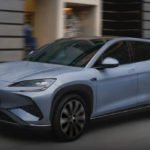 BYD Sealion 7 vs Seal Australia: Which Electric Car Should You Buy?
However, the Sealion 6 combines its rechargeable battery with a 60-litre petrol tank, allowing it to cover much longer distances between charging or refuelling stops under suitable conditions.
For long journeys across regional Australia, the Sealion 6 has an important advantage.
Electric range winner: BYD Sealion 7.
Combined driving flexibility winner: BYD Sealion 6.
BYD Sealion 7 vs Sealion 6 Fuel Consumption
The Sealion 7 does not consume petrol. Its running costs depend primarily on electricity consumption and charging prices.
The Sealion 6 offers exceptionally low official weighted fuel consumption figures when regularly charged.
| Sealion 6 variant | Claimed fuel consumption |
|---|---|
| Essential | 1.1 L/100 km |
| Dynamic Extended Range | 0.8 L/100 km |
| Premium Extended Range | 1.1 L/100 km |
However, these figures do not represent continuous driving with a depleted battery.
BYD's low-battery-state test figures are approximately 4.72 L/100 km for the Essential, 4.8 L/100 km for the Dynamic Extended Range and 5.5 L/100 km for the Premium Extended Range.
Real-world consumption may be higher, especially during motorway driving, towing or demanding journeys.
Drivers who rarely charge their Sealion 6 should not expect to consistently achieve the advertised figures below 2 L/100 km.
BYD Sealion 7 vs Sealion 6 Running Costs
Home charging can make both vehicles inexpensive to operate.
For this illustrative comparison, we assume:
- Annual driving distance: 15,000 km.
- Home electricity price: $0.30 per kWh.
- Petrol price: $1.90 per litre.
- Sealion 7 electricity consumption: 20 kWh/100 km.
- Sealion 6 electric consumption: 18 kWh/100 km.
- Sealion 6 petrol consumption in hybrid operation: 5.5 L/100 km.
| Driving scenario | Cost per 100 km | Annual energy cost |
|---|---|---|
| Sealion 7 electric driving | $6.00 | $900 |
| Sealion 6 electric driving | $5.40 | $810 |
| Sealion 6 petrol/hybrid driving | $10.45 | $1,567.50 |
| Sealion 6 with 70% electric driving | $6.92 | $1,037.25 |
These estimates exclude charging losses, servicing, insurance, registration and depreciation.
The Sealion 6 can be very economical when regularly charged. Nevertheless, the Sealion 7 eliminates petrol expenses entirely and does not require conventional engine servicing.
Owners using rooftop solar electricity could potentially reduce their charging costs further.
BYD Sealion 7 vs Sealion 6 Charging Speed
The Sealion 7 supports considerably faster charging than the Sealion 6.
| Charging specification | Sealion 7 | Sealion 6 |
|---|---|---|
| Maximum AC charging | 11 kW | 6.6 kW |
| Maximum DC charging | 150 kW | 18 kW |
| AC connector | Type 2 | Type 2 |
| DC connector | CCS2 | CCS2 |
| Vehicle-to-load | Yes | Yes |
Sealion 7 Charging
The Sealion 7's 150 kW DC charging capability makes it more suitable for electric road trips requiring regular fast-charging stops.
At home, its 11 kW onboard charger can take advantage of a compatible three-phase charging installation.
Sealion 6 Charging
Although the Sealion 6 has a much lower maximum charging speed, its smaller battery requires substantially less energy to recharge.
This makes overnight charging convenient for most daily journeys.
The petrol engine also eliminates the need to stop at a charger when the battery reaches a low state of charge.
Winner for charging speed: BYD Sealion 7.
BYD Sealion 7 vs Sealion 6 Dimensions
The Sealion 7 is longer and wider than the Sealion 6, although the Sealion 6 has a taller body.
| Dimension | Sealion 7 | Sealion 6 |
|---|---|---|
| Length | 4,830 mm | 4,775 mm |
| Width | 1,925 mm | 1,890 mm |
| Height | 1,620 mm | 1,670 mm |
| Wheelbase | 2,930 mm | 2,765 mm |
| Turning radius | 5.85 m | 5.5 m |
| Kerb weight | 2,225–2,340 kg | 1,940–2,160 kg |
The Sealion 7 is 55 mm longer and 35 mm wider. Its wheelbase is also 165 mm longer, contributing to a spacious passenger compartment.
However, the Sealion 6 has a more conventional SUV shape and a smaller turning radius, which may make it easier to manoeuvre in tight car parks.
BYD Sealion 7 vs Sealion 6 Boot Space
The Sealion 7 provides greater luggage capacity and additional storage underneath the bonnet.
| Storage area | Sealion 7 | Sealion 6 |
|---|---|---|
| Rear boot capacity | 500 litres | 425 litres |
| Front storage compartment | 58 litres | None |
| Combined front and rear storage | 558 litres | 425 litres |
Some earlier Australian publications quote 520 litres for the Sealion 7's rear boot. BYD's 2026 Australian specification brochure lists 500 litres, which is the figure used in this comparison.
The additional front storage compartment is useful for charging cables, small bags and other accessories.
The Sealion 6 remains practical for families, particularly when its rear seats are folded, increasing luggage capacity to 1,440 litres.
Winner: BYD Sealion 7.
This content may interest you!
BYD Sealion 7 vs Sealion 6 Interior and Technology
Both SUVs offer modern interiors with extensive standard equipment.
BYD Sealion 7 Interior
The Sealion 7 features a more contemporary, sporty cabin with equipment including:
- 15.6-inch rotating infotainment touchscreen.
- 10.25-inch digital instrument display.
- Panoramic glass roof.
- Heated and ventilated front seats.
- 12-speaker Dynaudio sound system.
- Apple CarPlay and Android Auto.
- Wireless smartphone charging.
- Head-up display.
- Ambient interior lighting.
- 360-degree camera.
The Performance variant adds further comfort features, including heated rear seats.
BYD Sealion 6 Interior
Depending on the variant, the Sealion 6 offers:
- Up to a 15.6-inch infotainment display.
- 12.3-inch digital instrument cluster.
- Apple CarPlay and Android Auto.
- Infinity premium sound system.
- Heated and ventilated front seats.
- Adjustable rear seat backrests.
- Dual-zone climate control.
- Wireless smartphone charging.
The Sealion 6 delivers a well-equipped family cabin, while the Sealion 7 generally offers a more premium presentation and generous standard equipment.
Winner: BYD Sealion 7.
BYD Sealion 7 vs Sealion 6 Towing Capacity
Towing capability varies considerably between models.
| Variant | Braked towing capacity |
|---|---|
| Sealion 7 Premium RWD | 750 kg |
| Sealion 7 Performance AWD | 1,500 kg |
| Sealion 6 FWD | 750 kg |
| Sealion 6 Premium AWD | 1,300 kg |
The Sealion 7 Performance offers the highest maximum towing capacity.
However, towing can significantly reduce an electric vehicle's driving range. The Sealion 6 Premium may therefore be more convenient for drivers towing trailers over long distances.
Always confirm the towing limits, towbar compatibility, vehicle payload and permitted combined mass for the specific vehicle before towing.
BYD Sealion 7 vs Sealion 6 Safety
Both vehicles have achieved five-star ANCAP safety ratings.
| ANCAP category | Sealion 7 | Sealion 6 |
|---|---|---|
| Adult occupant protection | 87% | 88% |
| Child occupant protection | 93% | 86% |
| Vulnerable road user protection | 76% | 83% |
| Safety assistance | 78% | 75% |
| Rating datestamp | 2025 | 2023 |
Both SUVs feature extensive driver assistance technology, including autonomous emergency braking, adaptive cruise control, lane departure warning, lane-keeping assistance and blind-spot monitoring.
Although both models achieved five stars, their assessments have different rating dates and should be interpreted accordingly.
BYD Sealion 7 vs Sealion 6 Reliability and Maintenance
The Sealion 7 has fewer conventional mechanical components because it does not use an internal combustion engine.
It does not require engine oil, spark plugs or conventional engine-related maintenance.
The Sealion 6 combines electric and petrol technologies, resulting in a more mechanically complex powertrain.
Both vehicles use BYD's lithium iron phosphate Blade Battery technology and offer:
- Six-year or 150,000 km vehicle warranty.
- Eight-year or 160,000 km traction battery warranty.
- Regenerative braking.
- Over-the-air software updates.
While the Sealion 7 may have advantages in mechanical simplicity, neither vehicle has accumulated enough long-term Australian ownership history to establish a definitive reliability winner.
BYD Sealion 7 vs Sealion 6: Pros and Cons
BYD Sealion 7 Pros
- Excellent acceleration.
- Fully electric driving.
- Longer electric range.
- Faster DC charging.
- More luggage capacity.
- Spacious interior.
- Premium standard equipment.
- No petrol expenses.
BYD Sealion 7 Cons
- Higher purchase price.
- Greater vehicle weight.
- Dependence on charging infrastructure.
- Limited towing capacity in the Premium variant.
- Potentially expensive replacement tyres.
BYD Sealion 6 Pros
- Lower starting price.
- Excellent long-distance flexibility.
- Petrol backup.
- Competitive electric-only range.
- Low fuel consumption when regularly charged.
- Comfortable family-oriented interior.
- Quick conventional refuelling.
BYD Sealion 6 Cons
- More complex powertrain.
- Smaller boot.
- Slower charging speed.
- Requires petrol engine maintenance.
- Higher fuel consumption when rarely charged.
Which BYD SUV Is Better for Australian Driving?
| Category | Winner |
|---|---|
| Purchase price | Sealion 6 |
| Maximum performance | Sealion 7 |
| Electric range | Sealion 7 |
| Long-distance flexibility | Sealion 6 |
| Charging speed | Sealion 7 |
| Boot capacity | Sealion 7 |
| Interior technology | Sealion 7 |
| Maximum towing capacity | Sealion 7 |
| Regional driving convenience | Sealion 6 |
| Mechanical simplicity | Sealion 7 |
| Urban manoeuvrability | Sealion 6 |
Choose the BYD Sealion 7 If:
You have reliable access to home charging, want to eliminate petrol consumption and prefer a modern electric SUV with strong acceleration, generous storage and premium technology.
The Sealion 7 Premium is particularly appealing for drivers seeking a balance between electric range, performance and purchase price.
Choose the BYD Sealion 6 If:
You frequently travel through regional Australia, want a more affordable electrified SUV or prefer the reassurance of having a petrol engine available.
The Dynamic Extended Range is particularly attractive for commuters who want substantial electric-only driving range without purchasing a fully electric vehicle.
Conclusion
The BYD Sealion 7 is the better choice for buyers seeking a fully electric SUV with stronger maximum performance, faster charging, greater storage capacity and a premium driving experience.
Meanwhile, the BYD Sealion 6 offers better purchase affordability and greater flexibility for Australian drivers who regularly travel long distances or have limited access to charging infrastructure.
We consider the Sealion 7 Premium an excellent option for households with convenient home charging, while the Sealion 6 Dynamic Extended Range represents particularly good value for drivers who want the benefits of electric motoring without giving up petrol-powered flexibility.
Ultimately, the best choice depends on your driving habits, charging arrangements, budget and travel requirements.
Frequently Asked Questions
1. Is the BYD Sealion 7 bigger than the Sealion 6?
Yes. The Sealion 7 is 55 mm longer, 35 mm wider and has a 165 mm longer wheelbase. However, the Sealion 6 is 50 mm taller.
2. Is the BYD Sealion 7 better than the Sealion 6?
The Sealion 7 is better for fully electric driving, maximum performance, charging speed and luggage capacity. The Sealion 6 is better for affordability and long-distance flexibility.
3. Which is cheaper to run, the BYD Sealion 6 or Sealion 7?
The Sealion 7 can be cheaper to operate overall when charged at home because it does not require petrol or conventional engine servicing. However, a Sealion 6 driven predominantly in electric mode can also achieve very low energy costs.
4. Can the BYD Sealion 6 run entirely on electricity?
Yes. The Sealion 6 can operate in electric mode, with claimed electric driving ranges of up to 140 km under the NEDC testing standard, depending on the variant. The petrol engine may start when additional power or other operating conditions require it.
This content may interest you!BYD Sealion 7 vs Sealion 8 Australia: Full Comparison5. Which BYD Sealion is better for long road trips in Australia?
The Sealion 6 is generally more convenient for long trips through areas with limited charging infrastructure because it can continue driving using petrol. The Sealion 7 is a strong alternative when reliable fast-charging stations are available along the route.
Leave a Reply