
Toyota Yaris Cross vs Hyundai Kona Australia: Which Small SUV Wins?

Choosing between the Toyota Yaris Cross and Hyundai Kona in Australia looks straightforward until we actually start comparing them. Both are small SUVs, both work beautifully in cities, both offer hybrid power, and both come from manufacturers with strong Australian dealer networks. Yet they approach the small-SUV formula from noticeably different directions.
The Toyota Yaris Cross is the leaner, thriftier option. Think of it as a pair of lightweight running shoes: compact, efficient and designed to make everyday movement easy. The Hyundai Kona, meanwhile, feels like someone took the small-SUV recipe and added another scoop of space, technology and personality.
For Australian buyers deciding between them, the right choice therefore isn't simply about which model is "better." It comes down to what we value: fuel economy, boot space, rear-seat room, price, equipment, urban manoeuvrability or long-term ownership.
Let's break down the Toyota Yaris Cross vs Hyundai Kona Australia comparison properly.
- Toyota Yaris Cross vs Hyundai Kona Australia at a Glance
- Exterior Size: How Much Bigger Is the Hyundai Kona?
- Toyota Yaris Cross vs Hyundai Kona Interior
- Rear-Seat Space: Hyundai Takes the Lead
- Boot Space: Yaris Cross vs Kona
- Hybrid Engines Compared
- Fuel Economy: Which Is Cheaper to Run?
- Toyota Yaris Cross AWD vs Kona FWD
- Towing Capacity
- Driving Experience
- Ride Comfort and Australian Roads
- Safety Equipment
- Technology: Kona Wins Comfortably
- Styling: Conservative Toyota or Futuristic Hyundai?
- Price in Australia
- Yaris Cross Variants in Australia
- Hyundai Kona Variants in Australia
- Warranty and Ownership
- Toyota Yaris Cross vs Hyundai Kona for City Driving
- Toyota Yaris Cross vs Hyundai Kona for Families
- Which Is Better for Long Highway Trips?
- Which Has Better Resale Potential?
- Which One Feels Like Better Value?
- Toyota Yaris Cross Pros and Cons
- Hyundai Kona Pros and Cons
- Toyota Yaris Cross vs Hyundai Kona: Our Verdict
- Final Thoughts
- Frequently Asked Questions
Toyota Yaris Cross vs Hyundai Kona Australia at a Glance
Before digging deeper, here's how the two broadly stack up.
| Category | Toyota Yaris Cross | Hyundai Kona |
|---|---|---|
| Vehicle type | Small SUV | Small SUV |
| Length | Approx. 4,180 mm | Approx. 4,350 mm |
| Hybrid system | 1.5L three-cylinder hybrid | 1.6L four-cylinder hybrid |
| Hybrid output | 85 kW combined | 104 kW combined |
| Hybrid fuel consumption | 3.8L/100km 2WD | 3.9L/100km |
| AWD availability | Yes, selected hybrid grades | Not on Kona Hybrid |
| Boot capacity | Up to 390L 2WD | 407L |
| Kona petrol option | No conventional petrol-only Yaris Cross currently | Yes |
| Electric version | No | Yes |
| Character | Efficient, compact, simple | Roomier, tech-focused, stronger |
Toyota's official May 2026 specifications list the Yaris Cross hybrid at 85kW combined, with official combined fuel consumption of 3.8L/100km for 2WD and 4.0L/100km for AWD. Its maximum VDA cargo capacity is listed at 390 litres for 2WD versions and 314 litres for AWD models.
Hyundai lists its Kona Hybrid at 104kW and 265Nm, with official combined consumption of 3.9L/100km. Hyundai also quotes 407 litres of cargo capacity, expanding to 1,241 litres with the second row folded.
So already we can see the personalities forming: Toyota has the fuel-economy and AWD cards, while Hyundai counters with power and practicality.
Exterior Size: How Much Bigger Is the Hyundai Kona?
The size difference matters more than it first appears.
The Yaris Cross measures roughly 4.18 metres long, while the current Kona stretches to around 4.35 metres. The Hyundai also has a substantial 2,660mm wheelbase.
That makes the Kona about 17cm longer.
Seventeen centimetres doesn't sound dramatic when we're looking at numbers on a screen. In a tight Melbourne parking garage or narrow Sydney street, though, it can feel significant.
Yaris Cross Is Easier to Place in the City
The Toyota's smaller footprint gives it an obvious urban advantage.
It feels more like a tall city hatchback than a conventional SUV, which makes it particularly appealing for:
- crowded inner-city streets;
- tight underground parking spaces;
- frequent supermarket runs;
- commuters who rarely carry multiple adults;
- drivers moving up from cars such as the Yaris or Corolla.
The Kona remains compact by SUV standards, but it occupies noticeably more road.
Kona Uses Its Extra Size Wisely
The reward comes inside.
Hyundai has turned those extra exterior dimensions into greater cabin flexibility, particularly in the second row and cargo area.
If we regularly carry adult passengers, kids in bulky child seats, sports equipment or luggage, that additional room becomes more valuable than shaving a few centimetres off the exterior.
Toyota Yaris Cross vs Hyundai Kona Interior
Walk into these two SUVs and we're greeted by completely different philosophies.
Toyota keeps things relatively conservative. Controls are straightforward, the driving position is familiar, and the general impression is functional rather than flashy.
Hyundai has gone much harder on presentation.
Its futuristic dashboard, broad digital displays and horizontal cabin design make the Kona feel like the newer-generation vehicle.
Kona Has the More Impressive Dashboard
Hyundai offers a 12.3-inch multimedia display, while selected variants feature dual 12.3-inch displays spanning the driver's instrument area and infotainment system. Hyundai also offers Bluelink connected services and over-the-air software-update capability.
Sit inside the Kona immediately after the Toyota and it's rather like swapping a dependable digital watch for a smartwatch.
Both tell us what we need to know. One simply looks much more ambitious while doing it.
Yaris Cross Keeps Things Simple
Toyota's GX includes an 8-inch display with wireless Apple CarPlay and Android Auto, while higher grades add extra comfort and technology features.
It doesn't produce the same showroom "wow" as the Kona, yet some buyers may actually prefer this restrained approach.
Why?
Because technology should make a car easier to use, not turn changing a setting into a treasure hunt.
Toyota's relatively simple layout is easy to understand quickly, and that can be surprisingly refreshing.
Rear-Seat Space: Hyundai Takes the Lead
If passengers regularly occupy the rear seats, we'd lean toward the Kona.
Its 2,660mm wheelbase and broader body give it better potential as a small family SUV. Adults have more breathing room and the second row feels less compromised.
The Yaris Cross remains a genuine five-seat vehicle, but it is unmistakably a compact one.
Who Should Choose the Toyota?
For a couple, solo driver or small family where the back seats are used occasionally, the Toyota's rear accommodation is unlikely to be a deal-breaker.
But load four adults into both cars and the Kona's advantage becomes clearer.
That makes Hyundai particularly attractive to buyers wanting one small SUV to cover both weekday commuting and weekend family duty.
Boot Space: Yaris Cross vs Kona
Boot capacity is another Hyundai win—but there's an interesting Toyota detail worth knowing.
Hyundai quotes 407 litres behind the rear seats and up to 1,241 litres with them folded.
Toyota lists the Yaris Cross at up to 390 litres in 2WD configuration, but just 314 litres for AWD versions.
Why Does the AWD Toyota Lose Boot Space?
Packaging.
The AWD hybrid hardware occupies space that would otherwise contribute to cargo capacity.
This creates an important buying decision. We might choose the Toyota precisely because it offers AWD—but doing so also means accepting a smaller boot.
For Maximum Practicality
The order is fairly simple:
Kona > Yaris Cross 2WD > Yaris Cross AWD
If prams, suitcases, camping equipment or a weekly Costco-style grocery haul regularly appear in the boot, the Kona is the more convincing package.
Hybrid Engines Compared
This is where the contest becomes particularly interesting.
Toyota has enormous experience with hybrid powertrains, and the Yaris Cross uses a 1.5-litre three-cylinder Toyota Hybrid Electric System producing 85kW combined.
The Kona Hybrid instead combines a 1.6-litre petrol engine, electric motor and six-speed dual-clutch transmission, producing 104kW and 265Nm.
Toyota Prioritises Efficiency
The Yaris Cross isn't trying to pin us against the seat.
Power delivery is adequate rather than exciting, and the hybrid system is happiest in suburban traffic where low-speed electric assistance can shine.
What matters more is how little fuel it uses.
Toyota quotes 3.8L/100km in 2WD form and 4.0L/100km with AWD.
That's excellent.
Kona Offers More Muscle
The Kona Hybrid's 104kW output gives it a meaningful advantage over the Toyota.
That extra power should be appreciated when:
- joining fast motorways;
- overtaking on country roads;
- travelling with four passengers;
- climbing long hills;
- carrying a loaded boot.
Hyundai quotes 3.9L/100km, meaning its official economy remains remarkably close to the Toyota despite providing substantially more output.
Fuel Economy: Which Is Cheaper to Run?
If we're comparing hybrid against hybrid, the difference on paper is tiny.
Yaris Cross 2WD: 3.8L/100km.
Kona Hybrid: 3.9L/100km.
Over 15,000km, using those laboratory figures, that's only around 15 litres of petrol separating them.
In real driving, traffic, tyres, temperature, hills and driving style could easily erase that difference.
Toyota Still Has the Efficiency Edge
We'd technically award Toyota the fuel-economy win, especially for dense urban use.
But anyone assuming the Kona Hybrid is dramatically thirstier may be surprised.
It's essentially giving us more performance and more space while remaining in the same fuel-economy neighbourhood.
That's impressive.
This content may interest you!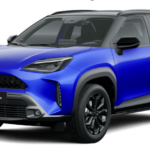 Toyota Yaris Cross vs RAV4 Australia: Which Toyota SUV Should We Buy?
Toyota Yaris Cross AWD vs Kona FWD
Here's one capability where Hyundai doesn't have an answer within the Kona Hybrid range: all-wheel drive.
Toyota offers electric AWD on selected Yaris Cross grades.
This does not transform the Toyota into a LandCruiser in hiking boots, of course.
Still, AWD can provide extra confidence on loose gravel, slippery roads, wet grass and some rural surfaces.
Do Australian Buyers Really Need AWD?
For most city users, probably not.
Front-wheel drive is perfectly suitable for routine driving.
But owners living around regional roads, frequently visiting snow country, travelling to country properties or encountering poor surfaces may appreciate Toyota's additional driven axle.
It's a genuine point of difference.
Towing Capacity
Toyota lists the Yaris Cross at 400kg braked and 400kg unbraked, excluding the 2WD GR Sport from towing.
The Kona Hybrid has historically been rated substantially higher, with Hyundai citing a 1,300kg braked towing capacity for the hybrid powertrain.
For buyers who genuinely intend to tow, the difference is enormous.
We wouldn't purchase either model primarily as a towing vehicle, but the Kona is far more versatile if a small trailer is part of the lifestyle.
Always check the specific current variant's compliance plate and official documentation before towing, as model-year specifications can change.
Driving Experience
Numbers don't tell us everything.
The Toyota feels light, nimble and designed around effortless urban driving. Its small dimensions help it dart through traffic like a scooter weaving through a bicycle rack—quick to place, easy to judge and rarely intimidating.
Its hybrid CVT-style drivetrain favours smoothness and efficiency.
Kona Feels More Substantial
The Kona has the broader, more mature character.
Its longer wheelbase and larger body contribute to the feeling that we're driving something half a class larger.
The hybrid's conventional six-speed dual-clutch transmission also gives acceleration a different character from Toyota's continuously variable hybrid arrangement.
Drivers who prefer a more traditional sensation of gears changing may favour the Hyundai.
Ride Comfort and Australian Roads
Australian roads can move from smooth motorway to scarred suburban asphalt in the space of one intersection.
Here, wheel size matters.
Larger wheels may look fantastic but typically come with lower-profile tyres, and those can expose more road imperfections.
The exact ride quality therefore depends significantly on the variant.
Don't Judge Only by the Top-Spec Model
This is one of our strongest recommendations.
If you're buying a lower or mid-range Yaris Cross, don't test-drive only an Urban or GR Sport.
Likewise, don't drive a heavily optioned Kona N Line and assume the regular Kona will feel identical.
Wheel-and-tyre packages, suspension tuning and equipment affect the experience.
Test the grade you genuinely intend to buy.
Safety Equipment
Both manufacturers load these vehicles with modern driver-assistance systems.
The Yaris Cross offers Toyota Safety Sense, plus features such as Blind Spot Monitor and reversing-camera technology, while its current range includes a strong suite of active-safety assistance.
Hyundai equips the Kona range with SmartSense technologies and seven airbags, including a front-centre airbag. Available systems across the range include collision avoidance, lane assistance and higher-end monitoring functions.
Which Has Better Safety Tech?
Rather than declare an easy winner, we'd compare grades.
The basic question isn't "Does the Kona have feature X?"
It's "Does the Kona grade at my budget have feature X, and does the equivalent Yaris Cross have it?"
Safety equipment can vary substantially through a model range.
Technology: Kona Wins Comfortably
For people who judge interiors partly by their screens, Hyundai is going to be difficult to resist.
The Kona's big-display layout, Bluelink connectivity and available dual 12.3-inch setup give it a noticeably more contemporary atmosphere.
Toyota covers the essentials, including wireless smartphone integration, but doesn't feel as digitally ambitious.
But More Technology Isn't Automatically Better
This depends on the owner.
Some of us want huge displays, connected-car functions and visual drama.
Others want to start the engine, connect the phone and drive home without studying a digital ecosystem.
The Kona wins the specification battle.
The Toyota may win the simplicity battle.
Styling: Conservative Toyota or Futuristic Hyundai?
The Yaris Cross follows Toyota's familiar compact-SUV language: muscular arches, short proportions and enough rugged styling to separate it from the regular Yaris.
The Kona goes in another direction entirely.
Its horizontal lighting and sharply sculpted exterior give it an almost EV-like appearance even when it's running a petrol-hybrid drivetrain.
Kona Is the Attention Seeker
If we want a small SUV that looks modern and unusual, Hyundai is the obvious pick.
Yaris Cross Is Easier to Ignore—and That's Fine
Toyota's styling is less adventurous, but subtle designs can age gracefully.
What looks spectacular today can sometimes look tied to a specific era five years later.
The Toyota is visually safer.
Whether that's praise or criticism depends on us.
Price in Australia
Pricing requires care because drive-away offers, state charges and promotional campaigns change.
Current 2026 pricing data puts the Yaris Cross range broadly from the mid-$30,000s upward, depending on grade and drivetrain. CarExpert currently lists 2026 Yaris Cross pricing from approximately $35,565 to $43,949 in its pricing database, while Carsales shows grade-dependent indicative drive-away figures.
Hyundai is currently advertising the petrol Kona from $35,990 drive-away and the Kona Hybrid from $39,990 drive-away for eligible vehicles under its current promotional terms.
Compare Drive-Away Price, Not Just List Price
This sounds obvious, but it saves headaches.
Dealer delivery, registration, stamp duty, metallic paint, accessories and promotions can dramatically change the real-world gap.
Ask both dealers one question:
"What is the total amount I need to transfer to drive this exact car away?"
That's the figure worth comparing.
Yaris Cross Variants in Australia
The current Toyota range includes grades such as:
- GX;
- GXL;
- Urban;
- GR Sport.
Both 2WD and AWD configurations are available across selected grades.
The GX gives us the sensible entry point, while Urban pushes further into comfort and equipment. GR Sport adds its own visual and suspension treatment.
Hyundai Kona Variants in Australia
The Kona range is broader because Hyundai offers multiple powertrain strategies.
Australian customers can choose among:
This content may interest you!Toyota Yaris Cross vs Renault Captur Australia: Which Small SUV Wins?- conventional petrol;
- hybrid;
- electric;
- selected N Line configurations.
Hyundai currently markets the Kona, Kona Hybrid and Kona Electric as distinct choices within the same family.
That's something Toyota cannot match with the Yaris Cross alone.
Hyundai Gives Buyers More Powertrain Choice
Want a relatively affordable petrol SUV? Kona.
Want a hybrid? Kona.
Want to eliminate petrol entirely? Kona Electric.
Toyota makes the Yaris Cross decision simpler: it's fundamentally a hybrid-focused proposition.
Warranty and Ownership
Warranty coverage is another important consideration.
Hyundai currently provides a standard five-year unlimited-kilometre new-car warranty, with eligible passenger vehicles first registered from June 1, 2025 able to receive coverage of up to seven years/unlimited kilometres when servicing conditions are met through authorised Hyundai dealers. Hybrid and EV high-voltage batteries receive an eight-year/160,000km warranty under Hyundai's terms.
Toyota ownership remains attractive largely because of the brand's extensive Australian dealer footprint and long-established hybrid ecosystem.
When comparing ownership costs, though, we'd request actual capped-price servicing quotes for the exact vehicles rather than making assumptions based purely on brand reputation.
Toyota Yaris Cross vs Hyundai Kona for City Driving
For dense city use, Toyota has a compelling case.
It's shorter, extremely economical and easy to manoeuvre.
If our typical journey consists of school drop-offs, commuting, shopping centres and crowded residential streets, the Yaris Cross feels tailor-made for the job.
City Winner: Toyota Yaris Cross
The Kona isn't difficult to drive in town, but the Toyota's smaller footprint is an asset we notice every day rather than once a month.
Toyota Yaris Cross vs Hyundai Kona for Families
Now reverse the priorities.
A growing family normally benefits more from rear-seat space, a bigger boot and greater power than from saving a few centimetres in a car park.
That's Kona territory.
Family Winner: Hyundai Kona
Its 407L boot, roomier body and additional hybrid performance make it a stronger all-round family proposition.
If we're fitting rear-facing child seats, we'd take those seats to the dealership and physically test them in both cars before buying.
Nothing exposes cabin packaging faster.
Which Is Better for Long Highway Trips?
We'd choose the Kona.
The Yaris Cross can certainly handle motorway journeys, but the Hyundai's extra size, performance and cabin space make it feel better suited to repeated long-distance work.
Travelling from Sydney to Canberra with passengers?
Kona.
Driving mostly from Fitzroy to Melbourne CBD?
Yaris Cross.
Context changes the winner.
Which Has Better Resale Potential?
Toyota traditionally carries an exceptionally strong reputation in Australia, and hybrid Toyotas are familiar products in the used-car market.
That familiarity could work in the Yaris Cross's favour.
Still, predicting future resale percentages with precision is dangerous. Supply, fuel prices, interest rates, new-vehicle pricing and consumer demand can all reshape residual values.
We'd therefore treat potential resale strength as a Toyota advantage—but not as a guaranteed financial return.
Which One Feels Like Better Value?
This question depends strongly on grade.
Toyota's value proposition revolves around efficiency, compactness and a proven hybrid-focused package.
Hyundai's revolves around space, equipment and performance.
If similarly priced hybrid grades are sitting next to each other, the Kona often gives us more car physically.
The Yaris Cross gives us less car to manage.
That's a surprisingly useful distinction.
Buy the Yaris Cross If We Value Minimalism
It makes sense when we want:
- very low fuel consumption;
- a compact footprint;
- available AWD;
- simple everyday driving;
- Toyota's familiar hybrid formula.
Buy the Kona If We Want Maximum Capability Per Square Metre
It makes sense when we want:
- better rear-seat space;
- a larger boot;
- stronger hybrid performance;
- more advanced cabin technology;
- higher towing capability;
- multiple powertrain choices.
Toyota Yaris Cross Pros and Cons
Pros
The Yaris Cross is exceptionally fuel efficient, easy to manoeuvre, available with AWD and cleverly packaged for its compact dimensions. Its hybrid system also suits stop-start urban environments particularly well.
Cons
The cabin isn't as spacious or dramatic as the Kona's, hybrid output is comparatively modest, and AWD versions sacrifice a substantial amount of boot capacity.
Hyundai Kona Pros and Cons
Pros
The Kona provides more interior space, more hybrid power, stronger technology, greater cargo capacity and substantially better towing ability. Hyundai also gives buyers petrol, hybrid and electric options.
Cons
It's larger than the Toyota, the hybrid lacks AWD and upper specifications can push pricing well beyond the territory many buyers associate with a "small" SUV.
Toyota Yaris Cross vs Hyundai Kona: Our Verdict
So, which one should Australians buy?
For urban efficiency, we'd choose the Toyota Yaris Cross.
For overall versatility, we'd choose the Hyundai Kona.
That distinction matters.
The Yaris Cross succeeds because it doesn't pretend to be a medium SUV. It's compact, frugal and uncomplicated. For one or two people who spend most of their lives around metropolitan Australia, that might be exactly what we need.
The Kona stretches the definition of a small SUV further. It gives us extra cabin room, stronger hybrid performance, better cargo space and a much more tech-heavy interior without destroying fuel economy.
If the prices of the two hybrid grades we're considering are reasonably close, we think the Kona Hybrid offers the stronger all-round package.
However, the Toyota remains the smarter choice for buyers who value compact dimensions, ultimate fuel efficiency or AWD availability.
Neither wins every category.
And that's what makes this comparison interesting.
Final Thoughts
The Toyota Yaris Cross vs Hyundai Kona Australia battle isn't really efficiency versus inefficiency, because both hybrids are remarkably frugal.
It's simplicity versus versatility.
Toyota gives us a compact city SUV that feels as though every unnecessary kilogram and centimetre has been trimmed away. Hyundai gives us a roomier, stronger and more technologically ambitious SUV that almost steps into the next size category.
Our final shortlist would look like this:
Choose the Toyota Yaris Cross if city manoeuvrability, low fuel consumption and available AWD matter most.
Choose the Hyundai Kona if passenger space, boot capacity, technology and stronger performance carry greater weight.
For the broadest range of Australian households, the Kona Hybrid is our overall winner.
For pure urban efficiency, however, the Yaris Cross remains extremely difficult to beat.
Frequently Asked Questions
1. Is the Toyota Yaris Cross bigger than the Hyundai Kona?
No. The Hyundai Kona is larger. It measures approximately 4,350mm long, compared with roughly 4,180mm for the Yaris Cross. The Hyundai's additional dimensions contribute to better passenger and cargo room.
2. Which is more fuel efficient, Yaris Cross or Kona Hybrid?
Officially, the Toyota Yaris Cross 2WD hybrid has a slight advantage at 3.8L/100km versus 3.9L/100km for the Kona Hybrid. The Yaris Cross AWD is rated at 4.0L/100km. Real-world results will vary.
3. Which has more boot space, Toyota Yaris Cross or Hyundai Kona?
The Hyundai Kona has the advantage with 407 litres of quoted VDA boot capacity. Toyota lists up to 390 litres for the Yaris Cross 2WD and 314 litres for AWD versions.
4. Can you get AWD on the Hyundai Kona Hybrid in Australia?
The current Australian Kona Hybrid is front-wheel drive. Toyota offers electric AWD on selected Yaris Cross hybrid grades, making Toyota the stronger choice if AWD is a priority.
This content may interest you!Toyota Yaris Cross vs Corolla Cross Australia: Which Toyota SUV Should We Buy?5. Is the Yaris Cross or Kona better for a family?
We'd generally choose the Hyundai Kona for families because it provides more cabin space, a bigger boot and stronger hybrid performance. The Toyota Yaris Cross remains an excellent alternative for smaller families who spend most of their time driving in congested urban areas.
Leave a Reply