Renault Captur warning symbols tell us about mechanical faults, safety reminders and features currently operating. The quickest way to interpret one is to match its shape with its colour, flashing behaviour and accompanying message. A red STOP warning requires a very different response from a green ECO indicator or the normal engine-standby symbol.
This guide explains 28 common Captur warning-symbol illustrations, with their meanings and practical next steps. We cover the spanner light, engine warning, tyre-pressure alert, brake warnings and the status indicators that are easy to mistake for faults.
Vehicle note: the guide focuses on common European Renault Captur symbols, using the Captur II handbook as the main reference. Earlier Captur models, diesel versions, LPG models and E-Tech hybrids can have different equipment and displays. The illustrations are representative monochrome artwork, so read the stated colour and your vehicle’s message. This is not a complete list of every warning on every Captur.
What do Renault Captur warning light colours mean?
Colour or behaviour
What it usually tells us
Red
An urgent fault or safety condition. Oil pressure, overheating and brake faults need immediate attention; seat-belt and parking-brake reminders can also be red.
Orange or amber
A fault, low level, disabled system or operating limitation. Read the message to decide the appropriate response.
Green, blue or white
Usually information about an active function, a selected setting or system status.
Flashing
Its meaning depends on the system. Flashing stability control can be normal intervention, while a flashing engine light needs prompt attention.
Several lamps illuminate briefly when we switch on the ignition. That self-check is different from a lamp remaining on after starting or appearing while driving. We should pay particular attention to a new beep, an unfamiliar message or a change in braking, steering or engine performance.
STOP, oil, temperature and other urgent warnings
STOP warning light
Red — urgent stop instructionThe STOP symbol appears with another warning light or message when the car detects a serious condition. It tells us what action to take, while the accompanying message helps identify the affected system.What to do: stop as soon as traffic conditions allow, switch off the engine and do not restart it. Contact roadside assistance or an approved repairer. Do not continue just because the car still seems to drive normally. Once safely parked, note the full message for the person diagnosing the fault.
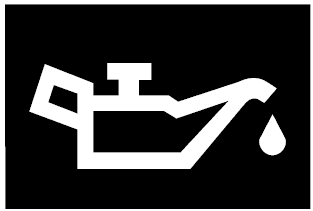
Engine oil pressure warning
Red — oil canThis symbol concerns engine oil pressure, not simply the date of the next oil change. If it appears while driving, particularly with STOP and a beep, the engine may not be receiving adequate lubrication.What to do: stop safely and switch off immediately. Check the oil level according to the handbook when safe. If the level is correct, the warning still needs investigation; correct oil quantity does not guarantee correct pressure. Avoid restarting or driving to see whether the lamp clears.
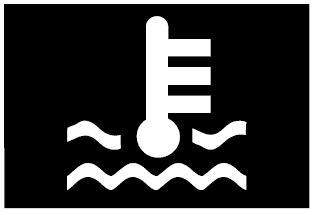
Coolant temperature warning
Blue when cold on equipped models; red when too hotThe thermometer above waves refers to engine coolant temperature. A blue indication can be normal after a cold start. A red indication needs attention and should not be confused with the blue main-beam headlight symbol.What to do: stop safely. For an isolated red temperature warning, Renault describes idling for a minute or two to see whether the temperature falls; switch off if it does not. If STOP, steam or severe symptoms are present, switch off immediately. Never remove the coolant cap while hot.
Brake circuit warning light
Red — exclamation mark inside a circleA brake-circuit warning during driving can indicate low brake fluid or a braking-system fault. With STOP and a beep, Renault instructs us to stop as soon as conditions allow. It is separate from the parking-brake status symbol on equipped versions.What to do: stop safely and seek assistance. Do not continue with a soft pedal, reduced braking or an unresolved red brake warning. Fluid loss needs a cause identified; topping up the reservoir does not establish that the car is safe to drive.
Battery charging warning
Red — battery symbolThe battery lamp reports a problem in the charging or electrical circuit when it appears during driving. It does not automatically mean the battery itself is the failed part. The handbook links a warning accompanied by STOP and a beep to an electrical overload or discharge.What to do: follow STOP immediately if displayed: pull over, switch off and obtain assistance. Have the electrical system tested rather than replacing a battery on the basis of the symbol alone. Petrol, diesel and hybrid charging arrangements can differ.
Power-assisted steering warning
Steering wheel warning — urgency follows the accompanying messageThis light can indicate a problem with the power-assisted steering system. Steering effort may increase, making low-speed manoeuvres particularly difficult. On the referenced Captur, an appearance with STOP means a system fault requiring the stop instruction to be followed.What to do: keep control, stop safely and seek assistance when steering changes or STOP appears. Do not switch off the ignition while the car is moving. We should not attempt an unrelated steering reset from another model without checking the correct handbook.
Parking brake applied indicator
Red — P inside a circle; manual/electronic system dependentThis symbol normally confirms that the parking brake is applied. It can also accompany an electronic parking-brake warning, depending on the version and message. A simple applied-brake indication is not the same as a fault in the main braking circuit.What to do: release the parking brake correctly before driving. If it will not release, do not force the vehicle to move. If it cannot secure the vehicle, hold the footbrake and arrange help. Follow any instruction to apply the brake manually before leaving the car.
Airbag system warning
Usually red — seated person and airbagThe airbag lamp should illuminate during the normal ignition check and then go out. If it does not appear during its expected check or stays on with the engine running, the restraint system needs attention.What to do: arrange prompt professional diagnosis. We cannot assume airbags and related restraint functions will operate correctly until the fault is resolved. Avoid probing airbag wiring or repeatedly clearing the warning. The passenger airbag ON and OFF lamps described later are separate status indications.
Seat belt reminder
Red — seat belt symbolThis light reminds us that a monitored seat belt is not fastened. Depending on the model, a chime and a seating-position display may identify the affected occupant. It is a safety reminder rather than proof of an engine fault.What to do: secure every occupant correctly before moving. If the reminder seems wrong, stop and check the buckles and any luggage resting on a monitored seat. A persistent alert with belts correctly fastened needs investigation instead of a buckle bypass or other workaround.
Orange warning symbols that need checking
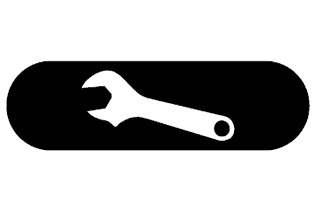
Spanner warning light
Orange — general warning or service-related indicationThe spanner tells us to pay attention to the accompanying information. It may appear with another warning or a message directing a check. It should not automatically be dismissed as a harmless oil-change reminder.What to do: read the complete display. Renault advises very careful driving to an approved repairer as soon as possible for this warning, provided no stop instruction or serious symptoms override that advice. If the display refers to scheduled servicing, check the service record and due interval before resetting a counter.
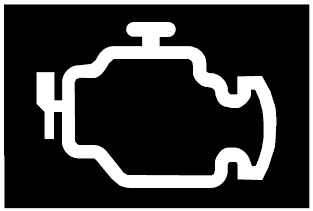
Engine management and emissions warning
Orange — engine-shaped lampRenault may call this the toxic fume filter system warning. It concerns engine or emissions control and is not a direct diagnosis of a clogged particulate filter. A steady warning and a flashing warning need different responses.What to do: have a steady light checked promptly. If it flashes, reduce engine speed until flashing stops and contact a repairer as soon as possible, as Renault advises. Stop safely if flashing persists with rough running, major power loss, overheating or another urgent warning. Avoid hard acceleration.
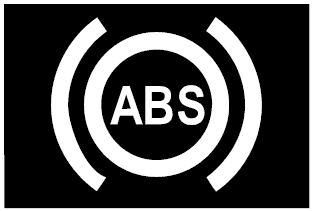
ABS warning light
Orange — anti-lock braking systemAn ABS warning that remains on while driving indicates a problem with anti-lock assistance. With an ABS-only fault, conventional braking may remain available, but the anti-lock function may not prevent wheel lock during a hard stop.What to do: allow extra stopping distance and arrange diagnosis. If STOP, the red brake light or abnormal pedal behaviour accompanies it, stop safely instead of relying on the ABS-only explanation. We should interpret combinations of brake warnings more cautiously than a single amber lamp.
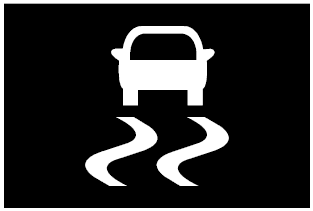
ESC and traction control warning
Orange — car with skid marksFlashing can mean the stability or traction system is intervening to help control wheelspin or vehicle movement. A persistent light, especially with a fault message, can mean the system is no longer providing its normal assistance.What to do: ease off the accelerator and adapt speed to the conditions when the light flashes during intervention. If it stays on, read the message and arrange a check. Good tyres and appropriate speed still matter; electronic stability control cannot create grip where little is available.
ESC or traction control unavailable indicator
Orange — OFF or non-availability indication; design variesThis symbol indicates that the relevant stability or traction function is unavailable or disabled. The exact display and available settings depend on the Captur version. It differs from normal flashing while the system actively intervenes.What to do: read the accompanying message and check whether a setting explains the indication. Do not assume every Captur has the same switch or reactivation procedure. If the function remains unavailable or a fault is reported, have it checked and allow for reduced assistance while arranging the repair.
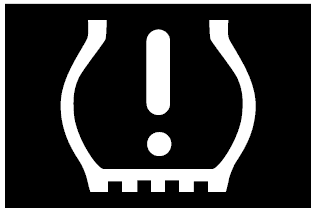
Tyre pressure warning
Orange — tyre outline with an exclamation markThis light concerns tyre pressure or the monitoring system. A message may distinguish low pressure, a puncture or a sensor/system problem. A tyre that looks normal from outside may still be significantly under-inflated.What to do: slow down without harsh braking, stop safely and inspect the tyres. Measure all cold pressures against the vehicle label. Repair a puncture or investigate repeated pressure loss before resetting anything. Follow your Captur’s exact reinitialisation procedure only after the pressures have been corrected.
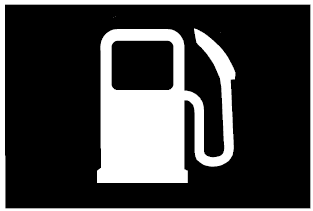
Low fuel warning
Orange — fuel pump symbolThe fuel pump warning means the usable fuel reserve is low. Although a handbook may quote an approximate remaining range, that figure is not a guarantee. Traffic, hills, load and driving style can shorten the distance available.What to do: refuel promptly. On a model with more than one energy source, identify which fuel or battery indication is being shown rather than treating every low-level alert alike. An E-Tech or LPG display should be interpreted using the instructions for that powertrain.
Diesel and particulate-filter symbols
We need to identify the engine before following exhaust-system advice. Diesel preheating does not apply to petrol models, and a filter-cleaning procedure for one engine should not be used as a universal Captur warning-light reset.
Diesel preheating light
Orange — glow plug coil; diesel onlyThis coil-shaped indicator normally appears when the diesel preheating system is working before the engine starts. It goes out when preheating is complete, according to the normal starting sequence for the vehicle.What to do: follow the handbook’s starting instructions. A brief pre-start appearance is not a fault. If starting becomes difficult, the light behaves abnormally or another warning appears, arrange diagnosis. The coil symbol alone does not establish that all glow plugs need replacing.
Particulate filter warning
Orange — exhaust filter; equipped enginesA dedicated particulate-filter warning relates to the exhaust filter system. Depending on the engine, a specified driving procedure may help cleaning, but petrol and diesel instructions can differ. Additional messages can indicate that workshop intervention is required instead.What to do: follow the exact message and engine-specific handbook. Do not attempt a generic motorway run with STOP, an engine-damage warning, overheating or severe running problems. If the permitted procedure does not clear the warning, arrange a check rather than repeating it indefinitely.
Normal operating and passenger airbag indicators
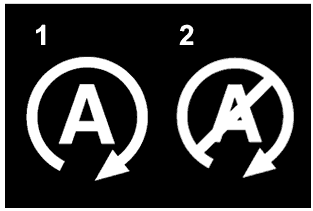
Engine standby and standby unavailable symbols
A with circular arrow; crossed-out version means unavailableIn this illustration, the normal A symbol on the left indicates engine standby under Stop & Start. The crossed-out symbol on the right indicates that standby is unavailable. Battery condition, temperature and other operating requirements can prevent an automatic stop without indicating a fault.What to do: distinguish an unavailable condition from an explicit system-fault message. Arrange a check if a fault is reported. Before leaving the car or working under the bonnet, switch the vehicle off properly; an automatic engine stop is not a full shutdown.
ECO mode indicator
Usually green — ECO mode activeThe ECO indication confirms that the economy driving mode is selected. It is a normal operating status, not a warning about engine damage. The effect on vehicle response depends on the model and powertrain.What to do: check the selected driving mode if the vehicle feels different from its usual response. We should not explain away severe power loss, shaking or another warning as ECO mode. Those symptoms still need to be assessed on their own merits.
Passenger airbag OFF indicator
Passenger airbag deactivated — status indicationThis light confirms that the front passenger airbag is disabled. It is separate from the main airbag-system fault lamp. The correct setting depends on the occupant and child-restraint arrangement.What to do: verify the status before using the seat. Never put a rear-facing child seat in front of an active front airbag. Follow both the vehicle handbook and child-seat instructions. If the displayed setting is unexpected, resolve it before carrying a passenger in that position.
Passenger airbag ON indicator
Passenger airbag activated — status indicationThe ON indication confirms the enabled status of the front passenger airbag according to the vehicle’s display sequence. It is not a general statement that every part of the restraint system is free from faults.What to do: make sure the setting suits the occupant. Read the handbook before interpreting how long the ON indicator remains visible. If the status conflicts with the intended setting or an airbag fault lamp is also on, have the system checked.
Lighting and direction-indicator symbols
Dipped beam headlight indicator
Green — dipped headlights onThis symbol confirms that dipped-beam headlights are operating. It is a normal lighting indication. Do not confuse it with daytime running lights, which do not necessarily provide the same lighting coverage.What to do: select appropriate lights for visibility and road conditions. If the road remains poorly illuminated, inspect the exterior lamps once safely parked. A dashboard status indicator tells us the selected function, but we should still investigate a suspected lamp or lighting-system problem.
Main beam headlight indicator
Blue — main beam onThe blue headlamp symbol means the main beams are on. It is different from the blue coolant-temperature indicator that can appear while the engine is cold.What to do: dip the headlights when main beam could dazzle oncoming or preceding traffic. If the blue lamp stays on unexpectedly, check the stalk position when safe. Monitoring this symbol helps us avoid leaving main beam selected after an unlit stretch of road.
Automatic main beam indicator
Automatic lighting status — equipped versionsThe headlamp with an A relates to automatic main-beam operation. Its presence does not mean main beam must be illuminated continuously; the system can change beam according to operating conditions. The separate blue lamp identifies actual main-beam use.What to do: continue watching other traffic and intervene when necessary. Poor visibility, unusual road layouts or obscured detection areas can limit automatic operation. We remain responsible for choosing lighting that does not dazzle other road users.
Rear fog light indicator
Orange — rear fog lamp selectedThis is a normal status lamp, despite its orange colour. It confirms that the bright rear fog light is switched on. It should not be mistaken for an engine or brake-system fault.What to do: use the rear fog lamp only when conditions and local rules call for it, and turn it off when visibility improves. Leaving it on unnecessarily can dazzle following drivers and make changes in brake-light intensity harder to notice.
Side light indicator
Green — side lights selectedThis symbol identifies the side-light setting. It confirms a lighting function rather than warning that a lamp has failed. The precise shape and display location can vary by instrument panel.What to do: make sure the chosen lighting is adequate for the road. Side lights are not a substitute for dipped headlights when we need to illuminate our path. Check the actual lighting conditions rather than treating any green dashboard light as proof that the correct beam is on.
Turn signals and hazard warning indicators
Green flashing arrowsA direction arrow flashes when a turn signal is selected. Both sides flash with the hazard warning lights. This is normal signalling activity, not a powertrain warning.What to do: cancel indicators after the manoeuvre and investigate an unusual flash pattern or suspected exterior-lamp failure. Check the lights while parked safely. During a breakdown, use the hazard warning lights as appropriate while following the roadside safety instructions for the location.
What do “Check injection” and “Check anti-pollution system” mean?
These messages describe a detected problem in a monitored system; they do not identify the exact part to replace. A message mentioning injection does not prove that an injector has failed. The accompanying warning lamps, stored diagnostic information and engine symptoms are needed to narrow down the cause.
We should arrange diagnosis for an unresolved message rather than buy a sensor based on its wording. If STOP or an engine-damage warning appears, follow the stop instruction. A message that disappears after restarting still deserves attention if it returns or the vehicle runs abnormally.
Why do several Captur warning lights appear together?
One fault can affect several related systems. For example, a loss of information used by driver-assistance functions can produce more than one warning. However, multiple lights do not prove that the battery is responsible, and we should not assume that every illuminated system has a separate failed component.
Deal with the most urgent warning first. Once stationary, photograph the full display and note the conditions: starting, braking, accelerating or driving over a rough surface. That record helps a workshop distinguish the original fault from secondary warnings. Do not use a phone to document the dashboard while driving.
Captur E-Tech, LPG and driver-assistance warnings
Captur powertrains do not all share the same warning set. E-Tech versions add hybrid-system and energy-status information. LPG versions can have separate fuel indications, while equipped diesels may display reagent or AdBlue information. Those messages need the handbook for the exact powertrain, especially if they mention a restart restriction or a required stop.
Newer equipped cars also report lane-assistance and active-emergency-braking availability. Read whether the system is disabled, temporarily unavailable or faulty. A support function being unavailable means we must drive without relying on it. It should not be interpreted as a promise that all other systems are unaffected.
Can we reset Renault Captur warning symbols?
First establish the reason for the warning. Correct tyre pressures and repair leaks before reinitialising the pressure system. Complete the required maintenance before resetting a service counter. An active engine, airbag, steering or braking fault needs diagnosis and repair rather than a cosmetic reset.
Disconnecting the battery or clearing codes can remove useful evidence without fixing the cause. Some systems also need diagnostic equipment beyond a basic engine-code reader. Keep a record of the warning and have the affected system checked when the reason is unclear.
Conclusion
We can interpret Renault Captur warning symbols more confidently by reading the shape, colour, message and behaviour together. STOP and urgent mechanical warnings demand a safe stop; orange fault messages call for prompt attention; many lighting and status indicators simply confirm normal operation. Check the handbook for your exact Captur before applying a reset or engine-specific procedure.
References and illustrations: meanings checked against the official Renault Captur II handbook, including warning lights, driving systems and operating messages. Select the matching version through the Renault user-manual portal. Representative Captur artwork comes from DASH-LIGHTS; some shared standard symbols use reference illustrations from other vehicle manuals and may differ from your cluster’s exact artwork.
Frequently Asked Questions
1. What does the spanner warning light mean on a Renault Captur?
It draws attention to a fault or service-related message. We need to read the full display instead of assuming it is only an oil-change reminder. Arrange the indicated check promptly, and stop if another warning or serious symptom requires it.
2. Can I drive my Captur with the STOP light on?
No. Renault instructs us to stop as soon as traffic conditions allow, switch off the engine and not restart it. Contact assistance and record the accompanying message once safely stationary.
3. Is a blue temperature light a problem?
A blue coolant-temperature symbol is normal on equipped models when the engine is cold. It is different from a red overheating warning. Drive gently while the engine warms, and investigate a red warning according to the handbook.
4. Why is the tyre pressure warning still on after adding air?
The pressure may still be incorrect, a tyre may be leaking, the system may need the correct reinitialisation or a monitoring fault may exist. Check cold pressures against the vehicle label first, then follow the procedure for your Captur.
5. Does the crossed-out Stop & Start symbol mean a fault?
Not necessarily. It can mean that conditions do not currently allow automatic engine standby. A specific fault message or persistent abnormal behaviour needs checking. We should not replace the battery solely because automatic stopping is unavailable.




















 Renault Captur Engine Oil Capacity: Complete Guide by Engine
 Mazda CX-5 Warning Lights
Leave a Reply