
Ford Ranger XLS vs XLT Australia: Which One Should You Buy?

Choosing between the Ford Ranger XLS vs XLT in Australia is more interesting than it might first appear. Both sit in the practical end of the Ranger range, both can deliver serious towing and off-road capability, and both can be ordered with Ford's excellent 3.0-litre V6 turbo-diesel.
However, the latest Australian Ranger lineup has changed considerably.
For the current MY26.5 range, the Ranger XLS is now a 3.0L V6 turbo-diesel 4WD Double Cab Chassis only, making it particularly attractive to buyers who intend to install their own tray, canopy or work body.
The Ranger XLT, meanwhile, remains the more versatile and better-equipped choice. It is available in several body configurations and adds equipment such as LED headlights, wireless phone charging and, on pickup versions, useful touring and load-bed features.
So, which Ranger represents better value?
For most private buyers, we think the Ranger XLT is the better all-rounder. But for tradespeople or buyers who want a V6 4WD cab-chassis without paying for equipment they don't need, the XLS may actually make more sense.
Let's compare them properly.
- Ford Ranger XLS vs XLT Australia: Quick Comparison
- What Is the Main Difference Between Ford Ranger XLS and XLT?
- Ford Ranger XLS vs XLT Price Australia
- Ford Ranger XLS vs XLT Engine
- Ford Ranger XLS vs XLT V6: Is the XLT Faster?
- Ranger 2.0 vs 3.0 V6
- Ford Ranger XLS vs XLT Towing Capacity
- Ford Ranger XLS vs XLT Off-Road
- Ford Ranger XLS vs XLT Ground Clearance
- Ford Ranger XLS vs XLT Interior
- Infotainment and Technology
- Ford Ranger XLS vs XLT Exterior
- Ford Ranger XLS vs XLT Safety
- Ford Ranger XLS vs XLT Wheels and Tyres
- Ford Ranger XLS vs XLT for Work
- Ford Ranger XLS vs XLT for Family Use
- Ford Ranger XLS vs XLT for Touring Australia
- Ford Ranger XLS vs XLT Fuel Economy
- Ford Ranger XLS vs XLT Reliability
- Is the Ford Ranger XLT Worth the Extra Money Over the XLS?
- Ford Ranger XLS Pros and Cons
- Ford Ranger XLT Pros and Cons
- Ford Ranger XLS vs XLT: Which Is Better Value?
- Ford Ranger XLS vs XLT: Our Verdict
- Frequently Asked Questions
Ford Ranger XLS vs XLT Australia: Quick Comparison
Here is the simplest way to understand the difference between the current Australian Ranger XLS and XLT.
| Feature | Ford Ranger XLS | Ford Ranger XLT |
|---|---|---|
| Engine | 3.0L V6 turbo-diesel | 2.0L turbo-diesel or 3.0L V6 |
| Power | 184kW | 125kW 2.0L / 184kW V6 |
| Torque | 600Nm | 405Nm 2.0L / 600Nm V6 |
| Transmission | 10-speed automatic | 10-speed automatic |
| Drivetrain | Full-time 4WD | 4x2 or full-time 4WD V6 |
| XLS body style | Double Cab Chassis | — |
| XLT body styles | — | Double Cab Chassis, Super Cab Pickup, Double Cab Pickup |
| Wheels | 17-inch alloys | 17-inch alloys |
| Tyres | All-terrain | All-terrain on V6 |
| Headlights | Halogen | C-Clamp LED |
| Touchscreen | 12-inch | 12-inch |
| Wireless Apple CarPlay/Android Auto | Yes | Yes |
| Wireless phone charging | No/trim dependent | Standard |
| Rear differential lock | Yes | Yes on 4WD |
| Maximum braked towing | Up to 3,500kg | Up to 3,500kg |
| Best suited to | Work/tray conversions | Work + family + touring |
Ford lists both the XLS and V6 XLT with its 3.0-litre V6 turbo-diesel producing 184kW and 600Nm, paired with a 10-speed automatic transmission and full-time four-wheel drive.
What Is the Main Difference Between Ford Ranger XLS and XLT?
The biggest difference isn't actually the engine anymore.
When comparing equivalent V6 versions, the underlying powertrain is essentially the same. What changes is equipment, body-style availability and intended use.
The XLS has become more specialised.
Ford describes the current XLS as essentially a blank canvas for people who want to fit a custom tray, service body, canopy or other commercial setup. It is sold as a Double Cab Chassis and comes standard with the V6 and full-time 4WD.
The XLT is more of an all-purpose ute.
It can perform commercial duties, but Ford gives it extra exterior styling, lighting, technology and towing-related conveniences that make it considerably nicer for daily driving, long-distance touring and family use.
XLS Is More Work Focused
The XLS makes plenty of sense if we're buying a Ranger primarily as a working vehicle.
Instead of paying for a factory tub that we may immediately remove, the Double Cab Chassis allows us to install exactly what the job requires.
That could mean:
- aluminium tray
- toolboxes
- service body
- canopy
- camping setup
- custom touring body
Its standard V6 engine is also a major attraction. We aren't getting an entry-level engine simply because we're buying one of the cheaper Rangers.
XLT Is the Better Lifestyle All-Rounder
The XLT moves the Ranger noticeably closer to a family SUV in terms of equipment without becoming as expensive or luxurious as a Wildtrak or Platinum.
We still get the rugged Ranger chassis and serious towing capacity, but we also gain features that are easier to appreciate every day.
That combination explains why the XLT has traditionally been one of the sweet spots in the Australian Ranger range.
Ford Ranger XLS vs XLT Price Australia
Pricing is where this comparison becomes slightly complicated because the cheapest XLT isn't directly comparable with the XLS.
For MY26.5, reported Australian prices before on-road costs include:
| Model | Price Before On-Road Costs |
|---|---|
| Ranger XLT 2.0 4x2 Double Cab Pickup | $52,990 |
| Ranger XLS V6 4x4 Double Cab Chassis | $58,450 |
| Ranger XLT V6 4x4 Super Cab Pickup | $63,790 |
| Ranger XLT V6 4x4 Double Cab Chassis | $66,590 |
| Ranger XLT V6 4x4 Double Cab Pickup | $67,990 |
These MY26.5 list prices were announced as part of Ford's updated Ranger lineup.
That means the entry-level XLT can technically be cheaper than the XLS.
But there's an obvious reason.
The $52,990 XLT uses the 2.0-litre turbo-diesel and rear-wheel drive, whereas the XLS gets the 184kW/600Nm V6 and full-time 4WD.
XLS vs XLT V6 Price Difference
The more meaningful comparison is between the two V6 Double Cab Chassis models.
The XLS is listed at approximately $58,450 before on-road costs, while the equivalent XLT V6 Double Cab Chassis is around $66,590.
That's a difference of roughly $8,140 before options and on-road costs.
For a business buyer who intends to build a work ute, that's significant.
If we don't care about LED headlights, extra convenience features and XLT styling, the XLS allows us to put that money towards a tray, canopy, suspension setup or other accessories.
Ford Ranger XLS vs XLT Engine
Ranger XLS Engine
The current Ranger XLS uses Ford's:
3.0-litre V6 turbo-diesel
It produces:
184kW at 3,250rpm
and
600Nm from 1,750 to 2,250rpm
It is paired with Ford's 10-speed automatic transmission and full-time four-wheel-drive system.
That's a seriously strong powertrain for what is still positioned relatively low in the Ranger lineup.
Ranger XLT Engine Options
The XLT provides more choice.
The entry-level XLT 4x2 uses a 2.0-litre four-cylinder turbo-diesel producing 125kW and 405Nm.
Move to the XLT V6 and we get the same basic 184kW and 600Nm 3.0-litre turbo-diesel used by the XLS.
For buyers comparing XLS V6 vs XLT V6, therefore, engine performance isn't really the deciding factor.
Ford Ranger XLS vs XLT V6: Is the XLT Faster?
There shouldn't be a dramatic real-world performance difference between equivalent XLS and XLT V6 models.
Both use the same 3.0-litre turbo-diesel producing 184kW and 600Nm and both pair it with a 10-speed automatic.
Vehicle body, accessories, tray configuration, payload and overall weight can affect acceleration and fuel consumption, but we wouldn't upgrade from an XLS V6 to an XLT V6 simply because we're expecting substantially more power.
The upgrade is mainly about equipment and versatility.
Ranger 2.0 vs 3.0 V6
Things change considerably when comparing the XLS V6 with the entry-level 2.0-litre XLT.
The 2.0 produces 125kW and 405Nm, compared with 184kW and 600Nm from the V6.
That's a difference of:
59kW more power for the V6.
And:
195Nm more torque.
The 2.0 can still make sense if our priorities are lower purchase cost and normal commuting or light-duty work.
But buyers regularly towing caravans, carrying substantial loads or travelling in regional Australia will probably appreciate the effortless torque of the V6.
This content may interest you!
Ford Ranger XLS vs XLT Towing Capacity
Both versions are extremely capable tow vehicles.
Ford states a maximum 3,500kg braked towing capacity for Ranger models other than the Raptor, subject to the appropriate equipment and vehicle limitations.
That means both the XLS V6 and XLT V6 can be suitable for towing:
caravans, large trailers, boats, horse floats and work equipment.
However, maximum towing capacity doesn't tell the whole story.
Payload, GVM, GCM, tow-ball download, passengers and accessories all affect how much we can legally and safely carry while towing.
XLT Has Better Factory Towing Equipment
This is one area where the XLT becomes especially attractive.
Ford lists the XLT with equipment including a tow-bar receiver, integrated trailer brake controller, trailer light check and Tow/Haul drive mode as standard.
For buyers regularly towing a large caravan, these features can make the XLT considerably more convenient straight from the showroom.
Ford Ranger XLS vs XLT Off-Road
Both V6 models have an excellent mechanical starting point for off-road driving.
The XLS includes full-time 4WD, all-terrain tyres and a locking rear differential. The V6 XLT also uses full-time four-wheel drive and comes with all-terrain tyres.
For normal Australian off-road conditions—gravel tracks, farms, beaches, muddy worksites and moderate trails—either should be more than capable.
Is the XLT Better Off-Road?
Not automatically.
The standard XLT isn't intended to be a specialised off-road model in the same way as a Ranger Tremor or Raptor.
Its advantage comes mainly from available technology.
Ford offers additional off-road modes including Mud/Ruts and Sand through the optional Touring Pack on appropriate XLT models. The package can also add equipment such as a 360-degree camera and Pro Trailer Backup Assist.
If we want maximum factory off-road capability, though, we'd probably look further up the range at something such as the Ranger Tremor.
Ford Ranger XLS vs XLT Ground Clearance
Ground clearance varies depending on Ranger configuration.
Ford quotes 234mm of ground clearance for the XLT 4x4 Double Cab Pickup, while the 4x2 XLT has approximately 224mm.
That's sufficient for most normal off-road and worksite conditions.
More important than a few millimetres of clearance will often be tyre choice, wheelbase, approach and departure angles, underbody protection and the terrain we're actually driving through.
Ford Ranger XLS vs XLT Interior
Inside, the difference isn't as dramatic as buyers might expect.
The XLS already gets a surprisingly modern cabin.
Standard equipment includes an 8-inch colour digital instrument display, dual-zone climate control, rear air vents, Ebony cloth upholstery and an eight-way manually adjustable driver's seat.
That means we aren't stepping into an obviously stripped-out commercial ute.
Is the XLT Interior Worth the Extra Money?
For somebody spending several hours a day in their ute, potentially yes.
The XLT adds smaller convenience touches that collectively make it feel like a more complete everyday vehicle.
One particularly useful feature is wireless smartphone charging.
Neither Ranger is trying to be a luxury model, though. Buyers wanting premium upholstery, high-end audio and additional comfort equipment should compare the XLT with Wildtrak and Platinum rather than expecting the XLT to provide SUV-level luxury.
Infotainment and Technology
Ford has made the Ranger unusually strong technologically even in lower trim levels.
The XLS includes a 12-inch portrait touchscreen, SYNC 4A, wireless Apple CarPlay and Android Auto, an embedded modem and Ford app connectivity.
The XLT also receives the 12-inch infotainment system and wireless smartphone integration, while adding wireless charging among its standard convenience features.
For us, this is one reason the XLS offers particularly strong value.
Unlike many traditional work utes, choosing the cheaper trim doesn't mean putting up with a tiny, outdated infotainment display.
Ford Ranger XLS vs XLT Exterior
This is one of the easiest ways to distinguish them.
The XLS maintains a relatively straightforward work-focused appearance with its black front grille, halogen headlights and 17-inch Ebony-finish alloy wheels wrapped in all-terrain tyres.
The XLT looks noticeably more sophisticated.
It gets Ford's distinctive C-Clamp LED headlights, LED daytime running lights, front fog lights and a more prominent grille with dark exterior detailing.
It's still clearly a working Ranger, but it looks more expensive.
XLT Pickup Gets More Lifestyle Equipment
When choosing an XLT pickup, the difference becomes even larger.
Ford highlights items such as the sports bar and drop-in bedliner on the XLT, which make it ready for private buyers who want a complete dual-cab ute straight from the dealership.
The XLS has a completely different philosophy: Ford expects the buyer to finish the rear of the vehicle according to their own needs.
Ford Ranger XLS vs XLT Safety
Both are comprehensively equipped in this area.
Ford lists the current XLS with nine airbags and a five-star ANCAP safety rating, alongside systems including Adaptive Cruise Control, Lane Keeping System, Road Edge Detection, Driver Alert, Blind Spot Monitoring with Cross Traffic Alert and Autonomous Emergency Braking with Junction Assist.
That is impressive equipment for a work-focused model.
It also means safety alone isn't a compelling reason to spend the extra money on an XLT.
Ford Ranger XLS vs XLT Wheels and Tyres
Both models use 17-inch alloy wheels in the current range.
The XLS receives Ebony-finish 17-inch alloys with all-terrain tyres.
The V6 XLT likewise receives all-terrain tyres with its 17-inch wheels.
We actually prefer this approach for a working or touring ute compared with unnecessarily large wheels.
Smaller wheels combined with higher-profile tyres are generally much more appropriate for corrugations, rough tracks and regional driving.
Ford Ranger XLS vs XLT for Work
For commercial applications, the XLS may be the smartest buy of the two.
The current XLS is clearly aimed at buyers planning to install specialist equipment.
You get the V6, 10-speed automatic, full-time 4WD, locking rear differential, heavy-duty suspension, all-terrain tyres and Double Cab practicality without paying for every lifestyle-oriented feature fitted to higher Ranger grades.
For a tradie, farmer, mining contractor or regional business, that's an appealing formula.
A custom tray and canopy can transform the XLS into exactly the vehicle required for the job.
Ford Ranger XLS vs XLT for Family Use
This is where we'd choose the XLT.
This content may interest you!
The XLS can obviously carry a family, but that's not really its primary purpose anymore.
The XLT Double Cab Pickup is much easier to buy as a complete vehicle and simply drive away.
We get the factory tub, improved headlights, additional towing features, wireless charging and a more polished appearance without having to move into the considerably more expensive upper Ranger grades.
For school runs Monday to Friday and caravan trips or off-road adventures on weekends, the XLT is probably the better fit.
Ford Ranger XLS vs XLT for Touring Australia
This comparison is much closer.
A properly equipped XLS could become an excellent touring platform.
Starting with a cab-chassis actually gives serious touring buyers freedom to build a custom tray-and-canopy combination with drawers, fridge, spare-wheel carriers, water storage and electrical systems.
In that scenario, the XLS V6 is arguably one of the most interesting Rangers in the lineup.
If we're not interested in building a bespoke touring vehicle, however, we'd choose the XLT.
Its factory pickup body and additional convenience and towing equipment make it much easier to live with straight out of the showroom.
Ford Ranger XLS vs XLT Fuel Economy
Fuel consumption will depend heavily on engine and configuration.
An XLT 2.0 shouldn't be compared directly with the V6 XLS because we're dealing with different engines and drivetrains.
We would normally expect the smaller four-cylinder XLT to have an advantage when fuel economy is the main priority, particularly for unloaded highway and urban driving.
However, fuel economy becomes much less predictable once we add heavy trays, canopies, larger tyres, roof equipment, trailers or caravans.
That's why buyers intending to tow regularly shouldn't choose the smaller engine based solely on official consumption figures.
The V6's 600Nm can provide a much more relaxed experience under heavy loads.
Ford Ranger XLS vs XLT Reliability
Because the XLS V6 and XLT V6 share the same core engine and transmission combination, we'd expect their long-term mechanical considerations to be broadly similar.
The biggest difference in ownership isn't likely to be engine reliability—it is how the vehicle is configured and used.
A commercial XLS carrying a tray, tools and close to its maximum payload every working day experiences a very different life from an XLT used primarily as a family vehicle.
Regular servicing becomes particularly important for Rangers subjected to heavy towing, dust, corrugations and commercial operation.
One useful development for current buyers is Ford Australia's seven-year conditional warranty for eligible new and demonstrator vehicles delivered from 1 September 2026, provided servicing and other applicable conditions are satisfied.
Is the Ford Ranger XLT Worth the Extra Money Over the XLS?
It depends entirely on what we're building.
If we're comparing Double Cab Chassis V6 models, the XLT costs about $8,000 more before on-road costs based on MY26.5 list pricing.
For a commercial buyer, we'd seriously consider keeping that money.
The XLS already gives us the expensive hardware that matters most: V6 torque, full-time 4WD, automatic transmission, rear differential lock and strong towing ability.
That leaves thousands of dollars available for fitting the vehicle out properly.
For private buyers, the calculation changes.
The extra refinement and factory convenience of an XLT can easily justify the additional cost, particularly if we were going to add many of those features ourselves anyway.
Ford Ranger XLS Pros and Cons
XLS Advantages
The current Ranger XLS has several major strengths:
- standard 184kW/600Nm V6 turbo-diesel
- full-time four-wheel drive
- 10-speed automatic
- locking rear differential
- all-terrain tyres
- 12-inch touchscreen
- strong standard safety equipment
- excellent base for a custom tray or canopy
- substantially cheaper than an equivalent XLT V6 cab-chassis
XLS Disadvantages
The downsides are mainly related to its specialised nature.
There is no regular factory pickup version in the latest MY26.5 lineup, halogen headlights look basic compared with the XLT's LEDs, and buyers wanting a family/lifestyle ute will need to spend additional money completing the rear body.
Ford Ranger XLT Pros and Cons
XLT Advantages
The XLT gives us a much wider selection of configurations, better exterior lighting, more convenience equipment and more factory-installed towing and lifestyle features.
It also lets buyers choose between the cheaper 2.0-litre 4x2 and the significantly stronger V6 4WD.
For private owners, that's a very useful range of choices.
XLT Disadvantages
Price is the obvious downside.
Once we specify the V6 and four-wheel drive, the XLT moves considerably above the XLS.
The Double Cab Pickup V6 costs around $67,990 before on-road costs based on MY26.5 pricing, pushing it closer to some higher-spec alternatives.
Ford Ranger XLS vs XLT: Which Is Better Value?
We'd separate buyers into two groups.
For commercial buyers, we'd choose the XLS V6.
Its powertrain specification is outstanding for the money, and the cab-chassis layout means we aren't paying for a tub we're going to remove.
For private buyers, we'd choose the XLT.
It feels more complete straight from the factory and offers exactly the type of extra equipment most owners actually notice every day.
The XLT Double Cab Pickup V6 is especially appealing if we regularly tow, travel long distances or want one vehicle to handle work and family duties.
Ford Ranger XLS vs XLT: Our Verdict
The Ford Ranger XLS vs XLT Australia comparison no longer comes down to simply choosing a basic Ranger or paying extra for a nicer one.
The latest XLS has become a more specialised proposition.
Ford has effectively turned it into a seriously capable V6 4WD foundation for buyers who want to build their own work or touring vehicle.
And we think that's a clever move.
Getting a 3.0-litre V6 producing 184kW and 600Nm, full-time 4WD, 10-speed automatic, locking rear differential and modern 12-inch infotainment system at the XLS level gives commercial buyers a lot of useful hardware for the money.
The Ranger XLT remains the better overall ute, though.
It gives us more body choices, LED lighting, additional convenience technology and better factory touring and towing equipment. The Double Cab Pickup also requires much less modification before it can serve as a family car, tow vehicle or touring ute.
So our recommendation is simple:
Choose the Ranger XLS V6 if you're building a work ute or custom touring setup.
Choose the Ranger XLT if you want the better everyday all-rounder.
And if we're comparing an XLS V6 against an XLT 2.0 simply because the XLT badge sounds superior, we'd think carefully. The XLS gives us considerably more engine and drivetrain capability despite sitting below the XLT in Ford's traditional trim hierarchy.
Frequently Asked Questions
Is Ford Ranger XLT better than XLS?
For most private Australian buyers, yes. The Ranger XLT has more standard convenience and lifestyle equipment, improved LED lighting and more body configurations. However, the XLS can be better value for commercial buyers because the current model includes the 3.0L V6 and full-time 4WD at a lower price than an equivalent XLT V6 cab-chassis.
Does the Ford Ranger XLS have a V6?
Yes. The current MY26.5 Australian Ford Ranger XLS comes standard with the 3.0-litre V6 turbo-diesel, producing 184kW and 600Nm, paired with a 10-speed automatic and full-time 4WD.
Does the Ford Ranger XLT have a V6?
Yes. Australian Ranger XLT buyers can choose the 3.0-litre V6 turbo-diesel producing 184kW and 600Nm on the applicable 4WD models. A 2.0-litre turbo-diesel producing 125kW and 405Nm is also available in the XLT 4x2.
This content may interest you!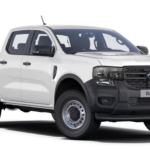 Ford Ranger Years to Avoid in Australia: Used Buyer’s Guide
What is the towing capacity of the Ford Ranger XLS and XLT?
Both can tow up to 3,500kg braked when correctly equipped and operated within Ford's specified vehicle, GVM, GCM and tow-ball limits.
Should I buy a Ford Ranger XLS or XLT in Australia?
Buy the XLS if you need a V6 4WD Double Cab Chassis for a work tray, canopy or custom touring build. Buy the XLT if you want a more complete family, towing and lifestyle ute with extra standard features and a wider choice of body configurations.
Leave a Reply