
Kia Tasman vs Isuzu D-Max Australia: Which Ute Is Better in 2026?

The Kia Tasman vs Isuzu D-Max comparison is one of the most interesting battles in Australia's competitive dual-cab ute market. On one side, we have the Kia Tasman, a newcomer offering modern technology, a spacious cabin, impressive practicality and a seven-year warranty. On the other, the Isuzu D-Max is an established favourite with a reputation for durability, strong diesel engines and proven off-road capability.
Both vehicles appeal to Australian buyers looking for a capable ute for work, towing, camping and family adventures. However, they approach these requirements differently.
The Tasman focuses on comfort, innovation and everyday practicality, while the D-Max emphasises proven engineering, workhorse credentials and long-term dependability.
So, is the Kia Tasman better than the Isuzu D-Max in Australia?
The answer depends on how we intend to use our ute. In this comparison, we'll examine everything from engine specifications and fuel consumption to towing performance, interior space, technology, reliability and ownership costs.
- Kia Tasman vs Isuzu D-Max: Quick Comparison
- Kia Tasman vs Isuzu D-Max Engine Performance
- Kia Tasman vs Isuzu D-Max Fuel Economy
- Kia Tasman vs Isuzu D-Max Towing Capacity
- Kia Tasman vs Isuzu D-Max Off-Road Capability
- Kia Tasman vs Isuzu D-Max Interior and Comfort
- Kia Tasman vs Isuzu D-Max Size and Dimensions
- Kia Tasman vs Isuzu D-Max Payload Capacity
- Kia Tasman vs Isuzu D-Max Technology and Safety
- Kia Tasman vs Isuzu D-Max Reliability
- Kia Tasman vs Isuzu D-Max Warranty and Maintenance Costs
- Kia Tasman vs Isuzu D-Max Price in Australia
- Kia Tasman vs Isuzu D-Max Resale Value
- Kia Tasman vs Isuzu D-Max for Work
- Kia Tasman vs Isuzu D-Max for Families
- Kia Tasman Pros and Cons
- Isuzu D-Max Pros and Cons
- Kia Tasman vs Isuzu D-Max: Which Should You Buy?
- Frequently Asked Questions
- Final Verdict: Kia Tasman or Isuzu D-Max in Australia?
Kia Tasman vs Isuzu D-Max: Quick Comparison
Before examining the differences in detail, let's compare their main specifications.
| Specification | Kia Tasman | Isuzu D-Max |
|---|---|---|
| Engine options | 2.2L turbo-diesel | 2.2L and 3.0L turbo-diesel |
| Maximum power | 154 kW | 120 kW / 140 kW |
| Maximum torque | 440 Nm | 400 Nm / 450 Nm |
| Transmission | 8-speed automatic | 8-speed auto (2.2L), 6-speed auto (3.0L) |
| Maximum braked towing | 3,500 kg | 3,500 kg |
| Fuel consumption (combined) | 7.4–8.1 L/100km | 6.3–7.8 L/100km |
| Fuel tank | 80 litres | 76 litres |
| Maximum wading depth | 800 mm | 800 mm |
| Wheelbase | 3,270 mm | 3,125 mm |
| Vehicle warranty | 7 years | 6 years / 150,000 km |
| Main strength | Comfort and practicality | Proven diesel capability |
Figures refer to Australian-market specifications and vary by engine, model, body style and drivetrain. Fuel consumption figures are official laboratory ratings rather than guaranteed real-world results.
The specifications reveal an interesting situation.
The Kia Tasman produces more power than either D-Max engine. However, the 3.0-litre Isuzu has slightly more torque, which may appeal to buyers regularly carrying substantial loads.
Meanwhile, the Tasman's longer wheelbase and larger dimensions provide an advantage in cabin space and cargo flexibility.
Kia Tasman vs Isuzu D-Max Engine Performance
Engine performance is an important factor when choosing a ute, particularly if we're planning to tow a caravan, transport equipment or travel through mountainous regions.
Kia Tasman 2.2L Turbo-Diesel Engine
The Australian Kia Tasman is powered by a 2.2-litre four-cylinder turbo-diesel engine.
Its specifications include:
- Engine capacity: 2,151 cc
- Maximum power: 154 kW at 3,800 rpm
- Maximum torque: 440 Nm between 1,750 and 2,750 rpm
- Transmission: 8-speed automatic
- Fuel type: Diesel
The Tasman delivers strong power for a four-cylinder diesel ute.
Its 154 kW output exceeds that of the D-Max's 3.0-litre engine by 14 kW, which gives Kia a noticeable advantage on paper.
The eight-speed automatic transmission also provides a wide spread of ratios, helping the engine balance acceleration, low-speed control and highway cruising.
For everyday driving, this combination should feel responsive, particularly when overtaking or travelling with passengers and luggage.
Isuzu D-Max 3.0L Turbo-Diesel Engine
The 3.0-litre Isuzu D-Max remains an attractive choice for buyers who prioritise towing and traditional diesel performance.
Its specifications include:
- Engine capacity: 2,999 cc
- Maximum power: 140 kW at 3,600 rpm
- Maximum torque: 450 Nm between 1,600 and 2,600 rpm
- Transmission: 6-speed automatic
- Fuel type: Diesel
Although the D-Max produces less power than the Tasman, it delivers its maximum torque slightly earlier.
Its 450 Nm output also exceeds the Kia's figure by 10 Nm.
The difference is small, but the Isuzu's larger engine capacity and torque delivery make it an appealing option for sustained towing and loaded touring.
However, engine displacement alone does not determine towing performance. Transmission calibration, vehicle weight, cooling systems and gearing all influence how a ute behaves under load.
Isuzu D-Max 2.2L Turbo-Diesel Engine
Australian buyers can also choose a newer 2.2-litre D-Max engine in selected variants.
This engine produces:
- 120 kW of power
- 400 Nm of torque
- An 8-speed automatic transmission
The smaller engine is intended to balance efficiency and practicality.
Compared with this version, the Kia Tasman offers 34 kW more power and 40 Nm more torque.
For buyers choosing between similarly priced 2.2-litre models, the Tasman therefore has a clear performance advantage in its official engine outputs.
Which Ute Has the Better Engine?
We would give the Kia Tasman the advantage for outright power and modern transmission performance.
However, the D-Max 3.0L remains a compelling alternative for buyers who value a well-established diesel powertrain.
Engine performance winner: Kia Tasman for power; Isuzu D-Max 3.0L for slightly higher torque and established credentials.
Kia Tasman vs Isuzu D-Max Fuel Economy
Fuel consumption matters enormously in Australia, especially for drivers covering long distances between cities or travelling through regional areas.
Both vehicles use turbo-diesel engines, but their official consumption figures vary.
Kia Tasman Fuel Consumption
The official combined fuel consumption figures for the Australian Tasman dual-cab pickup are:
This content may interest you! Mazda CX-5 vs Subaru Outback: Which One Fits Real Life Better?
| Kia Tasman Variant | Fuel Consumption |
|---|---|
| S 4x2 | 7.4 L/100km |
| S 4x4 | 7.6 L/100km |
| SX 4x4 | 7.6 L/100km |
| SX+ 4x4 | 7.6 L/100km |
| X-Line 4x4 | 7.8 L/100km |
| X-Pro 4x4 | 8.1 L/100km |
These figures are competitive for a large diesel ute.
The X-Pro consumes more fuel because of its off-road-focused configuration, tyres and equipment.
The Tasman also has an 80-litre fuel tank, which is useful when travelling through remote parts of Australia.
Isuzu D-Max Fuel Consumption
The D-Max provides a broader range of fuel economy figures because of its two diesel engines and different configurations.
Official combined consumption across the Australian range is approximately 6.3–7.8 L/100km.
The 2.2-litre engine can be particularly economical in selected 4x2 configurations, while the 3.0-litre engine generally uses more fuel.
For example, a 2.2-litre D-Max X-Rider 4x4 has an official combined figure of 7.1 L/100km.
The D-Max has a 76-litre fuel tank, slightly smaller than the Kia's.
Real-World Fuel Consumption
Official figures are useful for comparing vehicles, but actual fuel consumption depends on several factors:
- Driving speed and traffic conditions
- Tyre size and inflation pressure
- Vehicle payload
- Towing weight
- Roof racks and accessories
- Road gradients
- Driving style
A fully loaded ute towing a large caravan will typically consume considerably more fuel than the official combined-cycle figure.
We would expect both vehicles to deliver reasonable diesel efficiency during normal highway driving, but neither should be expected to match its advertised figures under heavy towing conditions.
Fuel economy winner: Isuzu D-Max, particularly in selected 2.2L configurations.
Kia Tasman vs Isuzu D-Max Towing Capacity
For many Australians, towing capacity is one of the biggest considerations when buying a ute.
Whether we're towing a caravan through Queensland, transporting a trailer for work or heading away with a boat, both vehicles offer substantial capability.
Kia Tasman Towing Capacity
The Kia Tasman has a maximum braked towing capacity of 3,500 kg.
Its key ratings include:
- Braked towing capacity: 3,500 kg
- Unbraked towing capacity: 750 kg
- Maximum towball download: 350 kg
- Gross combined mass: 6,200 kg
- Gross vehicle mass: 3,250 kg
The Tasman also provides a dedicated towing drive mode and trailer-related assistance features.
These are useful additions for owners regularly towing trailers or caravans.
Isuzu D-Max Towing Capacity
The Isuzu D-Max also offers a maximum braked towing capacity of 3,500 kg, subject to the required towing equipment.
Its ratings vary by configuration, with gross combined mass figures of approximately 5,850–6,000 kg.
The D-Max has an established record as a towing vehicle, particularly in its 3.0-litre form.
Its broad torque delivery and conventional diesel drivetrain make it a familiar option for Australian caravan owners.
Which Is Better for Towing a Caravan?
Both vehicles can tow up to 3,500 kg when appropriately equipped, but this does not mean they can carry a full payload at the same time.
Gross combined mass, gross vehicle mass, axle limits and towball download all need to be considered.
For example, the Tasman's 6,200 kg gross combined mass means that when towing a 3,500 kg trailer, the vehicle itself cannot exceed 2,700 kg as part of the combination.
That leaves less carrying capacity than its headline payload rating might suggest.
We would favour the D-Max 3.0L for buyers who want an established towing platform, while the Tasman deserves serious consideration for its power output, towing technology and higher published gross combined mass.
Towing winner: Draw on headline towing capacity. The best choice depends on the specific vehicle and trailer weights.
Kia Tasman vs Isuzu D-Max Off-Road Capability
Australia offers some of the world's most demanding off-road environments, from rocky mountain trails to sandy beaches and remote outback tracks.
Fortunately, both utes are designed to handle difficult terrain.
Kia Tasman Off-Road Performance
The Kia Tasman is available with four-wheel drive, low-range gearing and off-road driving systems.
Depending on the variant, equipment includes:
- Four-wheel-drive capability
- Low-range gearing
- Rear differential locking systems
- Terrain driving modes
- Hill descent assistance
- Off-road information displays
The X-Pro is the most adventure-focused Tasman model.
It offers 252 mm of minimum ground clearance, a selectable rear differential lock, additional terrain functionality and equipment intended for challenging tracks.
This content may interest you!Toyota LandCruiser Engine Oil: The Complete Selection and Maintenance GuideThe X-Pro also offers a 32.2-degree approach angle.
These figures make it particularly interesting for Australian buyers who regularly venture off sealed roads.
Isuzu D-Max Off-Road Performance
The Isuzu D-Max has extensive experience in Australian off-road conditions.
Four-wheel-drive variants feature low-range gearing, a rear differential lock and Isuzu's Rough Terrain Mode.
Depending on the model, ground clearance is approximately 235–244 mm.
The D-Max also offers up to 800 mm of wading depth under specified conditions, matching the Tasman's maximum rating.
Its strong aftermarket support is another advantage.
Australian buyers can find a wide selection of bull bars, suspension systems, underbody protection, snorkels and touring accessories for the D-Max.
Kia Tasman X-Pro vs Isuzu D-Max X-Terrain
These two variants target buyers seeking higher equipment levels and adventure capability.
The Tasman X-Pro focuses more heavily on specialised off-road equipment, with increased ground clearance and an aggressive design.
The D-Max X-Terrain provides a combination of premium equipment, traditional 4WD capability and practical everyday usability.
For dedicated off-road use, we would lean towards the Tasman X-Pro when comparing factory specifications.
However, an appropriately equipped D-Max remains highly capable and benefits from an established Australian accessory market.
Off-road winner: Kia Tasman X-Pro for factory equipment; Isuzu D-Max for established aftermarket support.
Kia Tasman vs Isuzu D-Max Interior and Comfort
Modern dual-cab utes are increasingly used as family vehicles, so interior comfort is becoming just as important as towing capacity.
This is an area where the Kia Tasman makes a strong impression.
Kia Tasman Interior
The Tasman features a modern cabin with a wide digital dashboard arrangement.
Depending on the variant, available features include:
- Dual 12.3-inch display screens
- An integrated climate-control display
- Wireless Apple CarPlay and Android Auto
- Heated and ventilated front seats
- Dual-zone climate control
- Wireless smartphone charging
- Premium seating materials
- Connected vehicle technology
The cabin feels designed for everyday driving rather than simply transporting workers between job sites.
The longer wheelbase also contributes to the impression of a spacious vehicle.
Rear-seat accommodation is particularly important for families who regularly carry adults or growing children.
Isuzu D-Max Interior
The D-Max adopts a more conventional interior design.
Higher-specification models offer features such as:
- A 9-inch infotainment screen
- Smartphone connectivity
- Dual-zone climate control on selected grades
- Leather-accented upholstery on selected grades
- Comfortable front seats
- Multiple storage compartments
The layout is practical and straightforward.
Some buyers may actually prefer the D-Max's more traditional controls because they can be easier to operate while driving.
However, the Kia looks and feels more contemporary.
Which Is More Comfortable?
For buyers using their ute primarily for commuting, family travel and long highway journeys, we would favour the Kia Tasman.
Its spacious interior and modern equipment make it an appealing alternative to established dual-cab competitors.
The D-Max remains comfortable enough for regular use, but its greatest strengths are practicality and functionality rather than a particularly luxurious cabin.
Interior winner: Kia Tasman.
Kia Tasman vs Isuzu D-Max Size and Dimensions
One important difference between these vehicles is their overall size.
| Dimension | Kia Tasman | Isuzu D-Max |
|---|---|---|
| Length | 5,410 mm | Approximately 5,280–5,340 mm |
| Width excluding mirrors | 1,930 mm | Approximately 1,870–1,880 mm |
| Wheelbase | 3,270 mm | 3,125 mm |
| Height | 1,870–1,920 mm | Varies by configuration |
The Tasman is generally longer and wider than the D-Max.
Its wheelbase is also 145 mm longer.
These dimensions help explain its spacious cabin and imposing road presence.
This content may interest you!
However, the larger body can make manoeuvring through narrow city streets or parking in compact spaces more challenging.
The D-Max's narrower dimensions may make it more convenient for urban environments and tight off-road tracks.
Which Ute Has the Bigger Tub?
The Tasman offers an advantage in load-bed width.
Depending on the variant, its pickup tub measures approximately 1,512–1,573 mm long and 1,572–1,600 mm wide.
Importantly, the space between the wheel arches is approximately 1,186 mm.
The D-Max pickup tub is approximately 1,570 mm long at floor level, with around 1,122 mm between the wheel arches.
This difference is important because a standard Australian pallet is approximately 1,165 mm square.
The Tasman can accommodate that pallet between its wheel arches, whereas the standard D-Max pickup tub cannot.
For tradespeople and businesses transporting palletised loads, this could be a decisive advantage.
Cargo tub winner: Kia Tasman.
Kia Tasman vs Isuzu D-Max Payload Capacity
Payload is another important consideration for Australian buyers.
The Kia Tasman dual-cab pickup offers approximately 1,013–1,124 kg of maximum payload, depending on drivetrain and specification.
The D-Max has a wider range of payload ratings because it is available in numerous body configurations, including single-cab, crew-cab and cab-chassis models.
Some D-Max work-oriented configurations offer payload figures well above one tonne.
However, higher equipment levels, accessories and different body styles can reduce carrying capacity.
For business buyers, we recommend checking the payload figure for the exact vehicle rather than relying on a general model specification.
A heavy bull bar, canopy, drawer system, roof rack and towbar can substantially reduce the remaining legal carrying capacity.
Both vehicles can perform serious work, but the Tasman's wider pickup tub makes it especially attractive for certain commercial applications.
Kia Tasman vs Isuzu D-Max Technology and Safety
Technology is one of the Tasman's strongest selling points.
Its modern infotainment system, digital displays and available driver-assistance equipment help create an experience closer to a contemporary SUV.
The D-Max also provides a comprehensive range of driver-assistance systems through Isuzu's Intelligent Driver Assistance System.
Depending on the vehicle, safety technology includes autonomous emergency braking, lane-keeping assistance, blind-spot monitoring and other active safety functions.
ANCAP Safety Ratings
The Kia Tasman achieved a five-star ANCAP safety rating under the 2023–2025 testing criteria.
This rating applies to relevant Tasman variants but excludes the X-Line and X-Pro, which are unrated.
The Isuzu D-Max also holds a five-star ANCAP rating from 2022 for applicable variants, excluding the Blade.
Because the vehicles were assessed under different testing protocols, their ratings should not be treated as directly identical measurements of safety performance.
Both offer strong safety equipment, but buyers should verify the rating and standard features of their preferred variant.
Technology winner: Kia Tasman for its modern presentation and connected features.
Kia Tasman vs Isuzu D-Max Reliability
Reliability is one of the biggest questions surrounding the Tasman.
The D-Max benefits from an established reputation in Australia, while the Tasman is still relatively new.
Is the Kia Tasman Reliable?
Kia has considerable experience developing diesel vehicles, and the Tasman uses conventional body-on-frame ute engineering.
However, the Tasman only entered the Australian market in 2025.
That means there is not yet enough long-term ownership information to confidently predict how it will perform after 200,000 or 300,000 kilometres.
Potential long-term considerations include:
This content may interest you!
- Diesel engine durability
- Automatic transmission reliability
- Electronics and infotainment systems
- Suspension wear under heavy loads
- Availability of specialised replacement parts
None of these should automatically be considered defects.
They are simply areas that matter when assessing any relatively new vehicle over an extended ownership period.
Is the Isuzu D-Max More Reliable?
The Isuzu D-Max has a stronger historical record in Australia's ute market.
Its 3.0-litre diesel engine belongs to an established engine family, and previous generations have developed a reputation for durability.
The D-Max is widely used for commercial work, long-distance touring and off-road travel.
However, no ute is completely free from mechanical problems.
Diesel particulate filter concerns, emissions-system maintenance, suspension wear and other mechanical issues can affect modern diesel vehicles, depending on usage and maintenance.
The newer 2.2-litre D-Max engine also has a shorter local ownership history than the established 3.0-litre unit.
For buyers prioritising proven long-term reliability, we would currently lean towards the D-Max 3.0L.
Reliability winner: Isuzu D-Max, based on its longer ownership and service history.
Kia Tasman vs Isuzu D-Max Warranty and Maintenance Costs
Warranty coverage can have a significant impact on ownership confidence.
Kia Tasman Warranty
Kia offers a seven-year warranty in Australia.
Private-use vehicles generally benefit from seven years of unlimited-kilometre coverage, while commercial-use conditions may include kilometre limitations.
The Tasman also has scheduled servicing intervals of 12 months or 15,000 km, whichever comes first.
Prepaid servicing options are available for eligible vehicles.
Isuzu D-Max Warranty
The D-Max includes a six-year or 150,000 km warranty, whichever occurs first.
Isuzu also offers five years of flat-price servicing for eligible vehicles, subject to the program's conditions.
Scheduled maintenance intervals are generally 12 months or 15,000 km.
Both manufacturers have established dealer networks in Australia.
Which Is Cheaper to Maintain?
Maintenance expenses depend on more than scheduled servicing.
Important considerations include:
- Replacement tyre costs
- Brake components
- Fuel consumption
- Insurance premiums
- Diesel emissions-system maintenance
- Replacement parts
- Accessory installation
The Kia's longer private-use warranty is attractive, while the D-Max offers a well-established servicing ecosystem.
We recommend comparing written servicing quotations and insurance premiums for equivalent variants.
Warranty winner: Kia Tasman for eligible private-use buyers.
Kia Tasman vs Isuzu D-Max Price in Australia
Pricing is especially important because both vehicles compete in one of Australia's most price-sensitive vehicle segments.
The Kia Tasman range covers work-focused versions through to premium off-road models.
Indicative 2026 list prices before on-road costs for selected dual-cab pickups include:
| Kia Tasman Model | Indicative List Price (AUD) |
|---|---|
| S 4x2 | $42,990 |
| S 4x4 | $49,990 |
| SX 4x4 | $54,490 |
| SX+ 4x4 | $62,390 |
| X-Line 4x4 | $67,990 |
| X-Pro 4x4 | $74,990 |
The D-Max range also spans entry-level commercial vehicles through to premium dual-cab variants such as the LS-U, LS-U+ and X-Terrain, along with specialist versions.
However, actual purchase prices can differ substantially from published list prices.
For example, during November 2026, Kia advertised selected 2025-build Tasman vehicles at substantially discounted drive-away prices, including an SX 4x4 dual-cab ute at $44,990 in a New South Wales pricing example.
These promotions are time-limited and subject to stock availability and eligibility.
This highlights an important point: a discounted Tasman may offer significantly better equipment for the money than its original list price suggests.
For the fairest comparison, we recommend obtaining current drive-away quotations for equivalent 4x4 dual-cab models.
Kia Tasman vs Isuzu D-Max Resale Value
The D-Max has an advantage when it comes to established resale-value history.
This content may interest you!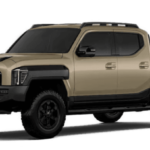 Kia Tasman vs Toyota HiLux Australia 2026: Which Ute Is Better?
It has been sold in Australia for many years and benefits from recognition among commercial buyers, families and off-road enthusiasts.
The Tasman is much newer, making its future depreciation more difficult to predict.
Its resale performance will depend on factors including:
- Long-term reliability
- Consumer demand
- New-vehicle discounts
- Competition from other utes
- Supply of replacement parts
- Future model updates
Significant discounts on new vehicles can also influence used-vehicle values.
That does not mean the Tasman will necessarily depreciate faster than the D-Max, but there is more uncertainty.
Resale-value confidence winner: Isuzu D-Max.
Kia Tasman vs Isuzu D-Max for Work
If we're buying a ute primarily for work, both vehicles deserve consideration.
The Tasman's wide cargo tub, substantial payload ratings and modern cabin make it attractive for tradespeople who spend long hours behind the wheel.
The D-Max offers proven commercial appeal, a broad range of body styles and an established service and accessory network.
For businesses transporting Australian pallets in a standard pickup tub, the Tasman has a practical advantage.
For remote commercial operations, the D-Max's longer market history may offer greater reassurance.
Ultimately, the best work ute is the one that suits the specific equipment, payload and operating environment.
Kia Tasman vs Isuzu D-Max for Families
Family buyers often prioritise comfort, interior space, safety and technology.
The Tasman performs particularly well in these areas.
Its modern cabin, longer wheelbase and available comfort features make it an appealing choice for parents who want a ute without sacrificing everyday convenience.
The D-Max remains a practical family vehicle, particularly for households that regularly tow a caravan or travel off-road.
However, we would generally choose the Tasman for families who spend most of their time driving on sealed roads.
Before purchasing either ute, families should also check child-seat compatibility, top-tether locations and rear-seat accommodation.
Kia Tasman Pros and Cons
Advantages
- More power than both D-Max diesel engines
- Modern interior and technology
- Spacious dual-cab cabin
- Wide cargo tub capable of accommodating an Australian pallet
- Strong towing specifications
- Seven-year warranty
- Well-equipped X-Pro off-road variant
- Competitive pricing when promotional discounts are available
Disadvantages
- Limited long-term reliability history
- Uncertain resale-value performance
- Controversial exterior styling
- Larger dimensions can make parking harder
- Single diesel engine choice
- Some competitors have more established aftermarket support
Isuzu D-Max Pros and Cons
Advantages
- Established reputation for durability
- Proven 3.0-litre diesel engine family
- Two engine options
- Strong towing credentials
- Competitive fuel economy
- Broad Australian dealer and accessory support
- Good off-road capability
- Established used-vehicle market
Disadvantages
- Less engine power than the Tasman
- More traditional interior design
- Narrower standard pickup tub
- Smaller fuel tank
- Shorter warranty period
- Premium variants can be expensive
Kia Tasman vs Isuzu D-Max: Which Should You Buy?
After comparing both vehicles, we believe there are several situations where one ute makes more sense than the other.
Choose the Kia Tasman if:
- You want a modern, comfortable dual-cab ute.
- You prioritise cabin space and technology.
- You need a wider cargo tub.
- You want strong diesel power.
- You value a longer private-use warranty.
- You can obtain a competitive drive-away price.
- You want an off-road-focused X-Pro variant.
Choose the Isuzu D-Max if:
- You prefer an established diesel platform.
- You regularly tow or undertake long-distance touring.
- You want a ute with a longer reliability history.
- You value established aftermarket accessory options.
- You operate in remote regional areas.
- You prefer a conventional interior layout.
- You want more engine and body-style choices.
For a family-oriented dual-cab ute, the Tasman is particularly attractive.
For buyers planning extensive remote travel or prioritising proven diesel ownership, the D-Max 3.0L remains a strong choice.
Frequently Asked Questions
1. Is the Kia Tasman better than the Isuzu D-Max?
The Kia Tasman is better in certain areas, including engine power, interior technology, cabin spaciousness and cargo tub width. However, the Isuzu D-Max has a longer reliability history, established aftermarket support and a proven 3.0-litre diesel engine. The better vehicle depends on whether we prioritise comfort and modern features or long-term ownership confidence.
2. Which is better for towing, Kia Tasman or Isuzu D-Max?
Both vehicles offer up to 3,500 kg of braked towing capacity when correctly equipped. The Tasman produces more power, while the D-Max 3.0L produces slightly more torque. Buyers should compare gross combined mass, towball download and available payload rather than relying solely on the maximum towing figure.
3. Is the Kia Tasman more fuel-efficient than the Isuzu D-Max?
Not necessarily. The Tasman's official combined fuel consumption ranges from 7.4 to 8.1 L/100km for dual-cab pickups. The D-Max range offers figures from approximately 6.3 to 7.8 L/100km, depending on configuration. Selected 2.2-litre D-Max variants are more economical on paper, although real-world results depend on driving conditions.
4. Is the Kia Tasman as reliable as the Isuzu D-Max?
It is too early to make a definitive long-term comparison. The Tasman entered the Australian market in 2025 and does not yet have the extensive ownership history of the D-Max. Isuzu's established 3.0-litre diesel engine provides greater historical evidence of durability, but this does not prove the Tasman will be unreliable.
5. Which ute is better for off-roading in Australia?
Both are capable four-wheel-drive utes. The Kia Tasman X-Pro offers impressive factory off-road specifications, including 252 mm of minimum ground clearance and a selectable rear differential lock. The Isuzu D-Max benefits from proven off-road systems and a substantial aftermarket accessory range. The best choice depends on the terrain and modifications required.
Final Verdict: Kia Tasman or Isuzu D-Max in Australia?
The Kia Tasman vs Isuzu D-Max comparison demonstrates how competitive Australia's ute market has become.
The Kia Tasman enters the segment with several genuine advantages. Its powerful 2.2-litre turbo-diesel engine, modern interior, spacious cabin, useful cargo tub and seven-year warranty make it an attractive proposition.
It also proves that a newcomer can compete seriously with established manufacturers.
The Isuzu D-Max, meanwhile, remains a dependable choice for buyers who prioritise traditional diesel performance, towing, off-road touring and long-term ownership confidence.
Its established reputation is particularly valuable in Australia, where many owners expect their utes to operate reliably across long distances and demanding environments.
Our overall preference would be the Kia Tasman for everyday driving, family use and modern practicality, provided the price is competitive.
This content may interest you!Kia Tasman Fuel Tank Capacity: How Far Can You Drive on a Full Tank?However, we would choose the Isuzu D-Max 3.0L for buyers who place greater importance on established reliability and remote-area touring.
Neither ute is the universal winner. Both offer serious capability, and the right decision ultimately comes down to how we plan to use the vehicle.
For Australian buyers in 2026, the best approach is to test-drive equivalent variants, compare actual drive-away prices and carefully consider towing requirements, payload and long-term ownership costs before making a final decision.
Leave a Reply