
Ford Ranger vs Nissan Navara Australia: Which Ute Is Better in 2026?

When comparing the Ford Ranger vs Nissan Navara in Australia, we are looking at two highly competitive dual-cab utes designed for demanding work, family adventures, off-road driving, and long-distance travel.
The Ford Ranger has become one of Australia's most popular utes thanks to its powerful diesel engines, excellent towing capabilities, advanced technology, and extensive range of configurations.
Meanwhile, the Nissan Navara has entered a new era with its fifth-generation D27 model, introduced in Australia in 2026. This updated ute brings a 2.4-litre bi-turbo diesel engine, improved interior technology, advanced safety systems, and suspension specifically tuned for Australian conditions.
But which one should we buy?
The answer depends on several important factors, including purchase price, engine performance, fuel consumption, towing capacity, reliability, maintenance costs, and everyday practicality.
In this comprehensive comparison, we will examine the 2026 Ford Ranger vs Nissan Navara to determine which vehicle offers better value for Australian drivers.
- Ford Ranger vs Nissan Navara Australia: Quick Comparison
- Ford Ranger vs Nissan Navara Price in Australia
- Ford Ranger vs Nissan Navara Engine Performance
- Ford Ranger vs Nissan Navara Fuel Economy
- Ford Ranger vs Nissan Navara Towing Capacity
- Ford Ranger vs Nissan Navara Payload Capacity
- Ford Ranger vs Nissan Navara Off-Road Performance
- Ford Ranger vs Nissan Navara Suspension and Ride Comfort
- Ford Ranger vs Nissan Navara Interior
- Ford Ranger vs Nissan Navara Safety
- Ford Ranger vs Nissan Navara Reliability
- Ford Ranger vs Nissan Navara Warranty and Maintenance Costs
- Ford Ranger vs Nissan Navara Dimensions
- Ford Ranger vs Nissan Navara for Family Use
- Ford Ranger vs Nissan Navara for Tradies
- Ford Ranger vs Nissan Navara Resale Value
- Ford Ranger vs Nissan Navara Pros and Cons
- Ford Ranger vs Nissan Navara: Which Should We Buy in Australia?
- Frequently Asked Questions About Ford Ranger vs Nissan Navara Australia
- Final Thoughts: Ford Ranger vs Nissan Navara Australia
Before exploring each vehicle in detail, let's compare their most important specifications.
| Specification | Ford Ranger 2026 | Nissan Navara 2026 |
|---|---|---|
| Diesel engines | 2.0L turbo and 3.0L V6 | 2.4L bi-turbo |
| Maximum diesel power | 184 kW | 150 kW |
| Maximum diesel torque | 600 Nm | 470 Nm |
| Diesel transmission | 10-speed automatic | 6-speed automatic |
| Maximum braked towing | 3,500 kg on most diesel variants | 3,500 kg |
| Fuel consumption | From 6.8 L/100 km | 7.7 L/100 km |
| Drive options | 4x2 and 4x4 | 4x4 |
| Infotainment display | 12 inches | 9 inches |
| Seating capacity | Up to 5 | 5 |
| Standard warranty | 5 years | 5 years |
| Extended warranty eligibility | Up to 7 years | Up to 10 years |
Specifications depend on the model and configuration. Ranger Raptor and plug-in hybrid variants have different powertrain and towing specifications.
At first glance, the Ranger has an advantage in engine performance and model variety. However, the Navara offers competitive towing capability, modern equipment, and attractive ownership benefits.
Let's explore these differences.
Price is one of the biggest considerations when choosing between these utes.
Both manufacturers offer work-focused and lifestyle-oriented models, although Ford provides a broader range of configurations.
Ford Ranger 2026 Price Australia
The Ford Ranger is available in several configurations, including XL, XLT, Wildtrak, Platinum, Tremor, and Raptor.
Indicative starting prices for selected 4x4 models include:
| Ford Ranger Variant | Price (AUD) |
|---|---|
| XL Double Cab 2.0L | $51,400 |
| Black Edition 2.0L | $53,490 |
| XL Double Cab V6 | $57,900 |
| XLT Double Cab V6 | $67,990 |
| Wildtrak V6 | $75,090 |
| Tremor V6 | $75,090 |
| Platinum V6 | $80,090 |
| Raptor Petrol V6 | $90,690 |
These prices exclude on-road costs and may change depending on the model year, dealership, optional equipment, and available promotions.
One of the Ranger's biggest advantages is that buyers can choose a relatively affordable commercial ute or a more expensive model with premium comfort and off-road equipment.
The new Nissan Navara is available in four main variants.
| Nissan Navara Variant | Price (AUD) |
|---|---|
| Navara SL | $53,348 |
| Navara ST | $56,765 |
| Navara ST-X | $63,177 |
| Navara PRO-4X | $68,418 |
These are indicative prices before on-road costs.
Unlike the Ranger, the D27 Navara is sold in Australia exclusively as a dual-cab 4x4 automatic.
Every version uses the same 2.4-litre bi-turbo diesel engine.
Which Ute Offers Better Value?
The Ranger XL can be slightly cheaper than the entry-level Navara SL when comparing 4x4 dual-cab pickup models.
However, the Navara SL produces more power and torque than the Ranger's basic 2.0-litre diesel.
At higher specification levels, the Navara PRO-4X costs considerably less than the Ranger Wildtrak V6.
Nevertheless, the Wildtrak offers stronger engine performance and additional premium equipment.
Our verdict: The Navara represents attractive value for buyers seeking a capable and well-equipped diesel 4x4, while the Ranger provides more flexibility across different budgets and applications.
Engine performance is particularly important when carrying heavy loads, towing caravans, accelerating on highways, or climbing steep roads.
Ford Ranger Engine Options
The updated Ford Ranger diesel lineup includes two main engines.
2.0-Litre Turbo-Diesel Engine
The entry-level diesel produces:
- Power: 125 kW
- Torque: 405 Nm
- Transmission: 10-speed automatic
- Available drivetrain: 4x2 or 4x4, depending on configuration
This engine is designed for buyers who prioritise practicality and reasonable fuel consumption.
It is particularly suitable for urban driving, commercial work, and occasional towing.
3.0-Litre V6 Turbo-Diesel Engine
The more powerful V6 produces:
- Power: 184 kW
- Torque: 600 Nm
- Transmission: 10-speed automatic
- Drivetrain: Full-time four-wheel drive
This engine provides considerably more torque than the smaller diesel.
The additional pulling power is especially useful for heavy towing, long highway journeys, and driving through mountainous areas.
Ford also offers a plug-in hybrid Ranger and the high-performance petrol-powered Ranger Raptor.
The 2026 Nissan Navara uses a 2.4-litre four-cylinder bi-turbo diesel engine.
Its specifications include:
- Power: 150 kW
- Torque: 470 Nm
- Transmission: 6-speed automatic
- Drivetrain: Four-wheel drive
This engine provides a useful balance between power and fuel efficiency.
It produces more torque than the Ranger's entry-level diesel but considerably less than the Ranger V6.
When comparing maximum diesel performance, the Ford Ranger V6 is the stronger vehicle.
Its 600 Nm of torque gives it a substantial advantage over the Navara's 470 Nm.
This can make the Ranger more appealing for drivers who regularly transport heavy equipment or tow large trailers.
However, we should not assume that every driver needs the additional power.
The Navara's engine provides sufficient performance for many everyday driving situations, including commuting, touring, and recreational towing within its rated limits.
Winner: Ford Ranger V6 for maximum engine performance.
Fuel consumption is an important consideration for Australian drivers who frequently travel long distances.
Even relatively small differences in fuel efficiency can become significant over thousands of kilometres.
Ford Ranger Fuel Consumption
The conventional diesel Ranger offers different fuel economy figures depending on engine and specification.
| Ford Ranger Engine | Claimed Combined Consumption |
|---|---|
| 2.0L turbo-diesel | 6.8–7.2 L/100 km |
| 3.0L V6 turbo-diesel | 8.3–8.4 L/100 km |
| 3.0L V6 Tremor | 9.4 L/100 km |
The smaller diesel is the most economical conventional Ranger engine.
However, choosing the V6 increases fuel consumption in exchange for stronger performance.
The 2026 Nissan Navara has a claimed combined fuel consumption of approximately 7.7 L/100 km.
Its 75-litre fuel tank provides a useful potential driving range for long-distance travel.
Actual fuel consumption will depend on driving conditions, loading, vehicle accessories, and driving habits.
Which Is More Fuel Efficient?
The Ranger 2.0-litre diesel offers better claimed fuel economy than the Navara.
However, the Navara is more economical on paper than the Ranger V6.
For example, drivers who mainly travel through urban areas may appreciate the smaller Ranger engine.
Those who want a balance of torque and efficiency may find the Navara particularly appealing.
Meanwhile, buyers prioritising heavy towing performance may accept the Ranger V6's higher fuel consumption.
We should also remember that towing can significantly increase diesel use in both vehicles.
Winner for conventional diesel fuel efficiency: Ford Ranger 2.0L.
Towing capacity is one of the most important specifications for Australian ute owners.
Whether we want to transport a boat, caravan, horse float, or work trailer, both vehicles offer substantial capabilities.
Ford Ranger Towing Capacity
Most conventional Ford Ranger diesel variants have a maximum braked towing capacity of 3,500 kg.
This makes them suitable for many caravans, boats, and commercial trailers.
The Ranger also offers useful towing technologies depending on the variant.
These can include:
This content may interest you!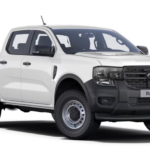 Ford Ranger vs Amarok Australia: Which Ute Is Better in 2026?
- Tow/Haul driving mode
- Trailer sway control
- Integrated trailer brake controller
- Trailer-related blind-spot assistance
- Available Pro Trailer Backup Assist
These features can make the towing experience more convenient, particularly when reversing large trailers.
However, the Ranger Raptor has a lower maximum braked towing rating of 2,500 kg.
The 2026 Nissan Navara also offers a maximum braked towing capacity of 3,500 kg across its Australian range.
Its 470 Nm diesel engine provides useful low-speed pulling performance.
The vehicle also benefits from suspension tuning developed for Australian driving conditions.
Which Ute Is Better for Towing Caravans?
Although both utes offer a 3,500 kg towing rating in their mainstream diesel configurations, the Ranger V6 has a clear torque advantage.
This can be particularly beneficial when towing heavy caravans through hilly terrain.
However, the Navara remains an attractive alternative for buyers seeking a capable towing vehicle at a lower purchase price than some higher-specification Rangers.
We must also consider that maximum towing capacity is not the only relevant figure.
Other important limits include:
- Gross Vehicle Mass (GVM)
- Gross Combination Mass (GCM)
- Towball download
- Axle load limits
- Passenger weight
- Accessories and luggage
A ute rated to tow 3,500 kg cannot necessarily carry its maximum payload while towing at that limit.
Winner for heavy towing performance: Ford Ranger V6.
Payload capacity determines how much weight a vehicle can carry, including passengers, luggage, tools, accessories, and applicable towball weight.
Ford Ranger Payload
The Ranger lineup includes configurations offering a maximum payload of up to approximately 1,412 kg.
However, this figure does not apply to every Ranger.
Payload depends on body configuration, engine, drivetrain, and equipment.
A basic commercial version may carry more than a heavily equipped premium dual-cab model.
The D27 Nissan Navara offers the following approximate payload figures:
| Nissan Navara Variant | Payload |
|---|---|
| SL | 1,064 kg |
| ST | 1,047 kg |
| ST-X | 1,019 kg |
| PRO-4X | 964 kg |
The Navara SL provides the highest payload in the range.
Meanwhile, the PRO-4X has a lower rating because of its additional equipment.
Which Is Better for Carrying Heavy Loads?
The Ford Ranger offers greater flexibility because of its different commercial configurations.
This makes it particularly attractive for tradies and businesses requiring specialised load-carrying solutions.
However, the Navara SL and ST are also capable work vehicles.
For heavy commercial use, we recommend comparing the exact payload rating of each variant rather than relying on the maximum figure advertised for the overall model range.
Australia offers some of the world's most challenging driving environments.
From sandy beaches to rocky tracks and remote outback roads, a capable 4x4 can make a significant difference.
Ford Ranger Off-Road Capability
The Ford Ranger offers impressive off-road features, depending on the chosen model.
These can include:
- Low-range four-wheel drive
- Locking rear differential
- Terrain Management System
- Hill descent control
- Underbody protection
- All-terrain tyres
- Specialised off-road suspension
The Ranger Tremor offers additional off-road equipment, including Bilstein dampers and suspension modifications.
Meanwhile, the Ranger Raptor is designed for high-performance off-road driving.
Its advanced suspension makes it particularly suitable for challenging terrain and faster recreational driving on appropriate tracks.
The new Navara offers two four-wheel-drive systems.
The SL and ST use an Easy 4x4 system with selectable four-wheel drive and low-range gearing.
The ST-X and PRO-4X feature the more advanced Super 4x4 system, incorporating a Torsen centre differential.
Higher specifications also offer multiple terrain modes to help drivers adapt to different surfaces.
Every 2026 Navara grade includes an electronic rear differential lock.
Both vehicles are capable off-road performers.
However, the Ranger has a broader selection of specialised configurations.
The Ranger Raptor is particularly difficult to match when it comes to high-performance off-road suspension.
Nevertheless, the Nissan Navara PRO-4X offers useful equipment for camping, touring, gravel roads, and recreational off-road adventures.
For many Australians, the Navara will provide more than enough capability.
Winner for specialised off-road performance: Ford Ranger.
Ride comfort can significantly influence everyday satisfaction, especially when using a dual-cab ute as a family vehicle.
Ford Ranger Ride Quality
The Ranger has been developed to balance commercial capability with passenger comfort.
Its suspension provides reasonable control on highways, suburban streets, and unsealed roads.
Higher specifications may include additional equipment designed to improve comfort or off-road capability.
However, ride quality differs between the XL, Wildtrak, Tremor, and Raptor.
The best model depends on whether we prioritise work, comfort, or recreational performance.
One of the biggest selling points of the 2026 Nissan Navara is its Australian-developed suspension calibration.
Nissan worked with engineering company Premcar to improve ride comfort, handling, and stability.
Three suspension configurations are available.
SL and ST: Designed primarily for practical commercial use and load-carrying.
ST-X: Developed to provide a balanced combination of comfort and everyday usability.
PRO-4X: Tuned for recreational driving and more demanding off-road conditions.
This approach gives the Navara a particularly interesting advantage for Australian drivers.
Instead of using one suspension setup for every specification, Nissan has developed different calibrations for different applications.
Which Ute Has the Better Ride?
The answer depends on the version being compared.
A Ranger Wildtrak and a Navara ST-X may feel different from an XL and an SL.
We recommend test-driving both vehicles on similar roads.
Ideally, we should also evaluate them with a representative load, because dual-cab utes can behave differently when their trays are empty.
Modern utes are increasingly expected to provide the same comfort and technology found in passenger SUVs.
Both the Ranger and Navara offer comfortable interiors, but there are important differences.
Ford Ranger Interior Features
The Ranger features a modern dashboard dominated by its large infotainment display.
Depending on the variant, available features include:
- 12-inch touchscreen
- Wireless Apple CarPlay
- Wireless Android Auto
- Digital instrument cluster
- Dual-zone climate control
- Power-adjustable front seats
- Premium audio systems
- Heated seats
- Wireless smartphone charging
Higher-specification models offer more luxurious materials and additional comfort equipment.
This content may interest you!Ford Ranger vs GWM Cannon Alpha Australia: Which Ute Is Better in 2026?The Ranger Platinum is particularly attractive for buyers looking for an upscale driving experience.
The new Navara represents a substantial improvement over the previous generation.
Its interior includes:
- 9-inch infotainment touchscreen
- Wireless Apple CarPlay
- Wired Android Auto
- Built-in satellite navigation
- 7-inch driver information display
- Rear air vents
- USB connectivity
- Available wireless charging
- Available heated front seats
The Navara offers a functional cabin with the technology most drivers need.
Which Has the Better Interior?
The Ford Ranger offers a larger infotainment screen and more premium equipment in its expensive variants.
However, the Navara delivers a practical interior with modern connectivity and convenience features.
For buyers prioritising luxury and technology, the Ranger has the advantage.
For those who prefer simplicity and value, the Navara is worth considering.
Safety is essential for families, businesses, and drivers who regularly travel long distances.
Both the mainstream Ford Ranger and the new Nissan Navara have achieved five-star ANCAP safety ratings for their applicable variants.
Ford Ranger Safety Features
Depending on specification, the Ranger offers:
- Autonomous emergency braking
- Adaptive cruise control
- Lane-keeping assistance
- Blind-spot monitoring
- Rear cross-traffic alert
- Reversing camera
- Parking sensors
- Available 360-degree camera
- Trailer-related safety assistance
These technologies can improve driver awareness and help reduce certain risks.
The 2026 Navara includes:
- Intelligent emergency braking
- Blind-spot warning
- Blind-spot intervention
- Lane departure intervention
- Intelligent cruise control
- Driver attention monitoring
- Rear automatic braking
- Around View Monitor
- Front and rear parking sensors
The Navara's standard surround-view monitoring system is particularly useful when manoeuvring in tight spaces.
Which Ute Is Safer?
Both vehicles offer strong safety equipment.
However, ANCAP ratings and individual safety features should be assessed according to the exact variant and testing protocol.
We would not declare an overall winner based solely on their five-star ratings.
For family buyers, child-seat compatibility, rear-seat accessibility, and visibility should also influence the decision.
Reliability is one of the most important factors for Australian ute buyers.
Many owners expect their vehicles to handle demanding conditions for hundreds of thousands of kilometres.
However, long-term reliability depends on maintenance, engineering, operating conditions, and vehicle history.
Ford Ranger Reliability
The Ford Ranger has an established ownership history in Australia.
Its popularity also supports a substantial servicing and aftermarket ecosystem.
However, reliability can vary depending on the engine, generation, and vehicle maintenance.
When inspecting a used Ranger, we should pay attention to:
- Engine servicing history
- Automatic transmission operation
- Cooling system condition
- Diesel emissions components
- Electronic warning messages
- Suspension wear
- Signs of extensive towing
- Outstanding recalls
A well-maintained Ranger may provide many years of service, but poor maintenance can significantly increase the risk of expensive repairs.
The Nissan Navara also has a long history in Australia.
However, the latest D27 generation is substantially different from the previous D23 model.
The new Navara shares important platform and drivetrain engineering with the Mitsubishi Triton.
This provides an established technical foundation.
Nevertheless, the 2026 Navara is still too new to have an extensive long-term reliability record.
We should therefore avoid assuming that problems associated with older Navara generations necessarily apply to the new vehicle.
There is not enough long-term evidence to conclusively identify a reliability winner between these specific 2026 models.
The Ranger has a more established ownership record in its current generation, while the new Navara requires more years of real-world use.
For either vehicle, regular servicing and responsible operation are essential.
We recommend checking warranty conditions, service intervals, and maintenance costs before purchasing.
Purchase price is only one part of vehicle ownership.
Fuel, servicing, insurance, tyres, repairs, and depreciation can substantially influence long-term expenses.
Ford Ranger Warranty Australia
Ford provides a standard five-year, unlimited-kilometre warranty.
Eligible vehicles delivered from September 2026 may qualify for an extended seven-year, unlimited-kilometre warranty when owners meet specific authorised-dealer servicing requirements.
Conditions and exclusions apply.
Maintenance costs depend on the engine, model, service schedule, and operating conditions.
Nissan provides a standard five-year, unlimited-kilometre warranty.
Eligible owners can access extended coverage of up to ten years or 300,000 km through the Nissan MORE programme.
This extended protection depends on compliance with the relevant servicing requirements.
The new Navara also offers advertised flat-price servicing for its first five scheduled services, with each priced at $499 under the applicable programme conditions.
Which Ute Is Cheaper to Maintain?
The Nissan Navara offers attractive scheduled-service price certainty and a longer potential warranty period.
However, this does not guarantee lower overall maintenance costs.
Tyres, insurance, replacement parts, repairs, and operating conditions can make a significant difference.
The Ford Ranger also benefits from an extensive servicing network and a broad availability of aftermarket accessories.
Winner for potential warranty duration: Nissan Navara.
Vehicle dimensions influence manoeuvrability, parking, passenger comfort, and cargo capacity.
| Dimension | Ford Ranger Double Cab | Nissan Navara D27 |
|---|---|---|
| Length | Approx. 5,370 mm | 5,320 mm |
| Width excluding mirrors | Approx. 1,918 mm | From 1,865 mm |
| Wheelbase | 3,270 mm | 3,130 mm |
| Seating capacity | 5 | 5 |
Exact dimensions can vary according to the variant and exterior equipment.
Which Ute Is Easier to Park?
The Navara's slightly shorter overall length may be advantageous in crowded urban environments.
However, both are relatively large vehicles.
Parking cameras, sensors, and driver-assistance systems can make a considerable difference.
The Ranger offers advanced parking technology on selected variants, while the Navara's standard Around View Monitor provides useful visibility.
Which Has the Better Cargo Area?
Both vehicles provide practical cargo beds capable of carrying tools, recreational equipment, and luggage.
The Navara's load bed measures approximately 1,555 mm in length and 1,545 mm in width.
The Ranger also provides a practical cargo area with useful loading features and accessory options.
Ford's broader range of cab and tray configurations is particularly appealing for commercial applications.
Dual-cab utes have become popular among Australian families who need a vehicle for both work and recreation.
Ford Ranger as a Family Vehicle
The Ranger offers several advantages for family driving.
Its modern cabin, safety technology, and available comfort features make it suitable for daily commuting and weekend travel.
The Wildtrak and Platinum are particularly appealing for families who want SUV-like equipment.
This content may interest you!Ford Ranger vs Ford Raptor Australia: Which Is Better in 2026?The Ranger V6 also provides substantial performance for towing caravans during holidays.
However, its large exterior dimensions can make parking more challenging in some urban environments.
The 2026 Navara offers improved interior space compared with its predecessor.
Additional rear-seat room makes the vehicle more practical for passengers.
The ST-X provides an appealing combination of comfort, safety technology, and everyday usability.
Its locally tuned suspension may also appeal to families who frequently travel on a combination of sealed and unsealed roads.
Which Is Better for Families?
The Ranger has an advantage in premium technology and engine selection.
However, the Navara ST-X offers an attractive combination of value, comfort, and practicality.
Families should test both vehicles with their usual passengers and child seats before deciding.
For Australian tradies, a ute is often an essential business tool.
Reliability, payload, towing capacity, cargo access, and operating expenses can be more important than luxury features.
Why Choose the Ford Ranger for Work?
The Ranger offers several advantages for commercial buyers.
These include:
- Single Cab, Super Cab, and Double Cab configurations
- Cab-chassis options
- Different diesel engines
- Competitive payload ratings
- Strong towing capability
- Extensive aftermarket accessories
- Practical cargo management features
The Ranger XL is particularly suitable for businesses prioritising function and value.
The Navara SL and ST are designed for practical commercial applications.
They provide substantial payload ratings, standard four-wheel drive, and a capable diesel engine.
Their suspension systems have also been tuned with Australian work conditions in mind.
However, the Navara's limited body configuration options may be a disadvantage for some businesses.
Which Ute Is Better for Tradies?
The Ford Ranger offers greater commercial versatility.
Its wider range of body configurations makes it suitable for more specialised applications.
Nevertheless, the Navara SL remains an excellent option for tradies who want a conventional dual-cab 4x4.
Winner for commercial versatility: Ford Ranger.
Resale value is another important factor when calculating long-term ownership costs.
The Ranger benefits from strong recognition in the Australian market and substantial buyer interest across different variants.
However, this does not guarantee that every Ranger will depreciate less than a comparable Navara.
Resale prices depend on:
- Vehicle age
- Kilometres travelled
- Service history
- Engine and specification
- Vehicle condition
- Previous commercial use
- Market supply and demand
- Accessories and modifications
The new Navara may attract buyers interested in its warranty programme, modern diesel engine, and off-road capability.
However, its long-term depreciation performance has not yet been established.
We recommend comparing actual used-market prices rather than relying on assumptions about either brand.
Ford Ranger Advantages
- Powerful 3.0-litre V6 diesel engine
- More body and drivetrain configurations
- Excellent towing capability
- Advanced infotainment and connectivity
- Strong commercial versatility
- Specialised off-road models
- Wide range of aftermarket accessories
Ford Ranger Disadvantages
- Higher prices for premium variants
- Greater fuel consumption with the V6
- Large exterior dimensions
- Payload varies considerably between models
- Some advanced features require expensive specifications
- Strong standard bi-turbo diesel engine
- Competitive 3,500 kg towing capacity
- Locally tuned Premcar suspension
- Attractive higher-grade pricing
- Long potential warranty coverage
- Predictable initial servicing costs
- Comprehensive standard safety equipment
- No V6 diesel option
- Fewer body configurations
- Smaller infotainment display
- No single-cab or cab-chassis option
- Limited long-term reliability data for the D27 generation
After comparing both vehicles across the most important categories, we can identify which ute is better suited to different buyers.
Choose the Ford Ranger If:
We should consider the Ranger if we regularly tow heavy trailers, want powerful diesel performance, or need a specialised commercial vehicle.
It is also an excellent choice for buyers who prioritise advanced technology and premium interior equipment.
The V6 diesel is particularly appealing for long-distance towing, while the Tremor and Raptor provide specialised off-road capabilities.
The Navara is worth considering if we want a capable diesel 4x4 with competitive towing performance and a straightforward model range.
It also appeals to drivers who value locally developed suspension, predictable scheduled-servicing expenses, and extended warranty eligibility.
The ST-X is a particularly interesting choice for everyday driving, while the PRO-4X offers useful recreational off-road equipment.
Our Overall Recommendation
We would choose the Ford Ranger for maximum versatility and performance.
Its powerful V6 engine, advanced technology, and broad selection of configurations make it suitable for a wide range of Australian driving requirements.
However, the Nissan Navara represents a compelling alternative.
Its modern diesel engine, locally tuned suspension, competitive pricing, and ownership benefits make it attractive for buyers who do not need the Ranger's additional performance.
For many families and recreational drivers, the Navara ST-X may provide an excellent balance between price and capability.
The Ford Ranger offers more engine choices, greater maximum diesel torque, advanced technology, and a broader selection of body configurations.
However, the Nissan Navara provides competitive towing capability, practical equipment, and attractive warranty benefits.
The Ranger is generally more versatile, while the Navara may offer better value for some buyers.
There is insufficient long-term reliability evidence to conclusively determine whether the 2026 Ranger or Navara is more dependable.
The current Ranger generation has a more established ownership history, while the new D27 Navara requires additional years of real-world testing.
Maintenance history and operating conditions are important for both vehicles.
Yes. The 2026 Nissan Navara and most conventional Ford Ranger diesel variants offer a maximum braked towing capacity of 3,500 kg.
However, the Ranger Raptor has a lower maximum braked towing capacity of 2,500 kg.
Actual towing capability also depends on GVM, GCM, towball weight, and vehicle loading.
The Ford Ranger 2.0-litre turbo-diesel has lower claimed combined fuel consumption than the 2026 Nissan Navara.
However, the Navara is more fuel-efficient on paper than the Ranger 3.0-litre V6 diesel.
Real-world fuel consumption varies according to driving conditions, load, and towing requirements.
Not necessarily.
Some entry-level Ford Ranger configurations cost less than the Nissan Navara SL.
However, premium Ranger variants can be significantly more expensive than comparable Navara models.
Buyers should compare equivalent specifications and current drive-away prices before making a decision.
The Ford Ranger vs Nissan Navara Australia comparison highlights two capable utes with different strengths.
The Ranger stands out for its powerful diesel V6, advanced technology, extensive model range, and excellent commercial versatility.
The Navara counters with a capable bi-turbo diesel engine, competitive towing capacity, locally tuned suspension, and attractive ownership benefits.
For drivers who prioritise maximum towing performance, premium equipment, and specialised off-road capability, the Ford Ranger remains our preferred choice.
However, the Nissan Navara is an appealing alternative for buyers seeking a practical, modern diesel 4x4 without necessarily paying for a higher-specification Ranger.
Before purchasing either vehicle, we recommend checking current specifications, comparing ownership costs, assessing payload requirements, and arranging test drives.
Ultimately, the best ute is not always the most powerful or expensive.
It is the vehicle that best matches our lifestyle, workload, driving conditions, and long-term budget.
This content may interest you!Ford Ranger vs F150 Australia: Which Is Better in 2026?
Leave a Reply