
Subaru Forester vs XV Australia: Which Is Better?

If we're comparing the Subaru Forester vs XV in Australia, we're looking at two capable SUVs that share Subaru's reputation for all-wheel-drive confidence, practical engineering and everyday versatility. However, despite coming from the same manufacturer, these vehicles are designed for slightly different buyers.
The Subaru Forester is a medium SUV focused on family comfort, generous interior space and long-distance practicality. The Subaru XV, meanwhile, is a smaller crossover that prioritises easy manoeuvrability, affordable ownership and a more compact design.
Both offer Subaru's Symmetrical All-Wheel Drive system, Boxer engines and impressive ground clearance. That makes either an interesting option for Australian drivers who regularly encounter wet roads, gravel tracks or regional driving conditions.
But which one should we choose?
In this detailed comparison, we'll explore everything from engine performance and fuel consumption to reliability, boot space, safety, ownership costs and off-road capability.
Important update: Subaru replaced the XV nameplate with the Crosstrek in Australia in 2023. Therefore, this article primarily compares the 2022 Subaru XV and Forester petrol models, while also explaining what the change means for buyers considering a newer Subaru.
- Subaru Forester vs XV Australia: Quick Comparison
- 1. Subaru Forester vs XV: Exterior Design
- 2. Subaru Forester vs XV Dimensions
- 3. Interior Space and Passenger Comfort
- 4. Subaru Forester vs XV Boot Space
- 5. Engine Performance: Forester vs XV
- 6. Subaru Forester vs XV Fuel Consumption
- 7. Driving Experience and Handling
- 8. Subaru Forester vs XV Off-Road Capability
- 9. Safety Features and ANCAP Ratings
- 10. Technology and Infotainment
- 11. Subaru Forester vs XV Reliability
- 12. Maintenance and Servicing Costs in Australia
- 13. Subaru Forester vs XV Insurance Costs
- 14. Subaru Forester vs XV Towing Capacity
- 15. Which Subaru Is Better for Australian Families?
- 16. Which Subaru Is Better for City Driving?
- 17. Which Subaru Is Better for Highway Driving?
- 18. Subaru Forester vs XV for Camping
- 19. Subaru Forester vs XV: Used Car Value
- 20. What About the New Subaru Crosstrek?
- 21. Subaru Forester vs XV: Pros and Cons
- 22. Subaru Forester vs XV: Which Should You Buy?
- Frequently Asked Questions
- Final Verdict: Subaru Forester vs XV Australia
Subaru Forester vs XV Australia: Quick Comparison
Before exploring the differences, let's compare the main specifications.
The following figures refer to Australian-market 2022 petrol versions.
| Specification | Subaru Forester 2.5i | Subaru XV 2.0i-L |
|---|---|---|
| Vehicle category | Medium SUV | Small SUV |
| Engine | 2.5L Boxer petrol | 2.0L Boxer petrol |
| Power | 136 kW | 115 kW |
| Torque | 239 Nm | 196 Nm |
| Transmission | CVT automatic | CVT automatic |
| Drivetrain | All-wheel drive | All-wheel drive |
| Fuel consumption | 7.4 L/100 km | 7.0 L/100 km |
| Length | 4,640 mm | 4,485 mm |
| Width | 1,815 mm | 1,800 mm |
| Height | 1,730 mm | 1,615 mm |
| Ground clearance | 220 mm | 220 mm |
| Boot capacity | 498 litres | 310 litres |
| Seats | 5 | 5 |
| Maximum braked towing | 1,800 kg | 1,400 kg |
Figures are based on the specified petrol variants. Equipment, cargo capacity and towing limits can vary between model years and hybrid versions.
At first glance, the Forester offers more power, substantially greater luggage capacity and stronger towing ability.
The XV responds with smaller exterior dimensions, slightly better official fuel efficiency and a design that's easier to manage in crowded urban environments.
1. Subaru Forester vs XV: Exterior Design
Subaru Forester: Traditional SUV Styling
The Subaru Forester follows a classic SUV design philosophy.
Its taller body, large windows, upright roofline and practical proportions give it a rugged appearance without looking excessively bulky.
The design is particularly suitable for Australian families who want a vehicle that feels substantial on the road.
Notable characteristics include:
- An upright seating position.
- Large windows providing excellent visibility.
- Practical roof rails on many variants.
- Substantial ground clearance.
- A relatively boxy body that maximises interior space.
The Forester's styling places function ahead of dramatic appearance.
For drivers who value comfort, visibility and practicality, that's an advantage.
Subaru XV: Sportier and More Compact
The Subaru XV looks noticeably different.
Its lower roofline, shorter body and hatchback-inspired proportions create a more youthful appearance.
Although Subaru markets it as an SUV, the XV feels closer to a raised hatchback in everyday use.
Distinctive features include protective wheel-arch cladding, compact proportions and an athletic stance.
We particularly like how the XV combines an urban-friendly appearance with genuine all-wheel-drive capability.
Our verdict: The Forester looks more like a traditional family SUV, while the XV offers a sportier crossover design.
2. Subaru Forester vs XV Dimensions
Size is one of the most important differences between these vehicles.
The Forester measures approximately 155 mm longer, 15 mm wider and 115 mm taller than the equivalent petrol XV.
Although the difference in width is relatively small, the Forester's taller body makes a noticeable difference to interior comfort.
Which Subaru Is Easier to Park?
The XV is generally easier to manage in tight parking spaces.
Its shorter body makes it particularly practical for:
- Underground shopping centre car parks.
- Narrow residential streets.
- Busy city centres.
- Small garages.
- Everyday commuting.
However, the Forester isn't excessively large for a medium SUV.
Its excellent outward visibility and relatively upright body shape can make parking easier than its dimensions might suggest.
Both vehicles have a turning circle of approximately 10.8 metres in the versions compared.
For drivers regularly travelling through Sydney, Melbourne or Brisbane, the XV's compact dimensions may be more appealing.
For suburban and regional use, the Forester's larger size is unlikely to be a major disadvantage.
3. Interior Space and Passenger Comfort
The Forester has a clear advantage in passenger accommodation.
Its taller cabin creates a more open feeling, particularly for adults sitting in the rear.
Front passengers also benefit from generous headroom and an elevated seating position.
Subaru Forester Interior
Inside the Forester, we find a cabin designed around everyday functionality.
Its major strengths include excellent visibility, comfortable seating and generous passenger space.
The relatively tall roof is particularly beneficial for taller occupants.
Families with children may also appreciate the easier access provided by the Forester's taller door openings.
Installing child seats can feel less awkward because there's more space to work with.
The rear seats are also better suited to carrying adults regularly.
Subaru XV Interior
The XV offers a comfortable driving environment, especially for front-seat occupants.
Its lower seating position gives it a slightly more car-like feel.
However, rear passenger space is less generous.
Two adults can travel comfortably in the rear for many journeys, but three passengers will find the accommodation relatively tight.
The lower roofline also makes the cabin feel less open than the Forester.
Winner: Subaru Forester. Its roomier interior makes it the stronger option for families and frequent long-distance journeys.
4. Subaru Forester vs XV Boot Space
Boot capacity is arguably the biggest practical difference between these SUVs.
The 2022 petrol Forester provides approximately 498 litres of luggage space, compared with 310 litres in the petrol XV.
That's a considerable difference.
Is the Forester Boot Much Bigger?
Yes.
The Forester offers around 188 litres of additional boot capacity with the rear seats upright.
That extra space can be valuable when carrying large suitcases, prams, shopping or camping equipment.
Its upright body also provides a more practical loading area for bulky objects.
We would generally choose the Forester for transporting:
- Baby prams and family equipment.
- Multiple suitcases.
- Camping supplies.
- Sporting equipment.
- Large weekly grocery shops.
Is the Subaru XV Boot Too Small?
Not necessarily.
For singles, couples or households travelling with minimal luggage, the XV's boot may be perfectly adequate.
It can accommodate everyday shopping, backpacks and smaller suitcases.
However, owners regularly transporting large amounts of luggage might find themselves folding down the rear seats more frequently.
The XV Hybrid has a different luggage capacity from the petrol XV, so buyers should check the exact variant.
Winner: Subaru Forester. It offers significantly greater everyday practicality.
5. Engine Performance: Forester vs XV
Both SUVs use naturally aspirated Boxer petrol engines in the versions compared.
A Boxer engine positions its cylinders horizontally rather than in the conventional upright arrangement.
This contributes to Subaru's distinctive mechanical layout and helps maintain a relatively low centre of gravity.
This content may interest you! Subaru Forester vs Outback Australia: Which Is Best?
However, the two vehicles deliver different levels of performance.
Subaru Forester 2.5L Engine
The 2022 petrol Forester uses a 2.5-litre four-cylinder Boxer engine producing:
- Power: 136 kW.
- Torque: 239 Nm.
- Transmission: Lineartronic CVT.
- Drivetrain: Symmetrical AWD.
Its larger engine provides stronger acceleration and more flexible performance than the XV's 2.0-litre unit.
This is particularly useful when overtaking on highways or carrying several passengers and luggage.
Although the Forester isn't a performance SUV, its power delivery is suitable for most everyday driving situations.
Subaru XV 2.0L Engine
The 2022 petrol XV features a 2.0-litre four-cylinder Boxer engine producing:
- Power: 115 kW.
- Torque: 196 Nm.
- Transmission: Lineartronic CVT.
- Drivetrain: Symmetrical AWD.
The XV's engine offers adequate performance for city driving and ordinary highway use.
However, acceleration can feel relatively modest, particularly when the vehicle is fully loaded.
The CVT may also allow engine revs to rise noticeably during hard acceleration.
For relaxed driving, the XV performs well.
For stronger acceleration and highway overtaking, we'd prefer the Forester.
Winner: Subaru Forester.
6. Subaru Forester vs XV Fuel Consumption
Fuel efficiency is an important consideration for Australian drivers, especially those travelling long distances.
The XV has a slight advantage when comparing the equivalent petrol-powered models.
| Driving measurement | Forester 2.5L | XV 2.0L |
|---|---|---|
| Official combined consumption | 7.4 L/100 km | 7.0 L/100 km |
| Official urban consumption | 9.3 L/100 km | 8.8 L/100 km |
| Official extra-urban consumption | 6.3 L/100 km | 6.0 L/100 km |
| Fuel type | Unleaded petrol | Unleaded petrol |
These are official test figures rather than guaranteed real-world results.
Actual consumption depends on factors such as traffic, driving style, terrain, tyre pressures and vehicle load.
Which Subaru Is More Economical?
The XV is slightly more fuel-efficient on paper.
Its smaller engine and lighter body contribute to its advantage.
However, the difference isn't enormous.
For many owners, annual fuel spending will depend more heavily on driving distance and petrol prices than the relatively small gap in official consumption.
The Forester's larger engine also delivers additional performance, which may justify its higher fuel use for some buyers.
What About Hybrid Versions?
Both models were offered with Subaru's earlier e-Boxer hybrid technology in Australia.
The XV Hybrid had an official combined fuel consumption figure of approximately 6.5 L/100 km.
Those early Subaru hybrids offered relatively modest fuel-saving benefits compared with some competing hybrid systems.
The newer Forester Strong Hybrid, introduced in Australia for the MY26 generation, is a significantly different proposition, with a more advanced powertrain and official combined consumption of approximately 6.2 L/100 km.
We should therefore avoid treating the older Forester Hybrid and newer Strong Hybrid as mechanically equivalent.
Winner for comparable petrol models: Subaru XV.
7. Driving Experience and Handling
The Forester and XV share several engineering characteristics, but they feel different from behind the wheel.
Subaru Forester Driving Experience
The Forester prioritises comfort, stability and visibility.
Its elevated driving position makes it easy to observe surrounding traffic.
The suspension generally provides a comfortable ride over imperfect road surfaces, making the vehicle suitable for longer journeys.
The Forester also feels particularly well suited to Australian highways and country roads.
Its more powerful engine helps when accelerating onto motorways or travelling with luggage.
Despite its taller body, it remains relatively composed through corners.
Subaru XV Driving Experience
The XV feels more compact and agile.
Its lower body and smaller exterior dimensions make it enjoyable to drive through urban environments.
We also appreciate its predictable handling and stable road manners.
Like the Forester, it benefits from Subaru's low-mounted Boxer engine and all-wheel-drive architecture.
However, the 2.0-litre engine can feel less responsive when rapid acceleration is required.
The XV is arguably more enjoyable in tight urban conditions, while the Forester feels better suited to relaxed family touring.
Winner: XV for compact urban driving; Forester for comfort and highway versatility.
8. Subaru Forester vs XV Off-Road Capability
One of the most interesting aspects of this comparison is that both SUVs offer an official ground clearance of 220 mm in the versions discussed.
That's impressive for the XV, considering its compact crossover design.
Subaru Symmetrical All-Wheel Drive
Both vehicles use Subaru's all-wheel-drive technology to distribute engine power between the front and rear wheels.
This can improve traction on challenging surfaces, particularly when compared with conventional front-wheel-drive vehicles.
Such conditions may include wet bitumen, loose gravel and some slippery unsealed roads.
However, neither vehicle should be confused with a dedicated four-wheel-drive vehicle featuring low-range gearing.
Is the Forester Better Off-Road?
The Forester is generally the more versatile option for outdoor activities.
Its larger cabin makes carrying camping equipment easier, and certain variants offer more advanced X-Mode functionality.
Nevertheless, the XV can be surprisingly capable on suitable unsealed tracks.
Its compact dimensions can also be useful on narrow routes.
Both vehicles are capable of handling many typical Australian outdoor adventures, provided the terrain remains within their capabilities.
Can the Subaru XV Handle Australian Dirt Roads?
Yes.
A properly maintained XV with suitable tyres is well suited to many formed gravel roads and moderate unsealed tracks.
Nevertheless, drivers should evaluate road conditions carefully.
Deep ruts, mud, water crossings and rocky tracks may exceed the limitations of either vehicle.
Winner: Subaru Forester for broader adventure practicality, although the XV remains impressively capable.
9. Safety Features and ANCAP Ratings
Safety is an important strength of both Subaru SUVs.
The Australian-market XV generation introduced in 2017 received a five-star ANCAP safety rating under the testing criteria applicable at that time.
The fifth-generation Forester received its five-star ANCAP rating in 2019.
However, ratings from different testing years aren't directly interchangeable because ANCAP assessment requirements evolve.
Subaru EyeSight Driver Assist
Subaru's EyeSight system is one of the brand's most recognisable safety technologies.
Depending on the model and variant, available features include:
- Autonomous emergency braking.
- Adaptive cruise control.
- Lane departure warning.
- Lane-keeping assistance.
- Lead vehicle start alert.
Some higher-grade versions also include blind-spot monitoring, rear cross-traffic alert and reverse automatic braking.
It's important to check the actual equipment fitted to a particular vehicle.
This content may interest you!Subaru Forester vs Honda CR-V Australia (2026)For example, earlier entry-level XV variants didn't include the complete EyeSight package.
Subaru subsequently removed those base variants from the MY22 Australian line-up, making EyeSight standard across the remaining XV variants.
Which Subaru Is Safer?
Both offer worthwhile safety technology, but there isn't a universal winner across every model year.
A newer Forester may offer more advanced driver-assistance technology than an older XV.
However, when comparing vehicles of similar ages, equipment differences and individual safety features matter more than the model name alone.
We recommend checking the relevant ANCAP assessment and specification sheet before buying.
10. Technology and Infotainment
Both the Forester and XV offer practical infotainment systems, although their exact equipment depends heavily on model year and trim level.
In comparable late-generation models, useful features may include Apple CarPlay, Android Auto, touchscreen infotainment, Bluetooth connectivity and reversing cameras.
Higher-grade variants can add upgraded audio systems, additional cameras, heated seats and more convenience technology.
Which Interior Technology Is Better?
The Forester's larger cabin provides a more spacious environment for accessing controls and storage compartments.
The XV, meanwhile, offers a relatively straightforward dashboard layout.
Neither older model is necessarily the most modern-looking SUV in its class.
However, both focus on functionality.
For buyers considering current-generation models, the difference becomes more significant.
The newer Forester and Crosstrek introduced redesigned interiors, larger displays and updated driver-assistance technology compared with their predecessors.
Consequently, a comparison between a used XV and a new Forester should take the substantial age difference into account.
11. Subaru Forester vs XV Reliability
Reliability is frequently one of the biggest concerns when purchasing a used SUV in Australia.
Both the Subaru Forester and XV can provide dependable long-term service when properly maintained.
They also share several fundamental mechanical components and design principles.
However, no vehicle is completely immune to mechanical issues.
Is the Subaru Forester Reliable?
The Forester has a generally positive reputation as a practical long-term family vehicle.
Its naturally aspirated petrol engine avoids some of the complexity associated with turbocharged powertrains.
Nevertheless, buyers should inspect used examples carefully.
Areas worth checking include:
- Engine oil leaks or abnormal consumption.
- CVT operation and maintenance history.
- Suspension bushes and shock absorbers.
- Wheel bearings.
- Cooling system condition.
- Evidence of neglected scheduled servicing.
The exact risks depend on the generation, engine and maintenance history.
We shouldn't assume that every Forester develops these problems.
Is the Subaru XV Reliable?
The XV also has a reputation for being a durable everyday crossover when serviced correctly.
Its relatively simple naturally aspirated petrol engine is an appealing feature for used-car buyers.
However, similar inspection points apply.
Pay particular attention to transmission behaviour, engine condition, suspension wear and evidence of previous accident damage.
A complete service history is valuable.
Which Subaru Is More Reliable?
There's no convincing reason to declare one universally more reliable based solely on its model name.
Condition, mileage, maintenance and driving history are more meaningful factors.
For example, a well-maintained XV with 80,000 kilometres may be a better purchase than a neglected Forester with considerably lower mileage.
Our advice is to prioritise condition over size when shopping for a used example.
12. Maintenance and Servicing Costs in Australia
Subaru ownership costs are an important consideration because both SUVs use Boxer engines and all-wheel-drive systems.
These systems offer certain driving advantages, but they can also make some maintenance procedures more involved than on simpler front-wheel-drive vehicles.
Subaru Service Intervals
For the 2022 XV and Forester generations, scheduled servicing is generally required every:
12 months or 12,500 kilometres, whichever comes first.
Subaru Australia has also offered capped-price servicing programs for eligible new vehicles.
However, buyers of used examples should check whether any original servicing arrangement remains applicable.
Which Is Cheaper to Maintain?
The XV may have an advantage in some routine ownership expenses because of its smaller size and certain tyre specifications.
However, scheduled servicing costs aren't necessarily substantially lower than those of a Forester.
Both vehicles require careful attention to:
- Engine oil and filters.
- Tyre condition and matching specifications.
- Brake components.
- Cooling system maintenance.
- Transmission servicing requirements.
- Differential and drivetrain maintenance.
Because all-wheel-drive vehicles depend on consistent tyre rolling characteristics, tyre replacement and maintenance deserve particular attention.
We recommend comparing servicing quotes for the exact model year rather than assuming the smaller SUV will always be cheaper.
13. Subaru Forester vs XV Insurance Costs
Insurance premiums can vary significantly throughout Australia.
The final cost depends on several factors, including the driver's age, postcode, driving history, annual kilometres and agreed or market value.
Generally speaking, the XV's lower purchase price may result in lower insurance premiums in some circumstances.
However, this isn't guaranteed.
A newer or higher-specification XV could cost more to insure than an older Forester.
We recommend requesting comprehensive insurance quotes for both vehicles before making a final decision.
Other costs worth comparing include registration, tyres, fuel and potential repair expenses.
14. Subaru Forester vs XV Towing Capacity
Drivers who regularly tow trailers or recreational equipment should pay particular attention to towing specifications.
The 2022 petrol Forester has a maximum braked towing capacity of 1,800 kg.
The equivalent petrol XV is rated to tow up to 1,400 kg with trailer brakes.
These figures assume suitable approved towing equipment and compliance with all applicable limits.
Hybrid variants have different towing capacities.
Which Subaru Is Better for Towing?
The Forester is the stronger option.
Its larger petrol engine delivers greater torque, while its towing rating provides additional flexibility.
This can make it more suitable for some small trailers and recreational loads.
However, neither vehicle should automatically be considered suitable for towing a large caravan.
We should always account for loaded trailer weight, towball download, vehicle payload and gross combination limits.
Winner: Subaru Forester.
15. Which Subaru Is Better for Australian Families?
For family buyers, the Forester offers several practical advantages.
This content may interest you!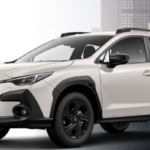 Subaru Crosstrek vs XV Australia: What’s the Difference and Which Is Better?
Its larger boot, more spacious cabin and taller roofline make it more convenient for everyday use.
Parents may particularly appreciate the additional room when installing child seats.
There's also more flexibility when carrying school bags, sporting equipment and holiday luggage.
Is the XV Suitable for a Small Family?
Absolutely.
A couple with one young child may find the XV perfectly suitable.
Its compact dimensions can be especially useful for families living in busy suburbs.
However, as children grow and luggage requirements increase, the smaller boot may become frustrating.
For households expecting to keep their SUV for many years, the Forester's extra space could be worth paying for.
Winner: Subaru Forester.
16. Which Subaru Is Better for City Driving?
Urban driving changes the comparison.
The XV's shorter body makes it easier to position in crowded areas.
Its slightly better official fuel economy is another advantage.
Although the Forester also offers good visibility, its larger body occupies more parking space.
The XV is therefore an excellent option for drivers who primarily commute, shop locally and occasionally travel outside the city.
We'd choose the XV for a compact urban lifestyle.
17. Which Subaru Is Better for Highway Driving?
Australian highways often involve long distances, changing weather and occasional rough road surfaces.
The Forester's stronger engine is beneficial when overtaking or travelling with a full load.
Its larger cabin also provides more space for passengers during lengthy journeys.
The XV remains comfortable at highway speeds, but its smaller engine may need to work harder during acceleration.
If we regularly travel between major cities or cover substantial distances in regional Australia, the Forester would generally be our preferred vehicle.
18. Subaru Forester vs XV for Camping
Both models are appealing to Australian drivers who enjoy outdoor activities.
Their all-wheel-drive systems and generous ground clearance make them suitable for reaching many established camping areas.
However, the Forester has a clear practical advantage.
Its larger luggage compartment provides more room for camping chairs, storage boxes and other equipment.
The taller interior also makes organising gear easier.
Can You Sleep in a Subaru Forester?
The Forester is generally the better choice for occasional vehicle-based sleeping arrangements.
With the rear seats folded, it provides a longer and more spacious cargo area than the XV.
However, we should measure the usable space carefully before purchasing a sleeping platform.
The floor may not be perfectly flat, and comfort depends on occupant height and the vehicle's interior layout.
The XV can also be adapted for occasional overnight use, but its smaller dimensions create greater limitations.
Winner: Subaru Forester.
19. Subaru Forester vs XV: Used Car Value
Since the XV was replaced by the Crosstrek in Australia, shoppers looking specifically for an XV will generally be purchasing a used vehicle.
That makes second-hand value particularly relevant.
Why Buy a Used Subaru XV?
The XV can offer attractive value for buyers who want genuine all-wheel drive without purchasing a larger SUV.
It provides respectable ground clearance, useful safety technology and practical everyday dimensions.
A well-maintained late-model example may represent excellent value.
Why Buy a Used Subaru Forester?
A used Forester offers substantially more interior space and additional engine performance.
For families, those advantages may justify the higher purchase cost.
When comparing listings, we should pay attention to mileage, service records, accident history, tyres and transmission condition.
It's also worth comparing similar model years and trim levels.
A base Forester and a fully equipped XV aren't necessarily equivalent in comfort or technology.
20. What About the New Subaru Crosstrek?
One important consideration is that the Subaru XV is no longer sold under that name as a new vehicle in Australia.
Subaru introduced the Crosstrek as its replacement in 2023.
The Crosstrek continues the XV's fundamental concept: a compact crossover with all-wheel drive, useful ground clearance and everyday practicality.
However, it introduced revised styling, updated technology and refinements compared with the outgoing XV.
Meanwhile, the Forester has also entered a newer generation.
Australian MY26 Forester models introduced revised design, updated safety systems and a new Strong Hybrid option.
Therefore, anyone comparing brand-new Subaru SUVs should focus on the Subaru Forester vs Subaru Crosstrek, rather than relying exclusively on historical Forester vs XV specifications.
For used-car shoppers, however, the XV remains highly relevant.
21. Subaru Forester vs XV: Pros and Cons
Subaru Forester Advantages
- More spacious passenger compartment.
- Significantly larger boot.
- Stronger petrol engine performance.
- Greater petrol-model towing capacity.
- Excellent visibility.
- Better suited to family holidays.
- More practical for camping equipment.
Subaru Forester Disadvantages
- Generally more expensive to purchase.
- Slightly higher official petrol consumption.
- Larger exterior dimensions.
- Less convenient in some tight parking spaces.
Subaru XV Advantages
- Compact, urban-friendly design.
- Slightly better official petrol fuel efficiency.
- Impressive ground clearance.
- Standard AWD across the Australian range.
- Generally lower purchase cost.
- Enjoyable and predictable handling.
Subaru XV Disadvantages
- Small luggage compartment.
- Less rear passenger space.
- Modest acceleration from the 2.0-litre petrol engine.
- Lower towing capacity.
- Less suitable for carrying bulky family equipment.
22. Subaru Forester vs XV: Which Should You Buy?
The decision ultimately depends on how we intend to use the vehicle.
| Buyer priority | Better choice |
|---|---|
| Family practicality | Forester |
| City commuting | XV |
| Boot capacity | Forester |
| Petrol fuel efficiency | XV |
| Engine performance | Forester |
| Tight parking spaces | XV |
| Camping equipment | Forester |
| Towing | Forester |
| Compact SUV styling | XV |
| Long-distance family travel | Forester |
We would choose the Subaru XV if affordable, compact all-wheel-drive transport were our main priority.
However, we'd choose the Forester if passenger comfort, luggage space and versatility were more important.
The Forester's larger body creates relatively few compromises while delivering substantial improvements in practicality.
For many Australian households, that makes it the more complete SUV.
Frequently Asked Questions
1. Is the Subaru Forester better than the XV?
The Subaru Forester is generally better for families, long-distance travel and carrying luggage. It offers more interior space, a larger boot and stronger petrol engine performance. However, the XV can be a better choice for city driving because of its smaller dimensions and slightly lower official petrol consumption.
2. Is the Subaru XV as good as the Forester off-road?
The XV is surprisingly capable on suitable gravel roads and moderate unsealed tracks. Both vehicles offer 220 mm of ground clearance in the versions compared and feature Subaru's all-wheel-drive system. However, the Forester provides greater cargo practicality and may offer additional traction-management features depending on the variant.
3. Which is more fuel-efficient, Subaru XV or Forester?
For the 2022 Australian petrol models, the XV is more fuel-efficient on paper. Its official combined consumption is approximately 7.0 L/100 km, compared with 7.4 L/100 km for the 2.5-litre Forester. Hybrid versions have different figures, and the newer Forester Strong Hybrid should be evaluated separately.
4. Is the Subaru XV cheaper to maintain than the Forester?
Not always. Although the XV is smaller, both vehicles share a number of mechanical characteristics and have broadly similar scheduled maintenance requirements. Actual ownership costs depend on vehicle condition, mileage, tyre choice and servicing history. Comparing quotes for the specific model years is the most reliable approach.
5. Why did Subaru discontinue the XV in Australia?
Subaru replaced the XV nameplate with Crosstrek in 2023 as part of a global naming strategy. The Crosstrek continues the same compact SUV concept with revised styling, updated technology and further refinements. Buyers looking for a new equivalent to the XV should therefore consider the Subaru Crosstrek.
Final Verdict: Subaru Forester vs XV Australia
After comparing the Subaru Forester and XV across performance, dimensions, fuel efficiency, reliability, safety and practicality, we believe both have clear strengths.
The Subaru XV is an excellent compact SUV for Australian drivers who value manageable dimensions, all-wheel-drive traction and everyday usability.
It's particularly appealing for city commuters, couples and smaller households who don't need a large luggage compartment.
However, the Subaru Forester is our overall winner for versatility.
Its considerably larger boot, spacious passenger compartment, stronger petrol engine and greater towing capacity make it better suited to a wider variety of Australian driving needs.
The Forester also offers the flexibility to accommodate growing families, camping equipment and longer road trips without requiring a significantly larger vehicle.
This content may interest you!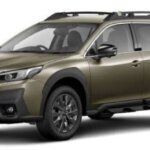 Subaru Outback vs XV Australia: Which Subaru Is Better?
Nevertheless, we shouldn't overlook purchase price and vehicle condition.
A carefully maintained XV may be a wiser purchase than a poorly maintained Forester.
Ultimately, if we're choosing between two similarly aged and well-maintained examples, we'd recommend the Subaru Forester for families and adventure-oriented buyers, while the Subaru XV remains the smarter option for compact urban driving.
Leave a Reply