
Hyundai i30 Models by Year Australia (2007–2026)

The Hyundai i30 has been one of Australia's most popular small cars since its introduction in 2007. Over the years, it has evolved from an affordable five-door hatchback into a versatile range featuring practical family vehicles, turbocharged models, hybrid sedans and high-performance versions.
If we're researching Hyundai i30 models by year in Australia, understanding the different generations, model codes, engines and trim levels is essential.
A 2010 Hyundai i30 SX is significantly different from a 2016 i30 ActiveX, while a 2022 i30 N Line offers a different driving experience from the regular hatchback.
There is also an important distinction between the Hyundai i30 Hatch and i30 Sedan. Although both vehicles share the i30 name in Australia, they belong to different model families.
In this complete guide, we'll explore the Hyundai i30's Australian history from 2007 to 2026, identify the major changes introduced each year, compare specifications and explain which versions are worth considering on the used-car market.
- Hyundai i30 Models by Year Australia: Overview
- Complete Hyundai i30 Models by Year Chart
- First-Generation Hyundai i30 (FD): 2007–2012
- Second-Generation Hyundai i30 (GD): 2012–2017
- Third-Generation Hyundai i30 (PD): 2017–2025
- Hyundai i30 Sedan Models by Year Australia
- Is the Hyundai i30 Discontinued in Australia?
- Hyundai i30 Trim Levels Explained
- Hyundai i30 Engines by Generation
- Which Hyundai i30 Years Had a Facelift?
- Best Hyundai i30 Years to Buy Used in Australia
- Hyundai i30 Years to Avoid: What Should Buyers Know?
- How to Identify Your Hyundai i30 Model Year
- Hyundai i30 Hatch vs Sedan: Which Is Better?
- Hyundai i30 Maintenance Costs in Australia
- What to Check Before Buying a Used Hyundai i30
- Frequently Asked Questions About Hyundai i30 Models
- Conclusion: Hyundai i30 Models by Year Australia
Hyundai i30 Models by Year Australia: Overview
The Hyundai i30 has been sold in three main hatchback generations in Australia:
- First generation (FD): 2007–2012.
- Second generation (GD): 2012–2017.
- Third generation (PD): Introduced in 2017, with regular hatchback production for Australia ending in 2025.
- i30 Sedan (CN7): Introduced in late 2020 as a separate sedan model family.
Some generations overlap because production dates, model years and first registration dates are not always identical.
For example, both FD and GD models can appear with a 2012 registration year, depending on when they were manufactured and sold.
Hyundai also introduced several facelifts, special editions and performance variants throughout the i30's Australian history.
Complete Hyundai i30 Models by Year Chart
The following table summarises the major Hyundai i30 models and developments in Australia.
| Year | Generation | Main Models and Changes |
|---|---|---|
| 2007 | FD | First-generation i30 hatchback; SX and SLX |
| 2008 | FD | SX, SLX and sportier SR versions |
| 2009 | FD | Hatchback range expands with i30cw wagon |
| 2010 | FD | Updated hatchback and wagon variants |
| 2011 | FD | Later first-generation models |
| 2012 | FD / GD | Second-generation GD hatchback arrives |
| 2013 | GD | Active, Elite, Premium, SR and other variants |
| 2014 | GD | Continuing hatchback and Tourer models |
| 2015 | GD Series II | Facelift with ActiveX and revised SR range |
| 2016 | GD Series II | Updated second-generation hatchback |
| 2017 | GD / PD | Third-generation PD hatchback launches |
| 2018 | PD | Go and high-performance i30 N |
| 2019 | PD | N Line replaces SR; Fastback N available |
| 2020 | PD / CN7 | Hatch continues; i30 Sedan introduced |
| 2021 | PD / CN7 | Updated hatchback, refreshed i30 N and Sedan N |
| 2022 | PD / CN7 | Hatchback, Sedan, N Line and N models |
| 2023 | PD / CN7 | Established hatchback and sedan range |
| 2024 | PD / CN7 | Sedan facelift, hybrid introduction and updated hatchback |
| 2025 | PD / CN7 | European-sourced N Line hatch; regular hatch production ends |
| 2026 | PD N / CN7 | i30 N Hatch and i30 Sedan range continue |
This table covers the major Australian-market developments rather than every limited edition, engine combination or transmission option.
First-Generation Hyundai i30 (FD): 2007–2012
The first-generation Hyundai i30, internally known as the FD, arrived in Australia in October 2007.
It represented a significant improvement over Hyundai's earlier small cars, introducing European-inspired styling, practical interior packaging and competitive equipment levels.
The original i30 competed against established Australian favourites such as the Toyota Corolla, Mazda 3, Ford Focus and Volkswagen Golf.
2007 Hyundai i30 Models
The original Australian range featured the SX and SLX variants.
Hyundai i30 SX
The SX was positioned as an affordable entry-level model, offering practical equipment for everyday driving.
Typical features included:
- Air conditioning.
- Power steering.
- Electric windows.
- Remote central locking.
- Front-wheel drive.
- Manual or automatic transmission options, depending on engine.
Hyundai i30 SLX
The SLX offered additional comfort and convenience equipment, making it appealing to buyers wanting a more refined small car.
Compared with the SX, it generally provided upgraded interior features and additional equipment.
2008–2009 Hyundai i30 Models
During 2008, the i30 range continued to expand.
The sportier SR version offered additional equipment and styling enhancements.
In 2009, Hyundai introduced the i30cw wagon, giving Australian families a more practical alternative to the standard hatchback.
The wagon offered additional luggage capacity and improved versatility for buyers who regularly transported bulky items.
2010–2012 Hyundai i30 Models
The later FD models retained the fundamental design of the original vehicle, with equipment and styling updates helping the i30 remain competitive.
Common versions included:
- Hyundai i30 SX.
- Hyundai i30 SLX.
- Hyundai i30 SR.
- Hyundai i30cw wagon.
Petrol and turbo-diesel engines remained available.
Today, first-generation examples are relatively inexpensive on Australia's used-car market, making them possible choices for first-time buyers.
However, their age means maintenance history is particularly important.
Hyundai i30 FD Engine Options
| Engine | Fuel | Characteristics |
|---|---|---|
| 2.0L four-cylinder | Petrol | Common everyday driving option |
| 1.6L CRDi turbo | Diesel | Good fuel economy and useful torque |
The 2.0-litre petrol engine was widely available and could be paired with a five-speed manual or four-speed automatic transmission.
The 1.6-litre turbo-diesel appealed particularly to drivers covering longer distances.
When purchasing an older diesel i30, we should inspect the turbocharger, fuel system, cooling system and service history.
Second-Generation Hyundai i30 (GD): 2012–2017
Hyundai introduced the second-generation GD i30 in Australia in June 2012.
Compared with the FD, this generation featured a more modern exterior, improved interior materials, additional technology and a broader selection of equipment.
The GD was an important step forward because it made the i30 feel more competitive against established Japanese and European small cars.
2012–2014 Hyundai i30 Models
The original GD range included several familiar trim names.
Hyundai i30 Active
The Active was the main entry-level version, designed to deliver everyday practicality and value.
It offered essential equipment for buyers who wanted an affordable modern hatchback.
Hyundai i30 Elite
The Elite added convenience and comfort equipment, making it suitable for drivers wanting more technology without moving to the most expensive model.
Hyundai i30 Premium
Premium versions offered more luxury features, which could include leather-appointed upholstery, additional electronic equipment and upgraded interior finishes.
Hyundai i30 SR
The SR targeted drivers looking for sportier styling and stronger petrol performance.
During this period, Hyundai also offered three-door versions and wagon derivatives, including the i30 Tourer.
Not every body style or trim was available throughout every model year.
2015 Hyundai i30 Series II Facelift
One of the most important updates arrived in April 2015.
Hyundai introduced the GD Series II, bringing revised styling, additional equipment and adjustments to the range.
The updated five-door hatchback line-up included:
| Variant | Position in Range |
|---|---|
| Active | Entry-level |
| ActiveX | Enhanced value and equipment |
| SR | Sportier petrol variant |
| SR Premium | Sporty model with additional luxury |
| Premium | Comfort-focused flagship |
The facelift featured a revised front grille, improvements to standard equipment and transmission updates for selected engines.
The ActiveX became a particularly interesting choice because it offered additional comfort features without requiring buyers to move into a more expensive performance-oriented version.
2016 Hyundai i30 Models
The 2016 i30 continued with the Series II design.
For buyers comparing 2013 and 2016 examples, the newer model generally provides a more contemporary appearance and updated equipment.
However, the mechanical condition and service history of an individual vehicle remain more important than the model year alone.
Hyundai i30 GD Engine Options
Common Australian-market powertrains included:
| Engine | Fuel | Typical Use |
|---|---|---|
| 1.8L four-cylinder | Petrol | Everyday hatchback driving |
| 2.0L four-cylinder | Petrol | Sportier SR variants |
| 1.6L CRDi | Diesel | Economy-focused versions |
The 1.8-litre petrol engine became a popular option in the second generation.
It was paired with manual or conventional automatic transmissions, depending on the variant.
The diesel engine offered strong efficiency, while the SR's larger petrol engine appealed to drivers wanting more performance.
Third-Generation Hyundai i30 (PD): 2017–2025
The third-generation PD i30 arrived in Australian showrooms in 2017.
This generation introduced a more sophisticated design, improved handling, additional safety technology and stronger turbocharged performance options.
It also became the foundation for Hyundai's first dedicated high-performance i30 N.
2017 Hyundai i30 Models
At launch, the Australian PD range included:
- i30 Active.
- i30 Elite.
- i30 Premium.
- i30 SR.
- i30 SR Premium.
The entry-level Go was added later in 2017.
The SR models were particularly interesting because they used a turbocharged 1.6-litre petrol engine producing approximately 150 kW and 265 Nm.
By comparison, regular petrol versions offered a naturally aspirated 2.0-litre engine.
2018 Hyundai i30 Models
The most significant development for 2018 was the arrival of the Hyundai i30 N.
This was Hyundai's first dedicated N performance model sold in Australia.
The i30 N introduced a 2.0-litre turbocharged petrol engine, performance-oriented suspension and specialised driving modes.
This content may interest you!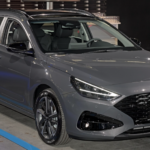 Hyundai i30 Pros and Cons in Australia: 2026 Review
It competed against established hot hatchbacks such as the Volkswagen Golf GTI and Honda Civic Type R.
Unlike the regular i30, the N was developed specifically for enthusiastic driving.
2019 Hyundai i30 Models: N Line Arrives
An important change occurred with the 2019 model range.
Hyundai replaced the SR and SR Premium with the N Line and N Line Premium.
These variants offered sportier exterior styling inspired by the high-performance i30 N.
Typical N Line features included:
- Aggressive front and rear bumpers.
- Larger alloy wheels.
- Sports seats.
- N Line badging.
- Sports suspension tuning.
- Turbocharged petrol performance.
The 2019 N Line retained the 1.6-litre turbocharged petrol engine producing 150 kW.
The high-performance i30 N and i30 Fastback N were separate models, rather than upgraded N Line versions.
2020 Hyundai i30 Models
The 2020 Australian hatchback range offered a wide selection of trims.
These included Go, Active, Elite, Premium, N Line and N Line Premium, alongside dedicated N performance models.
Buyers could choose among naturally aspirated petrol engines, turbocharged petrol engines and selected diesel variants.
The i30 N continued as the performance flagship.
The year was also significant because Hyundai introduced the i30 Sedan name in Australia as a replacement for the Elantra badge.
2021 Hyundai i30 Facelift
Hyundai updated the i30 hatchback range for the 2021 model year.
The facelift brought sharper front-end styling, additional technology and more advanced safety equipment.
The revised range included:
- i30.
- i30 Active.
- i30 Elite.
- i30 N Line.
- i30 N Line Premium.
The previous Go badge was replaced by the simpler i30 name.
Important improvements included additional Hyundai SmartSense driver-assistance features and upgraded infotainment systems.
The facelifted i30 N also received major updates, including an available eight-speed wet dual-clutch transmission.
This was an important development for buyers who wanted the performance of the i30 N without a manual gearbox.
2022–2023 Hyundai i30 Models
The 2022 and 2023 model years continued the updated third-generation platform.
Regular hatchbacks remained available with the naturally aspirated petrol engine, while N Line variants provided a sportier driving character.
The i30 N offered high-performance hardware, including a powerful turbocharged engine, specialised suspension and enhanced braking.
During this period, buyers could also choose the separately developed i30 Sedan and i30 Sedan N.
For many used-car shoppers, these years represent an attractive combination of relatively modern safety features, established mechanical technology and improved refinement.
2024–2025 Hyundai i30 Hatch Changes
One of the biggest developments in the i30's later Australian history was the change in production sourcing.
After Korean production ended, the regular hatchback was sourced from the Czech Republic.
The revised European-built hatchback range was introduced locally in 2024 for the 2025 model year.
Instead of the previous broad selection of affordable versions, Hyundai concentrated on two trims:
- Hyundai i30 N Line.
- Hyundai i30 N Line Premium.
Both used a 1.5-litre turbocharged petrol engine incorporating 48-volt mild-hybrid technology.
This powertrain produced 117 kW and 253 Nm and was paired with a seven-speed dual-clutch transmission.
The result was an efficiency-focused sporty hatchback rather than a direct performance equivalent of the previous 150 kW N Line.
The change also increased the entry price of the regular hatchback range.
Hyundai subsequently confirmed that production of the regular i30 Hatch for Australia would end in December 2025.
Hyundai i30 Sedan Models by Year Australia
The Hyundai i30 Sedan has an unusual history because it is not simply a four-door version of the European-designed i30 hatchback.
In Australia, Hyundai adopted the i30 Sedan badge for the vehicle known internationally as the Hyundai Elantra.
The seventh-generation sedan, identified by the CN7 model code, was launched locally in late 2020 for the 2021 model year.
2021–2023 Hyundai i30 Sedan Models
Early Australian models included:
- i30 Sedan Active.
- i30 Sedan Elite.
- i30 Sedan N Line.
- i30 Sedan N Line Premium.
The standard sedan used a naturally aspirated 2.0-litre petrol engine.
N Line variants featured a turbocharged 1.6-litre petrol engine, offering improved acceleration and a sportier driving character.
The high-performance i30 Sedan N arrived in 2021 with a 2.0-litre turbocharged engine producing 206 kW.
This made the Sedan N a substantially more powerful vehicle than the standard N Line.
2024 Hyundai i30 Sedan Facelift
The 2024 model year brought major updates to the sedan.
Hyundai introduced revised exterior styling, upgraded technology and a new hybrid powertrain.
The updated range featured regular petrol versions, N Line models and hybrid alternatives.
One of the most notable additions was the Hyundai i30 Sedan Hybrid, combining a 1.6-litre petrol engine with an electric motor.
Hyundai quoted combined-cycle fuel consumption of 3.9 L/100 km for the hybrid powertrain.
This made it an attractive alternative for drivers prioritising efficiency.
2025–2026 Hyundai i30 Sedan Models
By 2026, the Australian sedan line-up continued with multiple variants.
These included:
| Model | Engine Type | Main Focus |
|---|---|---|
| i30 Sedan | 2.0L petrol | Everyday practicality |
| i30 Sedan Elite | 2.0L petrol | Added comfort and equipment |
| i30 Sedan Premium | 2.0L petrol | Luxury and technology |
| i30 Sedan Hybrid | 1.6L petrol-electric | Fuel efficiency |
| i30 Sedan Elite Hybrid | 1.6L petrol-electric | Efficiency and comfort |
| i30 Sedan N Line | 1.6L turbo petrol | Sporty driving |
| i30 Sedan N Line Premium | 1.6L turbo petrol | Sporty luxury |
| i30 Sedan N | 2.0L turbo petrol | High performance |
Exact configurations, equipment and availability should always be checked against the Australian specifications for the relevant model year.
Is the Hyundai i30 Discontinued in Australia?
As of October 2026, the Hyundai i30 nameplate has not been completely discontinued in Australia.
However, the regular i30 Hatch has been discontinued for the Australian market.
Production of the mainstream hatchback ended in December 2025.
Remaining new vehicles may still appear in dealer stock, but they are not evidence of continued regular hatchback production.
The high-performance i30 N Hatch remains part of the Australian range, alongside the i30 Sedan family.
This distinction matters because searching for a new 2026 Hyundai i30 can produce results for the sedan, high-performance hatchback and older hatchback inventory.
Hyundai i30 Trim Levels Explained
Over the years, Hyundai has changed the names of its trim levels.
Understanding these badges makes comparing used vehicles much easier.
| Trim | General Positioning |
|---|---|
| SX | Early entry-level FD model |
| SLX | Better-equipped first-generation model |
| Go | Budget-oriented PD hatch |
| Active | Mainstream everyday model |
| ActiveX | Value-focused GD Series II version |
| Elite | More comfort and technology |
| Premium | Luxury-oriented specification |
| SR | Sportier variant before N Line |
| SR Premium | Sporty model with additional equipment |
| N Line | Sports styling and upgraded performance characteristics |
| N Line Premium | Sporty specification with luxury features |
| N | Dedicated high-performance model |
A common mistake is assuming that N Line and N are interchangeable.
They are not.
Hyundai i30 N Line vs i30 N
The i30 N Line is designed for drivers who want sportier styling and a more engaging driving experience without purchasing a dedicated high-performance vehicle.
The i30 N is engineered with substantially more performance-focused components.
Depending on model year, these can include:
- Higher-output turbocharged engines.
- Electronically controlled suspension.
- Performance brakes.
- Limited-slip differential technology.
- Specialised driving modes.
- Performance exhaust systems.
Consequently, running costs, tyres, insurance and servicing requirements may differ significantly.
Hyundai i30 Engines by Generation
Another important consideration when comparing Hyundai i30 models by year is the engine.
Different generations have used different petrol, diesel and electrified powertrains.
| Generation | Common Australian Engines |
|---|---|
| FD, 2007–2012 | 2.0L petrol; 1.6L turbo-diesel |
| GD, 2012–2017 | 1.8L petrol; 2.0L petrol; 1.6L diesel |
| PD, 2017–2020 | 2.0L petrol; 1.6L turbo petrol; 1.6L diesel; 2.0L turbo N |
| PD, 2021–2023 | 2.0L petrol; 1.6L turbo petrol; 2.0L turbo N |
| Updated PD hatch, 2024–2025 | 1.5L turbo mild-hybrid; 2.0L turbo N |
| CN7 Sedan, 2021 onward | 2.0L petrol; 1.6L turbo; 2.0L turbo N; 1.6L hybrid from 2024 |
Not every engine was available in every trim or throughout every year shown.
We should also remember that transmission choices changed between generations.
Older vehicles commonly used conventional torque-converter automatics, while some newer turbocharged models introduced dual-clutch transmissions.
This content may interest you!How Long Do Hyundai i30s Last? Mileage & LifespanThe exact drivetrain should be confirmed using the vehicle's identification details rather than relying solely on its badge.
Which Hyundai i30 Years Had a Facelift?
Hyundai introduced several important design and technology updates throughout the i30's Australian history.
| Year | Main Change |
|---|---|
| 2010–2011 | First-generation running updates |
| 2015 | GD Series II facelift |
| 2019 | SR replaced by N Line |
| 2021 | PD hatch facelift and safety updates |
| 2021 | Updated i30 N with optional DCT |
| 2024 | CN7 Sedan facelift and hybrid introduction |
| 2024–2025 | European-built hatch refresh with mild-hybrid engine |
A facelift is different from a completely new generation.
For example, the 2015 i30 Series II remained part of the GD generation, while the 2017 PD was a new generation altogether.
This distinction matters when ordering replacement parts or researching mechanical problems.
Best Hyundai i30 Years to Buy Used in Australia
There isn't one perfect Hyundai i30 model year for every buyer.
The ideal choice depends on budget, intended use, mileage, maintenance history and the features we consider essential.
However, several periods stand out.
Best Budget Choice: 2015–2016 Hyundai i30
The 2015 and 2016 GD Series II models can offer good value for drivers looking for inexpensive and practical transportation.
The Active and ActiveX versions are especially worth comparing.
Their strengths include:
- Straightforward everyday driving.
- A practical five-door body.
- Widely available second-hand examples.
- Reasonable equipment for their age.
We would prioritise well-maintained petrol versions over neglected vehicles with lower advertised prices.
Best All-Round Choice: 2021–2023 Hyundai i30
For many Australian buyers, the facelifted third-generation hatchback is a particularly attractive option.
These models benefit from newer safety features, more modern infotainment and improved cabin refinement.
The 2.0-litre petrol versions are worth considering for uncomplicated daily driving, while the N Line provides a sportier alternative.
Best Performance Choice: Hyundai i30 N
Enthusiasts seeking maximum performance should look at the dedicated i30 N.
The 2021-onward update is particularly interesting because of its additional technology and available dual-clutch automatic transmission.
However, we should carefully inspect the tyres, brakes, suspension, modifications and previous maintenance.
Hyundai i30 Years to Avoid: What Should Buyers Know?
It would be misleading to identify an entire Hyundai i30 model year as universally unreliable.
Problems depend on the engine, transmission, maintenance history and how a particular vehicle has been used.
Nevertheless, some ownership considerations deserve attention.
Older FD Models
Cars manufactured between 2007 and 2012 are now considerably older.
Age-related deterioration may affect suspension components, rubber seals, cooling systems and electrical equipment.
A comprehensive mechanical inspection is essential.
High-Mileage Diesel Models
Diesel-powered i30 models can be economical, particularly when regularly driven over longer distances.
However, repair costs associated with fuel-injection equipment, turbochargers or emissions systems can become significant.
Not every engine has the same emissions-control equipment, so we should verify the exact specification.
Turbocharged Models with DCT Transmissions
Some turbocharged i30 variants use dual-clutch transmissions.
During a test drive, we should check for unusual hesitation, excessive juddering, warning messages or inconsistent engagement.
These symptoms do not automatically indicate transmission failure, but they deserve professional investigation.
Poorly Maintained Performance Versions
The i30 N is designed for enthusiastic driving.
This makes a detailed inspection especially important when buying used.
We should look for evidence of overheating, poorly executed modifications, neglected servicing or excessive wear.
A properly maintained older i30 may be a better purchase than a newer vehicle with an incomplete service history.
How to Identify Your Hyundai i30 Model Year
If we're unsure which Hyundai i30 model we own or are considering purchasing, several identification methods can help.
Check the Model Code
The generation code is one of the easiest ways to narrow down the vehicle.
- FD: First-generation i30.
- GD: Second-generation i30.
- PD: Third-generation i30 Hatch.
- CN7: i30 Sedan introduced for the 2021 model year.
These codes are particularly useful when searching for replacement parts, owner's manuals and compatible accessories.
Check the VIN
The Vehicle Identification Number contains manufacturer and vehicle identification information.
A Hyundai dealer or suitable vehicle information service can use the VIN to help confirm the exact model specification.
This is more reliable than identifying a vehicle using registration year alone.
Check the Build Date
A vehicle advertised as a 2018 Hyundai i30 might have been manufactured in 2017.
Similarly, a car first registered in 2025 may have an earlier build date.
We should distinguish among:
- Manufacturing date.
- Model year.
- Australian compliance information.
- First registration date.
These details can affect parts compatibility, resale value and the interpretation of advertised specifications.
Hyundai i30 Hatch vs Sedan: Which Is Better?
The i30 Hatch and i30 Sedan serve different purposes, despite sharing the same model name.
| Feature | i30 Hatch | i30 Sedan |
|---|---|---|
| Body style | Five-door hatchback | Four-door sedan |
| Main strength | Practical cargo access | Separate luggage compartment |
| City driving | Compact and versatile | Comfortable everyday transport |
| Performance version | i30 N Hatch | i30 Sedan N |
| Hybrid availability | Mild hybrid in late N Line hatch | Full hybrid in selected sedan models |
| Australian status in 2026 | N Hatch continues; regular hatch discontinued | Sedan range continues |
The hatchback is attractive for drivers who regularly transport bulky items or prefer the versatility of a rear liftgate.
The sedan offers a conventional boot, a longer body and a different driving and interior experience.
For drivers prioritising fuel economy, the full-hybrid i30 Sedan deserves particular attention.
For enthusiasts seeking a practical performance hatchback, the i30 N remains an interesting choice.
Hyundai i30 Maintenance Costs in Australia
Ownership costs are another important factor when comparing different i30 model years.
Several variables affect how much we spend maintaining an i30:
- Engine type.
- Transmission type.
- Vehicle age and kilometres travelled.
- Service history.
- Tyre size.
- Availability of replacement parts.
- Whether genuine or suitable aftermarket components are used.
A naturally aspirated petrol hatchback will generally have different maintenance requirements from a turbocharged i30 N.
Older vehicles may also require age-related repairs that aren't part of routine servicing.
Before purchasing, we should obtain a service-cost estimate based on the exact VIN, engine and transmission.
We should avoid assuming that all i30 models have identical servicing costs simply because they share the same badge.
What to Check Before Buying a Used Hyundai i30
A thorough inspection can prevent expensive surprises.
We recommend the following checklist.
| Inspection Area | What to Check |
|---|---|
| Service history | Regular servicing and supporting invoices |
| Engine | Oil leaks, unusual noise and overheating |
| Transmission | Smooth operation and correct gear engagement |
| Cooling system | Coolant condition, leaks and operating temperature |
| Suspension | Noises, worn bushes and shock absorbers |
| Brakes | Disc condition, pad wear and braking consistency |
| Tyres | Uneven wear and correct specification |
| Electronics | Infotainment, sensors and warning lights |
| Bodywork | Accident repairs, corrosion and panel alignment |
| Documentation | VIN, registration, ownership and finance status |
In Australia, it is also sensible to arrange a Personal Property Securities Register (PPSR) check where applicable.
A professional pre-purchase inspection is especially valuable for older or higher-mileage vehicles.
We should also check whether any safety recalls remain outstanding.
Frequently Asked Questions About Hyundai i30 Models
1. What are the Hyundai i30 generations in Australia?
The Australian Hyundai i30 hatchback has three main generations: FD from 2007 to 2012, GD from 2012 to 2017 and PD from 2017 onward. Regular PD hatchback production for Australia ended in December 2025, while the high-performance i30 N Hatch continued into 2026. The separately developed CN7 i30 Sedan was introduced in late 2020.
2. What is the difference between Hyundai i30 FD, GD and PD?
FD, GD and PD are Hyundai's internal generation codes for the i30 hatchback. The FD is the original model, the GD introduced a more modern design and improved refinement, and the PD brought further technology, safety improvements and more advanced performance versions.
3. Which year Hyundai i30 is best to buy in Australia?
For a balance of modern features, practicality and used-car appeal, a well-maintained 2021–2023 Hyundai i30 is worth considering. Buyers with smaller budgets may prefer a 2015–2016 GD Series II, while enthusiasts should consider the i30 N. Vehicle condition is more important than model year alone.
4. Is the Hyundai i30 Sedan the same as the hatchback?
No. The i30 Sedan sold in Australia is based on the vehicle known internationally as the Hyundai Elantra. It uses a different model family from the i30 hatchback, although both are marketed under the i30 name in Australia.
5. Can you still buy a new Hyundai i30 in Australia in 2026?
Yes, the i30 nameplate continues in Australia through the Sedan range and high-performance i30 N Hatch. However, production of the regular i30 Hatch for the Australian market ended in December 2025. Any remaining regular hatchback availability depends on dealer inventory.
Conclusion: Hyundai i30 Models by Year Australia
The Hyundai i30 has undergone significant changes since arriving in Australia in 2007.
The first-generation FD established its reputation as an affordable and practical small car. The second-generation GD introduced better styling, comfort and refinement, while the third-generation PD expanded the range with more sophisticated technology and dedicated performance models.
The arrival of the i30 Sedan added another dimension to the nameplate, providing Australians with conventional petrol, hybrid and performance-focused sedan choices.
Although the regular hatchback was discontinued for Australia after 2025 production, the i30 name continues through the Sedan and N performance models.
When comparing Hyundai i30 models by year in Australia, we should focus on the generation code, engine, transmission, equipment, service history and overall vehicle condition.
This content may interest you!Hyundai i30 Tyre Size Guide: All Models and YearsBy understanding how the range evolved from 2007 to 2026, we can more confidently identify the Hyundai i30 that best suits our driving needs, budget and long-term ownership expectations.
Leave a Reply