
Hyundai i30 vs Peugeot 308 Australia: Full Comparison

Choosing between the Hyundai i30 and Peugeot 308 in Australia is an interesting decision. Both are compact hatchbacks designed to combine everyday practicality, attractive styling, modern technology and enjoyable driving dynamics. However, they approach these priorities in noticeably different ways.
The Hyundai i30 has established itself as a familiar choice among Australian motorists. Its combination of practicality, competitive pricing, accessible servicing and strong equipment levels makes it appealing to buyers looking for dependable everyday transport.
The Peugeot 308 takes a different approach. With distinctive European styling, a sophisticated interior and an efficient hybrid powertrain, it appeals to drivers who want something more premium and individual.
But which car is actually better for Australian roads?
In this comprehensive Hyundai i30 vs Peugeot 308 comparison, we'll examine their engines, fuel consumption, dimensions, interior comfort, technology, safety, reliability, maintenance costs and overall value.
We'll focus primarily on the Hyundai i30 N Line Hatch and Peugeot 308 GT Hybrid available in the Australian market, while also explaining where the i30 Sedan fits into the comparison.
- Hyundai i30 vs Peugeot 308: Quick Comparison
- Hyundai i30 vs Peugeot 308 Price in Australia
- Exterior Design: Sporty or Sophisticated?
- Dimensions and Size Comparison
- Interior Quality and Comfort
- Engine Performance Comparison
- Fuel Economy: Hyundai i30 vs Peugeot 308
- Hybrid Technology: Which System Is Better?
- Driving Experience on Australian Roads
- Boot Space and Practicality
- Rear Seat Space and Family Comfort
- Technology and Infotainment
- Safety Features Comparison
- Reliability: Hyundai i30 vs Peugeot 308
- Maintenance and Servicing Costs
- Warranty Comparison in Australia
- Hyundai i30 vs Peugeot 308 Insurance Costs
- Resale Value and Depreciation
- Hyundai i30 vs Peugeot 308 for City Driving
- Hyundai i30 vs Peugeot 308 for Highway Driving
- Pros and Cons of the Hyundai i30
- Pros and Cons of the Peugeot 308
- Which Car Should You Buy in Australia?
- Frequently Asked Questions
- Final Verdict: Hyundai i30 or Peugeot 308?
Hyundai i30 vs Peugeot 308: Quick Comparison
Before exploring the details, let's compare some important specifications.
| Specification | Hyundai i30 N Line Hatch | Peugeot 308 GT Hybrid |
|---|---|---|
| Body style | 5-door hatchback | 5-door hatchback |
| Engine | 1.5L turbo petrol mild hybrid | 1.2L turbo petrol hybrid |
| Cylinders | 4 | 3 |
| Maximum power | 117 kW | 107 kW combined |
| Maximum torque | Approximately 250 Nm | 230 Nm |
| Transmission | 7-speed dual-clutch automatic | 6-speed electrified dual-clutch automatic |
| Drivetrain | Front-wheel drive | Front-wheel drive |
| Fuel consumption | 5.6 L/100 km | 4.2 L/100 km |
| Length | 4,340 mm | 4,365 mm |
| Width | 1,795 mm | 1,859 mm |
| Wheelbase | 2,650 mm | 2,675 mm |
| Boot capacity | 395 litres | 384 litres |
| Seats | 5 | 5 |
| Standard new-car warranty | 5 years, unlimited km | 5 years, unlimited km |
Specifications are based on the Australian-market i30 N Line 1.5T mild-hybrid hatch and 308 GT Hybrid. Hyundai also offers an additional two years of warranty coverage on eligible vehicles when its authorised-servicing conditions are met. Equipment, prices and availability can vary by model year.
Initial verdict: The Hyundai i30 offers slightly more power, a practical boot and a strong ownership proposition. The Peugeot 308 delivers better official fuel economy, a more distinctive interior and a premium European character.
Hyundai i30 vs Peugeot 308 Price in Australia
Price is one of the most important considerations when comparing these compact hatchbacks.
Historically, Hyundai has positioned the i30 as a value-oriented alternative to more expensive European vehicles. Peugeot, meanwhile, has moved the 308 further towards the premium end of the small-car segment.
However, current promotions can substantially change the comparison.
Hyundai i30 Pricing
The Australian Hyundai i30 range includes several options:
- i30 Sedan with a naturally aspirated petrol engine.
- i30 Sedan Hybrid for improved fuel efficiency.
- i30 N Line Hatch with a turbocharged mild-hybrid powertrain.
- i30 N Line Premium Hatch with additional comfort features.
- i30 N performance models for enthusiasts.
The i30 N Line Hatch generally sits around the $40,000 drive-away mark, depending on location, model year, equipment and available offers.
Higher-specification versions cost more, while the i30 Sedan provides a less expensive entry into the broader i30 family.
Peugeot 308 Pricing
The Peugeot 308 GT Hybrid has a regular Australian list price of approximately $48,990 before on-road costs.
However, a promotional national drive-away price of $42,990 is advertised for eligible 308 GT Hybrid stock in October 2026, subject to conditions and availability.
This significantly reduces the gap between the Peugeot and the Hyundai.
Buyers should distinguish regular manufacturer list prices from drive-away offers, which include certain on-road costs.
Which Car Offers Better Value?
The Hyundai i30 generally makes more sense for buyers prioritising affordability and straightforward ownership.
However, the Peugeot 308 becomes much more competitive when substantial promotional discounts are available.
For buyers considering the more expensive i30 N Line Premium, the Peugeot may offer an appealing combination of equipment, efficiency and styling at a similar transaction price.
Our advice is to compare actual drive-away quotations rather than relying exclusively on advertised list prices.
Exterior Design: Sporty or Sophisticated?
Design is subjective, but these two hatchbacks have clearly different personalities.
Hyundai i30 Exterior Styling
The Hyundai i30 N Line offers a sporty design without becoming excessively aggressive.
Its appearance includes:
- A prominent front grille.
- Sport-inspired front and rear bumpers.
- Distinctive alloy wheels.
- LED lighting.
- N Line exterior badging.
- Sporty side skirts and aerodynamic details.
The design is practical and familiar, making the i30 appealing to drivers who prefer a conventional hatchback with a slightly more athletic appearance.
Its relatively compact width is also useful when navigating tight city streets and parking spaces.
Peugeot 308 Exterior Styling
The Peugeot 308 has a more dramatic European appearance.
It features a sculpted bonnet, distinctive front grille, sharp lighting signatures and a low, confident stance.
Particularly noticeable are the vertical daytime running lights and rear three-claw lighting design.
The 308 GT Hybrid also features striking alloy wheels and premium exterior detailing.
Compared with the Hyundai, it feels more visually distinctive and upscale.
Exterior Design Winner
Peugeot 308.
If we're choosing based purely on exterior styling, the Peugeot takes the lead thanks to its bold proportions and distinctive design.
However, buyers who prefer understated sportiness may favour the Hyundai.
Dimensions and Size Comparison
Although both vehicles belong to the small-car segment, they are not identical in size.
| Dimension | Hyundai i30 Hatch | Peugeot 308 Hybrid |
|---|---|---|
| Length | 4,340 mm | 4,365 mm |
| Width | 1,795 mm | 1,859 mm |
| Height | 1,453 mm | 1,465 mm |
| Wheelbase | 2,650 mm | 2,675 mm |
| Boot space | 395 L | 384 L |
The Peugeot is approximately 25 mm longer and 64 mm wider.
It also has a slightly longer wheelbase, although this doesn't automatically translate into more usable rear-seat space.
The Hyundai's narrower body can be advantageous in urban environments.
For example, navigating older car parks in Sydney or Melbourne may feel easier in the i30.
Both vehicles remain compact enough for daily commuting and suburban parking.
Interior Quality and Comfort
The difference between these two models becomes more apparent once we step inside.
Hyundai i30 Interior
The Hyundai i30 cabin prioritises practicality and ease of use.
Its controls are generally straightforward, while the dashboard layout makes everyday functions relatively accessible.
Depending on the variant, equipment includes digital instrumentation, a touchscreen infotainment system, sports seats and upgraded upholstery.
The N Line specification adds a sportier atmosphere through distinctive seat designs, contrasting stitching and performance-inspired details.
Storage compartments and cupholders are thoughtfully positioned for daily use.
The main advantage is usability. Most drivers should become comfortable with the Hyundai's cabin layout quickly.
Peugeot 308 Interior
The Peugeot 308 feels more unconventional and premium.
Its signature i-Cockpit design combines a compact steering wheel with a high-mounted digital instrument display.
A 10-inch central touchscreen, configurable digital instruments and customisable touchscreen shortcuts create a distinctive technological environment.
The GT Hybrid also offers premium upholstery, ambient lighting and upscale interior detailing.
Materials and design elements give the cabin a more luxurious appearance than many mainstream hatchbacks.
However, Peugeot's unusual steering-wheel and instrument arrangement is not equally comfortable for everyone.
Depending on driving position and body proportions, some people may find that the steering wheel partially obstructs the instrument display.
A proper test drive is particularly important.
Which Interior Is Better?
For everyday simplicity, we prefer the Hyundai i30.
For design, presentation and premium atmosphere, the Peugeot 308 wins.
The best choice depends on whether you value intuitive controls or distinctive interior styling.
Engine Performance Comparison
Powertrain differences are important when comparing the Hyundai i30 and Peugeot 308 in Australia.
Both use turbocharged petrol engines with electrification, but their hybrid systems are not identical.
Hyundai i30 N Line Engine
The current i30 N Line Hatch uses a 1.5-litre turbocharged four-cylinder petrol engine supported by a 48-volt mild-hybrid system.
Its principal specifications include:
- Maximum power: 117 kW.
- Maximum torque: approximately 250 Nm.
- Seven-speed dual-clutch automatic transmission.
- Front-wheel drive.
- 48-volt mild-hybrid assistance.
This powertrain provides useful acceleration for everyday driving.
The turbocharged engine delivers strong mid-range response, making it well suited to overtaking and highway merging.
This content may interest you!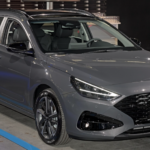 Hyundai i30 vs VW Golf Australia: Which Is Better?
The dual-clutch transmission can also provide relatively quick gear changes.
Peugeot 308 Hybrid Engine
The Peugeot 308 GT Hybrid features a smaller 1.2-litre turbocharged three-cylinder petrol engine combined with an electric motor.
Its specifications include:
- Maximum combined power: 107 kW.
- Maximum engine torque: 230 Nm.
- Six-speed electrified dual-clutch automatic transmission.
- Front-wheel drive.
- Hybrid battery charged through driving and regenerative braking.
Unlike a conventional plug-in hybrid, this version doesn't require external charging.
The hybrid system can assist the petrol engine and support limited low-speed electric operation under suitable conditions.
That makes it particularly appealing for stop-start urban driving.
Acceleration and Overtaking
The Hyundai's higher maximum power output suggests a slight advantage in outright engine performance.
The Peugeot counters with electric assistance that can help provide smooth response during lower-speed driving.
Neither vehicle should be confused with a dedicated hot hatch.
For drivers seeking substantially greater performance, the Hyundai i30 N is a separate proposition, with a considerably more powerful 2.0-litre turbo engine.
For ordinary commuting, motorway driving and weekend trips, both the i30 N Line and Peugeot 308 Hybrid provide sufficient performance.
Fuel Economy: Hyundai i30 vs Peugeot 308
Fuel consumption is one of the Peugeot's strongest advantages.
The Australian combined-cycle figures are:
<text preserveWhitespace={true}> </text>
| Model | Official combined consumption |
|---|---|
| Hyundai i30 N Line Hatch | 5.6 L/100 km |
| Peugeot 308 GT Hybrid | 4.2 L/100 km |
| Hyundai i30 Sedan 2.0 petrol | 6.1 L/100 km |
| Hyundai i30 Sedan Hybrid | 3.9 L/100 km |
These are laboratory-based figures. Actual results vary according to driving style, traffic, weather, tyres and vehicle load.
Which Car Uses Less Petrol?
The Peugeot 308 Hybrid uses approximately 25% less fuel than the Hyundai i30 N Line Hatch when comparing their published combined-cycle figures.
The difference becomes more relevant for drivers covering substantial distances.
For example, consider an Australian motorist travelling 15,000 km annually.
| Fuel consumption estimate | Hyundai i30 N Line | Peugeot 308 Hybrid |
|---|---|---|
| Annual distance | 15,000 km | 15,000 km |
| Fuel consumption | 5.6 L/100 km | 4.2 L/100 km |
| Estimated annual fuel use | 840 litres | 630 litres |
| Annual difference | — | 210 litres less |
At an illustrative petrol price of $2 per litre, the Peugeot could save approximately $420 per year.
Over five years, that amounts to around $2,100, assuming comparable conditions and stable fuel prices.
These savings are illustrative, not a prediction of real-world ownership costs.
What About the Hyundai i30 Sedan Hybrid?
An important exception is the Hyundai i30 Sedan Hybrid.
Its official consumption figure of 3.9 L/100 km is lower than that of the Peugeot 308 GT Hybrid.
Therefore, while the Peugeot wins against the i30 N Line Hatch for efficiency, it doesn't necessarily beat every member of the Hyundai i30 family.
Hybrid Technology: Which System Is Better?
Although both cars incorporate electrification, their systems have different capabilities.
Hyundai Mild-Hybrid Technology
The Hyundai uses a 48-volt mild-hybrid system.
This technology primarily supports the petrol engine rather than providing extensive independent electric driving.
Its main benefits include improved efficiency, smoother engine stop-start operation and electrical assistance under certain driving conditions.
For drivers who want familiar petrol-car behaviour with modest electrification, this is an appealing arrangement.
Peugeot Hybrid Technology
The Peugeot 308 Hybrid uses a more capable hybrid arrangement with an integrated electric motor and small traction battery.
It can recover energy during braking and use electric assistance to reduce petrol consumption.
Under appropriate conditions, it can also operate electrically for short periods without continuous petrol-engine propulsion.
The main advantage is particularly noticeable in urban driving, where frequent deceleration creates opportunities for energy recovery.
Hybrid System Verdict
Peugeot 308 Hybrid wins for fuel-saving capability.
However, the Hyundai i30 Sedan Hybrid deserves consideration if maximum fuel economy is your main purchasing priority.
Driving Experience on Australian Roads
Australia presents different driving conditions, from congested city centres to long-distance highways and winding regional roads.
Both hatchbacks are capable everyday vehicles, but their driving characters are noticeably different.
Hyundai i30 Ride and Handling
The Hyundai i30 N Line has a sportier personality than many conventional compact hatchbacks.
Its responsive turbocharged engine and well-controlled chassis make it enjoyable on winding roads.
Steering is generally predictable, and the suspension offers a balance between everyday comfort and enthusiastic driving.
However, the sportier wheels and suspension calibration can make certain road imperfections more noticeable.
On rough suburban streets, passengers may experience a firmer ride than in softer suspension setups.
The Hyundai feels particularly suitable for drivers who enjoy responsive acceleration and straightforward handling.
Peugeot 308 Ride and Handling
The Peugeot 308 takes a slightly different approach.
Its suspension and steering are designed to balance comfort, refinement and responsive cornering.
The compact steering wheel contributes to an immediate steering feel, although drivers may need time to become accustomed to the arrangement.
The hybrid powertrain also gives the Peugeot a different character in urban traffic.
Electric assistance can make low-speed acceleration feel responsive, while the petrol engine provides the necessary performance at higher speeds.
On longer journeys, the sophisticated cabin creates a pleasant environment.
Which Car Is Better for Long Trips?
Both models are suitable for interstate travel.
The Hyundai offers accessible controls, practical storage and familiar driving characteristics.
The Peugeot provides impressive fuel efficiency and a refined cabin atmosphere.
For extended highway driving, the ideal choice may depend more on seat comfort and driving position than the small differences in engine specifications.
We recommend testing both vehicles over a mixture of urban roads and higher-speed sections.
Boot Space and Practicality
Boot capacity is important for Australian buyers who regularly carry groceries, luggage, sports equipment or children's accessories.
The Hyundai i30 N Line Hatch provides approximately 395 litres of luggage space with the rear seats upright.
The Peugeot 308 GT Hybrid offers approximately 384 litres.
Although the Hyundai has a slight numerical advantage, the difference is relatively small.
Hyundai i30 Boot Capacity
The i30's hatchback layout provides convenient access to its luggage compartment.
Its benefits include:
- 395 litres of standard boot capacity.
- Approximately 1,301 litres with the rear seats folded.
- A practical opening for everyday luggage.
- Useful flexibility for transporting larger items.
One consideration is that the mild-hybrid i30 N Line uses a tyre repair kit instead of a conventional spare wheel.
This may matter to drivers who regularly travel through remote areas.
Peugeot 308 Boot Capacity
The Peugeot 308 GT Hybrid provides:
- 384 litres of luggage space with the rear seats upright.
- Approximately 1,295 litres with the rear seats folded.
- A practical five-door hatchback configuration.
- Useful flexibility for shopping and weekend luggage.
The hybrid battery arrangement affects cargo packaging compared with some non-hybrid 308 variants.
For that reason, buyers should avoid assuming that boot measurements from older petrol models apply to the current Australian hybrid.
Which Hatchback Is More Practical?
The Hyundai offers a slight advantage in measured boot volume.
This content may interest you! Subaru Liberty Years to Avoid: Complete Buying Guide
However, both provide enough luggage space for many couples and small families.
Before deciding, we recommend checking whether your particular pram, suitcase or other bulky equipment fits comfortably.
Rear Seat Space and Family Comfort
A five-seat configuration doesn't necessarily mean five adults will travel comfortably.
Both vehicles are better suited to four occupants than five adults on longer journeys.
Hyundai i30 Rear Seats
The Hyundai provides practical rear accommodation for a compact hatchback.
Adults of average height should find the rear seats suitable for ordinary journeys, although taller passengers may want more knee room.
The rear doors also provide convenient access for passengers.
Depending on specification, useful amenities include rear air vents, USB charging ports and a folding centre armrest.
For families, child-seat compatibility and front-seat clearance are worth checking carefully.
Peugeot 308 Rear Seats
The Peugeot's longer wheelbase doesn't automatically make it more spacious.
Its stylish exterior proportions and interior packaging can leave limited knee room for taller adults sitting behind similarly tall front occupants.
Nevertheless, the rear seats are suitable for children and many everyday passengers.
The premium cabin materials help create an attractive environment, even if maximum passenger accommodation isn't the Peugeot's strongest advantage.
Family Practicality Winner
Hyundai i30, by a narrow margin.
Its conventional cabin layout and slightly larger boot make it an appealing family-oriented choice.
However, neither hatchback is as spacious as a larger family SUV or medium-sized sedan.
Technology and Infotainment
Modern buyers expect smartphone connectivity, digital displays and advanced convenience features.
Fortunately, both vehicles provide a useful range of technology.
Hyundai i30 Technology
Depending on the model and trim, the i30 offers:
- Touchscreen infotainment.
- Apple CarPlay and Android Auto compatibility.
- Digital instrument displays.
- Wireless phone charging.
- USB charging connections.
- Driver-assistance technology.
- Automatic climate control.
Higher-specification N Line Premium models include additional convenience and comfort equipment.
Hyundai's advantage is its relatively familiar user interface.
Many frequently used functions remain easy to understand without navigating complicated menus.
Peugeot 308 Technology
The Peugeot 308 GT Hybrid offers a more elaborate digital environment.
Notable features include:
- A 10-inch digital instrument display.
- A 10-inch high-definition central touchscreen.
- Wireless Apple CarPlay and Android Auto.
- Configurable i-Toggle shortcuts.
- Integrated navigation.
- Wireless smartphone charging.
- A 360-degree camera system.
- Premium audio equipment.
The Peugeot's infotainment arrangement provides substantial functionality and a distinctive appearance.
However, some drivers may find its touchscreen-focused controls less intuitive than traditional physical buttons.
Technology Winner
Peugeot 308 GT Hybrid.
Its sophisticated displays, premium equipment and customisable interface give it an advantage in presentation.
Nevertheless, the Hyundai remains highly competitive for buyers who prioritise simplicity.
Safety Features Comparison
Safety is an essential consideration when choosing a vehicle for Australian conditions.
Both manufacturers offer modern driver-assistance systems, although the exact equipment depends on variant and model year.
Hyundai i30 Safety Features
Depending on specification, Hyundai SmartSense technologies can include:
- Autonomous emergency braking.
- Forward collision warning.
- Lane-keeping assistance.
- Driver attention monitoring.
- Blind-spot warning or assistance.
- Rear cross-traffic assistance.
- Parking sensors and reversing cameras.
These technologies are designed to assist drivers, but they cannot replace attentive driving.
Peugeot 308 Safety Features
The Peugeot 308 GT Hybrid offers an extensive safety package.
Features include:
- Autonomous emergency braking.
- Pedestrian and cyclist detection.
- Adaptive cruise control with stop-and-go functionality.
- Lane-keeping assistance.
- Blind-spot monitoring.
- Rear cross-traffic alerts.
- Front and rear parking sensors.
- A 360-degree camera system.
The Peugeot's equipment is impressive for a compact hatchback.
Which Car Is Safer?
Both provide valuable safety technology.
However, we shouldn't declare one universally safer based solely on the number of driver-assistance features.
Independent crash-test results must also be considered, and ratings can differ by body style, build date and model variant.
The i30 Hatch and i30 Sedan should not automatically be treated as having identical safety ratings.
Before purchasing, verify the specific Australian variant's current ANCAP applicability and included safety features.
Reliability: Hyundai i30 vs Peugeot 308
Reliability can influence ownership satisfaction more than almost any other factor.
A vehicle that looks attractive and drives beautifully may become frustrating if unexpected maintenance costs accumulate.
Is the Hyundai i30 Reliable?
The Hyundai i30 has an established history in Australia.
Its widespread presence means many local technicians are familiar with the model.
Common ownership advantages include a broad dealership network, established parts availability and extensive local market experience.
However, reliability still varies according to the engine, transmission, model year and maintenance history.
The modern i30 N Line incorporates a turbocharged engine, dual-clutch transmission and mild-hybrid components.
These systems require appropriate maintenance, and buyers shouldn't assume they will have exactly the same long-term ownership characteristics as older naturally aspirated i30 models.
For used vehicles, regular servicing and evidence of proper transmission operation are particularly important.
Is the Peugeot 308 Reliable?
The Peugeot 308 has a more complicated reliability reputation because different generations use different engines and technologies.
Older Peugeot and Stellantis 1.2-litre PureTech engines have attracted attention for timing-belt-related problems in certain applications.
However, the newer 308 GT Hybrid uses a different hybridised powertrain architecture, and problems associated with earlier engines should not automatically be attributed to it.
The more relevant question is how this particular engine and electrified dual-clutch transmission perform over many years.
As a relatively newer combination, Australian long-term ownership evidence is still more limited.
Buyers should follow the correct maintenance schedule, confirm applicable service requirements and investigate any manufacturer technical campaigns.
Reliability Winner
For buyers who prioritise a familiar Australian ownership environment, we would lean towards the Hyundai i30.
That preference reflects the established local market presence and servicing accessibility rather than proof that every Hyundai component is more reliable.
The Peugeot may still provide years of satisfactory ownership with appropriate maintenance.
Maintenance and Servicing Costs
Routine servicing deserves attention because it represents a recurring expense throughout vehicle ownership.
Hyundai i30 Servicing
Hyundai provides authorised servicing options across a broad Australian dealer network.
Depending on the vehicle and eligibility, buyers can access published service pricing and prepaid servicing arrangements.
Routine maintenance generally involves engine oil, filters, inspections, brake components and other scheduled items.
The mild-hybrid system also introduces additional electrical components.
Service intervals and costs should be confirmed for the exact vehicle rather than estimated from an older i30 model.
Peugeot 308 Servicing
Peugeot also provides authorised servicing and prepaid service plans.
This content may interest you!Hyundai i30 vs Toyota Corolla Australia: 2026 ComparisonFor the 308 Hybrid, advertised prepaid service packages include options covering three, four and five years.
As an example, a five-year prepaid service plan has been advertised at approximately $1,950, subject to the prevailing terms and pricing.
The Peugeot's hybrid system and electrified dual-clutch transmission make correct maintenance particularly important.
While routine costs may be competitive with prepaid servicing, buyers should also consider replacement-part availability and potential repair expenses outside warranty.
Which Car Is Cheaper to Maintain?
The Hyundai is likely to offer an advantage in servicing accessibility for many Australian owners.
However, it isn't possible to guarantee lower total maintenance expenditure without comparing actual quotations.
The Peugeot's fuel savings could offset some servicing differences.
For a proper comparison, we recommend calculating servicing, tyres, insurance, registration and petrol expenses over at least five years.
Warranty Comparison in Australia
Warranty coverage provides valuable protection against certain manufacturing defects.
The Peugeot 308 comes with a five-year, unlimited-kilometre manufacturer warranty for passenger vehicles.
Hyundai provides a standard five-year, unlimited-kilometre warranty, with coverage extending to seven years for eligible passenger vehicles first registered from 1 June 2025 when all scheduled servicing conditions are satisfied at authorised Hyundai dealers.
The additional Hyundai coverage is conditional, not an unconditional seven-year warranty.
| Warranty consideration | Hyundai i30 | Peugeot 308 |
|---|---|---|
| Standard vehicle warranty | 5 years | 5 years |
| Unlimited kilometres for eligible private passenger use | Yes | Yes |
| Additional warranty period | Up to 2 years, conditional | Not part of standard coverage |
| Authorised servicing available | Yes | Yes |
| Roadside assistance | Subject to programme conditions | Five-year coverage on eligible new vehicles |
Warranty conditions, exclusions and commercial-use restrictions should be checked before purchasing.
Warranty verdict: Hyundai has an advantage for buyers who qualify for the extended seven-year coverage and meet its servicing requirements.
Hyundai i30 vs Peugeot 308 Insurance Costs
Insurance premiums can vary considerably between two vehicles that appear similar in size.
Australian insurers calculate premiums using factors such as:
- Driver age and experience.
- Residential postcode.
- Vehicle value.
- Repair costs.
- Annual distance.
- Claims history.
- Parking arrangements.
- Selected excess and cover level.
The Peugeot's premium positioning and parts requirements could influence repair costs.
The Hyundai's widespread local presence may help with repair accessibility, although it doesn't guarantee a lower premium.
Rather than assuming one vehicle is cheaper to insure, obtain comprehensive insurance quotations for both cars using identical driver details and coverage settings.
Resale Value and Depreciation
Depreciation is often one of the largest costs associated with purchasing a new car.
Hyundai i30 Resale Value
The Hyundai i30 benefits from widespread Australian market recognition.
Its reputation as a practical small car may support demand among second-hand buyers.
Vehicles with complete maintenance records, reasonable kilometres and good cosmetic condition should be easier to evaluate and market.
However, resale values vary by trim, market conditions and purchase price.
Peugeot 308 Resale Value
The Peugeot 308 is a more specialised choice in Australia.
Its attractive styling and premium equipment may appeal to particular buyers, but the potential customer base can be narrower.
Significant discounts on new vehicles can also influence used-market valuations.
That doesn't necessarily make the Peugeot a poor purchase.
A discounted new 308 could represent good value, particularly for someone planning to keep it for many years.
Resale Value Winner
We would generally give Hyundai the advantage for used-market familiarity and potentially broader buyer demand.
However, depreciation should be calculated from the actual purchase price, not simply the manufacturer's recommended retail price.
Hyundai i30 vs Peugeot 308 for City Driving
Urban driving places particular demands on a vehicle.
Frequent braking, traffic congestion, parking restrictions and narrow streets make fuel efficiency and manoeuvrability especially important.
Hyundai i30 in the City
The i30 offers a relatively narrow body, predictable steering and familiar controls.
Its mild-hybrid technology helps improve overall efficiency.
The hatchback body is also convenient for parallel parking and everyday errands.
Peugeot 308 in the City
The Peugeot has a particular advantage in stop-start conditions because of its hybrid powertrain.
Energy recovery during braking can help reduce fuel consumption.
The electric motor also supports smooth responses in slower traffic.
However, its wider body may require slightly more care in narrow parking spaces.
City Driving Winner
Peugeot 308 Hybrid, particularly for drivers facing regular congestion.
Its efficiency and hybrid assistance make it a compelling urban commuter.
Hyundai i30 vs Peugeot 308 for Highway Driving
Australian motorists frequently travel long distances, whether commuting between regional centres or taking interstate road trips.
The Hyundai offers strong mid-range performance and predictable handling.
The Peugeot provides excellent official fuel economy and an attractive cabin for extended journeys.
Neither has a decisive advantage in every highway situation.
The Hyundai may appeal more to drivers who prefer its four-cylinder engine and conventional dashboard arrangement.
The Peugeot may be more attractive to drivers prioritising fuel efficiency and cabin ambience.
Ultimately, seat comfort, road noise, tyre choice and driver-assistance behaviour should be evaluated during a test drive.
Pros and Cons of the Hyundai i30
Advantages
- Established presence in the Australian market.
- Practical hatchback design.
- Slightly larger boot than the 308 GT Hybrid.
- Responsive turbocharged engine.
- Broad authorised service network.
- Straightforward everyday controls.
- Potential eligibility for extended warranty coverage.
- Strong range of body styles and powertrain options.
Disadvantages
- Higher official fuel consumption than the 308 GT Hybrid.
- Interior design is less distinctive.
- Sportier suspension can feel firm.
- The mild-hybrid system offers limited electric-driving capability.
- The N Line Hatch does not have a conventional spare wheel.
Pros and Cons of the Peugeot 308
Advantages
- Excellent official fuel efficiency.
- Distinctive European exterior styling.
- Premium interior design.
- Advanced infotainment features.
- Hybrid assistance in urban driving.
- Impressive driver-assistance equipment.
- Competitive value when heavily discounted.
- Comfortable and engaging driving character.
Disadvantages
- Relatively limited Australian market presence.
- Unconventional driving position may not suit everyone.
- Rear-seat space is not class-leading.
- Slightly smaller boot than the Hyundai.
- Long-term data for the newer hybrid powertrain is still developing.
- Replacement-part availability may require additional consideration.
Which Car Should You Buy in Australia?
The best vehicle depends on what you expect from your next compact hatchback.
| Your main priority | Our preference |
|---|---|
| Everyday practicality | Hyundai i30 |
| Official fuel efficiency between these two hatches | Peugeot 308 |
| Premium interior appearance | Peugeot 308 |
| Familiar controls | Hyundai i30 |
| Distinctive exterior styling | Peugeot 308 |
| Established Australian ownership network | Hyundai i30 |
| Hybrid capability in congested traffic | Peugeot 308 |
| Slightly larger boot | Hyundai i30 |
| Conditional extended warranty coverage | Hyundai i30 |
| Best discounted premium-hatch value | Depends on dealer offers |
Buy the Hyundai i30 If...
The Hyundai makes sense if you want a practical compact car with straightforward controls and an established Australian servicing network.
It's particularly appealing if you expect to keep the vehicle for several years and value everyday usability over premium presentation.
It also deserves attention if you regularly travel outside major cities and prefer a widely recognised model.
Buy the Peugeot 308 If...
The Peugeot makes sense if you want a hatchback with distinctive styling, premium technology and excellent fuel economy.
Its hybrid powertrain is especially attractive for drivers who spend considerable time in urban traffic.
Current promotional prices may also make it surprisingly competitive against higher-specification Hyundai models.
Frequently Asked Questions
1. Is the Hyundai i30 better than the Peugeot 308?
The Hyundai i30 is generally the more conventional choice for practicality, ownership familiarity and servicing accessibility in Australia. The Peugeot 308 provides more distinctive styling, a premium interior and better official fuel economy than the i30 N Line Hatch. Neither is universally better, and the right choice depends on your priorities.
2. Which is more fuel-efficient, the i30 or 308?
The Peugeot 308 GT Hybrid has an official combined fuel consumption figure of 4.2 L/100 km, compared with 5.6 L/100 km for the Hyundai i30 N Line Hatch. However, the Hyundai i30 Sedan Hybrid has an even lower official figure of 3.9 L/100 km. Actual fuel consumption depends on driving conditions and the specific model.
3. Is the Peugeot 308 expensive to maintain in Australia?
The Peugeot 308 isn't necessarily expensive to service, especially when using an appropriate prepaid maintenance plan. However, specialised repairs and parts availability may influence ownership costs. Buyers should compare servicing quotations, warranty terms and insurance costs before deciding.
4. Is the Hyundai i30 more reliable than the Peugeot 308?
The Hyundai i30 has a longer-established local ownership record and a broad Australian servicing network. The Peugeot 308 GT Hybrid uses a newer electrified powertrain with less extensive long-term Australian experience. There isn't enough directly comparable long-term evidence to guarantee that one specific current powertrain will be more reliable.
5. Is the Peugeot 308 worth buying in Australia?
Yes, the Peugeot 308 GT Hybrid is worth considering for buyers seeking an efficient, stylish and well-equipped hatchback. Its appeal increases when promotional discounts make it competitively priced. Buyers should test the unusual driving position, check local servicing access and compare the total cost of ownership against alternatives such as the Hyundai i30.
Final Verdict: Hyundai i30 or Peugeot 308?
The Hyundai i30 vs Peugeot 308 Australia comparison reveals two compact hatchbacks with different strengths.
The Hyundai i30 N Line Hatch focuses on everyday practicality, accessible technology, sporty performance and an established Australian ownership proposition.
The Peugeot 308 GT Hybrid distinguishes itself through premium styling, an upscale interior and impressive fuel efficiency.
For buyers who simply want a familiar, practical hatchback to use every day, we would choose the Hyundai i30. Its combination of functionality, established local presence and ownership support makes it a sensible long-term option.
However, the Peugeot 308 GT Hybrid is arguably the more interesting choice. Its design and hybrid technology offer a more distinctive experience, especially when the purchase price is competitive.
This content may interest you!Hyundai i30 vs Kona Australia: Which Is Better?If we regularly drove through congested Australian cities and wanted lower fuel consumption without sacrificing comfort or styling, the Peugeot would be particularly appealing.
The final decision should come down to actual drive-away pricing, seating comfort, warranty conditions and expected ownership costs.
Both vehicles deserve consideration, but the Hyundai is the more familiar all-rounder, while the Peugeot is the more distinctive and fuel-efficient alternative.
Leave a Reply