
Subaru Crosstrek vs Forester Australia: Which SUV Should You Buy?

Choosing between the Subaru Crosstrek and Subaru Forester in Australia can be surprisingly difficult. Both SUVs offer Subaru's famous Symmetrical All-Wheel Drive system, Boxer engines, impressive ground clearance and a reputation for handling Australian driving conditions confidently.
However, despite sharing several important characteristics, these vehicles are designed for slightly different buyers.
The Subaru Crosstrek is a compact SUV that prioritises manoeuvrability, everyday practicality and a lower purchase price. It is particularly appealing to drivers who spend most of their time commuting around cities such as Sydney, Melbourne, Brisbane and Perth but still enjoy weekend adventures.
The Subaru Forester, meanwhile, is a larger family-oriented SUV with considerably more cargo space, a stronger petrol engine and a more spacious interior. It is especially attractive to families, outdoor enthusiasts and drivers who regularly travel long distances.
The arrival of the latest-generation Forester and its stronger hybrid powertrain has also made this comparison more interesting.
So, which Subaru offers better value for Australian buyers?
In this detailed Subaru Crosstrek vs Forester Australia comparison, we'll examine their dimensions, engines, fuel consumption, hybrid technology, safety, towing capacity, reliability, ownership costs and overall practicality.
- Subaru Crosstrek vs Forester Australia: Quick Comparison
- Subaru Crosstrek vs Forester Size and Dimensions
- Subaru Crosstrek vs Forester Interior Space
- Subaru Crosstrek vs Forester Boot Space
- Subaru Crosstrek vs Forester Engine and Performance
- Subaru Crosstrek vs Forester Fuel Consumption Australia
- Subaru Crosstrek Hybrid vs Forester Hybrid Australia
- Subaru Crosstrek vs Forester Off-Road Capability
- Subaru Crosstrek vs Forester Towing Capacity
- Subaru Crosstrek vs Forester Safety Features
- Subaru Crosstrek vs Forester Technology and Features
- Subaru Crosstrek vs Forester Reliability
- Subaru Crosstrek vs Forester Maintenance Costs Australia
- Subaru Crosstrek vs Forester Price Australia
- Subaru Crosstrek vs Forester for City Driving
- Subaru Crosstrek vs Forester for Highway Driving
- Subaru Crosstrek vs Forester for Camping and Road Trips
- Subaru Crosstrek Pros and Cons
- Subaru Forester Pros and Cons
- Subaru Crosstrek vs Forester: Which Should You Buy in Australia?
- Frequently Asked Questions
- 1. Is the Subaru Forester Bigger Than the Crosstrek?
- 2. Which Is More Fuel-Efficient, the Subaru Crosstrek or Forester?
- 3. Is the Subaru Crosstrek or Forester Better for Off-Road Driving?
- 4. Is the Subaru Forester Worth Buying Over the Crosstrek?
- 5. Which Is More Reliable, the Subaru Crosstrek or Forester?
- Final Verdict: Subaru Crosstrek vs Forester Australia
Subaru Crosstrek vs Forester Australia: Quick Comparison
Before exploring their differences, let's compare the main specifications of the Australian-market 2026 models.
| Specification | Subaru Crosstrek | Subaru Forester |
|---|---|---|
| Vehicle category | Small SUV | Medium SUV |
| Seating capacity | 5 | 5 |
| Petrol engine | 2.0L Boxer | 2.5L Boxer |
| Petrol engine power | 115 kW | 136 kW |
| Petrol engine torque | 196 Nm | 247 Nm |
| Transmission | CVT automatic | CVT automatic |
| Drivetrain | Symmetrical AWD | Symmetrical AWD |
| Petrol fuel consumption | 7.2 L/100 km | 7.9 L/100 km |
| Hybrid fuel consumption | 6.5 L/100 km | 6.2 L/100 km |
| Length | 4,495 mm | 4,655 mm |
| Width | 1,800 mm | 1,830 mm |
| Height | 1,600 mm | 1,730 mm |
| Ground clearance | 220 mm | 220 mm |
| Petrol boot capacity | 291 litres | 496 litres |
| Petrol braked towing capacity | 1,400 kg | 1,800 kg |
Figures apply to the current Australian MY26 range. Boot capacity and towing ratings vary between petrol and hybrid versions. Official fuel consumption figures are measured under standardised testing and may differ in everyday driving.
At first glance, the Forester appears to offer more capability, particularly regarding engine performance, interior space and cargo capacity.
However, the Crosstrek has some meaningful advantages, especially for urban drivers looking for a smaller and more affordable SUV.
Subaru Crosstrek vs Forester Size and Dimensions
One of the most noticeable differences between these SUVs is their overall size.
Subaru Crosstrek Dimensions
The Crosstrek measures:
- Length: 4,495 mm
- Width: 1,800 mm
- Height: 1,600 mm
- Wheelbase: 2,670 mm
- Ground clearance: 220 mm
These dimensions make it a practical choice for Australian cities.
Its relatively compact body helps when navigating narrow streets, crowded shopping centres and residential parking spaces.
The Crosstrek also offers a slightly more car-like driving experience, which can make it feel easier to manage during everyday commuting.
Subaru Forester Dimensions
The Forester measures:
- Length: 4,655 mm
- Width: 1,830 mm
- Height: 1,730 mm
- Wheelbase: 2,670 mm
- Ground clearance: 220 mm
Compared with the Crosstrek, the Forester is 160 mm longer, 30 mm wider and 130 mm taller.
Interestingly, both vehicles share the same wheelbase.
However, the Forester's taller and more upright body creates a roomier interior, especially when considering headroom and luggage capacity.
Our verdict: The Crosstrek is better suited to tight urban environments, while the Forester offers greater practicality for families and longer trips.
Subaru Crosstrek vs Forester Interior Space
Interior comfort is another important consideration, especially if you regularly travel with passengers.
Front Seat Comfort
Both Subaru models offer comfortable driving positions, supportive front seats and good forward visibility.
The Crosstrek has a relatively low, car-like seating position compared with traditional SUVs, although it still provides a commanding view of the road.
The Forester offers a more upright driving position with a greater sense of space.
For taller drivers, the Forester may feel more comfortable, particularly on extended journeys.
Its larger windows and relatively upright design also contribute to excellent outward visibility.
Rear Passenger Space
The Forester becomes particularly attractive when regularly carrying adults in the rear seats.
Although both vehicles have a 2,670 mm wheelbase, the Forester's cabin packaging provides a more spacious feeling.
The extra height is especially useful for taller passengers.
Families with young children may also appreciate the Forester's larger rear door openings and the additional room available when installing child seats.
The Crosstrek remains perfectly suitable for occasional rear passengers, but its compact dimensions are more noticeable when travelling with five occupants.
Which Subaru Is Better for Families?
For families with one child, the Crosstrek may provide sufficient space.
However, households with multiple children, large prams or significant luggage requirements will probably appreciate the Forester.
We would generally recommend the Forester for buyers who frequently carry four or five people.
Subaru Crosstrek vs Forester Boot Space
Boot capacity is one of the biggest differences between these SUVs.
| Boot Capacity | Crosstrek | Forester |
|---|---|---|
| Petrol, rear seats upright | 291 litres | 496 litres |
| Hybrid, rear seats upright | 315 litres | 484 litres |
| Petrol, rear seats folded to ceiling | 1,278 litres | Up to 1,719 litres |
| Hybrid, rear seats folded to ceiling | Up to 1,314 litres | Up to 1,707 litres |
The Forester provides approximately 205 litres more luggage capacity than the petrol Crosstrek with the rear seats upright.
That is a substantial difference.
For everyday grocery shopping, either SUV should be suitable.
However, if you regularly transport camping equipment, bicycles, large suitcases, sports gear or children's equipment, the Forester offers considerably more flexibility.
Is the Crosstrek Boot Too Small?
Not necessarily.
The Crosstrek's luggage compartment is practical for a small SUV, especially for couples or drivers who rarely need to transport bulky items.
However, its relatively modest boot capacity is worth considering before purchasing.
For example, carrying a full-size pram and several large shopping bags can quickly consume the available space.
We recommend bringing your usual luggage or child-related equipment to a dealership and testing whether it fits comfortably.
Winner: Subaru Forester. Its larger boot makes it significantly more versatile.
Subaru Crosstrek vs Forester Engine and Performance
The Australian-market petrol versions use different Boxer engines.
Subaru Crosstrek 2.0L Boxer Engine
The Crosstrek features a naturally aspirated 2.0-litre four-cylinder Boxer petrol engine producing:
- Maximum power: 115 kW
- Maximum torque: 196 Nm
- Transmission: Lineartronic CVT
- Drivetrain: Symmetrical AWD
This engine provides adequate performance for everyday driving.
It is particularly suited to urban commuting, suburban roads and regular highway journeys.
However, acceleration can feel relatively modest when the vehicle is heavily loaded or overtaking on steep roads.
The continuously variable transmission helps maintain smooth power delivery, although some drivers may notice increased engine noise under hard acceleration.
Subaru Forester 2.5L Boxer Engine
The petrol Forester uses a larger 2.5-litre four-cylinder Boxer engine producing:
- Maximum power: 136 kW
- Maximum torque: 247 Nm
- Transmission: Lineartronic CVT
- Drivetrain: Symmetrical AWD
Compared with the Crosstrek, the Forester produces an additional 21 kW and 51 Nm.
The extra torque is especially useful when driving uphill, carrying passengers or overtaking slower vehicles.
For Australian motorists who regularly travel through mountainous areas or drive long distances, the Forester's stronger petrol engine is an advantage.
Which Subaru Has Better Acceleration?
The Forester's larger petrol engine provides stronger outputs, but acceleration also depends on vehicle weight, gearing and driving conditions.
Neither vehicle is designed to be a high-performance SUV.
The Crosstrek feels reasonably responsive around town thanks to its compact size.
The Forester offers more relaxed performance when loaded, making it the more comfortable choice for drivers who prioritise effortless everyday power.
Winner: Subaru Forester for petrol engine performance.
Subaru Crosstrek vs Forester Fuel Consumption Australia
Fuel economy is particularly important for Australian buyers because fuel prices and long driving distances can significantly influence ownership costs.
According to official combined-cycle figures:
| Powertrain | Fuel Consumption |
|---|---|
| Crosstrek 2.0L petrol | 7.2 L/100 km |
| Crosstrek 2.0L hybrid | 6.5 L/100 km |
| Forester 2.5L petrol | 7.9 L/100 km |
| Forester 2.5L strong hybrid | 6.2 L/100 km |
These figures reveal something interesting.
The conventional petrol Crosstrek is more fuel-efficient than the conventional petrol Forester.
However, the newer Forester Hybrid achieves a lower official combined fuel consumption figure than the Crosstrek Hybrid.
Fuel Consumption in City Driving
For city commuting, the Crosstrek petrol has an advantage over the Forester petrol.
Its smaller engine and lower vehicle weight help reduce fuel consumption.
However, the difference will vary depending on traffic conditions, driving habits, air conditioning use and average journey length.
Both hybrids can reduce fuel use, particularly in stop-start traffic, although their electric systems operate differently.
Fuel Consumption on Australian Highways
On longer highway journeys, both SUVs can deliver reasonable efficiency.
The Crosstrek's smaller engine may use less fuel when travelling at consistent speeds.
However, the Forester's additional torque can make highway overtaking and climbing hills feel more relaxed.
Actual fuel consumption will depend on factors such as wind, terrain, vehicle load and cruising speed.
Annual Fuel Cost Comparison
Let's consider an Australian driver covering 15,000 kilometres annually.
Using official combined-cycle consumption figures:
This content may interest you! Subaru Forester vs XV Australia: Which Is Better?
| Model | Approximate Annual Fuel Use |
|---|---|
| Crosstrek petrol | 1,080 litres |
| Forester petrol | 1,185 litres |
| Crosstrek Hybrid | 975 litres |
| Forester Hybrid | 930 litres |
The Forester petrol would consume approximately 105 litres more fuel annually than the Crosstrek petrol under these assumptions.
At a hypothetical petrol price of $2 per litre, that represents approximately $210 in additional annual fuel spending.
These calculations are illustrative rather than guaranteed real-world results.
Interestingly, the Forester Hybrid would use approximately 45 litres less fuel annually than the Crosstrek Hybrid on the same basis.
Subaru Crosstrek Hybrid vs Forester Hybrid Australia
The hybrid versions deserve a separate comparison because their systems are substantially different.
Subaru Crosstrek Hybrid
The Crosstrek Hybrid combines a 2.0-litre Boxer engine with a relatively small electric motor.
Its electric motor produces 12.3 kW and 66 Nm.
The system assists the petrol engine and provides limited electric propulsion under suitable conditions.
However, the Crosstrek Hybrid is not designed to operate as an electric vehicle over extended distances.
Its official combined fuel consumption is 6.5 L/100 km.
Subaru Forester Strong Hybrid
The latest Forester Hybrid uses Subaru's newer strong hybrid e-Boxer technology.
It combines a 2.5-litre petrol engine with a significantly more powerful electric motor.
The motor produces 90 kW and 276 Nm, while the combined system output is rated at 145 kW.
This stronger hybrid system allows more substantial electric assistance and improved fuel efficiency.
Its official combined consumption is 6.2 L/100 km.
The larger fuel tank also contributes to an impressive theoretical driving range.
Which Subaru Hybrid Is Better?
For buyers focused on hybrid performance and overall efficiency, the Forester Hybrid is the more compelling option.
It offers:
- A more powerful electric motor.
- Greater overall system output.
- Lower official combined fuel consumption.
- More interior and luggage space.
- Better suitability for family travel.
However, the Crosstrek Hybrid remains attractive for buyers who prefer a smaller vehicle.
Neither model requires plugging into an external charger.
Subaru Crosstrek vs Forester Off-Road Capability
Subaru has built a strong reputation in Australia for producing vehicles that handle gravel roads, slippery surfaces and challenging weather conditions.
Both the Crosstrek and Forester continue this tradition.
Symmetrical All-Wheel Drive
Both vehicles feature Subaru's Symmetrical AWD system.
Unlike many SUVs that primarily drive the front wheels and only engage the rear wheels when necessary, Subaru's AWD system is designed to provide continuous all-wheel-drive capability.
This can improve traction on surfaces such as:
- Wet roads.
- Gravel tracks.
- Loose dirt.
- Snow-covered roads.
- Slippery rural access routes.
However, AWD does not eliminate the need for appropriate tyres or careful driving.
Ground Clearance Comparison
Both SUVs offer 220 mm of ground clearance.
This is impressive for vehicles primarily intended for road use.
The clearance can be useful when navigating uneven tracks, rough driveways or lightly rutted roads.
However, ground clearance alone does not determine off-road capability. Approach angles, departure angles, tyres and vehicle geometry are also important.
Subaru X-Mode
Both ranges offer Subaru's X-Mode traction-management technology, although available modes and features depend on the variant.
X-Mode adjusts vehicle systems to help improve traction in demanding low-speed conditions.
For Australian drivers who occasionally travel on unsealed roads, this technology can provide additional confidence.
Which Subaru Is Better Off-Road?
The Crosstrek's compact dimensions can be advantageous on narrow tracks.
Its smaller body may also make it easier to manoeuvre around obstacles.
The Forester, meanwhile, offers greater cargo capacity for camping and outdoor equipment.
Both are capable of light off-road adventures, but neither should be confused with a dedicated heavy-duty four-wheel drive.
For difficult terrain, suitable tyres, recovery equipment and careful route planning remain essential.
Our verdict: Both are strong choices for light off-road use. The Crosstrek is easier to manoeuvre, while the Forester is more practical for extended camping trips.
Subaru Crosstrek vs Forester Towing Capacity
Towing capacity is another important difference.
| Model | Maximum Braked Towing Capacity |
|---|---|
| Crosstrek petrol | 1,400 kg |
| Crosstrek Hybrid | 1,270 kg |
| Forester petrol | 1,800 kg |
| Forester Hybrid | 1,200 kg |
The petrol Forester offers the highest towing capacity in this comparison.
Its 1,800 kg rating makes it more suitable for towing certain small caravans, trailers and camping equipment.
However, buyers should note that the Forester Hybrid has a lower braked towing capacity than the petrol model.
In fact, the Crosstrek Hybrid's rated braked towing capacity is slightly higher than the Forester Hybrid's.
This demonstrates why buyers should never assume that a larger vehicle automatically has a higher towing rating.
Always check the exact variant's towing limits, towball download, gross combination mass and payload before towing.
Subaru Crosstrek vs Forester Safety Features
Safety is a major consideration when purchasing a family SUV.
Fortunately, both Subaru models offer extensive active safety technology.
Subaru EyeSight Driver Assist
Both vehicles feature Subaru's EyeSight Driver Assist technology, with equipment and functions varying by model year and specification.
Key available functions include:
- Autonomous emergency braking.
- Adaptive cruise control.
- Lane departure warning.
- Lane-keeping assistance.
- Emergency driving assistance.
- Driver monitoring technology.
These technologies can help drivers respond to potential hazards.
However, they remain assistance systems and do not replace attentive driving.
ANCAP Safety Ratings
Both current-generation vehicles have achieved five-star ANCAP safety ratings.
This makes them appealing options for safety-conscious Australian buyers.
However, crash-test scores and safety equipment should always be compared using the relevant model year and test criteria.
Which Subaru Is Safer?
Both SUVs offer strong safety credentials.
We would not choose one solely because it is larger.
Instead, we recommend comparing the safety equipment available on the exact variants being considered, particularly features such as parking assistance, blind-spot monitoring and camera systems.
Subaru Crosstrek vs Forester Technology and Features
Modern Australian buyers increasingly expect advanced infotainment systems and convenient smartphone integration.
Both vehicles offer competitive technology.
Infotainment and Connectivity
The latest Australian Crosstrek features an 11.6-inch central touchscreen.
The Forester also offers an 11.6-inch infotainment display.
Depending on the variant, available features include:
- Wireless Apple CarPlay.
- Wireless Android Auto.
- Wireless smartphone charging.
- Satellite navigation.
- Premium audio systems.
- Multiple USB charging connections.
- Digital driver information displays.
Higher-grade models offer additional convenience and comfort equipment.
Everyday Technology Experience
The Crosstrek provides plenty of technology for a compact SUV.
The Forester offers a similar modern interface, with some variants adding premium comfort features.
When comparing the two, it is important to look beyond the model name.
A higher-grade Crosstrek may offer more luxury equipment than an entry-level Forester.
For that reason, comparing equivalent prices rather than simply comparing the cheapest versions can reveal better value.
Subaru Crosstrek vs Forester Reliability
Subaru vehicles have a long-established presence in Australia.
Both the Crosstrek and Forester benefit from Subaru's extensive experience producing Boxer engines and all-wheel-drive vehicles.
However, reliability depends on more than the badge.
Maintenance history, driving conditions, age and individual mechanical condition all influence long-term dependability.
Subaru Crosstrek Reliability
The Crosstrek uses a naturally aspirated 2.0-litre petrol engine in its conventional petrol versions.
This relatively straightforward engine configuration avoids the additional complexity of a turbocharger.
Nevertheless, it still requires proper maintenance.
This content may interest you! Subaru Liberty vs Impreza Australia: Which Is Better?
Potential long-term ownership considerations include:
- CVT transmission condition.
- Suspension wear.
- Cooling system maintenance.
- Oil leaks as the vehicle ages.
- Electronic sensors and infotainment components.
These are areas worth monitoring rather than guaranteed faults.
Subaru Forester Reliability
The Forester also uses naturally aspirated Boxer petrol engines in its conventional petrol variants.
Its larger 2.5-litre engine provides more torque without relying on turbocharging.
As with the Crosstrek, regular maintenance is important.
Owners should pay attention to:
- Engine oil condition.
- CVT servicing requirements.
- Wheel bearings and suspension components.
- Cooling system health.
- AWD drivetrain maintenance.
The latest Forester Hybrid introduces a newer powertrain with less long-term Australian ownership history than established petrol versions.
Which Subaru Is More Reliable?
There is no convincing reason to declare one automatically more reliable than the other based solely on their names.
Both can be sensible long-term purchases when maintained correctly.
For second-hand buyers, a documented service history and independent mechanical inspection are more useful than general assumptions about reliability.
Subaru Crosstrek vs Forester Maintenance Costs Australia
Maintenance expenses should be considered alongside the initial purchase price.
Both vehicles use Boxer engines, AWD systems and CVT automatic transmissions.
Subaru Crosstrek Servicing
Current-generation Australian Crosstrek models generally have scheduled service intervals of:
12 months or 15,000 kilometres, whichever occurs first.
Subaru Forester Servicing
Australian Forester models generally require servicing every:
12 months or 12,500 kilometres, whichever occurs first.
These intervals mean drivers covering substantial annual distances may need to service the Forester slightly more frequently.
Actual servicing costs depend on the vehicle's model year, powertrain, scheduled maintenance requirements and workshop.
Warranty Coverage
New Australian-delivered Subaru vehicles generally include a five-year, unlimited-kilometre manufacturer warranty for eligible private-use vehicles, subject to warranty conditions.
This provides additional peace of mind when purchasing either SUV new.
Long-Term Ownership Costs
Beyond scheduled servicing, buyers should consider:
- Tyre replacement.
- Insurance premiums.
- Fuel expenses.
- Registration.
- Brake maintenance.
- Replacement parts.
- Depreciation.
The Crosstrek may cost less to own in certain circumstances because of its smaller size and lower purchase price.
However, actual costs depend on the variant and how the vehicle is used.
Subaru Crosstrek vs Forester Price Australia
Price is an important factor in deciding between these two Subaru SUVs.
The Crosstrek is generally the more affordable model, reflecting its position in the small SUV segment.
The Forester commands a higher starting price because it belongs to the medium SUV category and offers more space and a larger petrol engine.
However, the difference can become less obvious when comparing high-grade Crosstrek variants with entry-level Forester models.
Is the Subaru Forester Worth the Extra Money?
For families and buyers who regularly need extra cargo space, the Forester's higher price can be justified.
It offers considerable advantages in practicality.
The stronger petrol engine and additional luggage capacity are also useful for frequent highway journeys.
However, buyers who primarily travel alone or with one passenger may not fully benefit from the Forester's extra size.
In those circumstances, the Crosstrek can represent better value.
Australian drive-away pricing varies by state, postcode, dealer offers and specification, so we recommend comparing current quotes for the exact variants.
Subaru Crosstrek vs Forester for City Driving
For Australian city driving, we believe the Crosstrek has several advantages.
Its shorter body makes it easier to park and navigate congested streets.
The relatively compact dimensions are also convenient in underground car parks and narrow residential driveways.
Additionally, the petrol Crosstrek has lower official combined fuel consumption than the petrol Forester.
The Forester is still comfortable around town, but its larger body may feel less convenient in tight parking situations.
Winner: Subaru Crosstrek.
Subaru Crosstrek vs Forester for Highway Driving
For long-distance Australian driving, the Forester becomes more appealing.
Its advantages include:
- Stronger petrol engine output.
- More relaxed performance when loaded.
- Greater luggage capacity.
- Spacious cabin.
- Comfortable, upright seating position.
The Crosstrek remains a capable highway vehicle and may be more economical in petrol form.
However, when travelling with passengers and luggage, the Forester offers the more practical package.
Winner: Subaru Forester.
Subaru Crosstrek vs Forester for Camping and Road Trips
Australia offers incredible road-trip destinations, from coastal routes to national parks and rural touring roads.
Both vehicles suit drivers who enjoy exploring beyond major cities.
The Crosstrek offers sufficient ground clearance for many maintained gravel roads and camping access tracks.
Its compact body makes it particularly useful when travelling along narrow routes.
However, the Forester's larger boot is a major advantage when transporting tents, sleeping bags, cooking equipment and luggage.
For extended road trips with several passengers, the Forester is generally the better choice.
That said, neither SUV is intended to replace a dedicated four-wheel drive for demanding remote-area expeditions.
Subaru Crosstrek Pros and Cons
Advantages of the Subaru Crosstrek
- Lower starting purchase price.
- Easier to manoeuvre and park.
- Lower petrol fuel consumption.
- Impressive 220 mm ground clearance.
- Standard AWD capability.
- Modern safety equipment.
- Comfortable for daily commuting.
- Practical size for couples and smaller households.
Disadvantages of the Subaru Crosstrek
- Relatively small boot.
- Less rear-seat space than the Forester.
- Modest petrol engine acceleration.
- Lower petrol towing capacity.
- Less suitable for frequent heavily loaded travel.
Subaru Forester Pros and Cons
Advantages of the Subaru Forester
- Significantly larger luggage compartment.
- Spacious and comfortable cabin.
- More powerful petrol engine.
- Higher petrol towing capacity.
- Strong hybrid powertrain available.
- Lower official hybrid fuel consumption than the Crosstrek Hybrid.
- Excellent outward visibility.
- Well suited to family travel and camping.
Disadvantages of the Subaru Forester
- Higher purchase price.
- Larger dimensions make parking slightly more challenging.
- Higher petrol fuel consumption.
- Less convenient for particularly tight urban environments.
- Forester Hybrid towing capacity is lower than the petrol model.
Subaru Crosstrek vs Forester: Which Should You Buy in Australia?
The best choice depends on your priorities.
| Your Priority | Better Choice |
|---|---|
| Lower purchase price | Crosstrek |
| City commuting | Crosstrek |
| Easy parking | Crosstrek |
| Petrol fuel economy | Crosstrek |
| Maximum boot space | Forester |
| Family practicality | Forester |
| Petrol engine power | Forester |
| Petrol towing capacity | Forester |
| Official hybrid fuel economy | Forester Hybrid |
| Long-distance family trips | Forester |
| Narrow tracks | Crosstrek |
| Camping with lots of luggage | Forester |
Choose the Subaru Crosstrek If...
We recommend considering the Crosstrek if you:
- Spend most of your time driving around the city.
- Want a smaller SUV with genuine AWD capability.
- Prefer lower petrol consumption.
- Have limited parking space.
- Rarely carry more than two or three passengers.
- Want a practical daily driver without paying for unnecessary interior space.
Choose the Subaru Forester If...
The Forester may be more suitable if you:
- Have children or regularly carry adult passengers.
- Need a significantly larger boot.
- Frequently travel long distances.
- Regularly transport camping or sporting equipment.
- Want stronger petrol engine performance.
- Need greater braked towing capacity in a petrol SUV.
- Prefer the newer strong hybrid powertrain.
Frequently Asked Questions
1. Is the Subaru Forester Bigger Than the Crosstrek?
Yes. The Subaru Forester is 160 mm longer, 30 mm wider and 130 mm taller than the Crosstrek in the current Australian range.
It also offers substantially more luggage capacity, making it better suited to families and drivers who frequently transport bulky items.
2. Which Is More Fuel-Efficient, the Subaru Crosstrek or Forester?
The petrol Crosstrek is more efficient on official combined-cycle figures, consuming 7.2 L/100 km compared with 7.9 L/100 km for the petrol Forester.
However, the newer Forester Hybrid achieves 6.2 L/100 km, compared with 6.5 L/100 km for the Crosstrek Hybrid.
Real-world results depend on driving conditions.
3. Is the Subaru Crosstrek or Forester Better for Off-Road Driving?
Both vehicles offer Symmetrical AWD, 220 mm of ground clearance and available X-Mode traction technology.
The Crosstrek's smaller dimensions can make it easier to manoeuvre on narrow tracks, while the Forester provides greater space for outdoor equipment.
Both are best suited to light off-road adventures rather than extreme four-wheel-drive conditions.
4. Is the Subaru Forester Worth Buying Over the Crosstrek?
The Forester is worth considering if you need additional interior space, a larger boot, stronger petrol performance or greater family practicality.
However, if you primarily drive in urban environments and do not need the extra room, the Crosstrek may offer better value for money.
5. Which Is More Reliable, the Subaru Crosstrek or Forester?
Both models have established Subaru engineering characteristics, including Boxer engines and Symmetrical AWD.
Reliability depends heavily on maintenance, driving conditions and the particular model year.
There is insufficient long-term evidence to declare the newest versions of either SUV categorically more reliable than the other.
Final Verdict: Subaru Crosstrek vs Forester Australia
After comparing the Subaru Crosstrek and Forester across the most important categories, we believe both SUVs are excellent candidates for Australian drivers, but they serve different needs.
The Subaru Crosstrek is the better choice for buyers who prioritise affordability, easy manoeuvrability and everyday urban practicality.
Its smaller dimensions make it convenient for city driving, while its standard AWD system and generous ground clearance provide confidence when exploring gravel roads and weekend destinations.
However, its limited boot space and modest petrol engine performance may be drawbacks for larger families.
The Subaru Forester is the better all-round choice for drivers who need a spacious, versatile family SUV.
It offers significantly more cargo space, a stronger petrol engine and a comfortable interior for long-distance travel.
The latest Forester Hybrid also adds an impressive combination of efficiency and performance, making it particularly appealing to buyers considering electrified SUVs.
Ultimately, if we were choosing an SUV primarily for commuting and occasional weekend trips, we would lean towards the Crosstrek.
But for a family vehicle designed to handle school runs, holidays, camping trips and long Australian highways, we would choose the Forester.
This content may interest you!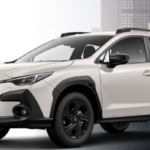 Subaru Crosstrek vs Hyundai Kona Australia: Which Small SUV Should You Buy?
Our overall winner for family practicality is the Subaru Forester, while the Subaru Crosstrek remains the smarter choice for compact SUV buyers.
Both deserve a test drive before making your final decision.
Leave a Reply