
Kia EV5 Weight: Kerb Weight, Tare Mass, GVM and Payload Explained

The Kia EV5 weight varies depending on the battery size, drivetrain and equipment fitted to each model. As an all-electric mid-size SUV, the EV5 is considerably heavier than many traditional petrol-powered vehicles, but its weight is typical of modern electric SUVs equipped with large battery packs.
In Australia, the 2026 Kia EV5 has an official tare weight ranging from 1,910 kg to 2,229 kg. The Air Standard Range is the lightest model, while the GT-Line AWD Long Range is the heaviest.
However, vehicle weight is more complicated than a single number. Kerb weight, tare mass, gross vehicle mass (GVM) and payload all describe different aspects of the vehicle.
In this guide, we'll explain exactly how much each Kia EV5 weighs, why the figures differ between variants, and how vehicle weight affects driving range, performance, towing and everyday practicality.
- How Much Does the Kia EV5 Weigh?
- Kia EV5 Kerb Weight Explained
- Kia EV5 Tare Weight by Variant
- Kia EV5 Gross Vehicle Mass (GVM)
- Kia EV5 Payload Capacity
- How Much Does the Kia EV5 Battery Weigh?
- Does the Kia EV5 Weight Affect Driving Range?
- Kia EV5 Weight and Performance
- Kia EV5 Weight and Towing Capacity
- Kia EV5 Weight Compared With Petrol SUVs
- Does Kia EV5 Weight Affect Tyre Wear?
- Is the Kia EV5 Too Heavy?
- Frequently Asked Questions About Kia EV5 Weight
- Conclusion: Understanding Kia EV5 Weight
How Much Does the Kia EV5 Weigh?
The Australian Kia EV5 is available in four main variants, each with a different tare weight and gross vehicle mass.
2026 Kia EV5 Weight by Model
| Kia EV5 Variant | Tare Weight | GVM |
|---|---|---|
| Air Standard Range FWD | 1,910 kg | 2,340 kg |
| Air Long Range FWD | 2,054 kg | 2,490 kg |
| Earth Long Range AWD | 2,198 kg | 2,630 kg |
| GT-Line Long Range AWD | 2,229 kg | 2,650 kg |
These figures apply to the Australian MY26 Kia EV5 range.
The difference between the lightest and heaviest models is 319 kg, which is substantial for vehicles sharing the same basic body dimensions.
The main reasons for this difference are battery capacity, the additional electric motor in AWD models and the equipment included in higher trim levels.
Despite these variations, every Kia EV5 is designed to carry five occupants and their luggage.
Kia EV5 Kerb Weight Explained
Kerb weight is one of the most frequently searched vehicle specifications because it helps us understand how heavy a car is before passengers and luggage are added.
In Australia, independent vehicle specification databases list the following kerb weight figures for the Kia EV5.
| Kia EV5 Variant | Listed Kerb Weight |
|---|---|
| Air Standard Range | 1,876 kg |
| Air Long Range | 2,020 kg |
| Earth AWD | 2,159 kg |
| GT-Line AWD | 2,192 kg |
These independently listed kerb figures differ from Kia Australia's published tare weights.
The distinction matters when comparing specifications or calculating how much additional weight a vehicle can carry.
What Is Kerb Weight?
Kerb weight generally describes the mass of a vehicle in a ready-to-drive condition, excluding occupants and luggage.
Exactly which items are included can depend on the reporting standard.
For that reason, we shouldn't automatically treat kerb weight, unladen mass and tare mass as interchangeable figures.
When comparing different electric SUVs, it's best to use the same weight measurement for every vehicle.
Kia EV5 Tare Weight by Variant
Let's examine each Australian Kia EV5 model individually.
Kia EV5 Air Standard Range Weight
The Kia EV5 Air Standard Range has an official tare weight of 1,910 kg.
It is the lightest model in the Australian range and uses a single electric motor driving the front wheels.
Its main specifications include:
- Tare weight: 1,910 kg
- Gross vehicle mass: 2,340 kg
- Battery capacity: 64.2 kWh
- Battery weight: 428 kg
- Motor output: 160 kW
- Drivetrain: Front-wheel drive
- WLTP driving range: 400 km
The smaller battery helps reduce the vehicle's overall mass.
This lighter configuration makes the Air Standard Range an appealing choice for buyers who primarily drive around town and don't require the longest possible electric range.
It also avoids the additional mechanical weight associated with a second electric motor.
Kia EV5 Air Long Range Weight
The Kia EV5 Air Long Range weighs 2,054 kg in tare mass, making it 144 kg heavier than the Standard Range model.
The main difference is its larger 88.1 kWh battery.
Key specifications include:
- Tare weight: 2,054 kg
- Gross vehicle mass: 2,490 kg
- Battery capacity: 88.1 kWh
- Battery weight: 573 kg
- Motor output: 160 kW
- Drivetrain: Front-wheel drive
- WLTP driving range: 555 km
The Air Long Range keeps the front-wheel-drive configuration but provides significantly more battery capacity.
Interestingly, it also has the longest official WLTP driving range of the Australian EV5 variants.
This demonstrates why vehicle weight alone doesn't determine electric driving range.
Battery capacity, aerodynamics, tyre specifications and drivetrain efficiency all contribute to the final result.
Kia EV5 Earth AWD Weight
The Kia EV5 Earth AWD has a tare weight of 2,198 kg.
Compared with the Air Long Range, it adds another 144 kg.
One important reason is its dual-motor all-wheel-drive system.
The Earth uses electric motors at the front and rear, providing improved traction and greater combined power.
Its specifications include:
- Tare weight: 2,198 kg
- Gross vehicle mass: 2,630 kg
- Battery capacity: 88.1 kWh
- Battery weight: 574 kg
- Combined motor output: 230 kW
- Drivetrain: All-wheel drive
- WLTP driving range: 500 km
The Earth is heavier than both Air variants, but it offers considerably stronger acceleration.
Its claimed 0–100 km/h acceleration time is approximately 6.1 seconds.
For drivers who regularly travel on highways or prefer the additional traction of all-wheel drive, the extra weight may be a reasonable trade-off.
Kia EV5 GT-Line Weight
The Kia EV5 GT-Line weighs 2,229 kg in tare mass, making it the heaviest model in the Australian range.
It shares its 88.1 kWh battery and dual-motor AWD drivetrain with the Earth, but includes additional premium features and styling equipment.
Its specifications include:
- Tare weight: 2,229 kg
- Gross vehicle mass: 2,650 kg
- Battery capacity: 88.1 kWh
- Battery weight: 574 kg
- Combined motor output: 230 kW
- Drivetrain: All-wheel drive
- WLTP driving range: 470 km
The GT-Line weighs 31 kg more than the Earth.
Although the difference is relatively small, the GT-Line's larger wheels, equipment and overall configuration contribute to its higher weight and energy consumption.
Its official driving range is also lower than that of the Earth.
For buyers interested in premium comfort and technology, the weight increase is unlikely to be a major concern during normal driving.
Kia EV5 Gross Vehicle Mass (GVM)
Gross vehicle mass is an especially important specification because it represents the maximum permitted loaded mass of the vehicle.
Unlike tare or kerb weight, GVM includes the vehicle itself, passengers, luggage, accessories and other carried loads.
The Australian Kia EV5 GVM figures are:
| Variant | Maximum GVM |
|---|---|
| Air Standard Range | 2,340 kg |
| Air Long Range | 2,490 kg |
| Earth AWD | 2,630 kg |
| GT-Line AWD | 2,650 kg |
These limits should not be exceeded.
This content may interest you!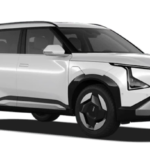 Kia EV5 Towing Capacity Australia: Complete 2026 Towing Guide
Even though the EV5 has a spacious cabin and boot, the amount of luggage and equipment it can carry is restricted by its allowable loaded mass.
Why Does GVM Matter?
Suppose we are planning a long family holiday.
We might need to carry several passengers, suitcases, a pram and additional travel equipment.
Every item adds weight.
The total loaded vehicle must remain within the manufacturer's GVM limit, regardless of how much physical space remains in the boot.
This is particularly important when fitting accessories or towing a trailer.
Kia EV5 Payload Capacity
Payload is the additional mass a vehicle can carry beyond its unloaded mass.
For a practical comparison, we can subtract Kia Australia's published tare weight from its GVM.
Kia EV5 Load Capacity Calculation
| Variant | GVM Minus Tare |
|---|---|
| Air Standard Range | 430 kg |
| Air Long Range | 436 kg |
| Earth AWD | 432 kg |
| GT-Line AWD | 421 kg |
These figures represent the difference between the official GVM and tare specifications. Payload figures derived from independently listed kerb weights can be higher because they use a different unloaded mass.
The exact available carrying capacity of a particular vehicle should be checked against its compliance information and actual loaded weight.
Is the Kia EV5 Payload Enough for a Family?
For many families, the EV5 should provide adequate carrying capacity for everyday journeys.
However, a fully occupied vehicle with five adults may have relatively little capacity remaining for luggage.
For example, if five occupants weigh 80 kg each, their combined weight is 400 kg.
Using the GVM-minus-tare figures above, that would leave just 21–36 kg before the vehicle reached its calculated load allowance.
Families travelling with lighter occupants will generally have more capacity for luggage.
The important point is that passenger weight counts towards the vehicle's total loaded mass.
We should also remember that accessories, cargo and any towball download use part of the available weight allowance.
How Much Does the Kia EV5 Battery Weigh?
The battery is one of the heaviest individual components of the Kia EV5.
Unlike a conventional petrol vehicle, which carries a relatively small fuel tank and combustion engine, the EV5 stores its driving energy in a large underfloor battery pack.
Kia EV5 Battery Weight Comparison
| Battery Configuration | Battery Weight |
|---|---|
| Air Standard Range, 64.2 kWh | 428 kg |
| Air Long Range, 88.1 kWh | 573 kg |
| Earth AWD, 88.1 kWh | 574 kg |
| GT-Line AWD, 88.1 kWh | 574 kg |
The larger battery is approximately 145–146 kg heavier than the Standard Range battery.
This explains much of the weight difference between the entry-level EV5 and the Long Range models.
Why Are Electric Car Batteries So Heavy?
An electric vehicle battery includes more than individual battery cells.
It also contains supporting structures, electrical connections, thermal management components and protective systems.
The battery pack must be strong enough to protect its internal components while operating in different temperatures and driving conditions.
Battery size therefore creates an important engineering compromise.
A larger battery can store more energy and extend driving range, but it also increases vehicle weight.
Does Battery Weight Affect Handling?
Yes, although the relationship isn't straightforward.
The Kia EV5 positions its battery under the passenger compartment.
This helps keep a substantial proportion of the vehicle's mass relatively low.
A lower centre of gravity can benefit cornering stability compared with an equivalent vehicle carrying the same mass much higher in the body.
However, the EV5 remains a heavy SUV.
Its tyres, brakes and suspension must still manage more than two tonnes of vehicle mass in the higher variants.
Does the Kia EV5 Weight Affect Driving Range?
Vehicle weight influences energy consumption, particularly when accelerating and climbing hills.
A heavier EV generally requires more energy to increase its speed.
However, it would be misleading to assume that the lightest EV5 always travels the furthest on a charge.
Kia EV5 Weight vs Driving Range
| Variant | Tare Weight | WLTP Range |
|---|---|---|
| Air Standard Range | 1,910 kg | 400 km |
| Air Long Range | 2,054 kg | 555 km |
| Earth AWD | 2,198 kg | 500 km |
| GT-Line AWD | 2,229 kg | 470 km |
The Air Long Range is heavier than the Standard Range, yet its larger battery allows it to travel further.
Meanwhile, the Earth and GT-Line use the same battery capacity but have shorter official ranges.
This is partly associated with their dual-motor drivetrains, higher weight and other configuration differences.
How Weight Changes Real-World Efficiency
Several driving conditions influence the relationship between mass and electricity consumption.
City driving: Frequent acceleration requires energy. Regenerative braking can recover some of that energy when slowing down, but it cannot recover all of it.
Highway driving: Aerodynamic drag becomes particularly important at higher speeds, so vehicle shape and cruising speed can have a greater influence than small weight differences.
Hilly roads: Climbing hills requires additional energy to lift the vehicle's mass. Heavier vehicles generally need more energy for the same ascent.
Fully loaded driving: Carrying passengers and luggage increases total vehicle weight and may slightly reduce driving range.
Tyre selection: Wider tyres and different wheel designs may affect rolling resistance and efficiency.
For everyday driving, the EV5's battery and motor configuration will often matter more than relatively small differences in equipment weight.
Kia EV5 Weight and Performance
The EV5's weight also influences acceleration and general driving behaviour.
Heavier vehicles need more energy and force to accelerate at the same rate.
However, the AWD variants compensate for their additional mass with greater electric motor output.
Performance Comparison
| Variant | Power | 0–100 km/h |
|---|---|---|
| Air Standard Range | 160 kW | Approx. 8.5 seconds |
| Air Long Range | 160 kW | Approx. 8.9 seconds |
| Earth AWD | 230 kW | Approx. 6.1 seconds |
| GT-Line AWD | 230 kW | Approx. 6.3 seconds |
The Earth and GT-Line are the quickest EV5 variants despite being the heaviest.
That's because their dual-motor systems produce substantially more combined power than the front-wheel-drive versions.
This content may interest you!
For drivers who value responsive acceleration, the AWD variants offer a noticeable performance advantage.
However, the lighter front-wheel-drive models remain sufficiently powerful for typical commuting and highway driving.
Kia EV5 Weight and Towing Capacity
Another important consideration is towing.
Although a heavy vehicle can sometimes offer stability advantages when towing, vehicle mass alone doesn't determine its towing capability.
The manufacturer sets towing limits based on several factors, including drivetrain, braking, structural capability and thermal management.
Kia EV5 Towing Capacity in Australia
| Variant | Braked Towing | Unbraked Towing |
|---|---|---|
| Air Standard Range | 300 kg | 300 kg |
| Air Long Range | 1,250 kg | 750 kg |
| Earth AWD | 1,250 kg | 750 kg |
| GT-Line AWD | 1,250 kg | 750 kg |
The Standard Range has a considerably lower towing limit than the remaining models.
For buyers who want to tow a small trailer, the Long Range variants provide more flexibility.
Does Towing Increase the Kia EV5's Vehicle Weight?
The weight of a trailer is not simply added in full to the EV5's GVM.
However, the downward force applied by the trailer to the towball contributes to the load carried by the vehicle.
The Kia EV5 has a maximum towball download of:
- 50 kg for the Air Standard Range.
- 100 kg for the Air Long Range, Earth and GT-Line.
For safe towing, we must consider the vehicle's GVM, towing limits, towball download and any applicable combination-mass or axle restrictions.
A trailer can also substantially increase energy consumption and reduce electric driving range, especially at highway speeds.
Kia EV5 Weight Compared With Petrol SUVs
One common question is whether the Kia EV5 is heavier than a conventional SUV.
In general, battery-electric SUVs often weigh more than comparable petrol vehicles because of their large high-voltage battery packs.
The EV5 follows this pattern.
Even the lightest Australian variant has a tare weight of 1,910 kg, while the top-specification GT-Line exceeds 2.2 tonnes.
However, heavier weight doesn't automatically mean worse driving behaviour.
The EV5 benefits from characteristics commonly associated with electric vehicles, including smooth power delivery and a battery positioned low in the body.
The driving experience also depends on suspension tuning, tyre specification and weight distribution.
When comparing the EV5 against a petrol SUV, we should consider the entire package rather than focusing only on kilograms.
Does Kia EV5 Weight Affect Tyre Wear?
Vehicle mass is one of several factors that can influence tyre wear.
A heavier SUV places substantial loads on its tyres, particularly during acceleration, braking and cornering.
Electric vehicles also deliver immediate torque, which can increase tyre wear when drivers accelerate aggressively.
However, tyre longevity depends on many other factors, including:
- Driving style and acceleration habits.
- Correct tyre inflation pressure.
- Wheel alignment.
- Road surface conditions.
- Tyre compound and construction.
- How frequently the vehicle carries heavy loads.
Following the recommended tyre pressures and maintaining proper wheel alignment are important for maximising tyre life.
It's also essential to use tyres with appropriate load ratings for the EV5.
Is the Kia EV5 Too Heavy?
Whether the Kia EV5 is too heavy depends on how we intend to use it.
For normal commuting, school runs and highway travel, its weight isn't necessarily a disadvantage.
The vehicle has been engineered around its electric drivetrain and battery pack, with suspension and braking components designed for its mass.
However, weight does create some considerations.
The EV5 has relatively modest additional load capacity when compared with its five-seat layout, especially when carrying several adults.
Drivers should also remember that heavy vehicles have substantial momentum and still require appropriate stopping distances.
For buyers who frequently travel fully loaded, payload capacity deserves particular attention.
Which Kia EV5 Has the Best Weight Balance?
The answer depends on our priorities.
For the lightest vehicle: The Air Standard Range is the obvious choice at 1,910 kg tare.
For maximum driving range: The Air Long Range combines a 2,054 kg tare weight with an official 555 km WLTP range.
For AWD performance: The Earth provides the same 230 kW combined output as the GT-Line while weighing 31 kg less.
For premium features: The GT-Line offers the highest equipment level, although it is also the heaviest version.
Overall, the Air Long Range provides a particularly attractive combination of manageable weight, strong electric range and everyday practicality.
Frequently Asked Questions About Kia EV5 Weight
1. How much does a Kia EV5 weigh in Australia?
The Australian MY26 Kia EV5 has a tare weight between 1,910 kg and 2,229 kg, depending on the variant. The Air Standard Range is the lightest, while the GT-Line AWD is the heaviest.
2. What is the Kia EV5 GT-Line kerb weight?
Independent Australian vehicle specifications list the Kia EV5 GT-Line AWD kerb weight at approximately 2,192 kg. Kia Australia's official published tare weight for this model is 2,229 kg. These are separate specifications and should not be confused.
3. What is the gross vehicle weight of the Kia EV5?
The Kia EV5's gross vehicle mass ranges from 2,340 kg for the Air Standard Range to 2,650 kg for the GT-Line AWD. GVM represents the maximum permitted loaded vehicle mass.
4. How heavy is the Kia EV5 battery?
The Kia EV5 Standard Range battery weighs 428 kg. The larger 88.1 kWh battery weighs approximately 573 kg in the Air Long Range and 574 kg in the AWD variants.
5. Which Kia EV5 is the lightest?
The Kia EV5 Air Standard Range is the lightest Australian variant, with a tare weight of 1,910 kg. It uses a 64.2 kWh battery and a single front-mounted electric motor producing 160 kW.
Conclusion: Understanding Kia EV5 Weight
The Kia EV5 weight ranges from 1,910 kg to 2,229 kg in official Australian tare mass, depending on the variant.
The Air Standard Range is the lightest and most straightforward configuration, while the GT-Line AWD is the heaviest thanks to its larger battery, dual-motor drivetrain and additional equipment.
However, weight is only one aspect of the EV5's overall performance.
The Air Long Range demonstrates that a heavier electric SUV can still offer superior driving range when equipped with a larger battery.
Meanwhile, the Earth and GT-Line show how additional motor power can deliver stronger acceleration despite greater vehicle mass.
For Australian buyers, understanding kerb weight, tare mass, gross vehicle mass and payload is particularly important when planning family trips, carrying luggage or towing.
This content may interest you!Kia EV5 Models Australia 2026: Complete Guide to Every VariantUltimately, the Kia EV5 offers several different combinations of weight, efficiency, equipment and performance, allowing us to select the variant that best suits our driving needs.
Leave a Reply