
Subaru Outback Versus Toyota Highlander: Which SUV Is Better?

Choosing between the Subaru Outback versus Toyota Highlander looks simple until we spend five minutes comparing what these two vehicles are actually designed to do. Both are practical, comfortable, all-weather family vehicles, but they approach that mission from opposite directions.
The Subaru Outback is the outdoorsy, five-seat option. It blends SUV ground clearance and standard all-wheel drive with a lower, almost wagon-like driving character. Think hiking boots that are comfortable enough to wear around town.
The Toyota Highlander is more like a family base camp on wheels. It offers three rows, seating for seven or eight depending on configuration, stronger gas-engine towing capability, and—perhaps most importantly for efficiency-conscious families—a hybrid option.
Using the current 2026 U.S. models as our main reference, the redesigned Outback starts at $34,995 and comes exclusively with standard Symmetrical All-Wheel Drive. The 2026 Highlander starts at $46,270, seats seven or eight people, and now also comes with AWD across its lineup.
So, which one makes more sense? That depends less on which badge we prefer and more on what we expect our SUV to do every Monday morning, Saturday afternoon, and summer road trip.
- Subaru Outback vs Toyota Highlander at a Glance
- Size and Design: Two Different Takes on the Family SUV
- Interior Space and Seating
- Cargo Space: The Outback Is More Practical Than It Looks
- Engine Performance: Which One Is Faster?
- Fuel Economy: Subaru Outback or Toyota Highlander?
- AWD and Bad-Weather Capability
- Subaru Outback Wilderness vs Toyota Highlander
- Towing Capacity: Highlander Wins
- Ride Comfort and Highway Driving
- Technology and Safety Features
- Pricing and Value
- Reliability and Long-Term Ownership
- Which One Is Better for Families?
- Which Is Better for Camping and Outdoor Adventures?
- Which Is Better for City Driving?
- Who Should Buy the Subaru Outback?
- Who Should Buy the Toyota Highlander?
- Subaru Outback Versus Toyota Highlander: Pros and Cons
- Our Verdict: Outback or Highlander?
- Frequently Asked Questions
- Closing Thoughts
Subaru Outback vs Toyota Highlander at a Glance
Here's the quick version before we dig into the details.
| Category | Subaru Outback | Toyota Highlander |
|---|---|---|
| Seating | 5 | 7 or 8 |
| Standard drivetrain | AWD | AWD on 2026 models |
| Base engine | 2.5L four-cylinder | 2.4L turbo four-cylinder |
| Available stronger engine | 2.4L turbo | — |
| Hybrid available | No current 2026 gas Outback hybrid | Yes |
| Maximum towing | Up to 3,500 lb | Up to 5,000 lb gas |
| Best official highway MPG | Up to 31 mpg | 28 mpg gas |
| Hybrid efficiency | — | Up to 35 mpg combined |
| Ground clearance | 8.7 in.; Wilderness 9.5 in. | More road-focused |
| Best suited for | Five-person adventure/cargo use | Larger families and towing |
Current Subaru specifications list 180 hp for the naturally aspirated Outback and 260 hp for turbocharged XT and Wilderness versions. Toyota's 2026 gas Highlander uses a 265-hp, 310-lb-ft turbocharged 2.4-liter four-cylinder and is rated to tow as much as 5,000 pounds.
Already we can see that this isn't quite an apples-to-apples battle. The Highlander is larger and more family-oriented, while the Outback puts greater emphasis on manageable size, cargo flexibility, AWD capability, and outdoor adventures.
Size and Design: Two Different Takes on the Family SUV
Park these vehicles beside each other and their different personalities become obvious.
The Highlander has the stance we expect from a traditional three-row crossover. It sits tall, presents more visual mass, and looks designed around passenger capacity.
The Outback has gradually moved closer to SUV territory, especially with its redesigned 2026 body, yet it retains some of the long-roof proportions that have always made the model distinctive. The 2026 Outback measures 191.7 inches long, 74 inches wide and offers 8.7 inches of ground clearance in regular versions. Wilderness increases clearance to 9.5 inches.
That relatively generous clearance is central to the Subaru's personality. Snowbanks, rough campsite entrances and rutted dirt tracks are less intimidating when we're not constantly worrying about scraping underneath the vehicle.
Which One Feels Easier to Live With?
For everyday commuting, parking lots and narrower city streets, we'd give the Outback the advantage.
The driver doesn't feel as though they're piloting a miniature bus. Its five-seat layout also means Subaru can devote its available length to passengers and cargo rather than squeezing in a third seating row.
The Highlander is still perfectly manageable for its class, but we're buying more vehicle because we're getting more passenger capacity.
That trade-off matters. If we routinely use six or seven seats, the Toyota's additional size is money well spent. If we rarely carry more than four people, we may spend years hauling around an empty third row.
Interior Space and Seating
Here's where the Toyota Highlander versus Subaru Outback comparison becomes much easier.
Need three rows? Buy the Highlander.
The 2026 Highlander accommodates seven or eight passengers depending on trim and seating configuration. Toyota itself positions the vehicle around its spacious cabin and ability to carry up to eight.
The Outback seats five.
That's not a minor specification. It's a fundamental difference.
The Highlander's Third Row Advantage
For households with three or four children, regular carpooling duties, visiting relatives or teenagers who always seem to bring friends, the Highlander's third row could decide this comparison before we even talk about engines.
Seven- and eight-passenger capability gives us flexibility that the Outback simply cannot replicate.
However, anyone expecting minivan-like third-row comfort may want to temper expectations. Like many midsize crossovers, the Highlander's rearmost seats make the most sense for children or occasional adult use rather than transporting six-foot passengers across several states.
The Outback's Five-Seat Advantage
Ironically, having fewer seats creates advantages of its own.
There is no third-row packaging requirement competing for space. Subaru lists an impressive 43 inches of front legroom and 39.5 inches in the rear for the current Outback. Passenger volume reaches as much as 112.3 cubic feet depending on configuration.
For four adults, the Outback can therefore feel wonderfully relaxed.
Rather than asking, "How many people can we technically fit?" we're asking, "How comfortable will the people we normally carry actually be?"
Those are different questions.
Cargo Space: The Outback Is More Practical Than It Looks
A low roofline can fool us into thinking a vehicle isn't spacious. The Outback proves otherwise.
The 2026 model provides 34.6 cubic feet of cargo space behind its second row and as much as 80.5 cubic feet with the rear seats folded.
That's enormous flexibility for a five-passenger vehicle.
Camping equipment? Easy.
A large dog crate? Very realistic.
Flat-pack furniture? Fold the rear seats.
Several suitcases plus four passengers? That's exactly the kind of job the Outback handles well.
Highlander Cargo Flexibility
The Highlander's advantage isn't necessarily that it annihilates the Subaru for maximum cargo volume. Its real advantage is configuration.
We can choose between carrying passengers and cargo in ways the five-seat Subaru cannot.
Fold the third row and we have a roomy two-row family SUV. Raise those seats when grandparents, friends or additional children join the trip.
That's flexibility through seating, whereas the Outback offers flexibility through a large dedicated cargo area.
Engine Performance: Which One Is Faster?
Now things get interesting.
This content may interest you!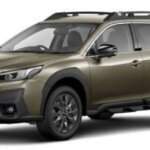 Subaru Outback or Toyota 4Runner Australia: Which One Makes More Sense?
The standard 2026 Outback uses Subaru's 2.5-liter naturally aspirated boxer four-cylinder producing 180 horsepower and 178 lb-ft of torque. It works through a Lineartronic continuously variable transmission.
Turbocharged Outback Wilderness, Limited XT and Touring XT versions step up to a 2.4-liter turbo boxer engine producing 260 horsepower and 277 lb-ft.
Toyota's gas Highlander uses a 2.4-liter turbocharged four-cylinder with 265 horsepower and 310 lb-ft, paired with an eight-speed automatic transmission.
Standard Outback Performance
The naturally aspirated Outback isn't built to pin us against the seat.
Its strength is adequate, predictable performance combined with reasonable fuel economy. Around town and during normal highway cruising, that's enough for many buyers.
Load the vehicle with passengers and luggage, point it uphill, or attempt a short highway pass, though, and the engine has to work harder.
It's less greyhound, more dependable Labrador.
Outback XT Performance
The turbo changes the story dramatically.
With 260 hp and torque arriving across a useful part of the rev range, the XT models have the muscle the chassis deserves. Passing feels easier, hills become less dramatic, and a loaded Outback doesn't feel as strained.
For drivers comparing the Outback directly with a gas Highlander, we'd consider the XT versions a fairer performance match.
Toyota Highlander Performance
The Highlander's 310 lb-ft of torque gives it plenty of low- and mid-range shove for an SUV carrying a family.
Its conventional eight-speed automatic may also appeal to drivers who dislike the operating characteristics of a CVT.
The Toyota isn't trying to be a sports SUV, but there's something satisfying about an engine that doesn't appear intimidated when all the seats are occupied and the cargo area resembles a luggage warehouse.
Fuel Economy: Subaru Outback or Toyota Highlander?
If we're comparing gasoline models alone, the Outback can be impressively efficient.
Subaru rates 2.5-liter 2026 Outback versions at up to 25 mpg city and 31 mpg highway. Turbo XT trims are rated at 21/29 mpg, while Wilderness comes in at 21/27 mpg.
The gas 2026 Highlander is rated at 21 mpg city and 28 mpg highway.
But Toyota has an ace hiding under the table.
Highlander Hybrid Changes Everything
The Highlander Hybrid XLE carries EPA estimates of 35 mpg city, 35 mpg highway and 35 mpg combined, while Hybrid Limited and Platinum versions are rated at 35 city/34 highway/35 combined.
That's excellent efficiency for a three-row AWD family crossover.
If we drive 15,000 or 20,000 miles every year—particularly in stop-and-go traffic—the hybrid deserves serious consideration.
The Outback has a lower purchase-price entry point and respectable highway economy, but the Highlander Hybrid is the obvious winner when maximizing fuel efficiency is the priority.
AWD and Bad-Weather Capability
Traditionally, this section would have started with a major Subaru advantage: AWD comes standard.
For 2026, however, Toyota has made all-wheel drive standard across the Highlander lineup, reducing that gap considerably.
Does that mean the vehicles are equally capable away from pavement?
Not exactly.
Why the Subaru Still Has an Adventure Edge
Subaru's Symmetrical All-Wheel Drive is standard on every 2026 Outback, as is X-MODE. The system can optimize drivetrain behavior on low-traction surfaces, and Hill Descent Control assists on steeper descents.
Regular Outbacks already have 8.7 inches of ground clearance.
Wilderness raises that to 9.5 inches.
That's the difference between having AWD primarily for slippery roads and designing an entire vehicle around venturing beyond them.
The Highlander remains perfectly sensible for rain, winter commuting, gravel roads and family trips to the mountains. The Outback—especially Wilderness—is the one we'd rather have when that gravel road deteriorates into something that makes our passengers ask, "Are you sure we're supposed to be driving here?"
Subaru Outback Wilderness vs Toyota Highlander
Anyone considering frequent camping, trail access or outdoor recreation should pay special attention to the Outback Wilderness.
This is where Subaru turns the adventure dial a few clicks beyond normal.
It combines the turbocharged 260-hp engine with 9.5 inches of ground clearance, X-MODE, AWD and additional capability-oriented tuning.
Its official fuel-economy rating drops to 21 city/27 highway, so we pay at the pump for the extra ruggedness.
But the Wilderness isn't intended to win an efficiency contest.
It's the Outback for someone whose navigation app occasionally stops showing paved roads.
The Highlander can certainly reach campsites and handle poor weather, but it remains primarily a road-going family crossover.
Towing Capacity: Highlander Wins
Here, Toyota lands a clean punch.
The naturally aspirated 2026 Outback is rated to tow 2,700 pounds, while turbocharged Wilderness, Limited XT and Touring XT models can tow 3,500 pounds when properly equipped.
Gas-powered 2026 Highlanders are rated for 5,000 pounds of towing capacity.
That 1,500-pound difference between the strongest versions is substantial.
This content may interest you!Subaru Outback or Hyundai Santa Fe Australia: Which SUV Should We Buy?Which Is Better for a Trailer?
For bike racks, small utility trailers, lightweight campers and modest recreational gear, the Outback may provide all the capacity we need.
For heavier boats or travel trailers, the Highlander's 5,000-pound rating offers far greater flexibility.
Naturally, published towing capacity is only one part of safe towing. Payload, hitch weight, passenger load, trailer brakes and individual trim specifications all matter.
Still, if towing is high on our priority list, we'd put a large check mark beside the Highlander.
Ride Comfort and Highway Driving
The Outback has long excelled at something difficult to quantify on a spreadsheet: it tends to be an exceptionally agreeable road-trip companion.
Its seating position provides good visibility without making the vehicle feel excessively tall. The suspension is designed to absorb broken pavement rather than fight it. Its long-wheelbase character suits highway cruising.
The Highlander responds with a quieter, more traditionally upscale family-SUV atmosphere, particularly as we climb through the Limited and Platinum trims.
For long family vacations, the Toyota's additional passenger flexibility may be more important than the Subaru's slightly more car-like personality.
For a couple, four-person household or empty nesters who frequently travel with luggage, the Outback feels almost purpose-built.
Technology and Safety Features
Neither vehicle is stuck in the technological Stone Age.
The 2026 Outback features Subaru's latest multimedia system and standard EyeSight Driver Assist Technology. Subaru says its updated EyeSight package includes enhanced sensors, while features such as hands-free assistance are available on certain configurations.
Toyota equips the 2026 Highlander with Toyota Safety Sense 2.5+, incorporating the familiar suite of active driver-assistance technologies used across the model range.
The exact feature mix depends on trim, so we'd compare specific vehicles rather than assuming every luxury or driver-assistance feature is standard.
Don't Choose by Screen Size Alone
This is one area where test-driving matters more than reading brochures.
Spend ten minutes doing normal things:
- Connect your phone and use Apple CarPlay or Android Auto.
- Adjust the climate settings while driving.
- Enter a navigation destination.
- Check rear visibility.
- Try the adaptive cruise controls.
- Adjust the seats and steering wheel.
- Sit in every row that your family will regularly use.
A spectacular touchscreen is useless if we need three taps to perform something that should require one.
Pricing and Value
Price creates one of the clearest separations in this comparison.
The 2026 Subaru Outback Premium starts at $34,995, while current Subaru pricing rises through $47,995 for the Touring XT.
The 2026 Toyota Highlander starts at $46,270 for the XLE, while the Hybrid XLE begins at $48,020. Higher trims climb beyond $50,000.
That's a large difference at the entry point.
We're not simply paying extra for another manufacturer's interpretation of the same vehicle, though. The Highlander gives us a third row and greater towing potential.
Which Offers Better Value?
If we don't need seven seats, the Outback makes an extremely persuasive financial argument.
Why spend significantly more for unused passenger capacity?
Conversely, a family that genuinely requires three rows shouldn't buy a five-passenger vehicle merely because it costs less.
Value isn't the cheapest receipt. It's buying the least expensive vehicle that properly solves our problem.
Reliability and Long-Term Ownership
Toyota and Subaru both have strong reputations among buyers who keep vehicles for many years, but reliability shouldn't be treated as a permanent characteristic attached to a logo.
Powertrains evolve.
Electronics change.
Manufacturing changes.
A redesigned model can behave differently from the one it replaces.
The current 2026 Outback introduces a new-generation design while carrying familiar Subaru engine concepts. The Highlander is further into its present generation.
For long-term ownership, we'd pay more attention to maintenance history when buying used, follow the manufacturer's service schedule religiously, and evaluate specific model years rather than relying solely on brand folklore.
Maintenance Complexity
The Highlander Hybrid adds electrified components, but Toyota has decades of hybrid experience behind it. Its absence of a conventional starter motor and some other traditional components also means hybrid ownership isn't automatically synonymous with excessive maintenance.
The Outback's boxer engine and full-time-style AWD arrangement are distinctive pieces of Subaru engineering, making Subaru-experienced service providers valuable once the vehicle is outside warranty.
Whichever we choose, preventative maintenance beats repair bills. Every time.
Which One Is Better for Families?
For a larger family, the Highlander takes this category.
Three rows change everything.
School runs, grandparents, sports teams and family holidays become much easier when we aren't deciding who stays home.
The Highlander's stronger towing rating is another advantage for families bringing boats, trailers or more serious recreational equipment.
But family size matters.
A couple with one or two children may actually find the Outback easier to use. There's plenty of rear legroom, an enormous cargo area, and no need to maneuver a larger three-row SUV through daily life.
This content may interest you!Subaru Outback vs Hyundai Tucson Australia: Which SUV Is Better?The best family car isn't automatically the vehicle with the most seats.
It's the one whose seats we actually use.
Which Is Better for Camping and Outdoor Adventures?
This category swings back toward Subaru.
The Outback offers generous ground clearance, standard AWD, X-MODE and a cargo area that works beautifully with outdoor equipment.
Subaru also lists a 200-pound dynamic roof-rail load capacity and up to 800 pounds static for the 2026 Outback when properly used, reinforcing how seriously the model takes its adventure brief.
For kayaks, mountain bikes, skiing, camping and journeys down questionable access roads, the Outback feels more naturally at home.
The Highlander is the better expedition vehicle when the "expedition" includes six people.
Which Is Better for City Driving?
We'd choose the Outback.
Not because the Highlander is cumbersome by three-row SUV standards, but because smaller and simpler usually wins in crowded environments.
The Outback gives us substantial interior room without the full bulk associated with carrying three seating rows.
If parking garages, tight supermarket spaces and congested streets form part of everyday life, that difference becomes noticeable.
The Highlander makes more sense when the extra physical size is earning its keep through additional passengers.
Who Should Buy the Subaru Outback?
The Outback fits buyers who want an SUV without necessarily wanting a traditional SUV.
It makes particular sense if we usually carry one to five people, value standard AWD, spend weekends outdoors, need lots of cargo room, encounter snow or poor roads, and want to keep the purchase price below the typical cost of a three-row crossover.
We'd lean strongly toward the turbo XT or Wilderness if we frequently drive fully loaded, live around steep terrain, or simply appreciate stronger acceleration.
The naturally aspirated 2.5-liter versions make more sense when efficiency and price matter more than speed.
Who Should Buy the Toyota Highlander?
The Highlander is the natural choice when passenger capacity comes first.
Seven or eight seats make it genuinely more useful for larger households. The gas model's 5,000-pound towing capability gives it more serious trailer credentials, while the Highlander Hybrid offers remarkably attractive fuel economy for something capable of carrying an entire family.
It's the Swiss Army knife of this comparison.
The catch?
We pay substantially more to get into one.
Subaru Outback Versus Toyota Highlander: Pros and Cons
Rather than declaring one vehicle universally superior, we can simplify the decision this way.
Choose the Subaru Outback if: five seats are enough, you want a lower purchase price, cargo space matters more than a third row, you regularly encounter rough roads, you like the Wilderness concept, or you prefer a smaller vehicle for daily use.
Choose the Toyota Highlander if: you need seven or eight seats, want stronger towing capability, prefer a traditional three-row SUV, or want the fuel-saving potential of a hybrid powertrain.
That's the heart of this entire comparison.
Our Verdict: Outback or Highlander?
If we had to recommend one vehicle to a five-person-or-smaller household, we'd pick the Subaru Outback.
It's less expensive, surprisingly spacious, highly practical and exceptionally well suited to buyers who combine normal commuting with outdoor recreation. The standard AWD system, considerable ground clearance and excellent cargo capacity make it feel purposeful rather than oversized.
But add a sixth passenger and the verdict flips immediately.
For a growing family, the Toyota Highlander is the more versatile machine. Seven- or eight-passenger capacity alone may justify the higher price, while 5,000-pound towing capability gives the gas model another meaningful advantage. The Highlander Hybrid is particularly compelling for drivers who want three rows without accepting typical three-row fuel consumption.
So which is better?
The Outback is the better adventure-oriented five-seat value.
The Highlander is the better full-size family tool.
Trying to crown one absolute winner would be like asking whether a hiking backpack is better than a large suitcase. The answer depends entirely on where we're going—and who's coming with us.
Frequently Asked Questions
1. Is a Toyota Highlander bigger than a Subaru Outback?
Yes. Although both occupy the broad midsize crossover world, the Highlander is configured as a three-row SUV capable of seating seven or eight people, while the Outback has two rows and five seats. The Toyota is therefore a better choice when passenger capacity matters more than compact dimensions.
2. Does the Subaru Outback or Toyota Highlander have better fuel economy?
It depends on the powertrain. The 2026 non-turbo Outback is rated at up to 25 mpg city and 31 mpg highway, whereas the gas Highlander is rated at 21/28 mpg. However, the Highlander Hybrid achieves an EPA-estimated 35 mpg combined, making it the efficiency champion of the overall comparison.
3. Which can tow more, the Highlander or Outback?
The gas-powered 2026 Toyota Highlander can tow up to 5,000 pounds when properly equipped. The strongest 2026 Outback versions—the Wilderness, Limited XT and Touring XT—are rated for up to 3,500 pounds, while non-turbo versions are rated for 2,700 pounds.
4. Is the Subaru Outback better than the Highlander in snow?
Both 2026 vehicles offer standard AWD, so either can be a capable winter vehicle when equipped with suitable tires. The Outback has an additional capability advantage through its standard X-MODE system and greater emphasis on ground clearance, with 8.7 inches on standard versions and 9.5 inches on Wilderness.
5. Should we buy a Subaru Outback or Toyota Highlander?
Choose the Subaru Outback if five seats are enough and you prioritize value, cargo capacity, rough-road ability and manageable dimensions. Choose the Toyota Highlander if you need three rows, regularly carry more than five people, plan to tow heavier trailers, or want a highly efficient hybrid option. Neither is automatically better—the right vehicle depends on how much passenger capacity and capability we'll actually use.
Closing Thoughts
The Subaru Outback versus Toyota Highlander debate becomes surprisingly straightforward once we stop treating them as direct twins.
The Outback is for buyers who want space without excess. It combines five comfortable seats, a huge cargo area, standard AWD and real ground clearance in a vehicle that's still easy to use every day.
The Highlander thinks bigger. More people. More towing. More seating combinations. And, with the hybrid, potentially much better city efficiency.
This content may interest you!Subaru Outback Boot Space: Dimensions, Capacity and PracticalityFor adventure-minded couples and smaller families, we'd save the money and take the Outback.
For households regularly filling three rows, we'd spend more and choose the Highlander.
Different tools. Different jobs. And thankfully, a much easier decision once we know which job needs doing.
Leave a Reply