
Subaru Outback or Toyota 4Runner Australia: Which One Makes More Sense?

Choosing between a Subaru Outback or Toyota 4Runner in Australia sounds straightforward until we look closely at what these two vehicles actually are. Both wear adventure credentials proudly. Both can haul camping equipment, handle dirt roads and take us far beyond the suburban supermarket run. Yet beneath that shared outdoorsy image, they approach the job from completely different directions.
The Subaru Outback is essentially the Swiss Army knife of family adventure vehicles. It combines wagon-like road manners, permanent all-wheel-drive confidence, useful ground clearance and relatively sensible running costs. The Toyota 4Runner, meanwhile, is closer to a hiking boot with number plates attached. It is a proper body-on-frame SUV designed with considerably tougher off-road work in mind.
There is another rather important Australian wrinkle: the current Toyota 4Runner is not part of Toyota Australia's official new-vehicle range. Toyota markets the sixth-generation 4Runner primarily in North America, meaning Australians considering one generally need to investigate private or specialist import possibilities, compliance, registration and local support. By contrast, the Outback is sold directly through Subaru Australia's dealer network.
That alone could settle the argument for many buyers. But suppose we're comparing the vehicles themselves. Which is better for Australian highways, gravel tracks, camping trips, towing and day-to-day life?
Let's dig in.
- Subaru Outback vs Toyota 4Runner Australia at a Glance
- These Two SUVs Solve Different Problems
- Subaru Outback: The More Natural Australian Daily Driver
- Toyota 4Runner: More Serious Hardware Underneath
- Which Is Better Off-Road?
- Australian Dirt Roads Favour the Subaru More Than You Might Think
- Highway Comfort: Outback Takes the Lead
- Engine Performance: 4Runner Has the Bigger Hammer
- Fuel Economy: Outback Makes More Sense
- Towing: Toyota 4Runner Has the Advantage
- Cargo Space and Family Practicality
- Interior Technology and Comfort
- Safety: The Australian-Spec Outback Has a Simpler Case
- Ownership in Australia: This May Decide Everything
- Why Isn't the Toyota 4Runner the Obvious Choice for Australian Buyers?
- Reliability: Subaru Outback or Toyota 4Runner?
- Subaru Outback Wilderness Changes the Comparison
- Which One Is Better for Camping?
- Which Is Better for Snow and Wet Roads?
- Subaru Outback or Toyota 4Runner for Australian Families?
- Who Should Buy the Subaru Outback?
- Who Should Consider the Toyota 4Runner?
- What Australian Buyers Should Check Before Importing a 4Runner
- The Verdict: Subaru Outback or Toyota 4Runner Australia?
- Frequently Asked Questions
- Closing Thoughts
Subaru Outback vs Toyota 4Runner Australia at a Glance
Before getting into the weeds, this is how we see the contest.
| Category | Subaru Outback | Toyota 4Runner |
|---|---|---|
| Everyday driving | Excellent | Good |
| Serious off-road ability | Good | Excellent |
| Fuel efficiency | Better | Higher consumption |
| Ride comfort | Excellent | More truck-like |
| Towing | Up to 2,100 kg on current turbo variants | Up to 6,000 lb (about 2,722 kg) on current US models |
| Ground clearance | 220-240 mm depending on version | Up to 10.1 in (about 257 mm) |
| Seating | 5 | Up to 7 |
| AWD/4WD | Symmetrical AWD | 2WD, part-time or full-time 4WD depending on grade |
| Australian dealer availability | Yes | No official new-car availability |
| Best suited to | Daily life + touring | Tough trails + heavier-duty adventure |
Subaru Australia's 2026 specifications list 220 mm of ground clearance on regular Outbacks and 240 mm on the Wilderness, while current turbocharged variants can tow as much as 2,100 kg braked. Toyota's current US-market 4Runner offers up to 10.1 inches of clearance, seating for as many as seven and a maximum towing rating of 6,000 lb.
Those numbers begin to reveal the personality difference.
These Two SUVs Solve Different Problems
A lot of vehicle comparisons involve two models fighting for practically the same customer. This isn't quite one of those comparisons.
The Outback asks: How adventurous can we make an everyday family car without ruining the everyday part?
The 4Runner asks: How comfortable can we make a serious off-road SUV without weakening its rugged foundations?
That's a significant distinction.
The Outback feels at home cruising through Sydney traffic, swallowing kilometres between Melbourne and Adelaide or disappearing down a gravel access road toward a campsite. The 4Runner makes more sense when that gravel road eventually turns into washouts, rocks, steep climbs and genuinely challenging tracks.
Neither philosophy is inherently better. We simply need to decide how much vehicle our lifestyle really requires.
Subaru Outback: The More Natural Australian Daily Driver
The Outback has developed a loyal Australian following for a reason. It occupies an unusual space between conventional SUVs and traditional wagons.
Its relatively low centre of gravity and long footprint make it feel more car-like than many tall 4WDs. At the same time, generous clearance and Subaru's full-time Symmetrical AWD give it more confidence away from sealed roads than an ordinary family wagon.
For the 2026 Australian model, Subaru offers a naturally aspirated 2.5-litre Boxer engine as well as a turbocharged 2.4-litre Boxer in tougher variants. Subaru also equips the range with its X-Mode traction-management system.
That combination makes sense for the way many Australians actually travel.
We can drive it to work Monday through Friday, fill the cargo area with camping gear on Friday night and tackle forest roads on Saturday morning without changing vehicles—or our expectations.
Why the Outback Works So Well Around Town
Large off-road SUVs often feel like oversized hiking backpacks when we only need a laptop bag.
The Outback avoids that problem.
Its lower driving position, lighter construction and less cumbersome dimensions make parking, changing lanes and threading through urban streets relatively straightforward. Its suspension is also tuned around passenger comfort rather than maximum axle articulation.
That matters more than enthusiasts sometimes admit.
If 90 per cent of our kilometres involve asphalt, why choose a vehicle optimised around the remaining 10 per cent unless that final 10 per cent genuinely demands it?
Toyota 4Runner: More Serious Hardware Underneath
The Toyota 4Runner comes from another world.
The current sixth-generation vehicle uses Toyota's body-on-frame TNGA-F architecture and is closely related philosophically to Toyota's tougher trucks and 4WDs rather than crossover SUVs.
Current American specifications include an i-FORCE 2.4-litre turbocharged engine producing 278 hp and 317 lb-ft, while the i-FORCE MAX hybrid version can produce up to 326 hp and 465 lb-ft.
More importantly, selected four-wheel-drive variants can include genuine off-road hardware such as a two-speed transfer case, low range, electronic rear differential locking, Multi-Terrain Select and Crawl Control.
That's not marketing glitter. That's meaningful equipment when the track becomes nasty.
What Low Range Changes
This is one of the biggest differences between these vehicles.
The Outback's X-Mode is clever. It coordinates throttle response, transmission behaviour, traction control and hill-descent functions to help the car maintain grip on slippery or uneven surfaces.
But electronic intelligence cannot completely replace mechanical gearing.
A proper low-range transfer case lets a 4Runner crawl over technical terrain with more controlled torque at very low speed. When we're navigating rocks, deep ruts or steep climbs, that matters tremendously.
Think of X-Mode as an excellent pair of trail-running shoes.
Low-range 4WD is a proper pair of mountaineering boots.
Which Is Better Off-Road?
If genuine off-road ability is the priority, the Toyota 4Runner wins.
There isn't much mystery here.
Depending on specification, Toyota offers the sort of hardware serious off-road drivers actively seek: high and low range, locking differential technology, generous approach geometry and sophisticated terrain-management features. Toyota says the current 4Runner offers up to 10.1 inches—roughly 257 mm—of ground clearance.
The new Outback is still impressively capable for a crossover-style vehicle. Regular Australian versions offer 220 mm of clearance, while the Outback Wilderness increases that to 240 mm and adds off-road-focused upgrades.
For gravel, snow, sand access roads, muddy campsites and moderate trails, the Subaru may be all we ever require.
When wheel articulation, deep ruts and prolonged low-speed crawling become part of the itinerary, however, the 4Runner steps into another league.
Do We Actually Need That Extra Capability?
Here's the uncomfortable question.
How often do most owners genuinely drive terrain requiring a locking differential and low-range transfer case?
Probably not very often.
Buying maximum off-road capability because we might need it someday can be like commuting every morning with a chainsaw in the boot because a tree could theoretically fall across the road.
Extra capability has a cost: weight, fuel consumption, size, road manners and complexity.
This content may interest you! Subaru Outback or Hyundai Santa Fe Australia: Which SUV Should We Buy?
For moderate Australian touring, the Outback can therefore be the smarter rather than the weaker choice.
Australian Dirt Roads Favour the Subaru More Than You Might Think
Australia contains enormous distances of unsealed roads, but "unsealed" doesn't automatically mean "extreme 4WD track."
Many rural access roads, national park routes and maintained gravel roads reward stability and compliant suspension more than rock-crawling hardware.
This is precisely where the Outback shines.
Its all-wheel-drive system operates continuously, rather than asking us to decide when 4WD should be engaged. X-Mode then provides additional assistance when surfaces deteriorate.
That creates a wonderfully natural driving experience. We don't need to think about drivetrain settings every few kilometres. We simply drive.
For long stretches of corrugated gravel and mixed road surfaces, that simplicity can feel almost luxurious.
Highway Comfort: Outback Takes the Lead
Imagine leaving Brisbane early in the morning and spending eight hours pushing inland.
Which vehicle would we rather be sitting in?
For most people, we'd choose the Outback.
It rides more like a sophisticated passenger vehicle than a truck. Steering tends to feel lighter and more natural, body movements are comparatively restrained, and the lower overall structure helps the car feel planted at motorway speeds.
The 4Runner has become more sophisticated in its latest generation, but rugged engineering always involves compromise. A body-on-frame vehicle with serious off-road capability rarely glides through bends with the same relaxed fluency as a lower, road-biased crossover.
The Long-Distance Question Matters
Australian driving has a peculiar way of making comfort suddenly important.
A 30-minute test drive around a dealership tells us very little about what happens after 600 kilometres.
Seat comfort, noise, steering corrections and suspension movement gradually become either invisible companions or tiny irritations pecking away at our patience.
The Outback's entire personality is better suited to these long mixed-surface journeys.
Engine Performance: 4Runner Has the Bigger Hammer
The 4Runner offers noticeably more muscular powertrain possibilities.
Its standard turbocharged i-FORCE engine develops 278 horsepower, while Toyota's hybrid i-FORCE MAX reaches 326 horsepower and 465 lb-ft of torque.
The Outback takes a more restrained approach.
Australian buyers can choose the standard 2.5-litre Boxer or a stronger turbocharged 2.4-litre Boxer depending on variant.
We wouldn't call the Outback underpowered for normal use, particularly in turbo form. Yet anyone hauling significant loads, climbing steep terrain or simply enjoying a big shove of torque will appreciate what the 4Runner brings.
The Toyota swings the larger hammer.
The Subaru simply asks whether we needed to demolish the wall in the first place.
Fuel Economy: Outback Makes More Sense
Here the Subaru restores order.
Body-on-frame 4WDs carry considerable mass and aerodynamic drag. Big tyres, substantial ground clearance and heavy-duty driveline components don't magically disappear when we merge onto the motorway.
The Outback's lighter, lower, more aerodynamic form generally gives it an inherent efficiency advantage.
Toyota quotes the latest 4Runner at up to an estimated 23 mpg combined in US specification, depending on configuration. Actual Australian consumption from an imported vehicle would depend heavily on variant, tyres, accessories, fuel and driving conditions.
Fuel consumption matters particularly in Australia because adventure frequently means distance.
An extra few litres every 100 kilometres may look harmless on paper. Multiply that over a 4,000-kilometre road trip and suddenly we're paying for capability at every service station.
Towing: Toyota 4Runner Has the Advantage
Anyone choosing between these vehicles because a camper trailer, boat or substantial caravan sits in the driveway should study towing figures carefully.
The 2026 Australian Outback is rated to tow up to 2,000 kg braked in naturally aspirated versions and 2,100 kg in turbocharged variants, according to Subaru's current specifications.
Toyota quotes the current 4Runner at up to 6,000 lb, approximately 2,722 kg, in the United States.
On raw numbers, the 4Runner wins.
But Australian buyers considering an imported 4Runner need to be extremely careful here. A US-market towing rating should not automatically be treated as an Australian legal towing rating for an individually imported or converted vehicle. Compliance approval, registration documentation, conversion specifications, tow equipment and local regulations need to be confirmed for the actual vehicle.
That administrative detail is far less exciting than talking about torque.
It's also far more important.
Cargo Space and Family Practicality
The Outback's long wagon body is exceptionally useful.
Current Australian specifications quote 530 litres of cargo space behind the rear seats, expanding substantially when the second row is folded.
Its load floor is accessible, the roof isn't excessively tall, and the cabin is designed around five occupants rather than squeezing in occasional extra seating.
The 4Runner has a different advantage: selected versions can accommodate up to seven passengers.
For larger families, that potential third row changes the equation.
Five Seats or Seven?
If we regularly carry six or seven people, the Outback simply isn't designed for the job.
If we only need five seats, however, its more compact layout makes daily life easier.
There's no universal winner here.
The question isn't which SUV can hold more humans. It's how many humans we genuinely plan to carry.
Interior Technology and Comfort
The modern Outback has moved significantly beyond the rugged-wagon simplicity of older generations.
This content may interest you! Nissan Patrol Reliability Australia: Is the Patrol Really Built to Last?
The Australian 2026 Outback brings a 12.1-inch touchscreen and a 12.3-inch digital instrument cluster on the entry AWD model, alongside wireless smartphone integration.
Toyota also modernised the new-generation 4Runner dramatically, with larger available multimedia displays and a much more contemporary cabin than the old model.
So this is no longer a battle between technology and toughness.
Both can feel modern.
The difference is atmosphere. The Subaru feels like a comfortable touring car prepared for adventure. The Toyota feels like an expedition machine that has learned some manners.
Safety: The Australian-Spec Outback Has a Simpler Case
Safety comparisons become tricky because the 4Runner discussed here is fundamentally a North American-market model rather than an official Australian-delivered competitor.
Toyota equips the 2026 4Runner with Toyota Safety Sense 3.0, including modern driver-assistance technologies.
The Subaru also comes with a broad suite of contemporary safety and driver-assistance equipment for the Australian market.
But Australian buyers should consider more than the existence of cameras and sensors. Local compliance, applicable crash-test information, replacement windscreens, sensor calibration and parts sourcing can all matter after purchase.
An officially supported Australian-spec vehicle has an obvious convenience advantage.
Ownership in Australia: This May Decide Everything
This is where the comparison stops being theoretical.
Buying a Subaru Outback in Australia is simple. We visit a Subaru retailer, choose a model, arrange finance if necessary, receive an Australian-delivered vehicle and gain access to the manufacturer's local support network. Subaru currently advertises a five-year/unlimited-kilometre warranty for eligible privately used new vehicles, along with capped-price servicing arrangements.
Buying a current-generation Toyota 4Runner is another matter because Toyota Australia does not list it as part of its normal new-vehicle range.
That can mean dealing with:
- vehicle import eligibility and approvals;
- right-hand-drive requirements or conversion issues where applicable;
- Australian Design Rule compliance;
- registration requirements;
- insurance acceptance;
- parts sourcing;
- warranty arrangements;
- resale uncertainty;
- local towing certification.
We wouldn't dismiss the 4Runner because of these complications. Enthusiasts import unusual vehicles all the time.
But we shouldn't pretend they're irrelevant either.
Why Isn't the Toyota 4Runner the Obvious Choice for Australian Buyers?
Because Australia already has access to several Toyota vehicles fulfilling overlapping roles.
The Australian market is rich with proper 4WDs and rugged utility platforms. That makes the business case for officially offering another similarly positioned Toyota SUV less obvious than it might be in North America.
For buyers, though, this means the vehicle's impressive specification sheet has to be balanced against practical ownership logistics.
A dream vehicle becomes less dreamy when a small replacement component spends six weeks travelling across the Pacific.
Reliability: Subaru Outback or Toyota 4Runner?
Toyota's 4Runner name has accumulated a formidable reputation for durability over several decades. Subaru's Outback also has a strong following among owners who keep their vehicles for long periods.
Still, we should avoid using historical reputation as a blank cheque.
The latest 4Runner is a substantially redesigned generation with newer turbocharged and hybrid powertrains. Likewise, the latest Australian Outback introduces updated technology and specifications.
Long-term reliability ultimately depends on more than the badge:
- Maintenance history matters.
- How the vehicle is driven matters.
- Modification quality matters.
- Towing loads matter.
- Dust, water and off-road exposure matter.
- Parts and servicing availability matter.
For an Australian owner, local support gives the Outback an additional practical reliability advantage even if we're not talking about mechanical failure rates at all.
A vehicle we can repair quickly is effectively more dependable than one waiting for imported parts.
Subaru Outback Wilderness Changes the Comparison
The arrival of the Outback Wilderness makes this contest considerably more interesting.
Subaru Australia's current Wilderness specification includes a 2.4-litre turbocharged Boxer engine, 240 mm of ground clearance, dual-function X-Mode, off-road-focused design changes and electronically controlled dampers.
That doesn't magically turn an Outback into a body-on-frame rock crawler.
It does, however, narrow the gap for the kind of off-road driving most owners realistically encounter.
Want to reach a remote campsite?
Fine.
Need to tackle rough forestry tracks?
Much more plausible.
Regularly attacking deeply rutted technical trails?
The 4Runner still has the mechanical advantage.
Outback Wilderness vs 4Runner
If our heart wants a 4Runner but our lifestyle mostly involves everyday driving with occasional serious weekends away, the Wilderness could be the sweet spot.
It preserves the Outback's easier road manners while adding meaningful clearance and capability.
That's a compelling formula for Australia.
Which One Is Better for Camping?
This depends entirely on what we mean by camping.
If camping means:
- national parks;
- gravel access roads;
- maintained forest tracks;
- touring;
- roof boxes;
- bicycles;
- moderate camper trailers;
the Outback is wonderfully well suited.
If camping means:
- remote overlanding;
- deeply rutted trails;
- low-range climbs;
- significant recovery gear;
- larger towing loads;
- more extreme terrain;
the 4Runner's architecture becomes much more attractive.
We shouldn't buy for the campsite.
We should buy for the hardest road between home and the campsite.
This content may interest you!Subaru Outback or Toyota RAV4 Australia: Which SUV Is Better?Which Is Better for Snow and Wet Roads?
The Subaru deserves special attention here.
Its Symmetrical All-Wheel Drive system is permanently available and works naturally in changing conditions. That makes the Outback particularly confidence-inspiring in rain, loose gravel and alpine environments.
Toyota's sophisticated 4WD systems can be extremely capable, especially on loose or difficult surfaces, but they are engineered with a stronger off-road emphasis.
For rapidly changing sealed-road conditions, we prefer the Subaru's set-and-forget approach.
Tyres Still Matter More Than Many Buyers Think
Neither drivetrain can defeat physics.
A Subaru on poor tyres may struggle where a properly shod Toyota cruises through. Likewise, a heavily modified 4Runner on aggressive mud tyres may sacrifice wet-road refinement compared with an Outback wearing quality all-terrain or touring rubber.
The badge is only part of the equation.
Subaru Outback or Toyota 4Runner for Australian Families?
For the average Australian household, we'd choose the Subaru Outback.
That's not because it's the tougher vehicle.
It isn't.
It's because the Outback better balances the things families do every day with the things they dream about doing on weekends.
School run? Easy.
Shopping centre car park? Easy.
Six-hour highway journey? Comfortable.
Wet gravel road? No drama.
Camping track? Quite capable.
Fuel bills? Relatively manageable.
Dealer servicing? Straightforward.
The 4Runner makes more sense when rugged capability isn't merely an appealing idea but a repeated requirement.
Who Should Buy the Subaru Outback?
The Outback is our pick if we:
- spend most kilometres on sealed roads;
- want permanent AWD without thinking about it;
- frequently travel long highway distances;
- need only five seats;
- value good cargo practicality;
- occasionally explore gravel and moderate off-road tracks;
- want easier Australian servicing and warranty support;
- prefer lower running costs over maximum 4WD capability.
It's the vehicle that does almost everything well without demanding many sacrifices.
Who Should Consider the Toyota 4Runner?
The 4Runner becomes the more exciting choice if we:
- deliberately seek challenging off-road terrain;
- value low-range gearing and locking differential capability;
- need greater towing potential;
- want up to seven-seat flexibility;
- enjoy overlanding and remote-area modification;
- are comfortable navigating Australia's import and compliance process;
- accept potentially higher fuel and ownership costs;
- prioritise ruggedness over sedan-like road behaviour.
For these buyers, the Toyota isn't unnecessarily excessive.
It's exactly the point.
What Australian Buyers Should Check Before Importing a 4Runner
This part deserves more attention than it usually gets.
Before placing money on a current-generation 4Runner, we'd confirm the actual vehicle's Australian import pathway and legal requirements rather than relying on assumptions from US specifications.
In particular, verify compliance eligibility, registration requirements, steering configuration or conversion arrangements, insurer acceptance, warranty coverage, spare-part sourcing and any locally approved towing rating.
Never assume that because a specification appears on Toyota's US website, Australian authorities or insurers will automatically recognise it in precisely the same form.
A pre-purchase conversation with the relevant importer, state registration authority and insurer can save us an extraordinary amount of pain later.
The Verdict: Subaru Outback or Toyota 4Runner Australia?
So, Subaru Outback or Toyota 4Runner in Australia?
For most Australian buyers, the Subaru Outback is the better choice.
It is officially sold locally, comfortable on long journeys, economical relative to a serious body-on-frame 4WD, impressively capable on rough roads and far easier to integrate into everyday life. The latest Wilderness model further strengthens its case for people wanting additional off-road credibility without abandoning crossover comfort.
But the Toyota 4Runner wins one battle decisively: serious off-road capability.
If we're deliberately seeking difficult trails, low-range crawling, stronger towing capacity and traditional rugged 4WD hardware, the 4Runner is built for those jobs in a way the Outback simply isn't.
The easiest way to think about it is this:
The Outback takes ordinary life further off the beaten track.
The 4Runner brings the beaten track back into ordinary life.
Choose the Subaru if adventure is part of your lifestyle.
Choose the Toyota if adventure largely is your lifestyle.
Frequently Asked Questions
1. Is the Toyota 4Runner available in Australia?
The current Toyota 4Runner is not offered as a normal new model through Toyota Australia's mainstream dealer range. Australians interested in one therefore need to investigate legitimate import, compliance and registration options for the particular vehicle they intend to buy.
2. Is a Subaru Outback better than a Toyota 4Runner off-road?
No, not for genuinely difficult terrain. The Outback's AWD system, generous ground clearance and X-Mode make it very competent on gravel, mud, snow and moderate tracks, but selected 4Runner variants offer proper low-range gearing, locking differential technology and other dedicated off-road equipment.
3. Which is better for everyday driving, Subaru Outback or Toyota 4Runner?
We'd choose the Subaru Outback. Its more road-focused construction, lower stance and passenger-car-like behaviour make commuting, parking and long highway journeys easier. The 4Runner makes its strongest case when genuine 4WD capability is a regular requirement rather than an occasional possibility.
4. Can a Subaru Outback tow a caravan?
Yes, provided the caravan and complete towing setup remain within the applicable limits. Subaru's 2026 Australian specifications list up to 2,000 kg braked towing capacity for naturally aspirated Outbacks and up to 2,100 kg for turbocharged variants. Always account for GVM, tow-ball download, payload and the specific vehicle's documentation rather than looking only at the headline towing figure.
5. Should we buy an Outback Wilderness instead of importing a 4Runner?
For many Australians, yes. The Outback Wilderness offers 240 mm of ground clearance, a turbocharged engine and enhanced X-Mode capability while retaining official Australian dealer and warranty support. Buyers who regularly encounter technical low-range 4WD terrain may still prefer the 4Runner or another locally available dedicated 4WD.
Closing Thoughts
Comparisons become much easier when we stop asking which vehicle is objectively "better" and start asking which compromises suit us better.
The Toyota 4Runner offers the stronger mechanical foundation for difficult off-road adventures. It's tough, powerful and deliberately engineered for situations where ordinary crossovers begin looking nervous.
This content may interest you!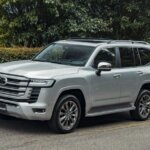 Toyota LandCruiser vs 4Runner Australia: Which Rugged SUV Makes More Sense?
The Subaru Outback plays a subtler game. It gives us enough adventure capability to escape the city while remaining pleasant when we're stuck inside it. That balance is exactly why it makes so much sense on Australian roads.
If our weekends involve highways, winding country roads, gravel, campsites and the occasional muddy surprise, we'd take the Outback and enjoy the journey.
If the road disappearing is where the journey finally becomes interesting, we'd want the 4Runner.
Leave a Reply