
Nissan Patrol Ute Models Australia: Complete Guide to GQ and GU Workhorses

Few Australian four-wheel drives have the same dusty, hard-earned reputation as the Nissan Patrol ute. Long before oversized dual-cab pickups filled suburban car parks, Patrol cab-chassis models were already earning their keep on farms, mine sites, remote properties and tracks where a mobile-phone signal was about as common as a traffic light.
Search for Nissan Patrol ute models Australia today, however, and things can become confusing quickly. We have GQ, GU, Y60, Y61, DX, ST, Coil Cab, leaf-spring models, naturally aspirated diesels, turbo diesels and the famous TD42. Then there are heavily modified examples that barely resemble the vehicles Nissan originally sold.
So, what were the actual Patrol ute models available in Australia? Which ones matter most on the second-hand market? And is there such a thing as a current Nissan Patrol ute?
Let's untangle it.
Nissan itself records the Patrol's long Australian history as including cab-chassis and pickup versions across several generations, from the early G60 and MQ through the GQ and GU. Crucially, the GU/Y61 became the final factory Patrol cab-chassis generation sold locally, remaining in Australia's range until 2016.
- Was the Nissan Patrol Really Sold as a Ute in Australia?
- Nissan Patrol Ute Generations Sold in Australia
- GQ Patrol Ute: The Y60 Era
- What Engines Came in Australian GQ Patrols?
- GU Patrol Ute: The Y61 Generation
- The Famous GU TD42 Patrol Ute
- ZD30 3.0-Litre Patrol Ute
- How Big Is a GU Patrol Ute?
- How Much Can a Nissan Patrol Ute Tow?
- Why Australians Still Love Patrol Utes
- Which Nissan Patrol Ute Is Best?
- What to Check Before Buying a Used Patrol Ute
- Modified Versus Standard Patrol Utes
- Is There a New Nissan Patrol Ute in Australia?
- Could Nissan Build Another Patrol Ute?
- Nissan Patrol Ute Versus Modern Dual-Cab Utes
- Are Nissan Patrol Utes Reliable?
- Is a GQ or GU Patrol Ute Better?
- Nissan Patrol Ute Models Australia: Final Thoughts
- Frequently Asked Questions
Was the Nissan Patrol Really Sold as a Ute in Australia?
Absolutely.
Although Australians casually call these vehicles "Patrol utes", many were technically sold as cab-chassis models. Nissan supplied the cabin, chassis and drivetrain, while the rear could be equipped with a tray or another body suited to the owner's work.
That distinction is important.
A traditional integrated pickup has its cargo tub designed as part of the vehicle. A cab-chassis is more like a blank canvas. Aluminium tray? Steel tray? Service body? Toolboxes? Canopy? Rural firefighting equipment? The chassis gives owners considerable freedom.
This flexibility is one reason old Patrol utes remain desirable.
They're agricultural in the most complimentary sense of the word. They aren't trying to impress us with ambient lighting or enormous touchscreens. Their appeal is mechanical: strong chassis construction, genuine low-range four-wheel drive, impressive axle articulation and drivetrains developed when durability mattered more than dashboard theatrics.
Nissan Patrol Ute Generations Sold in Australia
The ute story stretches much further back than the GU Patrol many buyers immediately picture.
Nissan Australia's historical record identifies cab-chassis or pickup configurations in the G60, MQ, GQ and GU generations. The GQ ran from 1987 to 1997 according to Nissan's historical timeline, while the GU followed from 1997 through 2016.
Those last two generations are the ones we're going to spend most of our time discussing because they dominate today's enthusiast and used-vehicle conversation.
Datsun Patrol G60 Cab-Chassis
The story starts surprisingly early.
The G60 arrived in Australia in 1961 and could be purchased in configurations including a cab-chassis. Nissan says it used a 4.0-litre inline-six petrol engine.
By today's standards, the G60 is less a practical second-hand ute choice and more an interesting piece of Australian four-wheel-drive history.
Finding an original one in respectable condition is a completely different exercise from shopping for a GU.
Still, it establishes something important: the Patrol ute wasn't an accidental spin-off. Commercial versions had been woven into the Patrol story for decades.
MQ Patrol Ute and Cab-Chassis
The MQ generation arrived in 1980 and substantially modernised the Patrol formula.
Nissan offered long-wheelbase pickup and cab-chassis variants alongside the wagon and short-wheelbase models. Engine possibilities across the broader MQ family included 2.8-litre petrol, 3.3-litre diesel, 3.3-litre turbo-diesel and 4.0-litre petrol inline-six units.
The MQ sits in an interesting middle ground today.
It is old enough to attract collectors yet still recognisable as the ancestor of the work-oriented Patrols that followed.
But when most Australians discuss buying a Patrol ute for touring, restoration or off-road modification, the conversation normally jumps ahead to the GQ.
GQ Patrol Ute: The Y60 Era
Here we reach one of Australia's genuine 4WD icons.
The Nissan Patrol GQ, internally known as the Y60, transformed the Patrol line when it arrived during the late 1980s. Nissan credits the GQ with introducing all-coil suspension to the Patrol family, while Australian models included cab-chassis and pickup configurations.
The GQ became the kind of four-wheel drive that develops folklore.
You hear stories about them covered in red dust, towing trailers across properties, climbing tracks that newer vehicles approach with far more electronics, and surviving mechanical abuse that would make a modern dashboard illuminate like a Christmas tree.
Some of that reputation is nostalgia. Much of it is deserved.
GQ Patrol Cab-Chassis Models
Australian GQ Patrol cab-chassis vehicles were fundamentally work machines.
The chassis was separate from the body, the drivetrain offered proper dual-range four-wheel drive, and the utility format made them suitable for trays and commercial equipment.
Contemporary descriptions of the Australian GQ range confirm long-wheelbase cab-chassis availability alongside short-wheelbase and wagon models.
Early models were deliberately straightforward. That simplicity is part of their appeal today.
A GQ can feel almost prehistoric beside a modern dual-cab ute. Yet when we're kilometres from sealed roads, simplicity can feel reassuring rather than primitive.
GQ Patrol Leaf-Spring Ute
Not every GQ ute received the suspension arrangement for which the wagon became famous.
Leaf-sprung cab-chassis Patrols remained available because commercial operators often valued their load-oriented characteristics.
Leaf springs are simple, tough and familiar to anyone who has spent time around traditional work utes. Loaded with equipment, fuel, tools and a substantial tray, the setup makes sense.
Unladen? That's another story.
A leaf Patrol can remind our spine that the road contains bumps we hadn't previously noticed.
Yet comfort was never the primary mission.
GQ Patrol Coil Cab
Then Nissan created something particularly interesting: the Patrol Coil Cab.
According to CarsGuide's history of the model, Nissan introduced a coil-sprung utility/cab-chassis arrangement during the GQ era while retaining leaf-spring alternatives for customers focused on carrying heavy loads.
That created two distinct personalities.
This content may interest you!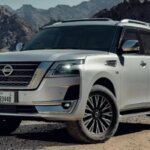 Nissan Patrol History: From Rugged Workhorse to Luxury 4WD Icon
The leaf version leaned harder toward traditional commercial duties. The Coil Cab brought more of the wagon's suspension philosophy into the ute world.
For recreational four-wheel drivers, that can make the Coil Cab extremely appealing.
Why the GQ Coil Cab Still Has a Following
Suspension articulation is a major part of it.
Live axles and coil springs provide the kind of wheel movement serious off-road drivers appreciate. Instead of relying on electronics to disguise limited articulation, the chassis physically allows the wheels to move.
Then there is modification potential.
A well-built GQ Coil Cab can become an expedition rig, weekend trail machine or serious remote-area tourer without losing the mechanical character that made the vehicle interesting in the first place.
Of course, decades of modifications create their own problem: finding one that hasn't been butchered.
More on that shortly.
What Engines Came in Australian GQ Patrols?
The GQ Patrol family was offered with several engines during its Australian life.
Nissan lists 2.8-litre turbo-diesel, 3.0-litre petrol, 4.2-litre petrol and 4.2-litre diesel six-cylinder engines across the Australian GQ range.
Not every engine was necessarily paired with every body configuration at every point in production, so buyers should always decode the specific vehicle rather than assuming wagon and ute specifications were identical.
For ute enthusiasts, however, one engine dominates the conversation.
TD42 4.2-Litre Diesel
Say "TD42" around a group of Australian Patrol enthusiasts and you'll probably start a very long conversation.
The 4.2-litre naturally aspirated inline-six diesel earned its reputation through simplicity and durability rather than spectacular output.
It wasn't fast.
Nobody climbed into an old naturally aspirated TD42 and wondered whether they'd accidentally purchased a sports car.
Performance could be leisurely, particularly with a tray, accessories, larger tyres or a heavy load. But outright acceleration isn't why people still chase these engines.
The attraction is their old-school mechanical nature and capacity to work when appropriately maintained.
That reputation has also pushed prices upward for desirable examples.
TB42 Petrol Patrol Utes
The big 4.2-litre petrol six deserves attention too.
Petrol GQs can provide smoother performance and may sometimes cost less to purchase than equivalent diesel examples. Their weakness for long-distance users is obvious: fuel consumption can become painful.
When fuel stations are hundreds of kilometres apart, thirst isn't merely a financial issue. It affects range and how much additional fuel we need to carry.
For recreational rigs that aren't covering huge annual distances, though, a petrol GQ can still make considerable sense.
GU Patrol Ute: The Y61 Generation
If the GQ established the formula, the GU Patrol cab-chassis refined it.
Nissan launched the GU/Y61 generation in 1997. It introduced a more spacious body together with improvements to the chassis, suspension and driveline. Nissan describes the GU as the most popular Patrol generation sold in Australia and continued offering selected GU variants, including workhorse cab-chassis vehicles, until 2016.
Visually, the GU looks substantially more modern than a GQ.
Mechanically, however, it retained much of the rugged philosophy buyers valued.
That combination explains why it remains so popular.
GU Patrol DX Cab-Chassis
The DX was the worker of the family.
Think less luxury lounge, more toolbox.
Equipment varied across years and series, but the underlying philosophy stayed straightforward: create a durable commercial Patrol without burying it beneath unnecessary luxuries.
Late Australian GU cab-chassis specifications show a DX Leaf version powered by the 3.0-litre common-rail intercooled turbo-diesel. The published specifications list 2,953cc displacement, 118kW and 380Nm, matched to a five-speed manual transmission.
That's a very different proposition from the early naturally aspirated TD42 workhorses.
More refined? Yes.
More powerful on paper? Absolutely.
As mechanically simple? Not really.
GU Patrol ST Coil Cab
The ST Coil Cab occupied perhaps the sweetest spot for private enthusiasts.
We get the Patrol's commercial usefulness while adding more comfort and coil suspension.
Late GU specifications show an ST Coil cab-chassis alongside the DX Leaf version, both using the 3.0-litre common-rail turbo-diesel in that stage of the vehicle's life. The ST also gained additional convenience equipment compared with the basic DX.
For touring and recreational use, the ST Coil can therefore be especially tempting.
It's still a tough cab-chassis Patrol underneath, but living with it every day doesn't feel quite as much like clocking onto a remote mine site.
GU Coil Versus Leaf Suspension
Choosing between them comes down to purpose.
If maximum work-oriented carrying ability is central to the build, a leaf-sprung model deserves serious consideration. If off-road articulation, ride quality and touring are higher priorities, the Coil Cab becomes very attractive.
This content may interest you!Which Nissan Patrol to Avoid Australia: Used Buyer’s GuideNeither is universally "better".
Imagine choosing between hiking boots and steel-capped work boots. Both are tough footwear; they're just designed around different jobs.
The same logic applies here.
The Famous GU TD42 Patrol Ute
For many enthusiasts, this is the holy grail.
Early GU cab-chassis models could be obtained with versions of Nissan's 4.2-litre diesel six, including turbocharged variants. An Australian review of the GU cab-chassis records naturally aspirated 4.2-litre diesel and 4.2-litre turbo-diesel engines in early GU models, with five-speed manual transmissions.
The factory turbo-diesel TD42 versions are particularly desirable.
Why?
Because they combine the fundamentally simple, understressed character associated with the TD42 family with factory turbocharging and the later GU platform.
That combination has become increasingly valuable on the used market.
Why TD42 Patrol Utes Can Be Expensive
Scarcity meets reputation.
There aren't unlimited numbers of clean, factory-specification TD42 GU utes remaining. Many have spent years doing precisely what Nissan intended them to do: working.
Others have been modified.
Some have received enormous tyres, suspension lifts, aftermarket turbo setups, engine swaps, chopped bodies, custom trays and enough accessories to qualify as a small BCF store.
Finding an unmolested example with documented servicing is therefore increasingly difficult.
And whenever supply shrinks while enthusiast demand remains enthusiastic, prices behave accordingly.
ZD30 3.0-Litre Patrol Ute
Later Patrol cab-chassis buyers will frequently encounter Nissan's 3.0-litre ZD30 turbo-diesel.
Nissan introduced the ZD30 four-cylinder turbo-diesel into the GU Patrol family in 2000, and later versions evolved considerably.
By the later cab-chassis years, Australian specifications listed a 2,953cc common-rail intercooled turbo-diesel producing 118kW and 380Nm.
This engine creates one of the biggest debates in Patrol ownership.
Early ZD30 engines developed a reputation that makes some second-hand buyers nervous. Yet lumping every ZD30 from a long production period into one basket doesn't give us a particularly useful buying strategy.
Condition, generation, maintenance history and previous modifications matter enormously.
A beautifully maintained later ZD30 can be a more sensible purchase than a supposedly bulletproof TD42 that has spent its life overheating, hauling excessive loads and receiving oil changes whenever its owner remembered.
The badge on the engine doesn't replace an inspection.
How Big Is a GU Patrol Ute?
These aren't compact machines.
Late factory data lists a 2,970mm wheelbase for both DX Leaf and ST Coil cab-chassis variants. Overall length without a tray was approximately 5,115mm for the DX Leaf and 4,940mm for the ST Coil in the referenced late-model specification.
Add a tray, bull bar, spare tyres and touring accessories and the finished vehicle can become substantial.
That's wonderful in open country.
Less wonderful when we're attempting a three-point turn outside the local supermarket.
The dimensions also matter when designing a touring build. Adding equipment without considering axle loading, gross vehicle mass and overall weight is an easy way to turn a capable Patrol into an overloaded Patrol.
How Much Can a Nissan Patrol Ute Tow?
Towing specifications vary by model, year and configuration, so the compliance plate and owner's documentation for the exact vehicle should always win any argument.
As an example, published information for a 2010 GU6 DX cab-chassis lists a braked towing capacity of 3,200kg and an unbraked figure of 750kg.
But tow rating isn't the whole equation.
Payload, tow-ball download, axle limits, GVM and GCM all interact.
A Patrol might theoretically tow a particular trailer while simultaneously having surprisingly little capacity remaining for passengers, tray equipment, fuel, water, tools and camping gear.
The numbers need to work together.
Why Australians Still Love Patrol Utes
There's something wonderfully straightforward about them.
Modern four-wheel drives are astonishingly capable, but capability increasingly arrives through layers of software. Terrain modes decide how the throttle behaves. Cameras show us rocks. Computers brake spinning wheels.
The old Patrol tackles the problem more mechanically.
Strong chassis. Live axles. Low-range gearing. Simple body. Big tyres if required.
There's a certain hammer-like quality to the whole experience.
And a hammer doesn't need a software update.
That doesn't automatically make an old Patrol superior to a new vehicle. Modern 4WDs offer enormous advantages in safety, comfort, efficiency and performance.
But people don't necessarily buy Patrol utes because they're objectively the best answer to every problem.
This content may interest you! Subaru Outback Years Australia: Complete Model-Year Guide
They buy them because of how they're built, what they can become and how they feel when the bitumen disappears.
Which Nissan Patrol Ute Is Best?
Our answer depends entirely on the job.
A restored GQ TD42 Coil Cab could be wonderful for an enthusiast who values mechanical simplicity and old-school character.
A GU TD42 turbo-diesel cab-chassis may be the dream choice for buyers who want classic Patrol toughness in the newer body.
A later GU 3.0 common-rail model may deliver a more affordable route into Patrol ute ownership while providing stronger everyday performance than the old naturally aspirated diesel.
Meanwhile, a leaf-sprung DX can still make more sense for a genuinely work-focused build than the more enthusiast-friendly coil version.
There isn't one perfect Patrol.
There's a Patrol that fits what we actually plan to do.
What to Check Before Buying a Used Patrol Ute
Age changes the buying process.
Even the youngest Australian-delivered GU Patrol utes are now well beyond their new-car years. Maintenance and modification history can consequently matter more than kilometres alone.
Before handing over money, we'd concentrate on:
- Service history: Look for evidence of consistent oil, cooling-system and drivetrain maintenance rather than trusting a low odometer reading.
- Chassis condition: Inspect carefully for cracks, rust, poor repairs, accident damage and evidence of severe overloading.
- Engine health: Check cold starting, blow-by, coolant condition, oil leaks, unusual noises, overheating history and modifications.
- Driveline: Listen for differential, gearbox and transfer-case noises and check universal joints, hubs and four-wheel-drive operation.
- Suspension: Inspect bushes, shocks, springs, steering components and evidence of badly engineered lifts.
- Tray and accessories: Heavy trays, bull bars, winches, long-range tanks and canopies consume payload before we've packed anything.
- Legal modifications: Confirm suspension, tyres, engine changes and GVM modifications comply with the relevant state or territory requirements.
- Previous use: A tidy-looking ute may have spent years towing, carrying heavy loads or working underground.
- Rust: Check the body, chassis, gutters, floors and areas affected by coastal or beach use.
- Pre-purchase inspection: For an expensive TD42 in particular, paying a Patrol-savvy independent mechanic to inspect it can be money extremely well spent.
A shiny snorkel tells us almost nothing about mechanical condition.
Receipts tell us much more.
Modified Versus Standard Patrol Utes
Here's where shopping gets interesting.
Most Patrol utes haven't spent their lives untouched.
Modification itself isn't bad. In fact, a thoughtful build can save the next owner thousands of dollars.
A quality tray, long-range tank, suspension package and professionally installed touring equipment can add genuine usefulness.
The question is how everything was installed.
A carefully engineered touring Patrol and a backyard project wearing $20,000 worth of accessories might look similar in an advertisement.
Underneath, they're completely different propositions.
We'd rather purchase fewer high-quality modifications with documentation than a mountain of mystery wiring, questionable welding and enormous tyres.
Is There a New Nissan Patrol Ute in Australia?
No factory Patrol ute is currently part of Nissan Australia's new-vehicle range.
This is an important point because online searches often blur Patrol generations together.
The GU/Y61 was the final Patrol generation sold in Australia as a cab-chassis, with Nissan continuing limited GU workhorse variants until 2016. Nissan announced the Y61 wagon and cab-chassis withdrawal during that year as the ageing model approached tighter emissions requirements.
The Y62 that followed the GU as Nissan's flagship Australian Patrol was a wagon rather than a cab-chassis ute.
And the Patrol story is changing again.
As of August 2026, Nissan Australia has announced the new Y63 Patrol range, with Australian orders open and first customer deliveries planned for early 2027. The announced Australian range is centred on the new-generation SUV, powered by a 3.5-litre twin-turbo V6; Nissan has not announced an Australian Y63 Patrol ute as part of that range.
So if we're shopping specifically for a Nissan Patrol ute in Australia, we're shopping used.
Could Nissan Build Another Patrol Ute?
Anything is theoretically possible, but we shouldn't confuse enthusiast wish lists with confirmed product plans.
A modern Patrol cab-chassis would certainly attract attention.
Imagine contemporary turbocharged performance, heavy-duty suspension and Patrol off-road engineering wrapped around a practical tray-back body.
Sounds tempting, doesn't it?
But Australia's ute market has changed enormously since the GU disappeared. Nissan already competes in the pickup space with Navara, while the modern Patrol occupies the large premium off-road SUV category.
Until Nissan announces something concrete, a new Patrol ute remains speculation rather than a model buyers should expect.
Nissan Patrol Ute Versus Modern Dual-Cab Utes
Buying an old Patrol instead of a newer Ranger, HiLux, D-MAX or Navara is not simply choosing between brands.
We're effectively choosing between eras.
A modern dual-cab provides better active safety, stronger refinement, quieter cruising, easier urban manners and usually far more technology.
The Patrol fights back with tremendous mechanical appeal, solid-axle off-road ability and the freedom of a traditional cab-chassis platform.
For remote touring enthusiasts who understand old vehicles, that trade-off can be worthwhile.
For somebody wanting a silent motorway commuter with adaptive cruise control and modern crash-avoidance technology?
The Patrol ute may feel like arriving at a smartphone convention carrying a rotary telephone.
Charming, robust—and unquestionably from another time.
Are Nissan Patrol Utes Reliable?
They can be exceptionally durable, but "Patrol reliability" should never become an excuse to ignore age.
This content may interest you! Toyota Land Cruiser Year Models Australia: Complete Generation Guide
A vehicle built 15, 20 or 30 years ago has had a lot of opportunities to be mistreated.
Rubber ages. Cooling systems deteriorate. Wiring gets altered. Bearings wear. Owners install questionable modifications. Heavy loads fatigue components.
A strong basic design gives us a good starting point, not immortality.
This is particularly relevant with TD42 Patrols. Their reputation can tempt buyers into paying enormous money for examples that haven't necessarily received enormous amounts of care.
Buy the condition and history, not the legend.
Is a GQ or GU Patrol Ute Better?
The GQ wins on raw old-school charm.
It's simpler, more agricultural and visually unmistakable. A good one makes even an ordinary trip feel slightly adventurous.
The GU feels like the evolved version.
It provides a roomier, more modern cabin and decades less visual ageing while preserving much of the heavy-duty Patrol DNA.
For a dedicated classic build, we'd understand choosing GQ.
For frequent touring, GU can be easier to live with.
But condition overwhelms theory.
A superb GQ is a better purchase than a neglected GU, and vice versa.
Choosing Based on Intended Use
Think about where the Patrol will spend most of its life.
If it's destined for a farm or worksite, payload suitability and simple servicing may dominate the decision.
If we're building a touring rig, comfort, range, suspension and accessory capacity become more important.
If serious technical four-wheel driving is the mission, articulation, gearing, tyre choice and modification potential move up the priority list.
And if the goal is collecting?
Originality suddenly matters much more.
The Best Patrol Ute Isn't Always the Most Expensive
This is worth remembering.
The internet can make rare TD42 Patrols appear like the automatic answer.
They're fantastic machines.
But paying a huge premium for an engine badge makes little sense if another Patrol better matches our actual requirements and budget.
Sometimes the smartest ute isn't the one enthusiasts photograph at 4WD meets.
It's the one that starts every morning, carries what we need and leaves enough money in the bank to actually go somewhere.
Nissan Patrol Ute Models Australia: Final Thoughts
The Patrol ute occupies a special corner of Australian four-wheel-drive culture.
Its history stretches from early G60 cab-chassis models through the MQ, the legendary GQ/Y60 and finally the long-lived GU/Y61.
But the GQ and GU are where the story becomes most relevant for today's buyer.
The GQ Patrol ute offers pure old-school character, rugged construction and the much-loved TD42 era. Its Coil Cab variants remain especially desirable among off-road enthusiasts.
The GU Patrol ute carried that philosophy forward with a newer body, improved refinement and an evolving engine range. From TD42-powered heavy-duty examples to later 3.0-litre common-rail DX Leaf and ST Coil models, the GU provided Australian buyers with a remarkably broad working platform.
Then the curtain fell.
Nissan withdrew the GU cab-chassis from Australia in 2016. The Y62 continued the Patrol name as a V8 SUV, and the incoming Australian Y63 represents another leap in sophistication rather than a return to factory ute production.
That makes every Patrol ute on Australia's roads a piece of a discontinued lineage.
Some are tired workers.
Some are wildly modified weekend toys.
Some are beautifully preserved TD42 examples commanding serious money.
And some are still doing exactly what they've always done: carrying a tray full of gear into places where sensible road cars would rather not venture.
Perhaps that's the real reason Australians continue to love them.
The Patrol ute never needed to pretend to be tough.
It simply went to work.
Frequently Asked Questions
1. What Nissan Patrol ute models were sold in Australia?
Australia received Patrol cab-chassis or pickup models across several generations, including the G60, MQ, GQ/Y60 and GU/Y61. For modern used-car buyers, the GQ and GU are the most relevant generations. Nissan's own historical overview confirms cab-chassis or pickup body styles across those earlier generations.
2. What was the last Nissan Patrol ute sold in Australia?
The GU/Y61 Patrol cab-chassis was the final factory Patrol ute-style model offered by Nissan Australia. The model entered run-out during 2016 and was withdrawn along with the remaining Y61 range.
3. Is the Nissan Patrol ute available with a TD42 engine?
Yes. GQ and GU Patrol cab-chassis models were available with versions of Nissan's 4.2-litre TD42 diesel engine, and early GU cab-chassis models included both naturally aspirated and turbo-diesel 4.2-litre variants.
This content may interest you! Ford Everest Issues Australia: Problems, Reliability, and Buyer Advice
4. Is a Nissan Patrol Coil Cab better than a leaf-spring ute?
It depends on the job. Coil-sprung Patrol utes tend to appeal to recreational and off-road users because of ride quality and articulation, while leaf-spring models make sense for traditional work-oriented duties. Neither suspension design automatically makes the vehicle better for every owner.
5. Can you buy a brand-new Nissan Patrol ute in Australia?
Not as a factory Australian-market Patrol. The final GU/Y61 cab-chassis models disappeared in 2016. Nissan's newly announced Y63 Australian Patrol range represents the next generation of the large SUV rather than a revived Patrol cab-chassis ute.
Leave a Reply