
Chery Tiggo 4 vs Tiggo 7 Australia 2026: Which SUV Should You Buy?

Choosing between the Chery Tiggo 4 and Chery Tiggo 7 in Australia is not simply a matter of picking the smaller or larger SUV. Both vehicles offer competitive pricing, generous standard equipment, modern technology and the reassurance of Chery's seven-year warranty.
However, there are important differences in size, practicality, transmission technology, fuel consumption and overall driving experience.
The Tiggo 4 is designed for buyers who want an affordable, practical small SUV that is easy to drive around town. The Tiggo 7, meanwhile, offers a more spacious cabin, a larger boot and a more substantial family-oriented design.
Interestingly, the Australian 2026 petrol versions of both vehicles produce exactly the same power and torque. That means upgrading to the Tiggo 7 does not necessarily give us more performance.
So, is the Tiggo 7 worth the extra money, or does the Tiggo 4 represent better value?
In this comprehensive comparison, we examine everything Australian buyers need to know, including current pricing, engine specifications, dimensions, fuel efficiency, safety, interior equipment and ownership costs.
- Chery Tiggo 4 vs Tiggo 7: Quick Comparison
- Chery Tiggo 4 vs Tiggo 7 Price in Australia
- Exterior Design: Which Chery SUV Looks Better?
- Chery Tiggo 4 vs Tiggo 7 Dimensions
- Interior Space and Passenger Comfort
- Chery Tiggo 4 vs Tiggo 7 Boot Space
- Engine and Performance Comparison
- Tiggo 4 CVT vs Tiggo 7 Dual-Clutch Transmission
- Chery Tiggo 4 vs Tiggo 7 Fuel Consumption
- Tiggo 4 Hybrid vs Tiggo 7 Super Hybrid
- Interior Technology and Infotainment
- Chery Tiggo 4 vs Tiggo 7 Safety
- Ride Comfort and Everyday Driving
- Ownership Costs, Warranty and Reliability
- Chery Tiggo 4 Pros and Cons
- Chery Tiggo 7 Pros and Cons
- Which Chery SUV Is Better for Different Australian Buyers?
- Is the Chery Tiggo 7 Better Than the Tiggo 4?
- Chery Tiggo 4 vs Tiggo 7: Our Final Verdict
- Frequently Asked Questions
Chery Tiggo 4 vs Tiggo 7: Quick Comparison
Before exploring each vehicle in detail, let's compare the main specifications of the Australian MY26 petrol models.
| Specification | Chery Tiggo 4 | Chery Tiggo 7 |
|---|---|---|
| SUV category | Small SUV | Medium SUV |
| Starting drive-away price | $23,990 | $29,990 |
| Engine | 1.5L turbo petrol | 1.5L turbo petrol |
| Power | 108 kW | 108 kW |
| Torque | 210 Nm | 210 Nm |
| Transmission | CVT automatic | 6-speed dual-clutch automatic |
| Drivetrain | Front-wheel drive | Front-wheel drive |
| Fuel consumption | 7.4 L/100 km | 6.9 L/100 km |
| Length | 4,307 mm | 4,540 mm |
| Width | 1,825 mm | 1,870 mm |
| Height | 1,660 mm | 1,710 mm |
| Wheelbase | 2,610 mm | 2,661 mm |
| Boot capacity | 380 litres | 549 litres* |
| Seating capacity | 5 | 5 |
| ANCAP safety rating | 5 stars | 5 stars |
| Vehicle warranty | 7 years/unlimited km | 7 years/unlimited km |
The Tiggo 7's quoted cargo figure is measured to the roof; published cargo measurements may use different conventions, so they are not necessarily directly comparable.
Our initial verdict: The Tiggo 4 is the better budget-focused option, while the Tiggo 7 makes more sense for families who regularly need additional passenger and luggage space.
All prices mentioned are Australian dollars. The drive-away prices reflect advertised MY26 petrol-model offers available in November 2026 and may change with promotions, stock and dealer conditions.
Chery Tiggo 4 vs Tiggo 7 Price in Australia
Price is one of the strongest selling points of both vehicles.
Chery has positioned its SUVs competitively against established Japanese and Korean manufacturers, offering technology and features that would traditionally be associated with more expensive models.
Chery Tiggo 4 Price Australia
The 2026 Chery Tiggo 4 petrol range includes two main variants:
| Variant | Advertised drive-away price |
|---|---|
| Tiggo 4 Urban | $23,990 |
| Tiggo 4 Ultimate | $26,990 |
Even the entry-level Urban includes a substantial amount of equipment, making it particularly attractive to first-time SUV buyers, city commuters and households looking for a second car.
The Ultimate adds several comfort and convenience features without pushing the price particularly far beyond the entry-level model.
Chery Tiggo 7 Price Australia
The 2026 petrol-powered Tiggo 7 is also offered in two versions:
| Variant | Advertised drive-away price |
|---|---|
| Tiggo 7 Urban | $29,990 |
| Tiggo 7 Ultimate | $33,990 |
Comparing the entry-level versions, the Tiggo 7 costs $6,000 more than the Tiggo 4.
That is a meaningful difference at this end of the Australian new-car market.
However, buyers receive a larger SUV with more luggage capacity and additional cabin space.
Is the Tiggo 7 Worth the Extra $6,000?
For a couple who primarily drives around Sydney, Melbourne or Brisbane, the smaller Tiggo 4 may provide almost everything they need.
However, families travelling regularly with children, prams, sporting equipment or holiday luggage may find the additional investment worthwhile.
Another interesting comparison is the Tiggo 4 Ultimate against the Tiggo 7 Urban.
At the advertised prices, only $3,000 separates these vehicles.
The decision then becomes whether we prefer a smaller SUV with additional luxury features or a larger SUV with more practical interior dimensions.
Exterior Design: Which Chery SUV Looks Better?
Although both vehicles share Chery's contemporary SUV styling, they have noticeably different proportions.
Chery Tiggo 4 Exterior Design
The Tiggo 4 features a compact body, distinctive diamond-pattern grille and relatively upright SUV profile.
Its shorter overall length makes it particularly suitable for urban environments.
The design combines practical proportions with enough visual presence to avoid looking like a conventional small hatchback.
Depending on the variant, exterior equipment includes alloy wheels, LED lighting and a powered sunroof.
The Urban features 17-inch alloy wheels, while the Ultimate upgrades to 18-inch wheels.
Chery Tiggo 7 Exterior Design
The MY26 Tiggo 7 adopts a more sophisticated appearance with updated front styling, slim LED headlights and a modern rear lighting design.
Its larger dimensions give it a stronger road presence.
The longer body, wider stance and additional height contribute to a more substantial family-SUV appearance.
Overall, the Tiggo 7 looks more like a traditional medium SUV, while the Tiggo 4 remains a practical compact crossover.
Design winner: The Tiggo 7 for a more substantial appearance, although buyers wanting compact dimensions may prefer the Tiggo 4.
Chery Tiggo 4 vs Tiggo 7 Dimensions
Size is one of the most important differences between these vehicles.
| Dimension | Tiggo 4 | Tiggo 7 | Difference |
|---|---|---|---|
| Length | 4,307 mm | 4,540 mm | Tiggo 7 +233 mm |
| Width | 1,825 mm | 1,870 mm | Tiggo 7 +45 mm |
| Height | 1,660 mm | 1,710 mm | Tiggo 7 +50 mm |
| Wheelbase | 2,610 mm | 2,661 mm | Tiggo 7 +51 mm |
The Tiggo 7 is approximately 23 centimetres longer than the Tiggo 4.
That difference might not sound enormous, but it can make a noticeable impact when transporting passengers and luggage.
Which Is Easier to Park?
The Tiggo 4 has an advantage in tight urban environments.
Its shorter length makes it easier to position in compact parking spaces, while its narrower body can help when navigating narrow residential streets.
The Tiggo 7 is still reasonably compact for a medium SUV, but buyers should consider garage dimensions and available parking space before purchasing.
For apartment living or frequent inner-city driving, we would favour the Tiggo 4.
Interior Space and Passenger Comfort
Both SUVs accommodate five passengers, but the Tiggo 7 is better suited to households that regularly use the rear seats.
Front-Seat Comfort
The Tiggo 4 provides a modern driving environment with supportive seating, digital displays and convenient storage compartments.
Front occupants should find sufficient room for everyday commuting.
The Tiggo 7 offers a wider cabin, which may create a more spacious feeling for the driver and front passenger.
Its larger dashboard screens and more substantial centre console also contribute to a more premium impression.
Rear-Seat Space
Rear-seat accommodation is an important consideration for Australian families.
The Tiggo 4 works well for children and occasional adult passengers.
However, the Tiggo 7 has a longer wheelbase and larger overall body, giving it an advantage when accommodating taller passengers or transporting several people.
If we regularly carry three people in the back, the Tiggo 7 would be our preferred starting point, although its actual shoulder room and child-seat arrangement should be checked in person.
Which Is Better for Child Seats?
Both vehicles provide family-friendly seating layouts, but child-seat compatibility depends on the dimensions of the specific restraint.
The Tiggo 7's wider cabin may make certain arrangements easier, particularly when using larger rear-facing child seats.
Before purchasing either SUV, we recommend installing the actual child seats intended for daily use.
That test is more useful than relying on exterior dimensions alone.
Chery Tiggo 4 vs Tiggo 7 Boot Space
Boot capacity is another major consideration.
The Tiggo 4 offers approximately 380 litres of luggage capacity with its rear seats upright.
The Tiggo 7 is quoted with a 549-litre cargo capacity measured to the roof.
Because these figures can reflect different measuring methods, they should not be interpreted as a precise 169-litre like-for-like difference.
Nevertheless, the Tiggo 7 is the more practical choice for carrying large amounts of luggage.
Tiggo 4 Boot Practicality
The Tiggo 4 provides sufficient space for everyday shopping, backpacks and smaller suitcases.
It should comfortably handle typical commuting and weekend shopping duties.
Folding the rear seats increases loading flexibility when transporting larger objects.
For couples or smaller households, its boot is likely to be adequate most of the time.
Tiggo 7 Boot Practicality
The Tiggo 7 is better suited to larger luggage loads.
It offers a useful advantage when carrying family holiday bags, camping equipment or bulky recreational items.
Its larger cargo area can make a difference during road trips, particularly when all five seats are occupied.
Boot-space winner: Chery Tiggo 7.
This content may interest you!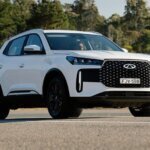 Chery Tiggo 4 vs Tiggo 7 Australia: Which SUV Should You Buy in 2026?
Engine and Performance Comparison
One surprising aspect of the Australian 2026 petrol-powered Tiggo range is that both SUVs use a 1.5-litre turbocharged four-cylinder engine producing identical headline outputs.
Chery Tiggo 4 Engine Specifications
The Tiggo 4 features:
- 1.5-litre turbocharged petrol engine
- 108 kW maximum power
- 210 Nm maximum torque
- Continuously variable transmission (CVT)
- Front-wheel drive
This engine provides sufficient performance for everyday commuting, suburban travel and normal highway driving.
Its turbocharged configuration helps deliver useful torque at relatively low engine speeds.
The CVT prioritises smooth power delivery, although drivers may notice engine revs increasing noticeably during stronger acceleration.
Chery Tiggo 7 Engine Specifications
The MY26 Tiggo 7 petrol features:
- 1.5-litre turbocharged petrol engine
- 108 kW maximum power
- 210 Nm maximum torque
- Six-speed dual-clutch automatic transmission
- Front-wheel drive
Despite being the larger vehicle, the Tiggo 7 does not have more petrol-engine power than the Tiggo 4.
Its main mechanical distinction is the transmission.
A dual-clutch gearbox provides defined gear ratios rather than the continuously varying operation of a CVT.
Which SUV Is Faster?
Neither vehicle should be considered a performance SUV.
Although both produce identical power and torque, their different weights, transmissions and gearing can influence acceleration.
The smaller Tiggo 4 may feel sufficiently lively in urban conditions, while the Tiggo 7 provides a more substantial driving experience.
We would not declare a definitive 0–100 km/h winner without comparable, independently verified acceleration testing.
For everyday Australian driving, both offer adequate performance rather than genuinely sporty acceleration.
Tiggo 4 CVT vs Tiggo 7 Dual-Clutch Transmission
The difference between the transmissions deserves particular attention.
Advantages of the Tiggo 4 CVT
A CVT does not operate through a conventional series of fixed gear changes.
Potential advantages include smooth acceleration and relatively seamless low-speed operation.
This can be appealing in heavy city traffic.
However, stronger acceleration may produce sustained engine noise, which some drivers find less engaging.
Advantages of the Tiggo 7 Dual-Clutch Gearbox
The Tiggo 7 uses a six-speed dual-clutch automatic transmission.
This design allows defined gear changes and can provide a more conventional shifting sensation.
However, dual-clutch transmissions can behave differently from CVTs during parking manoeuvres, crawling traffic and repeated low-speed starts.
We recommend test-driving both vehicles in stop-start conditions before deciding which transmission feels more natural.
Neither transmission type automatically guarantees superior long-term reliability.
Chery Tiggo 4 vs Tiggo 7 Fuel Consumption
Fuel efficiency is especially important for buyers who regularly commute long distances.
Interestingly, the petrol-powered Tiggo 7 has a slightly better official combined fuel-consumption figure than the smaller Tiggo 4.
| Model | Claimed combined fuel consumption |
|---|---|
| Tiggo 4 1.5L Turbo | 7.4 L/100 km |
| Tiggo 7 1.5L Turbo | 6.9 L/100 km |
| Tiggo 4 Hybrid | 5.4 L/100 km |
| Tiggo 7 Super Hybrid PHEV | 1.4 L/100 km* |
The Tiggo 7 Super Hybrid's figure is a plug-in-hybrid test result. It assumes battery energy is used and is not directly comparable with conventional petrol consumption figures. Electricity consumption must also be considered.
Real-World Petrol Consumption
Official combined figures are useful when comparing vehicles under standardised conditions.
However, real-world results depend on several factors:
- Traffic congestion and average speed
- Driving style and acceleration
- Passenger and luggage weight
- Air-conditioning use
- Tyre pressures
- Terrain and road conditions
We should therefore treat the official figures as benchmarks rather than guaranteed everyday results.
Annual Fuel Consumption Comparison
If we drive 15,000 kilometres annually, the official combined figures translate into the following estimated petrol usage:
| Model | Annual petrol consumption |
|---|---|
| Tiggo 4 petrol | 1,110 litres |
| Tiggo 7 petrol | 1,035 litres |
| Tiggo 4 Hybrid | 810 litres |
These estimates assume the vehicles achieve their published combined-cycle figures throughout the year.
The petrol Tiggo 7 would consume approximately 75 litres less fuel annually than the petrol Tiggo 4 under those assumptions.
That is a relatively small operating-cost difference compared with the initial purchase-price gap.
Tiggo 4 Hybrid vs Tiggo 7 Super Hybrid
Australian buyers should also understand that the two Chery hybrid systems are fundamentally different.
Chery Tiggo 4 Hybrid
The Tiggo 4 Hybrid uses a 1.5-litre petrol engine combined with electric propulsion.
It is a conventional hybrid electric vehicle, commonly described as an HEV.
Unlike a plug-in hybrid, it does not require external charging.
The system automatically manages energy between the petrol engine, electric motor and battery.
Its official combined fuel-consumption figure is 5.4 L/100 km.
For buyers who mainly drive in urban traffic and want improved fuel economy without installing a charger, the Tiggo 4 Hybrid is worth considering.
Chery Tiggo 7 Super Hybrid
The Tiggo 7 Super Hybrid is a plug-in hybrid electric vehicle, or PHEV.
It combines a turbocharged petrol engine with electric propulsion and a larger rechargeable battery.
Its key specifications include:
- 1.5-litre turbocharged petrol engine
- 18.4 kWh battery capacity
- 150 kW electric motor
- 310 Nm electric motor torque
- Up to 93 km claimed electric range under NEDC testing
- 1.4 L/100 km claimed weighted combined fuel consumption
The larger battery allows considerably more electric-only operation than a conventional hybrid.
However, achieving low petrol consumption depends heavily on charging frequency and journey length.
The real-world electric range may also be lower than the NEDC figure.
Which Hybrid Makes More Sense?
For buyers who cannot conveniently recharge at home or work, we would lean towards the Tiggo 4 Hybrid.
For drivers who can regularly recharge and want a larger SUV with substantial electric-driving capability, the Tiggo 7 Super Hybrid is more appealing.
Importantly, the plug-in hybrid's electricity costs should be included when comparing total running expenses.
Interior Technology and Infotainment
Both vehicles offer modern technology as standard, but the Tiggo 7 has a larger dashboard display arrangement.
Tiggo 4 Technology
The petrol Tiggo 4 includes a dual-screen layout with two 10.25-inch displays.
Features include:
- Digital instrument cluster
- Central touchscreen infotainment
- Wireless Apple CarPlay and Android Auto
- Intelligent voice control
- Keyless entry and push-button start
- Rain-sensing windscreen wipers
Ultimate variants add equipment such as a 360-degree camera system, wireless phone charging and heated front seats.
For the price, the Tiggo 4 offers a particularly attractive technology package.
Tiggo 7 Technology
The 2026 Tiggo 7 features dual 12.3-inch digital displays.
Additional equipment, depending on the grade, includes:
- Wireless Apple CarPlay and Android Auto
- Intelligent voice commands
- Dual-zone automatic climate control
- Wireless smartphone charging
- Power-adjustable front seats
- Heated and ventilated front seats
- Panoramic sunroof
- Powered tailgate
- 360-degree camera system
The larger screens create a more premium dashboard appearance, especially in the Ultimate variant.
Technology winner: Tiggo 7 for its larger displays and available premium equipment. However, the Tiggo 4 remains highly competitive for its price.
Chery Tiggo 4 vs Tiggo 7 Safety
Safety is an important consideration for families comparing these SUVs.
Both petrol models have achieved five-star ANCAP safety ratings in Australia, although their assessments have different rating years.
Tiggo 4 Safety Rating
The petrol Tiggo 4 carries a five-star ANCAP rating based on the applicable Tiggo 4 Pro assessment.
Its recorded assessment results include:
| Safety category | Result |
|---|---|
| Adult occupant protection | 88% |
| Child occupant protection | 87% |
| Vulnerable road user protection | 79% |
| Safety assist | 85% |
The petrol model includes seven airbags and a range of driver-assistance technologies.
These include autonomous emergency braking, lane-support functions and other collision-avoidance systems.
Important: The Tiggo 4 Hybrid is not covered by the petrol Tiggo 4's ANCAP rating and remains unrated under the published assessment.
Tiggo 7 Safety Rating
The updated Tiggo 7 has a five-star ANCAP rating based on a 2025 assessment.
Its results include:
This content may interest you!Chery Tiggo 4 vs Tiggo 4 Pro Australia: What's the Difference and Which Is Better?| Safety category | Result |
|---|---|
| Adult occupant protection | 82% |
| Child occupant protection | 86% |
| Vulnerable road user protection | 80% |
| Safety assist | 82% |
The updated range includes autonomous emergency braking, lane-support technology and speed-assistance systems.
The Tiggo 7's ANCAP assessment covers the relevant updated petrol and hybrid variants.
Which Is Safer?
Both petrol SUVs meet the requirements for a five-star rating.
However, comparing individual percentages across assessments requires care, particularly when vehicles have different rating years and testing conditions.
We would not assume the Tiggo 4 is categorically safer simply because some of its published scores are higher.
Buyers should examine the relevant model's safety report and confirm the equipment fitted to their chosen variant.
Ride Comfort and Everyday Driving
The best SUV is not necessarily the largest one.
Driving comfort depends on how and where we use the vehicle.
City Driving
For city use, the Tiggo 4 has several practical advantages.
Its compact size can simplify parking, while the CVT provides a different, generally seamless style of acceleration.
Drivers negotiating busy shopping centres or narrow streets may appreciate its smaller dimensions.
Highway Driving
The Tiggo 7's larger cabin and additional luggage capacity make it an appealing option for longer family journeys.
The extra body size may contribute to a more substantial driving feel, although actual ride quality depends on suspension calibration, tyres and road surfaces.
Both petrol models provide the same maximum engine power, so the Tiggo 7 should not be selected on the assumption that it offers stronger engine performance.
Australian Road Conditions
For regular travel between cities such as Sydney and Canberra or Melbourne and Geelong, both SUVs can fulfil normal road-trip duties.
However, their front-wheel-drive configurations mean buyers should not mistake either vehicle for a dedicated off-road SUV.
For rough access roads, check ground clearance, tyre specifications and the vehicle's stated operating limits.
Ownership Costs, Warranty and Reliability
Purchase price is only one part of the ownership equation.
Australian buyers should also consider maintenance costs, tyres, insurance, depreciation and long-term durability.
Warranty Coverage
Both the Tiggo 4 and Tiggo 7 are covered by Chery's:
- Seven-year, unlimited-kilometre vehicle warranty
- Seven-year capped-price servicing program
- Roadside assistance initially provided for one year, renewable through eligible scheduled servicing for up to seven years
Warranty terms, eligibility and exclusions should always be checked before purchasing.
Hybrid models also have separate high-voltage battery warranty arrangements.
Servicing Costs
Chery's capped-price servicing program gives buyers greater visibility over scheduled maintenance expenses.
However, the cheapest vehicle to buy is not automatically the cheapest to maintain.
Servicing costs may vary between petrol, conventional hybrid and plug-in hybrid powertrains.
Before purchasing, we recommend obtaining the complete scheduled-service cost breakdown for the exact model and comparing the total cost over several years.
Long-Term Reliability
Chery has expanded rapidly in Australia, but many of its current models have a shorter local ownership history than long-established alternatives such as the Toyota Corolla Cross, Hyundai Kona or Kia Seltos.
That means there is less long-term Australian ownership evidence available for some newer variants.
The Tiggo 4's CVT and Tiggo 7's dual-clutch transmission also have different mechanical characteristics.
Neither should be labelled definitively more reliable without sufficient long-term data.
Buyers intending to keep either vehicle for ten years or more should pay particular attention to scheduled maintenance, warranty conditions and dealer support.
Resale Value
Resale value is another area worth researching carefully.
A lower initial purchase price can reduce the total money exposed to depreciation, but future market demand also matters.
Since used-car values change over time, we would compare actual resale prices for similar age, mileage and condition rather than assuming either model will hold its value better.
Chery Tiggo 4 Pros and Cons
Advantages
- Lower starting purchase price
- More compact and easier to park
- Strong standard technology for the money
- Same petrol-engine power as the Tiggo 7
- Seven-year vehicle warranty
- Available conventional hybrid with good claimed fuel economy
- Well suited to city commuting
Disadvantages
- Smaller boot
- Less overall passenger space
- CVT driving characteristics may not appeal to everyone
- Less substantial cabin presentation than the larger Tiggo 7
- Conventional hybrid version remains unrated by ANCAP
Chery Tiggo 7 Pros and Cons
Advantages
- Larger cabin and luggage area
- More suitable for regular family use
- Larger dashboard screens
- More premium equipment available
- Slightly better official fuel economy in petrol form
- Seven-year vehicle warranty
- Available plug-in hybrid with substantial claimed electric range
Disadvantages
- Higher starting purchase price
- Larger dimensions make parking slightly more demanding
- Petrol engine offers no additional power over the Tiggo 4
- Dual-clutch transmission may not suit every driver's preferences
- Plug-in hybrid benefits depend on regular charging
Which Chery SUV Is Better for Different Australian Buyers?
The choice becomes easier when we consider different ownership scenarios.
| Buyer profile | Our preferred model |
|---|---|
| First-time SUV buyer | Tiggo 4 Urban |
| Budget-conscious commuter | Tiggo 4 Urban |
| Couple living in a city | Tiggo 4 |
| Family with young children | Tiggo 7 |
| Regular long-distance family travel | Tiggo 7 |
| Buyers wanting affordable luxury features | Tiggo 4 Ultimate |
| Buyers prioritising boot space | Tiggo 7 |
| Drivers wanting a hybrid without charging | Tiggo 4 Hybrid |
| Drivers with home charging | Tiggo 7 Super Hybrid |
| Buyers prioritising the lowest petrol-model price | Tiggo 4 |
Best Choice Under $25,000
The Tiggo 4 Urban is the obvious option within this budget at its advertised drive-away price.
It delivers modern technology, useful equipment and SUV practicality at a particularly competitive entry price.
Best Choice Around $30,000
At this price point, we would seriously consider the Tiggo 7 Urban.
It offers a meaningful improvement in overall space while retaining much of Chery's attractive standard equipment.
The Tiggo 4 Hybrid is another option worth evaluating if fuel efficiency is a higher priority than cabin size.
Best Choice for a Growing Family
For families who routinely carry children, prams and holiday luggage, we would choose the Tiggo 7.
Its increased dimensions and practical cargo area make it better suited to those requirements.
Best Choice for City Driving
The Tiggo 4 is our preference for frequent urban journeys.
Its manageable dimensions and lower purchase price make it a sensible everyday vehicle, especially when larger interior space is not essential.
Is the Chery Tiggo 7 Better Than the Tiggo 4?
The Tiggo 7 is better in several important areas, particularly passenger accommodation, luggage capacity and available premium equipment.
However, that does not automatically make it the better purchase.
The Tiggo 4 offers the same petrol-engine power, similar driver-assistance technology and the same basic vehicle warranty at a considerably lower price.
In addition, the Tiggo 7's modest fuel-economy advantage is unlikely to offset the full difference in purchase price for most buyers.
For someone who rarely uses the rear seats, the extra space may offer limited everyday benefits.
On the other hand, a family that regularly fills the boot could find the additional practicality well worth the money.
Ultimately, the Tiggo 7 is the more spacious vehicle, while the Tiggo 4 is the more affordable solution.
Chery Tiggo 4 vs Tiggo 7: Our Final Verdict
After comparing the 2026 Australian petrol models, we believe both SUVs make convincing arguments for different buyers.
The Chery Tiggo 4 is our pick for value.
It combines a very competitive starting price with modern technology, adequate performance and a useful seven-year warranty package.
For city commuters, couples and smaller families, it delivers much of what we would expect from a contemporary SUV without requiring a particularly large investment.
The Chery Tiggo 7 is our pick for family practicality.
Its larger dimensions, more generous luggage area and available premium equipment make it a worthwhile upgrade for buyers who frequently carry passengers or bulky belongings.
We also appreciate that the updated Tiggo 7 petrol offers slightly better claimed fuel efficiency despite its additional size.
Nevertheless, we would not automatically spend the extra $6,000 unless we genuinely needed the additional room.
If we were purchasing a compact SUV primarily for commuting, we would choose the Tiggo 4 Urban or Ultimate.
If we needed an affordable family SUV for daily duties and longer journeys, we would choose the Tiggo 7 Urban.
For buyers interested in electrification, the choice is different: the Tiggo 4 Hybrid suits those who prefer not to charge, whereas the Tiggo 7 Super Hybrid is particularly appealing when regular external charging is practical.
The most important final step is to test-drive both vehicles and compare actual dealer quotes. That will help determine whether the additional size and equipment of the Tiggo 7 justify its higher price.
Frequently Asked Questions
1. What is the main difference between the Chery Tiggo 4 and Tiggo 7?
The main difference is vehicle size. The Tiggo 4 is a small SUV measuring 4,307 mm long, while the Tiggo 7 is a medium SUV measuring 4,540 mm long. The Tiggo 7 provides greater luggage capacity and a more spacious cabin, but it costs more.
2. Is the Chery Tiggo 7 more powerful than the Tiggo 4?
No. The Australian 2026 petrol versions both use a 1.5-litre turbocharged engine producing 108 kW and 210 Nm. However, they use different automatic transmissions: a CVT in the Tiggo 4 and a six-speed dual-clutch gearbox in the Tiggo 7.
3. Which has better fuel economy, the Tiggo 4 or Tiggo 7?
For the petrol models, the Tiggo 7 has slightly better official combined fuel consumption at 6.9 L/100 km, compared with 7.4 L/100 km for the Tiggo 4. The Tiggo 4 Hybrid improves on both with a claimed 5.4 L/100 km. Actual consumption will depend on driving conditions.
4. Are the Chery Tiggo 4 and Tiggo 7 reliable SUVs?
Both vehicles come with a seven-year, unlimited-kilometre manufacturer warranty in Australia. However, long-term reliability evidence for newer Australian variants is still developing. We recommend following the prescribed service schedule and checking owner experiences, warranty exclusions and local dealer support before purchasing.
5. Should I buy a Chery Tiggo 4 or Tiggo 7 in Australia?
Choose the Tiggo 4 if you prioritise affordability, compact dimensions and city-friendly practicality. Choose the Tiggo 7 if you need additional passenger space, a larger boot and more family-oriented comfort. For most budget-conscious buyers, the Tiggo 4 offers stronger value, while the Tiggo 7 is the better choice for families needing more room.
This content may interest you!Chery Tiggo 4 vs Haval Jolion Australia: Which Small SUV Should You Buy in 2026?
Leave a Reply