
Ford Everest Models in Order Australia: Complete 2026.5 Range Guide

The Ford Everest has become one of Australia’s most recognisable large SUVs, and for good reason. It combines the toughness of a ladder-frame 4WD with the comfort, technology, and seating flexibility families expect from a modern SUV. Yet choosing one is not always straightforward. With different engines, drivetrains, styling themes, seating configurations, and equipment levels, the range can feel like a collection of similar-looking hiking boots—each capable, but designed for a slightly different trail.
For the Australian 2026.5 model year, the Ford Everest models in order are:
- Ford Everest Active
- Ford Everest Sport
- Ford Everest Tremor
- Ford Everest Wildtrak
- Ford Everest Platinum
That order moves broadly from the most affordable and practical model to the most luxurious. However, the Tremor complicates the traditional ladder slightly because it focuses more heavily on off-road performance than outright luxury. Ford Australia currently lists five Everest variants and places them in the order shown above.
In this guide, we will explore what each model offers, how the grades differ, and which Everest may make the most sense for Australian buyers.
- Ford Everest Models in Order at a Glance
- Understanding the Australian Ford Everest Line-up
- 1. Ford Everest Active
- 2. Ford Everest Sport
- 3. Ford Everest Tremor
- 4. Ford Everest Wildtrak
- 5. Ford Everest Platinum
- Ford Everest Engine Options Explained
- Part-Time 4x4 Versus Full-Time 4WD
- How Many Seats Does Each Ford Everest Have?
- Which Ford Everest Is Best for Towing?
- Which Everest Model Is Best for Off-Roading?
- Which Everest Model Offers the Best Value?
- Ford Everest Active vs Sport vs Tremor vs Wildtrak vs Platinum
- What Happened to Ambiente and Trend?
- How to Choose the Right Ford Everest
- Our Verdict on the Ford Everest Model Order
- Conclusion
- Frequently Asked Questions
Ford Everest Models in Order at a Glance
The current Everest range is structured around five distinct personalities rather than five simple equipment steps.
| Order | Ford Everest model | Main character | Engine availability | Best suited to |
|---|---|---|---|---|
| 1 | Active | Practical and versatile | 2.0L turbo-diesel or 3.0L V6 | Families and value-focused buyers |
| 2 | Sport | Bold and road-focused | 2.0L turbo-diesel or 3.0L V6 | Buyers wanting style and flexibility |
| 3 | Tremor | Off-road specialist | 3.0L V6 | Touring and serious trail use |
| 4 | Wildtrak | Premium adventure model | 3.0L V6 | Lifestyle buyers wanting character |
| 5 | Platinum | Flagship luxury model | 3.0L V6 | Maximum comfort and equipment |
The Active and Sport provide the broadest engine choice. The Tremor, Wildtrak, and Platinum concentrate on the 3.0-litre V6 turbo-diesel with full-time four-wheel drive.
Understanding the Australian Ford Everest Line-up
The Everest sits on a body-on-frame platform related to the Ford Ranger. That gives it genuine towing and off-road credentials, but its cabin, suspension tuning, and equipment are shaped around passenger comfort.
Unlike a softer crossover SUV, the Everest feels engineered for long distances, heavy loads, gravel roads, caravans, and remote-area travel. At the same time, features such as large touchscreens, driver-assistance technology, leather-accented seating, and seven-seat configurations make it useful for school runs and suburban life.
The easiest way to understand the model range is to think of it as three overlapping paths:
- Value and family practicality: Active and Sport
- Off-road and touring ability: Tremor
- Premium lifestyle and luxury: Wildtrak and Platinum
The “best” model is not automatically the most expensive. A buyer planning regular beach driving may prefer the Tremor, while someone spending most of the week in Melbourne traffic may enjoy the Platinum’s luxury features more.
1. Ford Everest Active
Where the Active Sits in the Range
The Ford Everest Active is the entry point to the current Australian line-up. However, calling it a basic model would be misleading. It was introduced as a more polished starting grade, combining everyday comfort with the core capability buyers expect from an Everest.
Ford describes the Active as balancing style and comfort, with features including 18-inch wheels, leather-accented seats, a 12-inch touchscreen, and an optional third row.
That optional third row is important. Buyers who do not regularly need seven seats can keep a simpler five-seat arrangement, while larger families can add the extra seating.
Ford Everest Active Engine Options
The Active is available with two diesel engines:
- 2.0-litre turbo-diesel
- 3.0-litre V6 turbo-diesel
The 2.0-litre version produces 125kW and 405Nm, while the 3.0-litre V6 delivers 184kW and 600Nm. Both use a 10-speed automatic transmission. The 2.0-litre model uses part-time four-wheel drive, while the V6 is paired with full-time four-wheel drive.
The smaller engine should be sufficient for many suburban families, occasional touring trips, and moderate towing. The V6 adds stronger low-speed pull and a more effortless character when carrying weight or travelling long distances.
Who Should Buy the Everest Active?
The Active makes sense for buyers who want:
- A capable 4WD without paying for every luxury feature
- A choice between four-cylinder and V6 power
- Five-seat flexibility with an optional third row
- A large infotainment screen and modern cabin
- A practical base for accessories and touring equipment
It is likely to appeal to families who want an Everest for genuine use rather than visual status. Think camping equipment, muddy football boots, dogs, roof racks, and weekend trips rather than polished wheels and prestige trim.
Active Strengths
The Active’s greatest advantage is balance. It gives us the Everest’s fundamental strength without forcing us to buy equipment we may not need. It may also leave more room in the budget for a tow bar, roof platform, all-terrain tyres, cargo accessories, or camping equipment.
Possible Active Drawbacks
Buyers comparing it with higher grades may miss some premium convenience features, distinctive styling details, or standard seven-seat packaging. The four-cylinder engine also cannot match the effortless torque of the V6.
Still, for sensible buyers, the Active could be the quiet star of the range.
2. Ford Everest Sport
Why the Sport Is a Popular Middle-Range Choice
The Ford Everest Sport sits above the Active and introduces a more assertive design theme. It is aimed at buyers who want their large SUV to look sharper and more athletic without jumping directly into the highest price bracket.
The Sport uses darker exterior details and 20-inch matt-black alloy wheels, giving it a wider, more road-focused visual stance. Ford offers it with either the 2.0-litre turbo-diesel or the optional 3.0-litre V6 turbo-diesel.
In simple terms, the Active wears hiking clothes. The Sport wears a fitted black jacket.
Sport Engine and Drivetrain Choices
Like the Active, the Sport offers two engine routes:
2.0-Litre Turbo-Diesel Sport
This version suits buyers who want the Sport appearance while keeping purchase and running costs relatively controlled. It still uses a 10-speed automatic transmission and part-time 4x4.
3.0-Litre V6 Sport
The V6 Sport is the more muscular option. With 184kW and 600Nm, it should feel more relaxed under acceleration, while towing, and when climbing long highway gradients. It also receives full-time four-wheel drive.
The V6 changes the Sport from a stylish family 4WD into a more complete towing and touring package.
Who Should Buy the Ford Everest Sport?
The Sport is ideal for buyers who:
- Want stronger visual presence than the Active
- Prefer black exterior styling
- Want the option of four-cylinder or V6 power
- Spend significant time on sealed roads
- Need a family SUV that can still tow and tour
The Sport is arguably the easiest Everest to recommend without knowing every detail of a buyer’s lifestyle. It combines style, practicality, capability, and engine choice in a tidy package.
Sport Versus Active
The decision between Active and Sport comes down to priorities.
Choose the Active when value, practical equipment, and accessory budget matter most.
Choose the Sport when appearance, larger wheels, cabin presentation, and a more premium feel justify the extra expense.
Neither is inherently better. One is the sensible work boot; the other is the same boot with cleaner leather and sharper stitching.
3. Ford Everest Tremor
The Everest Built for Rougher Ground
The Ford Everest Tremor sits third in the official model order, but it should not be viewed simply as a luxury step above the Sport. Its purpose is different.
The Tremor is the off-road-focused member of the family. It comes standard with the 3.0-litre V6 turbo-diesel, a 10-speed automatic transmission, full-time four-wheel drive, and specialised off-road suspension.
Where the Sport looks ready for the city, the Tremor looks as though it is already planning an escape from it.
Tremor Performance
The V6 produces:
- 184kW of power
- 600Nm of torque
- Power through a 10-speed automatic
- Full-time 4WD
The engine itself is shared with other high-grade Everest models, but the Tremor’s real difference lies beneath the body. Its suspension and off-road equipment are designed to improve control, traction, and comfort over corrugations, ruts, loose surfaces, and uneven terrain.
Tremor Interior and Seating
The Tremor comes with seven seats as standard and receives unique leather-accented seating with Tremor embossing. It also includes a 10-way power-adjustable driver’s seat with memory, an eight-way power passenger seat, plus heated and ventilated front seats.
This means the Tremor is not a stripped-out bush machine. It combines rugged mechanical upgrades with a cabin comfortable enough for long-distance family touring.
Who Should Buy the Everest Tremor?
The Tremor deserves serious consideration from buyers who regularly tackle:
- National park tracks
- Beach access routes
- Corrugated roads
- Remote campsites
- Muddy rural properties
- Long-distance off-road touring
It may also appeal to caravan travellers who want V6 torque and greater confidence when leaving sealed roads.
When the Tremor May Be Excessive
A driver who spends 95 percent of the time on suburban streets may not use the Tremor’s specialised suspension and off-road advantages. Its rugged configuration could be unnecessary when the Sport or Platinum better matches urban life.
This content may interest you!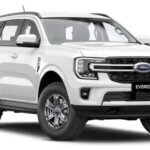 Ford Everest Trend vs Sport: Which Is Better in Australia?
The Tremor is not about owning the most expensive model. It is about buying the right tool for difficult terrain.
4. Ford Everest Wildtrak
The Lifestyle-Focused Everest
The Wildtrak name has long been associated with high-spec Ford Ranger models, and its arrival in the Everest family brings a similar blend of rugged styling and premium comfort.
In the current Australian hierarchy, the Wildtrak sits between the Tremor and Platinum. It is less mechanically specialised than the Tremor but more visually adventurous than the Platinum.
Ford equips the Everest Wildtrak with the 3.0-litre V6 turbo-diesel, producing 184kW and 600Nm through a 10-speed automatic transmission and full-time four-wheel drive.
Wildtrak Exterior Design
The Wildtrak receives a distinctive blacked-out grille, C-Clamp Matrix LED headlights, and 20-inch alloy wheels with gloss-black finishing and Ignite Orange inserts.
It is designed to stand out without looking overly formal. The Wildtrak feels like the Everest that wants to arrive at a remote campsite on Friday and a waterside restaurant on Saturday.
Wildtrak Interior Features
Inside, the Wildtrak uses an ebony colour scheme with orange and grey accents. Its coast-to-coast instrument panel incorporates a 12-inch portrait touchscreen, while the cabin includes Wildtrak-specific detailing.
Other listed equipment includes:
- Wireless Apple CarPlay and Android Auto
- Wireless phone charging
- 400W inverter
- Dual-zone climate control
- Seven seats
- Heated and ventilated front seats
- Power-adjustable front seats
- Driver’s-seat memory
- 360-degree camera
The result is a cabin with more personality than the restrained Platinum and more luxury emphasis than the Tremor.
Who Should Buy the Everest Wildtrak?
The Wildtrak is likely to suit buyers who want:
- The V6 engine as standard
- Full-time 4WD
- Seven-seat practicality
- Premium comfort
- Distinctive exterior styling
- A model that feels adventurous without being off-road specialised
It occupies an interesting sweet spot. It is capable enough for touring, luxurious enough for daily use, and bold enough to feel special in the driveway.
Wildtrak Versus Tremor
These two models may sit next to each other in the line-up, but their priorities differ sharply.
Choose the Tremor when suspension, ground clearance, tyre performance, and trail capability matter most.
Choose the Wildtrak when premium styling, road presence, technology, and interior atmosphere matter more.
The Tremor is dressed for dust. The Wildtrak is dressed for attention.
5. Ford Everest Platinum
The Flagship Ford Everest
The Ford Everest Platinum sits at the top of the Australian range. It is the most luxurious model, designed for buyers who want the Everest’s towing capacity and robust construction without sacrificing high-end comfort.
The Platinum comes with the 3.0-litre V6 turbo-diesel and full-time four-wheel drive. Ford lists it as the fifth and highest model in its current build-and-price order.
Everest Platinum Interior
The Platinum cabin is where the flagship separates itself most clearly. Its equipment includes quilted leather seating, heated and ventilated front seats, ambient lighting, a panoramic sunroof, and a 12-inch digital instrument cluster.
This is the Everest for buyers who want long road trips to feel less like endurance events and more like travelling in a comfortable lounge.
The Platinum’s appeal becomes especially obvious during:
- Long interstate journeys
- School and work commutes
- Family holidays
- Cold early-morning drives
- Hot Australian summer trips
- Extended towing days
Small luxuries matter when we spend several hours behind the wheel. Seat ventilation, better cabin materials, improved displays, and ambient lighting may sound unnecessary in a brochure, but they can make ownership feel more polished every day.
Who Should Buy the Everest Platinum?
The Platinum suits buyers who:
- Want the most luxurious Everest
- Prefer understated premium styling
- Need V6 towing strength
- Regularly travel long distances
- Value comfort more than extreme off-road hardware
- Want flagship technology and cabin presentation
Potential Platinum Disadvantages
The Platinum’s larger wheels and luxury focus may make it less suitable for buyers expecting frequent harsh off-road use. Premium wheels can be more vulnerable on rough tracks, while owners may hesitate before exposing a plush flagship interior to constant mud, sand, children, pets, and camping equipment.
It remains capable, but its natural habitat is the highway, the caravan park, the ski trip, and the family holiday—not necessarily the roughest track on the map.
Ford Everest Engine Options Explained
2.0-Litre Turbo-Diesel
The current 2.0-litre turbo-diesel is available in the Active and Sport. It produces 125kW and 405Nm and uses a 10-speed automatic transmission. Ford says the updated engine uses a new fuel-injection system and timing chain intended to improve durability.
This engine may appeal to buyers who prioritise:
- Lower initial cost
- Everyday commuting
- Family transport
- Occasional towing
- Lighter touring duties
It should not be dismissed as inadequate. For many households, it will perform every required task while avoiding the extra price of the V6.
3.0-Litre V6 Turbo-Diesel
The 3.0-litre V6 produces 184kW and 600Nm. It is available across the current Everest range, making it standard in Tremor, Wildtrak, and Platinum while remaining optional in Active and Sport.
The V6 is better suited to:
- Regular caravan towing
- Heavy trailers
- Long-distance touring
- Fully loaded family travel
- Mountain roads
- Buyers wanting effortless acceleration
The difference is not only outright performance. The V6 generally delivers its strength with less apparent effort, like a large wave pushing a boat rather than a smaller engine paddling furiously.
Part-Time 4x4 Versus Full-Time 4WD
The 2.0-litre Active and Sport use part-time four-wheel drive, while V6 versions use full-time four-wheel drive.
Part-Time Four-Wheel Drive
A part-time system normally operates in two-wheel drive on sealed roads. The driver selects four-wheel drive when surface conditions require additional traction.
It is suitable for:
- Gravel roads
- Mud
- Sand
- Loose surfaces
- Occasional off-road use
However, conventional locked part-time four-wheel drive should not normally be used on dry sealed roads because the system needs wheel-speed variation when turning.
Full-Time Four-Wheel Drive
A full-time 4WD system can distribute power to all four wheels during everyday sealed-road driving. That provides a simpler “select and forget” experience and can improve confidence in changing weather or road conditions.
It makes particular sense for buyers dealing with:
- Wet roads
- Alpine conditions
- Gravel highways
- Heavy towing
- Mixed-surface touring
Full-time 4WD does not eliminate the need for sensible driving, but it gives the V6 models a more versatile drivetrain.
How Many Seats Does Each Ford Everest Have?
Seating configuration is another important difference.
The Active can be configured with five seats, with a third row available as an option. Ford’s model specifications indicate that seven seats are standard in the Sport, Tremor, Wildtrak, and Platinum, while the third row is optional in the Active.
This gives buyers two clear choices:
Five-Seat Everest
A five-seat configuration can provide more permanent cargo space and may suit couples, small families, dog owners, tradespeople, and touring buyers carrying a fridge or drawer system.
Seven-Seat Everest
Seven seats improve flexibility for school runs, extended family trips, and carrying children’s friends. However, third-row seats reduce available luggage space when raised.
Before choosing, we should ask a simple question: will the third row be used regularly, or will it spend most of its life folded beneath camping gear?
Which Ford Everest Is Best for Towing?
The Everest offers up to 3,500kg of braked towing capacity when correctly equipped, though actual limits, payload interactions, accessories, and legal requirements must always be checked for the specific vehicle.
This content may interest you!Is Ford Everest Reliable in Australia? Complete Ownership GuideFor serious towing, the V6 versions are likely to be the most attractive due to their 600Nm torque output.
Best Everest for Frequent Towing
Strong candidates include:
- Active V6: capable and comparatively value-focused
- Sport V6: strong all-rounder with bolder styling
- Tremor: useful when towing leads to rough campsites
- Wildtrak: premium touring character
- Platinum: maximum comfort for long towing days
The best tow vehicle is not simply the highest grade. Payload, tow-ball download, passenger weight, accessories, and luggage all affect the real-world equation.
A Platinum filled with seven adults and luggage may have less available payload margin than buyers expect. Numbers matter more than badges.
Which Everest Model Is Best for Off-Roading?
The Everest Tremor is the clearest choice for serious off-road use. Its specialised suspension, V6 engine, full-time 4WD system, and rugged focus give it advantages over road-oriented grades.
The Active and Sport remain legitimate 4WDs, especially when correctly equipped with suitable tyres and recovery gear. The Wildtrak also provides strong touring ability, while the Platinum can handle off-road travel but prioritises luxury.
For repeated trail driving, we would rank them by purpose rather than price:
- Tremor
- Wildtrak
- Sport V6
- Active V6
- Platinum
That ranking is subjective. The Platinum is not mechanically helpless; it is simply less focused on absorbing punishment.
Which Everest Model Offers the Best Value?
For many buyers, the value winner will be either the Active or Sport.
Best Pure Value: Everest Active
The Active includes the core technology, engine choice, 4WD capability, and practical cabin buyers need. Its lower position in the range also leaves more money available for accessories.
Best Overall Balance: Everest Sport
The Sport combines desirable styling with both engine options. It feels premium enough to satisfy private buyers without reaching flagship territory.
Best Specialist Value: Everest Tremor
For genuine off-road users, paying for the Tremor’s mechanical upgrades may be better value than buying a road-focused grade and modifying it later.
Value is not the lowest purchase price. Value is paying for equipment we will actually use.
Ford Everest Active vs Sport vs Tremor vs Wildtrak vs Platinum
Choose the Active When…
We want practical capability, flexible seating, modern technology, and the lowest entry point into the current range.
Choose the Sport When…
We want an Everest that looks bolder, feels more premium, and still provides a choice between four-cylinder and V6 power.
Choose the Tremor When…
We expect regular off-road travel and want specialised suspension and hardware from the factory.
Choose the Wildtrak When…
We want strong V6 performance, adventurous styling, premium equipment, and a cabin with more personality.
Choose the Platinum When…
We want the most luxurious Everest, with flagship comfort, technology, and refinement for daily driving and long trips.
What Happened to Ambiente and Trend?
Australian buyers may still encounter Ambiente and Trend models in used-car listings or dealer stock from earlier model years. Those names belonged to previous versions of the Everest range.
For the 2026.5 model year shown on Ford Australia’s current website, the line-up has changed to Active, Sport, Tremor, Wildtrak, and Platinum. Ford explicitly notes that dealerships may still carry vehicles from other model years with different specifications and prices.
This distinction matters when comparing online reviews. An article discussing a Trend or Ambiente may refer to an earlier model year rather than the current showroom range.
Always check:
- Model year
- Build date
- Engine specification
- Drivetrain
- Seating layout
- Standard equipment
- Optional packages
Two Everests carrying similar badges may differ significantly depending on when they were built.
How to Choose the Right Ford Everest
Step 1: Decide How Many Seats We Need
Choose the Active if a permanent five-seat configuration suits your lifestyle. Consider the other grades when seven-seat flexibility is essential.
Step 2: Choose the Engine
The 2.0-litre engine makes sense for daily use and lighter duties. The V6 is better for frequent towing, heavy loads, and buyers who want stronger performance.
Step 3: Be Honest About Off-Road Use
A gravel driveway is not the same as crossing remote tracks. Buyers planning serious off-road travel should prioritise the Tremor.
Step 4: Separate Needs From Wants
Large wheels, sunroofs, ventilated seats, and premium trim are appealing. Yet a less expensive model with the right accessories may suit real-world travel better.
Step 5: Calculate the Complete Price
Do not compare only advertised vehicle prices. Include:
- Stamp duty and registration
- Insurance
- Tow package
- Roof racks or platform
- Bull bar
- All-terrain tyres
- Cargo protection
- Touring accessories
- Finance costs
The “cheaper” model can become expensive once heavily modified, while a higher grade may already include several desired features.
Our Verdict on the Ford Everest Model Order
The Australian Ford Everest range is more diverse than a simple good-better-best ladder.
The Active is the practical foundation. It offers real capability, useful engine choices, and flexible seating without unnecessary decoration.
The Sport adds visual energy and becomes perhaps the strongest all-round option. It is easy to imagine it handling weekday commuting, family holidays, towing, and weekend trails without feeling misplaced anywhere.
The Tremor is the adventurer. It sacrifices the traditional luxury hierarchy in favour of specialised off-road ability.
The Wildtrak blends V6 strength with distinctive styling and premium touring equipment. It feels confident, expressive, and slightly more playful than the flagship.
The Platinum sits at the summit, offering the richest cabin and highest level of comfort. It is the model for buyers who want their rugged SUV wrapped in a luxury coat.
So, which should we choose? The answer depends less on status and more on the road ahead. The right Everest is the one whose strengths match our routine—not the one carrying the highest badge.
Conclusion
The Ford Everest models in order Australia for the 2026.5 range are Active, Sport, Tremor, Wildtrak, and Platinum. The Active begins the line-up with practicality and flexible engine choices. The Sport adds sharper design and broad appeal. The Tremor specialises in off-road travel. The Wildtrak delivers premium adventure styling, while the Platinum finishes the range with flagship luxury.
For value, the Active deserves attention. For overall balance, the Sport is difficult to ignore. For rough-country touring, the Tremor stands apart. For personality and premium features, the Wildtrak hits a compelling middle ground. For maximum comfort, the Platinum remains the obvious flagship.
The Everest range is like a well-stocked toolbox: every version can handle demanding work, but each contains a slightly different set of instruments. Choosing well begins with understanding where we drive, what we carry, and which features will continue to matter after the showroom excitement fades.
Frequently Asked Questions
1. What are the Ford Everest models in order in Australia?
For the Australian 2026.5 model year, the range order is Active, Sport, Tremor, Wildtrak, and Platinum. The Active is the entry model, while the Platinum is the luxury flagship.
2. Which Ford Everest model is the best value?
The Active is likely to offer the strongest value for buyers prioritising practicality and capability. The Sport may provide the best overall balance for buyers who also want more distinctive styling.
3. Which Ford Everest is best for off-road driving?
The Everest Tremor is the most off-road-focused version. It combines the 3.0-litre V6, full-time 4WD, and specialised off-road suspension.
4. Which Ford Everest models have the V6 engine?
The 3.0-litre V6 is available across the range. It is optional in Active and Sport and standard in Tremor, Wildtrak, and Platinum.
5. Is the Ford Everest Active a seven-seater?
The Active can be fitted with an optional third row. Seven seats are standard on the Sport, Tremor, Wildtrak, and Platinum in the current specifications.
This content may interest you!Ford Everest Models Australia: Complete 2026 Range Guide
Leave a Reply