
Ford Ranger Super Duty Problems Australia: Common Issues and What Owners Should Know

The Ford Ranger Super Duty has quickly become one of the most interesting heavy-duty utes available in Australia. With a 4,500kg GVM, 8,000kg GCM and 4,500kg maximum braked towing capacity, it sits in a very different category from a normal Ranger.
But what about Ford Ranger Super Duty problems in Australia?
That question deserves a slightly different answer from what we would give for an older ute such as the Ranger PX or Toyota LandCruiser 79 Series.
The Ranger Super Duty is still relatively new. As of 2026, there simply isn't enough long-term Australian ownership data to confidently produce a list of failures that occur after 150,000 or 250,000 kilometres.
What we do have are Australian road tests, early ownership feedback, known characteristics of its diesel powertrain and several shortcomings identified by reviewers.
The biggest potential concerns currently include:
- High fuel consumption
- Slower acceleration than a normal Ranger V6
- Complex emissions equipment
- DPF management
- AdBlue requirements
- Heavy kerb weight
- Reduced payload when towing at maximum capacity
- Complicated touchscreen-based 4WD controls
- Some interior quality complaints
- Large dimensions and turning circle
- Expensive purchase price
- Unproven long-term reliability
So, let's look at each issue in detail.
- Is the Ford Ranger Super Duty Having Reliability Problems?
- 1. Ford Ranger Super Duty V6 Engine Concerns
- 2. Performance Can Feel Slow
- 3. Fuel Consumption Is High
- 4. DPF Problems Could Affect Short-Trip Vehicles
- 5. Ranger Super Duty Requires AdBlue
- 6. Ten-Speed Automatic Transmission Complexity
- 7. Maximum Towing Capacity Has a Catch
- 8. Accessories Can Quickly Reduce Payload
- 9. Huge Kerb Weight
- 10. Large Turning Circle and Parking Problems
- 11. Four-Wheel-Drive Controls Can Be Fiddly
- 12. Some Early Interior Quality Complaints
- 13. Rear Seat Space Isn't Exceptional
- 14. Poor Headlights Have Been Reported
- 15. Ranger Super Duty Recall Checks
- 16. Expensive Purchase Price
- 17. Eight-Stud Wheels Limit Wheel Choices
- 18. Super Duty Isn't Covered by the Normal Ranger ANCAP Rating
- 19. Is the Ford Ranger Super Duty Expensive to Maintain?
- 20. Is the Ranger Super Duty Good for Towing?
- Ford Ranger Super Duty Problems Summary
- Should You Avoid the Ford Ranger Super Duty?
- Who Should Buy a Ranger Super Duty?
- Who Probably Doesn't Need One?
- FAQs About Ford Ranger Super Duty Problems in Australia
- Final Thoughts: Ford Ranger Super Duty Problems Australia
Is the Ford Ranger Super Duty Having Reliability Problems?
At this stage, it would be misleading to describe the Ford Ranger Super Duty as an unreliable vehicle.
There isn't enough long-term evidence.
Ford introduced the Super Duty as a heavily re-engineered version of the Ranger designed specifically for demanding Australian commercial, mining, agricultural and towing applications.
Major components have been strengthened rather than simply fitting stiffer suspension to a normal Ranger.
Ford lists specifications including a 4.5-tonne GVM, 8.0-tonne GCM, 4.5-tonne towing capacity, eight-stud wheel hubs, 130-litre fuel tank and 850mm wading depth.
However, its newness creates an important problem for buyers: we don't yet know how these vehicles will perform after years of hard work.
Australian reviews have also identified long-term durability as one of the remaining questions surrounding the vehicle.
Why Long-Term Reliability Is Still Unknown
Think about the typical Ranger Super Duty buyer.
These vehicles could spend their lives:
- Towing large caravans
- Pulling heavy machinery
- Working on farms
- Travelling on corrugated roads
- Carrying more than one tonne regularly
- Operating in mining environments
- Driving in remote Australian conditions
A Ranger Super Duty that has travelled 20,000km isn't necessarily representative of one that has completed 250,000km carrying heavy loads.
For that reason, we'd treat claims that the Super Duty is either "bulletproof" or "unreliable" with caution for now.
1. Ford Ranger Super Duty V6 Engine Concerns
Under the bonnet is a version of Ford's 3.0-litre V6 turbo-diesel.
In the Ranger Super Duty it produces approximately:
| Specification | Ranger Super Duty |
|---|---|
| Engine | 3.0L V6 turbo-diesel |
| Power | 154kW |
| Torque | 600Nm |
| Transmission | 10-speed automatic |
| GVM | 4,500kg |
| GCM | 8,000kg |
| Maximum towing | 4,500kg |
| Fuel tank | 130L |
The interesting part is that the Super Duty makes less peak power than the V6 used in the regular Ranger.
Ford has reduced output to 154kW while retaining 600Nm of torque.
That's intentional rather than an engine fault.
The engine has been configured for the Super Duty's heavy-duty application and emissions requirements.
Is the 3.0 V6 Diesel Reliable?
This is one of the biggest questions potential Australian owners are asking.
Some concerns surrounding Ford's V6 diesel come from earlier versions and applications of this engine family rather than proven widespread Super Duty failures.
Australian reviewers have specifically noted that the engine's long-term durability remains something buyers will want to watch, while Ford says changes have addressed earlier issues.
Our approach would therefore be simple:
Don't automatically assume previous V6 problems will affect every Ranger Super Duty, but don't ignore the powertrain's history either.
Service history will eventually become extremely important when buying these vehicles second-hand.
2. Performance Can Feel Slow
One of the most consistent Ranger Super Duty complaints isn't actually a mechanical failure.
It's performance.
The Super Duty is heavy.
Very heavy.
Depending on configuration, body style and accessories, you're dealing with substantially more mass than a conventional Ranger.
Australian testing found that the additional weight noticeably reduces acceleration compared with the normal Ranger V6.
Why Is the Ranger Super Duty Slower?
There are two reasons.
First, the engine produces less peak power than the standard Ranger V6.
Second, it has considerably more weight to move.
That's the unavoidable consequence of components including:
- Reinforced chassis
- Heavy-duty suspension
- Larger axles
- Stronger differentials
- Eight-stud hubs
- Larger tyres
- Underbody protection
- Additional towing hardware
- Bigger fuel tank
It's built to work rather than win traffic-light drag races.
Does It Feel Underpowered?
Unladen, most drivers should find performance adequate.
Start adding several tonnes behind it, however, and the story changes.
Australian towing tests have reported noticeably slower acceleration under heavy loads, including the need for substantial throttle when climbing hills.
For someone towing 2.5 tonnes occasionally, that may be irrelevant.
For someone regularly towing close to 4.5 tonnes through mountainous areas, it's worth considering.
3. Fuel Consumption Is High
Nobody should buy a Ranger Super Duty expecting economy-car fuel consumption.
You're moving nearly three tonnes before adding passengers, accessories, cargo or trailers.
Australian testing of the Super Duty XLT has recorded consumption around 11.9-13.2L/100km, depending on conditions.
Other testing has similarly suggested roughly 11-13L/100km in favourable conditions.
And that's before towing something enormous.
This content may interest you!
Ranger Super Duty Fuel Economy When Towing
Once you add:
- A 3,000kg caravan
- 4,000kg machinery trailer
- Heavy canopy
- Bull bar
- Roof equipment
- Larger accessories
fuel consumption can increase significantly.
The good news is that Ford fits a 130-litre long-range fuel tank as standard, which is particularly valuable in regional and remote Australia.
But operating costs can still become significant for high-kilometre owners.
4. DPF Problems Could Affect Short-Trip Vehicles
Modern diesel engines use a Diesel Particulate Filter, or DPF, to capture particulate emissions.
DPFs periodically need to reach sufficient temperature to burn accumulated soot.
This process is called regeneration.
The Ranger Super Duty gives operators additional control over regeneration, which is especially useful in industries where an automatic high-temperature burn could be inconvenient or unsafe.
Ford allows drivers to temporarily disable automatic DPF regeneration and later perform a manual regeneration. The system begins warning the driver when filter loading exceeds approximately 70 percent.
Is This a DPF Problem?
Not necessarily.
In fact, Ford's manual regeneration system is partly designed to prevent operational problems.
However, owners need to understand how it works.
Repeatedly interrupting or postponing regeneration isn't something we'd recommend ignoring.
Who Is Most at Risk of DPF Issues?
DPF-related trouble generally deserves greater attention if the vehicle is used mainly for:
- Very short journeys
- Low-speed urban driving
- Frequent engine shutdowns
- Extended idling
- Stop-start work
Long-distance highway drivers generally provide more favourable conditions for passive or active regeneration.
5. Ranger Super Duty Requires AdBlue
Another difference some traditional ute buyers may dislike is AdBlue.
Because of its heavy-duty emissions classification, the Ranger Super Duty uses an SCR emissions system that requires diesel exhaust fluid, commonly called AdBlue.
That's not a defect.
But it does add another system that owners must maintain.
Potential AdBlue Ownership Issues
Owners need to keep an eye on:
- AdBlue level
- Warning messages
- Fluid quality
- Storage contamination
- SCR system faults
Remote-area operators may also want to think about AdBlue availability when planning extremely long trips.
For someone upgrading from an older diesel LandCruiser without modern emissions equipment, this additional complexity may be noticeable.
6. Ten-Speed Automatic Transmission Complexity
The Super Duty uses Ford's 10-speed automatic transmission.
Ten ratios allow the engine to operate efficiently across dramatically different situations, from ordinary driving to heavy towing.
The gearbox also works with the vehicle's dedicated Tow/Haul programming.
We haven't seen enough evidence to classify the transmission as a common Ranger Super Duty failure.
However, there's naturally more mechanical and electronic complexity than you'll find in an old-school manual work ute.
Gearbox Behaviour Under Heavy Loads
Testing has generally found the engine and gearbox work well together when towing.
One Australian test carrying roughly four tonnes found the transmission capable of holding gears rather than constantly hunting between ratios.
That's encouraging.
But long-term evidence from high-kilometre Super Duty vehicles is what will ultimately tell us how the transmission handles years of maximum-GCM use.
7. Maximum Towing Capacity Has a Catch
Ford advertises a maximum 4,500kg braked towing capacity.
That's impressive.
But 4,500kg doesn't mean you can tow 4.5 tonnes while simultaneously filling the vehicle with its maximum payload.
This is one of the most misunderstood aspects of heavy-duty ute specifications.
GVM vs GCM Matters
The Super Duty has:
- 4,500kg GVM
- 8,000kg GCM
- 4,500kg maximum towing
Let's say your fully loaded vehicle weighs 4,000kg.
An 8,000kg GCM means you would have roughly 4,000kg remaining for the trailer rather than the full 4,500kg.
Similarly, tow-ball download becomes part of the vehicle's load.
One Australian test calculated that with a 4,500kg trailer and approximately 450kg tow-ball load, a dual-cab configuration could have roughly 535kg of remaining payload under the conditions described.
That isn't a Ranger defect.
It's simply physics and Australian weight regulations.
But buyers should calculate their exact setup rather than relying exclusively on the "4.5-tonne towing" headline.
8. Accessories Can Quickly Reduce Payload
This is particularly important for Australian touring builds.
A brochure payload figure applies to the vehicle in a specified base configuration.
Then owners start adding things.
For example:
- Steel tray
- Bull bar
- Winch
- Canopy
- Drawers
- Dual batteries
- Fridge
- Roof rack
- Water tanks
- Recovery equipment
- Spare wheels
Suddenly you've added several hundred kilograms.
CarsGuide weighed an accessorised single-cab Super Duty and found roughly 612kg of accessory weight, reducing its usable payload accordingly.
The remaining payload was still substantial, but it illustrates why owners need to visit a weighbridge after completing their build.
9. Huge Kerb Weight
The strength that makes the Super Duty impressive also creates one of its biggest disadvantages.
This content may interest you!
Weight.
A Ranger Super Duty can approach or exceed 2.8 tonnes depending on specification before accessories and cargo.
That's considerably heavier than a conventional Ranger.
The consequences include:
- Slower acceleration
- Higher fuel consumption
- More tyre load
- More braking energy
- Greater inertia
- Less nimble handling
Ford has engineered the suspension and braking systems to handle that weight, and road testers have generally praised its stability.
Nevertheless, you can never completely hide mass.
10. Large Turning Circle and Parking Problems
If most of your driving happens around cattle stations and mine sites, this probably won't matter.
If you're trying to park at Westfield on Saturday afternoon, it might.
CarsGuide identified the large turning circle as one of the vehicle's disadvantages, while other testers have commented on its width and general size.
Off-Road Width Can Also Become a Problem
Width is useful for stability.
It's less useful on narrow bush tracks.
On tight Australian trails, drivers may find themselves squeezing between:
- Trees
- Rock walls
- Narrow gates
- Overgrown tracks
Scratched body panels may become part of Ranger Super Duty ownership if you regularly tackle narrow tracks.
11. Four-Wheel-Drive Controls Can Be Fiddly
The hardware is exceptionally serious.
The interface isn't always as straightforward.
Several Australian reviewers have criticised the way some off-road functions are accessed through the infotainment system rather than dedicated physical controls.
When crawling through difficult terrain, physical buttons can be easier to operate than navigating touchscreen menus.
This won't cause a breakdown.
But it can become annoying for owners who regularly switch:
- Differential locks
- Drive modes
- Terrain settings
- Off-road displays
For a vehicle designed for serious off-road work, we'd prefer more dedicated switches for critical 4WD functions.
12. Some Early Interior Quality Complaints
The base Super Duty is fundamentally a commercial work vehicle.
So don't expect Ranger Platinum levels of luxury.
Hard plastics and easy-clean surfaces are intentional.
However, Australian test vehicles have shown a few small quality issues.
Reviewers have reported things such as:
- Misaligned plastic trim
- Broken floor-mat clips
- Interior rattles
One test vehicle reportedly developed a noticeable rattle around the driver's B-pillar, while another showed minor trim alignment concerns.
These aren't serious mechanical problems, but buyers spending close to six figures may expect better finishing.
13. Rear Seat Space Isn't Exceptional
The Double Cab looks large externally, but that doesn't mean rear-seat space rivals a full-size American pickup.
One Australian review criticised rear accommodation, particularly when installing a rear-facing child seat or carrying larger adults.
That's worth checking personally if your Super Duty will double as a family touring vehicle.
Take the family to the dealership.
Install the child seat.
Move the driver's seat into your normal position.
Then see how much space actually remains.
14. Poor Headlights Have Been Reported
Another interesting complaint from Australian testing concerns the headlights.
One road test listed headlight performance among the areas needing improvement.
That's particularly relevant because many Super Duty owners are likely to drive in regional Australia.
Country-road driving at night means dealing with:
- Kangaroos
- Livestock
- Unlit roads
- Long-distance fatigue
- Poor weather
Some owners may eventually investigate compliant auxiliary driving lights if they aren't satisfied with factory illumination.
15. Ranger Super Duty Recall Checks
Owners should always check their VIN against the Australian government's vehicle recall database.
A 2026 recall covers certain 2025-2026 Ford Ranger Double Cab vehicles because the side curtain airbags may interact with B-pillar trim during deployment.
The Australian recall notice lists 13,907 affected vehicles.
Importantly, the recall information does not mean every Ranger Super Duty is affected.
The correct approach is to check the VIN of the specific vehicle you're buying or already own.
Why Recall Checks Matter When Buying Used
Before purchasing a second-hand Super Duty:
- Obtain the VIN.
- Search the Australian government recall database.
- Ask Ford whether outstanding campaigns exist.
- Request documentation showing completed recall work.
- Check the service history.
A recall itself doesn't automatically make a vehicle unreliable.
Ignoring an outstanding safety recall is the real problem.
16. Expensive Purchase Price
The Super Duty isn't simply a cheap Ranger with stronger suspension.
You're paying for extensive engineering changes.
But you're still paying a lot.
Australian reviewers have repeatedly identified pricing as one of the vehicle's disadvantages.
This content may interest you!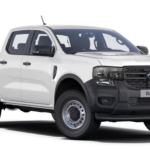 Ford Ranger Models Australia: Complete 2026 Range Guide
Then add accessories.
A serious touring or farm build might need:
- Tray
- Bull bar
- Winch
- Canopy
- Tow equipment
- Communications equipment
- Toolboxes
- Driving lights
An apparently reasonable base price can therefore climb rapidly.
17. Eight-Stud Wheels Limit Wheel Choices
The Ranger Super Duty doesn't use ordinary Ranger wheel hardware.
Ford fits heavy-duty eight-stud hubs along with LT 275/70 R18 all-terrain tyres.
That's great for load capacity.
It may be less convenient if you're expecting the enormous aftermarket wheel selection available for ordinary Rangers.
Before travelling remotely, we'd pay particular attention to:
- Spare tyre availability
- Suitable load ratings
- Replacement wheel availability
- Tyre availability in remote towns
The Super Duty already comes with equipment designed around heavy-duty operation, so changing wheels purely for appearance deserves careful consideration.
18. Super Duty Isn't Covered by the Normal Ranger ANCAP Rating
The substantial engineering changes made to the Super Duty mean buyers shouldn't simply assume the regular Ranger's existing ANCAP result automatically transfers across.
Australian testing has noted that the Super Duty isn't covered by the five-star ANCAP rating originally issued to the regular Ranger.
That doesn't mean the Super Duty is unsafe.
It means it should be considered separately rather than automatically quoting the standard Ranger's rating.
The Super Duty still carries a substantial suite of active and passive safety technology.
19. Is the Ford Ranger Super Duty Expensive to Maintain?
It's too early to establish a reliable long-term maintenance cost average.
Ford provides a five-year, unlimited-kilometre warranty, and servicing is scheduled at 12 months or 15,000km according to Australian testing information.
However, owners should budget for more than basic servicing.
A heavy vehicle working hard may consume more:
- Diesel
- Tyres
- Brake components
- AdBlue
- Suspension components
- Driveline fluids
Operating a Super Duty purely as a suburban commuter also makes relatively little financial sense unless you genuinely want its capabilities.
20. Is the Ranger Super Duty Good for Towing?
This is where many of the Super Duty's disadvantages suddenly make sense.
Its heavy chassis, wider track, large brakes, huge towing capacity and sophisticated towing technology are designed for serious loads.
Features include:
- 4.5-tonne towing capacity
- Integrated trailer brake controller
- Tow/Haul mode
- Smart Hitch
- Onboard Scales
- Pro Trailer Backup Assist
- 8,000kg GCM
Ford specifically engineered the model around these demanding commercial requirements.
Australian towing tests have also praised its stability and braking performance under heavy loads.
The main compromise is performance.
Expect the 154kW engine to work when the vehicle and trailer approach their combined maximum weight.
Ford Ranger Super Duty Problems Summary
Here is how we'd currently classify the major concerns.
| Problem or Concern | Severity | What to Know |
|---|---|---|
| High fuel consumption | Moderate | Heavy vehicle with large diesel engine |
| Slow acceleration | Moderate | Especially noticeable when towing heavily |
| DPF management | Low-Moderate | Understand regeneration procedure |
| AdBlue requirement | Low | Additional maintenance consideration |
| V6 reliability | Unknown | Too new for strong long-term conclusions |
| 10-speed transmission | Unknown | Long-term heavy-duty data still developing |
| Heavy kerb weight | Moderate | Affects economy and performance |
| 4WD touchscreen controls | Low | More annoying than dangerous |
| Interior rattles/trim | Low | Reported on some test vehicles |
| Large turning circle | Low-Moderate | Can be inconvenient in town |
| Maximum towing payload limits | Moderate | Requires careful weight calculations |
| High purchase price | Moderate | Accessories increase total cost significantly |
| Recall exposure | Vehicle-specific | Check individual VIN |
| Long-term durability | Unknown | More ownership data is needed |
Should You Avoid the Ford Ranger Super Duty?
Based on current evidence, no widespread mechanical defect gives us a reason to tell Australian buyers to automatically avoid the Ranger Super Duty.
Most of the issues currently identified are compromises caused by the vehicle's mission.
It is heavy because it needs to carry heavy loads.
It uses more fuel because it's heavy.
It accelerates more slowly because Ford has prioritised durability, emissions compliance and load capability over performance.
And its towing limitations are largely the result of legal weight calculations rather than an engineering deficiency.
The biggest unanswered question remains long-term reliability.
We need to see what happens after Australian Super Duty vehicles accumulate hundreds of thousands of kilometres in mining, agricultural, towing and remote-area use.
Who Should Buy a Ranger Super Duty?
The Super Duty makes the most sense if you regularly:
- Tow more than conventional dual-cab utes comfortably handle
- Carry extremely heavy payloads
- Operate commercial equipment
- Travel through difficult terrain
- Build heavy touring setups
- Tow large caravans
- Work in agriculture or mining
For those users, its unusual specifications can solve real problems.
Who Probably Doesn't Need One?
If your typical week involves:
- Commuting to work
- School runs
- Shopping
- Occasional camping
- Towing a small trailer
- Carrying mountain bikes
a conventional Ranger will probably be easier and cheaper to live with.
Buying a Super Duty when you never exploit its GVM, payload or towing capabilities means accepting extra weight, fuel consumption and expense without enjoying the main benefits.
FAQs About Ford Ranger Super Duty Problems in Australia
What are the most common Ford Ranger Super Duty problems?
Because the Ranger Super Duty is still relatively new, there isn't enough long-term ownership data to identify definitive common mechanical failures. Current complaints mainly involve high fuel consumption, slower acceleration, touchscreen-based 4WD controls, large dimensions, interior quality concerns and the additional complexity of DPF and AdBlue systems.
Does the Ford Ranger Super Duty have engine problems?
There is currently insufficient evidence to conclude that widespread engine failure is a common Ranger Super Duty problem. It uses a 3.0-litre V6 turbo-diesel producing 154kW and 600Nm. Long-term durability remains something Australian owners should monitor as higher-kilometre examples enter the market.
Does the Ford Ranger Super Duty have DPF problems?
The Super Duty uses a diesel particulate filter and provides driver control over regeneration. Ford allows operators to temporarily prevent automatic regeneration and later initiate a manual cleaning cycle. Owners who mainly make short journeys should pay particular attention to DPF warnings and regeneration requirements.
Is the Ford Ranger Super Duty good for towing 4.5 tonnes?
The Super Duty is factory rated to tow up to 4,500kg braked and has an 8,000kg GCM. However, owners must calculate actual vehicle weight, trailer weight and tow-ball download carefully. Towing the maximum trailer weight can reduce the amount of payload available inside the vehicle.
Is the Ford Ranger Super Duty reliable?
It's too early to make a strong long-term reliability judgement. Early Australian reviews have generally been positive about the Super Duty's engineering and heavy-duty capability, but reliability after hundreds of thousands of kilometres remains largely unproven because the model is still new.
Final Thoughts: Ford Ranger Super Duty Problems Australia
Searching for Ford Ranger Super Duty problems in Australia currently produces a very different picture from researching an ageing vehicle with years of failure data.
The Super Duty's biggest drawbacks aren't catastrophic engine or transmission failures.
At least, there isn't enough evidence to establish those as widespread issues yet.
Instead, buyers need to understand the compromises that come with this unusually capable ute: significant weight, increased fuel consumption, slower acceleration, expensive accessories, complicated emissions equipment and careful GVM/GCM calculations when towing.
We'd also keep an eye on the 3.0-litre V6, 10-speed automatic, DPF and AdBlue systems as the Australian fleet begins accumulating serious kilometres.
For buyers who genuinely need close to two tonnes of payload, 4.5-tonne towing capacity and serious off-road capability, those disadvantages may be easy to justify.
This content may interest you!Ford Ranger Long Range Fuel Tank: Sizes, Range and Best OptionsFor everyone else, the conventional Ranger V6 will probably be cheaper, quicker and easier to live with.
The important point is not to mistake the Ranger Super Duty for simply another Ranger trim level.
It's essentially a specialised heavy-duty work vehicle packaged inside the familiar Ranger body — and its ownership experience reflects that.
Leave a Reply