Hyundai i30 warning lights tell us about safety conditions, mechanical faults and the functions currently operating. The correct response depends on the symbol, its colour and the accompanying message. A red oil-pressure warning requires a safe stop and engine shutdown, while a green lighting indicator normally confirms a setting.
This illustrated guide explains the main Hyundai i30 dashboard symbols and what to do when they appear. We cover braking, engine management, tyre pressure, diesel warnings, petrol particulate filters and driver-assistance indicators, with a small image beside each explanation.
Model scope: the main references are Hyundai’s UK PD-generation i30 manual and its earlier GD-generation manual. Equipment varies by year, market and engine. The i30 Sedan sold in some countries and the performance-focused i30 N have their own manuals and additional features. Images are representative shared symbols, including Hyundai, Kia and Nissan artwork, rather than exact reproductions of every i30 cluster. Match the displayed wording and procedure to your own vehicle.
An urgent fault or safety reminder. Stop safely for serious engine, temperature or brake warnings. A belt reminder or applied parking brake has a different, specific explanation.
Amber or yellow
A condition needing attention, a disabled function or a system fault. Read the display and arrange the appropriate check.
Green, white or grey
Usually operating or standby information. Some assistance systems change colour as their operating conditions change.
Blue
Commonly confirms that main-beam headlights are on.
Flashing
Interpret it by system. Flashing ESC often means active intervention; a flashing engine or filter warning may need prompt diagnosis.
Several lights illuminate during the ignition self-check. That is normal if they go out as the handbook describes. Persistent warnings after starting, warnings that return while driving and lamps that fail their expected self-check need attention. We should not judge a fault solely from a photograph taken with the ignition on and the engine stopped.
Red warning lights and urgent safety conditions
Engine oil pressure warning
Red oil canThe oil-can warning concerns lubrication pressure. If it appears with the engine running, stop safely and switch the engine off. Continuing to run an engine without adequate pressure can cause serious damage.Check the oil level using the specified procedure, but remember that pressure and level are different. A normal dipstick reading does not make a pressure warning safe to ignore. If the warning remains, oil is unavailable or the engine sounds abnormal, arrange assistance instead of repeatedly restarting it.
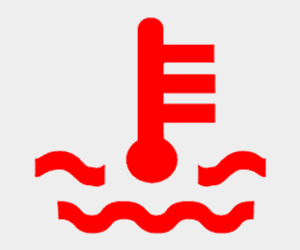
Engine coolant temperature warning
Red thermometer or overheating display — where fittedA temperature warning means the engine may be overheating. The i30 can communicate temperature through a gauge, a warning lamp or a display message, depending on the version.Pull over safely and follow the overheating procedure in your handbook. Do not open a hot coolant cap, and keep clear of escaping steam. If coolant is leaking or the temperature remains excessive, obtain assistance. A cooling-system warning is not a routine reminder to change coolant at the next service.
Parking brake and brake fluid warning
Red brake symbolThis light normally stays on when the parking brake is applied. Release the brake fully and check that the indicator goes out before driving. If it remains on, the brake-fluid level may be low or a brake fault may be present.Stop safely and assess the message and pedal feel. Do not continue with a fluid leak, abnormal braking or a persistent warning. Adding fluid alone does not explain why it became low; the braking system needs to be checked.
Battery and charging system warning
Red battery symbolA battery-shaped warning while driving indicates a problem with the electrical charging system. It does not automatically mean that the battery itself needs replacing. The alternator, belt, connections or another charging component may be involved.Move to a safe stopping place and follow the handbook. Do not inspect moving belts or keep driving with a damaged drive belt. If electrical power is failing or other critical warnings appear, arrange recovery. A successful jump-start does not establish that the charging fault has been repaired.
Airbag and SRS warning
Red restraint-system symbolThe airbag light should extinguish after its normal start-up check. Persistent illumination can indicate a problem affecting airbags or related restraint equipment. It deserves prompt inspection even if the car otherwise drives normally.This symbol is different from the passenger-airbag OFF status lamp. We should not probe airbag wiring or use devices that conceal the warning. A light that disappears after moving a seat can still represent an intermittent fault that needs professional diagnosis.
Seat belt reminder
Red seat-belt symbolThe belt reminder indicates that a monitored occupant may not be correctly buckled. Depending on the i30 version, individual seating positions can also be shown on the display.Check that every occupant is restrained before moving. A heavy item on a passenger seat can sometimes trigger an occupancy sensor, so store loose belongings securely. If the warning remains with the seat empty or the buckle correctly fastened, have the sensing system inspected rather than bypassing the reminder.
Brake, steering and tyre-pressure warnings
ABS warning light
Amber ABSAn ABS fault can leave normal braking available while disabling anti-lock assistance. The wheels may therefore lock more readily in an emergency stop. Allow extra following distance and avoid abrupt braking.Arrange diagnosis promptly. Do not assume that the warning identifies a failed ABS module: several inputs can affect the system. If the red brake light appears too, or braking feels abnormal, treat that combination more urgently and stop safely for assistance.
ABS and brake warnings together: EBD
Amber ABS plus red brake warningSimultaneous ABS and brake warnings can indicate that brake-force distribution or the broader braking system is not operating normally. This combination has a different significance from an isolated ABS warning.Slow down carefully, avoid abrupt braking and stop in a safe location. Arrange professional assessment, especially if the pedal feels different. The vehicle may behave unpredictably during sudden braking, so we should not continue a normal journey simply because the brakes still produce some stopping force.
Electronic parking brake warning
Amber EPB — where fittedAn amber EPB warning concerns the electronic parking-brake system. It is separate from the red indication that the parking brake is applied. Related stability-control faults can also cause the EPB warning to appear.Read the message and confirm that the car is securely parked before leaving it. Do not force the vehicle to move against a brake that will not release. A persistent warning needs diagnosis, particularly when it appears with other brake or stability lights.
Electric power steering warning
EPS or MDPS steering warningHyundai refers to motor-driven power steering as MDPS in some manuals. A steering warning indicates that assistance may be impaired, potentially making the steering wheel much heavier during slow manoeuvres.Keep a firm hold of the wheel and move to a safe location. Arrange inspection, and request recovery if safe control is difficult. This is an electric-assistance system; adding hydraulic steering fluid is not a general remedy. The warning and any related electrical faults need to be investigated.
Tyre pressure and TPMS warning
Amber tyre-shaped symbolA steady tyre-pressure warning usually means one or more tyres need checking. Stop safely, inspect for damage and use a gauge to compare cold pressures with the vehicle’s pressure label.A warning that flashes before remaining illuminated can indicate a monitoring-system fault. Correct pressures still matter even when a sensor is malfunctioning. Do not assume every i30 uses the same reset method, and do not inflate to the sidewall maximum instead of the pressure specified for the vehicle and load.
Electronic stability control indicator
Amber slipping-car symbolFlashing ESC normally means the system is helping manage traction or stability. Ease off the accelerator and adapt to the available grip. The intervention is a reason to moderate our driving, not a guarantee that the car can maintain its current pace safely.A steadily illuminated ESC warning after the start-up check can indicate a fault. Arrange diagnosis and recognise that assistance may be unavailable. Tyre condition, wheel-speed information and electrical issues can all be relevant to the investigation.
ESC OFF indicator
Amber disabled-system indicationESC OFF shows that stability or traction assistance has been reduced or switched off through the vehicle controls. Its exact meaning depends on the setting and version. It differs from the normal flashing ESC intervention light.Restore the standard assistance setting for ordinary road driving. If the indicator appeared without a deliberate selection or will not clear, read the message and arrange inspection. Switching ESC off is not a repair for another warning or for unsuitable tyres.
AUTO HOLD indicator
White standby, green holding, yellow fault — where fittedAUTO HOLD can keep the i30 stationary after braking without continual pressure on the pedal. White normally shows the selected standby state, green confirms holding and yellow indicates a problem.Check that the vehicle is actually held before lifting your foot. If a fault appears, use the brake pedal and arrange inspection. AUTO HOLD is not a substitute for the parking procedure: select the appropriate gear or Park and apply the parking brake when leaving the car.
Engine management and exhaust-filter warning lights
Check engine light: malfunction indicator
Amber engine-shaped symbolThe malfunction indicator concerns the engine or emissions-control system. A steady warning needs prompt diagnosis even if the car appears normal. The symbol cannot identify a failed part by itself.If the light flashes, the engine runs roughly or power drops sharply, reduce engine load and stop safely if necessary. Diesel and petrol interpretations can differ, so follow the exact message and handbook. Do not assume that every flashing engine light can be resolved by an exhaust-filter regeneration drive.
Petrol particulate filter warning: GPF
Amber filter symbol — petrol engines with GPF; representative filter artworkSome petrol i30 engines have a gasoline particulate filter, also called a petrol particulate filter. A soot-related warning may call for operating conditions that allow the filter to clean itself. This is not a diesel-only issue.Use the regeneration instructions for your exact engine and model year. Do not copy a speed or engine-speed target from another car. If the warning flashes, persists or accompanies other faults, arrange inspection rather than repeatedly attempting a drive cycle without diagnosis.
Diesel particulate filter warning: DPF
Filter or engine-management warning — applicable diesel versionsA diesel particulate filter traps soot and periodically burns it off. Repeated short journeys can make the required conditions harder to achieve. Depending on the i30 generation, a filter concern may be communicated through a dedicated indication or the engine-management lamp.Check the handbook before attempting any regeneration drive. It should only be considered when the instructions permit it and the car is otherwise operating normally. Persistent warnings, reduced power or additional faults require professional assessment. A petrol GPF procedure should not be substituted.
Diesel glow plug indicator
Amber coil — diesel engines onlyThe coil shows that diesel preheating is taking place before starting. Wait for it to go out as the handbook describes. Illumination time varies with operating conditions, so a longer cold-weather preheat is not automatically a fault.If the light stays on or flashes after the engine has warmed up or while driving, have the system checked. Do not assume that glow plugs are the only possible cause. Petrol i30 engines do not use this diesel preheating function.
Water in diesel fuel filter warning
Fuel-filter warning — diesel versions where fittedThis warning indicates that water may have accumulated in the diesel fuel filter. It is not simply a reminder that the fuel tank is low. Water contamination needs attention because it can damage fuel-injection components.Arrange correct draining and inspection following the model-specific procedure. Continuing to drive with the warning can lead to reduced power or further damage. Adding fresh fuel or clearing a code does not remove water already collected in the filter.
Low fuel warning
Amber fuel-pump symbolThe fuel warning tells us that the tank is getting low. Refuel soon instead of relying on the estimated remaining range to reach zero. Consumption changes with traffic, terrain and driving conditions.Avoid deliberately running the tank dry, particularly when an exhaust-filter or engine-management warning is also present. If the gauge behaves erratically or the warning remains after a proper refill, have the fuel-level system checked. A warning icon alone does not establish the exact quantity of fuel remaining.
General alerts and driver-assistance symbols
Master warning triangle
Amber triangle — read the information displayThe master warning is a general attention signal. Its purpose is to direct us to a more detailed message, which may concern lighting, tyre monitoring or an assistance system. It is not a diagnosis of the engine or battery.Read the display when safely stopped and record the exact wording. The required response follows that message and any other warning lamps. We should not clear or ignore the triangle without first establishing what condition triggered it.
Immobiliser and smart key indicator
Key/vehicle symbol — behaviour depends on key typeThis indicator relates to key recognition and starting authorisation. Brief illumination can be normal while the key is recognised, whereas unusual flashing or a no-start message may indicate a weak key battery or a recognition problem.Check that the correct key is inside the car. Replace a weak remote battery with the specified type and follow the handbook’s emergency starting method if needed. Persistent warnings require diagnosis; repeated start-button presses will not correct an immobiliser fault.
Forward Safety or FCA warning
Amber off/unavailable/fault status; red active alert on applicable displaysAn amber Forward Safety warning can mean collision assistance is switched off, temporarily unavailable or faulty. Read the display before deciding which applies. A blocked camera or radar area may limit the function.Clean accessible sensor areas as instructed and retain full control of braking. A red collision alert requires immediate attention to traffic. If an amber fault remains with the function enabled and sensors clear, arrange inspection. Automatic assistance cannot replace our observation or responsibility to avoid a collision.
Lane Safety or Lane Keeping Assist indicator
Standby/active colours vary; yellow may indicate a fault or disabled functionLane indicators show whether the system is selected, its operating conditions are met or assistance is active. Poor lane markings, glare, weather or camera obstruction can limit availability.Keep your hands on the wheel and monitor the road. A grey or white standby indication is not automatically a malfunction. Read a persistent yellow warning and arrange inspection if it remains after settings and visible obstructions are checked. The exact colour sequence differs between i30 generations.
Driver Attention Warning
Attention warning — newer equipped models; representative symbolAn attention-related warning can recommend taking a break. On applicable newer i30 displays, a yellow indication can also identify a disabled or malfunctioning Driver Attention Warning system, so the accompanying text matters.If you feel tired, stop somewhere safe and rest regardless of what the system reports. This feature cannot reliably establish that a driver is alert. A persistent system-fault message requires inspection after any obvious camera obstruction has been addressed.
Icy road warning
Snowflake or icy-road symbol — where fittedThe icy-road warning alerts us to a low outside temperature at which ice may be possible. It is not normally an engine-cooling or air-conditioning fault.Reduce speed smoothly and leave more space, especially on bridges, shaded roads and exposed surfaces. The outside-temperature reading cannot identify the grip available at every wheel. Ice can be present without the warning, so its absence should never be treated as proof that the road is clear.
LED headlight warning
Amber lighting fault — where fittedThis warning indicates a fault with an LED headlamp or associated equipment. Persistent illumination or flashing should be investigated even if the lamp still appears to produce light.Check whether visibility and exterior lighting are adequate before continuing after dark. A normal lights-on indicator is different from this fault warning. Arrange repair rather than assuming a bulb replacement will solve every LED-related problem; sealed lamps and control components may require specialist diagnosis.
Normal operating and lighting indicators
AUTO STOP and Idle Stop and Go indicator
ISG operating status — where fittedAUTO STOP shows activity of the Idle Stop and Go system. A normal automatic stop is different from an engine stall. The engine can restart when operating conditions require it.If automatic stopping is unavailable, battery condition, temperature or other requirements may explain it without a fault. Read any explicit malfunction message separately. When leaving the car, complete the normal parking and shutdown procedure rather than assuming a temporarily stopped engine will remain off.
High beam indicator
Blue headlamp symbolThe blue symbol confirms that main beam is operating. It normally indicates a selected lighting function rather than a mechanical or electrical fault.Dip the lights when necessary to avoid dazzling others. If automatic high-beam control is enabled, we still need to supervise it and intervene when conditions require. Do not confuse the blue indicator with an amber headlamp malfunction warning or a separate symbol showing that high-beam assistance is merely selected.
High Beam Assist indicator
Automatic lighting status — where fittedA headlamp symbol containing an A identifies high-beam assistance. Depending on the display, standby and active states can use different colours. The blue main-beam indicator still tells us when the stronger beam is actually on.Watch other road users and switch the lights manually when needed. Weather, road geometry and unusual lighting can limit automatic operation. An assistance symbol is not a guarantee that the system will dip correctly in every situation.
Dipped beam indicator
Green headlamp symbolThe dipped-beam indicator shows that low-beam headlights are operating. It is a normal status light and should not be confused with a low-battery or engine-power warning.Select the correct lighting when visibility falls. Daytime running lights and a bright dashboard do not necessarily mean the vehicle has the appropriate night-time lighting. Check the switch setting and road illumination rather than assuming the automatic setting suits every weather condition.
Rear fog light indicator
Amber fog-lamp symbolThe rear fog indicator means the bright rear fog lamp is switched on. Its amber colour does not by itself indicate a fault.Use the lamp only when conditions and local rules justify it, then switch it off when visibility improves. Leaving it on can dazzle drivers behind and make brake lights less obvious. If the indication does not respond to the lighting controls, check the model’s switch instructions before assuming a wiring fault.
Turn signal and hazard indicators
Green flashing arrowsOne flashing arrow usually confirms a selected turn signal; both indicate hazard-light operation. These are normal function indicators.An unusually rapid flash, a steady arrow or a missing indication can suggest a lamp or circuit problem. Check exterior operation from a safe location and arrange repair if necessary. The usual ticking sound is not enough to confirm that another driver can see the signal, so occasional physical lighting checks remain useful.
Petrol, diesel, mild hybrid and i30 N: check the correct handbook
The i30 name covers different engines, body styles and performance versions. A diesel water-in-fuel warning does not apply to a petrol model, while a petrol engine can have a GPF. Mild-hybrid electrical equipment and i30 N performance systems also need the correct version-specific instructions.
We should use the vehicle identification details to find the right manual rather than choosing solely by the name on the boot. In particular, the i30 Sedan offered in some markets is not interchangeable with a European i30 hatchback handbook. A matching symbol is a useful starting point, but it does not guarantee a matching reset or repair procedure.
What if several Hyundai i30 warning lights come on together?
Prioritise how the car behaves. Abnormal braking, heavy steering, overheating, significant power loss or a stop instruction takes precedence over identifying every icon. Move to safety and record the display only after stopping.
Linked systems can report warnings together because they share information or electrical power. That does not mean every component has failed, but it also does not justify assuming the problem is “just the battery”. Note when it started, any recent repairs and whether the warnings persist. A diagnostic assessment may need to examine several control modules rather than only generic engine codes.
Can we reset Hyundai i30 warning lights ourselves?
Simple reminders often clear when their cause is corrected, such as fastening a belt or releasing the parking brake. Tyre-pressure warnings may require a specific update process after the tyres have been checked and inflated correctly. There is no universal reset sequence for every i30.
For fault warnings, clearing codes or disconnecting the battery does not repair the cause and can erase useful evidence. Identify the problem and verify the repair first. A service-interval reminder is separate from an oil-pressure warning: resetting a maintenance counter cannot restore safe lubrication or correct an engine fault.
Conclusion
Reading Hyundai i30 warning lights correctly means combining the icon, colour, message and vehicle behaviour. Stop safely for serious oil-pressure, cooling or brake warnings, investigate persistent amber faults and recognise normal indicators such as AUTO STOP or main beam. The exact handbook is especially important when dealing with diesel DPF, petrol GPF, electronic parking brakes and newer driver-assistance systems.
Sources: Hyundai UK owner’s manual library, the PD-generation i30 manual and the GD-generation i30 manual. The relevant instrument-cluster, braking, emissions and emergency sections were used to check model-specific distinctions. Illustrations are representative shared symbols from the original image sources, not a complete catalogue of every i30 display.
Frequently asked questions
1. What does the yellow triangle mean on a Hyundai i30?
It is the master warning light. Read the accompanying message to identify the actual problem. The triangle alone does not establish an engine, battery or brake fault; the response depends on the detailed warning and any other symptoms.
2. Can I drive my i30 with the check engine light on?
A steady light with normal operation needs prompt diagnosis. Flashing, rough running or substantial power loss calls for greater urgency: reduce load and stop safely if needed. Do not assume that an exhaust-filter drive will resolve every engine warning.
3. Why are the ABS and brake warning lights on together?
The combination can indicate a problem affecting normal braking and electronic brake-force distribution. Slow carefully, avoid abrupt braking and stop safely for professional assessment. It should not be treated as the same condition as an isolated ABS warning.
4. Does a petrol Hyundai i30 have a particulate-filter warning?
Some petrol versions have a GPF, so filter warnings are not limited to diesels. Follow the procedure for the exact engine and model year. Persistent or flashing warnings, especially with other faults, need diagnosis rather than repeated regeneration attempts.
5. Why does AUTO STOP not activate on every journey?
ISG operation depends on conditions such as battery state, temperature and vehicle requirements. Temporary unavailability is not necessarily a malfunction. Read any accompanying message and have an explicit fault warning or persistent abnormal operation investigated.
















 Subaru Outback Dashboard Symbols
Leave a Reply