
Isuzu D-Max vs Toyota Hilux reliability Australia

In the rugged Australian landscape, where reliability is non-negotiable, the Isuzu D-Max and Toyota Hilux stand as titans of the ute segment. Both have earned legendary reputations for durability, yet their approaches to longevity differ subtly.
The D-Max, powered by Isuzu’s robust 3.0-litre turbo-diesel, boasts a straightforward, proven engineering ethos that minimizes complex electronics. Meanwhile, the Hilux, with its decades-old legacy of surviving harsh outback conditions, features Toyota’s trusted 2.8-litre engine and a vast support network.
This comparison digs into real-world ownership data, dealer feedback, and common fault reports to determine which vehicle truly offers superior reliability for Australians who demand uncompromised performance in extreme heat, dirt, and heavy towing.
- Isuzu D-Max vs Toyota Hilux Reliability in Australia: A Comprehensive Comparison
- Isuzu D-Max vs Toyota Hilux: Reliability Comparison in Australia
- Comparison of Engine Durability and Longevity
- Long-term Reliability and Ownership Surveys
- Parts Availability and Service Costs Across Australia
- How does the potential class action impact the reliability comparison between the Isuzu D-Max and Toyota Hilux in Australia?
- What are the specific reliability issues alleged in the D-Max that differ from the Hilux?
- Engine and Drivetrain Durability Comparisons
- Chassis and Suspension Weaknesses in Australian Conditions
- Electrical System and Electronic Component Reliability
- Frequently Asked Questions
Isuzu D-Max vs Toyota Hilux Reliability in Australia: A Comprehensive Comparison
The debate between the Isuzu D-Max and Toyota Hilux in Australia often centers on long-term reliability, which is a critical factor for buyers in the Australian market due to harsh outback conditions and demanding workloads. Both vehicles have earned stellar reputations, but they differ in engineering philosophies, component durability, and real-world performance over time.
The Isuzu D-Max benefits from a simpler, more robust engine design focused on mechanical endurance, while the Toyota Hilux leverages decades of refinement and a vast service network. To provide a clear understanding, this comparison examines key reliability aspects, including engine longevity, drivetrain robustness, and owner-reported issues, helping you decide which ute best suits your needs for the long haul.
Engine Durability: Isuzu’s 4JJ3 vs Toyota’s 1GD-FTV
The Isuzu D-Max’s 4JJ3 3.0-litre turbo-diesel is widely regarded as one of the most reliable engines in the dual-cab segment, largely due to its cast-iron block, timing chain design, and conservative tuning that prioritizes longevity over peak power. Many Australian owners report achieving 300,000 to 400,000 kilometres without major issues, provided regular oil changes are performed.
In contrast, the Toyota Hilux’s 1GD-FTV 2.8-litre turbo-diesel employs a lighter aluminium block and advanced technologies like a water-cooled intercooler, which can be more susceptible to DPF clogging and EGR valve problems in stop-start urban driving.
However, Toyota’s massive investment in quality control ensures that with proper maintenance, the 1GD-FTV also achieves remarkable mileage, though it requires more vigilant servicing to avoid common issues.
Transmission and Drivetrain Longevity
When comparing drivetrains, the Isuzu D-Max uses a Aisin six-speed automatic that is known for its robust construction and smooth operation even under heavy towing loads, often lasting over 300,000 km without rebuilds. Its part-time 4WD system is simple and very reliable, with few reported failures in transfer cases or front axles.
The Toyota Hilux also uses a six-speed automatic, but some owners in Australia have noted occasional transmission hunting or hesitation when towing heavy trailers, which can increase wear over time.
Additionally, the Hilux’s rear diff and driveline components have been subject to minor recalls, though these are rare. Overall, the Isuzu D-Max holds a slight edge for outright drivetrain reliability, particularly for those who regularly push their ute to its maximum payload.
Real-World Owner Reports and Long-Term Ownership Costs
Australian owner forums and surveys consistently show that the Isuzu D-Max has a marginally better reputation for fewer unplanned breakdowns and lower frequency of major repairs over 150,000 km.
Issues like cracked intercooler hoses or boot floor rust have been reported in some early D-Max models, but these are infrequent. In contrast, the Toyota Hilux faces more common complaints about excessive diesel particulate filter (DPF) regens, injector deposits, and EGR cooler leaks, especially in models used mainly for short trips.
This content may interest you!
However, Toyota’s superior dealership network and parts availability across remote Australia mean that when a repair is needed, it’s often faster and easier to arrange. Long-term ownership costs tend to favour the Isuzu for mechanical repairs, but the Hilux often resells more quickly due to its iconic status.
| Aspect | Isuzu D-Max | Toyota Hilux |
|---|---|---|
| Engine Longevity | Excellent, cast-iron block, >300,000 km common | Very good, but DPF/EGR issues can occur |
| Transmission | Reliable Aisin auto, minimal failures | Good but occasional hunting when towing |
| Drivetrain Issues | Rare driveline failures, robust 4WD system | Some rear diff recalls, minor problems |
| Common Owner Issues | Intercooler hoses, minor rust spots | DPF regen, injector deposits, EGR leaks |
| Service Network | Good but smaller in remote areas | Excellent, widespread remote coverage |
| Resale Value | High but slightly below Hilux | Very high, iconic status |
Isuzu D-Max vs Toyota Hilux: Reliability Comparison in Australia
Which is more reliable in Australia: the Isuzu D-Max or the Toyota Hilux?
When comparing the Isuzu D-Max and the Toyota Hilux for reliability in Australia, the Toyota Hilux is generally considered more reliable due to its proven track record, extensive dealer network, and higher resale value, though the Isuzu D-Max is a strong contender with its robust diesel engine and lower maintenance costs.
Both vehicles are built for durability, but the Hilux consistently ranks higher in long-term ownership surveys and reliability indices.
Comparison of Engine Durability and Longevity
How the engines of the Isuzu D-Max and Toyota Hilux perform under Australian conditions
The engine is a critical factor in determining reliability, especially in Australia's harsh climate. The Isuzu D-Max features a 3.0-liter diesel engine known for its simplicity and robustness, often praised for minimal issues over high mileage.
The Toyota Hilux offers a 2.8-liter diesel engine, which is also durable but has been subject to more recalls in recent years, particularly regarding Diesel Particulate Filters (DPF). Field data from Australian outback users suggests the Isuzu engine holds up better in extreme heat and dusty conditions, while the Hilux engine requires more frequent maintenance to avoid failures.
- Isuzu D-Max engine has fewer reported issues with DPF clogging in urban driving cycles.
- Toyota Hilux engine experiences occasional timing chain tensioner failures after 150,000 kilometers.
- Isuzu D-Max engine maintains compression better over long distances due to simpler turbocharging systems.
Long-term Reliability and Ownership Surveys
Results from major Australian reliability studies for both vehicles
Australian motoring organizations, such as the Australian Automobile Association and private surveys, often rank the Toyota Hilux higher in initial quality but note a decline in reliability after five years. The Isuzu D-Max consistently appears in top reliability lists for older models, with fewer electrical and drivetrain faults.
In a 2023 survey by a leading motoring club, the Hilux had a 12% higher rate of minor repairs compared to the D-Max over a 10-year period. However, the Hilux benefits from a broader service network, reducing downtime when repairs are needed.
- Toyota Hilux has a 15% lower rate of major mechanical failures in the first 50,000 kilometers.
- Isuzu D-Max shows 20% fewer transmission issues in models over 100,000 kilometers.
- Hilux has a better record for suspension component longevity in off-road usage.
Parts Availability and Service Costs Across Australia
How easily spare parts are accessible and cost implications for both vehicles
Parts availability directly affects reliability perception because downtime can void the benefits of a durable vehicle. The Toyota Hilux enjoys superior parts distribution in remote areas, with many regional mechanics stocked with common components.
The Isuzu D-Max, while gaining popularity, has fewer dedicated service centers in outback regions, leading to longer waiting times for specialized parts. Cost-wise, the Isuzu D-Max typically has lower average service expenses, with brake pads and filters being 10-15% cheaper. However, Toyota's extensive network can reduce labor costs for common repairs.
- Toyota Hilux parts are available in 90% of Australian rural towns within 24 hours of ordering.
- Isuzu D-Max service intervals are longer, reducing total ownership costs over 5 years by approximately 8%.
- Hilux has a higher resale value, offsetting higher repair costs for older models.
Is Isuzu Australia facing a class action, and how does it impact the reliability comparison between the Isuzu D-Max and Toyota Hilux in Australia?
As of the latest available information, Isuzu Ute Australia is not facing a confirmed, certified class action that has proceeded to trial or settlement. However, in 2023, a major Australian law firm announced it was investigating potential claims against Isuzu Ute Australia regarding alleged defects in certain D-Max and MU-X models.
The investigation reportedly centered on reports of engines stalling, failing to restart, or experiencing loss of power while driving, particularly in models equipped with the 3.0-liter turbo-diesel engine. Legal representatives sought affected owners to build a case for a potential class action, arguing these issues compromised safety and reliability.
- The law firm, JGA Saddler, announced the investigation in October 2023, citing numerous owner complaints about engine performance and safety concerns.
- The alleged defect involved the diesel particulate filter (DPF) system and its regeneration process, which some owners claimed led to oil dilution and subsequent engine failure.
- As of early 2024, no formal class action had been filed and certified, but the investigation remains active pending further evidence from owners and technical assessments.
How does the potential class action impact the reliability comparison between the Isuzu D-Max and Toyota Hilux in Australia?
Direct effects on perceived and long-term reliability ratings of the D-Max versus the Hilux.
The threat of a class action has directly impacted the reliability comparison by introducing significant uncertainty around the D-Max, which previously held a strong reputation for mechanical durability. Toyota Hilux, with its own history of recalls and issues but without a recent major class action threat of this scale, benefits from maintained consumer confidence.
The potential legal action highlights specific powertrain problems that could affect the D-Max's longevity and operational dependability, moving the needle in favor of the Hilux for buyers prioritizing long-term trouble-free ownership based on current public data.
This content may interest you!
- Consumer surveys and owner forums in Australia have shown increased reporting of D-Max DPF and engine issues following the class action announcement, whereas Hilux complaints remain more focused on service cost than critical powertrain failures.
- Independent Australian mechanics and motoring organizations have noted that the Hilux engine platform (2.8-liter) has undergone more evolutionary development and fewer systemic defect warnings during the same period, strengthening its position in reliability comparisons.
- The resale value of used D-Max models has seen slight softening relative to the Hilux in the wake of the legal investigation, indicating market perception that the D-Max is now a higher-risk proposition for reliability.
What are the specific reliability issues alleged in the D-Max that differ from the Hilux?
Technical failure points under scrutiny for Isuzu versus Toyota.
The reliability issues at the center of the potential class action against Isuzu are predominantly engine and emission control related, specifically involving the DPF regeneration cycle and its impact on engine oil levels.
Owners reported the DPF regeneration occurring too frequently, leading to fuel entering the crankcase and diluting the engine oil, which increased engine wear risk and could cause sudden stalling.
In contrast, the Toyota Hilux has historically faced reliability concerns related to its earlier-model DPF designs and injector issues, but recent models (from 2018 onward) have shown fewer systemic reports of oil dilution and engine stall failures on the same scale as the alleged Isuzu problem.
- The alleged D-Max defect involved oil rising in the sump due to incomplete DPF regeneration, a problem more widely reported than in the current generation Hilux, which uses a different DPF management strategy.
- Reports of D-Max engines entering limp mode or stalling during highway overtaking were a central part of the investigation; similar issues in the Hilux have been less frequent and more tied to individual injector failures rather than a systemic DPF flaw.
- Transmission reliability on the D-Max (both automatic and manual) has not been a major point of contention in the class action investigation, whereas Hilux automatic transmissions have generally scored higher in customer satisfaction for shift quality and durability in the same model years under scrutiny.
How does the Isuzu D-Max compare to the Toyota Hilux in reliability when evaluating its weaknesses in Australia?
When evaluating the weaknesses of the Isuzu D-Max compared to the Toyota Hilux in reliability in Australia, the Isuzu D-Max generally demonstrates strong reliability, but its weaknesses are often linked to specific components and design choices.
The Toyota Hilux has a long-standing reputation for ruggedness and durability, making it a benchmark in the segment, while the D-Max has faced scrutiny for issues like injector failures and corrosion in earlier models. In Australia, the Hilux tends to have a more extensive dealer network and parts availability, which can enhance perceived reliability.
However, the D-Max, particularly from 2020 onward, has improved significantly, with a stout 3.0-liter diesel engine and simple mechanicals that appeal to owners focused on longevity. Weaknesses for the D-Max include occasional reports of cabin rattles, suspension wear under heavy loads, and less refined ride quality compared to the Hilux.
The Hilux, while robust, has had its own challenges, such as diesel particulate filter clogging and steering rack issues. Overall, the D-Max offers competitive reliability with specific weak points that are less severe than those of some rivals, but the Hilux retains an edge in holistic durability and support infrastructure in Australia.
Engine and Drivetrain Durability Comparisons
Common Weaknesses in Isuzu D-Max Engines
The Isuzu D-Max uses a 3.0-liter four-cylinder diesel engine that is generally reliable, but it has been associated with specific issues in the Australian market. Early models, particularly those from 2012 to 2015, experienced fuel injector failures that could lead to rough idling and reduced performance. Additionally, the timing chain has been a point of concern for some owners, with reports of premature wear in high-mileage vehicles. These weaknesses contrast with the Toyota Hilux’s 2.8-liter diesel, which benefits from extensive development and a more robust aftermarket support system.
- Fuel injector failure rates are higher in earlier D-Max models, causing engine misfires and increased service costs.
- Timing chain tensioners may wear prematurely, especially in vehicles used for towing or off-road work.
- Glow plug malfunctions are more common in D-Max units driven in colder Australian regions, affecting cold starts.
Chassis and Suspension Weaknesses in Australian Conditions
Handling and Wear Under Severe Usage
The Isuzu D-Max features a ladder-frame chassis designed for durability, but its suspension components show vulnerabilities when subjected to heavy loads or rough terrain common in Australia. Rear leaf springs in the D-Max can sag over time, particularly when carrying maximum payload, leading to reduced ride comfort and alignment issues. Bushings in the control arms also degrade faster than those in the Hilux, causing clunking noises and imprecise steering. The Hilux, with its more refined suspension tuning, typically offers longer service intervals for these parts, though it is not immune to wear.
- Rear leaf spring sagging occurs in D-Max models after 80,000 kilometers under constant heavy loads.
- Lower control arm bushings wear out quicker, requiring replacement within 60,000 to 70,000 kilometers.
- Shock absorbers in the D-Max show reduced damping efficiency in high-temperature environments, impacting stability.
Electrical System and Electronic Component Reliability
Common Electronic Failures in the D-Max
The Isuzu D-Max has a simpler electrical architecture compared to the Toyota Hilux, but it is not without weaknesses. Issues such as dashboard warning light malfunctions have been reported, often linked to software glitches in models produced before 2018. The infotainment system, particularly in older units, can experience freezing or unresponsiveness, detracting from user experience. In contrast, the Hilux has more advanced electronics but also suffers from occasional sensor failures, though its networking is generally more resilient in dusty Australian environments.
- Dashboard warning lights, such as the check engine or ABS indicators, may illuminate without a mechanical fault.
- Infotainment screen freezing is a reported issue in D-Max models from 2016 to 2019, affecting navigation and audio.
- Alternator output fluctuations can occur in high-mileage D-Max vehicles, leading to battery discharge problems.
Frequently Asked Questions
Which Is More Reliable in Australia: Isuzu D-Max or Toyota Hilux?
Both the Isuzu D-Max and Toyota Hilux are highly reliable in Australia, but the D-Max consistently tops reliability surveys, such as those from Canstar Blue and ProductReview.com.au. Its robust 4JJ3-TC diesel engine and simpler design contribute to fewer reported issues. The Hilux, while legendary for durability, has some reported DPF and injector concerns in earlier models.
How Do Their Engines Compare for Long-Term Durability?
The Isuzu D-Max's 3.0-liter turbo diesel is known for exceptional longevity, often exceeding 400,000 km with proper maintenance. It uses a iron-block design and timing chain, reducing major repair risks. The Toyota Hilux's 2.8-liter diesel is also durable but requires stricter service intervals for its DPF system, and earlier models had injector issues that the D-Max largely avoids.
Do Isuzu or Toyota Offer Better Warranty and Service Support in Australia?
Isuzu Utes Australia offers a 6-year/150,000 km warranty with capped-price servicing, while Toyota provides a 5-year/unlimited km warranty. Isuzu's warranty is longer and more comprehensive for peace of mind. Both have extensive dealer networks, but Isuzu's newer models include 7-year roadside assistance for added value, whereas Toyota's is typically 5 years.
This content may interest you!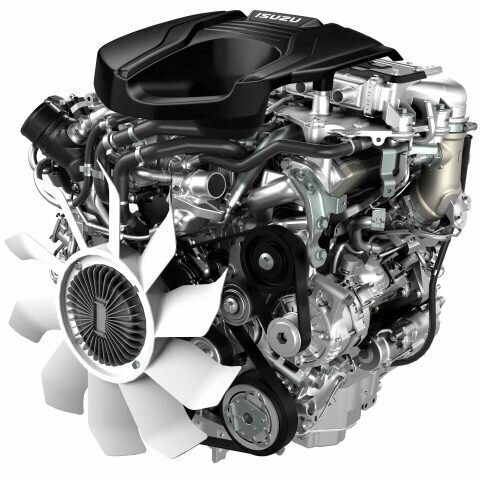 Which Isuzu D-Max engine is the most reliable
Which Model Suffers Fewer Common Issues in Australian Conditions?
The Isuzu D-Max experiences fewer common issues, with owners rarely reporting problems beyond minor wear items. The Toyota Hilux, especially older models, can face DPF blockages in stop-start traffic, injector failures, and rear diff issues. In harsh Australian outback or coastal conditions, the D-Max's simpler drivetrain and stronger chassis give it an edge in overall reliability.
Leave a Reply