
Renault Captur Boot Space: Size, Practicality and Luggage Guide

The Renault Captur boot space is one of the small SUV's strongest practical features. The Captur may look compact enough to squeeze into busy city parking spaces, but open the tailgate and there is considerably more flexibility than its exterior dimensions might suggest.
And there is a reason for that. Renault has traditionally approached the Captur as something between a supermini and a family SUV. Rather than simply carving out a fixed luggage compartment behind the rear seats, the Captur uses a sliding rear bench on many versions. That means we can effectively decide whether passengers or luggage get priority.
Need more rear legroom? Slide the bench backwards. Doing the weekly shop or heading to the airport with several suitcases? Push it forward and free up additional cargo room.
Simple idea, big difference.
However, the exact amount of Renault Captur boot space depends on the generation, model year, powertrain and rear-seat position. Hybrid versions can also differ from conventional petrol models because batteries and associated components have to live somewhere.
So, rather than focusing on one headline number, let's look at what the Captur's luggage compartment is actually like to use.
- How Big Is the Renault Captur Boot Space?
- The Sliding Rear Bench Is the Captur's Secret Weapon
- Renault Captur Boot Space With Seats Up
- Renault Captur Boot Space With Rear Seats Folded
- Renault Captur Hybrid Boot Space
- Renault Captur Boot Dimensions: Litres Don't Tell the Whole Story
- The Adjustable Boot Floor Adds More Flexibility
- Can a Pushchair Fit in the Renault Captur Boot?
- Can You Fit Suitcases in a Renault Captur?
- How Does the Renault Captur Boot Compare With Rivals?
- Is the Renault Captur Boot Big Enough for a Family of Four?
- Is the Renault Captur Good for Dogs?
- How to Get More From Your Renault Captur Boot Space
- What Should You Check Before Buying a Used Captur?
- Renault Captur Boot Space: Strengths and Weaknesses
- Should Boot Space Influence Which Captur Version You Buy?
- Is the Renault Captur Boot Space Good Overall?
- Final Thoughts
- Frequently Asked Questions About Renault Captur Boot Space
How Big Is the Renault Captur Boot Space?
The second-generation Renault Captur is particularly interesting because its luggage capacity isn't necessarily a single fixed figure.
In conventional versions, you'll commonly see figures of around 422 litres with the rear bench in its passenger-friendly position, with capacity increasing to roughly 536 litres when the bench is pushed forward.
Fold the rear seats and total carrying capacity can rise to approximately 1,275 litres, depending on the specification and measurement method.
Those numbers immediately tell us something important: when someone asks, "How big is the Renault Captur boot?", the answer needs a little context.
The Captur effectively gives us two personalities.
One day, it's a comfortable five-seat crossover. The next, it can sacrifice some rear legroom and become a surprisingly useful luggage carrier.
Renault Captur Boot Capacity at a Glance
For a typical second-generation petrol Captur, the useful figures to remember are approximately:
| Configuration | Approximate boot capacity |
|---|---|
| Rear bench back | 422 litres |
| Rear bench forward | Up to 536 litres |
| Rear seats folded | Around 1,275 litres |
Exact specifications vary between markets, model years and engines, so we should always check the figures for the individual Captur we're considering.
Still, those numbers give us a useful baseline.
Why Do Renault Captur Boot Space Figures Vary?
If you've been researching the Captur and encountered different capacity figures, don't assume somebody has made a mistake.
Several factors can alter the published measurement:
- Rear bench position
- Petrol, hybrid or plug-in-hybrid powertrain
- Captur generation
- Model year
- Spare-wheel or tyre-repair-kit configuration
- Market-specific equipment
- Measurement standard
This is especially relevant when comparing the Captur with rival SUVs. One manufacturer might quote its maximum five-seat capacity while another publishes a figure measured with the seats in their normal position.
It's a bit like comparing hotel rooms when one includes the balcony in the floor area and the other doesn't. The numbers need context.
The Sliding Rear Bench Is the Captur's Secret Weapon
This is arguably the feature that makes the Renault Captur boot more interesting than its raw litre capacity.
The rear bench can slide forwards and backwards, allowing us to change the balance between rear passenger space and cargo capacity.
Imagine we're taking four adults on a long journey. We'd probably want the rear seat pushed backwards, giving passengers more room for their knees.
Now imagine it's just two of us heading to the airport with multiple suitcases. Suddenly, rear legroom isn't important. We can slide the bench forward and make the boot substantially larger without folding the seats.
That's genuinely useful flexibility.
How Much Difference Does Sliding the Bench Make?
Potentially more than 100 litres.
That's not a token increase. It can be the difference between struggling with a large suitcase and simply dropping it into the luggage compartment.
This flexibility is particularly useful for families because our cargo requirements rarely remain constant.
Monday morning might involve school bags.
Saturday might involve groceries.
Sunday could mean a pushchair, picnic equipment and children's bikes.
The Captur lets us adapt the interior rather than forcing us to work around one fixed layout.
Is There a Catch?
Of course.
Sliding the rear bench forward increases boot capacity by reducing rear legroom. Push it far enough and taller passengers will notice.
So, the maximum quoted Renault Captur boot capacity shouldn't automatically be interpreted as the amount of luggage space available while providing maximum passenger comfort.
It's a compromise—but at least we get to choose the compromise ourselves.
Renault Captur Boot Space With Seats Up
With all five seats available, the Captur provides enough luggage capacity for most everyday situations.
A capacity in the region of 422 litres in many petrol versions is perfectly respectable for a compact crossover. More importantly, the boot itself is sensibly shaped.
This content may interest you!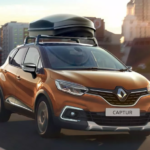 Renault Captur Tyre Pressure: PSI, Bar, TPMS and Full Guide
That's often more useful than chasing enormous theoretical capacity figures.
A 450-litre boot with awkward wheel-arch intrusions can sometimes be less useful than a 420-litre compartment with a broad, square floor.
What Can Fit in the Renault Captur Boot?
In practical terms, we should have little difficulty carrying everyday items such as:
- A large weekly grocery shop
- Several cabin-size suitcases
- One or two larger travel cases, depending on dimensions
- A folded pushchair
- Sports bags
- Backpacks and school equipment
- Smaller camping equipment
- A combination of shopping bags and children's gear
Packing efficiently matters, naturally.
Soft bags are often easier to arrange than rigid suitcases because they can squeeze into gaps around other luggage.
If you've ever played Tetris with airport luggage, you'll know exactly what we mean.
Renault Captur Boot Space With Rear Seats Folded
Need to carry something much larger?
Fold the rear seats and the Captur becomes substantially more versatile, offering approximately 1,275 litres of maximum cargo capacity in some configurations.
At this point, we're no longer talking about ordinary supermarket practicality. The Captur can handle larger loads such as flat-packed furniture, bulky boxes, sports equipment or luggage for a longer holiday.
Is the Floor Completely Flat?
This depends on the version and floor configuration.
The Captur can provide a relatively useful extended loading area, particularly when its adjustable boot floor is positioned appropriately, but we shouldn't assume every configuration creates a perfectly flat, van-like surface.
That's important if we're regularly transporting long or heavy items.
A slight step might be irrelevant when carrying bags. It's much more noticeable when sliding a large box through the tailgate.
Can the Captur Carry Long Items?
Yes, within reason.
Folding the rear seatbacks creates enough length for items that would never fit into the standard boot. Think:
- Flat-pack furniture
- Longer boxes
- Golf equipment
- Camping gear
- DIY supplies
- Large household purchases
- Certain bicycles with some dismantling
The Captur isn't a commercial van, obviously. But for occasional bulky loads, it's much more adaptable than its city-friendly footprint suggests.
Renault Captur Hybrid Boot Space
Here's where we need to be careful.
Electrification can affect luggage capacity because batteries, electric motors and associated electronics require packaging space.
Depending on the model year and hybrid configuration, a Renault Captur E-Tech hybrid may have different boot-capacity figures from a conventional petrol Captur.
That's why we'd avoid assuming the biggest Captur boot figure automatically applies to every version.
Why Can the Hybrid Boot Be Smaller?
Battery packaging is the main reason.
Manufacturers try to place hybrid batteries where they won't compromise passenger or luggage space too dramatically, but packaging a hybrid system inside a vehicle originally constrained by compact-SUV dimensions inevitably requires compromises.
Even when the visual difference seems minor, the usable volume beneath the luggage floor can change.
Does a Smaller Hybrid Boot Matter in Real Life?
That depends entirely on how we use the car.
For a couple carrying groceries and weekend bags, probably not much.
For parents who regularly travel with a pushchair, travel cot, suitcases and children's equipment, losing even a modest amount of luggage capacity can become noticeable.
If cargo space is a priority, we'd therefore compare the exact petrol and E-Tech versions physically, rather than relying purely on headline numbers.
Renault Captur Boot Dimensions: Litres Don't Tell the Whole Story
Boot capacity is normally advertised in litres, but litres are abstract.
Nobody arrives at IKEA carrying 400 one-litre bottles.
What actually matters is the shape of the compartment.
We want to know whether the opening is wide enough, whether there's a large loading lip, whether the wheel arches interfere with bulky objects and whether the parcel shelf gets in the way.
This is where the Captur's generally boxy luggage area works in its favour.
Boot Width
The Captur's luggage compartment is broad enough for typical family use, and the relatively square design helps us exploit the available volume.
The narrowest section around the wheel arches is naturally more restrictive than the widest point, so anyone carrying a specific large object should measure that object rather than relying on overall boot width.
Boot Height
Vertical space matters surprisingly often.
Tall shopping bags, stacked suitcases and pushchairs don't just require floor area; they need height beneath the parcel shelf.
Removing the parcel shelf can create additional flexibility when transporting awkward loads, although anything stacked above the seatback line should always be secured properly.
This content may interest you!Renault Captur Coolant Type: What Coolant Should You Use?Loading Lip
A low and manageable loading threshold makes a noticeable difference when we're lifting heavy suitcases, shopping crates or pushchairs.
The Captur isn't unusually difficult to load, and its adjustable floor can make the transition between the bumper and luggage area more convenient in certain configurations.
That might sound like a small detail.
Try lifting a 25 kg suitcase over a huge lip after a ten-hour flight and suddenly it doesn't feel small at all.
The Adjustable Boot Floor Adds More Flexibility
Depending on specification, the Captur's luggage floor can be arranged at different heights.
This provides two useful benefits.
Set it higher and we can create a more convenient loading surface while hiding smaller belongings underneath.
Set it lower and we prioritise maximum vertical cargo depth.
Underfloor Storage
Underfloor storage is one of those features we don't appreciate until we start using it.
It's useful for keeping smaller objects away from the main luggage compartment, including things such as:
- Charging cables where applicable
- Cleaning products
- Emergency equipment
- Small tools
- Reusable shopping bags
- Umbrellas
- Tyre equipment
It also helps stop small objects rolling around the boot every time we take a corner.
Adjustable Floor vs Maximum Volume
There is an important distinction here.
Raising the boot floor makes loading easier and can improve the shape of the extended cargo area, but lowering it gives us more usable depth.
Neither position is universally better.
Again, Renault gives us a choice.
Can a Pushchair Fit in the Renault Captur Boot?
For many buyers, this is far more important than the official litre figure.
Generally, yes—a normal folding pushchair should fit in a Renault Captur, although pushchairs vary enormously in size.
Compact travel strollers are unlikely to cause much trouble. Larger all-terrain pushchairs with chunky wheels can consume a significant portion of the boot.
This is where the sliding bench becomes useful again. If the pushchair almost fits, shifting the rear seat slightly forward can create valuable extra room.
Captur Boot Space for Families
The Captur makes considerable sense as a small family crossover because it allows us to adjust the cabin according to what we're carrying.
With young children, that flexibility is valuable.
We might need room for:
- A pushchair
- Changing bag
- Grocery bags
- Children's backpacks
- Coats
- Toys
- Travel accessories
Suddenly, a supposedly generous boot can disappear remarkably quickly.
The Captur's adjustable layout doesn't perform miracles, but it gives us more options than a completely fixed rear bench.
Can You Fit Suitcases in a Renault Captur?
Absolutely.
For normal holidays, the Captur should provide enough room for several bags, particularly if we're strategic about packing.
Cabin-size suitcases can usually be combined efficiently, while large hard-shell cases require more planning.
Airport Luggage Practicality
For two travellers, luggage capacity should rarely be an issue.
For four people, it depends on how everyone packs.
Four enormous hard-shell suitcases? That may become difficult without reducing passenger space or folding part of the rear seat.
A mixture of medium cases, cabin luggage and soft bags? Much easier.
This is why real-world packing ability matters more than a single number printed in a brochure.
How Does the Renault Captur Boot Compare With Rivals?
The compact-SUV class is packed with practical alternatives, including models such as the Peugeot 2008, Ford Puma, Nissan Juke, Volkswagen T-Cross, Toyota Yaris Cross and Skoda Kamiq.
Some rivals may offer larger fixed luggage compartments or particularly clever storage solutions.
The Captur's advantage is adaptability.
Rather than asking whether its boot is the absolute biggest in every configuration, we'd ask a more useful question:
Can we adjust the car to suit what we're doing today?
This content may interest you! Toyota Yaris Cross Boot Space: Size, Capacity and Practicality Guide
In the Captur, the answer is often yes.
Captur vs Small Hatchbacks
Compared with conventional superminis, the Captur's SUV-style body provides obvious practicality benefits.
The taller roof, higher tailgate and more flexible rear seating make it easier to carry bulky objects.
This is one reason small SUVs have become so popular. They aren't necessarily huge vehicles; they simply use their dimensions more efficiently for the lifestyles many buyers actually have.
Captur vs Larger Family SUVs
Against larger SUVs, physics eventually wins.
A Renault Austral, Nissan Qashqai or similarly sized family SUV provides a larger overall footprint and may offer more passenger and luggage flexibility for families regularly carrying five people.
But the Captur counters with easier parking, lower overall dimensions and city-friendly manoeuvrability.
It's about finding the sweet spot.
Is the Renault Captur Boot Big Enough for a Family of Four?
For many families, yes.
If we're talking about everyday school runs, groceries, sports equipment and occasional holidays, the Captur's boot is practical enough to cope.
Where things become more complicated is when all four occupants travel with bulky equipment simultaneously.
Think two adults, two young children, a large pushchair, travel cot and several suitcases.
At that point, even a clever compact SUV can start feeling small.
Who Will Find the Captur Boot Most Practical?
We think the luggage compartment works particularly well for:
- Couples who travel regularly
- Small families
- Urban drivers
- Dog owners
- Buyers downsizing from a larger SUV
- People who occasionally carry bulky items
- Drivers who value adjustable passenger/cargo space
Anyone who routinely fills a large estate car or seven-seat SUV, however, probably shouldn't expect the Captur to replace that capacity.
Is the Renault Captur Good for Dogs?
It can be, especially for small and medium-sized dogs.
The hatchback opening makes access straightforward, and the boot's useful shape provides reasonable floor space.
For larger dogs, we'd pay particular attention to boot height and the amount of space remaining when the rear bench is in its normal position.
A proper dog guard or secured travel crate is also preferable to simply letting a dog move freely around the luggage area.
Using the Sliding Bench With Pets
Here's another clever use of the Captur's sliding seat.
If nobody is travelling in the rear seats, we can push the bench forward and give the boot considerably more space.
That can make the luggage area more comfortable for a secured pet crate while preserving the front passenger compartment.
How to Get More From Your Renault Captur Boot Space
A flexible boot is only useful if we use it intelligently.
Our favourite approach is to treat the luggage compartment like a small modular storage system rather than simply throwing everything inside.
A few habits help:
- Slide the rear bench forward when rear legroom isn't needed.
- Lower the adjustable floor when maximum vertical capacity matters.
- Raise it when easier loading is the priority.
- Put heavy objects low and close to the rear seatbacks.
- Use soft bags around rigid suitcases.
- Remove the parcel shelf for tall loads when appropriate.
- Fold only part of the rear bench when carrying long objects alongside a passenger.
- Use underfloor storage for small accessories.
Those little adjustments can make the boot feel considerably larger.
What Should You Check Before Buying a Used Captur?
If luggage capacity matters to us, we'd physically inspect the boot rather than relying entirely on specifications.
Check that the sliding rear bench moves correctly and locks securely into position.
Inspect the adjustable luggage floor and make sure any removable components are still present.
Then bring the equipment you actually use.
Seriously.
The Pushchair Test Beats the Brochure Test
Buying the Captur as a family car?
Bring your pushchair to the dealership.
Play golf every weekend?
Bring the golf bag.
Regularly travel with large suitcases?
Measure them.
This content may interest you! Subaru Outback Boot Space: Dimensions, Capacity and Practicality
Published capacity figures are useful for comparisons, but real objects don't behave like litres of water. A pushchair can be awkwardly shaped. Suitcase wheels stick out. Golf clubs are long.
Five minutes of practical testing can tell us more than an hour staring at specification sheets.
Renault Captur Boot Space: Strengths and Weaknesses
So, where does the Captur ultimately succeed?
Its biggest strength isn't necessarily outright volume. It's how intelligently the available space can be manipulated.
Main Advantages
The strongest points include:
- Generous capacity for a compact SUV
- Sliding rear bench
- Useful maximum luggage volume
- Folding rear seatbacks
- Adjustable luggage floor on applicable versions
- Practical hatchback opening
- Good everyday family usability
- Useful underfloor storage possibilities
Potential Disadvantages
There are still limitations:
- Maximum boot capacity reduces rear passenger space
- Hybrid versions can have different luggage capacity
- Maximum seats-folded space doesn't rival a large SUV or estate
- Published figures vary between versions
- Very bulky pushchairs can consume much of the available space
- Maximum quoted litres don't necessarily represent the normal seating configuration
None of these are deal-breakers. They simply reinforce why we should look beyond the headline number.
Should Boot Space Influence Which Captur Version You Buy?
Definitely, especially if we're choosing between different powertrains.
Fuel economy, performance and purchase price tend to dominate car-buying decisions, but practicality affects us every single day.
Saving fuel with a hybrid is great.
Discovering after purchase that our largest pushchair doesn't fit quite as conveniently? Less great.
We'd therefore make boot space part of the test-drive process rather than treating it as an afterthought.
Think About Your Worst-Case Load
Don't test a car according to what you carry on an average Tuesday.
Think about the most demanding realistic scenario.
Family holiday.
Christmas shopping.
Airport run.
Camping weekend.
Trip with the dog.
If the Captur can handle that scenario without turning packing into an Olympic event, everyday use should feel easy.
Is the Renault Captur Boot Space Good Overall?
Yes. The Renault Captur boot space is one of the model's more convincing practical qualities, especially because we can alter the balance between luggage room and rear passenger space.
A typical petrol version can provide around 422 litres in one rear-seat configuration and up to roughly 536 litres with the sliding bench pushed forward, while folding the seats can increase total cargo capacity to approximately 1,275 litres, depending on version.
Those are useful figures.
But the clever bit isn't 422, 536 or 1,275.
It's the sliding bench.
Instead of forcing us to choose permanently between a roomy second row and a large boot, the Captur lets us change the interior whenever our priorities change.
For a compact crossover, that's exactly the kind of practicality we want.
Final Thoughts
The Renault Captur proves that boot space isn't simply a numbers game.
On paper, litres make comparisons easy. In real life, we care about whether the pushchair fits, whether we can load holiday suitcases without crushing the shopping bags, and whether folding a seat lets us bring home that suspiciously large flat-pack box we definitely didn't measure before buying.
The Captur handles those situations well because its luggage area is flexible rather than merely large.
If cargo capacity is one of our main buying criteria, we'd pay particular attention to the powertrain and model year because the precise capacity can vary. We'd also test the sliding bench, experiment with the adjustable floor and bring along any bulky equipment we regularly carry.
Do that, and we'll quickly know whether the Captur's boot works for our lifestyle.
For many couples, urban drivers and smaller families, the answer will be a comfortable yes.
Frequently Asked Questions About Renault Captur Boot Space
1. How many litres is the Renault Captur boot?
Many second-generation petrol Captur versions provide approximately 422 litres with the sliding rear bench positioned back, increasing to around 536 litres when the bench is moved forward. Figures vary by model year and powertrain.
2. What is the Renault Captur boot space with the seats down?
With the rear seats folded, maximum luggage capacity can reach approximately 1,275 litres in certain Captur configurations. Exact capacity depends on the version.
3. Can you fit a pushchair in a Renault Captur?
Yes. Most normal folding pushchairs should fit, although large all-terrain models can occupy much of the luggage compartment. The sliding rear bench can provide additional cargo room when required.
4. Does the Renault Captur hybrid have less boot space?
It can. Hybrid-system components and battery packaging may affect the luggage capacity compared with conventional petrol versions. Always check the specification for the exact E-Tech model and model year you're considering.
This content may interest you! Nissan Patrol Boot Space: Size, Capacity and Practicality
5. Is the Renault Captur boot big enough for four people?
Generally, yes. The Captur should provide enough space for everyday family use and normal trips for four occupants. For holidays involving large suitcases, a pushchair and other bulky equipment simultaneously, careful packing or moving the sliding rear bench forward may be necessary.
Leave a Reply