
Toyota HiLux Models by Year Australia: Complete Generation Guide

The Toyota HiLux models by year in Australia tell a story that stretches from a simple two-wheel-drive work ute to one of the most sophisticated dual-purpose vehicles on Australian roads. Across almost six decades, the HiLux has evolved through petrol engines, diesel power, turbo-diesel technology, 4x4 systems, automatic transmissions, family-friendly Double-Cabs, premium grades and, most recently, electrification.
For Australian buyers, however, the HiLux timeline can become confusing. A 2014 HiLux and a 2016 HiLux may look like completely different vehicles, while two utes registered only a year apart can belong to separate generations. Toyota has also introduced, removed and revived grades such as WorkMate, SR, SR5, Rogue, Rugged X and GR Sport.
So, rather than simply listing badges, we are going to walk through the Toyota HiLux generations in Australia by year, explain the most important changes, and show which model years belong to each major era.
Toyota's official history identifies eight generations between 1968 and the model introduced in 2015. Toyota subsequently launched the ninth-generation HiLux in Australia in late 2025 as the 2026 range.
- Toyota HiLux Models by Year Australia: Quick Reference Table
- First-Generation Toyota HiLux: 1968–1971
- Second-Generation Toyota HiLux: 1972–1977
- Third-Generation Toyota HiLux: 1978–1982
- Fourth-Generation Toyota HiLux: 1983–1987
- Fifth-Generation Toyota HiLux: 1988–1996
- Sixth-Generation Toyota HiLux: 1997–2004
- Seventh-Generation Toyota HiLux: 2005–2014
- Toyota HiLux 2005–2011 Models
- Toyota HiLux 2012–2014
- Eighth-Generation Toyota HiLux: 2015–2025
- Toyota HiLux 2015–2017
- Toyota HiLux 2018: Rogue and Rugged X Arrive
- Toyota HiLux 2020–2022
- Toyota HiLux 2023: GR Sport Changes the Flagship
- Toyota HiLux 2024–2025: V-Active Technology
- Ninth-Generation Toyota HiLux: 2026–Present
- 2026 Toyota HiLux Models in Australia
- 2026 HiLux WorkMate
- 2026 HiLux SR
- 2026 HiLux SR5
- 2026 HiLux Rogue
- 2026 HiLux Rugged X
- What Happened to the Toyota HiLux GR Sport?
- Toyota HiLux Cab Styles by Year
- Toyota HiLux Grade Hierarchy Explained
- How to Identify a Toyota HiLux Generation From the Year
- Which HiLux Years Have the 2.8-Litre Diesel?
- Which Toyota HiLux Year Should We Buy?
- Used Toyota HiLux: Why Condition Matters More Than Year
- Toyota HiLux Models by Year Australia: Final Thoughts
- FAQs About Toyota HiLux Models by Year Australia
Toyota HiLux Models by Year Australia: Quick Reference Table
Here is the easiest way to understand the HiLux timeline.
| Generation | Approximate model years | Major development |
|---|---|---|
| First generation | 1968–1971 | Original 4x2 HiLux |
| Second generation | 1972–1977 | Larger, more refined range |
| Third generation | 1978–1982 | 4x4 and diesel arrive |
| Fourth generation | 1983–1987 | Extra-Cab and greater sophistication |
| Fifth generation | 1988–1996 | V6 petrol and 2.8 diesel era |
| Sixth generation | 1997–2004 | WorkMate and turbo-diesel development |
| Seventh generation | 2005–2014 | Major modernisation and common-rail diesel |
| Eighth generation | 2015–2025 | 2.8 turbo-diesel, Rogue, Rugged X, GR Sport |
| Ninth generation | 2026–present | New design, tech, 2.8 diesel and electrification |
Toyota's own historical chronology lists new generations beginning in 1968, 1972, 1978, 1983, 1988, 1997, 2005 and 2015.
Keep in mind that registration year, build year and model year do not always line up perfectly. A vehicle first registered in January may have been built during the previous calendar year, so anyone buying a used HiLux should verify the VIN, compliance information, engine and specification rather than relying on registration year alone.
First-Generation Toyota HiLux: 1968–1971
The story begins in 1968.
Early HiLux models were dramatically simpler than today's utes. Toyota introduced the HiLux as a short-wheelbase 4x2 pickup, originally powered by a relatively small petrol engine and paired with a manual transmission.
Toyota says the original model used a 1.5-litre petrol engine producing 55kW, with power sent through a four-speed manual transmission.
What Defined the Early HiLux?
There was no SR5 luxury dual-cab loaded with touchscreens, cameras and driver-assistance technology.
This was fundamentally a working vehicle.
Its formula revolved around:
- Rear-wheel drive
- Petrol power
- Simple mechanical components
- Compact dimensions
- Strong utility focus
- Manual transmission
That basic workhorse philosophy would become the foundation of the HiLux reputation.
Is a 1968–1971 HiLux Relevant to Australian Buyers Today?
Primarily to collectors.
Surviving examples are now classic vehicles rather than realistic alternatives to a modern work ute. Condition and originality matter far more than normal considerations such as fuel economy or infotainment.
Second-Generation Toyota HiLux: 1972–1977
A major model change came in 1972.
Toyota improved styling, braking, safety and overall usability. A five-speed transmission also became part of the HiLux story, while more upmarket derivatives began emerging.
Toyota specifically notes the appearance of higher-grade models including the SR5 during the second generation.
The HiLux Was Beginning to Become More Than a Tool
This transition is important.
Australian ute buyers have traditionally expected vehicles to work hard, but over time they also began demanding greater comfort.
The second-generation HiLux represented an early move in that direction.
It was still rugged and simple, but Toyota was starting to realise that buyers wanted a vehicle they could live with outside working hours as well.
Third-Generation Toyota HiLux: 1978–1982
The 1978 HiLux generation was one of the most significant periods in the model's history.
Why?
Because this era brought two features that would ultimately become closely associated with the HiLux name:
diesel power and four-wheel drive.
Toyota confirms that third-generation development included the introduction of 4x4 variants and the HiLux's first diesel engine.
The Double-Cab Changed the HiLux Formula
The generation also expanded the HiLux's usefulness as passenger transport.
Double-Cab configurations and equipment such as:
- Power steering
- Air conditioning
- Cruise control
- Improved seating
- More passenger space
helped move the HiLux closer to the work-and-weekend formula Australians recognise today.
Why the 1978–1982 HiLux Matters
We could almost describe this generation as the point where the family tree split into two branches.
One branch remained a tough commercial vehicle.
The other began becoming a recreational 4WD.
Modern HiLux models continue trying to do both jobs at once.
Fourth-Generation Toyota HiLux: 1983–1987
The next major change arrived in 1983.
Toyota expanded the range again, adding the Extra-Cab body style and increasingly sophisticated mechanical technology.
Toyota highlights developments including independent front suspension, an automatic disconnecting front differential and electronic fuel injection for petrol-powered models.
Single-Cab, Extra-Cab and Double-Cab Choices
This period helped establish the multiple-cab strategy that remains important today.
Australian buyers could increasingly choose a HiLux according to the job:
- Single-Cab for maximum commercial practicality
- Extra-Cab for added interior flexibility
- Double-Cab for passenger carrying
That basic formula survived for decades.
Fifth-Generation Toyota HiLux: 1988–1996
The 1988 generation moved the HiLux another step forward in performance.
Toyota introduced new powertrain choices including a V6 petrol engine and 2.8-litre diesel.
For many Australian enthusiasts, HiLux models from this broad era represent the classic image of an old-school Toyota ute: mechanical, durable, relatively compact and far removed from today's electronically controlled vehicles.
Why Older Fifth-Generation HiLux Models Remain Interesting
Their appeal is easy to understand.
They can offer:
- Straightforward mechanical construction
- Traditional 4WD characteristics
- Relatively compact dimensions
- Classic styling
- Strong enthusiast following
But age matters.
This content may interest you!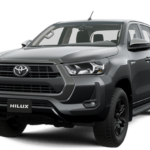 Are Toyota Hilux Reliable? Reliability, Problems and Lifespan Explained
A well-maintained example and a neglected example of exactly the same model can now be worlds apart.
What Should We Check on One Today?
For a ute approaching or exceeding three decades old, service history becomes only part of the picture.
We would also want to investigate:
- Rust
- Cooling system condition
- Previous accident repairs
- Suspension wear
- Steering components
- Driveline condition
- 4WD operation
- Engine leaks
- Modification quality
- Evidence of heavy towing or off-road abuse
At this age, condition beats reputation.
Sixth-Generation Toyota HiLux: 1997–2004
Toyota redesigned the HiLux again in 1997, paying more attention to passenger space, styling, ride comfort and safety.
This era is especially important to Australian shoppers because Toyota says the WorkMate range was introduced, alongside new petrol engines and the HiLux's first turbo-diesel engine.
WorkMate Becomes an Important HiLux Name
Few HiLux badges describe their intended customer as clearly as WorkMate.
The formula has generally prioritised:
- Commercial usability
- Simpler equipment
- Practical interiors
- Cab-chassis availability
- Lower entry pricing than premium grades
More than two decades later, WorkMate remains part of the Australian HiLux family.
Late-1990s and Early-2000s HiLux Models
Today, these vehicles occupy an interesting position in the used market.
They feel considerably more modern than an '80s HiLux but remain much simpler than a current-generation ute.
That makes them attractive to buyers who specifically want old-school mechanical simplicity.
Seventh-Generation Toyota HiLux: 2005–2014
The arrival of the seventh-generation HiLux in 2005 represented a huge leap forward.
This is when the HiLux started resembling the large, multipurpose ute that dominates Australian roads today.
Toyota's Australian history highlights three major engines from this generation:
- 4.0-litre quad-cam V6 petrol
- 2.7-litre four-cylinder petrol
- Common-rail turbo-diesel
Toyota says more than 400,000 units of this generation were sold in Australia across its ten-year lifespan.
Toyota HiLux 2005–2011 Models
Early seventh-generation vehicles offered buyers a much more substantial package than the model they replaced.
Depending on specification, shoppers could find combinations of:
- WorkMate
- SR
- SR5
- 4x2
- 4x4
- Single-Cab
- Extra-Cab
- Double-Cab
- Petrol engines
- Turbo-diesel engines
Toyota HiLux SR vs SR5
The SR developed into the logical middle ground.
It generally appealed to drivers wanting more equipment than a basic work ute without stepping all the way into the more lifestyle-oriented SR5.
The SR5, meanwhile, increasingly played the role of the premium mainstream HiLux.
That distinction continues today.
Toyota HiLux 2012–2014
Late examples of the seventh generation can be particularly appealing in the used market because they combine the established older platform with equipment improvements accumulated over the generation's lifespan.
However, we should never assume that the newest vehicle is automatically the best used purchase.
A 2012 HiLux with impeccable maintenance may be considerably more desirable than a hard-worked 2014 vehicle with questionable history.
Eighth-Generation Toyota HiLux: 2015–2025
If we are searching used HiLux models in Australia today, this is arguably the most important generation to understand.
The eighth-generation HiLux arrived in 2015 with substantial structural, mechanical and comfort improvements.
Toyota highlights:
- New high-torque turbo-diesel engines
- Six-speed transmissions
- A thicker, more rigid frame
- Upgraded suspension
- Stronger brakes
- Improved off-road capability
- Reduced cabin noise
- More SUV-like comfort
Australian engineers were also heavily involved in the model's development and calibration for local conditions.
Toyota HiLux 2015–2017
The early eighth-generation range centred heavily around familiar grades such as:
WorkMate
The work-focused entry point.
SR
The practical middle-grade option popular with both private and fleet buyers.
SR5
The more premium version, combining HiLux capability with greater comfort and convenience.
These three badges became the backbone of the Australian HiLux range.
Toyota HiLux 2018: Rogue and Rugged X Arrive
The HiLux lineup became considerably more interesting in 2018.
Toyota Australia introduced three locally developed halo models:
- HiLux Rogue
- HiLux Rugged
- HiLux Rugged X
Toyota described Rogue as the more urban and lifestyle-focused choice, while Rugged and Rugged X leaned more strongly toward off-road protection and functionality.
What Was the HiLux Rugged X?
Rugged X sat above the conventional range as a factory-developed adventure model.
Equipment included items designed around off-road protection and recovery, making it significantly more than an appearance package.
What Was the HiLux Rogue?
Rogue approached the premium-ute idea differently.
Instead of concentrating entirely on extreme trail hardware, it blended tougher styling with comfort and everyday usability.
This distinction became important as the Australian dual-cab market moved increasingly upmarket.
Toyota HiLux 2020–2022
The eighth-generation HiLux received another substantial update around this period.
The key 2.8-litre turbo-diesel was upgraded to 150kW and 500Nm in automatic applications, and Toyota continued developing the Rogue and Rugged X halo variants with significant Australian input.
Why These Years Are Popular Used Choices
They sit in a useful sweet spot.
They are modern enough to offer much of the performance and technology expected from a current ute while remaining part of a platform that had already been on the market for several years.
For shoppers comparing a 2020, 2021 or 2022 Toyota HiLux, specification and condition should therefore receive at least as much attention as the number printed on the registration papers.
This content may interest you!How Long Do Toyota Hilux Last? Mileage, Lifespan and Reliability ExplainedToyota HiLux 2023: GR Sport Changes the Flagship
The HiLux GR Sport arrived in Australia during 2023 as a performance-focused flagship.
This was not simply an SR5 wearing stickers.
Toyota gave the Australian GR Sport:
- 165kW
- 550Nm
- Wider front and rear tracks
- Dedicated suspension tuning
- Monotube shock absorbers
- Larger brakes
- Paddle shifters
- Unique exterior and interior treatments
Toyota described it as the most powerful diesel HiLux it had offered in Australia at the time.
Rugged X Gives Way to GR Sport
The transition matters when searching listings.
Toyota had earlier announced that Rugged X would be replaced by a new apex off-road model, which ultimately became the GR Sport.
That is why the badges appearing near the top of the range change depending on model year.
Toyota HiLux 2024–2025: V-Active Technology
The 2024 Australian HiLux range brought another important update: Toyota's 48-volt V-Active technology on selected automatic 4x4 Double-Cab models.
The system combines the diesel engine with a motor-generator and 48V electrical architecture, assisting functions such as stop-start operation and acceleration while contributing to improved efficiency.
Toyota also gave much of the range refreshed front styling and equipment updates.
Was Every 2024 HiLux Electrified?
No.
This is an important distinction.
V-Active was offered only on selected configurations. The 2024 lineup remained broad, incorporating different engines, drivetrains, cab types and grades.
So when shopping for a 2024 or 2025 HiLux, do not assume two vehicles sharing an SR or SR5 badge have identical mechanical specifications.
Ninth-Generation Toyota HiLux: 2026–Present
Then came the biggest model-year breakpoint since 2015.
Toyota launched the ninth-generation HiLux for 2026, with Australian-led exterior design work, a new-look cabin, greater technology, revised safety systems and significant changes to the model lineup. Toyota itself referred to the vehicle as the ninth-generation HiLux in early 2026.
The diesel range was also simplified dramatically.
2026 Toyota HiLux Models in Australia
The core diesel range uses five grades:
- WorkMate
- SR
- SR5
- Rogue
- Rugged X
Toyota says WorkMate and SR are available with 4x2 or 4x4 drivetrains depending on configuration, while SR5, Rogue and Rugged X occupy the 4x4 side of the range.
One Diesel Engine Across the Range
One of the biggest departures from the previous generation is engine rationalisation.
The new diesel HiLux range uses Toyota's 2.8-litre 1GD-FTV four-cylinder turbo-diesel, producing up to:
- 150kW
- 420Nm with the six-speed manual
- 500Nm with the six-speed automatic
Selected automatic Double-Cab versions continue with V-Active 48V technology.
The older 2.7-litre petrol and 2.4-litre turbo-diesel options were dropped from the new-generation Australian lineup.
2026 HiLux WorkMate
WorkMate remains the commercial starting point.
Depending on configuration, it continues to cover traditional workhorse requirements such as cab-chassis bodies, while retaining a deliberately practical equipment philosophy.
Think of WorkMate as the HiLux that arrives at the jobsite wearing steel-capped boots.
It is not trying to pretend it is a luxury SUV.
2026 HiLux SR
SR continues to bridge the gap between commercial and recreational use.
It is particularly relevant to Australian buyers because this middle grade can be configured in several practical forms without immediately moving into premium pricing territory.
Toyota's current Australian range includes Extra-Cab and Double-Cab SR configurations.
2026 HiLux SR5
For years, SR5 has been one of the most recognisable HiLux badges.
It remains positioned as the more family- and lifestyle-oriented mainstream 4x4.
Current specifications for the SR5 include a 150kW/500Nm 2.8-litre turbo-diesel in automatic V-Active form, with braked towing capacity listed at up to 3500kg, subject to the specific vehicle configuration and towing requirements.
2026 HiLux Rogue
Rogue remains the more premium, road-and-adventure focused flagship alternative.
It targets buyers wanting the toughness of a HiLux without the more overtly hardcore visual personality of Rugged X.
2026 HiLux Rugged X
One of the most interesting changes for 2026 is the return of Rugged X.
Toyota confirmed the badge's reintroduction when previewing the new generation.
That creates an unusual timeline:
2018: Rugged X arrives
2022: Toyota announces its eventual replacement
2023: GR Sport becomes the performance flagship
2026: Rugged X returns with the ninth generation
For anyone researching HiLux models by year, knowing that sequence avoids a lot of confusion.
What Happened to the Toyota HiLux GR Sport?
GR Sport belongs primarily to the later years of the eighth-generation Australian range.
It launched locally during 2023 and continued as an important flagship through that generation. Toyota's initial ninth-generation diesel lineup instead lists WorkMate, SR, SR5, Rogue and Rugged X.
Therefore, if we see a late-model Australian HiLux GR Sport advertised, we should pay close attention to its generation rather than assuming it shares the same specification as the latest HiLux.
Toyota HiLux Cab Styles by Year
Understanding the badge is only half the job.
HiLux vehicles have also been sold with different body configurations across their history.
Single-Cab
Usually the most work-focused configuration.
Single-Cab models sacrifice rear passenger accommodation in favour of load-carrying practicality.
This content may interest you! Toyota Land Cruiser Year Models Australia: Complete Generation Guide
Extra-Cab
The compromise between Single- and Double-Cab layouts.
Extra-Cab HiLux models provide additional cabin room while retaining more load space than the conventional family-oriented Double-Cab format.
Double-Cab
The body style most people now associate with lifestyle utes.
Double-Cabs provide four conventional doors and proper rear seating, making them far more practical as everyday family vehicles.
Toyota HiLux Grade Hierarchy Explained
The exact lineup changes by year, but the Australian badges can broadly be interpreted like this:
| Grade | General role |
|---|---|
| WorkMate | Commercial/work-focused |
| SR | Mid-range practical model |
| SR5 | Premium mainstream model |
| Rogue | Premium lifestyle/off-road model |
| Rugged X | Adventure/off-road flagship |
| GR Sport | Performance-focused eighth-gen flagship |
This is only a general guide. Equipment can change substantially between model years, so an SR5 from one generation should never be assumed to match an SR5 from another.
How to Identify a Toyota HiLux Generation From the Year
A simple rule of thumb works surprisingly well.
2004 or Earlier
You are looking at one of the older first-six-generation vehicles.
2005–2014
Seventh generation.
2015–2025
Eighth generation.
2026 Onward
Ninth generation.
Those three modern breakpoints — 2005, 2015 and 2026 — are especially useful when browsing Australian used-car listings.
Which HiLux Years Have the 2.8-Litre Diesel?
The question becomes important because several different diesel engines have appeared across the HiLux timeline.
The modern 1GD-FTV 2.8-litre turbo-diesel arrived with the eighth-generation HiLux in 2015.
By the 2026 generation, Toyota had simplified the diesel range so the 2.8-litre engine powered the entire conventional diesel lineup.
That means "2.8 HiLux" can describe vehicles from very different periods.
A 2016 SR5 2.8 and a 2026 SR5 2.8 may share engine lineage, but the surrounding technology, cabin and vehicle specification are separated by an entire generation.
Which Toyota HiLux Year Should We Buy?
There is no single model year that suits everybody.
Instead, we would divide the market according to priorities.
For Old-School Simplicity
Pre-2005 vehicles offer the traditional mechanical character many HiLux enthusiasts love.
For Value
Seventh-generation 2005–2014 models can offer plenty of capability without the prices commanded by much newer dual-cabs.
For Modern Used-Car Buyers
The 2015–2025 eighth generation provides the widest range of relatively modern used vehicles.
Within that generation, later versions gained more performance, safety features and technology.
For Latest Technology
The 2026 ninth-generation HiLux is the clear model-year breakpoint, bringing Toyota's newest cabin technology, updated safety systems, rationalised diesel range and new-generation styling.
Used Toyota HiLux: Why Condition Matters More Than Year
HiLux reputation can sometimes work against used buyers.
People hear that these utes are tough and assume maintenance does not matter.
It does.
A ute that has spent years towing, travelling on corrugated roads, carrying heavy loads or working in mines may have experienced considerably more mechanical stress than a privately owned vehicle of exactly the same age.
Before buying, we should investigate:
- Complete service history
- Engine condition
- Cooling system
- Transmission operation
- Differential and transfer-case operation
- Suspension wear
- Chassis damage
- Rust or corrosion
- Aftermarket modifications
- Towing history
- Signs of off-road abuse
- Tyre wear patterns
- Recalls and completed campaigns
- DPF operation where applicable
- Previous accident repairs
The badge on the tailgate tells us the specification.
The vehicle's history tells us whether we actually want to own it.
Toyota HiLux Models by Year Australia: Final Thoughts
Looking at Toyota HiLux models by year in Australia, several dates stand above the rest.
1968 started the story.
1978 brought diesel and four-wheel drive into the wider HiLux evolution.
1997 introduced the sixth generation and the WorkMate era.
2005 transformed the HiLux into the larger, increasingly sophisticated ute Australians recognise today.
2015 launched the eighth generation and modern 2.8-litre turbo-diesel era.
2018 added Rogue and Rugged X.
2023 introduced the Australian HiLux GR Sport.
2024 brought V-Active 48V technology to selected models.
And 2026 marked the arrival of the ninth-generation HiLux, with a redesigned range based around WorkMate, SR, SR5, Rogue and the returning Rugged X.
For used buyers, generation is often more important than individual registration year. Once we identify the generation, engine, cab style, drivetrain and grade, comparing HiLux models becomes dramatically easier.
FAQs About Toyota HiLux Models by Year Australia
What years are the Toyota HiLux generations in Australia?
Toyota's major generation changes occurred in 1968, 1972, 1978, 1983, 1988, 1997, 2005, 2015 and, most recently, the ninth generation launched for the 2026 Australian range.
What generation is a 2015 Toyota HiLux?
A 2015 HiLux belongs to the eighth generation. This generation introduced new turbo-diesel engines, six-speed transmissions, a stronger frame and substantial improvements in comfort and off-road capability.
What generation is a 2025 Toyota HiLux?
Australian 2025 examples generally belong to the outgoing eighth-generation family. The ninth-generation HiLux launched in Australia in late 2025 as the new 2026 range.
What Toyota HiLux models are available in Australia in 2026?
The new-generation diesel range is built around WorkMate, SR, SR5, Rogue and Rugged X grades, with different cab and drivetrain combinations depending on specification.
When did the Toyota HiLux GR Sport arrive in Australia?
The flagship Australian HiLux GR Sport arrived in 2023, using an upgraded 2.8-litre turbo-diesel producing 165kW and 550Nm along with wider tracks, dedicated suspension tuning and other performance upgrades.
This content may interest you! Subaru Outback Years Australia: Complete Model-Year Guide
Leave a Reply