
Toyota Land Cruiser That Looks Like a Jeep in Australia: Which Model Is It?

You have probably seen one rumbling through an Australian country town, parked outside a hardware shop, or coated in red dust somewhere beyond the bitumen. It carries a Toyota badge, yet its upright windscreen, square body, exposed-looking hinges, flat panels, and no-nonsense stance make it resemble an old-school Jeep.
So, what is the Toyota Land Cruiser that looks like a Jeep in Australia?
In most cases, the vehicle people are trying to identify is the Toyota LandCruiser 70 Series, particularly the 76 Series GXL Wagon. Depending on the body shape, they might also be looking at the longer 78 Series Troop Carrier, commonly called the Troopy.
The newer LandCruiser Prado 250 Series can also invite Jeep comparisons because of its retro-inspired, boxy shape. However, when someone describes a rugged Toyota that looks like a classic Jeep, the 70 Series is usually the answer.
Let us unpack the differences, explore why these Toyotas look so Jeep-like, and determine which model makes the most sense for Australian conditions.
- The Quick Answer: It Is Usually a LandCruiser 70 Series
- Which Australian LandCruiser Model Looks Most Like a Jeep?
- Why Does the LandCruiser 70 Series Look Like a Jeep?
- LandCruiser 76 Series vs Jeep Wrangler: Exterior Design
- Is the New LandCruiser Prado the Jeep-Looking Toyota?
- LandCruiser 70 Series Body Styles Explained
- What Engine Does the Jeep-Looking LandCruiser Use?
- Is the LandCruiser 76 Better Than a Jeep Wrangler?
- What Is the LandCruiser 76 Like to Drive?
- Is the LandCruiser 76 Suitable for Australian Families?
- Is the 70 Series Comfortable for Long Australian Trips?
- Why Australians Love the Jeep-Looking LandCruiser
- Common Modifications That Increase the Jeep-Like Look
- Should You Buy New or Used?
- Alternative Toyota Models With Jeep-Like Styling
- How to Identify the Model You Saw
- Who Should Buy the LandCruiser 76 Series?
- LandCruiser 76, Prado 250 or Jeep Wrangler?
- Final Thoughts: The Toyota That Resembles a Jeep
- Frequently Asked Questions
The Quick Answer: It Is Usually a LandCruiser 70 Series
The LandCruiser 70 Series is Toyota’s old-school, heavy-duty four-wheel drive. Unlike modern SUVs that have grown smoother, rounder and more luxurious, the 70 Series still looks like it was designed with a ruler, a toolbox and a mission.
Its defining visual characteristics include:
- A tall, rectangular body
- A relatively flat windscreen
- Square wheel arches
- An upright front grille
- A high bonnet
- Simple side panels
- Large mirrors
- A rear-mounted spare wheel on wagon models
- Minimal decorative styling
- A purposeful, military-inspired stance
Those features create an obvious visual connection with vehicles such as the Jeep Wrangler, particularly four-door Wrangler Unlimited models.
The resemblance is not the result of one brand copying the other. Both vehicles follow the traditional off-road formula: keep the body upright, maximise visibility, provide generous clearance and avoid fragile styling that serves little practical purpose.
Which Australian LandCruiser Model Looks Most Like a Jeep?
Toyota LandCruiser 76 Series Wagon
The 76 Series Wagon is the closest answer for shoppers searching for a Toyota equivalent to a four-door Jeep Wrangler.
It has four passenger doors, a relatively short and upright wagon body, a rear swing-out spare wheel and the classic proportions associated with serious off-road vehicles. From a distance, especially after the addition of aftermarket wheels, a bullbar and a roof rack, it can look like a stretched and heavily armoured Jeep.
Toyota sells the 76 Series in Australia as part of the broader LandCruiser 70 Series family. The current Australian range uses a 2.8-litre turbo-diesel four-cylinder engine, with manual and automatic transmission availability depending on the variant. Toyota quotes outputs of up to 151kW and 500Nm.
Toyota LandCruiser 78 Series Troop Carrier
The 78 Series Troop Carrier looks like a Jeep that has been pulled from both ends.
Australians know it affectionately as the Troopy. It has two side doors, a long rear body and barn-style rear access. Its silhouette is less like the current Wrangler Unlimited and more like a vintage military transport or an expedition vehicle built for crossing continents.
The Troopy is especially popular with:
- Remote-area travellers
- Mining and infrastructure operators
- Camping conversion specialists
- Tour companies
- Emergency services
- Buyers building long-distance expedition vehicles
When converted into a camper with a pop-top roof, storage drawers, solar panels and extra fuel capacity, the Troopy becomes less of a car and more of a steel apartment on wheels.
Toyota LandCruiser 79 Series
The 79 Series shares the same Jeep-like front end, but it comes as a single-cab or double-cab tray body rather than a conventional enclosed wagon.
From the front, it looks closely related to the 76 Series. From the rear, it is unmistakably a work ute.
A modified 79 Series with a canopy can still appear Jeep-inspired, especially when fitted with chunky tyres and a lifted suspension. Nevertheless, shoppers seeking a direct Wrangler-style wagon will generally find the 76 Series more relevant.
Why Does the LandCruiser 70 Series Look Like a Jeep?
Both Vehicles Put Function Before Fashion
The resemblance begins with engineering priorities.
A city-focused crossover can afford a steeply angled windscreen, hidden door handles, tapered windows and sculpted bumpers. A traditional four-wheel drive benefits from clearer sightlines, predictable body dimensions and components that are easier to inspect or replace.
The LandCruiser 70 Series and Jeep Wrangler both communicate toughness through simple geometry. They look like tools because, at their core, that is what they are.
Their styling says, “Where are we going?” rather than, “Which café has valet parking?”
Boxy Bodies Work Well Off Road
A square body does more than create a tough appearance.
An upright cabin can improve usable interior space relative to the vehicle’s footprint. Flat sides make roof racks, awnings, storage systems and external accessories easier to fit. A short front overhang can also improve the approach angle when climbing steep tracks.
Not every square panel exists purely for off-road performance, of course. Some survive because the 70 Series has evolved gradually rather than being completely reinvented every few years.
That continuity is part of its charm. Driving one can feel like using a mechanical watch in a world of smart screens.
Their Designs Carry Military Heritage
The Jeep name is inseparable from military history, while early LandCruisers were also developed as durable, go-anywhere utility vehicles.
That shared ancestry helps explain why both brands eventually arrived at similar design themes:
- Upright passenger compartments
- Easily recognisable silhouettes
- Strong chassis construction
- Four-wheel-drive hardware
- High ground clearance
- Minimal visual delicacy
A traditional 4WD does not need to look aggressive through fake vents and enormous grilles. Its capability creates the attitude naturally.
LandCruiser 76 Series vs Jeep Wrangler: Exterior Design
Front-End Appearance
The Wrangler usually looks more playful and instantly recognisable. Its round headlights and seven-slot grille are central to the Jeep identity.
The LandCruiser 76 Series has a broader, squarer nose. Its rectangular grille, wide bonnet and heavy-duty bumper area make it look more industrial. Where the Jeep resembles an adventurous mountain goat, the Toyota resembles a bull that has already decided the fence is optional.
Side Profile
Both models have upright cabins and squared-off windows, but their proportions differ.
This content may interest you!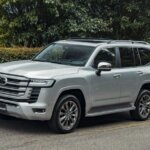 Toyota LandCruiser vs Lexus GX550 Australia: Which Luxury 4WD Should We Buy?
The Wrangler typically has:
- More obvious external styling details
- Pronounced wheel-arch flares
- Shorter-looking body sections
- Removable-door visual cues
- A more recreational character
The LandCruiser 76 Series has:
- Flatter side panels
- A taller and more work-focused appearance
- Less decorative bodywork
- Conventional fixed doors and roof
- A narrower, old-school cabin feel
The Jeep looks designed for weekend exploration. The Toyota looks ready to continue working after the weekend has ended.
Rear Design
Both can carry a full-size spare wheel on the rear door, which strengthens the resemblance.
The Wrangler’s tailgate arrangement and exposed spare have become lifestyle-design signatures. On the LandCruiser, the rear-mounted spare feels more utilitarian. It preserves interior cargo space and keeps an essential off-road component accessible.
Is the New LandCruiser Prado the Jeep-Looking Toyota?
The Prado 250 Has a Retro Shape
Sometimes, yes.
The latest LandCruiser Prado 250 Series sold in Australia has abandoned much of the rounded styling associated with the previous Prado. Its squared bonnet, vertical body sides, upright grille and retro detailing can make it resemble a Jeep, Ford Bronco or classic LandCruiser.
The design was deliberately moved toward a more practical and heritage-influenced appearance. It is based on Toyota’s GA-F body-on-frame architecture and retains the Prado name in Australia.
Prado 250 vs LandCruiser 76 Appearance
The Prado 250 is the more polished interpretation of the boxy 4WD idea.
Think of the difference this way:
- LandCruiser 76: a steel-capped work boot
- Prado 250: a premium hiking boot
- Jeep Wrangler: a trail boot with the laces deliberately showing
The Prado provides a more modern cabin, more sophisticated safety technology and a more family-oriented driving experience. The 76 Series remains deliberately agricultural by comparison.
Therefore, someone who wants Jeep-like styling without the full old-school character of the 70 Series may prefer the Prado.
LandCruiser 70 Series Body Styles Explained
Toyota’s naming system can feel confusing because “70 Series” refers to a family rather than one exact vehicle.
76 Series Wagon
The 76 Series is the compact five-door wagon. It is the model most likely to be described as the Toyota LandCruiser that looks like a Jeep Wrangler.
It suits buyers who want:
- Enclosed cargo space
- Four passenger doors
- Heavy-duty construction
- Strong modification potential
- A manageable wagon body
- Serious off-road credentials
78 Series Troop Carrier
The 78 Series is the long-body Troop Carrier. It favours load space, remote-area practicality and camper conversions over ordinary family convenience.
Its extended body provides significant room, but that length can make it less nimble on tight tracks than the shorter wagon.
79 Series Single and Double Cab
The 79 Series serves farmers, tradespeople, touring enthusiasts and commercial operators who need a tray.
The double-cab version has become a particularly popular base for expensive touring builds. Add a custom canopy, long-range tank, suspension upgrade and camping equipment, and the final cost can climb dramatically.
Why the 70 Series Range Remains So Popular
The range survives because it occupies a space few modern vehicles fill. It combines new-vehicle availability with a design philosophy from another era.
Toyota’s Australian lineup includes wagon, Troop Carrier and tray-body variants, and the company reopened orders for the GXL Wagon automatic in July 2026 after a pause.
What Engine Does the Jeep-Looking LandCruiser Use?
The current Australian LandCruiser 70 Series uses Toyota’s 2.8-litre four-cylinder turbo-diesel engine.
Toyota lists up to:
- 151kW of power
- 500Nm of torque
- A five-speed manual
- A six-speed automatic
- Up to 3,500kg braked towing capacity on relevant variants
The 76 Series Wagon is also listed with a 130-litre fuel capacity, a valuable feature for drivers travelling through remote parts of Australia.
Older Australian buyers may associate the 70 Series with the famous 4.5-litre turbo-diesel V8. That engine played a major role in the vehicle’s reputation and culture, but current new examples have moved to the four-cylinder diesel.
Is the LandCruiser 76 Better Than a Jeep Wrangler?
That depends less on the badge and more on the job.
Where the LandCruiser 76 Makes More Sense
The Toyota may suit you better when your priorities include:
- Remote-area travel
- Heavy touring accessories
- Long-distance fuel range
- Commercial or agricultural use
- Straightforward cabin design
- Strong demand on the used market
- Access to a broad Australian service network
- Carrying equipment over rough terrain
The 76 Series feels at home in environments where reliability, payload planning and fuel range matter more than removable roof panels.
Where the Jeep Wrangler Makes More Sense
The Wrangler may be more appealing when you want:
- More distinctive lifestyle character
- Removable roof or door experiences
- Strong articulation on technical trails
- A more recreational personality
- Modern petrol performance
- An instantly recognisable design
- More playful urban and weekend use
The Jeep can make every trip feel like an event. Even driving to the supermarket can feel like the opening scene of an off-road documentary.
Neither Vehicle Is Universally Better
The Toyota and Jeep share visual themes, but they approach ownership differently.
The Wrangler celebrates adventure as an experience. The LandCruiser 76 treats adventure as a job that must be completed.
One asks, “How much fun can we have getting there?” The other asks, “What do we need to carry, and how far is the next fuel stop?”
This content may interest you!Toyota LandCruiser vs 4Runner Australia: Which Rugged SUV Makes More Sense?What Is the LandCruiser 76 Like to Drive?
It Feels Deliberately Old School
Drivers moving from a modern SUV may be surprised by the 76 Series.
The steering, seating position, cabin width and general control feel do not disguise the vehicle’s workhorse roots. It does not float down the road like a luxury wagon, nor does it attempt to isolate the driver from every vibration.
That can be charming or exhausting, depending on expectations.
A buyer who understands the vehicle may call it honest. A buyer expecting a premium SUV may call it crude.
Both reactions can be reasonable.
The Cabin Is Narrower Than Its Exterior Suggests
The 76 looks substantial from outside, but its cabin architecture comes from an older design era. Front occupants can feel closer together than expected.
The dashboard is functional rather than theatrical, and storage solutions may not match the clever packaging found in modern family SUVs.
However, the simplicity appeals to owners who dislike cabins dominated by enormous screens and layered menus.
It Requires More Driver Involvement
The 76 Series rewards drivers who adapt to it.
You may need to allow more room when braking, take corners with greater patience and account for the effects of accessories, payload and tyre selection. A heavily modified touring build can behave very differently from a standard vehicle.
It is not difficult simply for the sake of being difficult. It is a specialised machine, and specialised machines ask their users to pay attention.
Is the LandCruiser 76 Suitable for Australian Families?
It Can Be, but Comfort Is Not Its Main Mission
A 76 Series can carry a family, camping gear and touring equipment, but it does not offer the same everyday refinement as a Prado, Ford Everest or many modern large SUVs.
Before buying one as a family car, consider:
- Rear-seat comfort
- Child-seat installation
- Cabin storage
- Ride quality when unladen
- Urban parking
- Safety expectations
- Daily fuel costs
- Access for young children
- Cargo organisation
- The cost of desired modifications
Families who spend substantial time touring may accept the compromises gladly. Those completing mostly school runs and suburban commutes may be paying for capability they rarely use.
Prado May Be the Better Jeep-Looking Family Toyota
The Prado 250 preserves the square, adventurous look while offering a more contemporary driving environment.
It is generally the more logical option when we want:
- Jeep-inspired visual character
- Family-focused comfort
- Modern driver assistance
- Better daily usability
- A more sophisticated interior
- Genuine off-road capability without a work-truck atmosphere
The 76 Series wins hearts through toughness. The Prado often wins households through balance.
Is the 70 Series Comfortable for Long Australian Trips?
Comfort depends heavily on configuration.
A standard, lightly loaded vehicle can feel firm, especially when suspension components are designed to accommodate serious payloads. Accessories and suspension changes may improve or damage comfort depending on how carefully the build is engineered.
For long-distance touring, owners commonly consider:
- Quality suspension matched to actual weight
- Supportive replacement seats
- Cabin sound insulation
- All-terrain tyres
- Cruise-control preferences
- Cargo barriers
- Fridge and drawer systems
- Dual-battery installations
- Additional lighting
- Communications equipment
The key phrase is matched to actual weight. Buying the stiffest possible suspension because it sounds toughest can produce a vehicle that hops along corrugations like a shopping trolley with ambition.
Why Australians Love the Jeep-Looking LandCruiser
It Matches the Landscape
Australia rewards vehicles that can travel long distances, carry supplies and tolerate harsh conditions.
The 70 Series looks natural in that environment. Its shape belongs beside cattle stations, mine sites, remote tracks and coastal campsites. It does not appear as though it has dressed up for the adventure; it appears to live there.
It Has Become a Cultural Symbol
The LandCruiser is more than transport for many Australians.
It can represent:
- Rural work
- Mechanical durability
- Self-reliance
- Remote travel
- Camping culture
- Four-wheel-drive modification
- Family traditions
- A rejection of disposable products
Some owners grew up riding in older LandCruisers and want to continue the story. Others simply admire a vehicle that refuses to follow every modern styling trend.
Its Basic Character Is Part of the Attraction
The 70 Series is sometimes criticised for offering relatively basic presentation at a substantial price. Yet that simplicity is exactly what many buyers seek.
Australian commentary around expensive 70 Series builds often highlights this division: some people see an outdated cabin, while enthusiasts see durability, customisation potential and a uniquely old-school design.
Common Modifications That Increase the Jeep-Like Look
A standard 76 Series already looks rugged, but the aftermarket can push its appearance much further.
Popular additions include:
- Steel bullbars
- Side rails and rock sliders
- Snorkels
- Raised suspension
- Wider wheels and tyres
- Roof platforms
- Awning systems
- Rear ladders
- Jerry-can holders
- Driving lights
- Winches
- Bonnet protectors
- Black exterior trim
- Rear storage systems
These upgrades can make the Toyota look broader, taller and more aggressive.
However, modifications should serve a clear purpose. Extra weight reduces payload capacity, affects braking and can alter suspension behaviour. A touring vehicle needs engineering discipline, not an accessory catalogue attached to every panel.
Be Careful With Warranty and Compliance
Owners should confirm whether modifications comply with Australian regulations and whether they may affect warranty coverage.
This content may interest you!How Many Toyota Land Cruiser Models Are There in Australia?Toyota’s warranty terms do not automatically cover failures caused by non-approved modifications or accessories. A highly modified vehicle therefore needs careful planning, reputable installation and proper documentation.
Should You Buy New or Used?
Advantages of Buying New
A new LandCruiser 70 Series offers:
- Known ownership history
- Current factory specification
- New-vehicle warranty
- No hidden off-road damage
- A clean base for modifications
- Easier finance in some circumstances
The challenge is availability. Supply conditions, production changes and order timing can influence how quickly a specific body style or transmission can be delivered.
Advantages of Buying Used
A used example may include valuable accessories such as a bullbar, canopy, upgraded suspension, long-range tank or dual-battery system.
Yet accessories should not automatically increase confidence. A heavily equipped LandCruiser may have completed hard remote travel, carried excessive weight or towed regularly.
Inspect:
- Service history
- Chassis condition
- Signs of corrosion
- Suspension bushes
- Differential and transfer-case leaks
- Tyre wear patterns
- Wiring quality
- Evidence of overloading
- Previous accident repairs
- The legality of modifications
A shiny snorkel does not tell us what happened beneath the vehicle.
Alternative Toyota Models With Jeep-Like Styling
LandCruiser Prado 250
The Prado 250 is the strongest alternative for buyers who love square styling but need modern comfort.
It is better suited to mixed suburban, highway and off-road use than the more specialised 76 Series.
Older LandCruiser 40 Series
The classic 40 Series LandCruiser looks even more like an early Jeep.
Its short wheelbase, circular headlights, upright grille and minimalist body make the connection obvious. Today, however, good examples are collector vehicles rather than straightforward modern transport.
Owning one can be rewarding, but buyers must account for age, rust, parts condition, braking performance and the absence of current safety technology.
Older Short-Wheelbase LandCruisers
Several earlier LandCruiser generations included compact, two-door configurations that strongly resemble traditional Jeeps.
These vehicles can be characterful weekend toys, but condition varies enormously. Purchase the best-maintained example rather than chasing the lowest advertised price.
How to Identify the Model You Saw
Use this simple guide:
Four Doors and a Short, Boxy Wagon Body
It was probably a LandCruiser 76 Series Wagon.
Two Side Doors and an Extra-Long Rear Body
It was probably a LandCruiser 78 Series Troop Carrier.
A Tray or Custom Canopy Behind the Cabin
It was probably a LandCruiser 79 Series.
A Modern, Wide Body With Retro Styling
It may have been the newer LandCruiser Prado 250 Series.
Very Small, Vintage and Usually Two-Door
It may have been a classic LandCruiser 40 Series.
Who Should Buy the LandCruiser 76 Series?
The 76 Series makes sense for buyers who genuinely value its strengths.
It may be right for us when we:
- Travel regularly in remote areas
- Need heavy-duty construction
- Carry substantial touring equipment
- Prefer mechanical character over luxury
- Plan to keep the vehicle for many years
- Understand the costs of modification
- Accept a firm, utilitarian driving experience
- Want one of Australia’s most recognisable workhorse 4WDs
It may be the wrong choice when we:
- Primarily drive in the city
- Expect luxury-SUV refinement
- Want generous interior width
- Need maximum rear-seat comfort
- Dislike road noise and firm suspension
- Want the latest cabin technology
- Are buying mainly because the shape looks fashionable
Buying a 76 Series purely for its appearance is like purchasing hiking equipment to walk across the lounge room. It will do the job, but most of its talent remains unused.
LandCruiser 76, Prado 250 or Jeep Wrangler?
Here is the practical decision.
| Vehicle | Best suited to | Main character |
|---|---|---|
| LandCruiser 76 Series | Remote touring, work and heavy-duty builds | Tough and utilitarian |
| LandCruiser Prado 250 | Families wanting modern comfort and off-road ability | Balanced and refined |
| Jeep Wrangler | Recreational off-roading and lifestyle use | Playful and distinctive |
| LandCruiser Troop Carrier | Camper conversions and extended expeditions | Spacious and specialised |
| Classic LandCruiser 40 Series | Collectors and weekend enthusiasts | Vintage and charismatic |
The best vehicle is not necessarily the toughest one. It is the one whose compromises match our actual life.
Final Thoughts: The Toyota That Resembles a Jeep
The Toyota Land Cruiser that looks like a Jeep in Australia is usually the LandCruiser 76 Series Wagon, part of the enduring 70 Series family.
Its square body, upright glass, external spare wheel and functional proportions place it in the same visual universe as the Jeep Wrangler. Yet beneath the resemblance, the two vehicles express different personalities.
The Jeep is a recreational icon. The LandCruiser is an industrial legend.
For remote touring, heavy work and traditional Australian four-wheel-drive culture, the 76 Series remains difficult to ignore. For families wanting the same boxy spirit with more refinement, the Prado 250 may be the smarter answer. For open-air fun and distinctive trail character, the Wrangler still has its own magic.
We should therefore avoid choosing only with our eyes. The LandCruiser’s square silhouette may draw us into the showroom, but its purpose, comfort, payload, ownership costs and daily behaviour should determine whether it belongs in our driveway.
Frequently Asked Questions
1. Which Toyota LandCruiser looks most like a Jeep Wrangler?
The Toyota LandCruiser 76 Series Wagon most closely resembles a four-door Jeep Wrangler. Both have upright cabins, square bodywork, prominent wheel arches and rear-mounted spare wheels, although the Toyota has a more industrial and work-focused design.
2. Is the Jeep-looking Toyota available new in Australia?
Yes. Toyota continues to offer the LandCruiser 70 Series family in Australia, including wagon, Troop Carrier and tray-body configurations. Availability can vary by variant, transmission, dealer allocation and current order conditions. Toyota announced in July 2026 that orders had reopened for the GXL Wagon automatic.
This content may interest you!Toyota LandCruiser 200 Series Towing Capacity Australia: Complete Guide3. Is the LandCruiser 76 more reliable than a Jeep Wrangler?
Reliability depends on the model year, maintenance, use and modifications. The 76 Series has a strong Australian reputation as a heavy-duty workhorse, but no vehicle is immune to neglect or mechanical failure. A modified example should be inspected carefully before purchase.
4. Is the LandCruiser Prado 250 similar to a Jeep?
Visually, yes. The Prado 250 has a boxier, retro-inspired body that can resemble a modern Jeep or Ford Bronco. Mechanically and practically, however, it is positioned as a more refined, family-friendly four-wheel drive than the LandCruiser 76 Series.
5. What is the long Toyota LandCruiser that looks like a Jeep van?
That vehicle is likely the Toyota LandCruiser 78 Series Troop Carrier, or Troopy. It shares the 70 Series front-end design but has a long enclosed rear body commonly used for passengers, equipment, remote-area work or camper conversions.
Leave a Reply