
Renault Captur Good Car Australia: Is It Worth Buying?

If you’re asking whether the Renault Captur is a good car in Australia, you’re probably looking beyond the glossy brochure. We want to know what it’s actually like to own: Is it comfortable? Is it economical? Does it have enough space? Will servicing become a headache? And, perhaps most importantly, does the Captur make sense when Australia has no shortage of excellent compact SUVs?
The Renault Captur sits in an interesting corner of the market. It brings European styling, a compact footprint and a surprisingly grown-up cabin into a segment dominated by Japanese and Korean rivals. It isn’t necessarily the obvious choice, and that’s partly what makes it interesting.
For Australian drivers who want a small SUV that feels different from the usual suspects, the Captur can be genuinely appealing. But it also comes with compromises that deserve attention before we sign on the dotted line.
So, is the Renault Captur a good car in Australia? Broadly, yes — particularly if we value design, efficient turbo performance, easy city driving and a well-presented interior. However, buyers prioritising maximum dealer coverage, strong resale values or the simplest possible ownership experience may prefer some of its mainstream rivals.
Let's dig deeper.
- Is the Renault Captur a Good Car in Australia?
- What Is the Renault Captur Like to Drive?
- Is the Renault Captur Comfortable?
- Renault Captur Fuel Economy in Australia
- Renault Captur Interior Quality
- How Practical Is the Renault Captur?
- Renault Captur Safety
- Renault Captur Reliability in Australia
- Is the Renault Captur Expensive to Maintain in Australia?
- What Is the Renault Captur Like on Australian Roads?
- Renault Captur vs Japanese and Korean Rivals
- Is a Renault Captur Good for City Driving?
- Is the Renault Captur Good on the Highway?
- Who Should Buy a Renault Captur in Australia?
- Buying a Used Renault Captur in Australia
- New vs Used Renault Captur
- What Makes the Renault Captur Different?
- Renault Captur Good Car Australia: Our Verdict
- Final Thoughts
- Frequently Asked Questions
Is the Renault Captur a Good Car in Australia?
The short answer is yes, for the right buyer.
The Captur is best understood as a small European SUV rather than a miniature off-roader. Its strengths are concentrated around urban and suburban driving. It’s easy to manoeuvre, reasonably practical, stylish and comfortable enough for everyday commuting.
Where it becomes more complicated is value.
Australia's compact SUV market is fiercely competitive. A decent car can still struggle simply because competitors offer longer warranties, larger dealer networks, more aggressive pricing or better resale prospects.
The Captur therefore needs to be judged on what it does differently.
It feels more individual than many mainstream alternatives. The exterior has a distinctly European character, while the cabin can feel more sophisticated than we'd expect from such a small vehicle. Its turbocharged engine also gives it enough punch that it rarely feels like an economy car wearing SUV clothes.
Renault Captur Strengths and Weaknesses at a Glance
| Area | Our assessment |
|---|---|
| City driving | Very good |
| Styling | Excellent |
| Fuel efficiency | Good |
| Interior quality | Good to very good |
| Performance | Good |
| Rear-seat space | Reasonable |
| Boot practicality | Good for the class |
| Highway driving | Good |
| Dealer coverage | Below major Japanese/Korean brands |
| Resale value | A potential weakness |
| Off-road capability | Limited |
| Overall | A strong but niche small SUV |
The Captur isn't trying to win every category. Instead, it combines several attractive characteristics into a package that feels a little more distinctive.
What Is the Renault Captur Like to Drive?
This is where the Captur starts making a convincing argument for itself.
Its compact dimensions make it naturally suited to crowded Australian cities. Navigating tight parking areas, narrow suburban streets and multi-storey car parks doesn't feel like steering a container ship through a canal.
Visibility is generally good, while the elevated seating position provides the slightly raised perspective that attracts so many buyers to small SUVs.
Performance Around Town
Recent Australian Captur models have been offered with a small turbocharged petrol engine paired with a dual-clutch automatic transmission.
On paper, that may not sound exciting. On the road, however, turbocharging gives the Captur useful mid-range torque. It doesn't need a huge engine because it isn't an especially large or heavy SUV.
Pull away from the lights and performance feels adequate rather than explosive. Once moving, though, the engine has enough flexibility for merging into traffic and dealing with everyday urban conditions.
We wouldn't describe the Captur as a hot hatch disguised as an SUV, but neither does it feel painfully slow.
What About the Dual-Clutch Transmission?
This is one area we'd pay particular attention to during a test drive.
Dual-clutch transmissions can behave differently from traditional torque-converter automatics. At very low speeds, particularly when creeping through traffic or manoeuvring into a parking space, they can occasionally feel less seamless.
That isn't automatically a fault.
Drivers coming from a conventional automatic or CVT may simply need a little time to adjust. Once the car is moving, shifts can feel quick and direct.
Our advice? Spend part of the test drive in stop-start traffic rather than doing nothing but a smooth motorway loop.
Is the Renault Captur Comfortable?
Comfort is one of those qualities that rarely dominates a specification sheet but matters enormously after six months of ownership.
The Captur generally strikes a sensible compromise between control and comfort. It isn't excessively soft, yet it doesn't try to impersonate a sports car either.
On smooth roads, it feels settled and mature. Australian roads, of course, aren't always smooth.
Sharp potholes and broken surfaces can expose the limitations of a short-wheelbase compact SUV, especially on versions fitted with larger wheels and lower-profile tyres. Even so, the Captur is generally comfortable enough for its intended role.
Is It Comfortable on Long Trips?
The Captur isn't only a city car.
Take it onto a motorway and it settles into cruising surprisingly well. The turbo engine has enough performance to maintain highway speeds without constantly feeling strained, while the driving position works well for longer journeys.
That makes the Captur viable for owners who commute during the week but occasionally escape the city at weekends.
If we regularly travel hundreds of kilometres with four adults and their luggage, however, a larger SUV would make more sense.
Renault Captur Fuel Economy in Australia
Fuel economy is another important reason to consider a Captur.
Small turbocharged engines are designed to provide a compromise between performance and efficiency. Driven sensibly, the Captur can be economical enough to make daily commuting relatively painless.
Actual consumption will naturally depend on traffic, temperature, driving style, load and road conditions.
Urban stop-start driving generally pushes consumption higher, while steady highway journeys can bring it down.
How to Get Better Fuel Economy From a Captur
Simple habits matter more than many drivers realise:
- Accelerate progressively rather than aggressively.
- Maintain correct tyre pressures.
- Avoid carrying unnecessary weight.
- Anticipate traffic instead of repeatedly accelerating and braking.
- Keep servicing up to date.
- Use cruise control appropriately on longer, flatter roads.
A turbo engine can be efficient when driven gently but thirsty when constantly asked to deliver boost. Think of the accelerator as a tap rather than an on/off switch.
Renault Captur Interior Quality
Step inside and the Captur can make a stronger first impression than its dimensions suggest.
Renault has historically leaned heavily into design, and the Captur reflects that philosophy. Rather than presenting a cabin that feels entirely utilitarian, it tries to add visual interest through shapes, materials, displays and trim.
The result is a cabin that can feel distinctly European.
Dashboard and Technology
Depending on model year and specification, equipment can include digital instrumentation, touchscreen infotainment, smartphone connectivity and various driver-assistance technologies.
The presentation is modern without turning the entire dashboard into one enormous screen.
That matters because technology should make driving easier, not transform changing a basic setting into an archaeological expedition through menus.
Is the Infotainment System Easy to Use?
Most owners should become familiar with it fairly quickly, although some rival systems may feel more immediately intuitive.
Apple CarPlay and Android Auto are particularly valuable because they allow us to use familiar smartphone interfaces for navigation, music and communication.
For many drivers, smartphone integration matters more in daily life than the manufacturer's native infotainment software.
How Practical Is the Renault Captur?
Small SUVs live or die by packaging.
A vehicle can look spacious from outside and still leave passengers playing luggage Tetris every weekend. Fortunately, the Captur uses its footprint reasonably effectively.
The front seats provide sufficient room for most adults, while storage spaces around the cabin make everyday items easier to manage.
Rear accommodation is respectable for the category, although taller adults may naturally prefer something larger.
Renault Captur Boot Space
Boot practicality is one of the Captur's stronger attributes.
Its cargo area should be sufficient for normal shopping, work bags, small suitcases and everyday family equipment. Depending on the particular configuration, flexible rear seating can also improve the balance between passenger and luggage space.
That's useful because practicality isn't simply about having the largest possible litre figure.
A flexible 400-ish-litre boot can sometimes be more useful than a larger but awkwardly shaped cargo area.
Is the Captur Good for a Small Family?
It can be.
For a couple with one or two younger children, the Captur offers a useful combination of manageable exterior dimensions and sufficient interior space.
This content may interest you!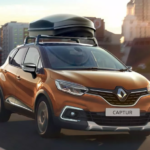 Renault Captur Boot Space: Size, Practicality and Luggage Guide
Child seats will naturally reduce available room, so we'd strongly recommend physically installing your own seats before buying.
A vehicle that looks perfect in photographs can suddenly feel very different when a rear-facing child seat pushes the front passenger seat towards the dashboard.
Renault Captur Safety
Safety is particularly important for small-SUV buyers because many Capturs will spend their lives carrying families.
Depending on year and variant, Captur safety equipment may include technologies such as autonomous emergency braking, lane assistance, blind-spot monitoring, parking sensors, reversing cameras and other driver aids.
Exact specifications can vary between model years, so we shouldn't assume that every used Captur has the same equipment.
Driver Assistance: Helpful or Annoying?
Modern safety systems can sometimes feel like an overprotective passenger who comments on everything.
But good systems fade into the background until they're needed.
Before buying, we'd test lane assistance, parking technology, cruise-control functions and warning systems during a normal drive. Buyers should determine whether they find the calibration helpful or intrusive.
Renault Captur Reliability in Australia
Reliability is probably one of the biggest questions Australians have when considering a Renault.
The brand doesn't have the same bulletproof reputation in Australia as Toyota, Mazda or Honda. That doesn't mean every Renault is unreliable. It means buyers tend to approach ownership with more caution.
A well-maintained Captur can provide dependable service, but maintenance history becomes especially important when buying used.
What Should We Check on a Used Renault Captur?
Before purchasing a second-hand Captur, we'd inspect:
- Complete service history.
- Evidence of scheduled maintenance.
- Transmission behaviour from cold and warm.
- Dashboard warning messages.
- Infotainment and electrical functions.
- Tyre condition and uneven wear.
- Air-conditioning performance.
- Battery condition.
- Signs of accident repairs.
- Outstanding recalls or manufacturer campaigns.
A pre-purchase inspection by a mechanic familiar with European cars is also money well spent.
A cheap used car stops being cheap very quickly when neglected maintenance arrives at our doorstep wearing a four-figure invoice.
Is the Renault Captur Expensive to Maintain in Australia?
Potentially more expensive than some mainstream Japanese alternatives, but that doesn't automatically make ownership prohibitively costly.
The important issue is predictability.
Before buying, contact local Renault service centres or reputable independent European specialists and ask for realistic servicing estimates. Don't judge running costs exclusively from the price of an oil change.
Consider tyres, brakes, batteries, scheduled replacement items and potential repairs as well.
Renault Dealer Network in Australia
Dealer coverage deserves consideration, particularly if we live outside a major metropolitan area.
Toyota, Mazda, Hyundai and Kia have extensive Australian footprints. Renault's network is smaller.
For a buyer living near a Renault service location, that might barely matter. For someone in regional Australia, it could become considerably more important.
Before buying, simply check where the nearest authorised service facility is located and whether independent specialists are available nearby.
What Is the Renault Captur Like on Australian Roads?
Australia throws almost every type of road at a vehicle.
We have smooth motorways, rough suburban streets, corrugated regional roads and endless kilometres of highway. The Captur handles sealed roads comfortably enough, but it shouldn't be mistaken for a rugged four-wheel drive.
Ground clearance and SUV styling may encourage adventurous thoughts, but the Captur is fundamentally road-focused.
Can the Renault Captur Go Off-Road?
Light gravel roads? Generally, yes, with appropriate care.
Serious off-roading? That's not its job.
The Captur is more café terrace than cattle station.
If your weekends regularly involve deeply rutted tracks, sand, mud or remote outback travel, we'd look at something designed with genuine off-road capability.
For normal Australian urban and regional sealed-road use, however, the Captur is perfectly at home.
Renault Captur vs Japanese and Korean Rivals
This is where the buying decision gets interesting.
The Captur competes in a category containing models from Toyota, Mazda, Hyundai, Kia, Volkswagen and other manufacturers.
Many of those alternatives have obvious strengths.
Japanese and Korean competitors often offer broader dealer networks and stronger familiarity among Australian buyers. Some may also provide better long-term resale confidence.
So why choose the Renault?
Reasons to Choose the Captur
The Captur makes sense if we value:
- Distinctive European styling.
- A well-designed cabin.
- Compact dimensions.
- Turbocharged performance.
- Good everyday efficiency.
- Useful interior flexibility.
- Something less common than mainstream alternatives.
There is also an emotional element.
Cars aren't washing machines. We interact with them every day. We look back at them after parking. We touch the steering wheel, dashboard and controls thousands of times.
If the Captur makes us smile while an equally competent rival feels anonymous, that's worth something.
Reasons to Choose a Rival Instead
A competitor may make more sense if our priorities are:
- Maximum dealer coverage.
- Potentially stronger resale value.
- Proven long-term familiarity in Australia.
- Maximum rear-seat room.
- Hybrid availability.
- Serious off-road ability.
- The lowest possible ownership complexity.
Neither decision is automatically correct.
We're simply choosing which compromises fit our lifestyle.
Is a Renault Captur Good for City Driving?
Absolutely. This may be its natural habitat.
The Captur's compact footprint makes parking easier than in larger SUVs, while the raised seating position provides the visibility many drivers enjoy.
Add light steering and modern parking aids, depending on specification, and city driving becomes relatively stress-free.
It's especially appealing for drivers who want SUV styling and practicality without dealing with the physical bulk of a medium SUV.
Is It Easy to Park?
Compared with larger family SUVs, yes.
This is an underrated advantage.
An extra 30 or 40 centimetres of vehicle length doesn't sound dramatic on paper. In a tight inner-city parking space, it can feel like the difference between calmly parking and performing a 14-point manoeuvre while three impatient drivers watch.
The Captur gives us SUV-like usefulness without excessive size.
Is the Renault Captur Good on the Highway?
The Captur performs better on highways than its city-friendly dimensions might suggest.
Turbocharged torque makes overtaking and merging relatively straightforward, although we'd still plan overtaking manoeuvres sensibly, especially with several passengers and luggage aboard.
At motorway speeds, stability is generally good.
Wind and tyre noise can become more noticeable than in larger, more expensive SUVs, but that isn't unusual in this class.
Would We Use One for Road Trips?
Yes, provided passenger and luggage requirements are realistic.
A couple travelling from Melbourne to Adelaide, for example, should find the Captur perfectly usable.
Four large adults with enough luggage for a three-week expedition? We'd want something bigger.
This content may interest you!Renault Captur Reliability Australia: Is It a Dependable Small SUV?Again, context matters.
Who Should Buy a Renault Captur in Australia?
We think the Captur works particularly well for:
- Singles or couples living in cities.
- Small families.
- Buyers downsizing from larger SUVs.
- Drivers who value European styling.
- Commuters wanting reasonable fuel economy.
- People who want something less common.
- Buyers with convenient access to Renault servicing.
It occupies the sweet spot between a hatchback and a conventional family SUV.
Who Should Probably Avoid It?
The Captur may not be ideal for drivers who regularly need huge cargo capacity, carry five adults, travel extensively in remote areas or prioritise maximum resale value above everything else.
Likewise, anyone who dislikes dual-clutch transmission behaviour should test the car carefully before purchasing.
We wouldn't buy a Captur without driving it first.
Specifications tell us what a car has. A test drive tells us what it feels like.
Buying a Used Renault Captur in Australia
Used Capturs can be interesting because depreciation may work in the buyer's favour.
A vehicle that loses value more quickly than a popular Japanese rival can represent attractive value on the second-hand market.
But there's a catch.
Lower purchase prices should never tempt us into ignoring condition.
Service History Matters More Than Mileage Alone
Imagine two Capturs.
One has travelled 55,000 km but has patchy service records. Another has travelled 85,000 km and comes with a detailed history showing maintenance completed properly and on schedule.
We'd often be more comfortable with the second car.
Mileage matters, but maintenance tells the story behind those kilometres.
Used Captur Test-Drive Checklist
During the test drive, pay attention to:
- Cold starting.
- Idle quality.
- Low-speed transmission smoothness.
- Acceleration.
- Braking.
- Steering alignment.
- Suspension noises.
- Warning lights.
- Air conditioning.
- Cameras and parking sensors.
- Infotainment.
- Unusual vibrations.
Drive it on several road types if possible.
Ten minutes around a dealership block tells us surprisingly little.
New vs Used Renault Captur
A new Captur offers the reassurance of warranty coverage and known history, but a used example can offer substantially better value if depreciation has already done the heavy lifting.
Which makes more sense depends on price.
If the difference between a new or near-new Captur and a mainstream competitor is relatively small, we'd compare total ownership costs carefully.
On the used market, the Captur can become more compelling because its lower resale popularity may translate into more equipment for our money.
Does the Renault Captur Hold Its Value?
Resale value has traditionally been an area where less mainstream European brands can struggle against Australia's most popular Japanese and Korean manufacturers.
That's bad news when selling a car new.
But it's potentially good news when buying used.
Depreciation is a two-sided coin: somebody's loss becomes somebody else's discount.
For owners planning to keep the vehicle for many years, resale differences may also matter less than they would for someone changing cars every three years.
What Makes the Renault Captur Different?
Character.
That's an admittedly subjective word, but it matters here.
The Captur doesn't simply feel like another anonymous appliance on wheels. Its exterior design, interior presentation and European personality give it an identity.
Some buyers won't care.
Others absolutely will.
And that's why judging the Captur purely through spreadsheets can miss part of its appeal.
The Captur Isn't Perfect — and That's Fine
No small SUV is perfect.
One rival has more space but feels dull. Another has outstanding reliability but costs more. Another offers great equipment but has a less enjoyable drivetrain.
Buying a car means choosing which imperfections we're prepared to live with.
The Captur's compromises — dealer coverage, resale uncertainty and limited ruggedness among them — need to be weighed against its design, efficiency, manoeuvrability and enjoyable everyday character.
Renault Captur Good Car Australia: Our Verdict
So, is the Renault Captur a good car in Australia?
Yes. It can be a very good small SUV, particularly for urban buyers who want something stylish, economical and pleasantly different.
Its strongest qualities are easy to appreciate every day: manageable dimensions, an attractive cabin, useful practicality and lively turbocharged performance.
At the same time, we'd enter ownership with our eyes open.
Renault's Australian presence isn't as extensive as the networks supporting major Japanese and Korean brands. Resale values deserve consideration, and used examples should be selected carefully with maintenance history front and centre.
For buyers who simply want the safest mainstream choice, there are easier recommendations.
But if we want a compact SUV with European personality and we've got convenient servicing nearby, the Captur deserves a proper test drive.
It might not be Australia's default small SUV.
And perhaps that's precisely the point.
Final Thoughts
The Renault Captur occupies an unusual but appealing position in Australia's crowded small-SUV market.
It combines the manoeuvrability of a small hatchback with the seating position, styling and practicality people expect from an SUV. Throw in turbo performance and a cabin with genuine visual flair, and the result feels more special than its dimensions might suggest.
Would we recommend one blindly? No.
We'd compare servicing options, inspect the warranty conditions applicable to the particular vehicle, research resale prices and carefully test the transmission.
But would we dismiss the Captur simply because the badge isn't Japanese or Korean?
Definitely not.
A good Captur bought at the right price, maintained properly and matched to the right lifestyle can be an enjoyable everyday vehicle.
Ultimately, the answer to “Is the Renault Captur a good car in Australia?” is yes — as long as what the Captur does well matches what we actually need.
Frequently Asked Questions
1. Is the Renault Captur reliable in Australia?
The Captur can be reliable when correctly maintained, but we'd place greater emphasis on service history than we might with some models renowned for extreme tolerance of neglect. Used buyers should look for documented servicing and consider an independent pre-purchase inspection.
2. Is the Renault Captur good for long-distance driving?
Yes. Despite its compact dimensions, the Captur is capable of comfortable highway travel. Its turbocharged engine provides useful performance, although larger SUVs offer more passenger and luggage room for extended family road trips.
3. Is the Renault Captur expensive to service?
Servicing costs depend on model year, location and whether maintenance is performed through an authorised Renault workshop or qualified independent specialist. We'd obtain local quotes before buying rather than assuming European automatically means expensive.
This content may interest you! Is Toyota Yaris Cross a Good Car in Australia? Complete 2026 Review
4. Is a used Renault Captur worth buying?
A used Captur can offer strong value because depreciation may make it considerably cheaper than when new. Prioritise condition, documented servicing and a thorough mechanical inspection rather than choosing solely on low kilometres or price.
5. Should I buy a Renault Captur or a Japanese small SUV?
Choose the Captur if European styling, turbo performance, compact dimensions and individuality matter to you. A mainstream Japanese alternative may suit you better if dealer coverage, resale confidence and widespread servicing availability sit at the top of your priorities.
Leave a Reply