
Ford Ranger as a Family Car in Australia: Is It a Good Choice?

The Ford Ranger as a family car in Australia is an increasingly appealing option for parents who want something more versatile than a traditional SUV. With its spacious dual-cab configuration, modern safety technology, impressive towing capabilities, and rugged design, the Ranger can handle everything from school drop-offs to weekend camping adventures.
But is the Ford Ranger actually a good family car, or would we be better off choosing a conventional SUV?
The answer depends on how we plan to use it. The Ranger offers plenty of advantages for active Australian families, particularly those who enjoy travelling, towing caravans, exploring regional roads, or carrying outdoor equipment. However, its large dimensions, firm suspension, and limited child restraint positions mean it isn't perfect for everyone.
In this guide, we'll examine the Ford Ranger's family-friendly features, interior space, safety ratings, comfort, fuel economy, running costs, and everyday practicality. We'll also compare it with popular alternatives to determine whether it deserves a place in our family driveway.
- Is the Ford Ranger a Good Family Car in Australia?
- Why Australian Families Choose the Ford Ranger
- Ford Ranger Interior Space for Families
- Ford Ranger Child Seats: Is It Suitable for Babies and Toddlers?
- Ford Ranger Safety Rating in Australia
- Is the Ford Ranger Comfortable for Everyday Family Driving?
- Ford Ranger Practicality for School Runs and Shopping
- Ford Ranger Boot Space and Family Luggage
- Ford Ranger Fuel Economy for Family Driving
- Ford Ranger Running Costs in Australia
- Which Ford Ranger Model Is Best for a Family?
- Ford Ranger vs Ford Everest for Families
- Ford Ranger vs Toyota Hilux as a Family Car
- Ford Ranger vs Traditional Family SUVs
- Advantages of Using a Ford Ranger as a Family Car
- Disadvantages of the Ford Ranger for Families
- Is the Ford Ranger Good for Family Road Trips in Australia?
- Is the Ford Ranger Suitable for Families Living in Cities?
- Should We Buy a New or Used Ford Ranger for Family Use?
- How to Make a Ford Ranger More Family-Friendly
- Who Should Buy the Ford Ranger as a Family Car?
- Frequently Asked Questions About the Ford Ranger as a Family Car
- Final Verdict: Is the Ford Ranger Worth Buying as a Family Car in Australia?
Is the Ford Ranger a Good Family Car in Australia?
Yes, the Ford Ranger can be an excellent family car in Australia, particularly in Double Cab form. It offers five seats, modern driver assistance systems, substantial cargo capacity, and the ability to handle demanding driving conditions.
Unlike older generations of work-focused utes, the current Ranger provides a more refined driving experience and technology normally associated with passenger vehicles.
Families can benefit from features such as:
- Five seats in the Double Cab configuration.
- ISOFIX child restraint anchorages in the two outer rear seating positions.
- Rear air-conditioning vents.
- A large touchscreen infotainment system.
- Apple CarPlay and Android Auto connectivity.
- Autonomous emergency braking.
- Blind-spot monitoring and other driver assistance technology.
- Generous cargo space in the rear tub.
- Available four-wheel drive for outdoor adventures.
These characteristics make the Ranger considerably more family-friendly than many traditional commercial vehicles.
However, we should remember that it remains a ute designed to carry substantial loads and tow heavy trailers.
Consequently, it may not deliver the same rear-seat comfort, luggage convenience, or smooth ride as a family-focused SUV.
Why Australian Families Choose the Ford Ranger
Australia has a strong ute culture, and vehicles such as the Ford Ranger are popular with drivers who need one vehicle for multiple purposes.
For many households, purchasing a dedicated family SUV and a separate work vehicle simply isn't practical.
A Double Cab Ranger offers a compromise between passenger accommodation and commercial capability.
A Vehicle for Work and Family Life
One of the Ranger's biggest advantages is versatility.
During the week, we can use it to commute, transport children to school, and complete everyday errands.
On weekends, the same vehicle can carry camping equipment, bicycles, fishing gear, or tools.
For families involved in trades, agriculture, or outdoor activities, this flexibility can be particularly valuable.
Suitable for Australian Driving Conditions
Australian families may encounter everything from congested city streets to unsealed rural roads.
The Ranger's ground clearance, strong chassis, and available four-wheel-drive system make it well suited to many of these conditions.
A properly equipped four-wheel-drive Ranger can also explore destinations that might be unsuitable for a low-clearance family sedan.
Nevertheless, four-wheel drive does not eliminate the need for appropriate tyres, safe driving techniques, or awareness of changing road conditions.
Ford Ranger Interior Space for Families
Interior space is one of the most important considerations when evaluating the Ford Ranger as a family vehicle.
The Double Cab is the configuration most families should consider because it provides four conventional side doors and seating for up to five occupants.
Front Seat Comfort
The front seats offer generous space for most adults.
The dashboard has a modern design, while multiple storage compartments make it easier to organise everyday items.
Depending on the variant, available equipment can include:
- Power-adjustable front seats.
- Premium upholstery.
- Dual-zone climate control.
- Heated or ventilated front seats.
- Wireless smartphone charging.
- A digital instrument display.
Lower-priced Rangers have a more functional interior, while higher specifications provide additional comfort and convenience.
For long journeys, the supportive driving position and adjustable steering wheel are particularly useful.
Ford Ranger Rear Seat Space
The rear bench provides reasonable accommodation for two adults or children, although the available legroom depends on the height and seating position of the front occupants.
Three people can sit across the back, but shoulder room becomes tighter, especially on longer journeys.
Families with teenagers should assess the rear seats carefully.
Although the Ranger is physically large, its rear passenger compartment is not necessarily more spacious than those of some dedicated family SUVs.
Rear air vents help improve comfort during Australian summers, while available rear charging connections make it easier to keep devices powered on longer trips.
Is the Ford Ranger Comfortable for Five People?
For occasional trips, the Ranger can transport five occupants.
However, four occupants generally represent a more comfortable arrangement, especially when children use bulky child restraints.
The centre rear position is narrower than the outer seats and has less convenient legroom.
If we regularly transport three teenagers or adults in the back, we should compare the Ranger with larger SUVs before purchasing.
Ford Ranger Child Seats: Is It Suitable for Babies and Toddlers?
Child seat compatibility is a critical factor when choosing a family vehicle.
The Australian Ford Ranger Double Cab has ISOFIX lower anchorages and top tether anchorage points in the two outer rear seating positions.
This allows two suitable child restraints to be installed, provided they are compatible with the vehicle and fitted according to the manufacturer's instructions.
How Many Child Seats Fit in a Ford Ranger?
The Ford Ranger Double Cab provides two designated rear positions with top tether anchorages.
This is particularly important because approved Australian child restraints may require a top tether connection.
The centre rear seating position does not have a dedicated top tether anchorage.
Consequently, we should not assume that the Ranger can safely accommodate three conventional child seats across its rear bench.
A third child may be able to use the centre seat with an age- and size-appropriate restraint that does not require a top tether, but the precise arrangement must comply with applicable regulations and the restraint instructions.
Families needing three anchored child seats should consider another vehicle.
Can a Rear-Facing Baby Seat Fit in the Ranger?
Yes, a suitable rear-facing child restraint can fit in an outer rear seating position.
However, installation may require the front passenger or driver's seat to be moved forward.
The amount of available space depends on:
- The size of the child restraint.
- The height of the front occupant.
- The angle required for correct installation.
- The specific Ranger model.
- The child restraint manufacturer's instructions.
Before buying, we recommend taking the family's existing child seats to the dealership.
Testing their installation in the actual vehicle is much more useful than relying solely on exterior dimensions.
Is the Ford Ranger Good for Families With Three Children?
It depends on their ages and restraint requirements.
For families with three young children who all require top-tethered restraints, the Ranger is generally not an appropriate choice because it has only two rear top tether positions.
This content may interest you!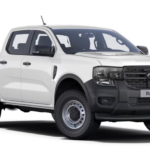 Ford Ranger Versus Toyota Tacoma Australia: Which Ute Is Better?
For families with older children who can safely use appropriate seatbelt or booster arrangements, it may be more practical.
We should always check the rules applicable in our Australian state or territory and consult a qualified child restraint fitter when necessary.
Ford Ranger Safety Rating in Australia
Safety is one of the Ranger's strongest selling points.
The current-generation Ford Ranger received a five-star ANCAP safety rating under the 2022 assessment criteria.
That rating applies to the standard Ranger range covered by ANCAP, including the Double Cab, but excludes the Ranger Raptor, which is unrated.
The assessment includes the following results:
| ANCAP assessment category | Score |
|---|---|
| Adult occupant protection | 84% |
| Child occupant protection | 93% |
| Vulnerable road user protection | 74% |
| Safety assist | 83% |
These results make the Ranger a credible option for safety-conscious families.
Active Safety Features
Modern Ranger variants offer a comprehensive range of safety systems.
Equipment includes autonomous emergency braking, lane support, blind-spot monitoring, and reversing assistance.
Depending on the specification, additional technologies may include intelligent adaptive cruise control, a surround-view camera, and more sophisticated parking assistance.
These features can be especially valuable around schools, shopping centres, and busy suburban streets.
However, driver assistance systems do not replace careful driving or appropriate supervision around children.
Does the Ford Ranger's Height Make It Safer?
Not automatically.
The Ranger's elevated seating position provides a commanding view of the road, but a taller vehicle is not inherently safer in every type of collision.
Vehicle mass, structural design, crash protection, visibility, braking performance, and accident avoidance technology all influence safety.
Large vehicles also have substantial blind spots, particularly around the front and rear.
For families, reversing cameras, parking sensors, and checking the surrounding area before moving are essential habits.
Is the Ford Ranger Comfortable for Everyday Family Driving?
The current Ranger is considerably more refined than older generations, but it still has characteristics associated with a commercial ute.
Its suspension is designed to accommodate significant payloads, which affects comfort when the rear tub is empty.
Ride Comfort on City Roads
On smooth roads, the Ranger generally feels stable and composed.
However, potholes, speed bumps, and uneven suburban streets can reveal a firmer ride than we would experience in many SUVs.
The rear of an unloaded ute may also feel bouncy on certain surfaces.
This is partly because most conventional Ranger versions use a load-oriented rear suspension design.
If comfort is our main priority, we should compare it directly with a Ford Everest, Kia Sportage, or Toyota RAV4.
Comfort on Long Australian Road Trips
Long-distance touring is one of the Ranger's strengths.
Its supportive front seats, highway stability, available driver assistance technology, and powerful diesel engines make extended journeys relatively straightforward.
The Ranger is particularly appealing when our holidays involve carrying substantial equipment or towing a caravan.
However, rear passenger comfort may be less impressive than in the front.
Families planning regular eight-hour road trips should let children or teenage passengers experience the rear seats during a meaningful test drive.
Is the Ford Ranger Too Noisy for Family Use?
The Ranger offers reasonable cabin refinement, especially compared with older diesel utes.
Nevertheless, engine noise, road noise, and tyre noise remain considerations.
Versions fitted with aggressive all-terrain tyres may generate more noise than those using road-oriented tyres.
Higher-specification models can feel more refined, although tyre choice and road surface can matter as much as interior materials.
Ford Ranger Practicality for School Runs and Shopping
A family car needs to be convenient, not simply capable.
This is where the Ranger's size creates both advantages and disadvantages.
Parking the Ford Ranger in Australian Cities
A conventional Double Cab Ranger measures approximately 5.37 metres in length, depending on the variant.
That makes it considerably longer than many popular family SUVs.
In practice, this can create challenges when parking in:
- Shopping centre car parks.
- Narrow suburban streets.
- School pickup areas.
- Underground garages.
- Older residential parking spaces.
Although reversing cameras and parking sensors help, they cannot make the vehicle physically smaller.
We should measure our garage and driveway before purchasing.
Height clearance is another consideration, particularly for models fitted with roof racks, larger tyres, or suspension modifications.
Is It Easy to Get Children Into the Ranger?
The Ranger's higher seating position means young children may need assistance when climbing into the cabin.
Side steps can improve access, although they may not be perfectly positioned for very small passengers.
Lifting a baby capsule into a relatively high vehicle can also become tiring.
This is an important consideration for parents who regularly install, remove, or adjust child restraints.
Visibility Around Children
The elevated driving position provides good forward visibility over surrounding traffic.
However, the vehicle's size creates areas that are difficult to see close to the body.
We should be particularly careful when reversing out of driveways or manoeuvring around playgrounds.
A camera is helpful, but physically checking the area before moving remains essential.
Ford Ranger Boot Space and Family Luggage
Unlike a conventional SUV, the Ranger does not have an enclosed rear boot.
Instead, Double Cab pickup models have a separate cargo tub designed for carrying equipment and substantial loads.
This arrangement can be extremely practical for some families and inconvenient for others.
Advantages of the Rear Tub
The cargo area is useful for transporting:
This content may interest you!Ford Ranger or Mazda BT-50 Australia: Which Ute Is Better in 2026?- Prams and pushchairs.
- Camping equipment.
- Children's bicycles.
- Beach chairs and umbrellas.
- Sports equipment.
- Suitcases.
- Muddy shoes and outdoor gear.
One advantage is that dirty equipment can remain separate from the passenger compartment.
For families who frequently visit beaches or camping areas, this is a major benefit.
The Problem With Uncovered Cargo
An uncovered tub exposes luggage to rain, dust, direct sunlight, and potential theft.
For this reason, many families consider a canopy, tonneau cover, or roller shutter essential.
However, not every cover is fully waterproof or dustproof.
The type and installation quality matter.
Is a Canopy Worth It for Family Use?
A well-designed canopy can make the Ranger substantially more useful.
It provides covered storage for luggage and outdoor equipment.
Nevertheless, a canopy introduces additional weight and can affect rear visibility.
We should also remember that the tub is separate from the climate-controlled passenger compartment.
Food, medicines, pets, and heat-sensitive belongings require appropriate storage and temperature management.
Ford Ranger Fuel Economy for Family Driving
Fuel consumption is an important consideration because family vehicles often accumulate substantial kilometres.
The Ranger's fuel economy depends on its engine, drivetrain, vehicle load, driving conditions, and tyre choice.
The Australian lineup includes diesel engines, plug-in hybrid versions, and the high-performance petrol-powered Raptor.
Ford Ranger 2.0-Litre Turbo-Diesel
The 2.0-litre turbo-diesel is a sensible choice for households focused on everyday practicality.
In the updated 2026.50 range, it produces approximately 125kW and 405Nm.
It offers sufficient performance for many commuting and family duties without the additional cost of the V6.
We should still expect fuel consumption to increase when carrying heavy loads, driving in stop-start traffic, or towing.
Ford Ranger 3.0-Litre V6 Diesel
The 3.0-litre V6 turbo-diesel produces approximately 184kW and 600Nm.
Its additional torque makes it particularly appealing for highway touring, towing, and travelling with substantial loads.
The trade-off is generally higher fuel consumption and a higher purchase price.
For families who rarely tow, the extra performance may not justify the additional expense.
Ford Ranger Plug-in Hybrid for Families
The Ranger Plug-in Hybrid combines a petrol engine with an electric motor and a rechargeable battery.
It offers the possibility of completing shorter journeys using electric power, which can be particularly useful for school runs and local commuting.
The updated hybrid powertrain produces a combined 207kW and 697Nm.
However, whether it saves money depends heavily on charging habits.
Families with convenient home charging and regular short trips are more likely to benefit.
Official plug-in hybrid fuel consumption figures can be very low because the testing process accounts for electric operation. They should not be interpreted as guaranteed petrol consumption during long journeys or when the battery is depleted.
Ford Ranger Running Costs in Australia
The purchase price is only one part of the total cost of owning a family vehicle.
We should also consider servicing, tyres, insurance, registration, fuel, and depreciation.
Servicing and Maintenance
For most current Australian Rangers, scheduled servicing is generally required every 12 months or 15,000 kilometres, whichever occurs first, subject to the vehicle's maintenance schedule.
Ford offers a servicing program for eligible MY2026 Ranger vehicles, with a published maximum price of $399 for each of the first five eligible general services.
Additional maintenance items can cost extra.
Regular servicing is particularly important if the vehicle spends significant time towing, travelling off-road, or operating in demanding conditions.
Ford Ranger Warranty in Australia
New Ford vehicles come with a five-year, unlimited-kilometre warranty as standard.
For eligible vehicles delivered from 1 September 2026, Ford offers an extension to seven years with unlimited kilometres, provided all required servicing is completed on schedule through authorised Ford dealers.
The additional coverage is conditional, so we should review the warranty requirements before making a purchase.
Tyres and Insurance
The Ranger's tyres can be more expensive than those fitted to smaller passenger cars.
Costs depend on wheel size, tyre construction, and whether we choose highway or all-terrain designs.
Insurance premiums also vary significantly according to the variant, location, driving history, vehicle modifications, and level of cover.
A Ranger Raptor may cost considerably more to insure than a basic XL or XLT.
Before buying, requesting insurance quotes for the exact variant is a sensible way to avoid surprises.
Which Ford Ranger Model Is Best for a Family?
The most suitable Ranger depends on our budget and the features we value.
A Double Cab pickup is generally the logical starting point because it provides the most practical passenger arrangement.
Ford Ranger XL: Best for Budget-Conscious Families
The Ranger XL is a practical starting point.
It includes important safety systems and modern connectivity, although its interior is more functional than luxurious.
Families who mainly want a capable vehicle for commuting, outdoor activities, and occasional towing may find that it meets their needs.
The main question is whether the basic upholstery, wheels, and convenience equipment suit everyday family use.
Ford Ranger XLT: A Balanced Family Choice
For many households, the XLT represents an appealing balance between equipment, practicality, and price.
It offers additional comfort and convenience features without reaching the cost of the premium variants.
Its combination of everyday usability and available diesel powertrains makes it worth considering as an all-round family ute.
We would put the XLT high on our test-drive shortlist.
Ford Ranger Wildtrak: Best for Families Wanting More Features
The Wildtrak is aimed at buyers who want a more premium experience.
This content may interest you!Is Ford Ranger a Good Car? Honest Review, Reliability, Pros and ConsDepending on the model year and specification, features include upgraded lighting, a premium audio system, a power-operated roller shutter, and additional convenience equipment.
These features can make family trips more enjoyable.
However, the Wildtrak does not fundamentally solve the Ranger's rear-seat space or child restraint limitations.
The Platinum is the more luxurious choice.
It adds premium interior materials and comfort-focused equipment, including heated and ventilated front seats.
For families who spend substantial time travelling, the additional comfort may be appealing.
Nevertheless, the higher price means we should also consider premium family SUVs with more passenger-focused interiors.
Is the Ford Ranger Raptor Good for Families?
The Raptor offers impressive off-road performance and sophisticated suspension.
However, its high purchase price, performance-focused character, and petrol fuel consumption make it a specialised choice.
It is also unrated by ANCAP under the current Ranger five-star assessment.
While families can use a Ranger Raptor for daily activities, we would not consider it the most cost-effective Ranger for ordinary school runs and shopping trips.
Ford Ranger vs Ford Everest for Families
One of the most useful comparisons is between the Ford Ranger and Ford Everest.
Both share important engineering foundations, but they serve different purposes.
| Feature | Ford Ranger Double Cab | Ford Everest |
|---|---|---|
| Passenger capacity | 5 seats | Up to 7 seats |
| Cargo area | Separate rear tub | Enclosed luggage compartment |
| Child seat practicality | 2 outer rear tether positions | More flexible seating arrangements, depending on row and variant |
| Everyday ride comfort | Ute-oriented | More passenger-focused |
| Work equipment | Excellent | Less suited to dirty or bulky loads |
| Family road trips | Very capable | Generally more convenient |
| Off-road ability | Strong in suitable 4WD variants | Strong in suitable 4WD variants |
Why We Might Choose the Ranger
The Ranger is particularly attractive when we regularly carry equipment that would be inconvenient inside an SUV.
It is also useful when the vehicle doubles as a work ute.
Why We Might Choose the Everest
The Everest generally offers a more convenient passenger-focused layout, enclosed luggage storage, and the possibility of carrying seven occupants.
Its suspension and interior packaging are better suited to many conventional family duties.
If we do not need a separate cargo tub, the Everest is often the more logical choice.
Ford Ranger vs Toyota Hilux as a Family Car
The Toyota Hilux is one of the Ranger's traditional competitors in Australia.
Both offer Double Cab configurations, four-wheel-drive capability, substantial towing potential, and practical cargo areas.
The Ranger is attractive for its modern interior design, connectivity, and range of powertrain options.
The Hilux is also worth considering for its reputation as a workhorse and its suitability for demanding conditions.
However, we should compare the latest versions rather than relying on older reputations.
For family use, the deciding factors should include:
- Rear-seat comfort.
- Child restraint compatibility.
- Suspension behaviour when unloaded.
- Safety technology.
- Engine refinement.
- Purchase and maintenance costs.
- Access to local dealerships.
A back-to-back test drive is the most useful way to determine which ute suits our household.
Ford Ranger vs Traditional Family SUVs
The Ranger offers greater commercial versatility than most conventional SUVs.
However, a family SUV can be easier to live with when the main priorities are carrying passengers, shopping, and everyday driving.
Models such as the Toyota RAV4, Kia Sportage, Hyundai Tucson, and Mazda CX-5 generally offer advantages in manoeuvrability and enclosed luggage convenience.
Many also provide a more comfortable ride on urban roads.
Their lower ride height can make it easier for children to enter and exit.
On the other hand, the Ranger is better suited to carrying dirty or bulky equipment in a separate load area and can offer substantial towing capability.
Ultimately, the correct vehicle depends on whether we need genuine ute versatility or simply want a comfortable family car.
Advantages of Using a Ford Ranger as a Family Car
The Ranger has several characteristics that make it attractive to Australian households.
1. Versatility: It can perform daily family duties while remaining useful for work and outdoor activities.
2. Safety equipment: Modern collision avoidance systems help support everyday driving.
3. Towing capability: Many variants can tow substantial braked trailer loads when properly equipped and operated within their weight limits.
4. Outdoor practicality: The cargo tub is useful for camping, sporting, and beach equipment.
5. Four-wheel-drive capability: Suitable variants can travel on challenging tracks and unsealed roads.
6. Modern technology: Smartphone connectivity and available driver assistance features improve convenience.
7. Touring ability: Strong diesel engines and highway stability make the Ranger appealing for long-distance travel.
Together, these qualities create a vehicle that is particularly well suited to active families.
Disadvantages of the Ford Ranger for Families
Despite its strengths, the Ranger has limitations that deserve serious consideration.
1. Limited child restraint positions: Only two outer rear positions have top tether anchorages.
2. Large exterior dimensions: Parking and navigating tight spaces can be inconvenient.
3. Firmer ride: The load-oriented suspension can feel less comfortable when the vehicle is empty.
4. High cabin access: Young children may find it difficult to climb inside.
5. Separate cargo compartment: Shopping and luggage are less conveniently accessible than in an SUV.
6. Running costs: Fuel, insurance, tyres, and accessories can make ownership expensive.
7. Rear passenger space: The back seat is not as spacious as the vehicle's exterior dimensions might suggest.
These drawbacks do not necessarily make the Ranger a poor family car.
They simply mean its strengths should match our actual lifestyle.
Is the Ford Ranger Good for Family Road Trips in Australia?
The Ranger is particularly appealing for Australian road trips involving camping, caravanning, or outdoor exploration.
Its ability to carry passengers and substantial equipment makes it useful for travelling between cities and exploring regional destinations.
This content may interest you!Can Ford Ranger Tow? Towing Capacity, Limits, and Complete GuideFor example, a family planning a road trip from Melbourne to the Great Ocean Road could use the rear tub to transport beach equipment, luggage, and outdoor supplies.
Similarly, families exploring regional Queensland or Western Australia may appreciate the ground clearance and available four-wheel-drive capability.
Family Road Trip Comfort
Before a long journey, we should consider passenger comfort.
Rear passengers need sufficient legroom, and luggage should be securely stored.
Children should have easy access to essential belongings, while snacks and drinks need suitable storage.
Long journeys also make regular rest stops important.
Can a Ford Ranger Tow a Family Caravan?
Many Ranger variants offer a maximum braked towing rating of up to 3,500kg when appropriately equipped.
However, this headline figure is not the weight every Ranger can tow while simultaneously carrying a full family and a heavily loaded tub.
We must also account for:
- Gross Vehicle Mass (GVM).
- Gross Combination Mass (GCM).
- Tow ball download.
- Vehicle payload.
- Passenger weight.
- Accessories and luggage.
- Trailer weight and axle limits.
A caravan's actual loaded weight is much more important than its advertised empty weight.
For frequent towing, the V6 diesel is worth considering because of its strong torque delivery.
Is the Ford Ranger Suitable for Families Living in Cities?
The Ranger can work as an urban family vehicle, but we should consider whether its size is justified.
In suburban areas with wide streets and generous parking, it may be relatively easy to live with.
However, busy inner-city locations can expose its disadvantages.
Finding a suitable parking space, navigating narrow streets, and loading children in congested areas may be more difficult than with a smaller SUV.
Families in Sydney, Melbourne, Brisbane, Perth, or Adelaide should consider their actual daily routes and parking arrangements rather than focusing exclusively on occasional holidays.
If most of our driving involves short trips through crowded streets, a smaller SUV or hybrid family vehicle may be more economical and convenient.
Should We Buy a New or Used Ford Ranger for Family Use?
Buying used can significantly reduce the initial purchase cost.
However, we should assess the vehicle's history carefully.
Some Rangers have spent their previous lives towing heavy trailers, carrying substantial loads, or operating on demanding work sites.
A used Ranger that looks clean externally may still have experienced considerable mechanical wear.
What to Check Before Buying a Used Ranger
We should inspect:
- Complete servicing records.
- Transmission operation.
- Cooling system condition.
- Suspension and steering components.
- Tyre wear.
- Signs of accident damage.
- Previous towing equipment.
- Unapproved or poorly installed modifications.
- Child restraint anchorages and seatbelt condition.
- Any outstanding recalls.
An independent pre-purchase inspection is particularly worthwhile.
We should also verify that any previous modifications comply with Australian requirements and do not compromise safety systems.
How to Make a Ford Ranger More Family-Friendly
A few carefully chosen accessories can improve the Ranger's everyday practicality.
Useful Accessories for Families
A canopy or suitable tub cover can provide more protected luggage storage.
All-weather floor mats can make cleaning easier after beach trips or outdoor activities.
Side steps may help children enter the vehicle.
A properly installed tub organiser can prevent smaller items from moving around the cargo area.
Other useful additions include sunshades, securely installed storage accessories, and suitable charging equipment.
We should avoid accessories that obstruct airbags, interfere with child restraints, reduce visibility, or exceed the vehicle's load limits.
Tips for Improving Family Comfort
For daily use, we recommend keeping heavy cargo low and properly secured.
Tyre pressures should follow the manufacturer's recommendations for the actual load and tyre specification.
Overinflated tyres can worsen ride comfort, while incorrect pressures can compromise handling and tyre safety.
We should also avoid unnecessary suspension modifications if the Ranger is primarily used on sealed roads.
Who Should Buy the Ford Ranger as a Family Car?
The Ranger makes the most sense for families who genuinely benefit from its ute capabilities.
It may be an excellent choice when we:
- Have one or two children requiring anchored child restraints.
- Regularly go camping or fishing.
- Transport bicycles or outdoor equipment.
- Tow a caravan, boat, or trailer.
- Live in regional Australia.
- Need one vehicle for both work and family activities.
- Value four-wheel-drive capability and load-carrying flexibility.
Who Should Consider Another Vehicle?
An SUV may be a better choice if we:
- Need three top-tethered child restraints.
- Regularly transport six or seven passengers.
- Primarily drive in crowded city environments.
- Want a particularly smooth ride.
- Prefer enclosed luggage storage.
- Need easier access for young children or older relatives.
- Place fuel economy above towing and cargo capability.
For these households, the Ranger's commercial strengths may not compensate for its practical compromises.
Frequently Asked Questions About the Ford Ranger as a Family Car
1. Is the Ford Ranger a good family car in Australia?
Yes. The Ford Ranger Double Cab can be a good family car, especially for households that enjoy outdoor activities, towing, or travelling on regional roads. It provides five seats, modern safety technology, and a versatile cargo area. However, its firm ride, large size, and limited child restraint positions mean a conventional SUV may be more suitable for some families.
2. Can you fit three child seats in a Ford Ranger?
The current-generation Ranger Double Cab has top tether anchorages for the two outer rear seats only. It does not have a dedicated centre rear top tether anchorage, making it unsuitable for three conventional child restraints that require top tethers. Families requiring three child restraints should consider a vehicle with an appropriate seating and anchorage configuration.
3. Is the Ford Ranger comfortable for long family trips?
Yes, particularly for front-seat occupants. The Ranger offers supportive seats, good highway stability, and available driver assistance technology. However, rear-seat legroom and suspension comfort may be less impressive than in a passenger-focused SUV. We recommend testing the rear seats before committing to frequent long-distance travel.
4. Which Ford Ranger model is best for a family in Australia?
For many families, the Ford Ranger XLT Double Cab offers a strong balance of equipment, comfort, and value. The Wildtrak is appealing for households wanting additional premium features, while the Platinum offers a more luxurious cabin. Families focused on affordability may prefer an XL Double Cab.
5. Is a Ford Ranger better than an SUV for a family?
The Ford Ranger is better when we need a separate cargo tub, substantial towing potential, and the ability to transport dirty or bulky outdoor equipment. An SUV is generally more convenient for families prioritising passenger comfort, child restraint flexibility, enclosed luggage storage, and everyday city driving.
Final Verdict: Is the Ford Ranger Worth Buying as a Family Car in Australia?
The Ford Ranger is a capable and practical family vehicle in Australia, but its suitability depends on how we intend to use it.
For active families who spend weekends camping, towing caravans, travelling on regional roads, or carrying recreational equipment, the Ranger offers an attractive combination of flexibility, safety technology, and driving capability.
Its modern interior and Double Cab configuration make it much easier to live with than older generations of work-focused utes.
However, it is important to recognise that the Ranger remains a commercial ute at heart.
Its rear seats are not as flexible as those in many family SUVs, its cargo area is separate from the cabin, and its large exterior dimensions can complicate everyday parking.
Most importantly, families needing three anchored child restraints should look for a different seating arrangement.
Our recommendation is to choose the Ford Ranger XLT Double Cab as a starting point for a family-focused test drive. It offers a practical balance without automatically paying for expensive premium or performance features.
But before making a final decision, we should install our actual child seats, test the rear passenger space, check garage clearance, and drive the vehicle over the roads we normally use.
If we genuinely need a ute's towing, carrying, and outdoor capabilities, the Ranger can be a rewarding family vehicle. If our priorities are comfort, easy parking, and transporting children, a dedicated SUV may prove the better long-term investment.
This content may interest you!Ford Ranger vs Ford Raptor Australia: Which Is Better in 2026?
Leave a Reply