
Ford Ranger or Mazda BT-50 Australia: Which Ute Is Better in 2026?

Choosing between the Ford Ranger or Mazda BT-50 in Australia can be challenging, especially when both vehicles offer impressive towing capabilities, practical designs and strong diesel engine options.
The Ford Ranger has established itself as one of Australia's most popular utes, offering modern technology, powerful engines and excellent versatility. Meanwhile, the Mazda BT-50 attracts buyers looking for a capable workhorse with dependable mechanical engineering, competitive equipment and solid off-road performance.
But which one should we actually buy?
The answer depends on what matters most to us. If we prioritise engine performance, advanced technology, driving comfort and towing refinement, the Ford Ranger generally comes out ahead. However, if we prefer a traditional diesel-powered ute with practical features and a straightforward approach to everyday work, the Mazda BT-50 deserves serious consideration.
In this detailed comparison, we'll explore everything Australian buyers need to know, including engine specifications, reliability, fuel consumption, towing capacity, off-road capability, servicing costs, interior comfort and long-term ownership.
By the end, we'll have a clearer understanding of which ute offers better value for our needs.
- Ford Ranger vs Mazda BT-50: Quick Comparison
- Ford Ranger vs Mazda BT-50 Engine Performance
- Ford Ranger or Mazda BT-50: Which Is More Reliable?
- Ford Ranger vs BT-50 Fuel Economy Australia
- Ford Ranger vs Mazda BT-50 Towing Capacity
- Ford Ranger vs BT-50 Payload Capacity
- Ford Ranger vs Mazda BT-50 Off-Road Performance
- Ford Ranger vs Mazda BT-50 Interior Comfort
- Ford Ranger vs BT-50 Safety Features
- Ford Ranger vs Mazda BT-50 Servicing Costs
- Ford Ranger vs Mazda BT-50 Warranty Australia
- Ford Ranger vs Mazda BT-50 Price Australia
- Ford Ranger vs BT-50 Resale Value
- Ford Ranger or Mazda BT-50 for Work?
- Ford Ranger or BT-50 for Long-Distance Australian Touring?
- Ford Ranger vs Mazda BT-50: Main Advantages and Disadvantages
- Ford Ranger or BT-50 Australia: Which Should We Buy?
- Frequently Asked Questions About Ford Ranger or BT-50 Australia
- Final Verdict: Ford Ranger or Mazda BT-50 Australia?
Ford Ranger vs Mazda BT-50: Quick Comparison
Before examining the differences in detail, let's look at how these two popular Australian utes compare.
| Feature | Ford Ranger | Mazda BT-50 |
|---|---|---|
| Main diesel engines | 2.0L turbo and 3.0L V6 | 2.2L turbo and 3.0L turbo |
| Maximum diesel power | 184 kW | 140 kW |
| Maximum diesel torque | 600 Nm | 450 Nm |
| Maximum braked towing | 3,500 kg on eligible variants | 3,500 kg |
| Diesel transmissions | 10-speed automatic | 6-speed or 8-speed automatic |
| Four-wheel drive | Part-time or full-time, depending on model | Selectable part-time 4WD |
| Plug-in hybrid option | Available | Not available |
| Performance variant | Ranger Raptor | No direct equivalent |
| Standard warranty | 5 years/unlimited kilometres | 5 years/unlimited kilometres |
| Main advantage | Performance and technology | Practicality and diesel capability |
Specifications depend on the model year, engine, body configuration and trim level.
One important difference is that the current Mazda BT-50 shares its mechanical platform with the Isuzu D-MAX, rather than the Ford Ranger.
Older BT-50 generations were related to Ford's ute range, but that partnership no longer defines the current model.
This distinction is particularly important when comparing reliability, engines, transmissions and maintenance requirements.
Ford Ranger vs Mazda BT-50 Engine Performance
Engine performance is one of the biggest factors separating these two vehicles.
The Ford Ranger provides more powertrain choices, while the Mazda BT-50 focuses on traditional four-cylinder turbo-diesel engines.
Ford Ranger Engine Options
The updated Australian Ford Ranger diesel range includes two main engine choices.
2.0-Litre Turbo-Diesel Engine
The updated 2.0-litre turbo-diesel produces approximately:
- 125 kW of power.
- 405 Nm of torque.
- 10-speed automatic transmission.
This engine is suitable for everyday commuting, commercial use and drivers who want a balance between performance and fuel economy.
It provides enough power for general work duties without the higher fuel consumption associated with larger engines.
3.0-Litre V6 Turbo-Diesel Engine
The 3.0-litre V6 is one of the Ranger's biggest selling points.
It produces:
- 184 kW of power.
- 600 Nm of torque.
- 10-speed automatic transmission.
The additional torque makes a noticeable difference when accelerating, climbing steep hills or towing heavy trailers.
For Australian drivers who regularly travel long distances with a caravan, the Ranger V6 offers particularly strong performance.
Ford also offers other powertrain options in the broader Ranger family, including a plug-in hybrid and the high-performance petrol-powered Ranger Raptor.
Mazda BT-50 Engine Options
The Mazda BT-50 takes a different approach, focusing on diesel efficiency and conventional utility-vehicle performance.
2.2-Litre Turbo-Diesel Engine
The 2.2-litre diesel produces approximately:
- 120 kW of power.
- 400 Nm of torque.
- 8-speed automatic transmission.
This engine is designed for drivers seeking practical performance and reasonable fuel consumption.
It's particularly suitable for commuting, light commercial duties and occasional towing.
3.0-Litre Turbo-Diesel Engine
The larger diesel engine produces:
- 140 kW of power.
- 450 Nm of torque.
- 6-speed automatic transmission.
This engine is closely related to the 3.0-litre diesel found in the Isuzu D-MAX.
Its strong low-speed torque makes it useful for towing, carrying equipment and travelling on uneven terrain.
Which Ute Has the Better Engine?
When comparing maximum performance, the Ford Ranger V6 is the clear winner.
Its 600 Nm of torque significantly exceeds the Mazda BT-50's 450 Nm.
That additional pulling power can make highway overtaking and heavy towing more comfortable.
However, not everyone needs a V6.
For everyday driving, moderate towing and general work duties, the Mazda's 3.0-litre diesel provides more than enough capability for many owners.
Our verdict: The Ford Ranger wins for performance, while the Mazda BT-50 remains an attractive choice for buyers who prefer a conventional four-cylinder diesel.
Ford Ranger or Mazda BT-50: Which Is More Reliable?
Reliability is often the deciding factor when Australians choose a ute.
After all, these vehicles are frequently used for demanding work, remote travel and long-distance towing.
Both the Ford Ranger and Mazda BT-50 are capable vehicles, but neither is completely immune to mechanical problems.
Ford Ranger Reliability
The Ford Ranger has undergone substantial improvements over the years.
The latest generation offers more refined engines, improved transmissions and advanced electronic systems.
However, some previous Ranger models have experienced problems involving:
- Automatic transmission shifting.
- Diesel particulate filters.
- Cooling system components.
- Turbocharger systems.
- Electronic sensors.
- Timing-belt-related maintenance on certain older engines.
These problems do not affect every Ranger, and their relevance depends on the engine and manufacturing year.
The updated 2.0-litre diesel introduces a timing chain, replacing the earlier wet-belt arrangement. This is an important mechanical change, although it will take time to establish long-term reliability under Australian conditions.
The Ranger V6 is powerful and refined, but buyers should also consider the complexity of its engine and drivetrain.
Mazda BT-50 Reliability
The current Mazda BT-50 benefits from its mechanical relationship with the Isuzu D-MAX.
This platform is designed around the requirements of commercial vehicles, including towing, carrying heavy loads and travelling on challenging roads.
The 3.0-litre turbo-diesel is particularly appealing to buyers familiar with Isuzu diesel engineering.
However, potential concerns can include:
- Diesel particulate filter issues.
- Exhaust gas recirculation system faults.
- Fuel system problems.
- Electronic warning messages.
- Suspension wear.
- Automatic transmission behaviour.
Like the Ford, these issues are not guaranteed to occur.
Regular servicing and appropriate vehicle use are essential for long-term dependability.
Is the Mazda BT-50 More Reliable Than the Ford Ranger?
There isn't enough directly comparable long-term reliability data to confidently declare one entire model range more reliable than the other.
This content may interest you!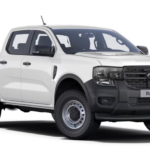 Ford Ranger vs Super Duty Australia: Which Is Better in 2026?
However, some buyers may prefer the Mazda BT-50 3.0-litre because of its conventional diesel drivetrain and shared Isuzu engineering.
Meanwhile, a properly maintained Ford Ranger can also provide years of dependable service.
When purchasing a used vehicle, maintenance history is often more important than brand reputation.
We would always inspect service records, check for outstanding recalls and arrange an independent mechanical inspection.
Ford Ranger vs BT-50 Fuel Economy Australia
Fuel consumption matters enormously when we consider the distances Australians regularly travel.
Whether we're commuting around Melbourne, travelling across regional Queensland or exploring Western Australia, fuel expenses can add up quickly.
Ford Ranger Fuel Consumption
Official combined-cycle diesel consumption figures vary by specification, but representative figures include:
| Engine | Approximate fuel consumption |
|---|---|
| 2.0L turbo-diesel | 6.8–7.2 L/100 km |
| 3.0L V6 turbo-diesel | 8.3–8.4 L/100 km |
The smaller diesel engine generally provides better fuel efficiency.
However, the V6 compensates with substantially stronger performance.
Real-world consumption will depend on driving habits, road conditions, tyres and vehicle load.
Mazda BT-50 Fuel Consumption
The Mazda BT-50's smaller 2.2-litre engine can achieve official consumption figures in the mid-6-litre-per-100-kilometre range, depending on configuration.
The larger 3.0-litre diesel generally uses more fuel, with combined-cycle figures around the high-7 to 8.0 L/100 km range.
These figures can increase significantly when towing a caravan or carrying heavy equipment.
Which Ute Is More Fuel Efficient?
The Mazda BT-50 can offer competitive fuel economy, particularly with its smaller diesel engine.
However, the Ford Ranger 2.0-litre also performs well.
If we're comparing the Ranger V6 with the Mazda 3.0-litre, the Mazda may use less fuel under similar conditions, although the Ranger provides considerably more power.
For buyers covering 25,000 or 30,000 kilometres annually, even a small difference in consumption can affect total ownership costs.
Our verdict: The Mazda BT-50 is competitive for diesel efficiency, but the most economical choice depends on the specific engine and drivetrain.
Ford Ranger vs Mazda BT-50 Towing Capacity
Towing is one of the main reasons Australians purchase dual-cab utes.
Whether we're transporting a boat, caravan, horse float or work trailer, having sufficient towing capacity is essential.
Both vehicles offer a maximum braked towing capacity of 3,500 kg in eligible configurations.
However, their towing characteristics are different.
Ford Ranger Towing Performance
The Ford Ranger V6 provides an advantage thanks to its 600 Nm of torque.
This additional pulling power can make towing heavy trailers feel less demanding, especially on steep roads.
Depending on the variant, the Ranger may also offer advanced towing equipment, including integrated trailer brake control and driver-assistance features.
However, we should remember that not every Ranger has the same towing rating.
For example, the Ranger Raptor has a lower maximum braked towing capacity of 2,500 kg.
Mazda BT-50 Towing Performance
The Mazda BT-50 can also tow up to 3,500 kg when equipped and configured appropriately.
Its 3.0-litre turbo-diesel provides strong low-speed pulling power, making it suitable for caravans, boats and commercial trailers.
While it lacks the Ranger V6's outright torque, it remains a capable towing vehicle.
For occasional towing, the performance difference may not be particularly important.
However, drivers regularly pulling heavy trailers through mountainous areas may appreciate the additional power of the Ranger.
Which Is Better for Towing a Caravan?
We would generally choose the Ford Ranger V6 for frequent heavy caravan towing.
Its stronger engine, refined transmission and available towing technology provide a convincing combination.
Nevertheless, the Mazda BT-50 remains a practical option for drivers who don't require maximum performance.
It's also important to consider Gross Vehicle Mass, Gross Combination Mass, tow-ball weight and payload.
A vehicle's 3,500 kg towing rating does not automatically mean it can tow that weight while carrying its maximum payload.
Ford Ranger vs BT-50 Payload Capacity
Payload capacity is particularly important for tradespeople, farmers and businesses.
It determines how much additional weight the vehicle can legally carry, including passengers, accessories and cargo.
Both vehicles offer substantial payload capabilities.
Some Ford Ranger configurations can carry more than 1,400 kg, while selected Mazda BT-50 variants exceed 1,200 kg.
However, these maximum figures generally apply to specific work-oriented configurations.
A heavily equipped dual-cab ute often has a lower payload than a basic single-cab model.
Accessories can also reduce available carrying capacity.
For example, installing a bull bar, canopy, roof rack, drawer system and additional batteries can consume a considerable portion of the vehicle's payload allowance.
Before choosing either ute for demanding work, we should calculate the weight of all passengers, equipment and modifications.
Ford Ranger vs Mazda BT-50 Off-Road Performance
Australia offers some of the world's most demanding off-road driving environments.
From sandy beaches to remote outback tracks, a capable four-wheel-drive ute can make exploring the country much easier.
Fortunately, both vehicles offer impressive off-road capabilities.
Ford Ranger Off-Road Capability
The Ranger offers several off-road features depending on the model.
These can include:
- Low-range four-wheel drive.
- Locking rear differential.
- Multiple terrain driving modes.
- Hill descent control.
- Off-road information displays.
- Underbody protection.
- Advanced suspension systems.
Certain Ranger variants offer full-time four-wheel drive, which can be particularly convenient when driving across changing road surfaces.
The Ranger Tremor provides additional off-road-focused equipment, while the Ranger Raptor takes performance further with specialised suspension and terrain-management systems.
Mazda BT-50 Off-Road Capability
The Mazda BT-50 also offers a capable four-wheel-drive system.
Depending on the specification, features include:
This content may interest you!Ford Ranger vs GMC Canyon Australia: Which Ute Is Better in 2026?- Selectable part-time four-wheel drive.
- Low-range gearing.
- Rear differential lock.
- Hill descent control.
- Rough Terrain Mode.
- Underbody protection.
The BT-50's traditional drivetrain makes it suitable for camping trips, rural properties and moderate off-road adventures.
Its strong diesel torque also helps when navigating difficult terrain at low speeds.
Which Is Better Off-Road?
For everyday four-wheel-drive touring, both vehicles are capable.
However, the Ford Ranger has a broader selection of specialised off-road variants.
If we're planning demanding recreational off-roading, a Ranger Tremor or Raptor may be more appealing.
For camping, gravel roads and occasional challenging tracks, the Mazda BT-50 remains a sensible choice.
We should also remember that tyres, driving technique and vehicle preparation can make a greater difference than small variations in factory specifications.
Ford Ranger vs Mazda BT-50 Interior Comfort
Interior comfort is increasingly important because many Australians use their utes as everyday family vehicles.
A modern dual-cab needs to provide more than just towing and carrying capability.
It also needs comfortable seats, convenient storage, useful technology and reasonable refinement.
Ford Ranger Interior
The Ford Ranger offers a modern cabin with an impressive selection of technology.
Depending on the variant, features may include:
- Large portrait-oriented touchscreen.
- Digital instrument cluster.
- Smartphone connectivity.
- Dual-zone climate control.
- Premium audio system.
- Heated seats.
- Electrically adjustable front seats.
- Advanced driver-assistance technology.
The Ranger generally feels refined for a traditional body-on-frame ute.
Its suspension and driving position make it particularly appealing for highway journeys and everyday commuting.
Mazda BT-50 Interior
The Mazda BT-50 also provides a practical and comfortable cabin.
Higher specifications offer features such as:
- Modern infotainment touchscreen.
- Smartphone connectivity.
- Premium seat upholstery.
- Heated front seats.
- Automatic climate control.
- Digital driver information.
- Advanced safety technology.
However, the Mazda retains a slightly more traditional ute character.
Its suspension can feel firmer over uneven roads, particularly when the tray is empty.
Road and engine noise may also be more noticeable in certain configurations.
Which Ute Is Better for Families?
For families using their ute as an everyday vehicle, we would lean towards the Ford Ranger.
It provides an attractive combination of comfort, technology and refinement.
However, the BT-50 still offers enough practicality for school runs, weekend travel and family adventures.
We recommend testing both vehicles with rear-seat passengers before deciding.
Ford Ranger vs BT-50 Safety Features
Safety is another important consideration when purchasing a new ute.
Both manufacturers offer modern driver-assistance technology designed to reduce accident risks.
Depending on the variant, equipment may include:
- Autonomous emergency braking.
- Adaptive cruise control.
- Lane departure warning.
- Lane-keeping assistance.
- Blind-spot monitoring.
- Rear cross-traffic alert.
- Reversing cameras.
- Parking sensors.
Many relevant variants of both vehicles have achieved five-star ANCAP safety ratings under their applicable assessments.
However, these ratings do not necessarily cover every version.
For example, specialised variants such as the Ranger Raptor may not be included in the standard Ranger's assessment.
We should always confirm the exact safety rating and equipment applicable to the vehicle we're considering.
Ford Ranger vs Mazda BT-50 Servicing Costs
Routine maintenance is an unavoidable part of ute ownership.
Diesel engines, automatic transmissions, four-wheel-drive systems and heavy-duty suspension components all require appropriate servicing.
Ford Ranger Servicing
Ford generally schedules servicing for relevant Ranger models every 12 months or 15,000 kilometres, whichever comes first.
The manufacturer offers servicing programs that can make routine maintenance expenses more predictable.
For eligible 2026 models, a five-service prepaid maintenance package has been advertised at approximately $1,596.
However, eligibility and pricing conditions apply.
Additional maintenance items, tyres, brakes and unexpected repairs may not be included.
Mazda BT-50 Servicing
The Mazda BT-50 generally follows a similar servicing interval of 12 months or 15,000 kilometres.
Mazda also provides capped-price servicing arrangements.
Depending on the engine and configuration, published five-year routine servicing totals for certain models have been around $2,200 to $2,500.
Actual pricing varies, and owners should confirm costs for their exact vehicle.
Which Ute Costs Less to Maintain?
Ford may offer an advantage in scheduled servicing costs when its prepaid servicing arrangement applies.
However, routine servicing represents only one part of vehicle ownership.
We should also consider insurance, registration, tyres, repairs and depreciation.
A reliable vehicle with slightly higher scheduled servicing costs could still be cheaper to own over the long term.
Ford Ranger vs Mazda BT-50 Warranty Australia
Both manufacturers provide a standard five-year, unlimited-kilometre new-vehicle warranty in Australia.
This offers useful protection against eligible manufacturing defects.
Ford has also introduced an extended warranty arrangement for qualifying vehicles with warranty commencement dates from September 2026.
Eligible owners may receive up to seven years of unlimited-kilometre coverage if they meet the manufacturer's specified servicing conditions.
Mazda continues to provide its standard five-year, unlimited-kilometre warranty.
However, warranty conditions can change, so we should always confirm eligibility, exclusions and servicing requirements before purchasing.
Ford Ranger vs Mazda BT-50 Price Australia
Purchase price can significantly influence our final decision.
Both manufacturers offer multiple configurations, ranging from basic commercial vehicles to premium dual-cab utes.
Indicative Australian 2026 manufacturer list prices before on-road costs include:
| Vehicle configuration | Ford Ranger | Mazda BT-50 |
|---|---|---|
| Entry single-cab 4x2 | $37,130 | $38,400 |
| Entry dual-cab pickup 4x2 | $43,530 | $47,210 |
| Entry dual-cab pickup 4x4 | $51,400 | $55,220 |
| Selected higher-output diesel dual-cab 4x4 | Around $57,900 | Around $57,720 |
These prices are indicative and do not represent identical equipment levels. Dealer offers, on-road costs and specification changes can affect the final amount.
This content may interest you!Ford Ranger vs Nissan Navara Australia: Which Ute Is Better in 2026?Interestingly, the Mazda BT-50 isn't always cheaper than the Ford Ranger.
Some Ford configurations have lower starting prices, while certain Mazda versions may offer attractive equipment for the money.
When comparing prices, we should consider the complete package rather than simply choosing the cheapest advertised vehicle.
A more expensive variant may offer additional technology, comfort or performance that justifies the difference.
Ford Ranger vs BT-50 Resale Value
Resale value plays an important role in the total cost of ownership.
A ute that retains a higher percentage of its original value may be a better financial decision over several years.
The Ford Ranger has strong recognition in the Australian market and attracts considerable interest from used-vehicle buyers.
Its popularity, extensive model range and powerful V6 diesel engine can make certain versions particularly desirable.
The Mazda BT-50 also benefits from its association with Isuzu mechanical engineering.
However, resale values depend on several factors:
- Vehicle age.
- Kilometres travelled.
- Service history.
- Overall condition.
- Engine configuration.
- Accident history.
- Optional equipment.
- Market demand.
Neither model is guaranteed to have better resale value in every situation.
For an accurate comparison, we should examine used prices for equivalent model years, specifications and kilometre ranges.
Ford Ranger or Mazda BT-50 for Work?
Many Australians purchase utes primarily for commercial activities.
Whether we're electricians, builders, plumbers or farmers, the right vehicle needs to transport equipment efficiently and withstand demanding operating conditions.
Why Choose the Ford Ranger for Work?
The Ford Ranger offers a broad selection of body configurations and engines.
Its advantages include useful carrying capacity, strong towing performance and practical cargo-management features.
The 2.0-litre diesel is suitable for many everyday commercial tasks, while the V6 offers additional performance for heavier duties.
Why Choose the Mazda BT-50 for Work?
The Mazda BT-50 is particularly attractive for buyers who prefer a conventional diesel workhorse.
It offers cab-chassis options, practical payload ratings and useful four-wheel-drive capability.
Its 3.0-litre diesel engine is well suited to many commercial applications.
For businesses, choosing the correct body configuration and payload may matter more than extra luxury equipment.
Which Is the Better Work Ute?
Both vehicles can perform demanding work duties.
The Ford offers broader engine and technology options, while the Mazda provides a practical alternative with conventional diesel engineering.
Our recommendation is to compare equivalent work-focused variants and calculate the total operating cost before deciding.
Ford Ranger or BT-50 for Long-Distance Australian Touring?
Long-distance touring is another popular reason for purchasing a ute.
From crossing the Nullarbor Plain to exploring Cape York, Australian drivers need vehicles capable of travelling substantial distances under varying conditions.
The Ford Ranger V6 offers impressive highway refinement and strong torque.
This makes it particularly appealing for buyers who regularly travel with passengers, luggage and a caravan.
The Mazda BT-50 3.0-litre is also a capable touring vehicle.
Its conventional diesel powertrain, useful four-wheel-drive capability and practical carrying options make it suitable for extended trips.
When preparing either vehicle for remote touring, we should consider:
- Fuel availability.
- Tyre selection.
- Spare parts access.
- Service intervals.
- Payload limitations.
- Recovery equipment.
- Water and storage requirements.
Ultimately, appropriate preparation and maintenance are essential regardless of which vehicle we choose.
Ford Ranger vs Mazda BT-50: Main Advantages and Disadvantages
Ford Ranger Advantages
- Powerful V6 turbo-diesel engine.
- Broad selection of powertrains.
- Comfortable highway driving.
- Advanced infotainment technology.
- Strong towing performance.
- Specialised off-road variants.
- Competitive servicing packages.
- Modern interior design.
Ford Ranger Disadvantages
- Premium variants can be expensive.
- V6 diesel uses more fuel than smaller engines.
- Some powertrains are mechanically complex.
- Certain older models have known maintenance concerns.
- The Raptor has a lower towing rating than regular Ranger variants.
Mazda BT-50 Advantages
- Isuzu D-MAX-related mechanical platform.
- Practical 3.0-litre diesel engine.
- Competitive fuel economy.
- Strong towing capacity.
- Useful payload options.
- Conventional four-wheel-drive system.
- Practical commercial configurations.
- Suitable for regional driving and touring.
Mazda BT-50 Disadvantages
- Less engine power than the Ranger V6.
- Fewer powertrain options.
- Firmer ride in certain configurations.
- Less advanced towing technology.
- No direct competitor to the Ranger Raptor.
- Not always cheaper than equivalent Ranger variants.
Ford Ranger or BT-50 Australia: Which Should We Buy?
The best vehicle depends on our individual priorities.
Let's compare the most common buying situations.
| Buying priority | Our preferred choice |
|---|---|
| Engine performance | Ford Ranger |
| Heavy caravan towing | Ford Ranger V6 |
| Highway comfort | Ford Ranger |
| Advanced technology | Ford Ranger |
| Traditional diesel workhorse | Mazda BT-50 |
| Family driving | Ford Ranger |
| General commercial use | Either |
| Recreational off-roading | Either |
| Extreme off-road performance | Ford Ranger Raptor |
| Fuel efficiency | Depends on engine |
| Reliability | Depends on engine, year and maintenance |
| Lower purchase cost | Depends on variant and dealer offer |
For buyers seeking a versatile ute that combines comfort, performance and technology, the Ford Ranger offers an especially attractive package.
However, the Mazda BT-50 remains competitive for those who primarily want a practical diesel vehicle without necessarily paying for additional performance features.
Frequently Asked Questions About Ford Ranger or BT-50 Australia
1. Is the Ford Ranger better than the Mazda BT-50?
The Ford Ranger generally offers stronger engine performance, greater technology choices and better highway refinement. However, the Mazda BT-50 remains a capable alternative for drivers seeking a practical diesel workhorse with strong towing and off-road capabilities.
The better choice depends on our budget and intended use.
2. Is the Mazda BT-50 more reliable than the Ford Ranger?
There is no definitive evidence that every Mazda BT-50 is more reliable than every Ford Ranger.
The BT-50 shares mechanical components with the Isuzu D-MAX, while the Ranger offers several different engines and transmissions.
Long-term reliability depends on model year, maintenance history, driving conditions and engine configuration.
3. Which Is Better for Towing, Ford Ranger or Mazda BT-50?
Both vehicles offer up to 3,500 kg braked towing capacity in suitable configurations.
However, the Ford Ranger V6 diesel produces 600 Nm of torque compared with the Mazda BT-50 3.0-litre diesel's 450 Nm.
For regular heavy towing, we would generally prefer the Ranger V6 because of its additional engine performance.
4. Is the Ford Ranger or Mazda BT-50 Cheaper to Maintain?
Maintenance expenses vary depending on the engine, model year and servicing arrangements.
Ford offers competitive scheduled servicing packages for eligible vehicles, while Mazda provides capped-price servicing programs.
However, we should consider repairs, tyres, insurance and depreciation when calculating overall ownership costs.
5. Should We Buy a Ford Ranger or Mazda BT-50 for Australian Conditions?
Both vehicles are suitable for Australian conditions when properly maintained and equipped.
The Ford Ranger is an excellent choice for buyers who prioritise performance, comfort and technology.
The Mazda BT-50 is particularly appealing for those seeking practical diesel capability, commercial versatility and conventional four-wheel-drive performance.
Final Verdict: Ford Ranger or Mazda BT-50 Australia?
After comparing reliability, engine performance, towing capacity, fuel economy, off-road capabilities, comfort and ownership costs, we believe the Ford Ranger is the better all-round choice for most Australian buyers in 2026.
Its powerful V6 diesel engine, modern technology, comfortable interior and advanced towing features make it exceptionally versatile.
Whether we're commuting through the city, travelling long distances or towing a heavy caravan, the Ranger offers an attractive combination of performance and practicality.
However, the Mazda BT-50 remains a strong competitor.
Its Isuzu-related mechanical platform, practical diesel engines and conventional four-wheel-drive capability make it an appealing choice for tradies, regional drivers and touring enthusiasts.
This content may interest you!Ford Ranger vs F150 Australia: Which Is Better in 2026?If our priority is a traditional diesel workhorse, particularly with the 3.0-litre engine, the Mazda BT-50 deserves a place on our shortlist.
On the other hand, if we want a ute that combines everyday comfort, advanced technology and powerful towing performance, we would choose the Ford Ranger.
Ultimately, the Ford Ranger wins for overall versatility, while the Mazda BT-50 remains an excellent alternative for practical diesel ownership in Australia.
Leave a Reply