
BYD Shark 6 Towing Capacity: Complete Australian Guide for 2026

The BYD Shark 6 has quickly become one of Australia's most talked-about dual-cab utes, offering a powerful plug-in hybrid system, impressive acceleration and a comfortable driving experience. However, for Australian drivers who regularly tow caravans, boats, trailers or heavy equipment, one important question remains: what is the BYD Shark 6 towing capacity?
The answer depends on which version you choose.
The BYD Shark 6 Premium has a maximum braked towing capacity of 2,500kg, while the 2026 BYD Shark 6 Performance increases this figure to 3,500kg. This is a significant difference, especially for buyers who want to tow large caravans or heavy trailers.
But maximum towing capacity is only part of the story. Payload, towball download, Gross Combination Mass (GCM), fuel consumption and vehicle stability are equally important when deciding whether a ute is suitable for your towing requirements.
In this comprehensive guide, we'll explain everything Australian buyers need to know about the BYD Shark 6 towing capacity, including specifications, caravan towing performance, fuel economy and comparisons with popular diesel utes.
- What Is the BYD Shark 6 Towing Capacity?
- BYD Shark 6 Premium Towing Capacity: Is 2,500kg Enough?
- BYD Shark 6 Performance Towing Capacity: The 3,500kg Upgrade
- Can the BYD Shark 6 Tow a Caravan?
- BYD Shark 6 Towball Weight Explained
- BYD Shark 6 Payload When Towing
- BYD Shark 6 Real-World Towing Performance
- BYD Shark 6 Towing Fuel Consumption
- BYD Shark 6 Towing Range: How Far Can It Travel?
- Can the BYD Shark 6 Tow Without Charging the Battery?
- BYD Shark 6 vs Ford Ranger, Toyota HiLux and Isuzu D-Max Towing Capacity
- BYD Shark 6 Towing Advantages and Disadvantages
- Which BYD Shark 6 Is Best for Towing?
- Tips for Safely Towing with a BYD Shark 6
- Frequently Asked Questions About BYD Shark 6 Towing Capacity
- Conclusion: Is the BYD Shark 6 Towing Capacity Good Enough?
What Is the BYD Shark 6 Towing Capacity?
The BYD Shark 6 offers two main braked towing ratings in Australia, depending on the variant.
The Premium is rated to tow up to 2,500kg with trailer brakes, while the Performance increases that rating to 3,500kg.
Both versions can tow an unbraked trailer weighing up to 750kg.
BYD Shark 6 Towing Capacity Specifications
| Specification | BYD Shark 6 Premium | BYD Shark 6 Performance |
|---|---|---|
| Maximum braked towing capacity | 2,500kg | 3,500kg |
| Maximum unbraked towing capacity | 750kg | 750kg |
| Maximum towball download | 250kg | 350kg |
| Gross Vehicle Mass (GVM) | 3,500kg | 3,500kg |
| Gross Combination Mass (GCM) | 5,750kg | 6,650kg |
| Kerb weight | 2,710kg | 2,775kg |
| Calculated maximum payload | 790kg | 725kg |
| Engine | 1.5L turbo petrol hybrid | 2.0L turbo petrol hybrid |
| Combined power | 321kW | 350kW |
| Combined torque | 650Nm | 700Nm |
These figures refer to Australian-market specifications. Always check the official ratings for the exact vehicle and model year before towing.
The main takeaway is straightforward: if you need to tow more than 2,500kg, the Shark 6 Performance is the more appropriate option.
However, buyers should also understand that a vehicle's maximum towing rating does not automatically mean it can tow that weight while carrying a full load of passengers and equipment.
The BYD Shark 6 Premium uses a 1.5-litre turbocharged petrol engine combined with electric motors to produce 321kW of power and 650Nm of torque.
These are impressive numbers for a dual-cab ute, particularly when compared with many traditional diesel competitors.
Despite this substantial power output, its maximum braked towing capacity is limited to 2,500kg.
Towing capacity is determined by much more than engine power.
Manufacturers must consider several important factors, including:
- Vehicle chassis strength and construction.
- Suspension design and load-carrying capability.
- Braking performance under load.
- Cooling system capacity.
- Transmission and powertrain durability.
- Vehicle stability when towing.
- Gross Vehicle Mass and Gross Combination Mass limits.
Although the Shark 6 Premium has enough power to pull substantial loads, its officially rated maximum towing capacity remains 2,500kg.
This does not necessarily make it a poor towing vehicle.
For many Australian drivers, a 2,500kg limit is more than sufficient.
The Shark 6 Premium can handle numerous recreational and practical towing applications.
| Trailer Type | Suitability |
|---|---|
| Small box trailer | Excellent |
| Jet ski trailer | Excellent |
| Small boat trailer | Excellent |
| Lightweight camper trailer | Excellent |
| Medium caravan | Good |
| Large touring caravan | Depends on loaded weight |
| 3,000kg trailer | Exceeds towing limit |
For example, if you own a caravan with an actual loaded weight of 2,000kg, the Shark 6 Premium has sufficient rated towing capacity, provided the other relevant vehicle and trailer limits are also respected.
However, if your caravan weighs 2,700kg when fully loaded, you cannot legally tow it with a Shark 6 Premium at that weight.
This distinction becomes especially important when comparing the Premium with the more capable Performance variant.
BYD Shark 6 Performance Towing Capacity: The 3,500kg Upgrade
One of the most important improvements introduced to the Australian Shark 6 range is the arrival of the Performance variant.
The 2026 BYD Shark 6 Performance offers a maximum braked towing capacity of 3,500kg, representing a 1,000kg increase over the Premium.
This allows it to compete more directly with established Australian dual-cab utes such as the Ford Ranger, Toyota HiLux and Isuzu D-Max.
What Makes the BYD Shark 6 Performance Better for Towing?
The Performance features a larger 2.0-litre turbocharged petrol engine combined with electric motors.
Its hybrid system delivers approximately 350kW of combined power and 700Nm of torque.
Beyond the increased power, the Performance incorporates changes intended to accommodate heavier towing loads.
Important differences include:
- Increased braked towing capacity.
- Higher maximum towball download.
- Greater Gross Combination Mass rating.
- Revised suspension and braking components.
- More powerful hybrid powertrain.
These improvements make the Performance a considerably stronger choice for buyers who regularly tow heavy caravans, boats or trailers.
Can the BYD Shark 6 Performance Tow 3,500kg?
Yes. The Shark 6 Performance has a maximum braked towing rating of 3,500kg.
However, it is essential to understand that the vehicle must remain within its other operating limits.
For example, if you are towing a caravan weighing 3,500kg, you still need to consider how much weight is carried inside the vehicle.
Passengers, luggage, recovery equipment, aftermarket accessories and towball download all affect the ute's available carrying capacity.
A 3,500kg towing rating should therefore be treated as the maximum permitted trailer weight under the applicable conditions, rather than a guarantee that every possible vehicle-and-trailer combination will be suitable.
Can the BYD Shark 6 Tow a Caravan?
Yes, the BYD Shark 6 can tow a caravan, but the type and size of caravan you can tow depend on the variant.
The Premium is generally suitable for smaller and medium-sized caravans, while the Performance can accommodate heavier touring caravans.
The Premium is an attractive option for Australian families who occasionally take caravan holidays.
With a 2,500kg braked towing rating, it can handle many caravans commonly used for recreational travel.
However, buyers must pay attention to the difference between a caravan's tare weight and its fully loaded weight.
A caravan advertised with a tare weight of 2,100kg could weigh substantially more once loaded with:
- Fresh water.
- Gas bottles.
- Food and clothing.
- Camping accessories.
- Additional batteries.
- Outdoor furniture.
- Personal equipment.
If the caravan exceeds 2,500kg when loaded, it will be outside the Premium's towing capacity.
This is why we recommend checking the actual loaded caravan weight before choosing a towing vehicle.
Towing a Caravan with the BYD Shark 6 Performance
The Performance is designed to handle heavier towing requirements.
Its 3,500kg braked towing capacity means that many larger Australian caravans fall within its rated limit.
For example, caravans weighing 2,800kg or 3,000kg when fully loaded are within the Performance's maximum towing rating.
Nevertheless, towball weight and available payload remain critical.
A large caravan may place considerable downward force on the towball, reducing how much additional weight the ute can safely carry.
For buyers planning extended Australian caravan trips, these weight calculations are just as important as the manufacturer's towing capacity figure.
BYD Shark 6 Towball Weight Explained
Towball download is the downward force exerted by the trailer coupling onto the vehicle's towball.
It is an important consideration because it contributes to the vehicle's loaded mass.
The BYD Shark 6 Premium has a maximum towball download of 250kg.
The Performance increases this figure to 350kg.
Why Does Towball Weight Matter?
Imagine you own a BYD Shark 6 Performance and tow a large caravan with a towball download of 320kg.
That 320kg is effectively part of the load supported by the towing vehicle.
Consequently, it reduces the remaining capacity available for passengers, luggage and accessories.
Incorrect towball loading can also negatively affect vehicle handling and trailer stability.
Too little towball download may increase the risk of trailer sway, while excessive download can overload the rear axle, hitch or vehicle.
Always follow the caravan and vehicle manufacturers' weight recommendations.
BYD Shark 6 Payload When Towing
Payload is one of the most commonly misunderstood aspects of towing.
A ute may have an impressive towing capacity but still offer relatively limited carrying capacity when connected to a heavy trailer.
The BYD Shark 6 Premium has a calculated payload of approximately 790kg, based on its stated kerb weight and GVM.
The Performance offers approximately 725kg.
How Much Payload Is Left When Towing?
Consider these illustrative calculations.
BYD Shark 6 Premium:
- Maximum payload: 790kg.
- Example towball download: 250kg.
- Remaining nominal payload: 540kg.
BYD Shark 6 Performance:
- Maximum payload: 725kg.
- Example towball download: 350kg.
- Remaining nominal payload: 375kg.
These calculations assume standard vehicle kerb weights and do not account for aftermarket accessories or other configuration changes.
The Performance example demonstrates why payload becomes especially important when towing a heavy caravan.
If four adult passengers and their luggage exceed the remaining carrying allowance, the vehicle could be overloaded even though the caravan itself remains within the rated towing capacity.
What About GVM and GCM?
Gross Vehicle Mass (GVM) is the maximum permitted weight of the loaded vehicle.
Gross Combination Mass (GCM) is the maximum permitted combined mass of the towing vehicle and trailer.
For the BYD Shark 6:
| Specification | Premium | Performance |
|---|---|---|
| GVM | 3,500kg | 3,500kg |
| GCM | 5,750kg | 6,650kg |
| Maximum braked towing | 2,500kg | 3,500kg |
It is essential to ensure that your vehicle and trailer combination complies with all applicable limits, including individual axle ratings.
The safest approach is to weigh your fully loaded vehicle and caravan using suitable weighbridge equipment.
BYD Shark 6 Real-World Towing Performance
On paper, the Shark 6 looks extremely capable thanks to its powerful hybrid powertrain.
But how does it perform when towing in real Australian driving conditions?
Acceleration While Towing
One of the main advantages of the Shark 6 is the immediate torque available from its electric motors.
Unlike some traditional combustion engines, electric motors can provide strong pulling force from very low speeds.
This helps the Shark 6 accelerate smoothly when pulling away from intersections or joining highways with a trailer attached.
The petrol engine can also contribute additional power when required.
The result is a driving experience that can feel smoother and more responsive than many conventional utes.
However, strong acceleration does not necessarily translate into superior towing stability or fuel efficiency.
Highway Towing Performance
At highway speeds, aerodynamic resistance becomes one of the biggest challenges.
Large caravans create substantial drag, particularly in strong headwinds.
As speed increases, the vehicle needs more energy to maintain momentum.
During sustained highway towing, the Shark 6 may rely more heavily on its petrol engine than it does during everyday city driving.
This can significantly increase fuel consumption compared with its official plug-in hybrid economy figures.
Towing on Steep Hills
The Shark 6's combination of petrol and electric power can provide impressive climbing performance.
However, demanding conditions such as long uphill sections, high temperatures and heavy loads place additional pressure on the hybrid system.
Battery state of charge can also influence how the system manages its available power.
For extended mountain towing, we recommend monitoring vehicle behaviour and following the manufacturer's operating guidelines.
BYD Shark 6 Towing Fuel Consumption
Fuel consumption is one of the most important considerations for Australian caravan owners.
This content may interest you!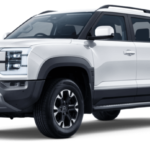 BYD Shark 6 Premium vs Performance Australia: Which One Should You Buy in 2026?
The Shark 6 is a plug-in hybrid, which means it can achieve very low petrol consumption during shorter journeys when sufficient battery charge is available.
However, towing a heavy caravan dramatically changes the equation.
Real-World BYD Shark 6 Towing Economy
Australian testing has recorded consumption of approximately 17.4L/100km while towing a trailer weighing around 2,400kg with the Shark 6 Premium.
Testing involving the Performance and a heavy caravan has also reported figures around 18L/100km.
These results are examples from particular test conditions rather than official towing economy ratings.
Actual consumption will vary depending on:
- Caravan weight.
- Aerodynamic drag.
- Road gradients.
- Driving speed.
- Weather conditions.
- Battery charge.
- Driving style.
- Tyre pressures.
Why Does the BYD Shark 6 Use More Fuel When Towing?
The main reason is the amount of energy required to move a heavy trailer.
When towing a caravan, the vehicle must overcome both increased rolling resistance and aerodynamic drag.
The additional energy demand means the petrol engine must work harder, particularly during extended highway driving.
Although the hybrid system can recover some energy during deceleration, this does not eliminate the extra energy required to tow a heavy load.
For Australian buyers planning long caravan journeys, real-world towing fuel consumption is far more relevant than the vehicle's official combined-cycle plug-in hybrid figure.
BYD Shark 6 Towing Range: How Far Can It Travel?
The BYD Shark 6 has a 60-litre petrol fuel tank.
When towing a heavy caravan, fuel consumption can rise substantially, reducing the distance available between fuel stops.
For example, using a consumption figure of 17.4L/100km:
60 litres ÷ 17.4 × 100 = approximately 345km.
This represents a theoretical petrol-only distance using the entire tank.
In practice, drivers should allow a fuel reserve and expect the usable distance between stops to be shorter.
Driving conditions can also increase consumption considerably.
For long-distance touring across Australia, especially in remote regions, we would recommend planning fuel stops carefully rather than relying on the Shark 6's official combined driving range.
Can the BYD Shark 6 Tow Without Charging the Battery?
Yes. The BYD Shark 6 can operate without being connected to an external charger before every journey.
Unlike a fully electric ute, the Shark 6 uses a petrol engine alongside its electric motors.
The engine can generate electricity and help maintain the battery's operating charge when necessary.
This means you can continue driving and towing even when public charging infrastructure is unavailable.
Does Battery Charge Affect Towing Performance?
Battery charge can influence how the hybrid system delivers power.
When the battery contains sufficient energy, the electric motors can provide substantial assistance during acceleration and demanding driving.
When battery charge becomes low, the petrol engine must provide more of the required energy.
The vehicle's energy management system automatically coordinates these functions.
For particularly demanding towing journeys, beginning with a suitably charged battery may provide additional flexibility.
However, owners should follow the vehicle's operating instructions rather than assuming that maintaining a full battery is always necessary.
BYD Shark 6 vs Ford Ranger, Toyota HiLux and Isuzu D-Max Towing Capacity
The Shark 6 competes in a market traditionally dominated by diesel-powered dual-cab utes.
For many Australian buyers, towing capability is a major factor in the purchasing decision.
Towing Capacity Comparison
| Vehicle | Maximum Braked Towing Capacity |
|---|---|
| BYD Shark 6 Premium | 2,500kg |
| BYD Shark 6 Performance | 3,500kg |
| Ford Ranger | Up to 3,500kg |
| Toyota HiLux | Up to 3,500kg |
| Isuzu D-Max | Up to 3,500kg |
| Mitsubishi Triton | Up to 3,500kg |
The figures for competing models vary depending on the individual variant and specification.
Is the Shark 6 Better Than a Diesel Ute for Towing?
The answer depends on how you intend to use your vehicle.
The Shark 6 has several important advantages.
Its electric motors provide smooth acceleration, while the plug-in hybrid system can reduce petrol consumption during shorter journeys when the vehicle is regularly charged.
It also offers a refined everyday driving experience.
However, diesel utes remain attractive for drivers who spend a large proportion of their time towing heavy loads over long distances.
Diesel vehicles may offer advantages in sustained towing fuel economy, range and established aftermarket support.
For someone who drives mainly around the city and occasionally tows a caravan, the Shark 6 could be a very appealing option.
For someone who tows a large trailer across remote Australian highways every week, a conventional diesel ute may still deserve serious consideration.
BYD Shark 6 Towing Advantages and Disadvantages
Before buying a Shark 6 primarily for towing, it's worth comparing its strengths and limitations.
Advantages
1. Excellent power and torque
The Shark 6 produces substantial combined power, helping it accelerate confidently with a trailer attached.
2. Smooth electric-assisted driving
Its electric motors provide responsive power delivery, particularly when pulling away from low speeds.
3. Increased towing capacity with the Performance
The 3,500kg rating makes the Performance competitive with many established Australian towing utes.
4. Everyday plug-in hybrid efficiency
Drivers who regularly charge their vehicle may benefit from reduced petrol consumption during short journeys without a trailer.
5. Comfortable driving experience
The Shark 6 offers a refined ride that can make everyday commuting more enjoyable.
Disadvantages
1. Premium towing capacity is limited to 2,500kg
This may not be sufficient for owners of heavier touring caravans.
2. Heavy towing increases petrol consumption
Real-world fuel economy when towing can be significantly higher than the official plug-in hybrid figures suggest.
3. Limited remaining payload at maximum towing weight
The Performance's available payload requires careful management when towing a large caravan.
4. Relatively small petrol tank
The 60-litre tank can mean more frequent fuel stops during demanding towing journeys.
5. Limited long-term towing history
Compared with established diesel competitors, the Shark 6 has a shorter history of intensive Australian towing use.
Which BYD Shark 6 Is Best for Towing?
Choosing between the Shark 6 Premium and Performance depends mainly on the weight of your trailer and how frequently you tow.
- Your caravan or trailer weighs less than 2,500kg when fully loaded.
- You mainly use the ute for everyday driving.
- You occasionally tow a boat or camper trailer.
- You value plug-in hybrid efficiency for shorter trips.
- You do not need the highest available towing rating.
For these buyers, the Premium can deliver an excellent combination of comfort, power and practicality.
Choose the BYD Shark 6 Performance If:
- You need to tow more than 2,500kg.
- You own a larger touring caravan.
- You want a 3,500kg braked towing rating.
- You regularly tow substantial loads.
- You prefer the more powerful hybrid powertrain.
The Performance is clearly the more capable towing variant.
Nevertheless, it is important to calculate the weight of your entire vehicle-and-trailer combination before purchasing.
Tips for Safely Towing with a BYD Shark 6
Good preparation is essential when towing with any vehicle.
1. Check Your Trailer's Loaded Weight
Never rely exclusively on the trailer's advertised empty weight.
Water, camping equipment, food and accessories can increase its mass significantly.
2. Confirm Towball Download
Ensure your trailer's actual towball download stays within the vehicle's permitted limit.
Incorrect loading can compromise towing stability.
3. Check the Vehicle's Payload
Passengers, luggage, aftermarket accessories and towball download all contribute to vehicle weight.
Make sure the loaded ute remains within its GVM and axle ratings.
4. Use Suitable Towing Equipment
The towbar, hitch, coupling and safety equipment must be correctly rated and installed.
Always follow the manufacturer's recommendations.
5. Allow Longer Braking Distances
Heavy trailers increase total vehicle mass and require more stopping distance.
Avoid sudden braking and maintain a safe following distance.
6. Plan Fuel Stops
Towing a large caravan can substantially reduce the Shark 6's fuel range.
This is particularly important when travelling through remote areas of Australia.
7. Monitor Battery Charge and Vehicle Performance
The Shark 6 automatically manages its hybrid system, but monitoring battery charge and overall vehicle behaviour can be helpful during demanding towing journeys.
Frequently Asked Questions About BYD Shark 6 Towing Capacity
1. Can the BYD Shark 6 tow 3,500kg?
Yes, the Australian BYD Shark 6 Performance has a maximum braked towing capacity of 3,500kg. However, the Premium is limited to 2,500kg. All applicable GVM, GCM, towball download and axle load restrictions must also be respected.
2. What is the BYD Shark 6 unbraked towing capacity?
The BYD Shark 6 has a maximum unbraked towing capacity of 750kg in Australia. This applies to the Premium and Performance variants, subject to the relevant vehicle and trailer restrictions.
3. Is the BYD Shark 6 good for towing a caravan?
Yes. The Shark 6 offers powerful acceleration and smooth hybrid performance, making it suitable for many caravan towing applications. The Premium works best with lighter caravans, while the Performance can accommodate heavier models. Buyers should also consider real-world towing fuel consumption and available payload.
4. How much fuel does the BYD Shark 6 use when towing?
Real-world Australian tests have reported consumption of approximately 17–18L/100km when towing substantial caravan or trailer loads. However, actual consumption varies with trailer weight, road conditions, driving speed, weather and battery charge.
5. What is the maximum towball weight of the BYD Shark 6?
The BYD Shark 6 Premium has a maximum towball download rating of 250kg, while the Performance increases this to 350kg. Towball download forms part of the load supported by the towing vehicle and must be included when calculating available payload.
Conclusion: Is the BYD Shark 6 Towing Capacity Good Enough?
The BYD Shark 6 is an interesting alternative to traditional diesel utes, offering impressive power, smooth acceleration and plug-in hybrid technology.
For buyers who occasionally tow lightweight trailers, boats or medium-sized caravans, the BYD Shark 6 Premium's 2,500kg braked towing capacity should be sufficient for many everyday requirements.
However, the BYD Shark 6 Performance's 3,500kg towing capacity makes it a much more appealing option for Australian drivers who need to tow larger caravans or heavier equipment.
The Performance also brings increased power, a higher towball download rating and improved capability for demanding towing applications.
That said, towing capacity should never be considered in isolation.
Payload, GVM, GCM, trailer weight, fuel consumption and real-world driving conditions all determine whether a vehicle is suitable for a particular towing setup.
If your priority is everyday comfort with occasional towing, the Premium offers a practical balance.
If you regularly tow loads above 2,500kg, the Performance is the more appropriate choice.
Ultimately, the BYD Shark 6 can be a capable towing vehicle in Australia, provided you choose the correct variant and remain within all the relevant weight limits.
This content may interest you!BYD Shark 6 Fuel Tank Size: How Big Is It and How Far Can You Drive?
Leave a Reply