
BYD Shark 6 Dynamic vs Premium Australia: Which One Should You Buy in 2026?

The BYD Shark 6 has quickly become one of Australia's most interesting dual-cab utes, combining impressive performance, plug-in hybrid technology and a surprisingly comfortable driving experience.
For 2026, BYD has expanded the Australian Shark 6 range with new variants, giving buyers more options than the original Premium model.
Two versions worth comparing are the BYD Shark 6 Dynamic Cab Chassis and the BYD Shark 6 Premium.
At first glance, the Dynamic looks like the more affordable alternative. It starts at $55,900 before on-road costs, while the Premium costs $57,900.
However, there's an important difference that changes the entire comparison.
The Dynamic is a cab-chassis model designed for buyers who want to install a customised tray or service body. The Premium comes with a conventional factory pickup tub and additional comfort features.
Both share the same powerful plug-in hybrid drivetrain, battery capacity and towing capability.
So, is the Dynamic actually better value, or is the Premium worth the extra money?
In this detailed comparison, we'll examine their specifications, prices, performance, interior equipment, practical capabilities and running costs to help Australian buyers choose the right Shark 6.
- BYD Shark 6 Dynamic vs Premium: Quick Comparison
- BYD Shark 6 Dynamic vs Premium Price in Australia
- BYD Shark 6 Dynamic vs Premium Engine and Performance
- BYD Shark 6 Dynamic vs Premium Fuel Economy
- BYD Shark 6 Dynamic vs Premium Battery and Electric Range
- BYD Shark 6 Dynamic vs Premium Interior Features
- BYD Shark 6 Dynamic vs Premium Exterior Design
- BYD Shark 6 Dynamic vs Premium Payload Capacity
- BYD Shark 6 Dynamic vs Premium Towing Capacity
- BYD Shark 6 Dynamic vs Premium Off-Road Capability
- BYD Shark 6 Dynamic vs Premium Safety Features
- BYD Shark 6 Dynamic vs Premium Running Costs
- BYD Shark 6 Dynamic vs Premium for Tradies
- BYD Shark 6 Dynamic vs Premium for Families
- Pros and Cons of the BYD Shark 6 Dynamic
- Pros and Cons of the BYD Shark 6 Premium
- Is the BYD Shark 6 Premium Worth the Extra Money?
- Which BYD Shark 6 Should You Buy in Australia?
- Final Verdict: BYD Shark 6 Dynamic vs Premium Australia
- Frequently Asked Questions
- 1. What is the main difference between the BYD Shark 6 Dynamic and Premium?
- 2. Is the BYD Shark 6 Dynamic cheaper than the Premium in Australia?
- 3. Do the BYD Shark 6 Dynamic and Premium have the same towing capacity?
- 4. Does the BYD Shark 6 Dynamic have the same electric range as the Premium?
- 5. Which is better for Australian families, the BYD Shark 6 Dynamic or Premium?
Let's start with the main specifications of both Australian models.
| Specification | Shark 6 Dynamic | Shark 6 Premium |
|---|---|---|
| Starting price (AUD) | $55,900 | $57,900 |
| Body style | Dual-cab cab chassis | Dual-cab pickup |
| Engine | 1.5L turbo petrol hybrid | 1.5L turbo petrol hybrid |
| Combined power | 321 kW | 321 kW |
| Combined torque | 650 Nm | 650 Nm |
| Drivetrain | Electric AWD | Electric AWD |
| Battery capacity | 29.6 kWh | 29.6 kWh |
| Electric range (NEDC) | 100 km | 100 km |
| 0–100 km/h | 5.7 seconds | 5.7 seconds |
| Braked towing capacity | 2,500 kg | 2,500 kg |
| Payload | 900 kg before tray fitment | 790 kg |
| Infotainment screen | 12.8 inches | 15.6 inches |
| Head-up display | No | Yes |
| Heated front seats | No | Yes |
| Ventilated front seats | No | Yes |
| Rear cargo area | Custom tray required | Factory pickup tub |
| Wheels | 18-inch alloys | 18-inch alloys |
| ANCAP safety rating | 5 stars | 5 stars |
Prices are Australian list prices before on-road costs, accessories and any applicable promotions. Specifications refer to the 2026 Australian models.
The most important takeaway is that both vehicles offer essentially identical powertrain performance.
Instead, the choice comes down to practicality, equipment and how you intend to use your ute.
Price is often the first consideration when comparing different versions of the same vehicle.
For 2026, BYD's Australian Shark 6 lineup includes three variants.
| BYD Shark 6 variant | Starting price before on-road costs |
|---|---|
| Dynamic Cab Chassis | $55,900 |
| Premium Pickup | $57,900 |
| Performance Pickup | $62,900 |
The Dynamic is officially $2,000 cheaper than the Premium.
That might make it appear to be the obvious option for budget-conscious buyers.
However, there's a catch.
The Dynamic Doesn't Include a Factory Pickup Tub
Unlike the Premium, the Shark 6 Dynamic is sold in cab-chassis configuration.
This means buyers must account for the cost of an appropriate rear tray or service body.
For example, an Australian review published in June 2026 reported the following costs for the factory-approved Ironman alloy tray:
- Heavy-duty alloy tray: approximately $5,000.
- Tray installation: approximately $1,155.
- Total additional cost: approximately $6,155.
Using those figures, the Dynamic would cost approximately $62,055 before on-road costs, compared with $57,900 for the Premium.
That makes the Dynamic roughly $4,155 more expensive once the example tray installation is included.
Accessory pricing and installation costs can change, so obtaining a current dealer quote is essential.
Which Model Offers Better Value?
For buyers who simply want a traditional dual-cab ute with a ready-to-use cargo tub, the Premium is the better-value option.
However, if you're planning to install a specialised tray, toolbox setup or work body, the Dynamic could be the smarter starting point.
Rather than paying for a factory tub that you intend to remove, you can build a setup designed around your actual requirements.
Price winner: Premium for general buyers; Dynamic for customised commercial applications.
One of the most interesting aspects of this comparison is that the Dynamic and Premium share the same plug-in hybrid powertrain.
Both feature BYD's Dual Mode Off-road (DMO) hybrid technology, which combines a turbocharged petrol engine with front and rear electric motors.
Engine Specifications
Both versions use:
- 1.5-litre turbocharged four-cylinder petrol engine.
- Front electric motor producing up to 170 kW.
- Rear electric motor producing up to 150 kW.
- Combined system output of 321 kW.
- Combined torque of 650 Nm.
- Electric all-wheel drive.
- Single-speed reduction transmission.
These are impressive numbers for a ute in this price category.
For comparison, many conventional diesel dual-cab utes produce considerably less peak power.
The electric motors also provide immediate torque delivery, helping the Shark 6 feel responsive during acceleration.
Acceleration Comparison
Both Shark 6 variants have a claimed acceleration time of:
0–100 km/h: 5.7 seconds
That's remarkably quick for a vehicle weighing more than 2.5 tonnes.
Whether you're merging onto a motorway, overtaking on a country road or carrying passengers, both variants offer strong performance.
The Dynamic's lower unladen weight doesn't translate into a different official acceleration figure.
No.
Despite its higher equipment level, the Shark 6 Premium does not have additional engine power or torque.
If performance is your main priority, there's no meaningful reason to choose the Premium over the Dynamic.
However, buyers wanting greater towing capacity and increased combined power should also consider the Shark 6 Performance, which uses a different 2.0-litre hybrid drivetrain.
Performance winner: Tie.
Fuel efficiency is a major selling point of the Shark 6, especially for drivers looking to reduce petrol consumption without switching to a fully electric vehicle.
Both versions use the same hybrid system, so their official fuel consumption figures are identical.
| Fuel economy specification | Dynamic | Premium |
|---|---|---|
| Claimed consumption with charged battery | 2.0 L/100 km | 2.0 L/100 km |
| Claimed consumption at low battery charge | 7.9 L/100 km | 7.9 L/100 km |
| Fuel tank capacity | 60 litres | 60 litres |
| Claimed combined driving range | 800 km | 800 km |
The official figures require some explanation.
Driving With a Charged Battery
When the battery has sufficient charge, both vehicles can use electric power for a substantial portion of everyday driving.
This content may interest you!
This can reduce petrol consumption considerably, particularly for drivers who:
- Commute relatively short distances.
- Regularly recharge at home.
- Spend time driving in urban traffic.
- Make frequent local trips.
- Avoid consistently carrying heavy loads.
The quoted 2.0 L/100 km is a laboratory-cycle result that reflects the contribution of electricity. It should not be interpreted as the fuel consumption you'll always achieve.
Driving With a Depleted Battery
When the battery's state of charge is low, the petrol engine has to work more frequently.
Under those conditions, both variants have an official figure of approximately 7.9 L/100 km.
Actual consumption can be higher depending on speed, terrain, towing, load and driving conditions.
For Australian drivers regularly travelling long highway distances without charging, the fuel-saving advantage may be less dramatic than the headline figure suggests.
Fuel economy winner: Tie.
Both Shark 6 variants use BYD's Blade Battery technology.
The battery has a capacity of 29.6 kWh and uses lithium iron phosphate (LFP) chemistry.
LFP batteries are known for their durability characteristics and thermal stability, although actual long-term battery performance depends on usage and operating conditions.
Electric Driving Range
Both models offer a claimed 100 km electric range under the NEDC test cycle.
That potentially makes the Shark 6 suitable for drivers who want to complete many everyday trips using electric power.
For example, someone with a 40 km daily commute could potentially travel to work and return home without needing to use much petrol, provided the battery is sufficiently charged.
However, real-world electric range will vary depending on temperature, driving speed, elevation, accessories and vehicle load.
The NEDC figure should therefore be treated as a comparison benchmark rather than a guaranteed everyday range.
Charging Specifications
Both models support:
| Charging specification | Dynamic | Premium |
|---|---|---|
| Battery capacity | 29.6 kWh | 29.6 kWh |
| Maximum AC charging | 7 kW | 7 kW |
| Maximum DC charging | 55 kW | 55 kW |
| Battery chemistry | LFP | LFP |
Home charging is particularly attractive for Shark 6 owners with regular commuting patterns.
Those who can recharge overnight may be able to use electric driving for much of their weekly travel.
Neither version offers a meaningful charging advantage over the other.
Battery and charging winner: Tie.
The interior is where the Premium begins to justify its higher equipment level.
Although the Dynamic is positioned as the work-focused model, it still provides a modern cabin with plenty of technology.
Both versions offer comfortable seating for five occupants, a digital instrument display, smartphone connectivity and numerous convenience features.
However, the Premium includes several desirable upgrades.
BYD Shark 6 Dynamic Interior
The Dynamic includes features such as:
- 12.8-inch infotainment touchscreen.
- 10.25-inch digital instrument cluster.
- Wireless Apple CarPlay and Android Auto.
- Wireless smartphone charging.
- Satellite navigation.
- Dynaudio audio system.
- Dual-zone climate control.
- Power-adjustable front seats.
- Synthetic leather-style upholstery.
- Keyless entry and push-button start.
For a work-oriented ute, this is a generous equipment list.
The Dynamic doesn't feel like a stripped-out commercial vehicle.
In fact, its cabin technology would be competitive with many higher-priced conventional utes.
The Premium introduces several upgrades designed to improve comfort and convenience.
Notable additions include:
- Larger 15.6-inch infotainment touchscreen.
- Head-up display.
- Heated front seats.
- Ventilated front seats.
- Additional driver's seat lumbar adjustment.
- Leather-wrapped steering wheel.
- Rain-sensing windscreen wipers.
- Rear privacy glass.
- Additional cabin lighting.
These features make the Premium particularly attractive for everyday personal use.
Are Heated and Ventilated Seats Worth It?
For Australian buyers, ventilated seats can be especially useful during hot summers.
Whether you're driving in Brisbane, Perth, Adelaide or regional Queensland, seat ventilation can improve comfort on particularly warm days.
Heated seats are also useful during colder mornings in places such as Melbourne, Canberra and Tasmania.
The larger infotainment display and head-up display provide further convenience for people who spend plenty of time behind the wheel.
Interior winner: Premium.
The most obvious visual difference between these two vehicles is the rear body configuration.
Dynamic Cab Chassis
The Dynamic features a conventional dual-cab passenger compartment combined with an open rear chassis for tray installation.
This makes it suitable for custom work applications.
Depending on the chosen body, owners can configure it with:
- Heavy-duty alloy trays.
- Toolboxes and storage compartments.
- Service bodies.
- Trade-specific equipment.
- Camping and touring accessories.
- Custom load-carrying arrangements.
The benefit is flexibility.
Rather than adapting your work requirements to a conventional pickup tub, you can select a rear body that suits your needs.
The Premium comes with a factory-fitted pickup tub.
Its cargo area measures approximately:
| Cargo tub measurement | Premium |
|---|---|
| Length | 1,520 mm |
| Width | 1,500 mm |
| Depth | 517 mm |
| Capacity | 1,200 litres |
This configuration works well for everyday use, including transporting sports equipment, camping gear, luggage, home improvement supplies and other recreational items.
For most family buyers, the Premium requires less additional spending to become practical.
Exterior practicality winner: Dynamic for customisation, Premium for convenience.
Payload is particularly important for Australian ute buyers who regularly carry tools, construction materials, camping equipment or heavy accessories.
This content may interest you!
This is also one area where the two models require careful comparison.
The Dynamic has a quoted maximum payload of approximately 900 kg before a tray is installed.
However, that figure doesn't represent what you can realistically carry after completing the vehicle.
For example, when fitted with the factory-approved Ironman alloy tray weighing approximately 150 kg, the usable payload falls to around 750 kg.
Adding accessories such as toolboxes, roof racks and recovery equipment reduces the remaining capacity further.
The Shark 6 Premium has a quoted payload of approximately 790 kg.
That means a Dynamic fitted with the example Ironman tray actually carries less payload than the factory Premium pickup.
| Payload comparison | Capacity |
|---|---|
| Dynamic without tray | 900 kg |
| Dynamic with 150 kg tray | 750 kg |
| Premium pickup | 790 kg |
These figures highlight why buyers shouldn't automatically assume that a cab-chassis ute has a higher usable payload.
The final configuration matters.
Remember that passengers, accessories, luggage and tow-ball download all contribute to the vehicle's load.
Payload winner: Premium against the Dynamic with the specified Ironman tray. A lighter Dynamic body could change the result.
Both models have identical official towing limits.
| Towing specification | Dynamic | Premium |
|---|---|---|
| Maximum braked towing capacity | 2,500 kg | 2,500 kg |
| Maximum unbraked towing capacity | 750 kg | 750 kg |
| AWD system | Yes | Yes |
A braked towing capacity of 2,500 kg is sufficient for many recreational and light commercial applications.
Both vehicles may be suitable for towing:
- Small to medium caravans.
- Box trailers.
- Boats and jet skis.
- Camping trailers.
- Light commercial equipment trailers.
However, owners must consider gross vehicle mass, gross combination mass, tow-ball download and remaining payload rather than relying only on the headline towing figure.
Are These Good Heavy-Duty Towing Vehicles?
The Dynamic and Premium aren't necessarily the best options for buyers who regularly tow very heavy caravans.
Traditional diesel competitors often offer a 3,500 kg braked towing rating.
BYD also offers the Shark 6 Performance with a 3,500 kg rating.
If your caravan or work trailer approaches 3,000 kg, neither the Dynamic nor the Premium would be appropriate based on their rated limits.
Towing winner: Tie.
The Shark 6 is designed to combine on-road comfort with useful off-road capability.
Both variants use electric all-wheel drive and independent suspension.
They also feature driving modes for different surfaces, including mud, sand and snow.
Ground Clearance and Suspension
Both versions have a quoted ground clearance of approximately 230 mm in their standard specifications.
The Shark 6 uses double-wishbone independent suspension at both the front and rear.
This arrangement contributes to its comfortable driving experience on sealed roads and uneven surfaces.
It also helps differentiate the vehicle from conventional leaf-spring dual-cab utes.
Is the Dynamic Better Off-Road?
Not automatically.
Although the Dynamic's cab-chassis design allows greater customisation, that doesn't necessarily make it more capable off-road.
The installed tray, rear overhang, tyre choice, accessories and overall weight distribution can influence its performance.
Neither the Dynamic nor Premium has a traditional low-range transfer case or mechanical locking differentials.
Instead, they rely on electronic traction management and electric motor control.
Both are suitable for many gravel roads, touring routes and moderate off-road situations, but serious rock crawling or highly demanding recovery conditions may favour purpose-built alternatives.
Water Wading Considerations
Both models have a quoted standard wading depth of up to 700 mm.
However, the Dynamic's effective wading capability depends on the rear body fitted.
For example, BYD's specifications indicate that fitting the genuine heavy-duty alloy tray can reduce the Dynamic's quoted wading depth to approximately 570 mm.
This is an important consideration for buyers planning water crossings.
Off-road winner: Tie in standard capability, with configuration-dependent differences.
Safety is a strong point of the Shark 6 range.
Both the Dynamic and Premium are covered by the five-star ANCAP safety rating applicable to the Shark 6.
Standard safety equipment includes:
- Seven airbags.
- Autonomous emergency braking.
- Adaptive cruise control.
- Lane-keeping assistance.
- Blind-spot monitoring.
- Rear cross-traffic alert.
- Driver monitoring.
- Front and rear parking sensors.
- Surround-view camera system.
- Child presence detection.
- Hill descent control.
The Premium adds a head-up display, which can help the driver monitor important information without looking down at the instrument cluster.
However, both models share a comprehensive package of driver-assistance technology.
Drivers should remember that these systems are assistance features rather than substitutes for attentive driving.
Safety winner: Tie for core safety equipment, with a convenience advantage for the Premium.
Because both vehicles share their main powertrain components, their routine running costs should be broadly similar under comparable conditions.
Nevertheless, there are some important factors to consider.
Servicing Costs
The Australian Shark 6 service interval is generally every 12 months or 20,000 km, whichever comes first.
This content may interest you!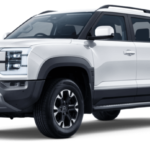 BYD Shark 6 Models Australia 2026: Complete Guide to Every Variant
BYD offers capped-price servicing for the range.
The published schedule reported in April 2026 included a total of approximately $2,489 for the first five years or 100,000 km of scheduled servicing.
Both the Dynamic and Premium use the same basic maintenance schedule.
As always, check the current schedule, operating-condition requirements and pricing before purchasing.
Insurance Costs
Insurance premiums can vary significantly based on:
- Driver age and experience.
- Residential postcode.
- Annual kilometres.
- Vehicle usage.
- Claims history.
- Insurance excess.
- Vehicle modifications and accessories.
A Dynamic used commercially with an expensive service body may require different insurance arrangements from a Premium used primarily as a family vehicle.
It's especially important to confirm that any custom tray, toolbox installation or other modification is covered by the policy.
Warranty Coverage
Both models benefit from BYD's Australian warranty provisions.
| Warranty | Coverage |
|---|---|
| Vehicle warranty | 6 years / 150,000 km |
| High-voltage battery warranty | 8 years / 160,000 km |
Coverage is subject to the applicable warranty conditions and exclusions.
Running cost winner: Tie for routine servicing, although insurance and accessories can make total ownership costs different.
For tradespeople, the Dynamic has a clear advantage in one important area: customisation.
A builder, electrician, plumber or maintenance contractor may benefit significantly from installing a specialised tray or service body.
Why Choose the Dynamic for Work?
The Dynamic makes sense if you need:
- Dedicated storage for tools.
- Custom lockable toolboxes.
- A tray designed for transporting specific equipment.
- Easy access to materials from different sides.
- A vehicle configured for regular commercial use.
However, it's essential to calculate the full purchase and fitment price.
The Dynamic's lower starting price doesn't guarantee lower total cost.
Absolutely.
The Premium's conventional tub may be sufficient for buyers who carry smaller tools, materials and general equipment.
For someone who only occasionally needs to transport work-related items, the Premium may be more practical and economical.
Our preference for professional use would depend entirely on the rear-body requirements.
For families, the Premium is the more attractive choice.
Both models offer five seats, spacious passenger accommodation and strong performance.
However, the Premium provides greater everyday comfort and convenience.
Its main advantages include the larger touchscreen, heated and ventilated front seats, head-up display and factory-fitted cargo tub.
These features can make a noticeable difference during school runs, weekend trips, holiday journeys and daily commuting.
The Dynamic remains a good option for families who need a custom touring or camping setup, but its commercial-focused configuration is unnecessary for many private buyers.
Family-use winner: Premium.
Pros and Cons of the BYD Shark 6 Dynamic
Advantages
- Lower initial vehicle list price.
- Flexible cab-chassis configuration.
- Suitable for specialised work bodies.
- Powerful 321 kW hybrid system.
- Up to 100 km claimed NEDC electric range.
- Strong standard safety equipment.
- Spacious five-seat cabin.
- Comfortable independent suspension.
Disadvantages
- Additional rear tray or body costs.
- Fewer luxury features than Premium.
- Smaller 12.8-inch infotainment screen.
- No heated or ventilated front seats.
- No head-up display.
- Payload depends heavily on the rear body fitted.
- Maximum braked towing capacity limited to 2,500 kg.
Advantages
- Factory pickup tub included.
- Excellent overall equipment for the price.
- Larger 15.6-inch touchscreen.
- Head-up display.
- Heated and ventilated front seats.
- Additional driver comfort features.
- Same powerful drivetrain as the Dynamic.
- Good all-round family and recreational versatility.
Disadvantages
- Higher initial list price.
- Less flexibility for specialised rear-body conversions.
- Payload may be insufficient for some heavy-duty users.
- No conventional low-range transfer case.
- Maximum braked towing capacity limited to 2,500 kg.
- Fuel consumption can increase substantially when the battery is depleted or the vehicle is heavily loaded.
For most Australian buyers, yes.
The Premium only costs $2,000 more at the advertised vehicle list-price level, yet it includes additional comfort features and a complete factory pickup body.
That's a compelling proposition.
The Dynamic makes more sense when you genuinely need a customised rear configuration.
For example, if you're planning to install an expensive service body for your business, the Dynamic's cab-chassis layout could save you from removing and replacing a factory tub.
But if you want a Shark 6 for commuting, weekend adventures, family travel and occasional load carrying, we believe the Premium represents the stronger overall package.
Which BYD Shark 6 Should You Buy in Australia?
The right choice depends on how you plan to use your ute.
| Buyer type | Recommended model |
|---|---|
| Everyday family driving | Premium |
| Business with custom service body | Dynamic |
| Weekend camping | Premium |
| Custom touring conversion | Dynamic |
| Best standard comfort features | Premium |
| Standard pickup cargo use | Premium |
| Custom tool storage | Dynamic |
| Lowest initial vehicle list price | Dynamic |
| Best general value | Premium |
The Dynamic isn't simply a cheaper version of the Premium.
It's a different body configuration designed for a more specific type of buyer.
Understanding that distinction will help you avoid choosing the wrong Shark 6 for your requirements.
After comparing the 2026 BYD Shark 6 Dynamic and Premium, our overall recommendation is clear.
The BYD Shark 6 Premium is the better choice for most Australian buyers.
It offers the same 321 kW plug-in hybrid drivetrain, 29.6 kWh battery, claimed 100 km NEDC electric range and 2,500 kg towing capability as the Dynamic.
However, it adds more premium equipment and includes a factory pickup tub, making it particularly attractive for families and recreational users.
The Dynamic's greatest advantage isn't its lower starting price. It's the flexibility of the cab-chassis design.
For tradespeople, fleet operators and buyers planning specialised conversions, that flexibility may justify the additional cost of installing a tray or service body.
Ultimately, we would choose the Shark 6 Premium for everyday use and the Dynamic for purpose-built work applications.
Both deliver the technology and performance that have made BYD's plug-in hybrid ute such a distinctive option in the Australian market.
Frequently Asked Questions
The biggest difference is the body configuration. The Dynamic is a dual-cab cab-chassis model designed for installing a custom rear tray or body, while the Premium comes with a factory pickup tub and additional comfort features. Both share the same 321 kW hybrid drivetrain.
The Dynamic has a lower advertised starting price of $55,900 before on-road costs, compared with $57,900 for the Premium. However, the Dynamic requires a rear tray or body, which can make its completed purchase price higher than the Premium.
Yes. Both models have a maximum braked towing capacity of 2,500 kg. Buyers requiring a higher towing rating should consider the Shark 6 Performance, which is rated to tow up to 3,500 kg braked.
Yes. Both use a 29.6 kWh Blade Battery and have a claimed electric driving range of up to 100 km under the NEDC test cycle. Actual range depends on driving conditions, temperature, speed and vehicle load.
This content may interest you!BYD Shark 6 Weight: Kerb Weight, GVM, Payload and Towing ExplainedThe BYD Shark 6 Premium is generally the better family vehicle because it includes a factory cargo tub, larger touchscreen, head-up display and heated and ventilated front seats. The Dynamic is more suitable for buyers who specifically need a customised cab-chassis setup.
Leave a Reply