
BYD Shark 6 Off-Road Capability: How Good Is This Hybrid Ute in Australia?

The BYD Shark 6 has attracted plenty of attention in Australia, and for good reason. This plug-in hybrid ute combines powerful electric motors, a turbocharged petrol engine, all-wheel drive and a comfortable interior in a package designed to compete with traditional diesel utes.
However, one important question remains: how good is the BYD Shark 6 off-road?
Australian buyers expect their utes to handle much more than suburban streets. Whether we are travelling along gravel roads, exploring national parks, driving across sandy beaches or tackling muddy tracks, off-road capability can make a significant difference.
The BYD Shark 6 promises impressive performance thanks to its Dual Mode Off-road (DMO) hybrid technology, substantial torque and intelligent traction management.
But there is a catch.
Unlike conventional four-wheel-drive vehicles such as the Toyota HiLux and Ford Ranger, the Shark 6 does not feature traditional low-range gearing or mechanical differential locks.
Instead, it relies heavily on electric motors and electronic traction systems.
In this guide, we'll explore the BYD Shark 6 off-road capability in Australian conditions, including its ground clearance, water-crossing ability, performance on sand and mud, suspension design, limitations and the improvements introduced with the 2026 Performance model.
- Is the BYD Shark 6 Good for Off-Road Driving?
- BYD Shark 6 Off-Road Specifications
- BYD Shark 6 AWD System: How Does It Work?
- BYD Shark 6 Ground Clearance: Is 230 mm Enough?
- BYD Shark 6 Off-Road Performance on Gravel Roads
- BYD Shark 6 Sand Driving Capability
- BYD Shark 6 Mud Driving Performance
- BYD Shark 6 Water Wading Depth
- 700 mm
- BYD Shark 6 Suspension: Is It Suitable for Off-Roading?
- Does the BYD Shark 6 Have Low-Range Gearing?
- BYD Shark 6 Off-Road Driving Modes Explained
- BYD Shark 6 Premium vs Performance: Which Is Better Off-Road?
- BYD Shark 6 vs Ford Ranger Off-Road
- BYD Shark 6 vs Toyota HiLux Off-Road
- Can the BYD Shark 6 Handle Australian Outback Conditions?
- Best Off-Road Upgrades for the BYD Shark 6
- Advantages and Disadvantages of the BYD Shark 6 Off-Road
- Who Should Buy the BYD Shark 6 for Off-Road Driving?
- Final Verdict: Is the BYD Shark 6 a Capable Off-Road Ute?
- Frequently Asked Questions About BYD Shark 6 Off-Road Capability
Is the BYD Shark 6 Good for Off-Road Driving?
Yes, the BYD Shark 6 is capable of light to moderate off-road driving, but it is not the ideal choice for extreme rock crawling or highly technical 4WD tracks.
Its strengths include strong acceleration, smooth electric torque delivery, electronic all-wheel drive and comfortable handling over relatively even terrain.
For Australians who regularly travel on unsealed country roads, visit campsites or explore moderate bush tracks, the Shark 6 can be a practical option.
However, serious four-wheel-drive enthusiasts may find its limitations frustrating.
The lack of traditional low-range gearing, limited suspension articulation and relatively modest departure and ramp-over angles make certain obstacles more difficult.
Here is our general assessment of the Shark 6's suitability for different conditions.
| Off-road terrain | Capability | Our assessment |
|---|---|---|
| Gravel roads | Very good | Well suited to touring |
| Maintained dirt tracks | Very good | Comfortable and capable |
| Moderate bush tracks | Good | Suitable with careful driving |
| Firm beach sand | Good | Tyre pressure and conditions matter |
| Deep soft sand | Variable | High weight and traction can be challenging |
| Light mud | Good | Terrain modes help |
| Deep mud | Limited | Risk of losing traction |
| Rocky tracks | Moderate | Ground clearance requires attention |
| Extreme rock crawling | Poor | Not its intended purpose |
| Water crossings | Conditional | Rated depth does not guarantee safety |
The important thing to understand is that the Shark 6 approaches off-road driving differently from a traditional diesel 4WD.
Its hybrid system offers advantages in certain situations, but electronic traction management cannot completely replace mechanical off-road hardware.
BYD Shark 6 Off-Road Specifications
Before exploring how the Shark 6 performs on different surfaces, let's examine its most important technical specifications.
The following figures apply to the Australian dual-cab models.
| Specification | BYD Shark 6 |
|---|---|
| Drive system | Electronic all-wheel drive |
| Platform | Dual Mode Off-road (DMO) |
| Ground clearance | 230 mm (unladen) |
| Approach angle | 31° |
| Departure angle | 19.3° |
| Ramp-over angle | 17° |
| Maximum rated wading depth | 700 mm |
| Front suspension | Independent double wishbone |
| Rear suspension | Independent double wishbone |
| Standard tyre size | 265/65 R18 |
| Wheelbase | 3,260 mm |
| Low-range transfer case | No |
| Mechanical differential locks | No |
| Hill descent control | Yes |
| Terrain driving modes | Yes |
These specifications suggest that the Shark 6 has respectable all-terrain potential.
Its 230 mm ground clearance is useful for avoiding smaller rocks and obstacles, while the 31-degree approach angle helps when climbing steep entrances or approaching uneven surfaces.
However, the 17-degree ramp-over angle and 19.3-degree departure angle are relatively restrictive for a ute designed to tackle Australian off-road conditions.
That means drivers need to be especially careful when crossing steep crests, large ruts or obstacles that could contact the underside of the vehicle.
BYD Shark 6 AWD System: How Does It Work?
One of the most interesting features of the Shark 6 is its unconventional drivetrain.
Rather than using a traditional four-wheel-drive system with a transfer case and mechanical connection between the front and rear axles, BYD employs an electronically controlled AWD arrangement.
Dual Mode Off-Road Hybrid Technology
The Shark 6 uses BYD's Dual Mode Off-road technology, which combines a turbocharged petrol engine with electric motors driving the front and rear axles.
In the Premium model, the system produces:
- Combined power: 321 kW
- Combined torque: 650 Nm
- Petrol engine: 1.5-litre turbocharged four-cylinder
- Battery: Approximately 29.6 kWh BYD Blade Battery
- Drive configuration: Electric all-wheel drive
The 2026 Shark 6 Performance increases combined output to 350 kW and 700 Nm through an upgraded 2.0-litre turbocharged hybrid powertrain.
For off-road driving, the most important advantage is how quickly the electric motors can respond.
Unlike conventional petrol or diesel engines, electric motors can deliver strong torque from very low speeds.
This makes acceleration smooth and potentially helpful when driving uphill, navigating loose gravel or moving across uneven surfaces.
Is the BYD Shark 6 a Real 4WD?
Technically, the BYD Shark 6 can drive both its front and rear wheels, making it an all-wheel-drive ute.
However, it operates differently from traditional selectable four-wheel-drive systems.
A conventional 4WD often offers mechanical low-range gearing and differential locks that provide predictable traction when crossing difficult terrain.
The Shark 6 instead uses software and electronically controlled power distribution.
That approach works well in many ordinary off-road situations.
However, when one or more wheels lose contact with the ground, the system must rely on its traction-control programming to recover grip.
In particularly demanding situations, this can be less effective than mechanical differential locks.
BYD Shark 6 Ground Clearance: Is 230 mm Enough?
The BYD Shark 6 has an officially listed ground clearance of 230 mm when unladen.
For everyday Australian driving, this is a useful amount of clearance.
It helps the ute negotiate:
- Rough gravel roads
- Moderate ruts
- Uneven campsite entrances
- Smaller rocks
- Shallow muddy tracks
- Unsealed farm access roads
However, ground clearance alone does not determine how capable a vehicle is off-road.
The location of the lowest components, wheelbase length and suspension movement are equally important.
Approach, Departure and Ramp-Over Angles
The Shark 6 has a relatively strong 31-degree approach angle.
This helps the front of the vehicle clear obstacles when beginning a steep climb.
The departure angle is less impressive at 19.3 degrees, increasing the possibility of the rear bumper contacting the ground when leaving steep obstacles.
The 17-degree ramp-over angle is another limitation.
Because the Shark 6 has a long wheelbase, it can be vulnerable to scraping its underside when crossing sharp crests.
This is particularly relevant because the hybrid battery is integrated into the vehicle's chassis structure.
Although the vehicle includes underbody protection, drivers should avoid treating the underside as something that can safely absorb repeated heavy impacts.
BYD Shark 6 Off-Road Performance on Gravel Roads
Gravel roads are one of the environments where the Shark 6 makes the most sense.
Australia has thousands of kilometres of unsealed roads, particularly in regional areas where a comfortable ute can be extremely useful.
The Shark 6's AWD system can provide reassuring traction when accelerating on loose surfaces.
Its independent suspension also contributes to more car-like handling compared with traditional leaf-sprung rear suspension arrangements.
Advantages on Gravel
The Shark 6 offers several advantages when travelling on maintained gravel roads.
Smooth electric torque: The hybrid system delivers power without the same gear-changing interruptions associated with conventional transmissions.
All-wheel-drive traction: Electronic power distribution helps the vehicle respond to changing grip levels.
Comfortable cabin: The spacious interior makes longer regional journeys more pleasant.
Responsive acceleration: Overtaking or accelerating on suitable surfaces feels effortless.
However, Australian testing has also highlighted that the Shark 6's standard suspension can feel unsettled over certain corrugated roads.
For extended outback travel, appropriate tyre pressures, reduced speeds and careful load management are particularly important.
BYD Shark 6 Sand Driving Capability
Can the BYD Shark 6 drive on sand?
Yes, the Shark 6 can handle sandy tracks and some beach-driving conditions, although deep, soft sand requires caution.
The combination of electric torque and all-wheel drive can be beneficial when moving over loose surfaces.
A dedicated Sand driving mode also adjusts the vehicle's behaviour to suit lower-traction conditions.
How Does the Shark 6 Perform on the Beach?
On relatively firm sand, the Shark 6 can maintain momentum effectively.
Its hybrid system provides responsive acceleration, helping the vehicle move through sections where additional traction is needed.
However, the Shark 6 is a heavy vehicle.
The Premium model weighs approximately 2,710 kg, while the Performance version weighs around 2,775 kg.
That weight can become a disadvantage in deep sand, especially when the vehicle loses momentum.
Heavier vehicles may sink more readily into soft surfaces, increasing the effort required to escape.
Tips for Driving the BYD Shark 6 on Sand
If we plan to take the Shark 6 onto an Australian beach or sandy track, a few precautions are essential.
- Activate the appropriate Sand driving mode.
- Adjust tyre pressures according to the manufacturer's recommendations and the terrain.
- Maintain controlled, steady momentum where safe.
- Avoid sudden steering or unnecessary aggressive acceleration.
- Carry suitable recovery equipment and know the vehicle's approved recovery points.
- Check tidal conditions and local beach access restrictions before travelling.
- Reinflate the tyres to road pressures before returning to normal driving.
We should also remember that not every beach permits vehicle access.
For extremely soft sand or remote coastal expeditions, a traditional low-range 4WD with suitable tyres and recovery equipment may provide greater confidence.
BYD Shark 6 Mud Driving Performance
Mud is another environment where the Shark 6's electronic traction system becomes important.
The ute includes a Mud driving mode intended to improve vehicle response on slippery surfaces.
In relatively shallow mud, the system can distribute torque between the axles and help maintain forward movement.
However, deep mud creates more difficult conditions.
Why Deep Mud Can Be Challenging
The main concerns include limited suspension articulation, vehicle weight and the absence of mechanical differential locks.
If the wheels begin spinning independently without sufficient grip, the software must intervene to redistribute power and control wheelspin.
Depending on the conditions and software calibration, the system may struggle to maintain progress.
Earlier Australian off-road tests reported situations where the original Shark 6 experienced traction difficulties on slippery and uneven climbs.
BYD has subsequently introduced improvements to its electronic off-road control systems, most notably Crawl Mode.
Even with these improvements, we would avoid deliberately taking the Shark 6 into extremely deep mud without suitable preparation and recovery support.
BYD Shark 6 Water Wading Depth
OFFICIAL RATED WADING DEPTH
700 mm
For the standard dual-cab configuration, subject to manufacturer guidance and actual conditions.
The BYD Shark 6 has a maximum rated wading depth of 700 mm.
This is a respectable figure for a modern dual-cab ute, especially one equipped with a high-voltage hybrid electrical system.
The Blade Battery and associated high-voltage components are designed with environmental protection in mind.
However, that does not mean the vehicle is waterproof or that crossing water approaching 700 mm is automatically safe.
Can the BYD Shark 6 Cross Rivers?
The Shark 6 can negotiate suitable water crossings within its rated limits, but the actual conditions matter enormously.
Flowing water, submerged obstacles, soft riverbeds and sudden changes in depth can make crossings dangerous.
A published wading-depth figure also does not account for every possible accessory or vehicle configuration.
For example, BYD's Australian specifications indicate that the Dynamic Cab Chassis fitted with its genuine heavy-duty alloy tray has an approximately 570 mm wading-depth rating rather than the standard 700 mm figure.
Before entering water, we should consider the manufacturer's instructions and avoid crossing if the depth or stability of the surface is uncertain.
Water crossings should never be attempted where there is significant current or a risk of flooding.
After a substantial crossing, inspecting the vehicle and following BYD's recommended checks is sensible.
BYD Shark 6 Suspension: Is It Suitable for Off-Roading?
One of the Shark 6's biggest differences from conventional dual-cab utes is its suspension design.
Instead of a traditional live rear axle with leaf springs, BYD uses independent double-wishbone suspension at both ends.
This arrangement provides several advantages.
Advantages of Independent Suspension
Independent suspension allows the wheels on the same axle to move with less direct influence on each other.
This can improve comfort and handling, particularly on ordinary roads and moderate off-road terrain.
For a vehicle used as both a family car and a weekend adventure ute, the design makes sense.
The main benefits include:
- More car-like everyday handling.
- Improved ride comfort on many surfaces.
- Responsive steering behaviour.
- Good stability on maintained unsealed roads.
Disadvantages on Rough Terrain
The biggest drawback involves wheel articulation.
Wheel articulation describes how effectively the suspension can keep all four tyres in contact with uneven terrain.
Traditional live-axle four-wheel drives often offer greater articulation in demanding off-road situations.
When the Shark 6 encounters deep diagonal ruts, one or more wheels can lift off the ground.
Once this happens, the electronic traction-control system needs to manage the loss of grip.
This can make progress more difficult on technical climbs or heavily rutted tracks.
Does the BYD Shark 6 Have Low-Range Gearing?
No. The BYD Shark 6 does not have a conventional low-range transfer case.
Traditional low-range gearing multiplies torque at the wheels and allows drivers to maintain precise control at extremely low speeds.
This is particularly valuable when rock crawling, descending steep slopes or recovering a heavily loaded vehicle.
The Shark 6 approaches these challenges differently.
Its electric motors provide strong low-speed torque without a conventional multi-speed gearbox.
However, electric torque alone does not guarantee sufficient traction.
The vehicle still needs its tyres to maintain contact with the ground and its electronic systems to respond effectively.
Does the Shark 6 Have Differential Locks?
The Australian Shark 6 does not feature conventional mechanical locking differentials.
Instead, it uses electronic traction-control systems to manage wheelspin.
This distinction matters most in highly technical terrain, where locking differentials can help maintain drive when some wheels have very little traction.
For moderate touring, the Shark 6's electronic systems can be sufficient.
For demanding rocky tracks, traditional 4WD hardware remains an important advantage.
BYD Shark 6 Off-Road Driving Modes Explained
The Shark 6 includes several selectable driving modes designed for different conditions.
Depending on the model and software version, these include normal road-driving settings and specialised off-road modes.
| Driving mode | Intended use |
|---|---|
| Normal | Everyday driving |
| Eco | Efficiency-focused driving |
| Sport | Stronger acceleration response |
| Mud | Slippery and muddy terrain |
| Sand | Loose sandy surfaces |
| Snow | Low-grip snowy conditions |
| Mountain | Slopes and uneven terrain |
| Crawl | Low-speed technical off-roading on equipped vehicles |
The mode names and their availability can vary with model year and software version.
What Does Mountain Mode Do?
Mountain Mode is intended to help the Shark 6 negotiate uneven terrain and slopes.
The system adjusts power delivery and traction management to improve control when conditions become more demanding.
It can be particularly useful on moderate climbs where the vehicle needs to distribute torque effectively.
However, Mountain Mode does not create a mechanical connection between the front and rear axles.
What Is BYD Shark 6 Crawl Mode?
Crawl Mode is an important addition introduced with the 2026 Shark 6 Performance.
It uses revised software to manage torque and wheelspin during low-speed technical driving.
The system is intended to improve performance over rocks, deep ruts and steep climbs.
Australian road tests have found that Crawl Mode improves traction compared with the earlier calibration, although it does not completely overcome the vehicle's hardware limitations.
BYD also announced plans to introduce Crawl Mode to Premium and Dynamic models through software updates.
Owners should check their vehicle's installed software and available updates rather than assume that every Shark 6 already has this feature.
The Australian Shark 6 range expanded in 2026, introducing a more powerful Performance version alongside the existing Premium and the Dynamic Cab Chassis.
For buyers interested in off-roading, the most relevant comparison is between Premium and Performance.
| Feature | Shark 6 Premium | Shark 6 Performance |
|---|---|---|
| Petrol engine | 1.5L turbo | 2.0L turbo |
| Combined power | 321 kW | 350 kW |
| Combined torque | 650 Nm | 700 Nm |
| Ground clearance | 230 mm | 230 mm |
| Wading depth | 700 mm | 700 mm |
| Approach angle | 31° | 31° |
| Suspension | Independent | Independent |
| Low-range gearing | No | No |
| Mechanical diff locks | No | No |
| Crawl Mode | Depends on software update | Introduced as standard |
| Braked towing capacity | 2,500 kg | 3,500 kg |
Is the Performance Model More Capable Off-Road?
Yes, the Performance offers improvements, particularly through its revised powertrain and Crawl Mode.
The additional torque provides greater performance potential, while the updated electronic traction strategy can improve low-speed control.
However, both versions share many of the same fundamental mechanical limitations.
Ground clearance, wheelbase, suspension design and off-road angles remain similar.
Therefore, upgrading from Premium to Performance does not transform the Shark 6 into a dedicated extreme off-road vehicle.
For buyers who frequently tow heavy trailers or want the more powerful engine, the Performance may be worthwhile.
For everyday driving combined with occasional camping and maintained dirt-road exploration, the Premium remains an attractive choice.
BYD Shark 6 vs Ford Ranger Off-Road
The Ford Ranger is one of the Shark 6's most important competitors in Australia.
Both vehicles offer substantial towing and touring potential, but they take different approaches to off-road driving.
The Shark 6 focuses on electrified performance, comfort and electronic AWD.
Meanwhile, suitable 4WD versions of the Ford Ranger offer traditional off-road equipment, including low-range gearing and, depending on the variant, locking differentials.
| Category | BYD Shark 6 | Ford Ranger 4WD |
|---|---|---|
| Drivetrain approach | Hybrid electronic AWD | Conventional mechanical 4WD |
| Low-range gearing | No | Yes, on 4WD variants |
| Mechanical diff locks | No | Available, depending on variant |
| Low-speed torque | Very strong | Strong, engine-dependent |
| Everyday comfort | Very good | Good to very good |
| Technical off-road capability | More limited | Generally stronger |
| Plug-in electric driving | Yes | Available on Ranger PHEV |
For serious rock crawling or particularly challenging bush tracks, we would generally favour an appropriately equipped Ranger 4WD.
However, for Australian families who spend most of their time on sealed roads and occasionally visit campsites or gravel destinations, the Shark 6 offers a compelling alternative.
BYD Shark 6 vs Toyota HiLux Off-Road
The Toyota HiLux has an established reputation for durability and demanding off-road work.
Many HiLux 4WD variants feature low-range gearing, and selected versions include additional off-road hardware.
Compared with the Shark 6, the HiLux generally has an advantage when negotiating particularly difficult terrain.
The Shark 6 counters with impressive hybrid acceleration, a spacious cabin and the ability to drive shorter journeys on electric power.
Which Is Better for Australian Off-Road Adventures?
If our main priority is reaching remote destinations on difficult tracks, a suitable HiLux 4WD is likely the more appropriate choice.
If we mainly travel between cities, enjoy weekend camping and occasionally use moderate unsealed tracks, the Shark 6 may suit our lifestyle better.
The best option depends on how frequently we leave the road and how challenging those conditions are.
Can the BYD Shark 6 Handle Australian Outback Conditions?
The Shark 6 can handle many Australian regional roads, but remote outback touring requires more consideration.
Long distances, extreme heat, corrugations, rough tracks and limited access to servicing can create challenges for any vehicle.
For the Shark 6, we would pay particular attention to three factors.
1. Remote-Area Fuel and Charging Availability
The Shark 6 is a plug-in hybrid, meaning it can continue operating using its petrol engine and hybrid system without needing to stop for external charging.
This makes it more flexible than a fully electric vehicle in remote areas.
However, off-road driving and heavy loads can increase fuel consumption significantly.
We should therefore calculate fuel needs conservatively and avoid relying on official combined-range figures for demanding outback journeys.
2. Spare Tyres and Recovery Equipment
Before visiting remote areas, we would carry appropriate recovery equipment, a tyre repair kit and a serviceable spare tyre.
The Shark 6 comes with a full-size spare, but the location and security of the carrier should be checked.
Owners should also verify that any relevant manufacturer safety recalls and inspections have been completed before undertaking remote travel.
3. Suspension and Underbody Protection
Prolonged corrugated roads can place substantial demands on suspension components.
The Shark 6's independent suspension offers comfort benefits, but its standard setup may not suit every remote touring environment.
Appropriate underbody protection and professionally selected suspension upgrades can help, although modifications must remain compatible with the vehicle's weight, safety systems and warranty requirements.
Best Off-Road Upgrades for the BYD Shark 6
If we plan to use the Shark 6 regularly away from sealed roads, a few carefully selected accessories can improve its practicality.
All-Terrain Tyres
One of the most worthwhile upgrades is a suitable set of all-terrain tyres.
Compared with ordinary road-oriented tyres, all-terrain designs generally offer stronger off-road traction and more robust construction.
They can be especially helpful on gravel, loose dirt and rocky surfaces.
However, tyre upgrades may increase road noise, weight and energy consumption.
The tyres must also meet the required load, speed and dimensional specifications.
Underbody Protection
Additional professionally fitted underbody protection may help reduce the risk of damage from rocks or uneven terrain.
This is particularly important for a plug-in hybrid vehicle with components integrated into its chassis.
Any protective equipment should be specifically approved or engineered for the Shark 6, maintaining appropriate ventilation, clearances and access to service points.
Suspension Upgrades
An appropriately engineered suspension upgrade may improve ground clearance or control over certain rough surfaces.
However, lifting an independent-suspension vehicle can also affect wheel alignment, suspension travel and driveline geometry.
We would avoid excessive lifting and seek specialist advice before making modifications.
Recovery Equipment
A practical off-road recovery kit can include a suitable tyre-pressure gauge, air compressor, traction boards and properly rated recovery equipment.
Any recovery points and procedures must be approved for the vehicle.
It is particularly important not to attach recovery straps to ordinary transport tie-down points or components that are not designed for vehicle recovery.
Advantages and Disadvantages of the BYD Shark 6 Off-Road
After examining the specifications and reported Australian testing, we can identify several clear strengths and weaknesses.
Advantages
- Powerful hybrid drivetrain with immediate electric motor response.
- Electronic AWD suitable for many moderate off-road conditions.
- Respectable 230 mm unladen ground clearance.
- 700 mm rated wading depth on standard dual-cab models.
- Comfortable and spacious cabin for family touring.
- Useful Sand, Mud and other terrain modes.
- Improved low-speed traction with Crawl Mode on equipped vehicles.
- Vehicle-to-load capability for powering compatible camping equipment.
Disadvantages
- No conventional low-range gearing.
- No mechanical differential locks.
- Limited wheel articulation compared with some traditional 4WD vehicles.
- Relatively shallow departure and ramp-over angles.
- Heavy kerb weight, particularly noticeable in soft sand.
- Electronic traction management may struggle on technical obstacles.
- Standard tyres are not ideal for every off-road environment.
- Challenging remote touring requires careful preparation.
Who Should Buy the BYD Shark 6 for Off-Road Driving?
The Shark 6 is particularly appealing to buyers who want one vehicle for everyday use and occasional outdoor adventures.
It makes sense for families who need a comfortable ute during the week and enjoy travelling to campsites, beaches or national parks on weekends.
It can also suit drivers who regularly travel on maintained gravel roads or visit rural properties without tackling highly technical tracks.
However, the Shark 6 is less appealing if we routinely negotiate extreme rocky trails, very deep ruts or remote 4WD routes where maximum mechanical traction is essential.
In those situations, a purpose-built traditional 4WD may be a more suitable choice.
The key is matching the vehicle to the terrain we actually expect to drive.
Final Verdict: Is the BYD Shark 6 a Capable Off-Road Ute?
The BYD Shark 6 offers an interesting combination of hybrid technology, strong performance and practical off-road ability.
Its electric all-wheel-drive system provides rapid torque delivery and can perform well on gravel roads, moderate bush tracks and suitable sandy surfaces.
With 230 mm of unladen ground clearance, a 700 mm rated wading depth and several terrain-driving modes, it has the basic specifications needed for many Australian adventures.
The newer 2026 Performance model also improves low-speed traction through its Crawl Mode technology.
However, the Shark 6 is not designed to replace a dedicated hardcore four-wheel-drive vehicle.
Its limited articulation, relatively shallow off-road angles and lack of mechanical differential locks restrict its ability on demanding terrain.
Our verdict is that the BYD Shark 6 is a good recreational off-road ute, but not an ideal extreme off-roader.
For buyers who want a powerful, comfortable plug-in hybrid ute capable of occasional off-road exploration, it deserves serious consideration.
For drivers who regularly tackle difficult Australian 4WD tracks, a traditional low-range four-wheel drive still has meaningful advantages.
Frequently Asked Questions About BYD Shark 6 Off-Road Capability
1. Is the BYD Shark 6 a proper 4WD?
The BYD Shark 6 uses an electronic all-wheel-drive system with electric motors powering the front and rear axles. Although it can drive all four wheels, it does not have conventional low-range gearing or mechanical differential locks. It is suitable for many moderate off-road conditions but has limitations on technical terrain.
2. What is the ground clearance of the BYD Shark 6?
The Australian BYD Shark 6 has a manufacturer-listed ground clearance of 230 mm when unladen. This provides useful clearance for gravel roads, moderate ruts and smaller obstacles. However, the long wheelbase and 17-degree ramp-over angle mean drivers must be careful when crossing sharp crests or uneven ground.
3. Can the BYD Shark 6 drive on the beach?
Yes, the BYD Shark 6 can drive on suitable sandy beaches and tracks. Its Sand mode and electric AWD system help manage traction. However, the vehicle's substantial weight can make deep, soft sand more challenging. Correct tyre pressures, sensible driving techniques and appropriate recovery equipment are essential.
4. How deep can the BYD Shark 6 drive through water?
The standard Australian BYD Shark 6 dual-cab has a maximum manufacturer-rated wading depth of 700 mm. This figure can change depending on the vehicle configuration and accessories. For example, the Dynamic Cab Chassis with BYD's genuine heavy-duty alloy tray has an approximately 570 mm rating. Water depth, current and submerged hazards must always be considered.
5. Is the BYD Shark 6 better off-road than the Ford Ranger?
For demanding off-road driving, a properly equipped Ford Ranger 4WD generally offers greater capability thanks to traditional low-range gearing and available mechanical differential locks. The BYD Shark 6 offers advantages in hybrid performance, quiet operation and everyday comfort. For light to moderate off-road adventures, both can be suitable, but the Ranger typically has the advantage on highly technical tracks.
This content may interest you!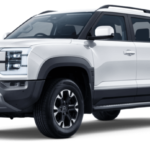 BYD Shark 6 Fuel Economy Australia: Real-World Consumption, Electric Range and Running Costs
Leave a Reply