
BYD Shark 6 vs Ford Ranger Raptor Australia: Which Ute Is Better in 2026?

The Australian ute market is changing rapidly, and the BYD Shark 6 vs Ford Ranger Raptor comparison highlights just how different the future of performance utes could look.
On one side, we have the BYD Shark 6, a powerful plug-in hybrid ute combining electric motors with a turbocharged petrol engine. On the other, the Ford Ranger Raptor, one of Australia's most established high-performance off-road utes, powered by a twin-turbocharged V6 petrol engine.
Both vehicles offer impressive acceleration, advanced technology and the versatility Australians expect from a dual-cab ute. However, they approach performance and capability in completely different ways.
The Shark 6 focuses on electrification, efficiency, comfort and value for money. Meanwhile, the Ranger Raptor prioritises extreme off-road performance, sophisticated suspension technology and driving excitement.
The arrival of the 2026 BYD Shark 6 Performance, with 350kW and a 3,500kg towing capacity, makes this comparison even more interesting.
So, is the BYD Shark 6 a better buy than the Ford Ranger Raptor in Australia? Let's compare their specifications, performance, fuel economy, towing capabilities, off-road ability and ownership costs.
- BYD Shark 6 vs Ford Ranger Raptor: Specifications Comparison
- BYD Shark 6 vs Ford Ranger Raptor Price in Australia
- Engine and Performance Comparison
- BYD Shark 6 vs Raptor Fuel Consumption
- Electric Range and Charging
- BYD Shark 6 vs Ford Ranger Raptor Off-Road Capability
- Towing Capacity: BYD Shark 6 vs Ford Ranger Raptor
- Payload and Practicality
- Interior Comfort and Technology
- Driving Experience: City, Highway and Country Roads
- Safety Comparison
- Reliability and Warranty in Australia
- BYD Shark 6 vs Ford Ranger Raptor Running Costs
- BYD Shark 6 vs Ford Ranger Raptor: Pros and Cons
- Which Ute Should You Buy in Australia?
- Final Verdict: Is the BYD Shark 6 Better Than the Ford Ranger Raptor?
- Frequently Asked Questions
BYD Shark 6 vs Ford Ranger Raptor: Specifications Comparison
Before examining how these utes perform in everyday conditions, let's compare their main specifications.
| Specification | BYD Shark 6 Premium | BYD Shark 6 Performance | Ford Ranger Raptor |
|---|---|---|---|
| Starting price (AUD) | $57,900 | $62,900 | $90,690 |
| Engine | 1.5L turbo petrol PHEV | 2.0L turbo petrol PHEV | 3.0L twin-turbo V6 petrol |
| Combined power | 321kW | 350kW | 292kW |
| Maximum torque | 650Nm | 700Nm | 583Nm |
| Drivetrain | Electric AWD | Electric AWD | Full-time 4WD |
| Transmission | Single-speed reduction gearing | Single-speed reduction gearing | 10-speed automatic |
| Battery capacity | 29.6kWh | 29.6kWh | Not applicable |
| Electric driving range | 100km NEDC | 80km WLTP | None |
| Braked towing capacity | 2,500kg | 3,500kg | 2,500kg |
| Payload | 790kg | 725kg | Approximately 650–720kg, depending on specification |
| Ground clearance | 230mm | 230mm | 272mm |
| Water wading depth | 700mm | 700mm | 850mm |
| Fuel tank | 60 litres | 60 litres | 80 litres |
| Off-road focus | Light to moderate tracks | Light to moderate tracks | Serious off-road performance |
Prices are Australian manufacturer/list prices before on-road costs. Specifications reflect the 2026 Australian range and may vary with model updates. The electric ranges use different test cycles and are not directly comparable.
The most noticeable difference is the price.
The BYD Shark 6 Premium costs approximately $32,790 less than the Ranger Raptor, while the more powerful Shark 6 Performance is approximately $27,790 cheaper.
That is a substantial difference, especially considering the BYD offers greater combined power output and plug-in hybrid technology.
However, specifications alone do not tell the entire story.
BYD Shark 6 vs Ford Ranger Raptor Price in Australia
BYD Shark 6 Price
The 2026 BYD Shark 6 range offers three main variants:
- Shark 6 Dynamic Cab Chassis: From $55,900.
- Shark 6 Premium: From $57,900.
- Shark 6 Performance: From $62,900.
All prices exclude on-road costs.
For buyers interested in a traditional dual-cab pickup, the Premium and Performance are the most relevant choices.
The Performance variant adds a larger petrol engine, additional power, greater towing capacity and updated driving technology.
Ford Ranger Raptor Price
The 2026 Ford Ranger Raptor starts from approximately $90,690 before on-road costs.
Depending on state taxes, accessories, optional equipment and dealer pricing, the final drive-away price can be higher.
The Raptor commands a premium because of its dedicated performance engineering, FOX suspension, specialised four-wheel-drive system and more aggressive off-road hardware.
Which Ute Offers Better Value?
If we compare the vehicles purely on power, technology and purchase price, the BYD Shark 6 offers outstanding value.
The Shark 6 Performance delivers more combined power, more torque and a higher towing rating while costing considerably less.
However, the Raptor's extra investment goes towards specialised engineering that is particularly valuable when driving fast across rough terrain or tackling difficult off-road tracks.
Price winner: BYD Shark 6.
Engine and Performance Comparison
One of the biggest surprises in this comparison is that the BYD Shark 6 produces more combined power than the Ranger Raptor.
BYD Shark 6 Hybrid Engine
The Shark 6 Premium uses a 1.5-litre turbocharged petrol engine supported by electric motors driving the front and rear axles.
Its combined output is:
- 321kW of power.
- 650Nm of torque.
- Claimed 0–100km/h acceleration in 5.7 seconds.
The 2026 Shark 6 Performance upgrades to a 2.0-litre turbocharged petrol engine and a more powerful front electric motor.
Its combined figures increase to:
- 350kW of power.
- 700Nm of torque.
- Claimed 0–100km/h acceleration in 5.5 seconds.
Electric motors provide immediate torque, giving the Shark 6 strong acceleration from a standstill.
This makes it surprisingly quick for a large dual-cab ute weighing more than 2.7 tonnes.
Ford Ranger Raptor V6 Engine
The Ford Ranger Raptor uses a 3.0-litre twin-turbocharged EcoBoost V6 petrol engine.
It produces:
- 292kW of power.
- 583Nm of torque.
- A 10-speed automatic transmission.
Independent Australian testing has recorded acceleration around the six-second mark from 0–100km/h, although results depend on conditions.
The Raptor has a very different personality from the Shark 6.
Its V6 engine delivers a more traditional performance-driving experience, accompanied by an active exhaust system and transmission paddle shifters.
It also maintains its performance character without needing an external battery charge.
Which Is Faster?
On their published outputs and available acceleration figures, the Shark 6 Performance has the advantage in straight-line acceleration.
However, the BYD's figures are manufacturer claims, while commonly quoted Raptor times come from independent tests. They are not directly comparable controlled test results.
Battery charge level, temperature, traction and operating conditions can also affect hybrid performance.
The Raptor is arguably the more engaging vehicle for drivers who enjoy engine sound, gear changes and high-speed off-road driving.
Straight-line performance winner: BYD Shark 6 Performance.
BYD Shark 6 vs Raptor Fuel Consumption
Fuel economy is one of the most important differences between these vehicles.
The Shark 6 uses plug-in hybrid technology, while the Ranger Raptor relies entirely on its petrol engine.
BYD Shark 6 Fuel Economy
The Shark 6 Premium has official consumption figures of:
- 2.0L/100km under the applicable charged-battery test conditions.
- 7.9L/100km when battery charge falls below 25%, under the quoted test cycle.
The Shark 6 Performance has corresponding published figures of:
- 1.3L/100km in its charged-battery WLTP test.
- 10.5L/100km at low battery charge under WLTP conditions.
These figures should not be interpreted as the fuel economy every owner will achieve.
Plug-in hybrid consumption is strongly influenced by charging frequency and driving distance.
If we regularly charge the Shark 6 at home and mainly drive shorter distances, petrol consumption can be extremely low.
However, on long highway journeys, especially with a depleted battery, the petrol engine must do more work.
The Premium and Performance figures also use different test standards, which means their official consumption numbers should not be treated as a direct comparison.
Ford Ranger Raptor Fuel Economy
The Ford Ranger Raptor has an official combined fuel consumption figure of approximately 11.5L/100km.
Real-world consumption can be higher, particularly when accelerating aggressively, towing or driving off-road.
The Raptor also has a larger 80-litre fuel tank compared with the Shark 6's 60-litre tank.
Although its petrol consumption is higher, the Raptor's traditional drivetrain avoids the need to plan charging stops.
Which Ute Is Cheaper to Run?
The Shark 6 has the potential to be considerably cheaper to operate, especially when:
- We can charge at home using relatively inexpensive electricity.
- Most daily journeys are within the vehicle's practical electric range.
- We regularly drive in urban traffic.
- We avoid frequent heavy towing.
However, drivers covering long distances without charging may see a much smaller fuel-cost advantage.
Electricity costs must also be included when calculating the Shark 6's total energy consumption.
Fuel economy winner: BYD Shark 6 for owners who charge regularly.
Electric Range and Charging
The BYD Shark 6 offers something the Ford Ranger Raptor cannot: the ability to drive on electric power alone.
BYD Shark 6 Electric Driving Range
The Shark 6 Premium has a claimed electric driving range of up to 100km under the NEDC test cycle.
The Shark 6 Performance has a quoted electric range of approximately 80km under WLTP testing.
Because these are different testing procedures, they cannot be compared directly.
Actual electric range depends on factors such as:
- Driving speed and acceleration.
- Outside temperature.
- Vehicle load.
- Air conditioning usage.
- Road conditions.
- Battery state of charge.
For drivers with shorter daily commutes, the Shark 6 could complete many trips with little petrol use.
BYD Shark 6 Charging Speed
The Shark 6 has a 29.6kWh lithium iron phosphate Blade Battery.
Maximum supported charging rates are approximately:
- 7kW AC charging.
- 55kW DC fast charging.
Charging times depend on available charger power, battery temperature and the starting and finishing charge levels.
The BYD also supports vehicle-to-load functionality, allowing owners to power compatible equipment and appliances.
This can be particularly useful when camping or working away from conventional electricity supplies.
Does the Ranger Raptor Need Charging?
No.
The Ford Ranger Raptor does not have a plug-in hybrid drivetrain and cannot operate as a dedicated electric vehicle.
It simply requires petrol, making it straightforward for drivers who regularly travel in remote areas.
Electric driving winner: BYD Shark 6.
BYD Shark 6 vs Ford Ranger Raptor Off-Road Capability
This is where the Ford Ranger Raptor establishes its strongest advantage.
Although both vehicles feature all-wheel-drive or four-wheel-drive systems, they are designed for different types of driving.
BYD Shark 6 Off-Road Performance
The Shark 6 uses an electronically controlled all-wheel-drive system, with electric motors providing propulsion to both axles.
It offers terrain modes for surfaces such as sand, mud and snow.
The 2026 Performance version also introduces Crawl mode to improve controlled progress over difficult terrain.
Key specifications include:
- 230mm ground clearance.
- 700mm water wading depth.
- 31-degree approach angle.
- 19.3-degree departure angle.
The Shark 6 uses independent suspension at the front and rear, contributing to its comfortable road manners.
However, it does not have conventional low-range transfer gearing or mechanical locking differentials.
Its electronic traction systems can perform well on moderate trails, but they are not a complete substitute for the Raptor's specialised off-road hardware.
Ford Ranger Raptor Off-Road Performance
The Ranger Raptor was developed specifically for demanding off-road driving.
It features:
- FOX Live Valve shock absorbers.
- Front and rear locking differentials.
- Low-range gearing.
- Dedicated Baja and Rock Crawl driving modes.
- BFGoodrich all-terrain tyres.
- Steel underbody protection.
- Approximately 272mm ground clearance.
- 850mm water wading capability.
The FOX suspension is one of the Raptor's biggest advantages.
It is designed to absorb significant impacts while maintaining vehicle control, particularly when travelling quickly across rough terrain.
The Raptor also benefits from a more specialised four-wheel-drive system and greater ground clearance.
Which Is Better for Australian Off-Road Conditions?
For gravel roads, maintained tracks and light camping adventures, the Shark 6 can be a comfortable and capable option.
However, for challenging rocky tracks, deep ruts, demanding sand driving and high-speed off-road conditions, the Ranger Raptor is the stronger choice.
The BYD's lower purchase price does not make its off-road hardware equivalent to the Ford's.
Off-road winner: Ford Ranger Raptor.
Towing Capacity: BYD Shark 6 vs Ford Ranger Raptor
Towing is another important consideration for Australian ute buyers, particularly those planning to transport caravans, boats or trailers.
BYD Shark 6 Towing Capacity
The Shark 6 Premium has a maximum braked towing capacity of 2,500kg.
The 2026 Shark 6 Performance significantly improves this figure to 3,500kg.
This is a major advantage for buyers needing to tow heavier trailers.
However, it is important to consider more than the headline towing figure.
This content may interest you!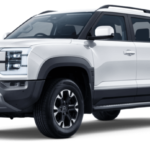 BYD Shark 6 vs Ford Ranger Australia: Which Ute Is Better in 2026?
Maximum legal towing weight also depends on the vehicle's gross combined mass, gross vehicle mass, axle limits, tow ball download and actual loading.
A vehicle rated to tow 3,500kg may not be able to carry its maximum payload simultaneously.
Ford Ranger Raptor Towing Capacity
The Ranger Raptor has a maximum braked towing capacity of 2,500kg.
This is lower than the 3,500kg rating available on many conventional Ford Ranger variants.
The reason is that the Raptor is primarily optimised for high-performance off-road driving rather than maximum towing capacity.
Which Ute Is Better for Towing a Caravan?
The Shark 6 Performance wins on maximum rated towing capacity.
For caravans weighing more than 2,500kg but within the Shark's certified limits, the BYD Performance provides an option that the Ranger Raptor cannot match.
However, owners should assess real-world towing consumption, vehicle stability, combined weight limits and charging practicality before choosing either vehicle.
Maximum towing capacity winner: BYD Shark 6 Performance.
Payload and Practicality
Payload is particularly important for owners carrying tools, camping equipment, passengers or heavy accessories.
The BYD Shark 6 Premium has a payload rating of approximately 790kg, while the heavier Performance version offers around 725kg.
The Ford Ranger Raptor has a payload rating generally around 650–720kg, depending on the exact Australian specification.
The Shark 6 therefore offers competitive carrying capacity, although neither ute is necessarily the ideal choice for heavy commercial loads.
Accessories such as bull bars, roof racks, canopies and spare equipment reduce the payload available for passengers and cargo.
For buyers who regularly transport heavy materials, comparing these vehicles against work-focused Ranger variants may be more appropriate.
Which Ute Has the Better Tray?
The BYD Shark 6 Premium and Performance have a pickup tub approximately:
- 1,520mm long.
- 1,500mm wide.
- 517mm deep.
The Ford Ranger Raptor also offers a practical pickup bed with a durable liner and useful tie-down points.
However, the Raptor's performance-focused design means it is not as load-oriented as some other Ranger grades.
For general recreational use, both vehicles provide enough utility for camping equipment, bicycles and everyday loads.
Interior Comfort and Technology
Both vehicles offer modern cabins, but their interior designs reflect different priorities.
BYD Shark 6 Interior
The BYD Shark 6 feels more like a modern electrified SUV than a traditional commercial ute.
The Premium model features a large 15.6-inch touchscreen and a digital instrument display.
Depending on the model, equipment includes:
- Wireless Apple CarPlay and Android Auto.
- Heated and ventilated front seats.
- Dual-zone climate control.
- A premium Dynaudio sound system.
- Wireless smartphone charging.
- Head-up display.
- Surround-view parking cameras.
The Shark 6 Performance also introduces updated infotainment and interior controls.
One of the BYD's biggest strengths is cabin refinement.
Electric propulsion creates a quiet driving experience, particularly in urban traffic.
Its suspension setup also helps deliver a smooth ride over ordinary Australian roads.
Ford Ranger Raptor Interior
The Ranger Raptor combines advanced technology with a more sporting cabin.
Notable features include:
- 12-inch portrait infotainment touchscreen.
- Digital instrument cluster.
- Ford Performance front seats.
- B&O premium audio system.
- Wireless smartphone integration.
- Steering wheel-mounted paddle shifters.
- Customisable driving settings.
- 360-degree camera.
The Raptor's seats provide additional support during enthusiastic driving or challenging off-road conditions.
Its cabin feels more focused on driving involvement, while the Shark 6 emphasises modern convenience and quietness.
Which Interior Is Better?
The Shark 6 is an excellent option for buyers prioritising comfort, technology and a relaxed driving experience.
The Raptor is better suited to drivers who want performance-oriented seats, more customisation and a distinctive motorsport-inspired atmosphere.
Comfort and technology winner: BYD Shark 6 for everyday refinement; Ford Ranger Raptor for sporting character.
Driving Experience: City, Highway and Country Roads
City Driving
The Shark 6 is particularly impressive in urban environments.
Its electric motors provide smooth acceleration without traditional gear changes.
Low-speed manoeuvring is quiet, and regenerative braking can help recover energy during deceleration.
For buyers using their ute as a daily family vehicle, these qualities can make the BYD appealing.
The Ranger Raptor is also comfortable, but its wide body, aggressive tyres and powerful petrol engine are less focused on urban efficiency.
Highway Driving
On Australian highways, both vehicles provide strong overtaking performance.
The Shark 6 is refined and quiet, especially when travelling at steady speeds.
The Raptor offers powerful V6 acceleration, impressive stability and suspension designed to cope with rougher surfaces.
However, the BYD's fuel economy advantage depends on battery charge and how often the vehicle can be plugged in.
Country Roads and Unsealed Surfaces
The Ranger Raptor comes into its own on rough Australian country roads.
Its suspension and tyre setup offer substantial advantages when surfaces become uneven or challenging.
The Shark 6 remains well suited to ordinary gravel roads and moderate driving conditions.
For drivers spending most of their time on sealed roads, the BYD's comfort and lower purchase price may be more valuable than the Raptor's extreme off-road equipment.
Safety Comparison
Safety is another important consideration, especially for families using these vehicles as daily transport.
BYD Shark 6 Safety
The BYD Shark 6 has achieved a five-star ANCAP safety rating, with the 2026 Performance variant covered by the applicable assessment.
Safety features include:
- Autonomous emergency braking.
- Adaptive cruise control.
- Blind-spot monitoring.
- Lane-keeping assistance.
- Front and rear cross-traffic alerts.
- Surround-view cameras.
- Driver monitoring systems.
These features make the Shark 6 a well-equipped option for everyday driving.
A further ownership consideration is the Australian recall affecting certain 2024–2026 Shark 6 vehicles due to a potential spare-wheel retention defect. Buyers should check whether a particular vehicle is affected and follow BYD's official recall instructions.
Ford Ranger Raptor Safety
The Ford Ranger Raptor includes safety technology such as autonomous emergency braking, adaptive cruise control, blind-spot monitoring and lane-keeping assistance.
It also features a substantial airbag package and driver-assistance systems.
An important distinction is that the Raptor itself is officially unrated by ANCAP, even though many other Ranger variants carry a five-star rating.
An unrated vehicle is not necessarily unsafe; it simply means the Raptor does not have an applicable published ANCAP star rating of its own.
Reliability and Warranty in Australia
BYD Shark 6 Warranty
The Shark 6 is covered by:
- Six-year/150,000km vehicle warranty.
- Eight-year/160,000km high-voltage battery warranty.
Scheduled servicing is generally required every 12 months or 20,000km, whichever comes first.
The Shark 6 uses relatively new plug-in hybrid technology, and long-term Australian ownership data is still developing.
Although the battery and electric drivetrain offer potential efficiency benefits, major hybrid components could be expensive to repair outside warranty.
Ford Ranger Raptor Warranty
The Ranger Raptor has a standard five-year/unlimited-kilometre warranty.
For qualifying new Ford vehicles with warranty start dates from 1 September 2026, Ford also offers the possibility of extending coverage to seven years, provided all specified servicing conditions are met.
Service intervals are generally 12 months or 15,000km.
The Raptor's performance engine, specialised suspension and tyres may contribute to higher ownership costs, especially when used regularly off-road.
Which Is More Reliable?
It is difficult to declare an outright winner.
The Raptor's current generation has more years of Australian road experience, but it is also a complex, high-performance vehicle.
The Shark 6 benefits from substantial warranty coverage, although its long-term battery, hybrid-system and electrical reliability cannot yet be assessed over the same ownership period.
We recommend prioritising service history, warranty coverage and independent inspections when buying either vehicle used.
BYD Shark 6 vs Ford Ranger Raptor Running Costs
The purchase price is only one part of the ownership equation.
We also need to consider insurance, fuel, electricity, servicing, tyres and depreciation.
| Ownership factor | BYD Shark 6 | Ford Ranger Raptor |
|---|---|---|
| Purchase price | Significantly lower | Significantly higher |
| Petrol consumption | Potentially much lower with charging | Higher |
| Charging expenses | Yes | None |
| Tyre replacement | Depends on fitment | Performance all-terrain tyres |
| Servicing interval | 12 months/20,000km | 12 months/15,000km |
| Battery replacement exposure | High-voltage hybrid battery | No traction battery |
| Insurance | Quote required | Quote required |
| Resale value | Long-term market still developing | More established used-vehicle market |
Insurance Costs
Insurance premiums depend on the driver's age, address, claims history, vehicle value and selected coverage.
The Raptor's higher purchase price and performance-oriented components may result in expensive premiums.
However, the Shark 6's advanced electronic and hybrid components can also influence insurance costs.
Comparing actual comprehensive insurance quotes is more reliable than assuming either model will always be cheaper.
Depreciation and Resale Value
The Ranger Raptor has an established position in Australia's enthusiast ute market.
This may help support demand from buyers seeking a specialist off-road vehicle.
The Shark 6 is newer, and its long-term resale performance remains less certain.
Future battery technology, buyer preferences and the availability of newer hybrid utes may influence depreciation.
Overall ownership value winner: BYD Shark 6, particularly for regular home charging and everyday driving.
BYD Shark 6 vs Ford Ranger Raptor: Pros and Cons
BYD Shark 6 Advantages
- Considerably lower purchase price.
- Greater combined power and torque.
- Plug-in hybrid efficiency.
- Electric-only driving capability.
- Comfortable and quiet cabin.
- Strong standard technology.
- Vehicle-to-load functionality.
- 3,500kg towing capacity on the Performance variant.
- Longer standard time-based vehicle warranty.
BYD Shark 6 Disadvantages
- Less specialised off-road hardware.
- No conventional low-range gearing or mechanical differential locks.
- Heavy vehicle weight.
- Fuel savings depend on charging habits.
- Long-term Australian reliability and resale data are still developing.
- The Performance model's payload is limited relative to its maximum towing rating.
Ford Ranger Raptor Advantages
- Outstanding specialist off-road capability.
- FOX Live Valve suspension.
- Powerful twin-turbo V6.
- Front and rear locking differentials.
- Greater ground clearance and wading capability.
- Dedicated Baja and Rock Crawl modes.
- Established performance-ute reputation.
- Strong driving engagement.
Ford Ranger Raptor Disadvantages
- Much higher purchase price.
- Higher petrol consumption.
- No electric driving capability.
- Maximum towing capacity limited to 2,500kg.
- Modest payload compared with work-focused utes.
- Potentially expensive performance tyres and accessories.
Which Ute Should You Buy in Australia?
The best choice depends on how you intend to use your vehicle.
Choose the BYD Shark 6 If You:
- Want a powerful ute without spending close to $100,000.
- Drive mainly around cities or on highways.
- Can regularly charge at home.
- Prefer a quiet, comfortable driving experience.
- Want modern technology and strong acceleration.
- Need up to 3,500kg rated towing capacity with the Performance model.
- Mainly use maintained dirt roads and moderate off-road tracks.
The Shark 6 is particularly appealing for families wanting a versatile dual-cab ute that also works as a comfortable daily vehicle.
Choose the Ford Ranger Raptor If You:
- Regularly drive challenging off-road tracks.
- Enjoy high-speed dirt-road driving.
- Need specialised suspension and differential locks.
- Prefer a traditional performance petrol engine.
- Value established off-road capability over maximum fuel efficiency.
- Want the distinctive experience of owning a performance-focused 4WD ute.
The Raptor is designed for buyers who will actually use its extensive off-road engineering.
If most driving takes place on sealed roads, its capabilities may be underutilised.
Final Verdict: Is the BYD Shark 6 Better Than the Ford Ranger Raptor?
The BYD Shark 6 and Ford Ranger Raptor are both impressive vehicles, but they excel in different areas.
The Shark 6 delivers exceptional value, strong acceleration, advanced hybrid technology and a comfortable interior at a significantly lower price.
The arrival of the 2026 Shark 6 Performance strengthens its position by increasing power to 350kW and towing capacity to 3,500kg.
For many Australian drivers, especially those primarily using their ute for commuting, family trips and occasional outdoor adventures, the BYD Shark 6 Performance is arguably the smarter financial and practical purchase.
However, the Ford Ranger Raptor remains the better choice for demanding off-road driving.
Its FOX suspension, locking differentials, low-range gearing and specialised chassis engineering provide advantages the Shark 6 cannot fully replicate.
Our conclusion is straightforward: choose the BYD Shark 6 for everyday value, hybrid efficiency and versatility. Choose the Ford Ranger Raptor for serious off-road performance and driving excitement.
Neither vehicle is universally better. The right choice depends on whether you prioritise efficiency and affordability or specialist 4WD capability.
Frequently Asked Questions
1. Is the BYD Shark 6 Faster Than the Ford Ranger Raptor?
The BYD Shark 6 Performance produces 350kW and 700Nm, compared with the Ford Ranger Raptor's 292kW and 583Nm. BYD claims 0–100km/h acceleration in 5.5 seconds for the Performance model. Independent Australian testing has recorded Ranger Raptor acceleration around six seconds, although direct testing under identical conditions is needed for a definitive comparison.
2. Is the BYD Shark 6 Better Off-Road Than the Raptor?
No. The Ford Ranger Raptor is better equipped for demanding off-road driving thanks to its FOX suspension, locking differentials, low-range gearing and greater ground clearance. The Shark 6 is better suited to light and moderate off-road conditions, although its electronic traction systems can be useful on challenging surfaces.
3. Can the BYD Shark 6 Tow More Than the Ford Ranger Raptor?
Yes, the 2026 BYD Shark 6 Performance has a maximum braked towing capacity of 3,500kg, compared with 2,500kg for the Ford Ranger Raptor. However, the Shark 6 Premium also has a 2,500kg towing limit. Actual towing capability depends on load, tow ball weight, axle ratings and combined mass limits.
4. Can the BYD Shark 6 Drive Without Petrol?
The BYD Shark 6 can operate using electric power alone when sufficient battery charge is available. The Premium has a claimed electric range of 100km under NEDC testing, while the Performance has an 80km WLTP rating. However, the Shark 6 is a plug-in hybrid rather than a fully electric ute, so petrol remains part of its overall operating system.
5. Is the BYD Shark 6 Worth Buying Instead of the Ford Ranger Raptor?
For buyers who prioritise price, comfort, technology, acceleration and potential fuel savings, the BYD Shark 6 is an attractive alternative. Its substantially lower purchase price makes it especially appealing for everyday use. However, the Ford Ranger Raptor remains a better choice for drivers who need advanced off-road capability, specialised suspension and a more engaging performance-driving experience.
This content may interest you!BYD Shark 6 vs GWM Cannon Alpha PHEV Australia: Which Is the Better Plug-in Hybrid Ute?
Leave a Reply