
BYD Shark 6 vs Kia Tasman Australia: Which Ute Is Better in 2026?

The Australian ute market is changing, and two of the most interesting newcomers are the BYD Shark 6 and Kia Tasman. Both compete in a segment traditionally dominated by the Toyota HiLux, Ford Ranger and Isuzu D-Max, but they approach the job from very different directions.
The BYD Shark 6 introduces plug-in hybrid technology, impressive acceleration, electric-only driving and a surprisingly comfortable ride. Meanwhile, the Kia Tasman follows a more traditional formula, combining a turbo-diesel engine with a rugged chassis, serious towing capability and proper four-wheel-drive hardware.
But which one is actually better?
In this BYD Shark 6 vs Kia Tasman Australia comparison, we'll examine their pricing, engines, fuel consumption, towing capacity, payload, off-road performance, interior technology, reliability and ownership costs.
We'll also consider the expanded 2026 Shark 6 range, including the Performance variant, which addresses one of the original model's biggest limitations.
- BYD Shark 6 vs Kia Tasman: Quick Comparison
- BYD Shark 6 vs Kia Tasman Price in Australia
- Engine and Performance: Hybrid Power vs Diesel Torque
- Fuel Economy: BYD Shark 6 vs Kia Tasman
- Towing Capacity: Which Ute Is Better?
- Payload Capacity and Work Practicality
- Off-Road Capability: BYD Shark 6 vs Kia Tasman
- Interior Comfort and Technology
- Which Ute Is Better for Long Road Trips?
- BYD Shark 6 vs Kia Tasman Reliability
- Warranty and Servicing Costs
- Safety: Which Is Safer?
- BYD Shark 6 vs Kia Tasman: Pros and Cons
- Which Should You Buy in Australia?
- Frequently Asked Questions
- 1. Is the BYD Shark 6 better than the Kia Tasman?
- 2. Can the BYD Shark 6 tow as much as the Kia Tasman?
- 3. Which is more fuel-efficient, the BYD Shark 6 or Kia Tasman?
- 4. Is the Kia Tasman better off-road than the BYD Shark 6?
- 5. Which is better for Australian families, the BYD Shark 6 or Kia Tasman?
- Final Verdict: BYD Shark 6 vs Kia Tasman Australia
BYD Shark 6 vs Kia Tasman: Quick Comparison
Before getting into the details, let's compare their main specifications.
| Specification | BYD Shark 6 | Kia Tasman |
|---|---|---|
| Vehicle type | Plug-in hybrid ute | Turbo-diesel ute |
| Engine | 1.5L or 2.0L turbo petrol PHEV | 2.2L turbo diesel |
| Maximum power | 321–350 kW | 154 kW |
| Maximum torque | 650–700 Nm | 440 Nm |
| Transmission | Single-speed hybrid drive | 8-speed automatic |
| Drivetrain | Electric AWD | 4x2 or 4x4 |
| Battery | 29.6 kWh | None (conventional diesel) |
| Electric range | 100 km NEDC or 80 km WLTP | Not applicable |
| Braked towing | 2,500–3,500 kg | 3,500 kg |
| Payload | Approximately 725–900 kg | Approximately 1,013–1,124 kg for dual-cab pickups |
| Fuel tank | 60 litres | 80 litres |
| Rear suspension | Independent, coil springs | Live axle, leaf springs |
| Vehicle warranty | 6 years/150,000 km | 7 years, conditions apply |
Specifications depend on variant. BYD electric-range figures use different test cycles and should not be compared directly.
The most obvious difference is the powertrain. The Shark 6 prioritises performance, efficiency when regularly charged and everyday comfort. The Tasman focuses on conventional ute capabilities and versatility.
BYD Shark 6 vs Kia Tasman Price in Australia
Price is one of the first things Australian buyers will consider, especially when looking for a dual-cab ute that can handle both family duties and weekend adventures.
BYD Shark 6 Price
The 2026 BYD Shark 6 range includes three variants:
| Variant | Price before on-road costs |
|---|---|
| Shark 6 Dynamic Cab Chassis | $55,900 |
| Shark 6 Premium | $57,900 |
| Shark 6 Performance | $62,900 |
The Premium remains particularly attractive because it combines substantial power, electric driving capability and a generous equipment list at a relatively competitive price.
The Performance adds more power and a significantly higher towing capacity for an extra $5,000.
Kia Tasman Price
The Kia Tasman offers a broader range, including affordable work-focused models and more luxurious off-road variants.
| Dual-cab pickup variant | Price before on-road costs |
|---|---|
| Tasman S 4x2 | $42,990 |
| Tasman S 4x4 | $49,990 |
| Tasman SX 4x4 | $54,490 |
| Tasman SX+ 4x4 | $62,390 |
| Tasman X-Line 4x4 | $67,990 |
| Tasman X-Pro 4x4 | $74,990 |
These are published Australian list prices. Dealer discounts, promotions, registration and state-based on-road costs can change the amount payable.
Which Ute Offers Better Value?
The answer depends on what you're buying.
The Kia Tasman S and SX offer a relatively affordable entry into the diesel ute market. They make particular sense for customers who want a traditional work vehicle with substantial towing and payload ratings.
However, the BYD Shark 6 Premium offers exceptional performance and equipment for its asking price.
For buyers who don't need a traditional low-range 4WD system or maximum payload capacity, we think the BYD presents a compelling value proposition.
Winner: BYD Shark 6 for performance and technology value; Kia Tasman for affordable work-focused variants.
Engine and Performance: Hybrid Power vs Diesel Torque
This is one of the biggest differences between the two vehicles.
BYD Shark 6 Engine and Performance
The BYD Shark 6 Premium uses a 1.5-litre turbocharged petrol engine combined with two electric motors.
Its total system output is:
- Power: 321 kW
- Torque: 650 Nm
- Acceleration from 0–100 km/h: approximately 5.7 seconds
The 2026 Shark 6 Performance takes things further with a 2.0-litre turbocharged petrol engine.
Its combined outputs increase to:
- Power: 350 kW
- Torque: 700 Nm
- Acceleration from 0–100 km/h: approximately 5.5 seconds
Those are remarkable numbers for a dual-cab ute.
Electric motors deliver immediate response, making the Shark 6 feel effortless when accelerating from traffic lights or overtaking.
Unlike a conventional diesel, the hybrid system doesn't need to work through multiple traditional gearbox ratios.
Kia Tasman Engine and Performance
The Kia Tasman uses a 2.2-litre four-cylinder turbo-diesel engine.
It produces:
- Power: 154 kW
- Torque: 440 Nm
- Transmission: 8-speed automatic
Although the figures are considerably lower than the BYD's, the Tasman's engine is designed around traditional diesel characteristics.
Its torque delivery, automatic gearbox and conventional 4WD system suit towing, carrying equipment and sustained long-distance use.
The Tasman feels more like a familiar diesel ute, while the Shark 6 delivers acceleration closer to that of a powerful SUV.
Which Is Faster?
There is little competition here.
The BYD Shark 6 is substantially quicker, whether we're comparing the Premium or Performance variant against the Tasman.
This content may interest you! Mazda CX-5 vs Subaru Outback: Which One Fits Real Life Better?
For everyday driving, overtaking and effortless acceleration, the BYD Shark 6 is the clear winner.
Fuel Economy: BYD Shark 6 vs Kia Tasman
Fuel consumption is another important consideration, particularly in Australia, where long highway journeys are common.
However, comparing a plug-in hybrid against a diesel requires some care.
BYD Shark 6 Fuel Consumption
The Shark 6 Premium has an official combined fuel consumption figure of approximately 2.0 L/100 km under the NEDC testing method with sufficient battery charge.
The Performance has a claimed 1.3 L/100 km under WLTP testing conditions with sufficient charge.
These figures don't mean the ute will always consume that little petrol.
They rely on the battery contributing substantial electrical energy during the test.
When battery charge is low, BYD quotes approximately:
- Shark 6 Premium: 7.9 L/100 km
- Shark 6 Performance: 10.5 L/100 km
Real-world consumption can be higher or lower depending on speed, driving conditions, battery state, load and towing.
The Shark 6 becomes particularly appealing when owners can charge regularly and complete much of their daily driving electrically.
Kia Tasman Fuel Consumption
The Tasman has a more conventional diesel fuel-consumption profile.
| Tasman variant | Official combined consumption |
|---|---|
| S 4x2 | 7.4 L/100 km |
| S 4x4 | 7.6 L/100 km |
| SX and SX+ | 7.6 L/100 km |
| X-Line | 7.8 L/100 km |
| X-Pro | 8.1 L/100 km |
These are laboratory figures rather than guarantees of real-world economy.
Nevertheless, the Tasman provides a straightforward ownership proposition: fill the diesel tank and continue driving without needing to charge.
Which Is Cheaper to Run?
Consider two different Australian drivers.
Driver A: Daily city commuter
Someone travelling 30–60 km per day around Melbourne, Sydney or Brisbane, with access to affordable home charging, could complete much of their weekly driving in the Shark 6 without using petrol.
In this situation, the BYD could offer substantial energy-cost savings.
Driver B: Long-distance highway driver
Someone regularly travelling hundreds of kilometres through regional Queensland or Western Australia may use the Shark 6's petrol engine much more frequently.
The Kia Tasman's consistent diesel operation and 80-litre tank become more attractive, especially when charging opportunities are limited.
Electricity prices, petrol and diesel costs, and charging frequency all influence the actual savings.
Winner: BYD Shark 6 for regular charging and shorter journeys; Kia Tasman for straightforward long-distance diesel operation.
Towing Capacity: Which Ute Is Better?
Towing is particularly important for Australian buyers who regularly pull caravans, boats or work trailers.
BYD Shark 6 Towing Capacity
The towing rating depends on the version.
| Shark 6 variant | Maximum braked towing |
|---|---|
| Dynamic | 2,500 kg |
| Premium | 2,500 kg |
| Performance | 3,500 kg |
The original 2,500 kg limit was one of the biggest disadvantages of the Shark 6 compared with established diesel competitors.
However, the introduction of the Performance variant changes the comparison significantly.
With a maximum braked towing capacity of 3,500 kg, the Shark 6 Performance can now compete on the headline towing figure.
Kia Tasman Towing Capacity
The Kia Tasman is rated to tow up to 3,500 kg braked, with a maximum towball download rating of 350 kg.
This makes it suitable, subject to all applicable weight limits, for heavier trailers and many larger caravans.
Its conventional diesel powertrain, low-range gearing on 4x4 models and integrated trailer brake controller are also attractive for towing-focused buyers.
Important Towing Considerations
A maximum towing rating doesn't tell the whole story.
Before towing a heavy caravan, we need to consider:
- Gross vehicle mass (GVM)
- Gross combined mass (GCM)
- Actual vehicle payload
- Towball download
- Passenger and luggage weight
- Trailer axle loads
- Accessories fitted to the ute
A vehicle rated to tow 3,500 kg cannot necessarily carry its full advertised payload at the same time.
The Shark 6 Performance's lower payload deserves particular attention when towing a large caravan with several passengers and camping equipment.
This content may interest you!Toyota LandCruiser Engine Oil: The Complete Selection and Maintenance GuideWinner: Kia Tasman for conventional heavy-duty towing practicality, although the Shark 6 Performance now matches its 3,500 kg braked towing rating.
Payload Capacity and Work Practicality
Payload is arguably where the Kia Tasman has its strongest advantage.
The Shark 6 Premium has a payload of approximately 790 kg, while the Performance offers around 725 kg.
The Dynamic Cab Chassis increases this to approximately 900 kg, depending on the fitted tray and configuration.
By comparison, Kia Tasman dual-cab pickups offer payload figures ranging from approximately 1,013 kg to 1,124 kg.
This difference is important for tradies, contractors and anyone regularly carrying heavy materials.
Why Payload Matters
Imagine loading your ute with:
- Four adult passengers
- Tools and equipment
- Camping accessories
- A roof rack or canopy
- A trailer with a substantial towball download
All these items contribute to the vehicle's weight.
For example, a 350 kg towball download could consume 350 kg of the Shark 6 Performance's 725 kg payload, leaving just 375 kg for passengers, accessories and other cargo before considering additional vehicle and combination limits.
The Tasman provides more flexibility for demanding load-carrying duties.
Winner: Kia Tasman.
Off-Road Capability: BYD Shark 6 vs Kia Tasman
Both vehicles look capable of tackling Australian dirt roads and weekend adventures, but their off-road systems differ substantially.
BYD Shark 6 Off-Road Performance
The Shark 6 uses an electronically controlled all-wheel-drive system with electric motors driving the front and rear axles.
It provides several selectable terrain modes, including mud, sand and snow.
The vehicle also benefits from:
- Approximately 230 mm ground clearance
- Around 700 mm rated wading depth
- Electronic traction management
- Hill descent control
- Strong electric motor response
The 2026 Performance also introduces an enhanced low-speed Crawl mode designed to improve control on challenging surfaces.
However, the Shark 6 does not have a conventional low-range transfer case or mechanical locking differential.
Its independent suspension and relatively heavy battery-equipped chassis can also impose limitations on deeply rutted terrain and more demanding obstacles.
For beaches, gravel roads, campsites and moderate bush tracks, the BYD can be an appealing choice.
For serious technical off-roading, its limitations are more noticeable.
Kia Tasman Off-Road Performance
The Kia Tasman takes a traditional approach.
Four-wheel-drive models feature a transfer case with low-range gearing and rear differential locking capability.
The X-Pro is particularly interesting for off-road enthusiasts.
It offers:
- Approximately 252 mm ground clearance
- 800 mm rated wading depth
- Low-range four-wheel drive
- Selectable electronic rear differential lock
- All-terrain tyres
- Specialised terrain modes
- X-Trek low-speed off-road control
The Tasman also uses a live rear axle, which suits conventional load-carrying and off-road applications.
Other Tasman variants have different ground-clearance figures and equipment, so the X-Pro's specifications shouldn't be applied to the entire range.
Which Is Better for Australian Off-Road Driving?
If you're regularly exploring demanding sections of the Victorian High Country, remote tracks or challenging rocky terrain, we'd prefer the Kia Tasman X-Pro.
Its low-range gearing, traction hardware and off-road-focused equipment give it an advantage.
For occasional dirt-road adventures and everyday driving, the Shark 6 remains a capable and comfortable alternative.
Winner: Kia Tasman, particularly the X-Pro.
Interior Comfort and Technology
Many Australians use their dual-cab utes as family vehicles, which makes interior comfort just as important as towing and off-road performance.
BYD Shark 6 Interior
The Shark 6 offers a modern cabin with an SUV-like atmosphere.
Depending on the variant, equipment includes:
- A large touchscreen infotainment system
- Digital instrument display
- Wireless smartphone connectivity
- Heated and ventilated front seats
- Wireless phone charging
- Surround-view cameras
- Advanced driver assistance features
The Premium and Performance variants feature a large 15.6-inch central touchscreen.
This content may interest you!
Another major benefit is the ride quality.
Thanks partly to its independent rear suspension, the BYD generally feels more composed and comfortable than many traditional leaf-sprung utes when driven without a heavy load.
Electric driving also makes the cabin particularly quiet in urban conditions.
Kia Tasman Interior
The Tasman offers a spacious and practical cabin with a distinctive dashboard design.
Its integrated panoramic display incorporates two 12.3-inch screens and a smaller central climate display.
Depending on the trim level, buyers can access:
- Wireless Apple CarPlay and Android Auto
- Heated and ventilated seats
- Premium sound system
- Wireless charging
- Multiple storage compartments
- Advanced parking cameras
- Sliding and reclining rear seats on selected grades
The rear seating arrangements are particularly impressive, with generous passenger accommodation and useful storage solutions.
The Tasman also retains a more conventional ute layout, which some drivers may find easier to operate while wearing work gloves or travelling over rough terrain.
Which Has the Better Interior?
The Shark 6 feels more futuristic and refined, especially when driving electrically.
The Tasman offers excellent space, practical controls and thoughtful storage.
For daily family use, we'd give the BYD a narrow advantage in ride comfort, although the Kia is an excellent choice for passengers who value rear-seat space.
Winner: BYD Shark 6 for refinement; Kia Tasman for cabin practicality.
Which Ute Is Better for Long Road Trips?
Australia's vast distances can change the priorities of ute buyers.
The Kia Tasman has an 80-litre diesel tank and doesn't require external charging.
That makes it convenient for long journeys through regional areas where service stations may be more accessible than suitable charging infrastructure.
The Shark 6 combines a petrol engine with its battery, so it doesn't depend on public chargers to complete a long journey.
However, its 60-litre fuel tank and changing efficiency when the battery becomes depleted can influence the frequency of fuel stops.
The Shark 6 is likely to feel quieter and smoother during many highway journeys, while the Kia provides a traditional diesel touring experience.
If we were planning frequent remote-area trips with heavier equipment, we'd lean towards the Tasman.
For family holidays involving highways, towns and accessible charging, the BYD could be the more comfortable companion.
BYD Shark 6 vs Kia Tasman Reliability
Reliability is a major consideration when buying a ute intended for long-term ownership.
Is the BYD Shark 6 Reliable?
BYD has established considerable experience in electric vehicles and battery technology.
The Shark 6 uses the manufacturer's Blade lithium iron phosphate battery technology, designed for durability and thermal safety.
However, the vehicle's plug-in hybrid system adds complexity compared with a conventional diesel powertrain.
It combines a petrol engine, high-voltage battery, electric motors, power electronics and sophisticated thermal management.
Long-term Australian durability data covering very high kilometres is still developing.
There is also an important safety issue buyers should know about: in September 2026, an Australian recall was announced involving 32,009 Shark 6 vehicles built across the 2024–2026 period because of a potential spare-wheel mounting defect.
Anyone buying an affected vehicle should confirm the recall status using its VIN and ensure the required remedy has been completed.
Is the Kia Tasman Reliable?
Kia has an established presence in the Australian market and offers a relatively conventional diesel powertrain in the Tasman.
Its traditional mechanical configuration may appeal to buyers who prefer established maintenance practices.
However, the Tasman itself is also a relatively new model.
Consequently, it would be premature to claim that it has demonstrated superior long-term reliability over hundreds of thousands of kilometres.
The engine, transmission, electronics and 4WD components still need to establish their durability record across many years of real-world Australian use.
Reliability Verdict
Neither vehicle has enough long-term model-specific history to declare an unquestionable winner.
This content may interest you!
The Kia may appeal to drivers who prefer a familiar diesel configuration, while the BYD offers sophisticated electrification with a separate battery warranty.
Regular maintenance and correct use will be particularly important for both.
Warranty and Servicing Costs
Warranty coverage can influence the overall ownership experience.
BYD Shark 6 Warranty
BYD Australia's coverage includes:
- Vehicle warranty: 6 years or 150,000 km
- High-voltage battery warranty: 8 years or 160,000 km
Scheduled servicing generally occurs every 12 months or 20,000 km, with additional checks or requirements depending on the service schedule.
Kia Tasman Warranty
Kia offers:
- A 7-year new-vehicle warranty
- Unlimited kilometres for eligible private-use vehicles
- A 150,000 km limit over seven years for applicable commercial use
- Scheduled servicing every 12 months or 15,000 km
- Available prepaid servicing plans
The Tasman benefits from Kia's established Australian dealership network.
The Shark 6 has longer scheduled service kilometre intervals, while the Tasman has an attractive warranty for eligible private buyers.
Which Is Cheaper to Maintain?
It's difficult to name a universal winner.
The BYD may reduce petrol expenditure considerably when charged frequently, but electricity, tyres, servicing and potential hybrid-system repairs all contribute to ownership costs.
The Tasman doesn't have a large traction battery, but diesel servicing, emissions-control components and fuel expenditure also need to be considered.
For a fair comparison, we would calculate the total cost over five years using realistic annual kilometres, charging access and the exact servicing plans.
Safety: Which Is Safer?
The BYD Shark 6 has achieved a five-star ANCAP safety rating.
It includes advanced equipment such as autonomous emergency braking, adaptive cruise control, blind-spot monitoring and a variety of driver assistance systems.
The Kia Tasman has also achieved a five-star ANCAP rating for applicable variants.
However, the X-Line and X-Pro are not covered by that published rating and remain unrated. This does not automatically mean they are unsafe; it means buyers shouldn't attribute the tested rating to those particular grades.
Both manufacturers offer comprehensive modern safety technology, although exact equipment varies across the range.
We recommend checking the safety specification and recall status of the individual vehicle rather than choosing solely on the number of stars.
BYD Shark 6 vs Kia Tasman: Pros and Cons
BYD Shark 6 Advantages
- Outstanding acceleration and combined power output
- Electric-only driving capability
- Potentially low running costs with regular charging
- Quiet and refined urban driving
- Comfortable independent rear suspension
- Strong standard technology and equipment
- Competitive pricing for the Premium and Performance
- Vehicle-to-load functionality for powering compatible equipment
BYD Shark 6 Disadvantages
- Lower payload than the Tasman
- Premium limited to 2,500 kg towing
- Requires charging to maximise efficiency benefits
- Less traditional off-road hardware
- Heavy kerb weight
- Limited long-term Australian reliability history
- Some 2024–2026 vehicles affected by a spare-wheel safety recall
Kia Tasman Advantages
- 3,500 kg braked towing capacity
- Strong payload figures
- Conventional low-range 4WD hardware on 4x4 models
- Excellent off-road equipment on the X-Pro
- Spacious cabin and practical storage
- Large 80-litre diesel tank
- Broad range of work-focused and recreational variants
- Competitive warranty coverage
Kia Tasman Disadvantages
- Significantly less power than the Shark 6
- No electric-only driving capability
- Higher potential fuel expenditure for urban commuters
- More conventional ride characteristics
- Premium X-Line and X-Pro models are relatively expensive
- Controversial exterior styling
- Limited long-term model-specific reliability data
Which Should You Buy in Australia?
The best choice depends on how you'll use your ute.
| Your priority | Our preferred choice |
|---|---|
| Everyday city driving | BYD Shark 6 |
| Acceleration and performance | BYD Shark 6 |
| Electric driving | BYD Shark 6 |
| Regular heavy payloads | Kia Tasman |
| Traditional 4WD adventures | Kia Tasman X-Pro |
| Towing 3,500 kg | Kia Tasman or Shark 6 Performance, subject to weight limits |
| Family comfort | BYD Shark 6 |
| Rear passenger versatility | Kia Tasman |
| Remote touring | Kia Tasman |
| Powering campsite equipment | BYD Shark 6 |
| Budget work ute | Kia Tasman S |
| Plug-in hybrid value | BYD Shark 6 Premium |
Buy the BYD Shark 6 If...
We would choose the Shark 6 if most of our driving involved commuting, family transport, weekend trips and occasional towing.
It's particularly attractive when home charging is available.
The Premium should satisfy buyers who don't need to tow more than 2,500 kg, while the Performance makes sense for those wanting the more powerful hybrid system and higher towing rating.
Buy the Kia Tasman If...
We would choose the Tasman if we regularly carried heavy equipment, towed large trailers or explored more demanding off-road routes.
The SX and SX+ offer a useful balance of price and practicality, while the X-Pro is better suited to drivers who prioritise off-road adventures.
For tradies and remote-area travellers, the Tasman's traditional capabilities remain highly relevant.
Frequently Asked Questions
1. Is the BYD Shark 6 better than the Kia Tasman?
The BYD Shark 6 is better for acceleration, electric driving and everyday refinement. The Kia Tasman is generally more suitable for heavy payloads, traditional off-road driving and work-focused duties. The best choice depends on how frequently you'll tow, carry loads and charge the vehicle.
2. Can the BYD Shark 6 tow as much as the Kia Tasman?
Yes, but only in the Shark 6 Performance variant. Both the Kia Tasman and Shark 6 Performance have a maximum braked towing rating of 3,500 kg. The Shark 6 Premium and Dynamic are rated to tow 2,500 kg braked. Payload, towball download and combined vehicle weight limits must also be respected.
3. Which is more fuel-efficient, the BYD Shark 6 or Kia Tasman?
The BYD Shark 6 can be significantly cheaper to run when regularly charged and driven primarily on electricity. However, the advantage becomes smaller when the battery charge is low or the vehicle is used for sustained highway driving. The Tasman offers official combined diesel consumption of approximately 7.4–8.1 L/100 km, depending on the variant.
4. Is the Kia Tasman better off-road than the BYD Shark 6?
For serious four-wheel driving, particularly in X-Pro specification, the Kia Tasman has an advantage thanks to its low-range gearing, differential locking capability, all-terrain tyres and specialised off-road equipment. The Shark 6 remains suitable for many gravel roads, beach trips and moderate off-road adventures.
5. Which is better for Australian families, the BYD Shark 6 or Kia Tasman?
The BYD Shark 6 is an excellent choice for families who value a quiet cabin, smooth acceleration and comfortable daily driving. The Kia Tasman offers particularly generous rear passenger accommodation, useful storage and greater traditional load-carrying practicality. Families who regularly tow heavy caravans may prefer the Tasman or Shark 6 Performance after checking all weight limits.
Final Verdict: BYD Shark 6 vs Kia Tasman Australia
The BYD Shark 6 vs Kia Tasman comparison demonstrates just how different modern Australian utes can be.
The BYD Shark 6 is the more innovative choice. It combines strong performance, plug-in hybrid technology and excellent everyday refinement in a vehicle that can still carry equipment and handle weekend adventures.
The introduction of the 2026 Performance model also makes the Shark 6 considerably more competitive by increasing its braked towing capacity to 3,500 kg.
However, the Kia Tasman remains a highly practical alternative.
This content may interest you!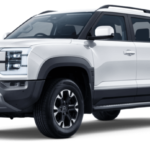 BYD Shark 6 vs Toyota HiLux Australia (2026): Which Ute Should You Buy?
Its stronger payload figures, conventional four-wheel-drive system and work-focused design make it attractive for tradies, caravanners and buyers who regularly venture into demanding Australian conditions.
Our overall choice would be the BYD Shark 6 Premium for everyday family use, urban commuting and value for money. Its combination of performance, comfort and electric driving capability is difficult to ignore.
But if we needed a ute primarily for heavy work, remote touring and challenging off-road adventures, we'd choose the Kia Tasman, particularly one of its well-equipped 4x4 variants.
Ultimately, the Shark 6 is the more compelling electrified lifestyle ute, while the Tasman is the more traditional all-round workhorse. Both have convincing strengths, and choosing the right one comes down to understanding exactly what you expect from your next Australian ute.
Leave a Reply