
Kia Tasman vs Toyota HiLux Australia 2026: Which Ute Is Better?

The Kia Tasman vs Toyota HiLux comparison is one of the most interesting battles in Australia's competitive dual-cab ute market. The Toyota HiLux has spent decades building a reputation for durability, reliability and excellent off-road performance. Meanwhile, the Kia Tasman enters the market with distinctive styling, modern technology, a spacious interior and impressive towing capabilities.
But can Kia's relatively new ute genuinely challenge one of Australia's most established vehicles?
The answer depends on what we expect from a ute. Some buyers prioritise towing heavy caravans, while others need a practical work vehicle capable of carrying equipment every day. Families may care more about interior comfort, safety technology and everyday driving refinement.
The latest Toyota HiLux also brings significant updates for 2026, including a redesigned cabin, improved technology and revised suspension tuning. That makes the comparison even more competitive.
In this detailed guide, we'll compare the 2026 Kia Tasman and Toyota HiLux in Australia, covering performance, fuel economy, towing capacity, off-road capability, dimensions, interior features, reliability, ownership costs and overall value.
- Kia Tasman vs Toyota HiLux: Quick Comparison
- Kia Tasman vs Toyota HiLux Engine and Performance
- Kia Tasman vs Toyota HiLux Fuel Consumption
- Kia Tasman vs Toyota HiLux Towing Capacity
- Kia Tasman vs Toyota HiLux Off-Road Capability
- Kia Tasman vs Toyota HiLux Dimensions and Size
- Kia Tasman vs Toyota HiLux Interior Comfort
- Kia Tasman vs Toyota HiLux Ride Quality
- Kia Tasman vs Toyota HiLux Payload and Practicality
- Kia Tasman vs Toyota HiLux Technology and Safety
- Kia Tasman vs Toyota HiLux Reliability
- Kia Tasman vs Toyota HiLux Warranty and Servicing
- Kia Tasman vs Toyota HiLux Price in Australia
- Kia Tasman vs Toyota HiLux Resale Value
- Kia Tasman vs Toyota HiLux for Australian Families
- Kia Tasman vs Toyota HiLux for Tradies
- Kia Tasman vs Toyota HiLux: Pros and Cons
- Kia Tasman vs Toyota HiLux: Which Should You Buy?
- Final Verdict: Is the Kia Tasman Better Than the Toyota HiLux?
- Frequently Asked Questions
Kia Tasman vs Toyota HiLux: Quick Comparison
Before examining each vehicle in detail, let's look at their main specifications.
| Specification | Kia Tasman | Toyota HiLux |
|---|---|---|
| Engine | 2.2L turbo-diesel | 2.8L turbo-diesel |
| Power | 154 kW | 150 kW |
| Torque | 440 Nm | 420–500 Nm |
| Transmission | 8-speed automatic | 6-speed manual or automatic |
| Drivetrain | 4x2 or 4x4 | 4x2 or 4x4 |
| Maximum braked towing | 3,500 kg | 3,500 kg (4x4) |
| Fuel consumption | 7.4–8.1 L/100 km | Approximately 7.1–7.6 L/100 km for diesel 4x4 models |
| Fuel tank | 80 litres | 80 litres |
| Wheelbase | 3,270 mm | 3,085 mm |
| Warranty | 7 years | 5 years |
| Main advantage | Comfort, space and technology | Torque, reputation and resale confidence |
Specifications refer to Australian-market 2026 diesel models. Figures vary by variant, drivetrain and body configuration. Warranty conditions apply.
At first glance, both vehicles appear closely matched.
The Tasman produces slightly more power, while the automatic HiLux delivers considerably more torque. Both can tow up to 3,500 kg in their relevant configurations.
However, these specifications only tell part of the story.
Kia Tasman vs Toyota HiLux Engine and Performance
Kia Tasman Engine Specifications
The Australian Kia Tasman uses a 2.2-litre four-cylinder turbocharged diesel engine.
Its main specifications include:
- Engine displacement: 2,151 cc
- Maximum power: 154 kW
- Maximum torque: 440 Nm
- Transmission: 8-speed automatic
- Fuel type: Diesel
- Available drivetrains: 4x2 and 4x4
Although its engine is smaller than the HiLux's, the Tasman delivers competitive power for a modern dual-cab ute.
The eight-speed automatic transmission is particularly useful during everyday driving. Its additional ratios help the engine operate within an appropriate rev range while providing smooth acceleration.
For commuting, highway driving and carrying moderate loads, the Tasman offers more than enough performance for most buyers.
However, drivers regularly towing very heavy trailers may notice the difference in torque compared with the automatic Toyota HiLux.
Toyota HiLux Engine Specifications
The 2026 Toyota HiLux uses a 2.8-litre four-cylinder turbo-diesel engine.
Depending on the transmission, its outputs are:
| Engine specification | HiLux Manual | HiLux Automatic |
|---|---|---|
| Engine capacity | 2.8L | 2.8L |
| Power | 150 kW | 150 kW |
| Torque | 420 Nm | 500 Nm |
| Transmission | 6-speed manual | 6-speed automatic |
The automatic HiLux has a significant advantage in torque, producing 60 Nm more than the Tasman.
This additional pulling force can be beneficial when:
- Towing heavy caravans
- Climbing steep hills
- Carrying substantial loads
- Driving through demanding off-road terrain
- Accelerating with a fully loaded vehicle
Selected automatic HiLux variants also feature Toyota's V-Active 48-volt mild-hybrid technology, which assists the diesel powertrain and can improve efficiency.
It is important to understand that this is not a conventional full-hybrid system. The HiLux cannot operate like a Toyota RAV4 Hybrid using electric propulsion alone.
Which Ute Has the Better Engine?
The Toyota HiLux automatic is our preferred choice for drivers who prioritise strong low-speed pulling performance.
However, the Kia Tasman's smaller diesel engine and eight-speed automatic transmission make it an appealing alternative for everyday driving.
Engine winner: Toyota HiLux automatic, particularly for heavy-duty applications.
Kia Tasman vs Toyota HiLux Fuel Consumption
Fuel economy is an important consideration for Australian ute owners, particularly those travelling long distances between cities or using their vehicles for work.
Both vehicles use turbo-diesel engines, but their official fuel consumption figures differ.
Kia Tasman Fuel Economy
The Kia Tasman's official combined fuel consumption figures are approximately:
| Kia Tasman Variant | Fuel Consumption |
|---|---|
| S 4x2 | 7.4 L/100 km |
| S 4x4 | 7.6 L/100 km |
| SX 4x4 | 7.6 L/100 km |
| SX+ 4x4 | 7.6 L/100 km |
| X-Line | 7.8 L/100 km |
| X-Pro | 8.1 L/100 km |
The X-Pro consumes slightly more fuel because of its off-road-focused configuration.
These are official laboratory-tested figures rather than guaranteed real-world results.
Toyota HiLux Fuel Economy
The 2026 diesel Toyota HiLux has official combined consumption figures of approximately:
- 4x4 manual: 7.1 L/100 km
- 4x4 automatic: 7.2–7.6 L/100 km
- 4x2 manual: 7.3 L/100 km
- 4x2 automatic: 7.4 L/100 km
Fuel efficiency depends on the specific model and whether it uses V-Active technology.
In many equivalent configurations, the HiLux has a small efficiency advantage.
Real-World Fuel Economy
Actual consumption can increase considerably when driving in difficult conditions.
For example, both utes will typically consume more diesel when towing a large caravan, carrying heavy equipment, driving on sand or negotiating steep mountain roads.
Tyre choice, roof accessories, driving speed and weather also influence fuel consumption.
Fuel Cost Comparison Over 20,000 km
Let's compare two popular variants using their official combined figures:
- Kia Tasman X-Line: 7.8 L/100 km
- Toyota HiLux SR5 automatic with V-Active: approximately 7.2 L/100 km
Assuming diesel costs $2.00 per litre:
This content may interest you! Mazda CX-5 vs Subaru Outback: Which One Fits Real Life Better?
| Annual Fuel Cost | Kia Tasman | Toyota HiLux |
|---|---|---|
| Distance | 20,000 km | 20,000 km |
| Diesel required | 1,560 L | 1,440 L |
| Estimated cost | $3,120 | $2,880 |
The HiLux would save approximately $240 annually in this example.
However, real-world figures may produce a different result.
Fuel economy winner: Toyota HiLux, although the difference is relatively small in many versions.
Kia Tasman vs Toyota HiLux Towing Capacity
For Australian buyers planning to tow caravans, boats, horse floats or heavy trailers, towing capacity can be one of the most important deciding factors.
Fortunately, both vehicles offer competitive towing capabilities.
Kia Tasman Towing Capacity
The Australian Kia Tasman offers a maximum braked towing capacity of 3,500 kg.
It also features an available integrated trailer brake controller, which makes it particularly appealing for towing applications.
Its key towing specifications include:
- Maximum braked towing: 3,500 kg
- Unbraked towing: 750 kg
- Maximum tow-ball download rating: 350 kg
- Gross Combined Mass: 6,200 kg
The Tasman's ladder-frame construction is designed to handle demanding work and recreational use.
Toyota HiLux Towing Capacity
The 2026 Toyota HiLux offers:
- Maximum braked towing for 4x4 models: 3,500 kg
- Maximum braked towing for 4x2 models: 2,900 kg
- Unbraked towing: 750 kg
- Gross Combined Mass for 4x4 models: 6,300 kg
The HiLux also benefits from its larger 2.8-litre diesel engine, particularly the automatic version producing 500 Nm.
Is the Kia Tasman Better Than the HiLux for Towing?
Both vehicles can legally tow heavy trailers when properly configured, but maximum towing capacity is not the only important measurement.
Buyers must also consider:
- Gross Vehicle Mass (GVM)
- Gross Combined Mass (GCM)
- Tow-ball download
- Vehicle payload
- Passenger and luggage weight
- Accessories fitted to the vehicle
For example, towing a 3,500 kg trailer with a Tasman rated at 6,200 kg GCM leaves 2,700 kg for the vehicle's actual mass as counted toward the combined limit.
That means a vehicle cannot necessarily operate at its maximum GVM while towing its maximum rated trailer weight.
The HiLux has a slightly higher 6,300 kg GCM in its 4x4 versions.
Nevertheless, its actual towing flexibility still depends on kerb weight, equipment and the specific model.
Towing winner: A close contest. We favour the automatic HiLux for its additional torque, but the Tasman remains a capable alternative with useful standard towing equipment.
Kia Tasman vs Toyota HiLux Off-Road Capability
Off-road performance is another important consideration for Australian buyers.
Whether exploring the Victorian High Country, travelling through the Kimberley or tackling sandy tracks around Fraser Island (K'gari), a capable four-wheel-drive ute can make an enormous difference.
Kia Tasman Off-Road Performance
Kia developed the Tasman with serious off-road use in mind.
Its body-on-frame construction provides the foundation for demanding conditions.
Depending on the variant, notable off-road features include:
- Dual-range four-wheel drive
- Rear differential locking capability
- Terrain driving modes
- Hill descent control
- Off-road monitoring displays
- Underbody protection
- Off-road tyres on the X-Pro
- Ground View Monitor on selected variants
The Tasman X-Pro is the model designed for more demanding off-road adventures.
It offers approximately 252 mm of ground clearance and a claimed wading depth of 800 mm.
Its additional clearance helps when negotiating rocky tracks, ruts and uneven terrain.
Another advantage is the automatic on-demand four-wheel-drive mode available on higher grades, which can distribute power between the axles while driving on sealed roads.
This provides flexibility in changing road conditions.
Toyota HiLux Off-Road Performance
The Toyota HiLux has a long history of performing in difficult Australian conditions.
The latest model continues with a rugged ladder-frame chassis and dual-range four-wheel drive in its 4x4 versions.
Depending on the grade, features include:
- Low-range four-wheel drive
- Rear differential lock
- Multi-Terrain Select
- Hill descent control
- Off-road driving assistance systems
- Off-road-oriented suspension tuning
- Additional recovery equipment on the Rugged X
The Rugged X is especially attractive to buyers who want factory-equipped off-road accessories.
Toyota's established reputation also matters when travelling through remote Australia.
The HiLux benefits from widespread familiarity among mechanics and a large aftermarket industry offering suspension upgrades, protection equipment and touring accessories.
Which Is Better Off-Road?
Both vehicles are highly capable when fitted with suitable tyres and driven correctly.
The Tasman X-Pro is particularly impressive considering Kia's relatively limited history in the Australian ute segment.
However, the HiLux offers decades of proven Australian off-road experience and a well-established accessory ecosystem.
Off-road winner: Toyota HiLux for established remote-area support, although the Kia Tasman X-Pro is a strong competitor.
This content may interest you!Toyota LandCruiser Engine Oil: The Complete Selection and Maintenance GuideKia Tasman vs Toyota HiLux Dimensions and Size
Size can significantly influence everyday practicality, particularly when parking, navigating narrow streets or carrying passengers.
The Kia Tasman is notably longer and has a considerably longer wheelbase than the Toyota HiLux.
| Dimension | Kia Tasman Dual Cab | Toyota HiLux Double-Cab Pickup |
|---|---|---|
| Length | 5,410 mm | 5,320 mm |
| Width | 1,930 mm | Approximately 1,855–1,885 mm |
| Wheelbase | 3,270 mm | 3,085 mm |
| Height | 1,870–1,920 mm | Approximately 1,865–1,880 mm |
The Tasman is approximately 90 mm longer than the HiLux double-cab pickup and has a wheelbase that is 185 mm longer.
This additional size offers practical benefits.
Kia Tasman Advantages
The Tasman's longer wheelbase contributes to generous passenger accommodation, particularly in the rear seating area.
Its wider body also provides a spacious interior.
These characteristics are especially beneficial for families and buyers who regularly travel with adult passengers.
Toyota HiLux Advantages
The HiLux's comparatively compact dimensions can make it easier to manoeuvre in tight spaces.
Its shorter wheelbase may also offer advantages on certain technical off-road trails.
However, overall off-road manoeuvrability also depends on approach angles, departure angles, suspension articulation and tyre size.
Size and passenger space winner: Kia Tasman.
Kia Tasman vs Toyota HiLux Interior Comfort
Interior comfort is one of the most important differences between these vehicles.
Modern Australian buyers increasingly expect their dual-cab utes to function as family vehicles rather than traditional work trucks.
Kia Tasman Interior
The Kia Tasman has a particularly modern cabin.
One of its most distinctive features is the panoramic dashboard display incorporating:
- A 12.3-inch digital instrument cluster
- A 5-inch climate-control display
- A 12.3-inch infotainment touchscreen
This layout provides a contemporary appearance more commonly associated with SUVs.
The Tasman also offers wireless Apple CarPlay and Android Auto, extensive storage areas and user-friendly controls.
Higher grades introduce additional comfort features such as heated and ventilated front seats, premium upholstery, wireless charging and reclining rear seats.
The reclining rear seats are especially useful during longer journeys.
Combined with generous legroom, they make the Tasman attractive for families travelling across Australia.
Toyota HiLux Interior
The updated 2026 Toyota HiLux has a significantly improved interior compared with its predecessor.
The redesigned dashboard includes a 12.3-inch infotainment touchscreen, modern connectivity features and upgraded digital instrumentation.
The cabin maintains an emphasis on practicality, with controls designed for regular use in demanding environments.
Higher specifications offer more premium materials, additional convenience equipment and improved seating comfort.
The updated HiLux is noticeably more modern than earlier models, reducing some of the interior technology advantage previously held by newer competitors.
Which Ute Is More Comfortable?
The Kia Tasman is our preferred option for buyers who regularly transport passengers or drive long distances.
Its generous cabin, modern layout and available reclining rear seats make it particularly appealing.
Interior winner: Kia Tasman.
Kia Tasman vs Toyota HiLux Ride Quality
Ride quality matters because many Australian utes spend considerably more time travelling on sealed roads than exploring difficult off-road terrain.
Both the Kia Tasman and Toyota HiLux use body-on-frame construction, but their suspension tuning creates different driving characteristics.
Kia Tasman Ride Quality
Kia invested substantial effort into developing the Tasman's suspension for Australian conditions.
The result is a ute that generally feels composed and comfortable across many road surfaces.
Its longer wheelbase also contributes to stability during highway driving.
The Tasman can still bounce or move around when travelling unloaded, particularly over rough roads, but its refinement is competitive within the dual-cab segment.
Toyota HiLux Ride Quality
The 2026 HiLux introduces revised suspension tuning, including comfort-focused improvements on selected grades.
These changes help address some of the firmness associated with previous models.
However, the HiLux retains the characteristics of a traditional ladder-frame ute.
Its ride quality can vary considerably depending on suspension specification, tyre pressure and payload.
This content may interest you!
Highway Driving Comparison
For long motorway journeys, we generally prefer the Tasman's quieter and more spacious cabin.
The HiLux remains capable and comfortable enough for touring, but the Kia delivers a particularly appealing experience for passengers.
Ride comfort winner: Kia Tasman.
Kia Tasman vs Toyota HiLux Payload and Practicality
Payload is essential for tradespeople, farmers and business owners.
Both vehicles offer useful carrying capacities, but the exact figures depend heavily on configuration.
The Kia Tasman pickup range offers payload capacities approaching one tonne in suitable versions, while certain cab-chassis configurations provide even greater carrying ability.
The Toyota HiLux also offers substantial payload capabilities, particularly in work-focused versions.
However, neither ute has one universal payload rating.
Adding accessories such as steel bull bars, roof racks, canopies, drawers and larger tyres can reduce the remaining legal payload.
Kia Tasman Tub
The Tasman offers a generous cargo area designed to accommodate practical work equipment.
Depending on the variant, it provides tub features such as:
- Cargo lighting
- Integrated corner steps
- Available power outlets
- Load-securing provisions
- Tub liners on selected grades
- Useful storage compartments
The ability to accommodate an Australian-standard pallet is another practical advantage.
Toyota HiLux Tub
The HiLux offers a practical load area with a broad range of available accessories.
Its established aftermarket is particularly useful for buyers requiring specialised trade or touring setups.
Accessories available for the HiLux include canopies, drawer systems, toolboxes, roof platforms and load-management equipment.
For businesses, the wide variety of compatible aftermarket products can be a major advantage.
Which Ute Is Better for Work?
The Tasman is highly competitive for buyers who want generous equipment and a practical load area.
The HiLux remains particularly attractive for established fleets, remote-area operations and buyers who value its extensive commercial support network.
Practicality winner: Tie, depending on the intended application.
Kia Tasman vs Toyota HiLux Technology and Safety
Both vehicles offer modern safety technology, although equipment varies between models.
Kia Tasman Safety Features
Depending on the specification, the Tasman includes features such as:
- Autonomous emergency braking
- Lane-keeping assistance
- Adaptive cruise control
- Blind-spot monitoring
- Rear cross-traffic assistance
- Surround-view cameras
- Highway Driving Assist
- Trailer stability assistance
Selected Australian Tasman grades have received a five-star ANCAP safety rating.
However, buyers should verify the rating for the specific variant, as the published five-star coverage does not automatically extend to every grade.
Toyota HiLux Safety Features
The updated HiLux offers an extensive range of driver-assistance systems.
Equipment includes autonomous emergency braking, adaptive cruise control, blind-spot monitoring, lane departure assistance and rear cross-traffic alert.
The 2026 HiLux has also received a five-star ANCAP safety rating for covered variants, although the Rugged X is not included in that rating.
Technology Comparison
The Kia Tasman stands out for its integrated panoramic display and available premium convenience features.
The updated Toyota HiLux, however, has become considerably more competitive with its redesigned infotainment system.
Both offer the essential technology expected from a modern Australian dual-cab ute.
Technology winner: Kia Tasman by a narrow margin.
Kia Tasman vs Toyota HiLux Reliability
Reliability is often one of the biggest concerns when choosing between an established vehicle and a relatively new competitor.
Is the Kia Tasman Reliable?
The Kia Tasman benefits from the manufacturer's experience producing diesel engines, SUVs and commercial vehicles.
Its mechanical design incorporates established technologies, including a conventional turbo-diesel engine and automatic transmission.
However, the Tasman is still relatively new in Australia.
Consequently, there is not yet enough long-term ownership data to determine how it performs after 200,000 or 300,000 kilometres.
That does not mean the Tasman is unreliable.
It simply means its long-term durability remains less established than the HiLux's.
Is the Toyota HiLux Reliable?
The Toyota HiLux has built a reputation for durability through decades of Australian use.
This content may interest you!
Its 2.8-litre diesel engine has been used extensively in Toyota's four-wheel-drive and commercial vehicle range.
The HiLux also benefits from an established supply chain and widespread servicing expertise.
Nevertheless, no vehicle is completely free from mechanical problems.
Previous HiLux generations have experienced issues involving diesel particulate filters and other components.
Therefore, regular servicing and appropriate maintenance remain essential.
Which Ute Is More Reliable?
At present, the Toyota HiLux has the stronger long-term reliability track record.
The Tasman may prove equally durable over time, but that cannot yet be established with the same confidence.
Reliability winner: Toyota HiLux.
Kia Tasman vs Toyota HiLux Warranty and Servicing
Warranty coverage is another area where the two vehicles differ significantly.
| Ownership Feature | Kia Tasman | Toyota HiLux |
|---|---|---|
| Standard vehicle warranty | 7 years | 5 years |
| Private-use kilometre limit | Unlimited under standard conditions | Unlimited under standard conditions |
| Typical service interval | 12 months / 15,000 km | 6 months / 10,000 km |
| Additional coverage | Roadside assistance benefits | Conditional extended engine and driveline coverage |
Kia's seven-year warranty is a major selling point, especially for buyers planning to keep their ute for an extended period.
Toyota offers five years of standard warranty coverage, with eligible engine and driveline protection potentially extending to seven years when servicing conditions are met.
The Tasman also requires less frequent scheduled servicing.
For owners who drive moderate distances annually, this can reduce the inconvenience of repeated workshop visits.
Toyota counters with a large Australian dealer and service network.
Which Ute Is Cheaper to Maintain?
Maintenance expenses depend on servicing prices, driving conditions, replacement parts and mechanical repairs.
The Kia's longer service intervals could be particularly attractive to private owners.
Toyota's widespread parts availability and established mechanical familiarity may provide benefits over a longer ownership period.
Warranty and service interval winner: Kia Tasman.
Kia Tasman vs Toyota HiLux Price in Australia
Price is one of the biggest factors in this comparison.
The 2026 Toyota HiLux diesel range starts at approximately $33,990 before on-road costs for the WorkMate 4x2 single-cab chassis.
However, that entry-level commercial model is not directly comparable with a dual-cab Tasman pickup.
For a more relevant comparison, published 2026 HiLux pricing includes:
| Toyota HiLux Variant | Indicative List Price |
|---|---|
| WorkMate 4x4 dual-cab pickup | $53,990 |
| SR 4x4 48V dual-cab pickup | $59,490 |
| SR5 4x4 manual dual-cab pickup | $63,990 |
| SR5 4x4 48V automatic dual-cab pickup | $65,990 |
| Rogue 4x4 dual-cab pickup | $71,990 |
| Rugged X 4x4 dual-cab pickup | $71,990 |
These are published prices before on-road costs and may change.
Kia's pricing strategy has been particularly aggressive during 2026.
For example, promotional Tasman drive-away prices advertised earlier in the year included approximately $49,990 for the S 4x4 dual cab, $54,990 for the SX+ and $64,990 for the X-Pro.
Those promotions were time-limited and should not be treated as current guaranteed offers.
Nevertheless, they illustrate how competitively the Tasman can be priced.
Which Ute Offers Better Value?
A discounted Tasman could offer considerably more comfort and equipment for the money than a similarly priced HiLux.
However, purchase price is only one component of ownership costs.
Depreciation, resale value, insurance, servicing and fuel consumption should also be considered.
For buyers intending to keep their vehicle for many years, a heavily discounted Tasman could represent excellent value.
Those planning to sell after a relatively short ownership period may prefer the HiLux's more established resale reputation.
Value winner: Kia Tasman when offered at a substantial discount.
Kia Tasman vs Toyota HiLux Resale Value
Resale value can have a significant impact on total ownership costs.
The Toyota HiLux has historically maintained strong demand in the Australian used-vehicle market.
Its established reputation, widespread recognition and suitability for commercial work help support buyer interest.
The Kia Tasman faces a different situation.
As a newer model, it lacks a long Australian resale history.
This content may interest you!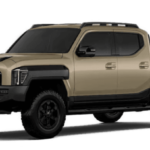 Kia Tasman vs Isuzu D-Max Australia: Which Ute Is Better in 2026?
Its distinctive exterior styling may also influence demand among second-hand buyers.
Furthermore, significant discounts on new examples can affect the perceived value of used vehicles.
This does not necessarily mean the Tasman will depreciate rapidly.
However, there is greater uncertainty surrounding its long-term resale performance.
Resale confidence winner: Toyota HiLux.
Kia Tasman vs Toyota HiLux for Australian Families
Families increasingly choose dual-cab utes because they combine passenger accommodation with the ability to tow trailers and transport recreational equipment.
For this type of ownership, the Kia Tasman offers several advantages.
Its spacious interior, available reclining rear seats and modern technology help create a comfortable environment.
The longer wheelbase and generous cabin dimensions are particularly attractive for families with growing children.
The Toyota HiLux also works well as a family vehicle.
Its updated interior provides modern safety features and practical equipment, while its established mechanical reputation offers additional peace of mind.
However, passengers who regularly spend several hours in the rear seats may appreciate the Tasman's extra space.
Family winner: Kia Tasman.
Kia Tasman vs Toyota HiLux for Tradies
For Australian tradies, a ute needs to be more than comfortable.
It must transport tools, handle heavy loads and remain dependable over many years.
Why Choose the Kia Tasman?
The Tasman offers useful payload capabilities, practical tub features, strong towing capacity and a long warranty.
Its modern cabin can also be beneficial for tradespeople who spend much of their working day driving between job sites.
Why Choose the Toyota HiLux?
The HiLux offers a mature commercial ecosystem, extensive accessory availability and strong familiarity among Australian mechanics.
Its established reliability reputation can be particularly valuable for businesses where vehicle downtime is expensive.
For remote work locations, the widespread Toyota support network is another advantage.
Tradie winner: Toyota HiLux for established fleet support, although the Tasman deserves consideration when its purchase price is substantially lower.
Kia Tasman vs Toyota HiLux: Pros and Cons
Kia Tasman Advantages
- Spacious and modern interior
- Competitive engine performance
- Eight-speed automatic transmission
- Excellent rear passenger accommodation
- Comfortable highway driving
- Seven-year warranty
- Longer scheduled service intervals
- Competitive towing capacity
- Attractive pricing opportunities
Kia Tasman Disadvantages
- Limited long-term reliability history
- Uncertain resale values
- Polarising exterior design
- Less torque than the automatic HiLux
- Larger dimensions can make parking more difficult
Toyota HiLux Advantages
- Established reliability reputation
- Strong 500 Nm torque output in automatic versions
- Extensive Australian service network
- Strong historical resale demand
- Proven off-road credentials
- Large aftermarket accessory selection
- Competitive fuel efficiency
- Available manual transmission
Toyota HiLux Disadvantages
- Shorter scheduled servicing intervals
- Less rear passenger space
- Five-year standard warranty
- Some versions can be relatively expensive
- Ride comfort remains dependent on suspension specification and load
Kia Tasman vs Toyota HiLux: Which Should You Buy?
Choosing between these vehicles ultimately depends on how we intend to use them.
| Buyer Priority | Our Preferred Choice |
|---|---|
| Maximum automatic diesel torque | Toyota HiLux |
| Family comfort | Kia Tasman |
| Rear passenger space | Kia Tasman |
| Long-term reliability history | Toyota HiLux |
| Heavy-duty towing confidence | Toyota HiLux automatic |
| Warranty coverage | Kia Tasman |
| Remote-area service support | Toyota HiLux |
| Interior technology | Kia Tasman |
| Resale confidence | Toyota HiLux |
| Discounted purchase value | Kia Tasman |
| Established off-road ecosystem | Toyota HiLux |
Choose the Kia Tasman If...
The Tasman makes sense if we want a comfortable, modern and spacious dual-cab ute.
It is particularly attractive for family buyers, people who regularly travel on highways and those who appreciate technology and long warranty coverage.
A substantial dealer discount can make the Tasman even more compelling.
Choose the Toyota HiLux If...
The Toyota HiLux is a strong choice if we prioritise long-term ownership confidence, heavy-duty use and proven Australian off-road credentials.
It is particularly appealing for tradespeople, remote-area travellers and buyers who regularly tow heavy trailers.
The automatic HiLux's 500 Nm diesel engine is another major attraction.
Final Verdict: Is the Kia Tasman Better Than the Toyota HiLux?
The Kia Tasman vs Toyota HiLux Australia comparison demonstrates just how competitive the modern dual-cab ute market has become.
The Tasman is a serious alternative to the HiLux. It offers a more spacious cabin, excellent comfort, modern technology, competitive towing capability and generous warranty coverage.
For many Australian families, particularly those who use their ute as an everyday vehicle, the Tasman could actually be the more enjoyable choice.
However, the Toyota HiLux remains difficult to beat as a dependable all-round workhorse.
Its established reputation, strong automatic diesel torque, extensive service network and historical resale performance make it particularly appealing for demanding ownership conditions.
Our overall preference is the Toyota HiLux for long-term heavy-duty ownership, while the Kia Tasman offers excellent value for buyers prioritising comfort, features and a competitive purchase price.
Ultimately, the best approach is to test-drive comparable variants and obtain actual drive-away quotations. The difference between two specific grades can matter far more than the reputation of either model.
Frequently Asked Questions
1. Is the Kia Tasman better than the Toyota HiLux?
The Kia Tasman offers advantages in interior space, comfort, technology and warranty coverage. However, the Toyota HiLux has a stronger long-term reliability track record, greater automatic diesel torque and more established resale confidence. The better choice depends on individual priorities.
2. Which is better for towing, the Kia Tasman or Toyota HiLux?
Both utes offer a maximum braked towing capacity of 3,500 kg in suitable configurations. The automatic Toyota HiLux produces 500 Nm of torque compared with the Tasman's 440 Nm, giving Toyota an advantage in engine pulling performance. However, buyers should compare GCM, GVM and available payload before selecting either vehicle for heavy towing.
3. Is the Kia Tasman more fuel-efficient than the HiLux?
Generally, the 2026 Toyota HiLux has a small advantage in official combined fuel consumption, depending on the variant. The Kia Tasman uses approximately 7.4–8.1 L/100 km, while diesel 4x4 HiLux models are rated at approximately 7.1–7.6 L/100 km. Actual consumption depends on driving conditions and vehicle load.
This content may interest you!Kia Tasman vs Ford Ranger Australia: Which Ute Is Better in 2026?4. Is the Kia Tasman reliable in Australia?
The Kia Tasman uses established diesel technology and is backed by a seven-year warranty. However, because it is relatively new to the Australian market, its long-term reliability has not yet been demonstrated across high-mileage ownership. The Toyota HiLux currently has a more extensive reliability history.
5. Should I buy a Kia Tasman or Toyota HiLux in 2026?
Buy the Kia Tasman if you prioritise cabin comfort, passenger space, modern features and warranty coverage, particularly when attractive dealer discounts are available. Choose the Toyota HiLux if you want an established workhorse with strong automatic diesel torque, extensive Australian service support and a proven resale reputation. Both are capable dual-cab utes, but they appeal to slightly different buyers.
Leave a Reply