
Subaru Outback Alternatives Australia: The Best Rivals Worth Considering

The Subaru Outback has carved out an unusual niche in Australia. It is part wagon, part SUV, part weekend escape machine, and somehow manages to feel equally comfortable outside a suburban café and halfway down a gravel road. That combination explains why finding genuine Subaru Outback alternatives in Australia isn't quite as straightforward as comparing a handful of medium SUVs.
The latest Australian Outback reinforces that formula. For the 2026 model year, Subaru gives the standard Outback permanent Symmetrical AWD, 220 mm of ground clearance, a 530-litre cargo area and a 2,000 kg braked towing capacity. The tougher Wilderness raises clearance to 240 mm and towing capacity to 2,100 kg.
Still, the Outback won't suit everybody. Perhaps we want hybrid fuel economy. Maybe we need seven seats. Perhaps traditional SUV styling matters more than the Outback's wagon-like personality. Or maybe we'd rather have stronger towing capability.
That's where the alternatives become interesting.
There isn't one vehicle that completely duplicates the Outback. Instead, several Australian SUVs beat it in particular areas. Let's work out which one makes the most sense for how we actually drive.
- What Makes a Good Subaru Outback Alternative?
- Quick Comparison of the Best Subaru Outback Alternatives
- Toyota RAV4: The Obvious Fuel-Efficient Alternative
- Mazda CX-5: A Great All-Round Alternative
- Honda CR-V: One of the Best Family Alternatives
- Škoda Kodiaq: The Practical European Alternative
- Hyundai Santa Fe: Better When Seven Seats Matter
- Kia Sorento: Another Strong Seven-Seat Choice
- Toyota Kluger: A Bigger Toyota Alternative
- Subaru Forester: Stay With Subaru, Just Go Smaller
- Ford Everest: The Alternative for Serious Adventure
- Volkswagen Tiguan: A More Road-Focused European Rival
- Which Subaru Outback Alternative Has the Best Fuel Economy?
- Which Alternative Is Best for Towing?
- Which Outback Alternative Is Best for Families?
- Which Alternative Feels Most Like an Outback?
- Should We Buy an Outback or a Traditional SUV?
- Best Subaru Outback Alternative for Different Buyers
- Is the Subaru Outback Still the Better Choice?
- What We'd Test Before Choosing an Outback Alternative
- Final Thoughts on Subaru Outback Alternatives in Australia
- Frequently Asked Questions
What Makes a Good Subaru Outback Alternative?
Before throwing competitors into the ring, we need to understand what we're trying to replace.
The Outback's appeal comes from balance.
It gives us SUV-like clearance without feeling like a lumbering 4WD. We get permanent AWD without needing a hardcore off-road vehicle. There's plenty of room for luggage, yet the vehicle remains low enough to load easily. Long-distance comfort is another important part of the equation.
A convincing alternative therefore needs to offer several of the same qualities rather than simply sharing a similar price.
We'd look for:
- AWD availability or strong all-weather capability
- Comfortable highway manners
- Useful cargo capacity
- Reasonable ground clearance
- Family-friendly passenger space
- Modern safety technology
- Enough towing capacity for typical recreational use
- Competitive ownership costs
- Australian dealer and servicing support
Some rivals tick almost every box. Others sacrifice one Outback strength while gaining something significant elsewhere.
Quick Comparison of the Best Subaru Outback Alternatives
Here's how some of the strongest contenders broadly position themselves.
| Alternative | Biggest Advantage Over Outback | Best For |
|---|---|---|
| Toyota RAV4 | Hybrid efficiency | High-mileage families |
| Mazda CX-5 | Value and road manners | Everyday driving |
| Honda CR-V | Cabin space and hybrid options | Families |
| Škoda Kodiaq | Space and towing | Larger households |
| Hyundai Santa Fe | Seven-seat practicality | Family road trips |
| Kia Sorento | Broad powertrain choice | Versatility |
| Toyota Kluger | Spacious three-row cabin | Large families |
| Subaru Forester | Smaller footprint | Subaru loyalists |
| Ford Everest | Serious off-road ability | Touring and towing |
| Volkswagen Tiguan | European driving feel | Urban families |
Think of the Outback as the Swiss Army knife in this group. Several rivals have sharper individual blades, but few blend everything quite the same way.
Toyota RAV4: The Obvious Fuel-Efficient Alternative
If we asked Australian buyers to name a Subaru Outback rival without giving them time to think, the Toyota RAV4 would probably be one of the first answers.
And there's good reason.
The RAV4 offers excellent everyday usability, strong resale appeal and, most importantly, hybrid powertrains that transform the running-cost equation.
Why the RAV4 Appeals
Toyota's latest Australian RAV4 offers hybrid and plug-in hybrid options. Official figures for the hybrid include fuel consumption as low as around 4.5 L/100 km depending on the variant, while AWD versions can tow up to 1,500 kg braked.
That efficiency matters if we're commuting every day.
An Outback might make more sense when the sealed road ends. A RAV4 Hybrid starts making more sense when we're covering 20,000 or 30,000 kilometres annually and most of those kilometres involve suburban roads and highways.
Where the Outback Still Wins
The biggest compromise is rugged versatility.
The Outback's 2,000 kg standard braked towing capacity is considerably stronger than the RAV4 AWD's 1,500 kg figure.
We'd therefore choose the RAV4 for economy and the Outback for adventure.
Mazda CX-5: A Great All-Round Alternative
The Mazda CX-5 has long been one of Australia's default medium-SUV choices, and the new-generation model makes the comparison even more interesting.
Mazda now provides AWD across the Australian CX-5 range, pairing it with a naturally aspirated 2.5-litre petrol engine and conventional six-speed automatic transmission. Mazda quotes up to 1,800 kg of braked towing capacity.
That's surprisingly close to Outback territory.
CX-5 Versus Outback for Everyday Driving
The Mazda tends to feel more like a conventional road-focused SUV.
Steering is composed, body movements are well controlled and the cabin has an upmarket atmosphere. If our Outback alternatives search is mostly about finding something refined for school runs, commuting and interstate travel, the CX-5 deserves a serious look.
Pricing strengthens the argument. Mazda announced Australian list pricing beginning at $39,990 for the 2026 CX-5 Pure AWD, while the Akera sits at $54,990 before on-road costs.
That's notable because the 2026 Outback AWD starts from a recommended driveaway price of $54,495 in Sydney, although driveaway pricing varies by location.
Where the Mazda Falls Short
The Outback remains the better choice for rough-road confidence.
Mazda's AWD system adds welcome traction, but the Outback feels designed around travelling beyond the bitumen rather than merely coping when conditions deteriorate.
Honda CR-V: One of the Best Family Alternatives
Sometimes the best Outback replacement isn't the toughest SUV.
It's the one our family enjoys living with every day.
Enter the Honda CR-V.
Its greatest strength is space. Honda has focused heavily on passenger comfort, cabin usability and straightforward ergonomics.
CR-V Hybrid Makes the Choice More Interesting
The Australian CR-V range now includes several hybrid variants. Honda lists hybrid fuel use around 5.5 L/100 km for selected front-drive versions and 5.7 L/100 km for AWD versions. The e LX AWD is priced from $58,900, while the e RS AWD starts from $64,400 at the time of writing.
If fuel economy matters more than trail ability, the Honda suddenly becomes extremely persuasive.
Outback or CR-V?
Choose the CR-V when we prioritise rear passenger space, urban comfort and hybrid efficiency.
Choose the Outback when gravel tracks, camping, roof loads and adventurous weekends sit higher on the agenda.
It's almost the difference between hiking boots and comfortable trainers. Both can walk a long way; only one really wants the muddy trail.
Škoda Kodiaq: The Practical European Alternative
The Škoda Kodiaq deserves more attention from Australians researching cars similar to the Subaru Outback.
It delivers huge practicality without becoming an old-school 4WD.
More importantly, the Australian Kodiaq range gives us multiple powertrain choices and significantly stronger towing capability in selected versions.
Why the Kodiaq Is So Compelling
For MY26, Škoda lists braked towing capacity of 1,800 kg for hybrid versions and up to 2,300 kg for 4x4 variants when properly equipped.
That's enough to put it ahead of even the 2,100 kg Outback Wilderness.
The Kodiaq also offers the option of seven seats depending on configuration.
If we're trying to combine Outback-style touring ability with greater passenger capacity, the Škoda has a strong argument.
Pricing Can Be Competitive Too
Škoda advertised the MY26 Kodiaq Hybrid from $49,990 driveaway and the Select 4x4 from $56,990 driveaway, although prices and offers can vary.
That positions it directly in Outback territory rather than far above it.
Hyundai Santa Fe: Better When Seven Seats Matter
The Hyundai Santa Fe approaches family transport differently.
Where the Outback feels like an adventure wagon enlarged into an SUV, the Santa Fe behaves like a genuine family SUV from day one.
That distinction matters.
Its upright dimensions provide generous passenger space, three-row versatility and excellent luggage flexibility.
Who Should Choose the Santa Fe?
We'd put it near the top of our shortlist if we regularly carry more than five people.
Parents with three or four children may appreciate those extra seats far more than the Outback's additional ground clearance.
The Santa Fe also feels more lounge-like inside. Long highway journeys become its natural habitat.
Why the Outback Remains Different
Five-seat buyers may find the Santa Fe unnecessarily large.
The Outback feels easier to place on narrow roads, and its long, relatively low cargo area works brilliantly for camping equipment, bicycles and bulky recreational gear.
Kia Sorento: Another Strong Seven-Seat Choice
The Kia Sorento follows a similar philosophy to the Santa Fe, although its styling and driving character give it a slightly different flavour.
For families comparing several Subaru Outback alternatives, it's difficult to ignore because the Sorento combines a three-row interior with a broad selection of powertrains.
This content may interest you!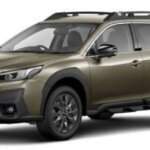 Subaru Outback Competitors Australia: Best Alternatives Compared
Depending on the current Australian range, buyers may encounter petrol, diesel and electrified configurations.
Where Sorento Makes More Sense
Imagine our typical Saturday.
Three children, grandparents visiting, sports equipment in the back and a weekend trip planned.
The Outback's five seats suddenly become the limiting factor rather than a selling point.
That's where the Sorento wins.
Where Outback Makes More Sense
If we're carrying four or five people maximum but spend plenty of time exploring unsealed roads, that extra row starts looking like luggage we're carrying permanently but rarely using.
The Outback's simpler five-seat layout becomes more appealing.
Toyota Kluger: A Bigger Toyota Alternative
The Toyota Kluger is another logical step upward for buyers who admire Toyota reliability and resale value but find the RAV4 too small.
Think of it as the RAV4's older, broader sibling.
The Kluger offers genuine family accommodation and hybrid availability while maintaining road manners that suit Australian suburbs and highways.
Kluger Versus Outback
The choice primarily comes down to size and mission.
The Kluger works beautifully for families needing multiple seating rows and generous passenger room.
The Outback better suits buyers who would rather devote vehicle length to cargo than passengers.
There is something refreshingly honest about that.
Not everyone needs seven seats.
Sometimes what we really need is room for a tent, cooler, two mountain bikes and enough snacks to survive a minor apocalypse.
Subaru Forester: Stay With Subaru, Just Go Smaller
Here's an alternative hiding inside Subaru's own showroom.
The Forester.
People often compare the Forester and Outback as though one should automatically replace the other, but their personalities remain noticeably different.
Why Choose the Forester Instead?
The Forester's boxier body gives us excellent visibility and a more conventional SUV seating position.
Its shorter footprint can also make urban parking easier.
We still get Subaru's familiar AWD philosophy and outdoor-oriented personality.
Why Choose the Outback Instead?
The Outback feels more substantial and more relaxed over long distances.
It also offers that stretched wagon-style cargo arrangement that people carrying outdoor equipment often appreciate.
If our adventures frequently involve interstate highways before reaching dirt roads, the Outback remains hard to beat.
Ford Everest: The Alternative for Serious Adventure
At some point we leave crossover territory entirely.
The Ford Everest isn't really an Outback clone. It's the option we consider when we like what the Outback represents but discover that we actually need much more capability.
We're talking towing, difficult tracks and remote touring.
Everest Versus Outback Off Road
The Everest's ladder-frame construction and proper 4WD hardware make it the more appropriate machine for demanding terrain.
An Outback handles gravel, snow, muddy campsites and relatively mild trails impressively well.
An Everest can go considerably further.
But capability always sends us an invoice.
The Price of Extra Capability
The Everest is heavier, larger and less wagon-like around town.
Running costs can also rise.
So we shouldn't buy serious 4WD hardware simply because we might use it one weekend every three years.
For mixed urban and recreational driving, the Outback remains the sweeter compromise.
Volkswagen Tiguan: A More Road-Focused European Rival
The Volkswagen Tiguan belongs on this list because not every Outback shopper is actually seeking adventure.
Some simply want a spacious, refined, high-quality SUV.
The Tiguan delivers a polished driving experience, contemporary technology and that distinctly European sense of solidity.
Why We'd Consider a Tiguan
Urban drivers who rarely leave sealed roads may prefer its road behaviour and cabin presentation.
Its SUV proportions also appeal to buyers who find the Outback's wagon heritage slightly awkward visually.
Why We'd Still Pick the Subaru
When rain turns a forest road into mud, the Outback begins earning its keep.
Its AWD system, clearance and X-Mode technology are central to its identity rather than accessories added to an otherwise road-focused package.
Which Subaru Outback Alternative Has the Best Fuel Economy?
Fuel economy is one of the few areas where several rivals can decisively outgun a petrol Outback.
Hybridisation changes everything.
The RAV4 is particularly strong here, with Toyota quoting combined fuel consumption down around 4.5 L/100 km for some current hybrid versions.
Honda's CR-V hybrids also return attractive official figures around 5.5–5.7 L/100 km depending on drivetrain.
If our daily commute is long, those numbers deserve attention.
An AWD Outback might save our weekend when a campsite access road becomes slippery.
A hybrid could save money every single Monday through Friday.
The better choice depends on which scenario appears more frequently in our life.
Which Alternative Is Best for Towing?
This question separates lifestyle SUVs surprisingly quickly.
The 2026 naturally aspirated Outback can tow up to 2,000 kg braked, while the turbocharged Wilderness increases that figure to 2,100 kg.
That's already respectable.
The new Mazda CX-5 reaches 1,800 kg, placing it below the Subaru but still within useful territory.
The RAV4 AWD sits at 1,500 kg.
Meanwhile, selected Kodiaq 4x4 variants are rated to 2,300 kg when fitted appropriately.
If heavier caravans or boats are involved, however, vehicles such as the Ford Everest move into a different capability class altogether.
Never choose a tow vehicle based on the headline towing number alone. Payload, tow-ball download, GVM, GCM and the loaded weight of passengers and equipment all matter.
Which Outback Alternative Is Best for Families?
There's no universal winner because Australian families aren't assembled from identical Lego bricks.
This content may interest you!Subaru Outback Pros and Cons: Is It Really Worth Buying?For a couple with two children, the Outback itself remains excellent.
Need lower fuel bills? RAV4 Hybrid.
Want more rear-seat comfort and hybrid efficiency? CR-V.
Need occasional third-row seating? Kodiaq.
Regularly carrying six or seven people? Santa Fe, Sorento or Kluger makes more sense.
Want weekends involving remote touring and serious towing? Everest.
That's why searching for the "best SUV" isn't especially useful.
The better question is: best for what?
Which Alternative Feels Most Like an Outback?
This is where things become slightly ironic.
Almost none of them do.
And that's precisely why the Outback survives.
The Mazda CX-5 gets relatively close in size, AWD capability and everyday usability.
The RAV4 matches its family-oriented practicality but moves toward efficiency.
The Kodiaq captures the touring philosophy while adding space.
The Forester reproduces Subaru's AWD character but in a smaller package.
Yet none blends long-roof wagon proportions, substantial ground clearance, permanent AWD and passenger-car manners in quite the same recipe.
The Outback is a little like a ute with the tray removed from the equation: unusual until we understand why people love it.
Should We Buy an Outback or a Traditional SUV?
Look at what sits in our driveway on Sunday morning.
If it's surfboards, hiking equipment, dogs and camping gear, the Outback makes enormous sense.
If it's child seats and grandparents, we'd investigate a seven-seater.
If Monday morning means a 70-kilometre commute, hybrid alternatives suddenly become attractive.
If Friday afternoon means hitching up a large caravan, towing capability deserves priority.
Buying according to reality rather than imagination can save thousands of dollars.
We all enjoy picturing ourselves crossing the Australian wilderness.
Most of us spend considerably more time crossing supermarket car parks.
Best Subaru Outback Alternative for Different Buyers
If we had to simplify the entire comparison, our picks would look something like this.
The Toyota RAV4 Hybrid is the strongest option for fuel-conscious drivers.
The Mazda CX-5 AWD is arguably the closest mainstream all-round rival and offers particularly strong value in lower grades.
The Honda CR-V Hybrid is excellent for families wanting comfort and efficiency.
The Škoda Kodiaq 4x4 deserves consideration when towing and cabin flexibility matter.
The Hyundai Santa Fe or Kia Sorento makes more sense for buyers needing seven proper seats.
The Ford Everest is the step up when genuine off-road capability matters more than passenger-car road manners.
And the Subaru Forester remains the obvious alternative for someone who loves Subaru's formula but doesn't need the Outback's size.
Is the Subaru Outback Still the Better Choice?
Quite often, yes.
The more alternatives we compare, the clearer the Outback's specialisation becomes.
The 2026 Australian model delivers 220 mm of ground clearance in regular versions, rising to 240 mm for Wilderness variants. Cargo capacity is listed at 530 litres with the rear seats raised, and towing reaches 2,100 kg in turbocharged Wilderness models.
Those numbers aren't individually revolutionary.
The magic is having them together.
A hybrid rival will consume less fuel.
A seven-seat SUV carries more passengers.
A ladder-frame 4WD tows more and travels further off road.
A sporty crossover may handle better.
Yet the Outback blends a little of each personality without becoming annoying to live with.
That's valuable.
What We'd Test Before Choosing an Outback Alternative
Specifications can narrow a shortlist, but we'd never make the final decision from a browser tab.
Seat comfort matters enormously, particularly for Australian interstate driving.
Take the potential vehicle through the roads we actually use. Check visibility entering roundabouts. Park it. Put a child seat in the back. Open the boot and imagine real luggage inside.
Then consider servicing, insurance, tyre prices and fuel consumption.
The winning car isn't necessarily the one that feels most impressive during a 15-minute dealership test drive.
It's the one we're still happy to own four years later.
Final Thoughts on Subaru Outback Alternatives in Australia
Australia gives us no shortage of excellent SUVs, yet genuine Subaru Outback alternatives remain surprisingly difficult to identify.
That's a compliment to the Outback rather than criticism of its competitors.
If we prioritise fuel efficiency, the Toyota RAV4 Hybrid deserves to sit near the top of the list. If we want sharp value and comfortable road manners, the Mazda CX-5 makes a persuasive case. Families wanting greater passenger space should investigate the Honda CR-V, while seven-seat buyers can move toward the Škoda Kodiaq, Hyundai Santa Fe, Kia Sorento or Toyota Kluger.
Anyone needing genuinely serious off-road ability should consider something like the Ford Everest instead.
But buyers wanting AWD, substantial clearance, five-seat practicality, useful towing capability and comfortable highway manners in one package may eventually discover something amusing.
After comparing all the Subaru Outback alternatives in Australia, the vehicle that best fits the brief may still be the Outback itself.
Frequently Asked Questions
What is the closest alternative to a Subaru Outback in Australia?
The Mazda CX-5 AWD is one of the closest mainstream alternatives for buyers prioritising five-seat practicality, AWD and good road manners. The Toyota RAV4 AWD is another logical competitor, particularly if hybrid fuel economy is important. Neither exactly duplicates the Outback's wagon-style proportions and adventure-focused setup.
Is a Toyota RAV4 better than a Subaru Outback?
It depends on our priorities. The RAV4 Hybrid is considerably more attractive for fuel-conscious commuting, with Toyota quoting fuel consumption as low as approximately 4.5 L/100 km on certain versions. The Outback counters with greater standard ground clearance and stronger towing capability.
What is a cheaper alternative to the Subaru Outback?
The Mazda CX-5 is worth investigating. Mazda announced a starting list price of $39,990 for the 2026 CX-5 Pure AWD, considerably below higher-spec Outback pricing, although list and driveaway prices aren't directly comparable and on-road costs vary.
What seven-seat SUV is a good alternative to the Subaru Outback?
The Škoda Kodiaq, Hyundai Santa Fe, Kia Sorento and Toyota Kluger are strong candidates. We'd choose among them according to powertrain, towing requirements, third-row usage and budget rather than simply vehicle size.
This content may interest you!Subaru Outback vs Honda CR-V Australia: Which SUV Wins?Which Subaru Outback alternative is best for towing?
Among conventional crossover-style alternatives, selected Škoda Kodiaq 4x4 models stand out with up to 2,300 kg braked towing capacity, compared with 2,000 kg for the naturally aspirated 2026 Outback and 2,100 kg for the Wilderness. Buyers needing significantly more capability should investigate larger 4WDs such as the Ford Everest.
Leave a Reply