
Subaru Outback Competitors Australia: Best Alternatives Compared

The Subaru Outback competitors Australia buyers should consider are a surprisingly varied bunch. That is partly because the Outback itself refuses to fit neatly into one box. It has the footprint and practicality of a large family SUV, the road manners of a wagon, permanent all-wheel-drive credibility, generous ground clearance, and enough towing ability to make weekends outside the suburbs genuinely interesting.
For 2026, that identity has become even clearer. Subaru Australia describes the latest Outback as a large SUV with the versatility of an all-terrain wagon. The standard 2.5-litre model produces 137kW and 254Nm, provides 220mm of ground clearance and 530 litres of cargo capacity, while Subaru quotes a 2,000kg braked towing capacity. Wilderness versions increase ground clearance to 240mm and towing capacity to 2,100kg.
That puts the Outback in an unusual position. We cannot simply line it up beside half a dozen medium SUVs and call the comparison finished. Australian buyers might cross-shop it against the Toyota RAV4, Nissan X-Trail and Mazda CX-5, but they may also look at larger, more premium or more family-focused alternatives.
So, which vehicles deserve a place on our shortlist? Let’s dig into the strongest Subaru Outback alternatives available to Australian drivers and, more importantly, figure out what each one does better—or worse.
- What Makes a Genuine Subaru Outback Competitor?
- Subaru Outback vs Toyota RAV4
- Subaru Outback vs Nissan X-Trail
- Subaru Outback vs Mazda CX-5
- Subaru Outback vs Honda CR-V
- Subaru Outback vs Mazda CX-60
- Subaru Outback vs Skoda Kodiaq
- Subaru Outback vs Hyundai Santa Fe
- Subaru Outback vs Kia Sorento
- Subaru Outback vs Volkswagen Tiguan
- Subaru Outback vs Ford Everest
- Subaru Outback Wilderness vs Traditional SUVs
- Which Subaru Outback Competitor Has the Best Fuel Economy?
- Which Outback Alternative Is Best for Towing?
- Which Competitor Has the Most Interior Space?
- Which Subaru Outback Alternative Is Best Off-Road?
- Best Subaru Outback Competitors by Buyer Type
- Is the Subaru Outback Better Than Its Competitors?
- What Should We Check Before Buying an Outback Alternative?
- Are Used Subaru Outback Competitors Worth Considering?
- Subaru Outback Competitors Australia: Our Final Verdict
- Frequently Asked Questions
What Makes a Genuine Subaru Outback Competitor?
Before comparing models, we need to understand what makes the Outback different.
Most SUVs are designed primarily around family transport. The Outback adds another layer. It feels built around the idea that Australian families might leave sealed roads occasionally, tow something on the weekend, carry camping equipment, load bicycles onto the roof or simply travel very long distances.
That means a true competitor ideally needs several ingredients:
- A roomy five-seat cabin
- Useful luggage capacity
- Available or standard AWD
- Respectable ground clearance
- Strong safety technology
- Comfortable highway manners
- Reasonable towing capability
- Enough refinement for daily driving
- A reputation suited to Australian conditions
Few alternatives tick every box.
That is exactly why choosing between them gets interesting.
The Outback Sits Between a Wagon and an SUV
Historically, the Outback has felt like a raised wagon wearing hiking boots.
The latest generation moves visually closer to the SUV world, but the basic appeal remains familiar. Its relatively long body gives it a stretched, planted appearance rather than the tall and upright proportions we see on many SUVs.
Subaru Australia's MY26 specifications list the regular Outback at 4,880mm long, 1,880mm wide and 1,715mm high.
That shape matters.
A lower, longer vehicle can feel more natural on highways and winding roads, while the high ground clearance still provides confidence on rough tracks. It is rather like having a pair of hiking boots that somehow remain comfortable enough to wear around town.
Why This Matters in Australia
Australian drivers often ask more from one vehicle than manufacturers probably expect.
Monday might involve school drop-offs.
Friday could mean a 600km highway trip.
Saturday morning could involve gravel roads, a boat ramp or a camping track.
That broad usage pattern is exactly where the Outback makes sense—and where some competitors begin to separate themselves from the pack.
Subaru Outback vs Toyota RAV4
If there is one obvious name on almost every Australian SUV shopping list, it is the Toyota RAV4.
The RAV4 takes a different approach from the Outback. Toyota leans heavily into electrification, efficiency and mainstream family practicality, while Subaru prioritises standard AWD capability and an adventure-oriented personality.
The latest Australian RAV4 range offers hybrid and plug-in hybrid powertrains. Toyota quotes fuel consumption from approximately 4.5L/100km for selected versions and a maximum braked towing capacity of 1,500kg for AWD variants.
That tells us plenty about the fundamental difference.
The Toyota is the efficiency champion.
The Subaru is the heavier-duty adventure machine.
Where the RAV4 Beats the Outback
For buyers who spend almost all their time in suburbs and cities, the RAV4 can make enormous sense.
Fuel economy is a major advantage, especially for commuters covering thousands of kilometres each year. The hybrid drivetrain can also feel beautifully suited to stop-start urban traffic.
Toyota additionally offers enormous brand recognition in Australia, an extensive dealer network and strong demand in the used market.
The RAV4 therefore makes a convincing alternative if our priorities are:
- Hybrid efficiency
- Urban driving
- Running-cost consciousness
- Strong resale appeal
- Traditional medium-SUV dimensions
Where the Outback Fights Back
The Subaru counters with more standardised all-wheel-drive capability, greater ground clearance and stronger towing credentials.
Australian specifications quote 220mm of ground clearance for regular Outbacks compared with 240mm on Wilderness models. Maximum braked towing is rated at 2,000kg for naturally aspirated variants and 2,100kg for turbocharged Wilderness models.
So, if our weekend regularly involves dirt roads, trailers or rough campsites, the Outback starts making a more persuasive argument.
Subaru Outback vs Nissan X-Trail
The Nissan X-Trail is another compelling Subaru Outback competitor in Australia because it mixes practical family packaging with available electrification and AWD.
Where the Outback feels like an adventurous five-seat wagon-SUV, the X-Trail follows the traditional family SUV formula more closely.
And it has one particularly useful trick.
Depending on specification, the X-Trail can provide seven-seat flexibility.
Family Practicality Gives the X-Trail an Edge
For families who occasionally need more than five seats, this decision might end before it starts.
The Outback is strictly a five-seater.
The X-Trail can accommodate larger families in selected variants, giving it an immediate practical advantage.
Nissan's MY26 Australian specifications also list a 2,000kg maximum braked towing capacity for petrol versions, putting them directly into Outback territory. Five-seat petrol models offer up to 585 litres of cargo capacity measured to the roof, while Nissan's e-POWER versions offer 575 litres.
That makes the X-Trail much more than merely a cheaper substitute.
What About Nissan e-POWER?
The e-POWER models bring a very different driving experience.
Rather than functioning like a conventional petrol drivetrain, the petrol engine primarily supports electricity generation while electric motors drive the vehicle.
For us as drivers, that can translate into smooth, immediate responses and an almost EV-like feeling around town.
However, buyers focused on towing should pay attention to specifications. Nissan lists a lower 1,650kg maximum braked towing capacity for MY26 e-POWER versions.
Outback or X-Trail?
Choose the X-Trail if extra seating flexibility, a more conventional SUV layout or electrified driving appeals.
Choose the Outback if five seats are enough and rough-road ability is higher on the priority list.
Subaru Outback vs Mazda CX-5
The Mazda CX-5 has long been one of Australia's most polished mainstream SUVs.
It appeals to buyers who want practicality without feeling as though they have purchased an appliance on wheels.
Its greatest strength is refinement.
Mazda has traditionally paid considerable attention to steering, cabin materials, driving position and visual design. The result is an SUV that can feel more premium than its badge or price might suggest.
Why Buyers Cross-Shop the CX-5 and Outback
At first glance, they seem quite different.
The CX-5 is more compact.
The Outback is longer and more adventure oriented.
Yet both attract buyers who care about how a vehicle feels rather than simply comparing boot capacities on a spreadsheet.
The CX-5 is likely to appeal more strongly to urban drivers who want:
- Easier parking
- A premium-feeling cabin
- Responsive road manners
- Stylish exterior design
- A manageable medium-SUV footprint
The Outback makes more sense when cargo, rough-road travel and long-distance versatility take priority.
This depends on trim level, but Mazda has historically been particularly good at creating expensive-looking interiors without requiring buyers to jump into a luxury badge.
The Outback goes in another direction.
Its cabin feels practical, roomy and increasingly technology focused. For MY26, Subaru introduced a 12.1-inch infotainment touchscreen alongside a 12.3-inch digital driver display.
Think of the Mazda as a tailored jacket and the Subaru as a high-quality outdoor coat.
Both can be excellent.
We simply wear them for different occasions.
Subaru Outback vs Honda CR-V
The Honda CR-V deserves serious attention from families seeking a comfortable and spacious alternative to the Outback.
Honda's philosophy tends to prioritise clever packaging. That might sound boring until we actually live with a vehicle.
Wide-opening doors, useful storage areas, sensible seating positions and generous rear-seat room can matter far more after three years of ownership than flashy ambient lighting.
Where the CR-V Makes Sense
The CR-V suits buyers who spend most of their time on sealed roads.
Its strengths revolve around everyday family use rather than pretending every school run is an expedition through the Simpson Desert.
For many Australians, that is exactly what they need.
If our regular routine revolves around commuting, groceries, children and highway holidays, we might appreciate the Honda's straightforward personality more than the Outback's stronger adventure credentials.
Why the Outback Still Has an Advantage Off the Bitumen
This is where Subaru's DNA becomes important.
Symmetrical All-Wheel Drive is standard across the MY26 Outback range, while X-Mode and substantial ground clearance reinforce its ability to tackle conditions beyond perfect asphalt.
If dirt-road confidence matters frequently rather than theoretically, the Subaru has the clearer mission.
Subaru Outback vs Mazda CX-60
Want something more luxurious?
Now the comparison gets interesting.
The Mazda CX-60 targets buyers looking for a more premium experience without automatically moving into BMW, Audi or Mercedes-Benz territory.
Its positioning is therefore above traditional Outback alternatives such as the CX-5, X-Trail and RAV4.
Yet buyers considering higher Outback grades may still find themselves looking at a CX-60.
The Mazda emphasises cabin presentation, sophisticated powertrain options and rear-wheel-drive-based architecture.
This content may interest you!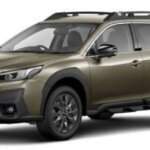 Subaru Outback Pros and Cons: Is It Really Worth Buying?
The Outback takes a different route: utility first, adventure second and luxury third.
That does not mean the Subaru feels cheap. Far from it.
It simply avoids pretending to be something it is not.
Who Should Pick the Mazda?
The CX-60 will make more sense when:
- Interior quality ranks above off-road practicality
- Strong road performance matters
- Premium styling is important
- Most driving happens on sealed surfaces
- We want something that feels closer to a luxury SUV
Pick the Outback if capability, visibility, practicality and dirt-road confidence outweigh badge prestige.
Subaru Outback vs Skoda Kodiaq
The Skoda Kodiaq is perhaps one of the smartest alternatives for buyers who approach car shopping logically.
It is spacious, clever and family oriented, and it offers seven-seat versatility that the Subaru cannot match.
Skoda's practical details often feel as though the designers actually spent time living with children, shopping bags and luggage instead of simply staring at computer models.
The Kodiaq's Secret Weapon: Space
Need seven seats?
The Kodiaq immediately becomes attractive.
Need a spacious cabin for long interstate journeys?
Again, it deserves attention.
European road manners are another strength. The Kodiaq typically feels controlled and composed at highway speeds without becoming unnecessarily harsh.
The Outback remains more naturally aligned with gravel roads, camping and light off-road use, but the Kodiaq can be the better family road-trip machine for buyers who rarely leave sealed surfaces.
Subaru Outback vs Hyundai Santa Fe
Few competitors have changed as dramatically as the Hyundai Santa Fe.
Modern Santa Fe models have moved towards a large, boxy and extremely family-focused design.
Compared with the Outback, it feels more like a traditional large SUV.
Santa Fe Is Better for Bigger Families
More seating is the obvious advantage.
The Subaru stops at five.
The Santa Fe is designed around buyers who need greater passenger capacity, making it particularly attractive for households with three or more children or families frequently carrying grandparents and friends.
The boxier body can also provide excellent packaging.
But Bigger Is Not Always Better
The Outback remains easier to understand for couples and smaller families.
Why carry unused seats around every day?
A five-seat layout means Subaru can focus on comfortable passenger accommodation and cargo space without squeezing in a third row.
For adventure-minded couples or families with one or two children, the Outback may therefore feel like the more honest solution.
Subaru Outback vs Kia Sorento
The Kia Sorento challenges the Outback with a broad set of capabilities.
It offers family-friendly seating, multiple powertrain possibilities and a more conventional large-SUV experience.
The Sorento particularly suits buyers who want one vehicle to handle school runs, family holidays and occasional towing while retaining seven-seat flexibility.
Sorento Strengths
The Kia makes sense when we prioritise:
- Seven-seat accommodation
- Strong family practicality
- Broad equipment levels
- Modern cabin technology
- Traditional SUV styling
The Subaru again wins buyers who do not need the third row and would rather have a lower, more wagon-like vehicle with strong AWD credentials.
Subaru Outback vs Volkswagen Tiguan
The Volkswagen Tiguan represents another European interpretation of the family SUV.
It tends to place greater emphasis on road sophistication, compact packaging and turbocharged performance than the Outback.
Drivers coming from sedans or hatchbacks may find the Tiguan immediately familiar.
The Tiguan Feels More Urban
This is probably the easiest way to describe the difference.
The Volkswagen feels designed around city roads, highways and European-style driving.
The Subaru feels like it expects us to eventually encounter a road where the bitumen disappears.
Neither philosophy is inherently superior.
It simply depends on where we spend our weekends.
Subaru Outback vs Ford Everest
At first, comparing the Outback with the Ford Everest might seem strange.
The Everest is a proper body-on-frame SUV with serious towing and off-road credentials.
Yet Australian buyers who enjoy caravanning, camping and remote-area travel could genuinely consider both.
Everest Wins When the Adventure Gets Serious
If our definition of off-road driving involves deep ruts, difficult tracks, heavy caravans and remote touring, an Everest belongs in another league.
The Outback is capable, but it is not intended to replace a traditional 4WD.
This distinction matters enormously.
Do We Actually Need a Full 4WD?
That is the more important question.
Many Australians buy hardcore four-wheel drives but spend 98% of their time on suburban streets.
That brings extra weight, greater dimensions and potentially higher running costs.
If the toughest road we regularly encounter is gravel leading to a campsite, the Outback can provide the capability we need without dragging around hardware we do not.
Subaru Outback Wilderness vs Traditional SUVs
The arrival of Wilderness variants changes the Outback equation.
Subaru gives the MY26 Wilderness 240mm of ground clearance and a turbocharged 2.4-litre Boxer engine. Maximum braked towing rises to 2,100kg.
That puts it closer to adventure-focused SUVs without transforming it into a body-on-frame 4WD.
And perhaps that middle ground is exactly the point.
Why Wilderness Could Be the Sweet Spot
Imagine our driving year looks like this:
We commute Monday to Friday.
Several times a month, we head down dirt roads.
Every few months, we go camping.
Once or twice a year, we make a substantial interstate trip.
Maybe we tow a relatively modest camper or trailer.
A traditional off-roader could be unnecessary.
A conventional crossover might feel insufficient.
The Outback Wilderness fills the gap.
Which Subaru Outback Competitor Has the Best Fuel Economy?
For fuel-conscious buyers, the electrified alternatives deserve immediate attention.
The newest Toyota RAV4 is an obvious example. Toyota quotes combined fuel consumption as low as approximately 4.5L/100km on selected Australian hybrid variants.
Hybrid alternatives from Honda, Nissan, Hyundai and Kia may also appeal depending on the chosen model and variant.
The petrol Outback's advantage is not class-leading fuel economy.
Its value proposition is broader capability.
This is worth remembering because comparing fuel consumption alone can be misleading.
A Swiss Army knife usually weighs more than a single kitchen knife because it does more things.
The Outback follows similar logic.
Which Outback Alternative Is Best for Towing?
Towing requirements can completely change our shortlist.
The regular MY26 Outback is rated to tow up to 2,000kg with trailer brakes, while turbocharged Wilderness variants reach 2,100kg.
Nissan's MY26 petrol X-Trail also reaches 2,000kg, although e-POWER models are rated lower at 1,650kg.
The latest AWD RAV4, meanwhile, is rated at 1,500kg braked.
For heavier caravans, boats or trailers, something like a Ford Everest becomes more appropriate than any crossover-style SUV.
Never Compare Towing Capacity Alone
Here is where buyers can get caught.
Maximum towing capacity is only one number.
We also need to investigate:
- Gross Vehicle Mass
- Gross Combined Mass
- Tow-ball download limits
- Vehicle payload
- Passenger weight
- Luggage and accessories
- Trailer weight when fully loaded
A vehicle being rated to tow a particular figure does not automatically mean we can fill every seat, pack the boot to the roof and attach the heaviest permitted trailer simultaneously.
Which Competitor Has the Most Interior Space?
If maximum passenger accommodation matters, seven-seat SUVs quickly gain the advantage.
This content may interest you!Subaru Outback 4 Cylinder vs 6 Cylinder: Which Engine Is Better?The Nissan X-Trail, Skoda Kodiaq, Kia Sorento and Hyundai Santa Fe are particularly relevant.
The Outback instead concentrates on making five seats comfortable.
Cargo capacity is rated at 530 litres with the rear seats upright, expanding substantially when they are folded.
That long cargo area can be particularly useful for bulky outdoor equipment.
Five Good Seats or Seven Occasional Ones?
This question matters more than brochure numbers.
If we genuinely use six or seven seats every week, buying a five-seat Outback makes little sense.
If we only imagine needing seven seats once every two years, sacrificing everyday comfort or paying for a larger vehicle could be equally questionable.
Buy for the 95% use case, not the fantasy 5%.
Which Subaru Outback Alternative Is Best Off-Road?
For genuine off-road work, body-on-frame vehicles such as the Ford Everest have the advantage.
But among crossover-style alternatives, the Outback remains unusually convincing.
Standard Symmetrical AWD, X-Mode, 220mm of clearance on regular models and 240mm on Wilderness versions give it a strong toolkit for loose, uneven and slippery surfaces.
The Nissan X-Trail is another useful option, particularly in AWD form, although MY26 specifications list ground clearance at 205mm for petrol versions and 187mm for e-POWER versions.
Ground Clearance Is Not Everything
Tyres, traction management, suspension travel, approach angles, driver skill and road conditions all matter.
Still, extra clearance is reassuring when a track becomes deeply rutted or rocks begin appearing beneath the car.
Nobody enjoys hearing the underside of a new SUV introduce itself to a rock.
Best Subaru Outback Competitors by Buyer Type
Rather than declaring one universal winner, we can narrow the field according to what Australian buyers actually need.
| Buyer Priority | Strong Alternative |
|---|---|
| Fuel efficiency | Toyota RAV4 Hybrid |
| Seven-seat flexibility | Nissan X-Trail |
| Premium road manners | Mazda CX-60 |
| Compact premium feel | Mazda CX-5 |
| Large-family practicality | Hyundai Santa Fe |
| Seven-seat European option | Skoda Kodiaq |
| Family touring | Kia Sorento |
| Urban European character | Volkswagen Tiguan |
| Serious off-roading | Ford Everest |
| Balanced five-seat adventure use | Subaru Outback |
No vehicle wins every category.
That is precisely why the Outback remains relevant.
It does not dominate because it is the absolute best at one task. It succeeds because it combines many useful abilities without forcing huge compromises elsewhere.
Is the Subaru Outback Better Than Its Competitors?
Sometimes.
But not always.
If we want maximum fuel efficiency, the RAV4 Hybrid is difficult to ignore.
If we need seven seats, the X-Trail, Sorento, Santa Fe or Kodiaq deserves more attention.
If we want genuine heavy-duty off-road performance, a Ford Everest makes more sense.
If premium cabin presentation is everything, Mazda gives us tempting options.
But what happens when we want five comfortable seats, generous luggage space, standard AWD, strong ground clearance, meaningful towing ability and comfortable long-distance road manners in one vehicle?
Suddenly the Outback becomes difficult to replace.
The Outback's Biggest Strength Is Balance
That word keeps returning: balance.
The Outback avoids many extremes.
It is not enormous.
It is not tiny.
It is not a hardcore 4WD.
It is not a soft city-only crossover.
It is not an economy-focused hybrid.
It is not a performance SUV.
Instead, it sits somewhere near the middle of all those ideas.
For Australian driving conditions, that can be remarkably useful.
What Should We Check Before Buying an Outback Alternative?
A test drive should go beyond checking whether the seats feel comfortable.
We should recreate our actual lifestyle as closely as possible.
Bring the family.
Check child-seat access.
Sit in the second row.
Open the boot.
Imagine loading suitcases.
Check visibility when parking.
Drive over poor road surfaces.
Try highway speeds.
If towing matters, calculate real payload requirements before signing anything.
And if we regularly travel outside metropolitan areas, look at dealer coverage and tyre availability too.
Don't Buy Based Only on the Specification Sheet
Specifications help us create a shortlist.
They cannot tell us which vehicle feels right.
One SUV may theoretically have more cargo space yet use it awkwardly.
Another may have slightly less engine power but feel more responsive during normal driving.
A third may have dozens of technology features but bury simple functions beneath frustrating menus.
Cars are lived in, not merely measured.
Are Used Subaru Outback Competitors Worth Considering?
Absolutely.
Opening the search to near-new or used vehicles can completely change the equation.
A buyer looking at a new mid-grade Outback might discover that the same budget reaches a higher-grade Mazda, Toyota, Volkswagen or even a premium-brand SUV on the used market.
However, the equation becomes more complicated.
Luxury vehicles in particular can look like bargains because depreciation has already done its work. Maintenance costs, tyres, insurance and replacement parts may not have received the same discount.
A cheap premium SUV can therefore become an expensive cheap SUV.
Always investigate whole-of-ownership costs.
Subaru Outback Competitors Australia: Our Final Verdict
The Australian SUV market is packed with excellent alternatives, but surprisingly few vehicles copy the Subaru Outback formula exactly.
The Toyota RAV4 is arguably the strongest alternative for efficiency-focused households.
The Nissan X-Trail is a compelling choice for families wanting more seating flexibility.
The Mazda CX-5 appeals to drivers seeking polish in a smaller package, while the CX-60 offers a more premium direction.
The Honda CR-V majors on sensible family usability.
The Skoda Kodiaq, Kia Sorento and Hyundai Santa Fe become stronger options when seven seats matter.
The Volkswagen Tiguan caters to buyers wanting more European road manners, while the Ford Everest takes us into genuine 4WD territory.
Yet the Outback continues to occupy its own comfortable patch of ground.
Its combination of standard AWD, useful ground clearance, five-seat practicality, towing ability and long-distance comfort creates a formula that is difficult to replicate.
Rather than asking, “What SUV is better than a Subaru Outback?”, perhaps we should ask something more useful:
Better at what?
Once we answer that question, choosing the right vehicle becomes much easier.
Frequently Asked Questions
What cars compete with the Subaru Outback in Australia?
Major Subaru Outback competitors in Australia include the Toyota RAV4, Nissan X-Trail, Mazda CX-5, Mazda CX-60, Honda CR-V, Volkswagen Tiguan, Skoda Kodiaq, Kia Sorento and Hyundai Santa Fe. Adventure-focused buyers may also compare the Outback Wilderness with more serious SUVs such as the Ford Everest.
Is a Toyota RAV4 better than a Subaru Outback?
The RAV4 can be better for buyers prioritising fuel economy and hybrid technology, while the Outback has stronger standard AWD credentials, greater ground clearance and higher maximum towing capacity than the latest AWD RAV4. Toyota quotes up to 1,500kg braked towing for AWD RAV4 variants, compared with up to 2,000kg for regular MY26 Outbacks and 2,100kg for Wilderness versions.
What is the closest Nissan competitor to the Subaru Outback?
The Nissan X-Trail is the closest mainstream Nissan alternative. It offers strong cargo capacity, available AWD and optional seven-seat flexibility. Petrol MY26 X-Trail variants can tow up to 2,000kg braked, although e-POWER models have a lower 1,650kg rating.
Which Subaru Outback competitor is best for families?
For five-person families, the RAV4, CR-V, CX-5 and Outback are all strong options. Larger families should consider seven-seat alternatives such as the Nissan X-Trail, Skoda Kodiaq, Kia Sorento or Hyundai Santa Fe. The best choice depends more on how often we actually need the third row than on which model has the longest equipment list.
Is the Subaru Outback good for Australian road trips?
Yes. Its spacious five-seat layout, 530-litre cargo capacity, standard AWD, 220mm ground clearance on regular MY26 versions and up to 2,000kg braked towing capacity make it particularly well suited to long-distance Australian touring. Wilderness models increase clearance to 240mm and maximum braked towing to 2,100kg.
This content may interest you!Subaru Outback or Hyundai Santa Fe Australia: Which SUV Should We Buy?
Leave a Reply