
Cars Similar to Subaru Outback Australia: Best Alternatives Worth Considering

The Subaru Outback has carved out a rather unusual corner of the Australian car market. It is part wagon, part SUV, part family tourer and part weekend adventure machine. That combination explains why finding genuinely cars similar to Subaru Outback Australia can be harder than simply searching for another medium SUV.
The latest 2026 Subaru Outback pushes even further toward SUV territory, but it retains the qualities that have traditionally made the nameplate appealing: standard all-wheel drive, generous ground clearance, a roomy five-seat cabin and plenty of space behind the rear seats. Australian models offer 220 mm of ground clearance, while the Wilderness stretches that to 240 mm. The regular Outback can tow up to 2,000 kg braked, while the Wilderness increases that figure to 2,100 kg.
So, what do we buy if we like the Outback concept but don't necessarily want an Outback?
There is no perfect clone. Some alternatives are more economical, some more luxurious, some better off road and others more practical for a growing family. That's actually good news. Instead of trying to find an identical substitute, we can choose the vehicle that improves upon whichever Outback characteristic matters most to us.
Below, we're looking at the strongest Subaru Outback alternatives currently relevant to Australian buyers.
- What Makes a Car Similar to the Subaru Outback?
- Quick Comparison: Best Subaru Outback Alternatives in Australia
- 1. Subaru Forester – The Most Natural Outback Alternative
- 2. Toyota RAV4 – Best Alternative for Fuel Economy
- 3. Mazda CX-60 – The More Premium, Powerful Choice
- 4. Škoda Kodiaq – Best for Practicality and Towing
- 5. Honda CR-V – Best for Comfortable Family Driving
- 6. Hyundai Santa Fe – Best If the Outback Is Too Small
- 7. Kia Sportage – One of the Best Value Alternatives
- 8. Volkswagen Tiguan – The Road-Focused Alternative
- 9. Mazda CX-5 – A Proven and Straightforward Choice
- 10. Subaru Crosstrek – Best Smaller Adventure Alternative
- 11. Mazda CX-70 – A Bigger, More Powerful Alternative
- Which Subaru Outback Alternative Is Best for Off-Road Driving?
- Which Alternative Is Best for Fuel Economy?
- Which Car Is Closest to the Outback for Towing?
- Which Is the Best Luxury Alternative to a Subaru Outback?
- Is the Toyota RAV4 Better Than the Subaru Outback?
- What Should Australian Buyers Look for Before Choosing?
- Our Overall Ranking of Cars Similar to Subaru Outback Australia
- Conclusion: What Is the Best Subaru Outback Alternative in Australia?
- Frequently Asked Questions
What Makes a Car Similar to the Subaru Outback?
Before comparing models, we need to define what we're looking for.
Throwing every medium SUV into the same bucket doesn't make much sense. An Outback shopper usually expects more than a high seating position and a large touchscreen.
The characteristics that matter most are generally:
- Five-seat family practicality
- AWD availability or standard AWD
- Useful ground clearance
- Comfortable highway manners
- Good luggage capacity
- Ability to handle gravel roads and light off-road driving
- Reasonable towing capability
- Long-distance touring comfort
- Roof-rack friendliness
- Enough refinement for everyday urban use
The Outback's personality is particularly Australian-friendly because it doesn't force us to choose completely between road comfort and recreational capability.
Think of it like a pair of hiking shoes that somehow work reasonably well at the café afterward. Plenty of SUVs can tackle suburban duties. Fewer feel naturally suited to both Melbourne traffic and a dirt road heading toward a campsite.
Quick Comparison: Best Subaru Outback Alternatives in Australia
| Alternative | Best For | AWD Available? | Main Advantage |
|---|---|---|---|
| Subaru Forester | Closest Subaru alternative | Yes | Familiar AWD capability |
| Toyota RAV4 | Fuel economy | Yes | Excellent hybrid efficiency |
| Mazda CX-60 | Performance and luxury | Yes | Strong engine choices |
| Škoda Kodiaq | Space and towing | Yes | Practicality and 2,300 kg towing |
| Honda CR-V | Family comfort | Yes | Refined hybrid option |
| Hyundai Santa Fe | Larger families | Yes | More passenger space |
| Kia Sportage | Value and technology | Yes | Strong all-round package |
| Volkswagen Tiguan | Road manners | Yes, depending on grade | European driving feel |
| Mazda CX-5 | Simplicity and handling | Yes | Familiar, polished package |
| Subaru Crosstrek | Smaller alternative | Yes | Compact AWD capability |
There isn't one winner for everybody. The better question is: what do we wish the Outback did differently?
That answer will lead us toward the right alternative.
1. Subaru Forester – The Most Natural Outback Alternative
If we like the philosophy behind the Outback but find it a little too large, the Subaru Forester deserves to be the first car on our shopping list.
The current Australian Forester provides standard Subaru AWD, 220 mm of ground clearance and five-seat practicality. The petrol version offers 496 litres of cargo capacity with the rear seats in place, compared with 530 litres in the 2026 Outback.
Why the Forester Makes Sense
The Forester feels more like a conventional SUV. It is shorter than the Outback and has a more upright cabin, making it easier to manoeuvre through crowded suburbs and tight parking spaces.
The 2026 range also gives Australian buyers both petrol and hybrid choices. Subaru lists the Forester AWD from $44,990 drive-away in Sydney and the Forester AWD Hybrid from $46,990, although actual drive-away prices vary by location.
That places it below the 2026 Outback AWD, which Subaru lists from $54,495 drive-away using Sydney pricing as its reference.
Where the Forester Beats the Outback
The Forester is easier to live with if most of our driving happens around town. Visibility is excellent, its dimensions are manageable and it still offers genuine dirt-road confidence.
The petrol Forester also has a braked towing capacity of up to 1,800 kg, although hybrid versions have lower towing limits.
Where the Outback Remains Better
For long-distance touring, the Outback feels more substantial. It has more cargo room, more towing ability and a longer body that suits highway cruising.
If we're regularly carrying camping equipment, bicycles or bulky luggage, we'd probably still lean toward the Outback.
Best for: Buyers who want an Outback-like experience in a smaller and potentially cheaper package.
2. Toyota RAV4 – Best Alternative for Fuel Economy
The Toyota RAV4 takes a very different road to the same destination.
Where Subaru emphasises permanent adventure-ready AWD character, Toyota has increasingly built the RAV4 around electrification and efficiency.
The latest Australian RAV4 offers hybrid variants in both front-wheel-drive and AWD configurations, with official combined fuel consumption quoted at 4.5 L/100 km for 2WD versions and 4.6 L/100 km for AWD models. Toyota also offers plug-in hybrid versions.
That makes the RAV4 particularly appealing if fuel bills matter more to us than maximum rough-road capability.
RAV4 vs Outback for Australian Driving
The Outback feels almost tailor-made for gravel roads, snow trips and long rural drives. The RAV4 feels more like the efficient daily driver that can still escape the suburbs when needed.
Neither approach is wrong.
If our week consists of five days commuting and two days exploring, the RAV4's hybrid drivetrain may make more financial sense.
If we're frequently driving rough forestry tracks or travelling deep into regional Australia, the Outback's ground clearance and AWD-focused engineering remain persuasive.
Who Should Choose the RAV4?
We'd shortlist it if we want:
- Lower fuel consumption
- Hybrid technology
- Strong everyday practicality
- AWD availability
- A mainstream ownership experience
- An SUV rather than a wagon-like body shape
Best for: Outback shoppers who prioritise efficiency over ruggedness.
Want something similar in size and versatility but noticeably more sophisticated?
The Mazda CX-60 changes the flavour completely.
Rather than positioning itself primarily as an outdoor lifestyle vehicle, the CX-60 feels like Mazda's attempt to push into premium territory.
And its drivetrain menu is unusually interesting.
For 2026, Mazda Australia offers the CX-60 with rear-wheel-drive petrol models as well as AWD inline-six petrol, inline-six diesel and plug-in hybrid powertrains. Mazda's July 2026 pricing update lists the CX-60 Pure G40e/D50e AWD at $51,640 before on-road costs, while the Pure P50e AWD is $56,640.
Why It Appeals to Outback Buyers
The CX-60 still provides the elevated seating position, luggage flexibility and AWD availability we want in an Australian touring vehicle.
But it adds something the regular Outback doesn't emphasise: drivetrain sophistication.
A turbo inline-six has a very different personality from a naturally aspirated Subaru Boxer four-cylinder.
Where the Outback calmly gets on with the job, the six-cylinder Mazda can feel like it has dressed for dinner.
Is the CX-60 Better Than the Outback?
On sealed roads, some buyers may think so.
Its cabin presentation feels more premium, its engine options are broader and rear-biased architecture gives the Mazda a distinctly different character.
Yet we'd still choose the Outback for regular rough-road use. The Subaru's whole package feels less precious when the asphalt disappears.
Best for: Buyers wanting an Outback-sized SUV with stronger performance and a more upmarket cabin.
4. Škoda Kodiaq – Best for Practicality and Towing
The Škoda Kodiaq is one of those vehicles that tends to make more sense the longer we look at it.
It may not have the Outback's outdoorsy image, but it is extremely practical.
Current Australian Kodiaq 4x4 models can tow up to 2,300 kg braked when fitted with the appropriate genuine Škoda tow bar. That's more than the 2,000 kg rating of the regular 2026 Outback and the 2,100 kg maximum of the Wilderness.
Why the Kodiaq Is an Excellent Family Alternative
The Kodiaq is aimed squarely at buyers who want space.
It has a more traditional SUV profile than the Outback and is particularly compelling for families who occasionally need more seating flexibility.
The current model measures roughly 4.76 metres long depending on variant, giving it generous interior proportions without becoming a full-size 4WD.
Kodiaq or Outback?
Choose the Kodiaq if towing, cabin versatility and European-road refinement dominate our priorities.
Choose the Outback if ground clearance, gravel-road confidence and adventure capability rank higher.
The difference is almost philosophical.
The Kodiaq feels like a family SUV that learned how to tow.
The Outback feels like an adventure wagon that learned impeccable family manners.
Best for: Touring families and buyers who need stronger towing capability.
5. Honda CR-V – Best for Comfortable Family Driving
Honda's CR-V has always been sensible, but sensible doesn't have to mean boring.
The latest Australian range has become especially interesting because Honda now offers several hybrid variants, including AWD.
The 2026 CR-V e LX AWD is listed at $58,900 and the e RS AWD at $64,400. Honda quotes 5.7 L/100 km combined fuel consumption for both AWD hybrid grades.
That puts the CR-V directly into the conversation for buyers considering a well-equipped Outback.
Where the CR-V Shines
It's exceptionally easy to understand.
The cabin is spacious. The controls are straightforward. Hybrid versions promise considerably better official fuel economy than many petrol-powered alternatives.
It feels like the sort of vehicle we could drive every day for five years without constantly thinking about it — which is perhaps one of the biggest compliments we can give a family SUV.
Where the Outback Has the Edge
The Outback's identity is more rugged.
If our weekends regularly involve muddy campsite entrances, steep unsealed driveways or rough country tracks, the Subaru feels more appropriate.
This content may interest you!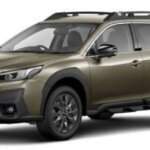 Subaru Outback or Forester Australia: Which One Should We Buy?
The CR-V is the better candidate when sealed-road comfort and urban economy dominate.
Best for: Families wanting an efficient, comfortable and polished Outback alternative.
6. Hyundai Santa Fe – Best If the Outback Is Too Small
Sometimes the problem isn't that we dislike the Outback.
We simply need more car.
That's where the Hyundai Santa Fe enters the picture.
The current Santa Fe offers petrol and hybrid powertrains, along with AWD depending on variant. Its unusual boxy styling also creates a particularly spacious cabin.
Australian specifications list a 2.5-litre turbo petrol engine producing 206 kW and 422 Nm, while hybrid models use a 1.6-litre turbocharged petrol engine as part of their electrified system.
Santa Fe Towing and Efficiency
Petrol Santa Fe variants can tow up to 2,000 kg braked, while the hybrid has a lower 1,650 kg rating. Official combined fuel consumption is listed at 9.3 L/100 km for the 2.5 turbo and 5.6 L/100 km for the hybrid.
Those numbers reveal the choice quite clearly.
Want performance and towing? Petrol.
Want lower fuel use? Hybrid.
Why Pick It Over an Outback?
Passenger space.
For bigger families, the Santa Fe's extra seating and boxier interior make it far more versatile.
The trade-off is that we're moving away from the relatively low-slung, wagon-like driving feel that has traditionally defined the Outback.
Best for: Families who love the Outback idea but need more seats.
7. Kia Sportage – One of the Best Value Alternatives
The Kia Sportage doesn't imitate the Outback. Instead, it attacks the same buyer from another direction.
It offers bold styling, plenty of technology and a wide selection of grades and powertrains.
For buyers spending most of their time on sealed roads, the Sportage can make a lot of sense.
Sportage vs Subaru Outback
The Sportage generally feels more urban.
Its cabin design is modern, its technology presentation is strong and its dimensions make it easier to manage around shopping centres and suburban streets.
The Outback counters with greater road-trip character and stronger rough-road credentials.
This becomes an interesting comparison because many buyers don't actually need the Outback's full capability.
If our toughest expedition is a maintained gravel road leading to a holiday rental, paying for extra off-road ability may not improve our life very much.
When We'd Choose the Sportage
We'd put it ahead of the Outback when value, equipment and day-to-day usability matter most.
We'd keep the Subaru if remote touring and rough surfaces appear regularly in the calendar.
Best for: Value-conscious buyers wanting lots of equipment and contemporary styling.
8. Volkswagen Tiguan – The Road-Focused Alternative
The Volkswagen Tiguan is worth considering when what we really love about the Outback is its long-distance comfort rather than its dirt-road capability.
Volkswagen has traditionally tuned the Tiguan with a distinctly European feel. Steering, body control and motorway refinement take centre stage.
Why Outback Owners Might Like It
Both vehicles work well as long-distance family transport.
They can swallow luggage, accommodate adults comfortably and tackle extended road trips without feeling cumbersome.
Yet the personalities diverge once we reach rougher terrain.
The Outback says, "keep going."
The Tiguan tends to say, "how far exactly is this gravel section?"
That's exaggerated, of course, but it captures the difference.
Outback vs Tiguan
Choose the Volkswagen for road behaviour, cabin ambience and a more conventional SUV character.
Choose the Subaru for clearance, adventure capability and confidence away from bitumen.
Best for: Drivers who want an Outback alternative primarily for sealed-road touring.
9. Mazda CX-5 – A Proven and Straightforward Choice
The Mazda CX-5 is smaller than the Outback, but there is plenty of overlap in how people actually use these cars.
Both are five-seat family vehicles capable of commuting Monday through Friday and carrying weekend gear on Saturday morning.
Why the CX-5 Remains Relevant
Sometimes newer isn't automatically better.
The CX-5's appeal lies partly in familiarity. It has been refined over many years, delivers tidy handling and offers AWD in suitable variants.
It also feels slightly more compact and nimble than the Outback.
The Compromise
Cargo capacity and overall cabin space are less generous.
So if we're downsizing intentionally, excellent.
If we regularly fill the Outback's luggage compartment to the roof, perhaps not.
Best for: Buyers who want something slightly smaller and more road-focused without moving to a genuinely compact SUV.
10. Subaru Crosstrek – Best Smaller Adventure Alternative
What if we don't need Outback space at all?
Then the Subaru Crosstrek might be the smarter choice.
It retains some of the brand's defining ingredients — AWD, useful clearance and outdoorsy character — while shrinking everything into a more city-friendly footprint.
Why It Makes Sense
For couples, singles or small families, an Outback can sometimes be overkill.
The Crosstrek is easier to park and easier to thread through traffic while still feeling far more adventure-ready than the typical small crossover.
Where We Give Something Up
Space.
Lots of it.
The Outback remains the better vehicle for lengthy road trips with multiple passengers, big dogs, camping equipment or bulky recreational gear.
But if half of that cargo space normally travels empty, why carry it everywhere?
Best for: Buyers who want Subaru capability without Outback dimensions.
11. Mazda CX-70 – A Bigger, More Powerful Alternative
Australian buyers now have another interesting Mazda option: the CX-70.
Mazda positions it above the CX-60, and 2026 Australian pricing starts at $73,020 before on-road costs for the GT with G50e or D50e AWD powertrains.
Clearly, it isn't a direct price rival to an entry-level Outback.
But it becomes relevant for somebody considering a high-spec Outback Wilderness or looking to move into a more premium vehicle.
CX-70 vs Outback Wilderness
The Mazda provides stronger luxury cues and powerful inline-six engine choices.
The Subaru offers more explicit off-road intent.
If the journey involves long stretches of smooth country highway followed by a nice hotel, we'd be tempted by the Mazda.
If it ends beside a muddy trail and a tent, we'd probably take the Outback.
Best for: Buyers moving upward from the Outback into a more premium two-row SUV.
Which Subaru Outback Alternative Is Best for Off-Road Driving?
Among mainstream crossovers, the Subaru Forester is probably the most natural choice.
This content may interest you!Subaru Outback vs Crosstrek Australia: Which One Should We Buy?Its 220 mm ground clearance matches the standard 2026 Outback, and Subaru equips it with AWD and X-Mode.
However, anyone specifically comparing alternatives with the Outback Wilderness should remember that Wilderness versions now offer 240 mm of clearance.
At that point, conventional medium SUVs begin to fall away.
Drivers needing substantially more serious off-road capability may actually be better served by body-on-frame vehicles such as the Toyota Prado, Ford Everest or Isuzu MU-X. Those aren't truly Outback equivalents, though. They represent a different category with different compromises in weight, fuel consumption and everyday road manners.
Which Alternative Is Best for Fuel Economy?
The Toyota RAV4 deserves serious attention here.
Its current AWD hybrid variants carry an official combined figure of 4.6 L/100 km.
Honda's CR-V hybrid is another strong candidate, with the current AWD e models rated at 5.7 L/100 km combined.
The Hyundai Santa Fe Hybrid is larger but is still officially rated at 5.6 L/100 km combined.
If our annual mileage is high, these differences can become important.
Fuel economy is a little like tyre noise: easy to dismiss during a 20-minute test drive and difficult to ignore after three years of ownership.
Which Car Is Closest to the Outback for Towing?
This is where things get interesting.
The regular 2026 Outback is rated to 2,000 kg braked, while the Wilderness increases that to 2,100 kg.
The petrol Forester comes close at 1,800 kg, but the Škoda Kodiaq 4x4 surpasses both with a maximum rating of 2,300 kg when appropriately equipped.
The petrol Hyundai Santa Fe sits at 2,000 kg.
Of course, maximum towing capacity isn't the entire story. Payload, tow-ball download, gross combination mass, trailer braking requirements and how much equipment we carry can all affect what is practical and legal.
Anyone regularly towing near the limit should compare the complete weight specifications rather than shopping by the headline figure alone.
Which Is the Best Luxury Alternative to a Subaru Outback?
We'd begin with the Mazda CX-60.
It doesn't have a European luxury badge, yet its design, rear-drive-based platform and availability of inline-six engines give it a more premium flavour.
Buyers with larger budgets could also consider vehicles from Volvo, Audi or BMW, but the price gap quickly becomes substantial.
And there's another issue.
Luxury crossovers may match the Outback's practicality on paper while failing to match its relaxed attitude toward dirt, dogs, bicycles and muddy equipment.
Sometimes a less precious interior is a feature rather than a drawback.
Is the Toyota RAV4 Better Than the Subaru Outback?
Neither is universally better.
The RAV4 is probably the stronger choice for commuters seeking lower fuel consumption.
The Outback is arguably the more convincing vehicle for mixed-surface touring.
Toyota's latest AWD hybrid has an official combined consumption figure of 4.6 L/100 km. Meanwhile, the Outback offers 220 mm of ground clearance in standard form along with standard AWD and up to 2,000 kg braked towing capacity.
So we need to decide which advantage we'll actually use.
Buying adventure capability we never use makes little sense.
Buying an efficiency-focused SUV and then constantly wishing it were more capable makes equally little sense.
What Should Australian Buyers Look for Before Choosing?
Ground Clearance
Australia has plenty of beautifully maintained roads.
It also has potholes, corrugations, gravel roads, steep driveways and camping tracks that seem to have been designed by someone with a personal vendetta against low bumpers.
Ground clearance matters if we venture away from major roads.
AWD System
Not all AWD systems behave identically.
Some primarily prioritise traction during slippery road conditions. Others are calibrated with rough surfaces in mind.
Subaru's AWD reputation is one reason the Outback remains so difficult to duplicate exactly.
Fuel Consumption
Consider our actual driving.
A hybrid shines in stop-start urban conditions. Someone doing enormous stretches of rural highway may experience a different benefit profile.
Cargo Shape, Not Just Cargo Litres
Boot capacity figures can deceive us.
A square, tall luggage area may be more useful than a larger theoretical volume with awkward wheel-arch intrusions.
Bring the pram to the dealership.
Bring the golf clubs.
If the salesperson looks confused when we appear with two suitcases and a dog crate, that's fine. We're the ones spending the money.
Towing Requirements
Don't buy based on what we might tow someday.
Identify the actual trailer, boat or caravan weight and work backward from there.
Tyres and Spare Wheel
This is especially important in Australia.
Large low-profile tyres look fantastic in brochures. They're less entertaining when damaged 200 kilometres from the nearest tyre shop.
Anyone planning regional travel should investigate tyre availability and the type of spare supplied.
Our Overall Ranking of Cars Similar to Subaru Outback Australia
If we had to narrow the market into recommendations by purpose, we'd rank them like this:
Best overall alternative: Subaru Forester
Best for fuel economy: Toyota RAV4 Hybrid
Best premium alternative: Mazda CX-60
Best for towing and family practicality: Škoda Kodiaq
Best comfortable hybrid: Honda CR-V
Best for larger families: Hyundai Santa Fe
Best value-focused SUV: Kia Sportage
Best road-focused European option: Volkswagen Tiguan
Best smaller alternative: Mazda CX-5
Best compact adventure option: Subaru Crosstrek
Notice something?
The closest Outback competitor depends less on specifications than on why we liked the Outback in the first place.
That's the key to this entire comparison.
Conclusion: What Is the Best Subaru Outback Alternative in Australia?
Finding cars similar to Subaru Outback Australia isn't as straightforward as comparing five medium SUVs and choosing whichever has the largest touchscreen.
The Outback combines several personalities that usually live in separate vehicles.
It has wagon-like practicality, SUV clearance, genuine AWD credentials and comfortable long-distance manners. The 2026 model strengthens that formula with 220 mm of clearance in standard versions, 240 mm in Wilderness form and towing capacities reaching 2,100 kg.
For the closest overall alternative, we'd start with the Subaru Forester. It retains the same basic adventure-oriented philosophy while being shorter and cheaper.
For commuters, the Toyota RAV4 Hybrid is extremely attractive because of its fuel efficiency.
For drivers wanting more power and luxury, the Mazda CX-60 is arguably the most interesting alternative.
For towing and space, the Škoda Kodiaq deserves a serious look.
And for families who simply need more room, the Hyundai Santa Fe takes the Outback concept and stretches it into a larger package.
The right choice comes down to our lifestyle.
If Saturday morning means roof racks, wet hiking boots and an unsealed road disappearing toward the horizon, the Subaru formula remains difficult to beat.
If Saturday means sport practice, groceries and a long freeway drive to visit family, several alternatives may suit us even better.
Frequently Asked Questions
1. What car is most similar to the Subaru Outback in Australia?
The Subaru Forester is arguably the closest mainstream alternative because it combines standard AWD, 220 mm of ground clearance and practical five-seat accommodation. It is shorter and slightly less spacious than the Outback, which can make it easier to use in urban areas.
2. What Toyota is comparable to a Subaru Outback?
The Toyota RAV4 is the closest mainstream Toyota alternative. It offers similar family-SUV practicality and AWD hybrid versions, although it focuses more heavily on efficiency than rough-road capability. Toyota quotes 4.6 L/100 km combined for current AWD hybrid models.
3. Is a Mazda CX-60 similar to a Subaru Outback?
Yes, although it has a more premium and performance-oriented character. Australian CX-60 buyers can choose from several drivetrains, including AWD six-cylinder petrol and diesel versions as well as a plug-in hybrid. The Outback remains the more adventure-focused choice.
This content may interest you!Subaru Outback Alternatives Australia: The Best Rivals Worth Considering4. What is a good seven-seat alternative to the Subaru Outback?
The Hyundai Santa Fe and Škoda Kodiaq are strong options for buyers needing additional seating and family space. The Kodiaq is particularly appealing for towing, with appropriately equipped 4x4 versions rated up to 2,300 kg braked.
5. Should I buy a Subaru Outback or an SUV instead?
Choose the Outback if you value AWD capability, ground clearance, long-distance comfort and a practical five-seat layout. A conventional SUV such as a RAV4, CR-V, Kodiaq or Santa Fe may be better if your priorities lean toward hybrid efficiency, seven-seat accommodation or urban driving.
Leave a Reply