
Audi Q7 Reliability Australia: Is the Q7 Actually Reliable?

The Audi Q7 has always occupied an interesting corner of the Australian luxury SUV market. It is big without feeling like a truck, sophisticated without looking excessively flashy, and powerful enough to tow a serious caravan while carrying the family in considerable comfort.
But there is one question that matters more once the new-car smell disappears: how good is Audi Q7 reliability in Australia?
That question deserves more than a simple yes or no.
The Q7 can be an impressively dependable luxury SUV when it has been maintained properly, particularly if we choose the right engine and ownership history. At the same time, this is not a Toyota LandCruiser wearing an Audi badge. There is considerable technology packed underneath the skin, and ageing electronics, diesel emissions equipment, air suspension and neglected servicing can turn a tempting used Q7 into an expensive driveway ornament.
Australian owner feedback also paints a mixed picture. Some owners report years of trouble-free driving, while others have experienced repeated electrical, diesel particulate filter and drivetrain faults. Australian ProductReview feedback for the second-generation Q7, for example, is distinctly mixed rather than universally positive.
So, should we avoid the Q7?
Not necessarily.
We simply need to understand what we are buying.
- How Reliable Is the Audi Q7 in Australia?
- Does the Australian Climate Affect Q7 Reliability?
- Audi Q7 Generations in Australia
- Audi Q7 Diesel Reliability in Australia
- Audi Q7 Petrol Reliability
- Audi Q7 45 TDI Reliability
- Audi Q7 55 TFSI Reliability
- Common Audi Q7 Problems in Australia
- Are New Audi Q7s More Reliable?
- Audi Q7 Recalls in Australia
- Audi Q7 Service Costs in Australia
- How Long Can an Audi Q7 Last?
- Is a High-Kilometre Audi Q7 Worth Buying?
- Buying a Used Audi Q7 in Australia
- Audi Approved and Used-Q7 Reliability
- Audi Q7 Reliability vs Toyota LandCruiser
- Audi Q7 Reliability vs BMW X5
- Audi Q7 Reliability vs Volvo XC90
- Who Should Buy an Audi Q7?
- Who Should Avoid an Audi Q7?
- How to Make an Audi Q7 More Reliable
- So, Is the Audi Q7 Reliable in Australia?
- Conclusion: Our Audi Q7 Reliability Australia Verdict
- Frequently Asked Questions
How Reliable Is the Audi Q7 in Australia?
Taken as a whole, we would describe Audi Q7 reliability in Australia as average to good for a complicated European luxury SUV, but highly dependent on maintenance history.
That last part is crucial.
Two identical-looking Q7s with similar kilometres can be completely different ownership propositions. One may have received scheduled servicing, correct oils, software updates and preventative repairs. The other might have been serviced whenever its owner remembered.
Guess which one we want?
The Q7 uses sophisticated engines, turbochargers, quattro all-wheel drive, advanced electronics and, depending on specification, adaptive air suspension and mild-hybrid electrical systems. None of these technologies are inherently unreliable, but each adds another layer of complexity.
When everything works, the Q7 feels beautifully engineered.
When several things fail simultaneously, our wallet may feel considerably less beautiful.
Our Overall Audi Q7 Reliability Verdict
For Australian buyers, we would roughly judge the Q7 like this:
| Area | Our Assessment |
|---|---|
| Engine durability | Good with proper servicing |
| Automatic transmission | Generally strong |
| Quattro system | Very good |
| Electronics | Mixed |
| Diesel emissions equipment | Can cause problems |
| Air suspension | Excellent when working, costly when ageing |
| Interior durability | Generally good |
| Long-term maintenance costs | Above average |
| Overall used-car reliability | Fair to good |
| New-car ownership confidence | Good with warranty |
The important distinction is between reliability and cheap ownership.
A Q7 can remain reliable while still costing considerably more to maintain than a mainstream SUV.
Does the Australian Climate Affect Q7 Reliability?
Absolutely.
Australian cars live interesting lives.
A Q7 in Melbourne doing regular freeway journeys experiences a very different environment from one doing constant short school runs in Sydney or baking under 40-degree summer temperatures in Western Australia.
Heat places additional stress on:
- cooling systems;
- batteries;
- rubber hoses and seals;
- electronic modules;
- air-conditioning systems;
- engine oil;
- tyres.
Distance matters too.
Australia's enormous geography can actually favour diesel Q7s when they are regularly driven on highways. Long journeys allow diesel engines to reach operating temperature properly and provide better conditions for diesel particulate filter regeneration.
Ironically, an expensive diesel SUV used almost exclusively for five-minute suburban trips can have a harder life than one regularly travelling hundreds of kilometres.
Audi Q7 Generations in Australia
Understanding the generations makes reliability discussions much easier.
First-Generation Audi Q7 4L
The original Q7 arrived in Australia in 2006 and remained on sale until the mid-2010s.
It was enormous, heavy and unmistakably German.
Diesel engines became particularly popular because their torque suited the Q7's considerable mass.
These early vehicles can now look astonishingly affordable on the used market. A luxury SUV that originally cost serious money may now cost less than a modest new hatchback.
That does not mean it has hatchback running costs.
Older Q7s can experience issues involving suspension, electronics, cooling systems, diesel emissions equipment, oil leaks and general age-related deterioration.
Interestingly, Australian owner reports are not universally negative. Some owners of older 4L diesels report very high kilometres and strong long-term dependability.
Should We Buy an Old 4L Q7?
Possibly, but condition matters far more than price.
A cheap Q7 needing several thousand dollars of repairs is not actually cheap.
We would rather buy a more expensive example with:
- complete service documentation;
- evidence of major maintenance;
- good tyres;
- functioning suspension;
- no warning lights;
- smooth transmission operation;
- no unexplained coolant loss.
A comprehensive pre-purchase inspection is almost mandatory.
Second-Generation Audi Q7 4M
The second-generation Q7 represented a huge step forward.
It became lighter, more efficient, more technologically sophisticated and significantly more polished.
This is the Q7 most Australian used buyers are likely to consider today.
The 4M generation has generally proven capable of covering substantial kilometres, but electronics and emissions systems deserve attention.
Australian owner reviews include reports of DPF-related warnings and limp-mode incidents on some earlier 45 TDI examples.
That does not mean every 45 TDI will suffer the same fate. Owner-review websites naturally attract people experiencing problems, so they should not be treated as statistical reliability studies.
They are nevertheless useful for identifying patterns worth checking.
Audi Q7 Diesel Reliability in Australia
Diesel and the Q7 have always felt like natural partners.
This content may interest you!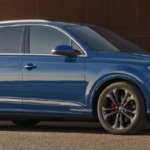 Audi Q7 Models Australia: Complete Range and Buying Guide
A large SUV needs torque, and Audi's turbo-diesel engines deliver plenty of it.
They are particularly attractive for Australians who:
- tow caravans;
- travel long distances;
- regularly drive on motorways;
- live regionally;
- carry heavy loads.
Are Q7 TDI Engines Reliable?
Fundamentally, Audi's V6 TDI engines can be extremely durable.
A properly maintained diesel engine can cover substantial kilometres without major internal problems.
However, the engine itself is only one part of the modern diesel ecosystem.
Around it we have emissions-control components, sensors, turbocharging equipment and various electronic systems.
That is where ownership can become complicated.
DPF Problems
The diesel particulate filter traps soot from the exhaust.
Periodically, the vehicle needs to raise exhaust temperatures sufficiently to burn accumulated material away during regeneration.
If we constantly interrupt that process by driving short distances, problems may eventually appear.
Symptoms can include:
- DPF warning lights;
- reduced engine performance;
- increased fuel consumption;
- frequent regeneration;
- cooling fans running after shutdown;
- limp mode.
Earlier Australian owner reports specifically mention DPF-related trouble in some second-generation Q7 diesels.
Who Should Avoid a Diesel Q7?
If our driving consists primarily of tiny suburban journeys, buying diesel simply because diesels use less fuel can be false economy.
Petrol may suit that usage better.
Diesels thrive when allowed to stretch their legs.
Think of them like long-distance runners rather than sprinters trapped between traffic lights.
Audi Q7 Petrol Reliability
Petrol-powered Q7s avoid some of the diesel-specific emissions concerns, although they introduce their own maintenance requirements.
Modern turbocharged Audi petrol engines are powerful and refined, but we should still pay attention to cooling systems, oil consumption, ignition components and electrical systems as kilometres increase.
The latest Australian Q7 range continues to offer both TFSI petrol and TDI diesel power depending on specification and model year. Audi currently lists the Q7 as a seven-seat SUV capable of towing up to 3,500 kg in relevant specification.
For buyers doing relatively low annual kilometres, the additional fuel consumption of petrol may be easier to tolerate than diesel emissions-system headaches.
Audi Q7 45 TDI Reliability
The 45 TDI has been one of the important Q7 variants in Australia.
It offers the combination many families want: strong torque, manageable fuel consumption and effortless highway performance.
Mechanically, the basic proposition is strong.
The bigger questions concern the supporting systems.
On used examples we would investigate:
- DPF history;
- AdBlue or emissions warnings where applicable;
- cooling-system condition;
- battery health;
- electrical warnings;
- transmission servicing;
- complete service records.
A Q7 that has spent its life travelling between Melbourne and regional Victoria may actually appeal to us more than a lower-kilometre example that has barely left inner-city traffic.
Kilometres tell only part of the story.
Audi Q7 55 TFSI Reliability
The 55 TFSI provides significantly stronger petrol performance and suits buyers who want refinement without diesel.
Its complexity should not be ignored, particularly on versions incorporating 48-volt mild-hybrid technology.
Australian owner reports include individual cases of significant electrical or charging-system problems on newer 55 TFSI vehicles. Those reports are valuable warning signals, but they should not be interpreted as proof that every 55 TFSI shares the problem.
When inspecting one, we would pay special attention to:
- dashboard warning history;
- battery condition;
- 48-volt system faults;
- stop-start operation;
- charging-system warnings;
- diagnostic fault codes.
A professional scan with Audi-compatible diagnostic equipment is worth considerably more than simply checking whether the dashboard happens to be warning-light-free during a ten-minute test drive.
Common Audi Q7 Problems in Australia
No reliability guide would be useful without discussing what can actually go wrong.
1. Electrical Problems
Technology is one of the Q7's greatest strengths.
It is also one of its vulnerabilities.
Depending on model year, the vehicle may contain:
- Virtual Cockpit;
- adaptive lighting;
- parking sensors;
- multiple cameras;
- radar systems;
- infotainment displays;
- electrically operated seats;
- powered tailgate;
- driver-assistance systems;
- numerous control modules.
A weak battery alone can occasionally generate a Christmas tree of warnings.
That is why we should not immediately assume every dashboard fault means catastrophic mechanical failure.
But neither should we ignore repeated electrical errors.
Electrical Items to Test Before Buying
During an inspection we should operate everything.
And we mean everything.
Test:
- every screen;
- every camera;
- climate control;
- Bluetooth;
- navigation;
- USB ports;
- seat controls;
- windows;
- mirrors;
- sunroof;
- tailgate;
- parking sensors;
- adaptive cruise control where safe;
- keyless entry.
The five minutes spent pressing buttons could save us thousands later.
2. Diesel Particulate Filter Trouble
As mentioned earlier, DPF trouble tends to affect vehicles whose usage pattern does not suit diesel technology.
A diesel Q7 driven properly should be capable of regenerating normally.
This content may interest you!Audi Q7 Generations Australia: Complete Model History and Buying GuidePersistent DPF issues deserve investigation rather than another forced regeneration followed by hope.
3. Air Suspension Problems
Optional or standard air suspension on certain Q7 variants gives the Audi one of its best tricks.
The big SUV can float along rough Australian roads with remarkable composure.
Unfortunately, air suspension is also more complicated than conventional steel springs.
With age, we may eventually encounter problems involving:
- air springs;
- compressors;
- ride-height sensors;
- valves;
- leaks.
Watch whether the vehicle sits unevenly after being parked overnight.
Listen for a compressor that appears to operate excessively.
And cycle through the available ride heights.
Repair costs can be meaningful, so inspection is preferable to optimism.
4. Cooling-System Leaks
Cooling systems become increasingly important as Q7s age.
Any unexplained drop in coolant should be investigated.
Look for:
- dried coolant residue;
- warning messages;
- water-pump leakage;
- thermostat issues;
- hoses deteriorating with age;
- overheating history.
Australian summers do not forgive neglected cooling systems.
5. Brake and Tyre Wear
Calling brake and tyre replacement a reliability problem would be unfair.
They are consumables.
But the Q7 is a large, heavy, powerful vehicle, and premium components are not inexpensive.
Big wheels also mean expensive tyres.
Poor alignment can accelerate wear dramatically.
Four premium tyres can transform the way a Q7 drives—but they can also transform our monthly budget.
Uneven Tyre Wear Can Tell a Story
Inspect all four tyres closely.
Uneven wear may suggest:
- bad alignment;
- worn suspension components;
- incorrect tyre pressure;
- aggressive driving;
- neglected maintenance.
The tyres are almost like the Q7's diary. Read them.
Are New Audi Q7s More Reliable?
Newer vehicles benefit from years of development and updated components, but increasing technology means there are also more electronic systems aboard.
The major advantage for Australian buyers is warranty protection.
Audi Australia states that new Audi vehicles first registered or delivered from 1 January 2022 receive a five-year, unlimited-kilometre manufacturer warranty.
That materially changes the ownership equation.
A three-year-old Q7 may still have substantial factory warranty coverage remaining.
Audi also provides five years of AudiCare roadside assistance on new Audis sold from January 2022.
That does not make faults impossible.
It simply reduces our financial exposure while the vehicle remains covered.
Audi Q7 Recalls in Australia
Before buying any used Q7, check its VIN for outstanding recalls.
Recalls do not automatically mean a vehicle is unreliable. They actually demonstrate that a recognised safety defect has a formal rectification process.
But ignoring them would be foolish.
For example, an Australian recall published in November 2025 covered a small number of 2019–2024 Q7 and Q8 e variants because modules in the high-voltage battery could potentially experience thermal overload during charging. Only 33 affected units were listed across the covered models and variants.
The sensible approach is simple: check the specific VIN rather than assuming every Q7 from a particular year is affected.
Audi Q7 Service Costs in Australia
Here is where expectations need recalibration.
The Q7 is a premium German SUV.
Servicing it like a premium German SUV produces much better results than attempting to maintain it like a fifteen-year-old economy car.
Audi offers five-year service plans on eligible new vehicles, covering the first five scheduled services up to five years or 75,000 km, whichever occurs first, subject to the plan's conditions.
For used vehicles outside a service plan, costs depend heavily on:
- engine;
- dealer versus independent workshop;
- kilometres;
- upcoming maintenance;
- brakes;
- tyres;
- suspension;
- unexpected repairs.
Independent Audi Specialists Can Make Sense
Once factory warranty considerations no longer dominate the decision, a reputable independent Volkswagen/Audi specialist can substantially improve the economics of Q7 ownership.
We want someone who knows the platform rather than a generic workshop learning about it using our credit card.
Proper diagnostic equipment matters too.
How Long Can an Audi Q7 Last?
There is no magical kilometre figure at which a Q7 expires.
A well-maintained example can comfortably exceed 200,000 km, and substantially higher mileage is possible.
This content may interest you! Are Toyota Hilux Reliable? Reliability, Problems and Lifespan Explained
But reliability at 200,000 km does not necessarily mean nothing has been replaced.
By that point, we should expect age-related work.
A better question is:
Can a Q7 remain mechanically worthwhile beyond 200,000 km?
Yes.
Especially when:
- oil changes have been consistent;
- cooling systems have been maintained;
- transmission servicing has not been ignored;
- diesel emissions systems receive appropriate driving conditions;
- faults are repaired promptly;
- quality parts are used.
A neglected 90,000-km car can be worse than a carefully maintained 180,000-km car.
Is a High-Kilometre Audi Q7 Worth Buying?
Sometimes.
Highway kilometres are relatively gentle.
Repeated cold starts, short trips and stop-start traffic can produce considerably more wear per kilometre.
A 160,000-km regional Q7 with perfect records may therefore be more attractive than an 85,000-km example with patchy servicing and endless five-kilometre journeys.
Our High-Kilometre Checklist
We would want evidence of:
- regular scheduled servicing;
- transmission maintenance where required;
- cooling-system repairs;
- suspension condition;
- recent battery replacement if applicable;
- emissions-system health;
- no persistent warning lights;
- clean diagnostic scan;
- quality tyres;
- documented ownership history.
Service history is not glamorous.
But neither is standing beside a broken luxury SUV waiting for a tow truck.
Buying a Used Audi Q7 in Australia
This is where research really earns its keep.
Check the Service History First
Invoices are even better than stamps.
They show exactly what was replaced.
A folder containing years of invoices tells us considerably more than somebody saying, "Mate, it's been serviced regularly."
Get a Pre-Purchase Inspection
Do not rely solely on a roadworthy inspection.
We want somebody familiar with Audi vehicles to inspect:
- engine;
- transmission;
- suspension;
- electronics;
- cooling system;
- fault codes;
- underbody;
- brakes;
- tyres.
A specialist diagnostic scan is especially valuable.
Start the Car Cold
A seller who has already warmed the engine before every viewing may simply be courteous.
Or may not.
A cold start allows us to observe:
- startup noises;
- smoke;
- idle quality;
- warning lights;
- cold transmission behaviour.
Take a Proper Test Drive
Ten minutes around the block is not enough.
Drive at urban speeds and highway speeds.
Accelerate firmly.
Brake progressively.
Turn tightly.
Use different drive modes.
Listen with the radio turned off.
The quiet cabin can hide a lot when the stereo is booming.
Audi Approved and Used-Q7 Reliability
Buyers wanting additional protection may consider Audi's certified used programme.
Audi says qualifying Audi Approved vehicles receive a 115-point safety and mechanical check, at least two years of unlimited-kilometre warranty, scheduled servicing and roadside assistance, subject to eligibility and programme terms.
That extra protection may make sense on a complicated luxury SUV.
We may pay more upfront, but certainty has value.
Audi Q7 Reliability vs Toyota LandCruiser
This comparison inevitably appears in Australia.
If maximum ruggedness, remote-area support and long-term mechanical simplicity are our priorities, the LandCruiser remains difficult to beat.
But the Q7 offers something different.
It generally feels:
- more agile;
- more refined;
- more car-like;
- more technologically advanced;
- quieter and more luxurious on sealed roads.
The Toyota is the hiking boot.
The Audi is the expensive running shoe.
Both can travel a long distance. They simply approach the journey differently.
Audi Q7 Reliability vs BMW X5
The Q7 and BMW X5 are much closer philosophically.
Both combine sophisticated European engineering with powerful engines and extensive electronics.
This content may interest you! Mitsubishi ASX Problems: Common Issues, Reliability Concerns, and What We Should Know Before Buying
Neither should be purchased used without understanding maintenance costs.
The X5 tends to feel sportier, while the Q7's seven-seat practicality gives it an advantage for larger families.
Reliability differences often come down more to individual engine, model year and service history than the badge itself.
Audi Q7 Reliability vs Volvo XC90
The Volvo XC90 is another natural Q7 rival.
Both prioritise refinement, family practicality and technology.
Again, there is no magic reliability winner across every year and powertrain.
Modern XC90s also contain substantial electronic and powertrain complexity.
When buying used, we would choose the best-maintained example rather than automatically choosing one brand because somebody on a forum declared it bulletproof.
Who Should Buy an Audi Q7?
The Q7 makes plenty of sense for someone wanting:
- seven-seat versatility;
- luxury-car comfort;
- serious towing ability;
- strong highway performance;
- quattro all-wheel drive;
- premium interior quality;
- understated styling.
It particularly shines as a long-distance family vehicle.
Few things feel more appropriate than a Q7 swallowing luggage, children and hundreds of kilometres of Australian highway without drama.
Who Should Avoid an Audi Q7?
We would think twice if we:
- want extremely cheap maintenance;
- hate unexpected repair bills;
- never drive beyond short suburban distances but want diesel;
- cannot budget for premium tyres and brakes;
- intend to buy the cheapest example available;
- dislike complicated electronics.
There is nothing wrong with admitting that a simpler vehicle suits us better.
The purchase price is only the opening chapter of luxury-car ownership.
How to Make an Audi Q7 More Reliable
Good ownership habits can dramatically improve the odds.
Follow the Maintenance Schedule
Do not treat service intervals as vague suggestions.
Use the Correct Fluids
Modern engines are designed around particular lubricant standards.
Cheap generic oil is not clever saving.
Let Diesels Do Longer Runs
A diesel Q7 that spends its existence crawling between school, supermarket and home may never operate in the environment it was designed for.
Fix Small Faults Early
A minor coolant leak does not improve with age.
Neither does a failing battery, worn suspension bush or persistent warning light.
Preventative Maintenance Is Cheaper Than Rescue Maintenance
That principle applies especially well to European luxury cars.
We would much rather spend money maintaining a healthy Q7 than recovering one after neglected problems cascade into one another.
So, Is the Audi Q7 Reliable in Australia?
Yes—with qualifications.
The Audi Q7 can be a reliable, durable and extremely satisfying luxury SUV in Australia. Its core engines and drivetrains can cover substantial distances, and newer cars benefit from far better warranty coverage than older Australian Audis.
But the Q7 rewards informed ownership.
This is not a vehicle we buy blindly because a used example suddenly looks affordable.
Its complexity means maintenance history matters enormously.
Diesel models need appropriate usage. Air suspension should be inspected. Electronics deserve careful testing. Cooling systems cannot be ignored. And every used example should ideally receive a specialist inspection before money changes hands.
Do those things, and the Q7 makes much more sense.
Skip them, and that inexpensive used luxury SUV can become remarkably expensive remarkably quickly.
Conclusion: Our Audi Q7 Reliability Australia Verdict
The Audi Q7's Australian reliability story is neither a horror story nor a fairy tale.
It sits somewhere more realistic.
A good Q7 can be brilliant.
It delivers the effortless torque, highway refinement, seven-seat flexibility and sophisticated driving experience that made the model successful in the first place.
The strongest examples are generally those owned by people who understood that premium engineering requires premium maintenance.
If we are buying new, Audi's current five-year unlimited-kilometre warranty provides meaningful peace of mind for vehicles first registered or delivered from January 1, 2022.
If we are buying used, history beats appearance.
The gleaming paint and giant alloy wheels may capture our attention, but the service records, diagnostic scan and mechanical inspection should make the final decision.
Find a properly maintained Q7 and it can be an outstanding Australian family SUV.
Find a neglected one?
Keep walking.
Frequently Asked Questions
1. Are Audi Q7s reliable in Australia?
Generally, yes, provided they have been properly serviced. Engines and drivetrains can be durable, but electronics, diesel emissions equipment, cooling components and air suspension can increase repair costs as the vehicle ages. Maintenance history is therefore especially important.
2. What is the biggest problem with a used Audi Q7?
There is no single problem affecting every Q7, but used buyers should pay particular attention to electronic faults, diesel particulate filter problems, cooling-system leaks and ageing suspension components. The relevant risks vary considerably by model year, engine and specification.
3. How many kilometres will an Audi Q7 last?
A properly maintained Q7 can exceed 200,000 km, and considerably higher mileage is possible. Rather than judging the vehicle solely by its odometer, we should assess how it was driven, how regularly it was serviced and which major components have already been repaired or replaced.
This content may interest you!Audi Q7 Years to Buy Australia: Best Models for Used Buyers4. Is a diesel Audi Q7 good for Australian driving?
Yes, particularly for highway driving, regional travel and towing. Diesel engines suit the Q7's size and provide excellent torque. However, buyers who mainly complete short urban trips may be better served by petrol because repeated short journeys can be unfavourable for diesel particulate filter regeneration.
5. Is a used Audi Q7 expensive to maintain in Australia?
It can be. Routine servicing is manageable, especially through a knowledgeable Audi/VW specialist, but tyres, brakes, suspension, electronics and major repairs can cost considerably more than those on mainstream SUVs. We should therefore budget beyond the purchase price.
Leave a Reply