
Kia EV5 vs BYD Atto 3 Australia: Which Electric SUV Is Better in 2026?

The Australian electric vehicle market is becoming increasingly competitive, and two models attracting plenty of attention are the Kia EV5 and BYD Atto 3. Both offer fully electric driving, modern technology, practical interiors and the promise of lower running costs compared with conventional petrol SUVs.
However, choosing between the Kia EV5 vs BYD Atto 3 in Australia is not as straightforward as comparing their prices.
The Kia EV5 is a larger, family-focused electric SUV designed to compete with vehicles such as the Tesla Model Y. Meanwhile, the BYD Atto 3 offers a more affordable entry into electric SUV ownership, with an emphasis on equipment, efficiency and value.
The arrival of the updated 2026 BYD Atto 3 Evo makes this comparison particularly interesting. Its new Premium version offers significantly more power, a larger battery and much faster charging than the previous generation.
So, which electric SUV should Australian buyers choose?
In this detailed comparison, we'll examine pricing, battery capacity, driving range, charging performance, dimensions, interior comfort, safety, reliability and ownership costs to determine which model makes the most sense.
- Kia EV5 vs BYD Atto 3 Australia: Quick Comparison
- Kia EV5 vs BYD Atto 3 Price in Australia
- Kia EV5 vs BYD Atto 3 Exterior Design
- Kia EV5 vs BYD Atto 3 Dimensions
- Kia EV5 vs BYD Atto 3 Boot Space
- Kia EV5 vs BYD Atto 3 Battery Size
- Kia EV5 vs BYD Atto 3 Driving Range
- Kia EV5 vs BYD Atto 3 Charging Speed
- Kia EV5 vs BYD Atto 3 Performance
- Kia EV5 vs BYD Atto 3 Interior and Technology
- Kia EV5 vs BYD Atto 3 Ride Comfort and Driving Experience
- Kia EV5 vs BYD Atto 3 Safety
- Kia EV5 vs BYD Atto 3 Reliability
- Kia EV5 vs BYD Atto 3 Warranty in Australia
- Kia EV5 vs BYD Atto 3 Running Costs
- Kia EV5 vs BYD Atto 3 for Australian Families
- Kia EV5 vs BYD Atto 3 for City Driving
- Kia EV5 vs BYD Atto 3 for Long-Distance Travel
- Kia EV5 vs BYD Atto 3: Pros and Cons
- Kia EV5 vs BYD Atto 3 Australia: Which Should You Buy?
- Frequently Asked Questions
- Conclusion: Kia EV5 vs BYD Atto 3 Australia
Kia EV5 vs BYD Atto 3 Australia: Quick Comparison
Before exploring the differences, let's compare the main specifications of the Australian-market models.
| Specification | Kia EV5 Air Standard Range | BYD Atto 3 Evo Dynamic | BYD Atto 3 Evo Premium |
|---|---|---|---|
| Vehicle type | Medium electric SUV | Compact electric SUV | Compact electric SUV |
| Battery capacity | 64.2 kWh | 60.48 kWh | 74.88 kWh |
| Battery chemistry | LFP | LFP | LFP |
| Electric motor power | 160 kW | 150 kW | 230 kW |
| Drivetrain | FWD | FWD | RWD |
| WLTP driving range | 400 km | 420 km | 510 km |
| Maximum DC charging | Approx. 140 kW | 110 kW | 220 kW |
| Length | 4,615 mm | 4,455 mm | 4,455 mm |
| Width | 1,875 mm | 1,875 mm | 1,875 mm |
| Height | 1,715 mm | 1,615 mm | 1,615 mm |
| Boot capacity | 513 L | 434 L | 490 L |
| Seating capacity | 5 | 5 | 5 |
| 0–100 km/h | 8.5 seconds | 7.3 seconds | 5.5 seconds |
Specifications refer to the 2026 Australian lineup. The EV5 is also available in Long Range and all-wheel-drive configurations.
Our initial verdict: The Kia EV5 is the more practical choice for families wanting a spacious SUV, while the BYD Atto 3 Evo delivers impressive value, particularly in the powerful Premium version.
Kia EV5 vs BYD Atto 3 Price in Australia
Price is one of the biggest differences between these electric SUVs.
Kia EV5 Australia Pricing
The 2026 Kia EV5 lineup includes four main variants.
| Kia EV5 variant | Indicative price before on-road costs |
|---|---|
| EV5 Air Standard Range | $56,770 |
| EV5 Air Long Range | $61,170 |
| EV5 Earth AWD Long Range | $64,770 |
| EV5 GT-Line AWD Long Range | $71,770 |
These figures provide a useful comparison of the regular pricing structure. Kia has also offered substantial drive-away discounts and promotional incentives.
For example, during November 2026, eligible in-stock EV5 models have been offered with a $2,000 cashback incentive at participating dealerships.
Actual drive-away prices depend on the state, dealer, available stock and current promotions.
BYD Atto 3 Australia Pricing
The updated 2026 BYD Atto 3 Evo has two main versions.
| BYD Atto 3 variant | Price before on-road costs |
|---|---|
| Atto 3 Evo Dynamic FWD | $41,990 |
| Atto 3 Evo Premium RWD | $46,990 |
Some dealerships may still have outgoing Atto 3 Essential models available, originally priced from $39,990 before on-road costs.
This distinction is important because the older Essential and Premium versions have different battery capacities, charging speeds and performance figures from the updated Evo lineup.
Which SUV Offers Better Value?
At regular listed prices, the BYD Atto 3 is considerably cheaper.
The difference between the Atto 3 Evo Dynamic and Kia EV5 Air Standard Range is approximately $14,780 before on-road costs.
Even the more powerful Atto 3 Evo Premium has a lower list price than the entry-level EV5.
However, discounted Kia drive-away offers can considerably narrow the difference.
For buyers focused primarily on affordability, the BYD is the obvious starting point. Nevertheless, the EV5 justifies consideration through its larger dimensions, additional interior space and more traditional family-SUV layout.
Winner for regular purchase price: BYD Atto 3 Evo.
Kia EV5 vs BYD Atto 3 Exterior Design
The two vehicles follow noticeably different design philosophies.
Kia EV5: Bold and Modern SUV Styling
The Kia EV5 features a relatively upright body, squared-off proportions and distinctive lighting.
Its design resembles a smaller interpretation of Kia's larger EV9 electric SUV.
Important styling characteristics include:
- Boxy SUV proportions.
- Modern LED lighting.
- Relatively high roofline.
- Pronounced wheel arches.
- Clean exterior surfaces.
- A substantial road presence.
The EV5 looks and feels like a conventional family SUV with futuristic styling elements.
For Australian buyers transitioning from a petrol-powered SUV, this familiar shape could be particularly appealing.
BYD Atto 3: Compact and Contemporary
The BYD Atto 3 has softer curves and a more compact appearance.
The 2026 Evo update introduces revised bumpers, lighting details, wheel designs and subtle styling improvements.
Although the Atto 3 has an SUV body style, its overall proportions make it feel closer to a compact crossover than a full-sized medium SUV.
Its relatively short body is also useful when navigating tight urban streets and shopping centre car parks.
Design verdict: The Kia EV5 has stronger SUV styling, while the BYD Atto 3 is more compact and city-friendly.
Kia EV5 vs BYD Atto 3 Dimensions
Dimensions are particularly important for Australian families comparing electric SUVs.
| Dimension | Kia EV5 | BYD Atto 3 Evo |
|---|---|---|
| Length | 4,615 mm | 4,455 mm |
| Width | 1,875 mm | 1,875 mm |
| Height | 1,715 mm | 1,615 mm |
| Wheelbase | 2,750 mm | 2,720 mm |
The Kia EV5 is:
- 160 mm longer.
- 100 mm taller.
- The same width.
- 30 mm longer in wheelbase.
Although these differences might not seem enormous on paper, the taller and longer body of the EV5 contributes to a more spacious cabin.
Which SUV Has More Passenger Space?
The Kia EV5 has an advantage for taller passengers.
Its upright roofline provides generous headroom, while its overall proportions make the second row feel particularly accommodating.
The BYD Atto 3 also provides a surprisingly spacious interior for its exterior dimensions.
Its dedicated electric platform helps create a relatively flat floor and useful rear legroom.
Nevertheless, families regularly carrying four or five passengers may appreciate the larger Kia.
Winner for passenger space: Kia EV5.
Kia EV5 vs BYD Atto 3 Boot Space
Boot capacity is another important consideration, especially for families with prams, luggage or sporting equipment.
| Cargo specification | Kia EV5 | Atto 3 Evo Dynamic | Atto 3 Evo Premium |
|---|---|---|---|
| Boot, rear seats upright | 513 L | 434 L | 490 L |
| Boot, rear seats folded | 1,714 L | 1,340 L | 1,360 L |
| Front storage compartment | 67 L | Not available | 101 L |
The Kia EV5 provides more rear cargo space than either BYD variant.
Its squared-off design also makes the boot particularly useful for bulky items.
The Atto 3 Evo Premium, however, deserves credit for offering a larger boot than the Dynamic and an additional 101-litre front storage compartment.
For buyers who regularly transport large luggage, camping gear or baby equipment, the EV5 is the more versatile choice.
Winner for rear cargo capacity: Kia EV5.
Kia EV5 vs BYD Atto 3 Battery Size
Both vehicles use lithium iron phosphate batteries, commonly known as LFP batteries.
This chemistry is popular among modern electric vehicles because of its thermal stability, durability characteristics and reduced reliance on nickel and cobalt.
Kia EV5 Battery Options
The Australian Kia EV5 offers two battery sizes:
- Standard Range: 64.2 kWh.
- Long Range: 88.1 kWh.
The larger battery is available with front-wheel drive or all-wheel drive, depending on the variant.
BYD Atto 3 Evo Battery Options
The updated BYD offers:
- Dynamic: 60.48 kWh.
- Premium: 74.88 kWh.
Both versions use BYD's Blade Battery technology.
Although the Kia has the largest available battery, the BYD generally uses less electricity per kilometre according to the official combined-cycle figures.
Consequently, a larger battery does not automatically translate into better efficiency.
Kia EV5 vs BYD Atto 3 Driving Range
Driving range can be a deciding factor for Australian motorists, particularly those who regularly travel between cities.
Kia EV5 Driving Range Australia
| Kia EV5 variant | WLTP range |
|---|---|
| Air Standard Range | 400 km |
| Air Long Range | 555 km |
| Earth AWD Long Range | 500 km |
| GT-Line AWD Long Range | 470 km |
The Air Long Range offers the greatest claimed driving range in the EV5 lineup.
Its 555 km WLTP figure makes it an attractive option for longer journeys.
BYD Atto 3 Evo Driving Range Australia
| BYD Atto 3 variant | WLTP range |
|---|---|
| Evo Dynamic | 420 km |
| Evo Premium | 510 km |
The Atto 3 Evo Premium has a considerable improvement in range compared with the older model.
It also outperforms the EV5 Standard Range by 110 km under the WLTP testing procedure.
Which Is Better for Australian Road Trips?
For drivers regularly travelling between Melbourne, Sydney, Brisbane or regional destinations, the EV5 Air Long Range has an advantage in official maximum range.
However, the Atto 3 Evo Premium is not far behind.
Its combination of 510 km WLTP range and faster charging capability makes it an appealing highway vehicle.
Actual driving range will depend on speed, temperature, wind, terrain, tyre pressure and air-conditioning use.
This content may interest you!
Driving at sustained motorway speeds can produce lower range than the WLTP figure.
Winner for maximum driving range: Kia EV5 Air Long Range.
Kia EV5 vs BYD Atto 3 Charging Speed
Charging performance is one of the most significant differences between the vehicles.
The latest BYD Atto 3 Evo Premium has made a substantial improvement over the previous model.
Kia EV5 Charging Performance
The EV5 supports CCS2 DC fast charging and Type 2 AC charging in Australia.
On a suitable high-power DC charger, Kia quotes approximately:
- Standard Range: 10–80% in 36 minutes.
- Long Range: 10–80% in 38 minutes.
Charging performance depends on battery temperature, state of charge and available charger output.
The Long Range variants also support up to 11 kW three-phase AC charging.
BYD Atto 3 Evo Charging Performance
The BYD Atto 3 Evo Dynamic supports DC charging at up to 110 kW.
The Premium version introduces a newer 800-volt electrical architecture, allowing DC charging at up to 220 kW.
BYD quotes approximately:
- Dynamic: 0–80% in 41 minutes.
- Premium: 0–80% in 30 minutes.
These times use different starting charge levels from Kia's 10–80% figures, so they should not be treated as directly equivalent charging tests.
However, the Premium's higher maximum charging capability is a meaningful advantage when using compatible ultra-rapid chargers.
Which EV Charges Faster?
For drivers who frequently rely on public fast chargers, the BYD Atto 3 Evo Premium is particularly attractive.
It offers a much higher peak DC charging rate than the Kia EV5.
In practice, charging curves and charger availability also matter, not just the advertised maximum power.
Winner for peak DC charging speed: BYD Atto 3 Evo Premium.
Kia EV5 vs BYD Atto 3 Performance
Electric vehicles provide immediate torque, making even relatively affordable models feel responsive in everyday driving.
Kia EV5 Motor and Acceleration
| Kia EV5 variant | Power | 0–100 km/h |
|---|---|---|
| Air Standard Range | 160 kW | 8.5 seconds |
| Air Long Range | 160 kW | 8.9 seconds |
| Earth AWD | 230 kW | 6.1 seconds |
| GT-Line AWD | 230 kW | 6.3 seconds |
The standard front-wheel-drive EV5 provides sufficient acceleration for commuting and highway driving.
Meanwhile, the all-wheel-drive variants deliver noticeably stronger performance.
BYD Atto 3 Evo Motor and Acceleration
| BYD Atto 3 variant | Power | 0–100 km/h |
|---|---|---|
| Evo Dynamic FWD | 150 kW | 7.3 seconds |
| Evo Premium RWD | 230 kW | 5.5 seconds |
The Atto 3 Evo Premium is surprisingly quick for an affordable electric SUV.
Its 230 kW motor provides stronger straight-line acceleration than any current Australian EV5 variant according to manufacturer claims.
The Kia does offer all-wheel drive, which may be preferable for buyers who value additional traction in slippery conditions.
Winner for acceleration: BYD Atto 3 Evo Premium.
Kia EV5 vs BYD Atto 3 Interior and Technology
Both SUVs provide modern interiors, although their approaches to technology are quite different.
Kia EV5 Interior
The EV5 emphasises a practical cabin with a clean dashboard layout.
Its integrated panoramic display incorporates:
- A 12.3-inch digital instrument cluster.
- A 12.3-inch infotainment touchscreen.
- A 5-inch climate-control display.
Other available features include wireless smartphone connectivity, heated front seats, dual-zone climate control, USB-C charging ports and Kia Connect services.
Higher specifications add additional comfort and convenience equipment.
The EV5's cabin feels relatively conventional, making it easy for drivers coming from other Kia models to become familiar with the controls.
BYD Atto 3 Evo Interior
The BYD takes a more distinctive approach.
The 2026 Evo includes a 15.6-inch central touchscreen, an 8.8-inch digital driver display and a revised centre console.
Standard equipment includes:
- Wireless Apple CarPlay and Android Auto.
- Panoramic sunroof.
- Heated and ventilated front seats.
- 50W wireless smartphone charging.
- Electric tailgate.
- Ambient interior lighting.
- Electrically adjustable front seats.
The Premium adds further convenience features, including dual-zone climate control.
These features make the Atto 3 Evo particularly appealing for buyers who want a well-equipped electric SUV without spending heavily on optional extras.
Which Has the Better Interior?
The Kia EV5 offers more traditional ergonomics and a spacious, family-oriented atmosphere.
The BYD Atto 3 Evo provides particularly strong standard equipment for its price.
We would choose the Kia for cabin practicality and the BYD for equipment value.
Kia EV5 vs BYD Atto 3 Ride Comfort and Driving Experience
Australian road conditions vary considerably, from congested city streets to rough regional highways.
The Kia EV5 has benefited from suspension and driving-system calibration aimed at Australian conditions.
Its taller body and relatively substantial weight contribute to a solid SUV feel.
The front-wheel-drive Air Long Range is particularly appealing for drivers prioritising relaxed commuting and highway cruising.
The BYD Atto 3 has a lighter and more compact character.
The Dynamic's front-wheel-drive configuration suits everyday driving, while the Evo Premium's rear-wheel-drive layout and stronger motor provide a different driving experience.
One advantage of the Atto 3 is its shorter overall length, which makes manoeuvring in urban environments somewhat easier.
However, buyers should test-drive the exact variants they are considering. Ride comfort, steering response and noise levels can differ depending on wheel size and suspension setup.
Comfort verdict: The EV5 is particularly appealing for families and longer journeys, while the Atto 3 is a sensible choice for urban commuting.
Kia EV5 vs BYD Atto 3 Safety
Safety is an important factor when choosing a family electric SUV.
Both model lines have achieved five-star ANCAP safety ratings, although their published assessments were conducted under different testing protocols and years.
The Kia EV5 received its five-star rating under 2024 testing criteria.
The Atto 3's five-star rating originated from a 2022 assessment. Buyers of the updated Evo should confirm rating applicability to their specific version.
Kia EV5 Safety Features
Depending on specification, the EV5 offers advanced safety technology such as:
- Autonomous emergency braking.
- Lane-keeping assistance.
- Adaptive cruise control.
- Blind-spot collision avoidance.
- Rear cross-traffic assistance.
- Driver attention monitoring.
- Safe exit warning.
BYD Atto 3 Evo Safety Features
The updated BYD also includes an extensive safety package, with features such as autonomous emergency braking, adaptive cruise control, lane-keeping assistance, blind-spot monitoring and surround-view cameras.
The newer Evo lineup also introduces child presence detection.
Both vehicles offer strong safety equipment, but drivers should compare how their assistance systems behave during a test drive.
Kia EV5 vs BYD Atto 3 Reliability
Both vehicles are relatively modern electric SUVs, and long-term reliability data remains more limited than for established petrol-powered models.
Nevertheless, there are several useful considerations.
Kia EV5 Reliability
Kia has an established Australian dealer and service network.
Its experience with electric vehicles, including the EV6 and EV9, may offer additional reassurance to some buyers.
The EV5's battery also uses LFP chemistry, which has characteristics associated with durability and thermal stability.
However, this does not guarantee that the vehicle will be free from software, electronic or mechanical problems.
BYD Atto 3 Reliability
BYD has substantial experience producing batteries and electric vehicle technology.
Its Blade Battery is a central part of the brand's EV strategy.
The Atto 3 has also been sold in Australia since 2022, providing some ownership history.
However, the updated Evo Premium introduces substantial mechanical and electrical changes, including rear-wheel drive and 800-volt architecture.
Long-term reliability results for this revised version will take time to establish.
This content may interest you!
Reliability verdict: Neither model can currently claim a decisive long-term reliability victory based on comprehensive Australian ownership data.
Kia EV5 vs BYD Atto 3 Warranty in Australia
Warranty coverage is another important distinction.
| Warranty | Kia EV5 MY26 | BYD Atto 3 Evo |
|---|---|---|
| Vehicle warranty | 7 years, unlimited km | 6 years, 150,000 km |
| High-voltage battery warranty | 7 years, 150,000 km | 8 years, 160,000 km |
The Kia EV5 provides longer general vehicle coverage and unlimited kilometres under its standard new-car warranty.
However, BYD offers longer battery coverage.
This is particularly relevant because the high-voltage battery is one of the most expensive components in an electric vehicle.
Warranty conditions, exclusions and battery health requirements should always be checked before purchasing.
Winner for general vehicle warranty: Kia EV5.
Winner for battery warranty: BYD Atto 3.
Kia EV5 vs BYD Atto 3 Running Costs
Electric vehicles generally have lower routine energy and maintenance costs than comparable petrol SUVs, particularly when charged at home.
However, electricity consumption differs between models.
Electricity Consumption
| Model | Official combined consumption |
|---|---|
| Kia EV5 Air Standard Range | 18.2 kWh/100 km |
| Kia EV5 Air Long Range | 18.0 kWh/100 km |
| BYD Atto 3 Evo Dynamic | 16.0 kWh/100 km |
| BYD Atto 3 Evo Premium | 16.4 kWh/100 km |
The BYD is more efficient according to the published figures.
For example, at a hypothetical home electricity tariff of $0.30 per kWh:
- EV5 Air Long Range: approximately $5.40 per 100 km.
- Atto 3 Evo Dynamic: approximately $4.80 per 100 km.
- Atto 3 Evo Premium: approximately $4.92 per 100 km.
These estimates exclude charging losses and assume official energy consumption figures are achieved.
Actual costs will vary with electricity tariffs, driving conditions and the proportion of public charging used.
Maintenance Costs
Both vehicles require scheduled inspections and maintenance despite not having conventional petrol engines.
Typical EV maintenance items include tyres, brakes, cabin filters, coolant inspections and electrical-system checks.
Tyres may be an important expense because electric SUVs can be relatively heavy and deliver substantial instantaneous torque.
Insurance premiums may also vary considerably based on the vehicle, driver profile and location.
Winner for official energy efficiency: BYD Atto 3 Evo.
Kia EV5 vs BYD Atto 3 for Australian Families
If we were choosing an electric SUV primarily for family use, we would pay particular attention to rear-seat accommodation, boot capacity and ease of everyday ownership.
The EV5 has several advantages:
- More headroom and a taller cabin.
- A larger conventional boot.
- A spacious second row.
- A boxier body that suits bulky luggage.
- An optional all-wheel-drive powertrain.
- A longer general vehicle warranty.
The Atto 3 also offers five seats, useful passenger space and an impressive equipment list.
Its lower price leaves additional room in the household budget for a home charger, insurance or other expenses.
For smaller families who mainly travel around town, the BYD may provide everything necessary without the additional cost of a larger SUV.
For families regularly travelling with multiple passengers and substantial luggage, the Kia EV5 is more attractive.
Kia EV5 vs BYD Atto 3 for City Driving
Urban drivers often prioritise ease of parking, manoeuvrability and efficiency.
The Atto 3 is 160 mm shorter than the EV5, which can make a difference in tight parking spaces.
It also consumes less electricity according to the official combined-cycle figures.
Its strong standard equipment makes it particularly suitable for daily commuting in cities such as Sydney, Melbourne, Brisbane and Perth.
The EV5 remains comfortable and practical in city traffic, but its additional size may be unnecessary for buyers who rarely carry rear passengers or large amounts of cargo.
Winner for city driving: BYD Atto 3 Evo.
Kia EV5 vs BYD Atto 3 for Long-Distance Travel
Long-distance driving introduces different priorities.
Battery range, charging speed, passenger comfort and luggage capacity all become more important.
The EV5 Air Long Range offers the highest official driving range in this comparison at 555 km WLTP.
Its larger body also provides more room for passengers and luggage.
However, the BYD Atto 3 Evo Premium offers a compelling alternative.
Its 510 km WLTP range and 220 kW maximum DC charging capability make it particularly interesting for journeys with frequent charging stops.
The best option ultimately depends on whether buyers prioritise maximum range between charges or potentially shorter charging sessions.
For long journeys with children and substantial luggage, we would lean towards the Kia EV5 Air Long Range.
For a couple regularly travelling between cities and prioritising rapid charging, the BYD Atto 3 Evo Premium deserves serious consideration.
Kia EV5 vs BYD Atto 3: Pros and Cons
Kia EV5 Advantages
- Larger cabin and more generous passenger space.
- Bigger rear boot.
- Longer maximum WLTP driving range.
- Available all-wheel drive.
- Seven-year unlimited-kilometre vehicle warranty.
- Practical SUV design.
- Established Australian dealer network.
Kia EV5 Disadvantages
- Higher regular purchase price.
- Less energy-efficient than the Atto 3 Evo.
- Slower acceleration than the BYD Evo Premium.
- Lower peak DC charging speed than the Evo Premium.
- Larger dimensions may be less convenient in the city.
BYD Atto 3 Evo Advantages
- Lower purchase price.
- Strong standard equipment.
- Better official energy efficiency.
- Faster acceleration in Premium RWD form.
- Up to 220 kW DC charging in the Premium.
- Eight-year battery warranty.
- More compact exterior dimensions.
BYD Atto 3 Evo Disadvantages
- Less rear cargo space.
- Shorter general vehicle warranty.
- No all-wheel-drive option in the Australian Evo lineup.
- Smaller cabin footprint.
- Less long-term reliability information for the substantially revised Premium version.
Kia EV5 vs BYD Atto 3 Australia: Which Should You Buy?
Choosing between these SUVs depends mainly on budget, family requirements and driving habits.
Choose the Kia EV5 If:
You want a spacious electric family SUV with generous headroom, a large boot and a traditional SUV layout.
The Air Long Range is particularly appealing because it combines the EV5's practical body with a substantial 555 km WLTP driving range.
The Earth and GT-Line versions also make sense if all-wheel drive is important.
Choose the BYD Atto 3 Evo If:
You want a well-equipped electric SUV at a lower purchase price.
The Dynamic provides excellent value for urban and suburban driving.
Meanwhile, the Evo Premium is particularly compelling for buyers who prioritise performance, range and rapid charging.
Its 230 kW rear-wheel-drive powertrain and 220 kW peak charging capability make it significantly more capable than the older Atto 3.
Our Overall Recommendation
For most budget-conscious Australian buyers, the BYD Atto 3 Evo offers the stronger value proposition.
Its relatively affordable price, generous standard equipment and competitive driving range make it difficult to overlook.
However, the Kia EV5 is the better choice for buyers who genuinely need a larger family SUV.
Its additional interior and luggage space provide everyday benefits that cannot be replicated simply through faster acceleration or a larger infotainment screen.
If budget allows, the EV5 Air Long Range is arguably the sweet spot in Kia's lineup.
On the BYD side, the Atto 3 Evo Premium stands out as an especially attractive option for buyers who frequently use public fast-charging infrastructure.
Frequently Asked Questions
1. Is the Kia EV5 bigger than the BYD Atto 3?
Yes. The Kia EV5 is 4,615 mm long, compared with 4,455 mm for the BYD Atto 3. It is also 100 mm taller and has a slightly longer wheelbase. Consequently, the Kia offers more headroom and a larger rear boot.
2. Does the Kia EV5 have more range than the BYD Atto 3?
The Kia EV5 Air Long Range offers up to 555 km of WLTP range, compared with 510 km for the 2026 BYD Atto 3 Evo Premium. However, the EV5 Standard Range provides 400 km, which is less than either updated Atto 3 Evo variant.
3. Is the BYD Atto 3 cheaper than the Kia EV5 in Australia?
Yes. The 2026 BYD Atto 3 Evo Dynamic starts from $41,990 before on-road costs, while the Kia EV5 Air Standard Range has a regular listed price of approximately $56,770 before on-road costs. Dealer promotions and drive-away discounts can narrow the difference.
4. Which charges faster, the Kia EV5 or BYD Atto 3?
The BYD Atto 3 Evo Premium has the higher peak DC charging speed at 220 kW, compared with approximately 140 kW for the Kia EV5. Actual charging times depend on charger capacity, battery temperature and state of charge.
5. Which is better for families, the Kia EV5 or BYD Atto 3?
The Kia EV5 is generally better suited to families needing additional passenger and luggage space. However, the BYD Atto 3 remains a practical and more affordable alternative for smaller households, especially those mainly driving in urban areas.
Conclusion: Kia EV5 vs BYD Atto 3 Australia
The Kia EV5 vs BYD Atto 3 Australia comparison highlights two very different approaches to electric SUV ownership.
The Kia EV5 focuses on interior space, comfort, practicality and family-friendly versatility. Its larger dimensions, generous boot capacity and available 555 km WLTP driving range make it particularly attractive to buyers replacing a conventional medium SUV.
The BYD Atto 3 Evo takes a different approach, delivering impressive technology, strong efficiency and competitive performance at a more accessible price.
The updated Premium version is especially compelling thanks to its 230 kW motor, 510 km WLTP range and 220 kW peak DC charging capability.
Ultimately, there is no universal winner.
Choose the Kia EV5 if space, comfort and family practicality are your priorities. Choose the BYD Atto 3 Evo if affordability, equipment, efficiency and performance matter more.
Both represent strong electric SUV options for Australian buyers in 2026, but comparing the exact variants and obtaining current drive-away quotes is essential before making a final decision.
This content may interest you!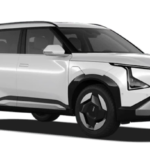 Kia EV5 vs Hyundai Elexio Australia (2026): Which Electric SUV Should You Buy?
Leave a Reply