
Subaru Forester vs Outback vs Crosstrek Australia

Choosing between the Subaru Forester, Outback and Crosstrek in Australia isn't as straightforward as picking the biggest SUV or the cheapest model. All three offer Subaru's Symmetrical All-Wheel Drive, impressive ground clearance and practical features designed for Australian driving conditions. However, they serve different types of drivers.
The Subaru Crosstrek is the smallest and most affordable option, making it attractive for city driving, commuting and weekend adventures. The Subaru Forester offers a practical balance between interior space, fuel efficiency and family-friendly versatility. Meanwhile, the Subaru Outback delivers greater cargo capacity, stronger towing performance and a more substantial touring experience.
With the latest Forester Strong Hybrid and redesigned seventh-generation Outback now part of the Australian lineup, there are some important differences worth understanding.
In this detailed comparison, we'll examine prices, dimensions, engines, fuel economy, boot space, safety, reliability, off-road capability and running costs to help determine which Subaru SUV makes the most sense for Australian buyers.
- Subaru Forester vs Outback vs Crosstrek: Overview
- Subaru Forester vs Outback vs Crosstrek Price in Australia
- Exterior Design: Which Subaru Looks Better?
- Dimensions: Which Subaru Is Bigger?
- Interior Space and Passenger Comfort
- Boot Space: Forester vs Outback vs Crosstrek
- Engine Performance Comparison
- Hybrid Comparison: Which Subaru Is More Efficient?
- Fuel Economy: Subaru SUV Running Costs
- Driving Experience: City and Highway
- Off-Road Capability in Australia
- Towing Capacity: Which Subaru Is Best?
- Safety Features and Driver Assistance
- Interior Technology and Infotainment
- Reliability: Which Subaru Is More Dependable?
- Maintenance and Ownership Costs
- Subaru Forester vs Crosstrek: Which Is Better?
- Subaru Forester vs Outback: Which Is Better?
- Subaru Outback vs Crosstrek: Which Is Better?
- Best Subaru SUV for Australian Families
- Best Subaru for Australian Road Trips
- Best Subaru for Snow and Ski Trips
- Which Subaru Has the Best Value for Money?
- Pros and Cons of Each Subaru SUV
- Five FAQs About Subaru SUVs in Australia
- Final Verdict: Forester, Outback or Crosstrek?
Subaru Forester vs Outback vs Crosstrek: Overview
Before exploring the differences, let's compare the three SUVs using their Australian specifications.
Subaru SUV Comparison Table
| Specification | Subaru Crosstrek | Subaru Forester | Subaru Outback |
|---|---|---|---|
| Vehicle category | Small SUV | Medium SUV | Large SUV |
| Seating capacity | 5 | 5 | 5 |
| Length | 4,495 mm | 4,655 mm | 4,880 mm |
| Width | 1,800 mm | 1,830 mm | 1,880 mm |
| Wheelbase | 2,670 mm | 2,670 mm | 2,745 mm |
| Ground clearance | 220 mm | 220 mm | 220–240 mm |
| Petrol engine | 2.0L Boxer | 2.5L Boxer | 2.5L Boxer |
| Hybrid available | Yes | Yes | No |
| Turbo engine available | No | No | Yes |
| Standard drivetrain | AWD | AWD | AWD |
| Petrol fuel consumption | 7.2 L/100 km | 7.9 L/100 km | 8.1 L/100 km |
| Hybrid fuel consumption | 6.5 L/100 km | 6.2 L/100 km | Not available |
| Boot capacity, seats up | 291–315 L | 484–496 L | 530 L |
| Maximum braked towing | 1,400 kg | 1,800 kg | 2,100 kg |
Figures refer to Australian MY26 models. Boot capacities, fuel consumption and towing limits depend on the engine or variant. The Outback Wilderness uses a 2.4-litre turbocharged engine and has different fuel consumption and ground clearance figures.
Looking at these specifications, we can already identify three distinct advantages.
The Crosstrek is the easiest to accommodate in urban environments, thanks to its compact dimensions. The Forester combines useful cargo space with an efficient strong hybrid option, while the Outback provides the most substantial towing capability and overall luggage capacity.
However, choosing the right vehicle requires looking beyond the numbers.
Subaru Forester vs Outback vs Crosstrek Price in Australia
Price is often the first consideration when comparing three vehicles from the same manufacturer.
Subaru positions the Crosstrek as its more accessible adventure-focused SUV, followed by the Forester and then the larger Outback.
Australian Starting Prices
Indicative advertised starting driveaway prices include:
| Model | Starting price (AUD) |
|---|---|
| Subaru Crosstrek | From $38,990 |
| Subaru Forester | From $45,990 |
| Subaru Outback | Around $54,500 |
These figures are indicative Australian advertised prices, not guaranteed national quotes. Driveaway pricing depends on postcode, dealer, availability, registration charges and applicable promotions.
The price difference between the Crosstrek and Forester can be worthwhile if we regularly carry passengers, luggage or bulky equipment.
Similarly, moving from the Forester to the Outback provides more room, greater towing ability and access to the turbocharged Wilderness variants.
Nevertheless, a higher purchase price doesn't automatically mean better value.
A Crosstrek could be the smarter investment for someone who mostly drives alone, occasionally travels with friends and rarely needs a large boot.
On the other hand, families who regularly travel interstate may appreciate the Forester or Outback enough to justify the additional expense.
Exterior Design: Which Subaru Looks Better?
Although all three models share Subaru's rugged design philosophy, their proportions create noticeably different personalities.
Subaru Crosstrek: Compact and Adventurous
The Crosstrek has a sporty crossover appearance, combining relatively compact dimensions with protective exterior cladding and raised ground clearance.
Its design works especially well for buyers who want something more adventurous than a conventional hatchback without committing to a large SUV.
The short overall length also helps when navigating narrow streets and crowded supermarket car parks.
Subaru Forester: Traditional SUV Practicality
The Forester adopts a more upright SUV design, with a tall cabin, substantial windows and a functional exterior shape.
Its proportions prioritise visibility, passenger accommodation and ease of entry.
We particularly appreciate this approach for families, older drivers and anyone who values practicality over dramatic styling.
The Forester looks and feels like a conventional medium SUV, making it an appealing all-rounder.
Subaru Outback: Larger and More Rugged
The latest Outback has moved further towards a traditional SUV appearance.
Its seventh-generation redesign introduces a more upright profile, distinctive front-end styling and a stronger visual emphasis on outdoor capability.
The Wilderness variants take that philosophy further with additional ground clearance, protective styling and hardware intended for challenging conditions.
If we prefer a substantial, adventure-oriented vehicle, the Outback has the strongest visual presence.
Dimensions: Which Subaru Is Bigger?
The Subaru Outback is the largest of the three models, followed by the Forester and Crosstrek.
However, the differences become particularly meaningful when considering Australian parking spaces, family requirements and long-distance journeys.
Length Comparison
- Subaru Crosstrek: 4,495 mm
- Subaru Forester: 4,655 mm
- Subaru Outback: 4,880 mm
The Forester is approximately 160 mm longer than the Crosstrek, while the Outback is another 225 mm longer than the Forester.
That means the Outback is 385 mm longer than the Crosstrek.
Although this might sound relatively insignificant, the difference becomes noticeable when parking in a narrow garage or manoeuvring through crowded shopping centres.
Width Comparison
The Crosstrek measures 1,800 mm wide, compared with 1,830 mm for the Forester and 1,880 mm for the Outback, excluding mirrors.
The Outback's wider body contributes to its spacious feel, but it also demands additional attention in narrow parking spaces.
Which Is Easiest to Park?
For urban environments such as Sydney, Melbourne and Brisbane, we would generally favour the Crosstrek.
The Forester is still manageable for everyday city use, particularly with its good outward visibility.
The Outback is better suited to drivers comfortable operating a larger vehicle.
Of course, parking cameras and driver-assistance systems can make a meaningful difference, especially on higher-specification variants.
Interior Space and Passenger Comfort
All three Subaru SUVs accommodate five passengers, but their cabin layouts cater to different priorities.
Subaru Crosstrek Interior Space
The Crosstrek offers adequate accommodation for four adults, with a fifth seat available when necessary.
Front-seat passengers enjoy a comfortable driving position, while the rear seats are suitable for regular commuting and shorter journeys.
However, taller passengers may find the rear accommodation less generous than in the larger Subaru models.
Families with bulky rear-facing child seats should also check the front-seat clearance before purchasing.
Subaru Forester Interior Space
The Forester offers a noticeably more family-oriented cabin.
Its upright roofline creates a spacious atmosphere, while the large windows improve outward visibility.
Rear passengers benefit from a more accommodating seating environment, making the Forester particularly appealing for households with children or teenagers.
Getting into the vehicle is also relatively straightforward, which can be useful when assisting children or passengers with reduced mobility.
For many Australians, the Forester offers an excellent compromise between exterior dimensions and usable cabin space.
Subaru Outback Interior Space
The Outback provides a more substantial interior, particularly for longer journeys.
Its larger dimensions and longer wheelbase support a spacious passenger environment.
The redesigned seventh-generation model also introduces improvements to seating comfort, cabin materials and headroom.
For families regularly travelling between cities, the Outback's comfortable cabin and luggage capacity are especially appealing.
Our verdict: The Forester is an excellent everyday family SUV, while the Outback is particularly attractive for extended touring. The Crosstrek works best when maximum interior space isn't essential.
Boot Space: Forester vs Outback vs Crosstrek
Cargo capacity is one of the biggest differences between these vehicles.
Whether we're carrying shopping bags, prams, camping equipment or holiday luggage, boot space can significantly affect everyday practicality.
Boot Capacity Comparison
| Model | Boot space with rear seats up |
|---|---|
| Crosstrek petrol | 291 litres |
| Crosstrek hybrid | 315 litres |
| Forester petrol | 496 litres |
| Forester hybrid | 484 litres |
| Outback | 530 litres |
The Crosstrek has a considerably smaller boot than the other two models.
For couples and individuals, that may not be an issue. However, families transporting prams, sports equipment and several suitcases could find the available space restrictive.
The Forester provides a substantial improvement, with nearly 500 litres of luggage capacity in petrol form.
This makes it much more practical for family holidays, camping equipment and weekly shopping.
The Outback offers the largest standard boot, with 530 litres available behind the rear seats.
With the rear seats folded, its cargo capacity can reach approximately 1,810–1,844 litres when measured to the ceiling, depending on the variant.
Which Subaru Is Best for Camping Equipment?
We would choose the Forester for most casual camping trips because it combines a generous boot with manageable exterior dimensions.
However, the Outback becomes more attractive when transporting bulky equipment, multiple camping chairs, an esky and luggage for several passengers.
The Crosstrek remains suitable for lighter weekend adventures, particularly for solo travellers or couples.
Engine Performance Comparison
The Australian Subaru lineup offers several engine configurations.
While every model uses Subaru's horizontally opposed Boxer engine design, engine displacement and electrification vary.
Subaru Crosstrek 2.0L Engine
The petrol Crosstrek uses a naturally aspirated 2.0-litre four-cylinder Boxer engine producing:
- 115 kW of power
- 196 Nm of torque
Its performance is adequate for city driving, suburban commuting and ordinary highway journeys.
However, acceleration can feel less effortless when carrying several passengers or climbing steep hills.
Drivers who regularly overtake on rural highways may prefer the additional performance offered by the larger Subaru models.
Subaru Forester 2.5L Engine
The petrol Forester features a naturally aspirated 2.5-litre Boxer engine delivering:
- 136 kW of power
- 247 Nm of torque
Compared with the Crosstrek, the Forester provides more power and torque.
This makes it better suited to family duties, highway driving and carrying heavier loads.
Although it isn't designed as a performance SUV, its engine provides a useful balance between capability and everyday usability.
Subaru Outback 2.5L and 2.4L Turbo
The Outback offers two distinct petrol engine options.
The standard 2.5-litre Boxer engine generates approximately 137 kW and 254 Nm.
For buyers seeking substantially stronger acceleration, the Outback Wilderness introduces a 2.4-litre turbocharged Boxer engine producing:
- 194 kW of power
- 382 Nm of torque
This turbocharged engine delivers considerably more torque than the naturally aspirated alternatives.
The result is stronger acceleration and greater flexibility when carrying luggage, climbing hills or towing.
This content may interest you! Subaru Forester vs Outback Australia: Which Is Best?
For outright petrol-engine performance, the Outback Wilderness is the clear winner.
Hybrid Comparison: Which Subaru Is More Efficient?
One of the most interesting differences between the three SUVs involves hybrid technology.
Both the Crosstrek and Forester offer hybrid powertrains in Australia, but they don't use identical systems.
Subaru Crosstrek e-Boxer Hybrid
The Crosstrek Hybrid combines a 2.0-litre Boxer petrol engine with a relatively small electric motor.
Its electric assistance improves efficiency under suitable conditions, but the system remains primarily petrol-driven.
This is a more modest hybrid arrangement than the newer system used in the Forester.
The Crosstrek Hybrid has an official combined fuel consumption figure of 6.5 L/100 km.
Subaru Forester Strong Hybrid
The newer Forester Strong Hybrid represents a significant technological improvement.
It combines a 2.5-litre Boxer engine with a substantially more powerful electric motor.
The system can rely more heavily on electric propulsion under suitable conditions, helping reduce petrol consumption.
Its official combined fuel economy is 6.2 L/100 km.
Interestingly, that makes the larger Forester Strong Hybrid more fuel-efficient on the official combined test cycle than the smaller Crosstrek Hybrid.
This demonstrates why engine size and vehicle dimensions don't always determine efficiency.
Does the Subaru Outback Have a Hybrid?
The Australian MY26 Outback range does not offer a hybrid powertrain.
Instead, buyers choose between the naturally aspirated 2.5-litre engine and the more powerful 2.4-litre turbocharged engine.
If hybrid technology is a purchasing priority, the Forester and Crosstrek are therefore the relevant options.
Fuel Economy: Subaru SUV Running Costs
Fuel consumption matters considerably for Australian drivers who regularly cover long distances.
Official combined fuel consumption figures are:
| Engine | Fuel economy |
|---|---|
| Forester Strong Hybrid | 6.2 L/100 km |
| Crosstrek Hybrid | 6.5 L/100 km |
| Crosstrek petrol | 7.2 L/100 km |
| Forester petrol | 7.9 L/100 km |
| Outback 2.5L petrol | 8.1 L/100 km |
| Outback Wilderness turbo | 9.7 L/100 km |
These are laboratory-based combined consumption figures. Actual fuel economy depends on traffic, driving style, tyre pressures, road conditions and vehicle load.
Best Subaru for City Commuting
For daily commuting, the Forester Strong Hybrid offers the lowest official fuel consumption.
Its hybrid system is especially attractive for drivers spending considerable time in stop-start traffic.
The Crosstrek Hybrid is another appealing option, although its smaller cabin may influence the final decision.
Best Subaru for Highway Driving
The difference between petrol and hybrid models can narrow during steady highway cruising because electric assistance is generally less frequent.
For long Australian highway journeys, we would consider fuel consumption alongside comfort, seating and luggage capacity.
The Forester offers a sensible compromise, while the Outback may justify its greater consumption for drivers who prioritise space and touring capability.
Driving Experience: City and Highway
Choosing an SUV isn't only about specifications. The driving experience also matters.
Crosstrek: Easy Everyday Driving
The Crosstrek's compact dimensions make it relatively approachable for urban driving.
It feels well suited to commuting, navigating suburban streets and taking occasional trips outside the city.
Its standard AWD system also provides useful traction on wet roads and loose surfaces.
However, drivers who frequently carry heavy loads may find the smaller engine less satisfying.
Forester: Comfortable All-Rounder
The Forester strikes an appealing balance between comfort, visibility and stability.
Its upright driving position makes surrounding traffic easier to observe, while its dimensions remain manageable.
This combination makes it particularly suitable for families and drivers who split their time between cities, highways and country roads.
Outback: Long-Distance Touring Comfort
The Outback is particularly attractive for Australians who regularly travel substantial distances.
Its larger body, spacious seating and available turbocharged engine make it a strong option for long interstate journeys.
The latest generation also introduces improvements intended to reduce cabin noise and improve ride comfort.
If highway touring is a major priority, the Outback deserves serious consideration.
Off-Road Capability in Australia
One of Subaru's biggest selling points is its standard Symmetrical All-Wheel Drive system.
Unlike many competing SUVs that offer AWD only on selected variants, all three Australian models provide AWD as standard.
Nevertheless, AWD shouldn't be confused with the low-range four-wheel-drive systems found in dedicated off-road vehicles.
Ground Clearance Comparison
- Crosstrek: 220 mm
- Forester: 220 mm
- Outback: 220 mm
- Outback Wilderness: 240 mm
All three offer useful ground clearance for rougher roads, gravel tracks and moderately uneven terrain.
Their X-Mode systems also help manage traction in slippery conditions, although exact functionality varies by model and specification.
Best Subaru for Dirt Roads
For regular gravel-road driving, we would favour the Forester.
Its combination of ground clearance, visibility and manageable dimensions makes it a versatile option.
The Crosstrek also performs well for drivers who prefer a smaller vehicle.
Best Subaru for More Challenging Trails
The Outback Wilderness offers the most serious off-road-focused equipment in this comparison.
Its additional ground clearance, specialised suspension features and improved approach and departure angles make it particularly attractive for outdoor adventures.
However, none of these SUVs should automatically be treated as a replacement for a dedicated four-wheel drive on demanding rocky tracks, deep sand or severe off-road terrain.
Tyres, terrain conditions, vehicle loading and driver experience remain extremely important.
Towing Capacity: Which Subaru Is Best?
Towing requirements can quickly determine which vehicle makes the most sense.
The three SUVs offer different maximum braked towing capacities.
| Model | Maximum braked towing |
|---|---|
| Crosstrek petrol | 1,400 kg |
| Crosstrek Hybrid | 1,270 kg |
| Forester petrol | 1,800 kg |
| Forester Strong Hybrid | 1,200 kg |
| Outback 2.5L | 2,000 kg |
| Outback Wilderness turbo | 2,100 kg |
These figures refer to maximum braked trailer mass. Actual towing suitability also depends on towball download, payload, gross vehicle mass, gross combination mass and applicable legal requirements.
Which Subaru Can Tow a Caravan?
The Outback provides the highest towing rating and is the strongest candidate for buyers needing to tow a suitably matched caravan or trailer.
The Forester petrol may be sufficient for smaller caravans, camper trailers and recreational equipment.
The Crosstrek can handle lighter towing duties within its limits.
An important detail is that the Forester Strong Hybrid has a lower towing rating than the petrol Forester.
Therefore, buying the hybrid doesn't automatically mean getting the best towing capability.
If towing is a regular activity, we should check the complete loaded trailer weight rather than relying only on an advertised empty caravan weight.
Safety Features and Driver Assistance
Subaru places considerable emphasis on occupant protection and driver-assistance technology.
The three models offer Subaru EyeSight technology, although the exact functions differ by model year and variant.
Depending on the vehicle, relevant features may include:
- Autonomous emergency braking
- Adaptive cruise control
- Lane departure warning
- Lane-keeping assistance
- Driver monitoring technology
- Blind-spot monitoring on applicable variants
- Rear cross-traffic alerts on applicable variants
The latest Outback introduces updated EyeSight functionality alongside a wide-angle camera and revised driver-assistance features.
The Forester and Crosstrek also offer extensive safety equipment.
However, we shouldn't assume every feature is included on every trim level.
Before purchasing, it's worth comparing the exact variants under consideration and reviewing their applicable ANCAP ratings and assessment years.
Interior Technology and Infotainment
Modern Subaru models combine practical cabin layouts with substantial infotainment technology.
Crosstrek Technology
The Crosstrek features an 11.6-inch portrait-oriented central touchscreen and wireless Apple CarPlay and Android Auto connectivity.
Higher variants introduce features such as upgraded audio, additional camera systems and premium interior appointments.
For everyday use, the technology package is competitive for its class.
Forester Technology
The Forester also offers a large touchscreen and various convenience features depending on specification.
Hybrid versions add information relating to electric power delivery and energy management.
Higher-grade variants provide additional comfort and technology equipment.
The cabin focuses on practical controls and visibility rather than creating an excessively complicated driving environment.
Outback Technology
The redesigned Outback features a 12.1-inch horizontal infotainment display and a 12.3-inch digital instrument cluster.
The system supports wireless smartphone integration, while selected variants include upgraded audio and additional camera functionality.
Subaru has also returned certain commonly used climate and vehicle functions to physical controls.
For drivers who appreciate convenient access to important settings, this is a welcome design decision.
Reliability: Which Subaru Is More Dependable?
Reliability is an important consideration when purchasing a vehicle intended to remain in the family for many years.
The Forester, Outback and Crosstrek share several fundamental Subaru technologies, including Boxer engines, AWD systems and continuously variable transmissions.
However, sharing a manufacturer doesn't mean all three vehicles will have identical maintenance costs or long-term reliability outcomes.
Subaru Boxer Engine Reliability
Subaru's horizontally opposed engines have been used across numerous generations of its vehicles.
Modern versions can provide dependable service when maintained correctly, but regular servicing remains essential.
This content may interest you!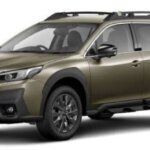 Subaru Outback vs Crosstrek Australia: Which One Should We Buy?
As with any engine, poor maintenance, overheating or neglected fluid changes can lead to expensive problems.
Subaru CVT Reliability
The three SUVs use Subaru Lineartronic continuously variable transmission technology.
A CVT delivers smooth operation and helps manage engine efficiency, but it can feel different from a conventional automatic transmission.
Some drivers notice sustained engine revs during strong acceleration.
When purchasing a used Subaru, we would check transmission behaviour, maintenance records and any applicable manufacturer service recommendations.
Are Subaru Hybrids Reliable?
The Crosstrek's hybrid technology differs substantially from the newer Forester Strong Hybrid system.
The stronger hybrid system is relatively new in the Australian Forester, meaning its long-term local reliability record is still developing.
That doesn't mean it is unreliable, but we should avoid making unsupported claims about durability over very high kilometres.
Which Subaru Would We Choose for Long-Term Ownership?
Rather than declaring one model the most reliable without comparable long-term evidence, we would prioritise:
- A vehicle with a complete service history
- An engine suited to the intended driving conditions
- Affordable insurance and maintenance
- A comfortable driving position
- Adequate space without unnecessary size or complexity
Subaru Australia's standard five-year, unlimited-kilometre new-car warranty provides additional reassurance, subject to its terms and exclusions.
Maintenance and Ownership Costs
Purchase price and fuel economy don't tell the complete ownership-cost story.
We should also account for servicing, insurance, tyres, registration, depreciation and possible repairs.
Crosstrek Ownership Costs
The Crosstrek's relatively affordable purchase price is an important advantage.
Its smaller dimensions may also translate into less expensive replacement tyres than some higher-grade Outback variants, although tyre specifications matter more than vehicle size alone.
For budget-conscious buyers who don't need a large SUV, it is an appealing choice.
Forester Ownership Costs
The Forester sits in the middle of the range for initial purchase price.
Petrol versions offer conventional mechanical simplicity relative to the hybrid system, while the Strong Hybrid can reduce fuel expenditure.
The hybrid's financial benefit will depend on the additional purchase price, annual kilometres and actual consumption.
Outback Ownership Costs
The Outback generally has the highest entry price.
Turbocharged Wilderness versions also have higher official fuel consumption.
Insurance, tyres and servicing expenses may vary considerably between the standard Outback and higher-grade Wilderness models.
For buyers who genuinely need the additional capability, these costs may be justified.
However, we wouldn't automatically recommend the largest Subaru when a smaller model meets the same everyday requirements.
Subaru Forester vs Crosstrek: Which Is Better?
The Forester and Crosstrek are arguably the most difficult pair to choose between.
Both offer standard AWD, generous ground clearance and hybrid availability.
The main differences concern space, engine performance and the type of driving they're best suited to.
Choose the Crosstrek If:
- You mainly drive in urban environments.
- You prefer a compact vehicle.
- Your parking space is relatively small.
- You rarely transport large amounts of luggage.
- You want a lower purchase price.
Choose the Forester If:
- You regularly carry rear passengers.
- You have children or need space for child seats.
- You travel with substantial luggage.
- You want the more advanced Strong Hybrid powertrain.
- You prefer the versatility of a medium SUV.
Our winner: Subaru Forester for families, Crosstrek for urban drivers.
The Forester is more versatile overall, but the Crosstrek can deliver better value when additional space isn't necessary.
Subaru Forester vs Outback: Which Is Better?
The Forester and Outback both offer spacious cabins and useful touring capability.
However, their strengths differ.
The Forester is easier to manage as an everyday family vehicle, while the Outback provides greater luggage space and towing performance.
Choose the Forester If:
- You want a medium-sized family SUV.
- Fuel economy is a priority.
- You prefer a more manageable exterior footprint.
- You want a strong hybrid option.
- You don't require the Outback's maximum towing ability.
Choose the Outback If:
- You frequently undertake long road trips.
- You need additional cargo space.
- You regularly tow heavier trailers.
- You want access to a turbocharged engine.
- You prefer the Wilderness variant's extra off-road equipment.
Our winner: Forester for everyday versatility, Outback for touring and towing.
Neither vehicle is universally better; the right choice depends on how frequently its additional capabilities will actually be used.
Subaru Outback vs Crosstrek: Which Is Better?
The differences between the Crosstrek and Outback are substantial.
The Crosstrek prioritises compact dimensions and affordability, while the Outback focuses on space, performance and versatility.
Why Buy the Crosstrek?
The Crosstrek is attractive for buyers who want Subaru's AWD capability without the size or expense of a larger SUV.
It works particularly well for singles, couples and drivers living in densely populated areas.
Why Buy the Outback?
The Outback is more suitable for drivers who regularly carry several passengers, travel long distances or need greater towing capability.
Its larger boot and more powerful engine options are meaningful advantages for touring.
However, choosing an Outback purely for occasional commuting may mean paying for space and capability that rarely gets used.
Best Subaru SUV for Australian Families
For most families, we would choose the Subaru Forester.
Its cabin feels spacious without making the vehicle excessively large.
The generous boot accommodates ordinary family requirements, while the upright seating position and large windows help make driving comfortable.
The Strong Hybrid is particularly interesting for households that combine school runs, shopping and regular commuting.
The Outback becomes a stronger candidate for larger luggage requirements, extended holidays or regular towing.
The Crosstrek can still work for smaller households, but its limited boot volume is worth considering carefully.
Best Subaru for Australian Road Trips
Australia's extensive highway network makes long-distance comfort especially important.
Driving between Melbourne and Sydney, exploring regional Queensland or travelling through rural New South Wales can involve hours behind the wheel.
For these journeys, we would favour the Outback when travelling with several passengers and substantial luggage.
Its larger cargo area, comfortable cabin and touring-focused design suit extended trips.
The Forester is an excellent alternative, particularly when fuel economy and easier parking are priorities.
The Crosstrek remains capable of highway travel, but it offers less luggage flexibility.
Best Subaru for Snow and Ski Trips
All three vehicles offer standard AWD, which can be useful when visiting alpine regions.
The Crosstrek's compact dimensions make it appealing for couples travelling with modest equipment.
The Forester provides more room for passengers, winter clothing and recreational gear.
The Outback offers the most cargo flexibility, particularly when transporting equipment for several people.
However, AWD doesn't eliminate the need for appropriate tyres or compliance with snow-chain requirements.
Australian alpine destinations may impose specific chain-carrying or fitting rules depending on location, weather and vehicle type.
We should always check local regulations before travelling.
Which Subaru Has the Best Value for Money?
Value for money isn't necessarily determined by the lowest purchase price.
A vehicle offers good value when its features, comfort and capabilities match what the owner actually needs.
| Buyer priority | Best Subaru |
|---|---|
| Lowest purchase price | Crosstrek |
| City commuting | Crosstrek |
| Everyday family driving | Forester |
| Official hybrid fuel efficiency | Forester Strong Hybrid |
| Maximum boot space | Outback |
| Highest towing capacity | Outback Wilderness |
| Highway touring with luggage | Outback |
| Compact AWD adventure SUV | Crosstrek |
| Balanced all-round practicality | Forester |
| Most powerful petrol engine | Outback Wilderness |
For someone who mainly drives to work and occasionally travels on weekends, the Crosstrek could be the best investment.
For families who want a practical SUV with room to grow, the Forester represents an attractive middle ground.
For buyers who regularly tow, camp or travel long distances with bulky equipment, the Outback justifies stronger consideration.
Pros and Cons of Each Subaru SUV
Subaru Crosstrek Pros and Cons
Pros
- Most affordable starting price
- Compact and easy to manoeuvre
- Standard all-wheel drive
- Excellent ground clearance for its size
- Petrol and hybrid choices
- Modern infotainment features
Cons
- Smallest boot
- Less powerful petrol engine
- Less suitable for bulky family equipment
- Lower maximum towing capacity than the larger petrol models
Subaru Forester Pros and Cons
Pros
- Spacious family-oriented cabin
- Excellent outward visibility
- Practical boot capacity
- Strong Hybrid availability
- Comfortable everyday dimensions
- Good versatility for Australian conditions
Cons
- More expensive than the Crosstrek
- Less boot space than the Outback
- Hybrid towing capacity is relatively modest
- No turbocharged petrol option in the Australian range
Subaru Outback Pros and Cons
Pros
- Largest boot in this comparison
- Strong towing capability
- Available turbocharged engine
- Spacious touring-oriented cabin
- Rugged Wilderness variants
- Updated interior technology
Cons
- Highest starting purchase price
- Larger dimensions make parking less convenient
- No hybrid option in the Australian MY26 lineup
- Higher fuel consumption, especially in turbocharged form
Five FAQs About Subaru SUVs in Australia
1. Is the Subaru Forester better than the Crosstrek?
The Subaru Forester is generally better for families because it offers more interior space, a significantly larger boot and a more powerful petrol engine. Its Strong Hybrid version also achieves lower official combined fuel consumption than the Crosstrek Hybrid. However, the Crosstrek is cheaper and easier to manoeuvre in urban environments.
2. Is the Subaru Outback bigger than the Forester?
Yes. The Australian MY26 Subaru Outback measures 4,880 mm long and 1,880 mm wide, compared with 4,655 mm long and 1,830 mm wide for the Forester. The Outback also offers greater standard boot capacity, making it particularly suitable for long-distance travel and carrying additional luggage.
3. Which is more fuel-efficient: Forester, Outback or Crosstrek?
The Subaru Forester Strong Hybrid is the most fuel-efficient option based on official Australian combined consumption figures, using 6.2 L/100 km. The Crosstrek Hybrid follows at 6.5 L/100 km. The standard petrol Crosstrek uses 7.2 L/100 km, while the petrol Forester and Outback consume more fuel.
4. Which Subaru is best for off-road driving in Australia?
The Subaru Outback Wilderness offers the most off-road-focused equipment of the three, including 240 mm of ground clearance and specialised suspension features. However, the Forester and Crosstrek are also capable of handling suitable gravel roads and mild trails. None is a direct substitute for a dedicated low-range four-wheel-drive vehicle in extreme conditions.
5. Which Subaru SUV should I buy in Australia?
Choose the Crosstrek if you want an affordable, compact AWD SUV. Choose the Forester if you need a practical family vehicle with a spacious cabin and efficient hybrid option. Choose the Outback if your priorities include long-distance touring, additional luggage capacity or heavier towing. The Forester offers the most balanced combination for many Australian households.
Final Verdict: Forester, Outback or Crosstrek?
After comparing the Subaru Forester vs Outback vs Crosstrek in Australia, it's clear that each model has its own strengths.
The Subaru Crosstrek is the sensible choice for drivers who value affordability, compact dimensions and everyday convenience. It offers much of Subaru's signature AWD capability without the expense or physical size of its larger siblings.
The Subaru Forester is our overall recommendation for most Australian families. It combines a spacious interior, generous luggage capacity, good visibility and the availability of an efficient Strong Hybrid powertrain. For everyday driving and occasional adventures, it offers a compelling balance.
The Subaru Outback is the strongest option for buyers who need additional cargo space, more powerful petrol engines or greater towing capability. Its redesigned cabin and available Wilderness variants also make it particularly appealing for outdoor enthusiasts.
Ultimately, the best Subaru isn't necessarily the largest or most expensive one.
If we want the best overall balance, we'd choose the Forester. If we prioritise compact affordability, we'd choose the Crosstrek. And if we regularly travel long distances with plenty of luggage or need greater towing capability, we'd choose the Outback.
Before making a final decision, it's worth test-driving all three models, checking the equipment included in each Australian variant and obtaining an accurate local driveaway quote.
This content may interest you!Subaru Forester vs Kia Sportage Australia: 2026 Comparison
Leave a Reply