
Toyota RAV4 vs Nissan X-Trail Australia: Which SUV Is Better?

Choosing between the Toyota RAV4 and Nissan X-Trail in Australia is not necessarily an easy decision. Both Japanese SUVs offer spacious interiors, modern safety technology, comfortable driving experiences and electrified powertrain options.
However, they approach family motoring in different ways. The Toyota RAV4 focuses on fuel efficiency, hybrid technology and long-term ownership value, while the Nissan X-Trail offers greater seating flexibility, impressive towing capabilities and a distinctive e-POWER hybrid system.
The competition has become even more interesting in 2026, with the arrival of the sixth-generation Toyota RAV4 and the updated Nissan X-Trail range.
In this Toyota RAV4 vs Nissan X-Trail comparison, we examine pricing, performance, fuel consumption, reliability, boot space, maintenance costs and everyday practicality to help Australian drivers make the right decision.
- Toyota RAV4 vs Nissan X-Trail: Quick Comparison
- Toyota RAV4 vs Nissan X-Trail Price in Australia
- Engine and Performance Comparison
- Toyota RAV4 vs Nissan X-Trail Fuel Consumption
- Toyota RAV4 vs Nissan X-Trail Dimensions
- Boot Space and Practicality
- Toyota RAV4 vs Nissan X-Trail: Which Has More Seats?
- Interior Comfort and Technology
- Toyota RAV4 vs Nissan X-Trail Reliability
- Maintenance and Servicing Costs
- Toyota RAV4 vs Nissan X-Trail Towing Capacity
- Safety Features and ANCAP Ratings
- Which SUV Is Better for City Driving?
- Which SUV Is Better for Highway Driving?
- Resale Value and Depreciation
- Toyota RAV4 Pros and Cons
- Nissan X-Trail Pros and Cons
- Toyota RAV4 vs Nissan X-Trail: Overall Comparison
- Which Should You Buy in Australia?
- Conclusion
- Frequently Asked Questions
Toyota RAV4 vs Nissan X-Trail: Quick Comparison
Let's begin with an overview of the current Australian models.
| Specification | Toyota RAV4 | Nissan X-Trail |
|---|---|---|
| Vehicle category | Medium SUV | Medium SUV |
| Starting price | $45,990 | $38,305 |
| Engine options | 2.5L hybrid and PHEV | 2.5L petrol and 1.5L e-POWER |
| Hybrid power output | 143 kW | Up to 157 kW |
| Hybrid fuel consumption | 4.5–4.6 L/100km | 5.4–6.1 L/100km |
| Seating capacity | 5 | 5 or 7 |
| Maximum boot capacity | Up to 705 litres | Up to 585 litres |
| Maximum braked towing | 1,500 kg | 2,000 kg |
| Drivetrain | 2WD or AWD | 2WD or AWD |
| Plug-in hybrid available | Yes | No |
| Standard warranty | 5 years | 5 years |
| Extended warranty options | Conditional coverage | Up to 10 years |
Prices are in Australian dollars and exclude on-road costs. Specifications vary depending on the selected powertrain and model grade. Boot measurements may also use different measurement methods.
Toyota RAV4 vs Nissan X-Trail Price in Australia
Price is one of the biggest differences between these two family SUVs.
The Nissan X-Trail offers a considerably lower starting price because buyers can still choose a conventional petrol engine. The new Toyota RAV4 range, meanwhile, consists entirely of electrified models.
Toyota RAV4 Prices
Selected 2026 Toyota RAV4 prices include:
| Model | Price from |
|---|---|
| RAV4 GX Hybrid 2WD | $45,990 |
| RAV4 GX Hybrid AWD | $49,340 |
| RAV4 GXL Hybrid 2WD | $48,990 |
| RAV4 GXL Hybrid AWD | $52,340 |
| RAV4 Edge Hybrid AWD | $55,340 |
| RAV4 Cruiser Hybrid 2WD | $56,990 |
| RAV4 Cruiser Hybrid AWD | $60,340 |
| RAV4 XSE PHEV 2WD | $58,840 |
Nissan X-Trail Prices
Selected 2026 Nissan X-Trail prices include:
| Model | Price from |
|---|---|
| X-Trail ST 2WD | $38,305 |
| X-Trail ST AWD | $41,305 |
| X-Trail ST-L 2WD | $42,780 |
| X-Trail ST-L AWD | $45,880 |
| X-Trail ST-L e-POWER 2WD | $45,990 |
| X-Trail Rock Creek AWD | $48,315 |
| X-Trail ST-L e-POWER AWD | $49,080 |
| X-Trail Ti e-POWER 2WD | $50,915 |
| X-Trail Ti-L e-POWER AWD | $58,380 |
The Nissan X-Trail is particularly attractive for buyers working with a budget of approximately $40,000.
However, the entry-level RAV4 Hybrid and X-Trail ST-L e-POWER 2WD have identical published starting prices, making them particularly interesting alternatives.
Winner: Nissan X-Trail for affordability.
Engine and Performance Comparison
Although both vehicles offer hybrid technology, their mechanical configurations are considerably different.
Toyota RAV4 Hybrid Engine
The conventional Toyota RAV4 Hybrid combines a naturally aspirated 2.5-litre four-cylinder petrol engine with electric motor technology.
Its main specifications include:
- 2.5-litre four-cylinder petrol engine.
- 143 kW combined system output.
- Electronic continuously variable transmission.
- Front-wheel-drive or all-wheel-drive configuration.
- Regenerative braking.
- Automatic hybrid battery charging.
The Toyota hybrid system can use the petrol engine, electric motor or a combination of both to drive the vehicle.
It delivers smooth acceleration and prioritises efficient everyday operation.
Toyota RAV4 Plug-in Hybrid
The 2026 RAV4 PHEV introduces a more powerful alternative for Australian buyers.
Depending on the configuration, it offers:
- 201–227 kW combined output.
- A 22.7 kWh battery.
- External charging capability.
- Up to 154 km of claimed electric driving range under NEDC testing.
- Front-wheel-drive or all-wheel-drive options.
Real-world electric range will vary according to driving conditions, temperature and speed.
The plug-in hybrid is especially appealing to drivers who can charge regularly at home.
Nissan X-Trail Petrol Engine
The conventional Nissan X-Trail features a 2.5-litre naturally aspirated four-cylinder petrol engine producing 135 kW and 244 Nm.
It uses a continuously variable transmission and is suitable for everyday commuting, family transport and occasional long-distance journeys.
While it is not as economical as either hybrid alternative, its lower purchase price remains attractive.
Nissan X-Trail e-POWER Engine
The Nissan e-POWER system works differently from Toyota's hybrid technology.
A 1.5-litre turbocharged three-cylinder petrol engine generates electricity, while electric motors drive the wheels.
The all-wheel-drive e-4ORCE version produces a combined output of 157 kW.
Because the wheels are powered electrically, the X-Trail e-POWER delivers immediate acceleration and a driving experience that feels closer to an electric vehicle.
However, it does not require external charging.
Winner: Toyota RAV4 PHEV for maximum performance; Nissan X-Trail e-POWER for electric-like driving without plugging in.
Toyota RAV4 vs Nissan X-Trail Fuel Consumption
Fuel economy is one of the strongest reasons to consider the Toyota RAV4.
Official Fuel Consumption Figures
| Model | Combined fuel consumption |
|---|---|
| Toyota RAV4 Hybrid 2WD | 4.5 L/100km |
| Toyota RAV4 Hybrid AWD | 4.6 L/100km |
| Nissan X-Trail e-POWER 2WD | 5.4 L/100km |
| Nissan X-Trail e-POWER AWD | 6.1 L/100km |
| Nissan X-Trail Petrol 2WD | 7.4 L/100km |
| Nissan X-Trail Petrol AWD | 7.8 L/100km |
The RAV4 Hybrid is more fuel-efficient than both the conventional petrol X-Trail and the e-POWER versions according to official combined-cycle testing.
The RAV4 PHEV has an even lower official petrol consumption figure, but its results depend heavily on regular battery charging. Electricity costs must also be considered.
Annual Fuel Cost Comparison
Assuming an annual driving distance of 15,000 km and a petrol price of $2.00 per litre, we can estimate the following expenses.
| Model | Annual fuel cost |
|---|---|
| RAV4 Hybrid 2WD | $1,350 |
| RAV4 Hybrid AWD | $1,380 |
| X-Trail e-POWER 2WD | $1,620 |
| X-Trail e-POWER AWD | $1,830 |
| X-Trail Petrol 2WD | $2,220 |
| X-Trail Petrol AWD | $2,340 |
Under these assumptions, the RAV4 Hybrid 2WD could save approximately $870 annually compared with the petrol X-Trail 2WD.
These are illustrative estimates using identical petrol prices. The actual difference will depend on real-world consumption and the price of the required fuel grade. The 2026 RAV4 Hybrid requires 95 RON petrol, whereas the conventional petrol X-Trail accepts 91 RON.
Winner: Toyota RAV4.
Toyota RAV4 vs Nissan X-Trail Dimensions
Both SUVs occupy a similar amount of road space, making them suitable for suburban driving and family transport.
| Dimension | Toyota RAV4 | Nissan X-Trail |
|---|---|---|
| Length | Approximately 4,600 mm | Approximately 4,680 mm |
| Width | Approximately 1,855 mm | Approximately 1,840 mm |
| Height | Approximately 1,680 mm | Approximately 1,725 mm |
| Wheelbase | 2,690 mm | 2,705 mm |
| Maximum seating | 5 | 7 |
Dimensions vary slightly depending on the model grade.
The Nissan X-Trail is generally longer and taller, while the Toyota RAV4 has a slightly wider body in its standard configuration.
Both offer a raised driving position and good everyday usability.
Boot Space and Practicality
Families frequently prioritise luggage capacity when purchasing a medium SUV.
Toyota RAV4 Boot Space
The sixth-generation Toyota RAV4 offers up to 705 litres of luggage capacity, depending on the variant.
Its practical cargo area makes it suitable for:
- Family holidays.
- Shopping trips.
- Prams and children's equipment.
- Camping accessories.
- Sports equipment.
- Large suitcases.
The plug-in hybrid versions may have different luggage capacities because of their battery configuration.
Nissan X-Trail Boot Space
Selected five-seat Nissan X-Trail petrol variants offer up to 585 litres of luggage capacity, while e-POWER models provide approximately 575 litres.
Seven-seat variants offer approximately 465 litres with the third row folded.
The X-Trail's biggest advantage is its flexible seating configuration rather than outright cargo capacity.
Because manufacturers may measure luggage capacity differently, we recommend inspecting both vehicles in person if boot space is a major priority.
Toyota RAV4 vs Nissan X-Trail: Which Has More Seats?
The Toyota RAV4 is exclusively a five-seat SUV in Australia.
The Nissan X-Trail offers five-seat and seven-seat configurations across selected petrol variants.
This makes the Nissan particularly attractive for larger families who occasionally need additional passenger space.
However, the third row is better suited to children and shorter journeys than regular adult transport.
It is also important to remember that Australian X-Trail e-POWER models are five-seaters. Buyers cannot currently combine the seven-seat configuration with Nissan's hybrid powertrain.
Winner: Nissan X-Trail.
Interior Comfort and Technology
Both SUVs provide comfortable interiors, although their design philosophies differ.
Toyota RAV4 Interior
The latest RAV4 features a modern dashboard, updated multimedia technology and practical storage solutions.
Depending on the grade, available equipment includes:
This content may interest you!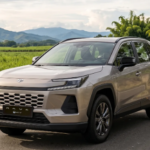 Toyota RAV4 or Mazda CX-50 Australia: Which SUV Is Better?
- Digital instrument cluster.
- Infotainment touchscreen measuring up to 12.9 inches.
- Smartphone connectivity.
- Heated and ventilated front seats.
- Premium audio system.
- Panoramic sunroof.
- Wireless smartphone charging.
- Powered tailgate.
The RAV4 balances modern technology with everyday functionality.
Nissan X-Trail Interior
The Nissan X-Trail offers an attractive cabin with comfortable seating and generous passenger space.
Selected models feature:
- 12.3-inch infotainment touchscreen.
- Digital instrument cluster.
- Leather-accented upholstery.
- Head-up display.
- Bose premium audio system.
- Surround-view camera system.
- Wireless smartphone connectivity.
- Three-zone climate control.
Higher-specification X-Trail models are particularly appealing to buyers who want a more luxurious family SUV.
Winner: Nissan X-Trail for comfort and premium interior appeal.
Toyota RAV4 vs Nissan X-Trail Reliability
Reliability is an important consideration for Australian drivers planning to keep their vehicles for several years.
Is the Toyota RAV4 Reliable?
Toyota has developed a strong reputation for dependable vehicles, particularly those equipped with its established hybrid technology.
Potential advantages include:
- Extensive experience with petrol-electric powertrains.
- Naturally aspirated petrol engine.
- Established hybrid transmission design.
- Extensive Australian servicing network.
- Strong historical resale values.
Nevertheless, the sixth-generation RAV4 is relatively new. Its long-term reliability cannot yet be assessed with the same confidence as previous generations.
Is the Nissan X-Trail Reliable?
The Nissan X-Trail is generally a capable family vehicle, although reliability varies across generations and powertrain configurations.
Older X-Trail models have sometimes attracted complaints relating to CVT performance. These historical concerns should not automatically be applied to every newer model.
Importantly, the e-POWER drivetrain does not use the conventional petrol model's CVT to drive the wheels.
Its more complex turbocharged generator system has a shorter long-term track record than Toyota's established hybrid architecture.
For buyers prioritising proven hybrid technology, Toyota remains the more conservative choice.
Winner: Toyota RAV4 for established reliability reputation.
Maintenance and Servicing Costs
Both manufacturers offer scheduled servicing programmes in Australia.
| Ownership factor | Toyota RAV4 | Nissan X-Trail |
|---|---|---|
| Indicative capped-price service | $260 | $399 |
| Initial servicing programme | Up to 5 years | Up to 5 years |
| Standard vehicle warranty | 5 years/unlimited km | 5 years/unlimited km |
| Conditional extended coverage | Available | Up to 10 years/300,000 km |
Toyota generally has the advantage in scheduled servicing costs.
Nissan, however, offers an attractive service-activated extended warranty programme that can provide coverage for up to 10 years or 300,000 kilometres, subject to eligibility and authorised dealer servicing.
Maintenance prices, coverage and exclusions should be confirmed before purchasing.
Winner: Toyota RAV4 for scheduled servicing costs; Nissan X-Trail for conditional extended warranty coverage.
Toyota RAV4 vs Nissan X-Trail Towing Capacity
The Nissan X-Trail has a clear advantage when it comes to towing.
| Model | Braked towing capacity |
|---|---|
| Toyota RAV4 Hybrid 2WD | 800 kg |
| Toyota RAV4 Hybrid AWD | 1,500 kg |
| Toyota RAV4 PHEV AWD | 1,500 kg |
| Nissan X-Trail Petrol | 2,000 kg |
| Nissan X-Trail e-POWER AWD | 1,650 kg |
The conventional petrol Nissan X-Trail is the stronger choice for drivers who regularly tow small caravans, boats or heavier trailers.
The RAV4 AWD is still capable of handling moderate recreational towing requirements.
Always consider vehicle payload, towball download, trailer weight and manufacturer towing limitations before connecting a trailer.
Winner: Nissan X-Trail.
Safety Features and ANCAP Ratings
Both SUVs offer numerous advanced driver assistance systems.
Common safety technologies include:
- Autonomous emergency braking.
- Adaptive cruise control.
- Blind-spot monitoring.
- Lane departure warning.
- Lane keeping assistance.
- Rear cross-traffic assistance.
- Multiple airbags.
The current Nissan X-Trail holds a five-star ANCAP safety rating based on 2021 assessment protocols.
As of November 2026, the sixth-generation Toyota RAV4 remains unrated by ANCAP. The previous generation's five-star rating does not automatically apply to the new model.
An unrated vehicle is not necessarily unsafe, but buyers should understand the distinction between available safety equipment and independently verified crash-test performance.
Winner: Nissan X-Trail for its currently established ANCAP rating.
Which SUV Is Better for City Driving?
The Toyota RAV4 Hybrid is particularly well suited to urban environments such as Sydney, Melbourne, Brisbane and Perth.
Its efficient hybrid system reduces petrol consumption during stop-start driving, while regenerative braking helps recover energy.
The Nissan X-Trail e-POWER also performs well in urban environments thanks to its responsive electric drive system.
It feels smooth when accelerating away from traffic lights and requires no charging infrastructure.
We would choose the RAV4 for lower fuel consumption, but the X-Trail e-POWER is an excellent alternative for drivers who prefer an electric-like driving experience.
Which SUV Is Better for Highway Driving?
Both vehicles are comfortable on Australian motorways and regional roads.
The Toyota RAV4 offers a balanced combination of fuel efficiency, predictable handling and long-distance practicality.
The Nissan X-Trail provides comfortable seating, a relaxed driving experience and impressive refinement, particularly in higher-specification e-POWER models.
Drivers who regularly travel with several passengers or tow trailers may find the X-Trail more suitable.
For long-distance commuting without a trailer, the RAV4 Hybrid remains an attractive choice.
Resale Value and Depreciation
Toyota vehicles have historically performed well in the Australian used-car market.
The RAV4 benefits from strong brand recognition, demand for hybrid SUVs and an established reputation for reliability.
The Nissan X-Trail also enjoys widespread recognition, but its depreciation can vary considerably depending on the engine, specification, purchase discount and vehicle condition.
Although future resale values cannot be guaranteed, the Toyota RAV4 is likely to remain competitive in this category.
Winner: Toyota RAV4.
Toyota RAV4 Pros and Cons
Advantages
- Excellent hybrid fuel economy.
- Established hybrid technology.
- Competitive scheduled servicing costs.
- Strong historical resale value.
- Generous luggage capacity.
- Plug-in hybrid options.
- Extensive Australian dealer network.
Disadvantages
- Higher entry-level purchase price.
- No seven-seat configuration.
- Lower maximum towing capacity.
- Premium petrol requirement for the new hybrid.
- Limited long-term reliability data for the sixth generation.
Nissan X-Trail Pros and Cons
Advantages
- More affordable entry-level models.
- Optional seven-seat configuration.
- Excellent towing capacity.
- Smooth e-POWER hybrid system.
- Comfortable and well-equipped cabin.
- Conditional 10-year warranty programme.
- Established five-star ANCAP rating.
Disadvantages
- Higher official hybrid fuel consumption.
- Higher scheduled servicing prices.
- No plug-in hybrid option.
- Seven seats unavailable with e-POWER.
- Less established long-term e-POWER reliability record.
Toyota RAV4 vs Nissan X-Trail: Overall Comparison
| Category | Winner |
|---|---|
| Purchase price | Nissan X-Trail |
| Fuel economy | Toyota RAV4 |
| Established reliability | Toyota RAV4 |
| Scheduled maintenance costs | Toyota RAV4 |
| Interior comfort | Nissan X-Trail |
| Seating flexibility | Nissan X-Trail |
| Towing capacity | Nissan X-Trail |
| Warranty programme | Nissan X-Trail |
| Established ANCAP rating | Nissan X-Trail |
| Resale value | Toyota RAV4 |
| Maximum performance | Toyota RAV4 PHEV |
| Urban fuel efficiency | Toyota RAV4 |
Which Should You Buy in Australia?
We recommend the Toyota RAV4 if your priorities are low fuel consumption, established hybrid technology, affordable scheduled servicing and long-term ownership value.
The Nissan X-Trail is a better choice if you need additional seats, greater towing capacity, a lower purchase price or a comfortable family SUV with an extended warranty programme.
For buyers specifically comparing the Toyota RAV4 Hybrid with the Nissan X-Trail e-POWER, the decision largely comes down to fuel efficiency versus driving refinement and equipment.
Both are capable vehicles, but their strengths appeal to different types of Australian motorists.
Conclusion
The Toyota RAV4 vs Nissan X-Trail comparison reveals two excellent medium SUVs with distinct advantages.
The Toyota RAV4 stands out for its fuel efficiency, established hybrid technology, competitive servicing costs and potential resale value. The introduction of plug-in hybrid technology also makes the 2026 model more versatile than before.
Meanwhile, the Nissan X-Trail offers greater seating flexibility, stronger towing capabilities, comfortable interiors and an attractive extended warranty programme.
For most Australian buyers looking for an economical five-seat family SUV, we would choose the Toyota RAV4 Hybrid.
However, if practicality means carrying seven passengers, towing heavier trailers or spending less upfront, the Nissan X-Trail could be the better investment for your household.
Frequently Asked Questions
1. Is the Toyota RAV4 better than the Nissan X-Trail?
The Toyota RAV4 is generally better for fuel efficiency, established hybrid technology and long-term ownership value. The Nissan X-Trail is better for seating flexibility, towing capacity and entry-level affordability.
2. Is the Toyota RAV4 more fuel-efficient than the Nissan X-Trail e-POWER?
Yes. The 2026 RAV4 Hybrid officially consumes approximately 4.5–4.6 L/100km, compared with 5.4–6.1 L/100km for the Nissan X-Trail e-POWER.
3. Which is more reliable, the Toyota RAV4 or Nissan X-Trail?
The Toyota RAV4 has a stronger historical reputation for hybrid reliability. However, the newest RAV4 generation and updated X-Trail models require more long-term ownership data for a definitive comparison.
4. Is the Nissan X-Trail bigger than the Toyota RAV4?
The Nissan X-Trail is generally longer and taller than the Toyota RAV4. It also offers seven-seat configurations, although the RAV4 has a generous five-seat luggage area.
This content may interest you! Ford Everest Sport vs Wildtrak Australia: Which Should You Buy?
5. Which is cheaper to maintain in Australia?
The Toyota RAV4 generally offers lower scheduled servicing costs and better official fuel economy. However, Nissan's conditional extended warranty may appeal to buyers seeking longer vehicle coverage.
Leave a Reply