
Toyota Yaris Cross Problems Australia: What Owners Should Know

The Toyota Yaris Cross has become a familiar sight on Australian roads, and it is easy to see why. It combines the easy-to-park dimensions of a small hatchback with SUV styling, a practical cabin and, in most versions now sold locally, Toyota’s impressively economical hybrid technology.
But reliability reputations can sometimes work like a thick coat of paint: they hide the little imperfections underneath. Toyota has a strong reputation for durability, yet that does not mean every Yaris Cross is trouble-free.
So, what are the Toyota Yaris Cross problems Australia buyers should actually worry about?
The picture is more nuanced than some online discussions suggest. There have been several genuine Australian recalls and service campaigns, particularly affecting earlier vehicles. At the same time, owners and Australian reviewers have raised recurring complaints about 12-volt batteries, engine noise, cabin refinement, cameras and driver-assistance behaviour.
That does not automatically make the Yaris Cross unreliable. In fact, the evidence suggests something rather different: it is generally a sensible small SUV with a handful of known weaknesses that buyers should understand before handing over their money.
Let's dig into them.
- Is the Toyota Yaris Cross Reliable in Australia?
- Toyota Yaris Cross Problems Australia: The Main Issues
- 1. Hybrid Transmission Input Damper Problem
- 2. Rear Centre Seatbelt Anchor Recall
- 3. Front Radar Sensor Calibration Problems
- 4. Panoramic View Monitor Camera Failure
- 5. Toyota Yaris Cross GR Sport Tyre Issue
- 6. 12-Volt Battery Complaints
- 7. Loud Engine Under Hard Acceleration
- 8. Cabin and Road Noise
- 9. Performance Can Feel Underwhelming
- 10. Interior Quality Can Feel Cheap
- 11. Infotainment and Technology Expectations
- 12. Driver-Assistance Systems Can Feel Overactive
- 13. Are Toyota Yaris Cross Hybrid Batteries Problematic?
- 14. What Should You Check Before Buying a Used Yaris Cross?
- 15. Warning Signs We Wouldn't Ignore
- 16. Which Toyota Yaris Cross Years Have the Most Problems?
- 17. Is a Used Toyota Yaris Cross Worth Buying in Australia?
- 18. How Does Toyota Warranty Coverage Reduce the Risk?
- 19. Toyota Yaris Cross Problems vs Normal Characteristics
- 20. Our Verdict on Toyota Yaris Cross Reliability in Australia
- Conclusion: Should Toyota Yaris Cross Problems Put You Off?
- Frequently Asked Questions
Is the Toyota Yaris Cross Reliable in Australia?
Broadly, yes.
We would not place the Yaris Cross in the category of vehicles with an obviously troublesome powertrain or a long catalogue of catastrophic failures. Its hybrid architecture is related to technology Toyota has developed over many years, and the Australian-market Yaris Cross is backed by substantial factory warranty coverage.
Toyota currently provides five years of unlimited-kilometre warranty coverage on eligible new vehicles purchased after January 1, 2019. Hybrid traction-battery coverage starts at five years/unlimited kilometres and can potentially reach 10 years when the required annual battery health checks are completed.
However, "reliable" does not mean "perfect."
Early Australian Yaris Cross models were affected by genuine safety recalls, while later vehicles have experienced more minor campaigns. We therefore think of the Yaris Cross as a generally dependable car that still demands a proper VIN and service-history check when buying used.
Toyota Yaris Cross Problems Australia: The Main Issues
Australian owners considering a Yaris Cross should pay particular attention to the following areas:
- 2020 hybrid transmission input-damper recall
- rear-centre seatbelt anchor recall on certain 2020 vehicles
- front radar calibration recall affecting some 2020–2021 examples
- GR Sport hybrid tyre-compliance recall
- Panoramic View Monitor camera problems on selected vehicles
- occasional owner reports of discharged 12V batteries
- noticeable engine and road noise
- modest performance when heavily loaded or accelerating hard
- driver-assistance systems that some drivers may find intrusive
- interior materials and refinement that can feel basic for the price
Some are genuine defects. Others are characteristics of the vehicle rather than failures. Knowing the difference matters enormously.
1. Hybrid Transmission Input Damper Problem
This is arguably one of the most important early Yaris Cross issues Australian buyers should know about.
Certain 2020 Yaris Cross Hybrid vehicles were included in an Australian recall involving the hybrid transmission input damper.
According to the Australian Government recall notice, improper application of an anti-corrosion preservation agent could allow the input damper to develop an abnormal slipping condition during rapid acceleration. Symptoms could include shuddering and the illumination of a warning light.
In a worst-case scenario, the hybrid system could shut down, allowing the vehicle to slow or stop unexpectedly. The Australian recall covered 1,295 Yaris Hybrid and Yaris Cross Hybrid vehicles combined.
What Does the Transmission Problem Feel Like?
A driver could potentially notice abnormal vibration or shuddering when accelerating quickly.
That distinction is important because the Yaris Cross hybrid naturally changes between electric and petrol propulsion. Some unusual noises or sensations therefore aren't necessarily evidence of mechanical failure.
Persistent shuddering accompanied by a warning light, however, deserves immediate investigation.
Should Used-Car Buyers Avoid 2020 Hybrids?
Not automatically.
A completed recall repair changes the equation significantly. Instead of ruling out every 2020 Yaris Cross Hybrid, we would verify the VIN and obtain evidence that any applicable recall work has been completed.
A properly rectified vehicle can be a completely different proposition from an affected car that never received the campaign work.
2. Rear Centre Seatbelt Anchor Recall
Another recall affected certain 2020 Toyota Yaris Cross and Yaris Cross Hybrid models.
The Australian Government recall notice states that a sharp edge on the rear-centre seatbelt anchor bracket could damage the seatbelt webbing during a collision.
The concern wasn't merely cosmetic. Damage could compromise the seatbelt's ability to restrain the passenger occupying the middle rear seat.
A total of 2,341 affected Yaris Cross vehicles were identified in that Australian recall. Toyota was required to rectify affected vehicles free of charge.
Why This Matters When Buying Used
You cannot reliably judge recall status simply by examining the seatbelt.
Instead, check the VIN.
Toyota Australia's current recall service allows owners and prospective buyers to determine whether applicable recall or service campaign work remains outstanding. Recall repairs are performed free of charge.
That's one of the simplest checks we can make before buying—and perhaps one of the most valuable.
This content may interest you! Renault Captur Problems Australia: Common Issues, Reliability and What Owners Should Know
3. Front Radar Sensor Calibration Problems
Driver-assistance technology is useful only when its sensors know exactly where they are looking.
Certain Australian Toyota models produced during 2020 and 2021—including Yaris Cross petrol, hybrid and AWD variants—were recalled because the front radar sensor may not have been correctly calibrated during manufacturing.
That sensor supports functions including the Pre-Collision System.
The Australian recall warned that an incorrectly calibrated radar could prevent the system from properly detecting a vehicle ahead, issuing a warning or providing brake assistance. The broader campaign covered 18,471 vehicles across several Toyota models.
Warning Signs Aren't Always Obvious
This issue is unusual because a car might appear to drive perfectly normally.
There may be no clunk, vibration or obvious mechanical symptom.
That is precisely why recall history matters. An electronic safety system can be malfunctioning without producing the dramatic symptoms we associate with traditional mechanical problems.
4. Panoramic View Monitor Camera Failure
Fast-forward to newer cars and we find a different kind of problem.
In September 2025 Toyota Australia announced a Customer Service Exercise involving approximately 3,512 Yaris Cross vehicles produced between December 7, 2022 and December 28, 2023.
The problem concerned cameras used by the Panoramic View Monitor.
Toyota explained that a manufacturing issue could cause cracks to develop in forward or side camera sensors. As the crack expanded, an internal circuit could open or short, potentially preventing the relevant camera image from appearing on the panoramic display.
Toyota reiterated the Yaris Cross campaign when expanding the same exercise to selected Camry Hybrid vehicles in March 2026.
Is This a Recall?
Toyota describes this particular program as a Customer Service Exercise, rather than the same type of safety recall as the earlier transmission or seatbelt campaigns.
That distinction is worth preserving when discussing Yaris Cross reliability online. Throwing every manufacturer campaign into one bucket labelled "recall" makes a car sound considerably worse than the evidence supports.
Owners of affected vehicles can have the cameras inspected and replaced where necessary at no charge.
5. Toyota Yaris Cross GR Sport Tyre Issue
A much smaller group of vehicles encountered another Australia-specific problem.
Toyota recalled approximately 245 Yaris Cross GR Sport Hybrid vehicles produced between October 2022 and April 2023.
The fitted tyres did not correctly align with the Australian Design Rule certification requirements for the model. The government recall notice states they could cause fuel consumption to differ from the consumption indicated on the vehicle's label.
Importantly, authorities did not describe the issue as a safety hazard or one affecting vehicle performance. Toyota's remedy involved replacing all four tyres free of charge.
A Serious Reliability Problem? Not Really
We would call this a compliance problem rather than evidence of fundamental Yaris Cross unreliability.
It is still worth checking on a used GR Sport because four replacement tyres aren't exactly loose change, but it shouldn't be interpreted as a sign that the hybrid powertrain itself is problematic.
6. 12-Volt Battery Complaints
Here's where we move away from official recalls and into owner experiences.
Some Australian Yaris Cross Hybrid owners report difficulties with the conventional 12-volt auxiliary battery, particularly when the car spends significant periods parked or is predominantly driven on short trips.
One detailed Australian owner review reports repeated no-start situations and several auxiliary-battery replacements. That is anecdotal evidence rather than proof of a fleet-wide defect, so we should treat it accordingly.
Hybrid Battery vs 12V Battery: Don't Confuse Them
This trips up plenty of people.
The large hybrid traction battery propels the car and stores regenerative energy. The smaller 12V battery powers conventional electrical systems and allows the vehicle's control electronics to initialise.
Consequently, a perfectly healthy hybrid traction battery does not guarantee that a Yaris Cross will enter its READY state when its 12V auxiliary battery is discharged.
When inspecting a used hybrid, ask whether the auxiliary battery has ever been replaced, particularly if the vehicle has low kilometres relative to its age.
7. Loud Engine Under Hard Acceleration
Not every "problem" is actually broken hardware.
One of the most frequently noted criticisms of the Yaris Cross is simply noise.
Toyota's little three-cylinder petrol engine works beautifully when efficiency is the priority, especially around town. Ask for maximum acceleration, however, and the peaceful personality disappears rather quickly.
This content may interest you!Renault Captur Key Not Detected: Causes, Fixes and What to DoAustralian reviewers have repeatedly remarked on substantial engine and road noise. CarExpert described the 2025 Yaris Cross as very noisy inside, while CarsGuide noted that the petrol engine becomes noisy under load and that the transmission can contribute to a droning sound at higher speeds.
Does the CVT Have a Problem?
Usually, no.
Hybrid Toyota transmissions can allow the engine to hold high revs while vehicle speed catches up. To somebody coming from a conventional automatic, the soundtrack can resemble a slipping transmission.
That's a little like hearing a vacuum cleaner suddenly switch to maximum power: the noise suggests greater drama than the machinery is necessarily experiencing.
However, unusual shuddering, warning messages or loss of drive should never be dismissed as "normal CVT behaviour," particularly on an early hybrid covered by the input-damper recall.
8. Cabin and Road Noise
The engine isn't the only source of noise.
Road roar on coarse-chip Australian surfaces can also penetrate the Yaris Cross cabin more noticeably than some buyers expect.
CarExpert has highlighted both engine noise and substantial external/road noise in its Australian testing.
This becomes more obvious on regional highways than during a short urban test drive.
Why Test Drives Should Include an 80–100km/h Section
A five-minute loop around a dealership tells us very little.
Try the car on the roughest road you're likely to use regularly.
If you commute predominantly through suburban streets, the Yaris Cross can feel delightfully quiet whenever its petrol engine shuts down.
On coarse country bitumen at highway speeds, the experience can be considerably busier.
That's not a reliability problem, but for someone spending $30,000-plus on a used or near-new small SUV, perceived quality matters.
9. Performance Can Feel Underwhelming
The Yaris Cross hybrid prioritises economy rather than outright pace.
That formula works wonderfully in city traffic. Electric assistance provides immediate response from low speeds, and the car's compact dimensions keep it feeling nimble.
Highway overtaking is where expectations need adjustment.
Australian reviewers have described certain versions as underpowered, and hard acceleration brings the three-cylinder engine's noise to the foreground.
Again, that isn't a defect.
But someone moving from a turbocharged small SUV may initially interpret the noise-to-acceleration ratio as mechanical strain.
10. Interior Quality Can Feel Cheap
Here's another issue that owners may describe as a "problem" even though nothing has actually failed.
The cabin doesn't always feel expensive.
There are hard surfaces, relatively straightforward trim materials and a functional rather than luxurious overall atmosphere. Reviewers have similarly criticised the Yaris Cross for feeling less plush than rivals and somewhat dated inside.
Toyota upgraded the vehicle's interior technology for the Australian market, improving an area where earlier versions had started to show their age.
Even so, buyers primarily paying for efficiency, packaging and Toyota ownership credentials will probably be happier than those expecting a premium-feeling miniature SUV.
11. Infotainment and Technology Expectations
Earlier Yaris Cross versions were criticised for relatively basic infotainment technology compared with newer competitors.
This becomes especially relevant when shopping used because specification changed during the vehicle's Australian lifecycle.
The smartest strategy is not merely asking, "Does the touchscreen work?"
Connect your own phone.
Try Apple CarPlay or Android Auto. Test Bluetooth calls. Check every steering-wheel control. Reverse into a parking space. Inspect every camera angle if the car has the Panoramic View Monitor.
Technology problems have a nasty habit of hiding during static inspections and introducing themselves about twenty minutes after we've bought the car.
This content may interest you!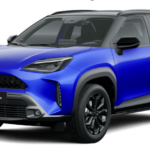 Is Toyota Yaris Cross a Good Car in Australia? Complete 2026 Review
12. Driver-Assistance Systems Can Feel Overactive
Modern Toyotas carry substantial active-safety technology, which is good news from a crash-avoidance standpoint.
Yet some drivers find lane assistance and other alerts more intrusive than they would prefer.
We should separate subjective irritation from genuine malfunction. A system that beeps frequently is not necessarily defective.
What we should investigate is inconsistent behaviour: persistent radar warnings in clear weather, unavailable safety systems after cleaning sensors, unexplained warning lamps or assistance that behaves erratically.
And on a 2020–2021 example, the radar calibration recall makes checking campaign completion especially important.
13. Are Toyota Yaris Cross Hybrid Batteries Problematic?
There is little reason from the Australian recall history we've reviewed to label the Yaris Cross traction battery itself as a major chronic weakness.
That distinction matters because searching "Yaris Cross battery problems" mixes two very different components: the high-voltage hybrid battery and the ordinary 12V auxiliary battery.
Toyota provides five-year/unlimited-kilometre hybrid battery coverage on eligible vehicles, extendable annually for up to another five years when the required battery health-check conditions are satisfied.
What About an Older Used Hybrid?
Ask for the maintenance documentation.
If long-term hybrid-battery warranty eligibility matters to us, confirmation that the relevant inspections have been performed is more useful than assurances such as "Toyota batteries last forever."
No battery lasts forever.
The better question is whether the particular vehicle has been maintained correctly and whether diagnostic testing indicates normal battery health.
14. What Should You Check Before Buying a Used Yaris Cross?
A Yaris Cross deserves the same scrutiny we'd give any modern hybrid.
Start with the VIN and run it through Toyota Australia's recall system. Toyota specifically provides a VIN-based Vehicle Safety Recall & Service Campaign Status checker for Australian-delivered cars, although Toyota notes that the tool should not be solely relied upon and does not cover grey imports.
Then study the servicing documentation.
A complete history is particularly appealing on a hybrid because it helps establish not only ordinary maintenance but also whether applicable health checks, campaigns and software work have been carried out.
After that, test every electronic feature and listen to the car from a cold start.
15. Warning Signs We Wouldn't Ignore
Some Yaris Cross characteristics sound alarming but can be normal, particularly increased engine speed when accelerating.
Others deserve investigation.
A warning lamp paired with shuddering, intermittent failure to enter READY mode, repeated flat 12V batteries, non-functioning cameras, persistent radar-system errors or unexplained drivetrain warnings shouldn't be waved away by a seller.
That doesn't automatically mean the car is a lemon.
It means we need the diagnosis before the purchase, not after it.
16. Which Toyota Yaris Cross Years Have the Most Problems?
If we judge purely from Australian recall history, the earliest 2020–2021 cars deserve the closest inspection.
The 2020 model year was involved in the seatbelt anchor and hybrid input-damper recalls, while some 2020–2021 Yaris Cross vehicles were included in the radar calibration campaign.
That does not make every early Yaris Cross bad.
In fact, an early car with all recall work completed, full Toyota service history and a healthy battery may make an excellent used buy.
Later vehicles don't escape scrutiny either. Selected GR Sport hybrids from 2022–2023 had the tyre-compliance recall, and certain Yaris Cross vehicles built from December 2022 through December 2023 were included in Toyota's Panoramic View Monitor Customer Service Exercise.
The VIN matters more than broad claims such as "avoid every 2020 model."
17. Is a Used Toyota Yaris Cross Worth Buying in Australia?
For the right driver, absolutely.
The strengths remain compelling: tiny external dimensions, impressive urban efficiency, useful interior space and a hybrid system particularly suited to congested Australian cities.
It isn't perfect.
This content may interest you!Toyota Yaris Cross Towing Capacity Australia: Complete GuideThe cabin can be noisy. Interior presentation isn't especially premium. Hard acceleration produces more sound than speed, and certain earlier examples require careful recall-history checks.
But those weaknesses don't add up to a fundamentally problematic vehicle.
The difference between a good and bad used Yaris Cross purchase will often come down to condition, campaign completion and service history rather than the badge on the tailgate.
18. How Does Toyota Warranty Coverage Reduce the Risk?
Toyota's Australian warranty structure provides useful protection for newer vehicles.
Eligible new Toyotas purchased after January 1, 2019 receive a five-year unlimited-kilometre warranty, while additional engine and driveline protection may apply when servicing conditions are met. Hybrid traction-battery coverage can extend to 10 years subject to Toyota's required annual health checks and applicable conditions.
For someone considering a three- or four-year-old Yaris Cross, remaining factory coverage can therefore add considerable peace of mind.
Remember that warranty and recall coverage aren't the same thing.
A safety recall repair is performed because a particular campaign applies to the vehicle; Toyota states that recall repairs are free.
19. Toyota Yaris Cross Problems vs Normal Characteristics
This is perhaps the most important lesson.
Online reliability research often turns ordinary characteristics into supposed mechanical defects.
A revving engine isn't necessarily a failing transmission. An audible petrol-engine start isn't necessarily a rough hybrid system. Hard interior plastics aren't a defect. Frequent lane warnings aren't necessarily broken electronics.
But shuddering plus a hybrid warning light isn't something we'd ignore. Neither is a camera that repeatedly goes black, radar faults that remain after cleaning the sensors or an auxiliary battery that keeps leaving the car unable to start.
Understanding that boundary saves both panic and money.
20. Our Verdict on Toyota Yaris Cross Reliability in Australia
The Toyota Yaris Cross isn't flawless, but its Australian problem record doesn't suggest a small SUV riddled with chronic mechanical failures.
The most important concerns are concentrated around specific production periods and campaigns.
Early vehicles deserve particular attention because of the 2020 hybrid transmission input-damper and rear-seatbelt recalls, followed by the 2020–2021 radar calibration campaign. Some later GR Sport hybrids required replacement tyres for regulatory compliance, while selected 2022–2023 vehicles have been subject to Toyota's Panoramic View Monitor service exercise.
Beyond those official issues, the biggest everyday complaints are less dramatic: engine noise, road noise, modest acceleration, basic cabin materials and occasional reports surrounding 12V auxiliary batteries.
In other words, buying a Yaris Cross is less like walking through a mechanical minefield and more like checking the weather before a road trip. Know where the clouds are, prepare properly, and there is little reason to panic.
Conclusion: Should Toyota Yaris Cross Problems Put You Off?
Probably not.
We wouldn't reject a Toyota Yaris Cross merely because it appears in recall databases. Recalls exist precisely because manufacturers identify problems and provide remedies.
Instead, we would focus on the individual vehicle.
Check its VIN. Confirm every applicable recall and service campaign has been completed. Examine the service history. Test the 12V battery if its condition is questionable. Drive on both urban streets and coarse highway surfaces. Test every camera and safety feature.
Do those things and the Yaris Cross remains one of the more convincing choices for Australians wanting a small, efficient hybrid SUV.
The real question isn't whether the Toyota Yaris Cross has problems.
Every car does.
The question is whether those problems are identifiable, manageable and outweighed by the vehicle's strengths. For most well-maintained Australian Yaris Cross examples, we'd say they are.
Frequently Asked Questions
1. What are the most common Toyota Yaris Cross problems in Australia?
The most notable verified Australian issues include recalls involving the hybrid transmission input damper, rear-centre seatbelt anchor and front radar calibration on certain early vehicles. Selected GR Sport hybrids also had a tyre-compliance recall, while some 2022–2023 vehicles were covered by a Panoramic View Monitor camera Customer Service Exercise. Owners and reviewers additionally mention 12V battery concerns, cabin noise and relatively modest performance.
2. Does the Toyota Yaris Cross Hybrid have battery problems?
There isn't strong evidence from Australian recall records that the high-voltage traction battery is a widespread chronic weakness. Some owners have reported discharged or prematurely troublesome 12V auxiliary batteries, however, which are completely separate from the hybrid traction battery. Toyota's eligible hybrid battery warranty can extend up to 10 years subject to required annual health checks and applicable conditions.
3. Which Toyota Yaris Cross year should I avoid?
Rather than completely avoiding a particular year, we'd scrutinise 2020 and 2021 examples particularly carefully because early Australian vehicles were involved in several recalls. A car with completed recall work and excellent service history may still be a better purchase than a newer example that has been neglected. Always check the VIN rather than relying solely on model year.
4. Why is my Toyota Yaris Cross so noisy when accelerating?
The three-cylinder hybrid powertrain can become quite vocal under heavy acceleration. Australian road tests have also criticised road-noise isolation. A smooth increase in engine revs without warnings or abnormal vibration can be normal; severe shuddering, warning lights or loss of power should be professionally diagnosed.
5. Is the Toyota Yaris Cross a good used car in Australia?
Yes, provided the individual vehicle checks out. Look for complete servicing, verify all recalls and campaigns using the VIN, test the auxiliary battery and electronics, and take a sufficiently long road test. A properly maintained Yaris Cross combines excellent fuel efficiency with compact dimensions and Toyota's substantial Australian warranty support.
This content may interest you!Toyota Yaris Cross Engine Size: Complete Guide to the 1.5L Powertrain
Leave a Reply