
Why Not to Buy a Subaru Crosstrek in Australia? 12 Reasons to Think Twice Before Buying

The Subaru Crosstrek has become a familiar sight on Australian roads, attracting drivers who want a compact SUV with all-wheel drive, excellent safety technology, and enough ground clearance for weekend adventures. At first glance, it seems like an excellent choice for anyone looking for a practical alternative to traditional small SUVs.
However, there are several reasons why you might not want to buy a Subaru Crosstrek in Australia, especially when comparing it with competitors such as the Toyota Corolla Cross, Mazda CX-30, Hyundai Kona, and Kia Seltos.
Although the Crosstrek offers genuine advantages, including its Symmetrical All-Wheel Drive system and comfortable driving characteristics, it also comes with compromises that could make it unsuitable for certain Australian buyers.
Some of the biggest concerns include its modest engine performance, relatively small boot, limited hybrid efficiency improvements, servicing expenses, and increasingly competitive pricing.
In this guide, we'll examine 12 reasons to reconsider buying a Subaru Crosstrek in Australia, discuss its ownership costs, explain the difference between petrol and hybrid models, and help you decide whether this Subaru deserves a place on your shopping list.
- Is the Subaru Crosstrek a Bad Car?
- 1. The Subaru Crosstrek Feels Underpowered
- 2. The CVT Transmission Is Not for Everyone
- 3. The Subaru Crosstrek Has a Surprisingly Small Boot
- 4. Fuel Economy Is Not Particularly Impressive
- 5. The Australian Crosstrek Hybrid Is Not a Strong Hybrid
- 6. Subaru Crosstrek Servicing Can Be Expensive
- 7. The Purchase Price Is Becoming Difficult to Justify
- 8. Rear Passenger Comfort Has Limitations
- 9. The Touchscreen Controls May Frustrate Some Drivers
- 10. The Driver Assistance Systems Can Feel Intrusive
- 11. The Subaru Crosstrek Is Not a Serious Off-Road Vehicle
- 12. The Hybrid Version Does Not Have a Spare Wheel
- Subaru Crosstrek Common Problems: What Should Buyers Watch For?
- Subaru Crosstrek vs Alternatives in Australia
- Who Should Avoid Buying a Subaru Crosstrek?
- Who Should Still Consider Buying a Subaru Crosstrek?
- Should You Buy a New or Used Subaru Crosstrek?
- Is the Subaru Crosstrek Worth Buying in Australia in 2026?
- Frequently Asked Questions
- Final Verdict: Why You Might Regret Buying a Subaru Crosstrek
Is the Subaru Crosstrek a Bad Car?
Before discussing its disadvantages, we should make one thing clear: the Subaru Crosstrek is not necessarily a bad vehicle.
In fact, it offers several features that make it appealing in Australia:
- Standard Symmetrical All-Wheel Drive.
- Generous 220 mm ground clearance.
- Comfortable suspension for everyday driving.
- A five-star ANCAP safety rating.
- Subaru EyeSight driver assistance technology.
- Good visibility from the driver's seat.
- A relatively compact body for city parking.
- Capable handling on gravel roads and uneven surfaces.
These qualities make the Crosstrek particularly attractive to drivers who regularly travel outside metropolitan areas.
However, being a good all-round vehicle does not automatically make it the best purchase.
The key question is whether the Crosstrek's strengths justify its price, running costs, and limitations compared with other small SUVs available in Australia.
For many buyers, the answer depends on how frequently they actually need all-wheel drive.
1. The Subaru Crosstrek Feels Underpowered
One of the most frequently discussed weaknesses of the Australian Subaru Crosstrek is its relatively modest engine performance.
The petrol versions use a naturally aspirated 2.0-litre four-cylinder Boxer engine producing:
| Specification | Australian Petrol Crosstrek |
|---|---|
| Engine | 2.0-litre Boxer petrol |
| Maximum power | 115 kW |
| Maximum torque | 196 Nm |
| Transmission | Lineartronic CVT |
| Drivetrain | Symmetrical AWD |
| Combined fuel consumption | 7.2 L/100 km |
On paper, these figures are adequate for a compact SUV. In everyday driving, however, the engine can feel less responsive than some turbocharged competitors.
Acceleration Can Be Disappointing
The Crosstrek performs reasonably well during relaxed urban driving, but its lack of strong low-rev torque becomes noticeable when more acceleration is required.
This can happen when:
- Overtaking slower vehicles on country roads.
- Accelerating onto Australian motorways.
- Climbing steep hills with passengers.
- Carrying luggage during longer journeys.
- Accelerating from low speeds in heavy traffic.
Drivers accustomed to turbocharged engines may find the Crosstrek less responsive than expected.
Why This Matters in Australia
Australian driving conditions vary considerably.
Someone living in central Melbourne might rarely need aggressive acceleration. However, drivers travelling through mountainous areas, regional highways, or steep coastal roads may prefer an engine with stronger performance.
The Crosstrek is capable of these journeys, but it often requires higher engine speeds to deliver the acceleration needed.
Our assessment: If responsive acceleration and effortless overtaking are priorities, the Crosstrek may not be your ideal small SUV.
2. The CVT Transmission Is Not for Everyone
Another reason to reconsider the Subaru Crosstrek is its continuously variable transmission, commonly known as a CVT.
Unlike a conventional automatic transmission with fixed gear ratios, a CVT can continuously adjust its operating ratio.
This design helps deliver smooth acceleration and allows the engine to operate efficiently.
Unfortunately, it also changes how the vehicle feels.
The Engine Can Become Noisy Under Acceleration
When the driver presses the accelerator firmly, the CVT may hold the engine at relatively high revolutions.
The result can be a sustained engine sound that some drivers find unpleasant.
This characteristic is particularly noticeable when overtaking, climbing hills, or accelerating with a fully loaded vehicle.
Although Subaru programs simulated gear changes into the transmission, the overall driving experience still differs from a traditional automatic.
Long-Term CVT Ownership Considerations
CVT transmissions are not inherently unreliable, and their condition depends heavily on maintenance, driving conditions, and previous ownership.
However, transmission repairs can become expensive if serious mechanical problems develop.
For used Crosstrek buyers, we recommend checking:
- Whether acceleration feels smooth.
- Whether there are unusual whining noises.
- Whether the transmission responds consistently.
- Whether the vehicle has a complete service history.
- Whether any dashboard transmission warnings appear.
A pre-purchase mechanical inspection is particularly important when purchasing a higher-kilometre example.
3. The Subaru Crosstrek Has a Surprisingly Small Boot
Boot space is another significant disadvantage.
Despite its SUV styling and relatively practical exterior dimensions, the Crosstrek offers less luggage capacity than many buyers might expect.
Australian specifications list approximately:
| Version | Boot Capacity |
|---|---|
| Crosstrek petrol | 291 litres |
| Crosstrek mild hybrid | 315 litres |
These figures refer to the luggage compartment with the rear seats upright.
For comparison, several competing small SUVs offer considerably larger cargo areas, although measurement methods and particular variants can differ.
Why Is the Boot So Small?
The Crosstrek shares much of its basic architecture with the Subaru Impreza.
Its relatively compact rear body design and packaging priorities limit the available luggage space.
This becomes noticeable when transporting:
- Large suitcases.
- Baby prams.
- Camping equipment.
- Sports bags.
- Shopping for larger families.
- Pet carriers.
Even though the rear seats can fold down to increase cargo capacity, doing so reduces passenger accommodation.
Is the Crosstrek Practical for Families?
For couples or individuals, the available luggage space may be sufficient.
However, families regularly travelling with children, prams, and holiday luggage could find it restrictive.
Before buying, we suggest placing your own pram, suitcase, or camping equipment inside the vehicle during a dealership visit.
Our assessment: If luggage capacity is important, the Toyota Corolla Cross, Hyundai Kona, and Kia Seltos deserve serious consideration.
4. Fuel Economy Is Not Particularly Impressive
Fuel consumption is another area where the Subaru Crosstrek faces strong competition.
The Australian petrol Crosstrek has an official combined fuel consumption rating of approximately 7.2 L/100 km.
The mild-hybrid version is rated at approximately 6.5 L/100 km.
While these figures are reasonable for an all-wheel-drive SUV, they are not particularly competitive against some modern front-wheel-drive hybrids.
Subaru Crosstrek Petrol vs Hybrid Fuel Consumption
| Specification | Petrol | Mild Hybrid |
|---|---|---|
| Combined consumption | 7.2 L/100 km | 6.5 L/100 km |
| Fuel used over 15,000 km | 1,080 L | 975 L |
| Annual fuel cost at $2/L | $2,160 | $1,950 |
The annual figures are illustrative calculations based on official combined consumption ratings. Actual fuel costs depend on fuel prices, traffic conditions, terrain, and driving style.
Under these assumptions, the mild hybrid saves approximately $210 in fuel annually.
That is not an insignificant amount, but it may be disappointing for buyers expecting substantial hybrid savings.
Why Does the Crosstrek Consume More Fuel Than Some Rivals?
Several characteristics influence its efficiency.
First, the Crosstrek uses all-wheel drive as standard. This provides additional traction but introduces mechanical complexity and weight compared with many front-wheel-drive competitors.
Second, its petrol engine lacks some of the efficiency advantages offered by more advanced hybrid powertrains.
Third, Australian driving conditions can significantly affect consumption.
Stop-start traffic, air-conditioning use, hilly roads, and short journeys may all increase fuel consumption.
For buyers who drive predominantly in Sydney, Brisbane, Melbourne, or Perth, a more efficient full-hybrid SUV could offer meaningful long-term savings.
5. The Australian Crosstrek Hybrid Is Not a Strong Hybrid
The word "hybrid" can create expectations that are not necessarily met by every electrified vehicle.
This distinction is especially important when considering the Subaru Crosstrek.
The Australian 2026 Crosstrek Hybrid uses Subaru's e-Boxer mild-hybrid system rather than the newer Strong Hybrid system available in certain overseas markets.
What Is the Difference?
A mild hybrid uses an electric motor to assist the petrol engine and recover energy during driving.
A stronger full-hybrid system generally provides greater electric assistance and can operate more extensively without relying directly on the petrol engine.
As a result, stronger hybrid systems can deliver substantially better efficiency in suitable driving conditions.
Is the Subaru Crosstrek Hybrid Worth the Extra Money?
That depends on your priorities.
The mild-hybrid Crosstrek offers some efficiency improvement, but the difference in official combined consumption between the petrol and hybrid versions is only 0.7 L/100 km.
At 15,000 km annually, that represents an official-cycle difference of approximately 105 litres.
Buyers should compare the additional purchase price with the expected savings over their intended ownership period.
They should also consider differences in equipment, resale value, and driving characteristics.
Our assessment: If your main reason for buying a hybrid is dramatically lower fuel consumption, the Australian Crosstrek mild hybrid may disappoint.
6. Subaru Crosstrek Servicing Can Be Expensive
Long-term ownership expenses are sometimes overlooked when purchasing a new vehicle.
A competitive purchase price does not necessarily mean the vehicle will be cheap to maintain.
Subaru recommends servicing the Crosstrek every 12 months or 15,000 km, whichever occurs first.
For the 2026 Crosstrek, published five-year capped-price servicing figures have been around $2,444, although applicable pricing should always be confirmed for the specific vehicle.
Why Are Maintenance Costs Important?
Routine servicing is only part of the ownership equation.
Over several years, owners may also need to budget for:
- Tyre replacement.
- Brake pads and discs.
- Battery replacement.
- Wheel alignment.
- Suspension components.
- Air-conditioning maintenance.
- General wear-and-tear repairs.
The Crosstrek's Boxer engine layout and AWD drivetrain also make some mechanical procedures different from those on conventional front-wheel-drive vehicles.
That does not mean every repair is expensive, but specialised labour and certain replacement components can affect costs.
Subaru Crosstrek vs Competitors: Maintenance
Vehicles such as the Toyota Corolla Cross and some other compact SUVs may offer more competitive scheduled servicing packages.
When comparing vehicles, we recommend requesting the complete five-year service schedule rather than focusing only on the cost of the first service.
Our assessment: Budget-conscious buyers should consider total ownership costs, not just the price displayed at the dealership.
7. The Purchase Price Is Becoming Difficult to Justify
The Subaru Crosstrek occupies a competitive section of the Australian small SUV market.
For the 2026 model year, Australian list prices have started at approximately $36,490 before on-road costs for the entry-level petrol version.
Higher-specification petrol and hybrid models cost considerably more.
Once registration, stamp duty, dealer delivery, and other applicable charges are included, the final drive-away price can increase substantially.
What Else Can You Buy for Similar Money?
Depending on the variant and available offers, Australian buyers can consider:
- Toyota Corolla Cross.
- Mazda CX-30.
- Hyundai Kona.
- Kia Seltos.
- Honda HR-V.
- Mitsubishi ASX.
- Selected versions of larger SUVs.
Some competitors offer more interior space, stronger acceleration, better fuel efficiency, or additional equipment at comparable prices.
Are You Paying for AWD You Do Not Need?
This is perhaps the most important question.
Subaru's standard Symmetrical All-Wheel Drive system is a genuine strength.
However, many Australian drivers spend almost all their time on sealed suburban roads and motorways.
For these buyers, a less expensive front-wheel-drive SUV may provide everything they need.
Paying extra for traction capabilities that you rarely use might not represent the best financial decision.
8. Rear Passenger Comfort Has Limitations
Although the Crosstrek is a five-seat SUV, it is not particularly spacious compared with some larger alternatives.
Front-seat accommodation is generally comfortable, but the rear seating area may feel restrictive when carrying taller adults.
Rear Legroom and Shoulder Room
Two adults can usually travel comfortably in the rear seats, particularly on shorter journeys.
However, fitting three adults across the rear bench is less convenient.
The centre seat is narrower, and the transmission tunnel can reduce foot space for the middle passenger.
This makes the Crosstrek less attractive for households that frequently transport five occupants.
Limited Rear-Seat Amenities
Another detail worth considering is the absence of dedicated rear air vents in the current Australian Crosstrek.
For families travelling through Australia's warmer regions, rear ventilation can be an important comfort feature.
The cabin can still be cooled by the main climate-control system, but rear passengers do not receive the same direct airflow offered by some competitors.
If you regularly travel with children, passengers, or pets, this is worth checking during a test drive.
9. The Touchscreen Controls May Frustrate Some Drivers
Modern vehicle interiors increasingly rely on touchscreen technology, and the Subaru Crosstrek is no exception.
Australian models feature a large, vertically oriented 11.6-inch central display.
It provides access to infotainment functions, smartphone connectivity, and various vehicle settings.
Although the screen gives the cabin a modern appearance, not everyone prefers controlling important functions through a touchscreen.
Some frequently used functions are managed through the screen rather than traditional dedicated buttons.
This can require additional attention when adjusting settings while driving.
Drivers accustomed to straightforward physical climate controls may find the system less intuitive.
Potential Infotainment Complaints
As with many modern infotainment systems, users may experience occasional frustrations involving:
This content may interest you!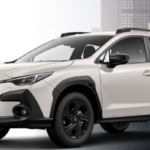 Is the Subaru Crosstrek a Good Car in Australia? Complete 2026 Review
- Menu navigation.
- Screen responsiveness.
- Smartphone connection behaviour.
- Software updates.
- Touchscreen visibility in bright sunlight.
These are considerations to test rather than faults guaranteed to affect every Crosstrek.
We recommend spending several minutes exploring the infotainment system before purchasing.
If the interface already feels distracting during a short test drive, it may become frustrating during everyday ownership.
10. The Driver Assistance Systems Can Feel Intrusive
Subaru has developed a strong reputation for safety technology, and the Crosstrek benefits from the company's EyeSight driver assistance system.
Features include adaptive cruise control, emergency braking, lane assistance, and driver monitoring technology.
These systems can provide meaningful safety benefits.
However, some drivers may find certain warnings overly sensitive or distracting.
Frequent Driver Monitoring Alerts
The driver monitoring system is designed to detect potential distraction or fatigue.
Depending on driving behaviour and operating conditions, it may generate reminders or warnings.
Some drivers appreciate the additional safety monitoring, while others prefer a less interventionist driving experience.
Lane Assistance Behaviour
Lane-keeping and lane-centring systems can also feel different from those fitted to competing vehicles.
On poorly marked roads or during certain motorway conditions, drivers may notice steering assistance that feels less natural than expected.
These systems are designed to assist the driver rather than replace driver control.
Before purchasing, test the vehicle on the types of roads you regularly use and determine whether the assistance systems suit your preferences.
11. The Subaru Crosstrek Is Not a Serious Off-Road Vehicle
One of the Crosstrek's greatest selling points is its ability to handle conditions beyond ordinary paved roads.
Its AWD system and 220 mm ground clearance are useful for gravel tracks, rough access roads, and some camping destinations.
However, buyers should not confuse these capabilities with those of a dedicated four-wheel-drive vehicle.
What the Crosstrek Does Well
The Crosstrek is generally well suited to:
- Gravel country roads.
- Maintained forest tracks where access is permitted.
- Uneven campsite entrances.
- Wet rural roads.
- Light off-road recreational driving.
Where Its Limitations Become Clear
More demanding off-road conditions expose several disadvantages.
The Crosstrek does not have the same heavy-duty drivetrain, low-range transfer gearing, or mechanical protection commonly associated with traditional off-road vehicles.
Its approach and departure angles, tyres, and underbody components also limit what it can safely negotiate.
Deep ruts, large rocks, severe mud, and difficult water crossings can present significant challenges.
For Australians planning serious outback travel or demanding four-wheel-drive tracks, a more purpose-built vehicle may be appropriate.
Our assessment: The Crosstrek is an adventure-friendly small SUV, not a replacement for a dedicated off-roader.
12. The Hybrid Version Does Not Have a Spare Wheel
This is a particularly important consideration for Australian buyers who regularly drive outside major cities.
The petrol Crosstrek includes a temporary spare wheel, while the Australian mild-hybrid versions use a puncture repair kit.
That difference may appear minor during everyday city driving.
However, it becomes more significant when travelling through remote locations.
Why a Puncture Repair Kit May Not Be Enough
Repair kits can be useful for certain small punctures.
Unfortunately, they are not suitable for every type of tyre damage.
A significant sidewall tear, for example, may make a tyre impossible to repair using a sealant kit.
If that happens far from a tyre shop, roadside recovery may be required.
For drivers planning regular regional travel, this deserves careful consideration.
Before purchasing the hybrid, we recommend checking available tyre replacement options and roadside assistance arrangements.
Subaru Crosstrek Common Problems: What Should Buyers Watch For?
Beyond the 12 disadvantages discussed above, prospective owners should understand the difference between general design compromises and actual mechanical faults.
The Crosstrek's modest acceleration and limited luggage capacity are characteristics of the vehicle rather than evidence of poor reliability.
Mechanical problems, on the other hand, must be assessed according to the vehicle's age, mileage, maintenance history, and condition.
Potential Issues to Check on Used Vehicles
When inspecting a used Crosstrek or an earlier Subaru XV, pay attention to the following areas.
CVT transmission behaviour: Look for unusual noises, hesitation, vibration, or inconsistent acceleration.
Suspension wear: Listen for knocking sounds when travelling over uneven surfaces.
Wheel bearings: Unusual humming or rumbling noises that change with road speed deserve investigation.
Electronic systems: Check the infotainment screen, cameras, dashboard warnings, and safety assistance functions.
Oil leaks: Inspect the engine and surrounding components for signs of fluid leakage.
Tyre condition: Uneven tyre wear may indicate alignment problems or other issues requiring attention.
None of these checks establishes that all Crosstrek models suffer from the same faults.
They are practical inspection points for used-car buyers.
Is the Subaru Crosstrek Reliable in Australia?
The Crosstrek should not automatically be considered unreliable simply because it has disadvantages.
Subaru has extensive experience producing Boxer engines and all-wheel-drive vehicles, and the Crosstrek benefits from that engineering background.
However, long-term reliability depends on consistent servicing and appropriate maintenance.
For used examples, a complete service history is often more valuable than general assumptions about brand reputation.
Subaru Crosstrek vs Alternatives in Australia
If you're reconsidering the Crosstrek, several competitors deserve attention.
The best alternative depends on what you value most.
| Vehicle | Main Advantage Over Crosstrek | Consideration |
|---|---|---|
| Toyota Corolla Cross Hybrid | Greater fuel efficiency | AWD availability depends on variant |
| Mazda CX-30 | Refined cabin and driving feel | Rear-seat and boot practicality have limitations |
| Hyundai Kona | Practical cabin and powertrain choices | AWD depends on the version |
| Kia Seltos | Generous cabin and luggage space | Driving character varies by engine |
| Honda HR-V | Clever interior packaging and hybrid option | Not as capable on rough tracks |
Toyota Corolla Cross: Better for Fuel Economy
The Corolla Cross Hybrid is particularly appealing to buyers who prioritise fuel efficiency.
Its full-hybrid technology can provide stronger fuel savings than the Australian Crosstrek mild hybrid.
For urban commuters and drivers covering substantial annual distances, this may be an important advantage.
However, exact equipment and drivetrain availability should be compared carefully.
Mazda CX-30: Better for Interior Refinement
The Mazda CX-30 offers an attractive alternative for drivers who value cabin design, steering response, and a more conventional driving experience.
Depending on the engine and specification, it may feel more engaging to drive.
Nevertheless, the CX-30 also has limitations involving rear-seat accommodation and cargo capacity.
It is not necessarily the better choice for families requiring maximum space.
Hyundai Kona: Better for Everyday Versatility
The Hyundai Kona deserves consideration because of its available powertrain options, interior packaging, and modern equipment.
A hybrid Kona may suit buyers who spend most of their time commuting in urban conditions.
However, it does not necessarily offer the same rough-road strengths as the AWD Crosstrek.
Kia Seltos: Better for Practicality
The Kia Seltos is a strong alternative for buyers who need more luggage space and a roomier cabin.
It may be a better choice for households regularly carrying passengers, shopping, and holiday equipment.
The Crosstrek remains attractive for drivers who place greater importance on AWD capability and ground clearance.
Who Should Avoid Buying a Subaru Crosstrek?
The Crosstrek is more likely to disappoint buyers whose priorities do not match its strengths.
We would think twice about purchasing one if:
- You want strong acceleration. The 2.0-litre engine may feel less responsive than turbocharged alternatives.
- You need a large boot. The luggage compartment is modest for a small SUV.
- You prioritise fuel economy. Stronger hybrid competitors may consume significantly less petrol.
- You want inexpensive servicing. Some rivals offer more affordable scheduled maintenance.
- You dislike CVT transmissions. The driving sensation may not suit everyone.
- You rarely leave sealed roads. You may not benefit sufficiently from standard AWD.
- You regularly carry five adults. Rear passenger accommodation is limited.
- You want a highly efficient hybrid. The Australian mild-hybrid system offers relatively modest improvements.
These considerations do not make the Crosstrek a poor vehicle.
They simply suggest that another model may provide better value for your particular circumstances.
Who Should Still Consider Buying a Subaru Crosstrek?
Despite its drawbacks, the Crosstrek can still be a worthwhile purchase.
Its combination of standard AWD, substantial ground clearance, and compact dimensions is relatively unusual in the Australian small SUV market.
Drivers Living in Regional Australia
People regularly travelling on gravel roads, rural access routes, and uneven surfaces may appreciate its additional traction.
The AWD system can offer more confidence in challenging conditions, although appropriate tyres and careful driving remain essential.
Outdoor Enthusiasts
The Crosstrek is attractive to drivers who enjoy camping, hiking, mountain biking, and weekend adventures.
Its ground clearance can make it more convenient than lower-riding alternatives when accessing suitable recreational areas.
Buyers Who Prioritise Safety
With its five-star ANCAP rating and range of driver assistance technologies, the Crosstrek offers a comprehensive safety package.
Families and commuters who value these systems may consider that a meaningful advantage.
Drivers Who Prefer a Comfortable Small SUV
The Crosstrek's predictable handling, comfortable seating position, and straightforward everyday driving characteristics make it appealing to buyers who are not concerned with sporty performance.
For these drivers, the engine's modest power may be perfectly acceptable.
Should You Buy a New or Used Subaru Crosstrek?
Buying used can be an effective way to reduce the financial impact of the Crosstrek's relatively high new-car price.
However, this decision requires careful consideration.
Advantages of Buying New
A new Crosstrek offers:
- A full manufacturer warranty.
- Updated safety equipment.
- Known vehicle history.
- Access to the latest model-year features.
- No uncertainty about previous owners' driving habits.
The main disadvantage is the higher purchase price and initial depreciation exposure.
Advantages of Buying Used
A used Crosstrek may provide much of the same AWD capability at a lower price.
However, buyers should check the vehicle's service records, transmission behaviour, tyre condition, and general mechanical health.
It is also worth comparing used Crosstrek prices with older Subaru XV models.
Because the Crosstrek replaced the XV nameplate in Australia, the earlier vehicle may offer a more affordable entry point into Subaru's compact AWD range.
A professional pre-purchase inspection remains highly recommended.
Is the Subaru Crosstrek Worth Buying in Australia in 2026?
The answer depends largely on what you expect from a small SUV.
If you're looking for a compact vehicle with genuine all-wheel-drive capability, generous ground clearance, and comprehensive safety technology, the Crosstrek remains an attractive option.
However, the market has changed considerably.
Australian buyers now have access to numerous small SUVs offering efficient hybrid engines, spacious interiors, competitive warranties, and attractive pricing.
Consequently, the Crosstrek's AWD capability must be valuable enough to justify its compromises.
For buyers who rarely encounter difficult road conditions, a front-wheel-drive or full-hybrid competitor may make more financial and practical sense.
For those who regularly travel on gravel roads or need extra ground clearance, the Crosstrek's strengths become much more relevant.
We recommend test-driving the Crosstrek alongside at least two competitors before making a final decision.
Pay particular attention to acceleration, luggage capacity, cabin controls, and the total cost of ownership.
Frequently Asked Questions
1. Why Should You Not Buy a Subaru Crosstrek in Australia?
The main reasons include relatively modest engine performance, a small boot, potentially expensive servicing, and fuel consumption that is less competitive than some full-hybrid SUVs. The CVT transmission and higher-specification pricing may also discourage buyers. However, the Crosstrek remains appealing to drivers who value standard AWD and ground clearance.
2. What Is the Biggest Problem With the Subaru Crosstrek?
One of the most significant complaints is its lack of strong acceleration. The Australian 2.0-litre petrol engine produces 115 kW and 196 Nm, which is adequate for normal driving but can feel underpowered when overtaking or climbing hills. Limited boot space is another important drawback.
3. Is the Subaru Crosstrek Expensive to Maintain in Australia?
It can cost more to service than some competing compact SUVs. Subaru recommends maintenance every 12 months or 15,000 km, and published five-year servicing packages for the 2026 model have totalled approximately $2,444. Owners should also budget for tyres, brakes, insurance, and unexpected repairs.
4. Is the Subaru Crosstrek Hybrid Worth Buying?
The Australian Crosstrek mild hybrid may suit buyers who value AWD and want slightly lower fuel consumption than the petrol version. However, its official combined consumption of 6.5 L/100 km is only modestly better than the petrol model's 7.2 L/100 km. Buyers seeking maximum fuel efficiency should compare it with full-hybrid alternatives.
5. What Is a Better Alternative to the Subaru Crosstrek in Australia?
The Toyota Corolla Cross Hybrid is a compelling option for fuel-conscious drivers, while the Hyundai Kona and Kia Seltos offer alternatives for everyday practicality. The Mazda CX-30 is worth considering for its interior refinement and driving characteristics. The best choice depends on your budget, preferred drivetrain, and intended use.
Final Verdict: Why You Might Regret Buying a Subaru Crosstrek
The Subaru Crosstrek is a capable and generally well-rounded compact SUV, but it is not the perfect choice for every Australian driver.
Its biggest weaknesses are relatively modest acceleration, limited cargo space, higher servicing expenses, and a mild-hybrid system that delivers only moderate fuel savings.
The CVT transmission may also disappoint drivers looking for a more responsive driving experience.
Nevertheless, we should not overlook what the Crosstrek does well.
Its Symmetrical All-Wheel Drive system, 220 mm ground clearance, comfortable driving characteristics, and comprehensive safety technology make it particularly appealing for regional driving and light outdoor adventures.
Our conclusion is simple: the Subaru Crosstrek makes the most sense when you genuinely need its AWD capability.
If your priorities are fuel efficiency, luggage space, strong acceleration, and maximum value for money, several competitors deserve consideration before you commit.
Ultimately, the best way to avoid regretting your purchase is to compare the Crosstrek with its main Australian rivals, calculate the likely ownership costs, and choose the vehicle that best matches your everyday driving needs.
This content may interest you!Subaru Crosstrek Competitors Australia: 10 Best Alternatives Compared in 2026
Leave a Reply