
Renault Captur vs Mitsubishi ASX Australia: Which Small SUV Is Better?

The Renault Captur vs Mitsubishi ASX Australia comparison has become far more interesting than a conventional small-SUV showdown. At first glance, we have a stylish French crossover facing one of Australia's most recognisable Japanese SUV nameplates. Dig beneath the badges, though, and things become rather unusual.
The latest Mitsubishi ASX sold in Australia is essentially based on the Renault Captur. Mitsubishi adopted the European Captur architecture through the Renault-Nissan-Mitsubishi Alliance, changed the styling details, added its own badges and specification strategy, and introduced the resulting ASX to Australian buyers.
There is another twist.
As of 2026, Renault Australia no longer lists the Captur among its current new-vehicle range. The larger Renault Symbioz has effectively taken over its position in the Australian lineup. That means Australians shopping for a brand-new vehicle today are realistically looking at the Mitsubishi ASX, while the Renault Captur is more relevant to buyers considering a used example.
So which should we choose?
Let us compare their engines, fuel consumption, practicality, interior technology, driving behaviour, warranties, ownership costs and value.
- Renault Captur vs Mitsubishi ASX Australia: Quick Comparison
- The Biggest Difference: The Captur Is No Longer a New-Car Option
- Mitsubishi ASX Australian Pricing
- Renault Captur Used Prices Change the Equation
- Engine Performance: Nearly Identical DNA
- Seven-Speed Dual-Clutch Transmission
- Fuel Economy: Mitsubishi ASX Wins Slightly
- Driving Experience: European Rather Than Traditional ASX
- Ride Comfort
- Interior Design: Mitsubishi Benefits From Renault's Expertise
- Infotainment and Technology
- Passenger Space
- Boot Space and Practicality
- Safety
- Renault Captur vs Mitsubishi ASX Warranty
- Servicing Intervals
- Dealer Network: Mitsubishi Has the Advantage
- Reliability: Are They Really Different?
- Used Renault Captur: What Should We Check?
- Mitsubishi ASX Strengths
- Mitsubishi ASX Weaknesses
- Renault Captur Strengths
- Renault Captur Weaknesses
- Which Is Better for City Driving?
- Which Is Better for Families?
- Which Is Better for Long-Distance Driving?
- Which Offers Better Value?
- Renault Captur vs Mitsubishi ASX Australia: Our Verdict
- Frequently Asked Questions
- 1. Is the new Mitsubishi ASX based on the Renault Captur?
- 2. Can you still buy a new Renault Captur in Australia?
- 3. Which is more fuel-efficient, the Renault Captur or Mitsubishi ASX?
- 4. Does the Mitsubishi ASX have a longer warranty than the Renault Captur?
- 5. Should I buy a used Renault Captur or new Mitsubishi ASX?
Renault Captur vs Mitsubishi ASX Australia: Quick Comparison
The similarities between these SUVs are impossible to ignore.
The Australian-market 2024 Renault Captur used a 1.3-litre turbocharged four-cylinder petrol engine producing 113kW and 270Nm, paired with a seven-speed dual-clutch automatic transmission driving the front wheels. The latest Australian Mitsubishi ASX uses effectively the same formula: a 1.3-litre turbo petrol engine, 113kW, 270Nm, a seven-speed dual-clutch automatic and front-wheel drive.
| Feature | Renault Captur | Mitsubishi ASX |
|---|---|---|
| Engine | 1.3L turbo petrol | 1.3L turbo petrol |
| Power | 113kW | 113kW |
| Torque | 270Nm | 270Nm |
| Transmission | 7-speed dual-clutch | 7-speed dual-clutch |
| Drive | Front-wheel drive | Front-wheel drive |
| Claimed fuel use | 6.6L/100km | 6.4L/100km |
| Seating | 5 | 5 |
| Sliding rear seat | Yes | Yes |
| Captur warranty | 5 years/unlimited km | — |
| ASX warranty | — | Up to 10 years/200,000km* |
*The Mitsubishi 10-year warranty is conditional on eligible scheduled servicing through Mitsubishi dealerships; otherwise the standard warranty conditions differ.
In other words, these vehicles are less like distant rivals and more like cousins wearing different jackets.
The Biggest Difference: The Captur Is No Longer a New-Car Option
Anyone searching for Renault Captur vs Mitsubishi ASX Australia needs to understand this before comparing prices.
Renault Australia's current vehicle lineup does not include the Captur. Instead, Renault now offers models including the Symbioz, Duster, Arkana Hybrid, Koleos, Scenic E-Tech and Megane E-Tech.
The Symbioz arrived in Australia in 2026 and essentially replaced the Captur as Renault's small-SUV offering.
That changes the buying equation dramatically.
Buying New
If we want a factory-fresh vehicle with current Australian dealer support, the Mitsubishi ASX is the obvious choice between these two.
Buying Used
The Captur becomes much more interesting.
A well-priced 2022, 2023 or 2024 Captur can potentially deliver much of the same mechanical character as the latest ASX without requiring us to pay new-car money.
That is where this comparison becomes genuinely useful.
Mitsubishi ASX Australian Pricing
The latest ASX range moved significantly upmarket compared with the previous Japanese-designed generation.
The 2026 Australian lineup launched with three variants:
- ASX LS – $37,740 before on-road costs
- ASX Aspire – $42,690 before on-road costs
- ASX Exceed – $46,490 before on-road costs
That pricing is considerably higher than many Australians associate with the ASX badge.
The old ASX gained popularity partly because it was straightforward, affordable and familiar. The new model instead feels more sophisticated, more European and more technology-focused.
Whether that is progress depends on what we value.
Renault Captur Used Prices Change the Equation
The Captur previously sat roughly within the same general small-SUV price territory.
Before disappearing from Australian new-car showrooms, the pre-facelift Captur range had been priced from approximately $33,000 to $39,500 before on-road costs.
Used examples can naturally cost considerably less depending on age, kilometres, specification and condition.
That gives the Captur a powerful advantage.
Instead of asking:
"Which vehicle is technically better?"
We should probably ask:
"How much Mitsubishi ASX am I getting for the extra money?"
And because their mechanical DNA overlaps so heavily, that question can become uncomfortable for the Mitsubishi.
Engine Performance: Nearly Identical DNA
1.3-Litre Turbo Petrol Engine
Both cars revolve around an excellent little 1.3-litre turbocharged four-cylinder petrol engine.
Output is:
113kW of power and 270Nm of torque.
Those numbers may not sound spectacular, but the important figure is torque.
A healthy 270Nm gives these compact SUVs a surprisingly muscular feel during normal driving. They do not need to scream toward the redline every time we want to merge into traffic.
Instead, there is a useful shove through the middle of the rev range.
Think of it like a small dog with unexpectedly strong legs.
Is Either One Faster?
We should not expect a major real-world performance gap.
Because the engine and transmission concept are closely shared, neither vehicle has an overwhelming advantage.
The latest ASX is reasonably lively around town and competent on faster roads, although Australian road tests have noted that outright overtaking performance is not especially strong.
This is not a hot hatch wearing SUV boots.
It is a compact crossover designed for commuting, school runs, shopping trips and weekend travel.
And for those jobs, there is plenty of performance.
Seven-Speed Dual-Clutch Transmission
Both vehicles pair the turbo engine with a seven-speed dual-clutch automatic.
A dual-clutch transmission behaves differently from the traditional torque-converter automatic many Australians know.
Once moving, shifts can feel quick and efficient. Around parking speeds, however, DCT transmissions sometimes require a little more finesse.
What Does That Mean in Everyday Driving?
We may notice:
- Slight hesitation when moving away from a stop
- More mechanical feeling at crawling speeds
- Quick gear changes once underway
- Strong efficiency on open roads
- Good responsiveness when accelerating normally
Once we understand its personality, the transmission generally works well.
But anyone moving from an older naturally aspirated ASX with a CVT will immediately realise that the latest model is an entirely different machine.
Fuel Economy: Mitsubishi ASX Wins Slightly
The previous Australian Captur carried an official combined fuel-consumption figure of 6.6L/100km.
The latest Mitsubishi ASX claims approximately 6.4L/100km combined.
This content may interest you!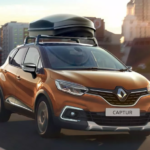 Renault Captur vs Nissan Qashqai: Which SUV Is Better?
The difference?
Only 0.2L/100km.
In normal ownership that is tiny.
Driving style, traffic, tyre pressures, weather and trip length could easily make a larger difference than the official gap between them.
The Australian Captur specifies 95 RON premium unleaded petrol, paired with a 48-litre fuel tank.
That is worth remembering when calculating running costs.
A small turbo engine may drink less fuel than an older naturally aspirated SUV, but premium petrol generally costs more per litre.
Driving Experience: European Rather Than Traditional ASX
The old Mitsubishi ASX was rarely described as sophisticated.
Reliable? Frequently.
Simple? Absolutely.
Sporty? Not particularly.
The latest model changes that.
Because the new ASX shares its foundations with the Captur, it has inherited a much more European driving character. Australian road testers have highlighted its well-balanced ride and handling, with the chassis generally feeling polished and entertaining for a small SUV.
Renault Captur Handling
The Captur already had a pleasant combination of:
- Light steering
- Compact dimensions
- Predictable cornering
- Comfortable suspension
- Easy urban manoeuvrability
It feels happiest threading through city streets.
We would describe it more as nimble than sporty.
Mitsubishi ASX Handling
The latest ASX follows essentially the same recipe.
Compared with the previous ASX generation, the difference feels like swapping hiking boots for running shoes.
The new vehicle feels lighter, more responsive and generally more modern.
Ride Comfort
Neither SUV is trying to float along like a luxury sedan.
Still, both offer a convincing balance between control and comfort.
Around Australian suburbs, the suspension generally deals well with speed bumps, patched asphalt and ordinary road imperfections.
Larger wheels fitted to higher-grade models may naturally transmit more sharp-edged bumps into the cabin, so the fanciest version is not automatically the most comfortable.
That is worth remembering before paying extra for appearance packages or larger alloy wheels.
Interior Design: Mitsubishi Benefits From Renault's Expertise
Open the door of the latest ASX and previous ASX owners may wonder whether they entered the wrong vehicle.
That is understandable.
The interior is dramatically more modern than the old Mitsubishi.
Materials, dashboard architecture, infotainment and general presentation owe much to the Renault Captur from which the new ASX originates. Australian reviewers have specifically noted how dramatically more contemporary and upmarket the cabin feels compared with the outgoing ASX.
Captur Interior
The Captur cabin has long been one of the model's strongest cards.
We get:
- Attractive dashboard design
- Useful centre-console storage
- Comfortable front seats
- Rear air vents
- Good door storage
- Digital instrumentation depending on specification
- Smartphone connectivity
It feels more interesting than some conservative Japanese rivals.
ASX Interior
The Mitsubishi interpretation follows the same philosophy while adjusting equipment according to grade.
Higher ASX variants can include features such as leather upholstery, heated front seats, a power-adjustable driver's seat, sunroof and other premium touches.
The result feels more expensive than the old ASX.
Of course, it also is more expensive.
Infotainment and Technology
Technology is another area where this Renault-derived Mitsubishi moves the ASX nameplate forward.
Depending on grade, the new model can offer modern smartphone integration, digital instrumentation and Google-based infotainment features.
This makes the older Captur's infotainment system look slightly dated in comparison.
The 2024 Captur, for example, still used older USB-A connections in areas where newer vehicles increasingly provide USB-C, and some versions relied on wired Apple CarPlay.
So although the cars share bloodlines, the newer ASX benefits from arriving later.
Passenger Space
Compact SUVs live or die by packaging.
Fortunately, this platform is clever.
The Captur measures approximately:
- 4,227mm long
- 1,797mm wide
- 1,567-1,576mm high depending on specification
- 2,639mm wheelbase
Those compact external dimensions make parking relatively painless.
Yet the interior makes sensible use of available space.
Front Seats
Up front, adults get generous room for a vehicle this size.
There are plenty of storage spaces and good adjustability.
The latest ASX is particularly convincing here, with Australian testers praising its front-seat accommodation.
Rear Seats
Rear legroom is respectable rather than enormous.
Adults can sit behind adults, especially on shorter journeys, while children should have little difficulty.
Headroom can become slightly tighter for taller passengers.
The clever trick is the sliding rear bench.
Move it backwards when carrying passengers.
This content may interest you!Renault Captur vs Hyundai Kona: Which Small SUV Is Better?Move it forwards when carrying luggage.
Simple idea. Big practical benefit.
Boot Space and Practicality
The Australian Captur provides 422 litres of VDA-measured boot capacity with the rear bench in its normal rearward position, rising to 536 litres when the rear seat is moved forward. Folding the rear seats expands capacity substantially.
Mitsubishi lists up to 484 litres for the current ASX using its own quoted cargo measurement, with a split-level floor and sliding rear seat.
Because manufacturers and publications can use different measurement standards, we would avoid treating those figures as a perfectly apples-to-apples contest.
The important point is simpler:
Both are impressively flexible small SUVs.
Why the Sliding Bench Matters
Suppose we are heading to the airport with three people and several suitcases.
Slide the rear seat forward.
Taking four adults instead?
Move it backwards.
It gives the vehicle a bit of accordion-like flexibility that conventional fixed-seat SUVs lack.
Safety
Safety equipment has advanced significantly since the earliest Captur models.
Depending on variant, these cars can include equipment such as:
- Autonomous emergency braking
- Blind-spot monitoring
- Lane assistance
- Adaptive cruise control
- Rear cross-traffic alert
- Parking sensors
- Reversing camera
- Driver monitoring or assistance technology
Higher-specification ASX variants bring an extensive suite of driver-assistance features, while Mitsubishi's Australian specifications include systems such as Blind Spot Warning and Rear Cross Traffic Alert.
One thing we should always do when buying used is check the exact build year and variant rather than assuming every Captur has identical equipment.
Renault Captur vs Mitsubishi ASX Warranty
This is one of the clearest Mitsubishi victories.
Renault Captur Warranty
Australian Capturs were covered by Renault's five-year, unlimited-kilometre new-vehicle warranty. Renault Australia continues to list Captur among vehicles eligible under that warranty policy.
Mitsubishi ASX Warranty
The new ASX can qualify for Mitsubishi's Diamond Advantage coverage of up to 10 years or 200,000km when scheduled servicing requirements are met through Mitsubishi dealers.
Otherwise, Mitsubishi states that a five-year/100,000km new-vehicle warranty applies under the relevant conditions.
That distinction matters.
Do not simply read "10-year warranty" and stop there.
Check the servicing conditions.
Why Mitsubishi's Ownership Package Is Appealing
For Australians planning to keep the vehicle for eight, nine or ten years, the Mitsubishi package potentially offers significant peace of mind.
It also includes capped-price servicing and roadside-assistance provisions subject to eligibility conditions.
That is arguably the biggest reason to choose the ASX instead of searching for a cheaper used Captur.
Servicing Intervals
The 2024 Renault Captur required servicing every 12 months or 30,000km, whichever came first.
Mitsubishi's capped-price servicing arrangement for the new ASX is based around 12-month/15,000km intervals, subject to its program conditions.
For low-mileage private owners, both effectively mean an annual dealership visit.
High-kilometre drivers should pay closer attention.
A longer kilometre interval can make a meaningful difference for someone covering 25,000km or more each year.
Dealer Network: Mitsubishi Has the Advantage
The Renault might wear the original badge, but Mitsubishi has the stronger Australian presence.
That matters.
A broad dealer network can make servicing, warranty claims, trade-ins and regional ownership easier.
The ASX therefore makes particular sense for buyers outside major metropolitan centres.
Renault ownership is perfectly feasible, but depending on where we live, authorised service access may require more planning.
Reliability: Are They Really Different?
This is where badge assumptions become dangerous.
Some buyers may think:
"Mitsubishi means Japanese reliability, Renault means European complexity."
But the latest ASX is fundamentally Renault-derived.
Its engine, transmission and underlying architecture are closely connected with the Captur.
Therefore, buying the latest ASX does not magically replace European engineering with old-school Mitsubishi mechanical simplicity.
What Mitsubishi does add is its Australian warranty package, dealership infrastructure and ownership support.
That distinction is more meaningful than the badge itself.
Used Renault Captur: What Should We Check?
If a used Captur's price attracts us, we should inspect it carefully.
Service History
The most important question is simple:
Has it been maintained properly?
A turbocharged direct-injection engine and dual-clutch transmission deserve consistent servicing.
Transmission Behaviour
During the test drive, check:
- Smooth take-off
- Reverse engagement
- Low-speed behaviour
- Gear changes under moderate acceleration
- Any unusual warning messages
A small amount of DCT character is normal.
Harsh shuddering or persistent hesitation is another matter.
Electronics
Test everything.
Infotainment, cameras, sensors, climate control, electric windows and driver-assistance features should all operate normally.
This content may interest you!Renault Captur vs Skoda Kamiq Australia: Which Small European SUV Makes More Sense?Do Not Buy the Badge—Buy the Condition
A beautifully maintained Captur with documented servicing can be a much better purchase than a neglected example that happens to be cheaper.
Used-car condition beats internet stereotypes every time.
Mitsubishi ASX Strengths
The current ASX makes the most sense when we value:
- New-car availability
- Long conditional warranty coverage
- Large Mitsubishi dealer network
- Modern infotainment
- Clever interior packaging
- Comfortable road manners
- Strong turbocharged torque
- Contemporary safety technology
It is significantly more sophisticated than the ASX Australians knew for more than a decade.
Mitsubishi ASX Weaknesses
Its weaknesses are equally clear.
The main one is price.
Australian launch pricing starts at $37,740 before on-road costs and rises to $46,490 for the Exceed.
That puts the ASX into a brutally competitive segment.
Buyers can cross-shop hybrids, newer Chinese SUVs and larger vehicles for similar money.
The ASX is good.
But at these prices, simply being good is not always enough.
Renault Captur Strengths
The Captur still has several attractive qualities:
- Stylish European design
- Strong 1.3-litre turbo engine
- 270Nm torque
- Flexible sliding rear seats
- Generous boot
- Compact exterior dimensions
- Comfortable urban driving
- Potentially attractive used pricing
The strongest argument is value.
Buy the right used Captur at the right price and we may obtain much of the basic engineering behind today's ASX for considerably less money.
Renault Captur Weaknesses
The obvious drawback is that we cannot currently walk into a Renault showroom and configure a new Captur in Australia.
Renault Australia's current lineup has moved on, with the Symbioz filling that part of the range.
Used buyers also receive whatever warranty coverage remains from the original vehicle rather than starting a fresh new-car warranty period.
Dealer coverage is another consideration.
Which Is Better for City Driving?
Call this one nearly even.
Both cars are compact, relatively light and easy to manoeuvre.
The punchy turbo engine works nicely in suburban traffic and the elevated SUV seating position provides good visibility.
If buying used, the Captur potentially delivers outstanding urban value.
If buying new, the ASX gives us the same basic ingredients with newer technology and warranty protection.
Which Is Better for Families?
The ASX narrowly wins.
Not because it is fundamentally much larger—it is not.
Rather, families may appreciate:
- New-car warranty protection
- Newer safety equipment
- Modern infotainment
- Mitsubishi dealer availability
- Flexible rear seating
- Practical cargo storage
Still, families on a tighter budget should not dismiss a clean Captur.
Its sliding rear seat and 422-536L boot configuration make it surprisingly useful for its footprint.
Which Is Better for Long-Distance Driving?
Again, these vehicles are very closely matched mechanically.
The 270Nm turbo engine provides decent mid-range flexibility and the seven-speed transmission keeps engine speeds sensible.
The ASX may appeal more strongly if we regularly travel between regional towns because Mitsubishi's Australian dealership footprint and long warranty arrangement provide additional reassurance.
For pure driving ability, however, there is little reason to expect a huge difference.
Which Offers Better Value?
New-Car Value: Mitsubishi ASX
It wins automatically because the Captur is no longer a current new-car option.
Used-Car Value: Renault Captur
This is where the Renault can shine.
Imagine finding a well-maintained Captur for substantially less than a new ASX.
We receive:
- The same 113kW output
- The same 270Nm torque
- A seven-speed DCT
- Front-wheel drive
- Similar packaging
- Comparable basic platform DNA
Suddenly, that Renault badge looks rather tempting.
Renault Captur vs Mitsubishi ASX Australia: Our Verdict
This comparison has one of the strangest conclusions in the small-SUV market.
The Mitsubishi ASX is essentially the Renault Captur's Australian second act.
If we are buying brand new in 2026, the ASX is the obvious winner. The Captur is no longer listed in Renault Australia's current range, while the Mitsubishi offers updated technology, strong equipment, a nationwide support network and potentially up to ten years of warranty coverage when Mitsubishi's servicing conditions are satisfied.
But if we are comfortable buying used?
Things flip.
A good late-model Renault Captur could represent substantially better value because its engine, transmission, dimensions and basic driving character are remarkably close to what we now find underneath the Mitsubishi badge.
So our recommendation is straightforward.
Choose the Mitsubishi ASX if we want a new vehicle, maximum warranty reassurance and straightforward Australian dealer support.
Choose a used Renault Captur if purchase price matters more and we can find a carefully maintained example with excellent service history.
The fascinating part is that whichever one we choose, we are buying into much of the same engineering family.
Different badge.
Different ownership proposition.
Very similar recipe.
Frequently Asked Questions
1. Is the new Mitsubishi ASX based on the Renault Captur?
Yes. The latest Australian Mitsubishi ASX is based on the Renault Captur through the Renault-Nissan-Mitsubishi Alliance. It uses closely related architecture, powertrain technology and interior packaging, although Mitsubishi applies its own styling, equipment and ownership program.
2. Can you still buy a new Renault Captur in Australia?
As of September 2026, Renault Australia does not list the Captur among its current new-car range. The Renault Symbioz has effectively replaced it in the Australian lineup.
3. Which is more fuel-efficient, the Renault Captur or Mitsubishi ASX?
Official figures give the latest ASX a slight advantage. Mitsubishi claims approximately 6.4L/100km combined, compared with 6.6L/100km for the 2024 Australian Captur. In everyday driving, however, the 0.2L/100km difference is unlikely to be dramatic.
This content may interest you!Renault Captur Reliability Australia: Is It a Dependable Small SUV?4. Does the Mitsubishi ASX have a longer warranty than the Renault Captur?
Potentially, yes. Australian Renault Capturs were covered by a five-year unlimited-kilometre warranty, while Mitsubishi offers eligible ASX owners coverage of up to 10 years or 200,000km when specified servicing requirements are met through Mitsubishi dealerships.
5. Should I buy a used Renault Captur or new Mitsubishi ASX?
A new ASX is the safer choice for buyers prioritising warranty protection, newer technology and dealer support. A used Captur can offer better value for buyers willing to trade some of that security for a lower purchase price. Because the vehicles share significant mechanical DNA, a carefully maintained Captur can be an especially interesting alternative.
Leave a Reply