
Do the Toyota Hilux and Fortuner Have the Same Engine?

If you are comparing the Toyota Hilux and Toyota Fortuner, one of the first questions you may have is simple: do the Toyota Hilux and Fortuner have the same engine?
In many markets and model years, yes, the Toyota Hilux and Fortuner use the same 2.8-litre 1GD-FTV turbo-diesel engine. However, that does not mean the two vehicles are mechanically identical.
Toyota has historically developed the Fortuner using many components and engineering principles related to the Hilux platform. The Hilux is designed primarily as a work-focused ute or pickup, while the Fortuner turns the basic formula into a seven-seat SUV.
That difference affects suspension, weight, towing capacity, transmission calibration, driving characteristics and overall performance.
Let’s look at exactly how much the Hilux and Fortuner engines have in common.
- Are the Toyota Hilux and Fortuner Engines the Same?
- What Engine Does the Toyota Hilux Use?
- What Engine Does the Toyota Fortuner Use?
- Toyota Hilux vs Fortuner Engine Specifications
- What Is the Toyota 1GD-FTV Engine?
- Do the Hilux and Fortuner Have the Same Power?
- Do the Hilux and Fortuner Use the Same Transmission?
- Is the Toyota Fortuner Basically a Hilux SUV?
- Is the Fortuner Engine Tuned Differently From the Hilux?
- Why Does the Hilux Feel Different From the Fortuner?
- Which Has Better Performance, Hilux or Fortuner?
- Toyota Hilux vs Fortuner Towing Capacity
- Is the Hilux Engine More Reliable Than the Fortuner Engine?
- Do Hilux and Fortuner Engine Parts Interchange?
- Can You Put a Hilux Engine in a Fortuner?
- Does the Toyota Prado Use the Same Engine Too?
- Is the Hilux 2.8 Diesel a Good Engine?
- Is the Fortuner 2.8 Diesel a Good Engine?
- Hilux vs Fortuner Fuel Economy
- Should You Buy a Hilux or Fortuner?
- Toyota Hilux and Fortuner: Same Engine, Different Vehicles
- FAQs
- Conclusion
Are the Toyota Hilux and Fortuner Engines the Same?
Yes. One of the best-known engines shared by the Toyota Hilux and Toyota Fortuner is Toyota's 1GD-FTV 2.8-litre four-cylinder turbo-diesel.
Toyota Australia has previously described the 2.8-litre turbo-diesel as an engine shared between the Hilux and Fortuner.
The modern Australian-market Hilux uses the 1GD-FTV 2.8-litre turbo-diesel, producing up to 150 kW and 500 Nm when paired with the six-speed automatic transmission. Manual versions produce the same 150 kW but up to 420 Nm.
So, mechanically speaking, there is a very close relationship between the two vehicles.
What Engine Does the Toyota Hilux Use?
The exact Hilux engine depends heavily on the country and model year.
For the latest Australian Hilux generation, Toyota has simplified the diesel range considerably. The 2026 Hilux uses Toyota's:
- 2.8-litre four-cylinder turbo-diesel
- 1GD-FTV engine code
- Common-rail fuel injection
- 16-valve DOHC design
- 2,755 cc displacement
- Up to 150 kW of power
- Up to 500 Nm of torque with the automatic transmission
- Up to 420 Nm with the manual transmission
Toyota also offers V-Active 48-volt technology on selected automatic double-cab versions.
Older Hilux generations and models sold in other countries may also use engines such as the 2.4-litre 2GD-FTV diesel or different petrol engines.
Therefore, you should always compare the specific model year and market rather than assuming every Hilux has the Fortuner engine.
What Engine Does the Toyota Fortuner Use?
The Fortuner has also been offered with several engines internationally, but the 2.8-litre 1GD-FTV turbo-diesel is one of its most important powertrains.
This content may interest you! Mazda CX-5 vs Subaru Outback: Which One Fits Real Life Better?
For example, the Australian Fortuner was sold with a 2.8-litre turbo-diesel connected to a six-speed automatic transmission.
Toyota listed fuel economy of approximately 7.6 L/100 km for Australian Fortuner variants and a braked towing capacity of 3,100 kg.
An important point for Australian readers is that Toyota states that the Fortuner was discontinued in Australia from April 2026.
The Fortuner continues to be relevant in many international markets, however, so the Hilux-versus-Fortuner engine comparison remains useful.
Toyota Hilux vs Fortuner Engine Specifications
Here is a simplified comparison of the closely related 2.8-litre diesel versions:
| Specification | Toyota Hilux | Toyota Fortuner |
|---|---|---|
| Engine family | 1GD-FTV | 1GD-FTV |
| Displacement | 2.8 litres | 2.8 litres |
| Cylinders | 4 | 4 |
| Aspiration | Turbocharged | Turbocharged |
| Fuel | Diesel | Diesel |
| Injection | Common rail | Common rail |
| Max power in common Australian specification | 150 kW | 150 kW |
| Max automatic torque | 500 Nm | 500 Nm |
| Transmission | 6-speed manual/automatic depending on version | Primarily 6-speed automatic in later Australian models |
| Vehicle type | Ute/pickup | SUV |
Toyota's specifications for the latest Hilux confirm its 2,755 cc 1GD-FTV engine, while Toyota documentation has also explicitly identified the Fortuner as sharing the 2.8-litre turbo-diesel with Hilux.
What Is the Toyota 1GD-FTV Engine?
The 1GD-FTV belongs to Toyota's GD diesel-engine family.
It is a 2.8-litre four-cylinder turbocharged diesel designed to deliver strong low-rpm torque, which makes it particularly suitable for:
- towing
- off-road driving
- carrying heavy loads
- highway driving
- commercial applications
In current Hilux specifications, displacement is 2,755 cc, with a bore and stroke of approximately 92.0 mm x 103.6 mm and a compression ratio of 15.6:1.
The relatively long stroke contributes to the low-speed torque characteristics expected from a diesel engine used in vehicles such as the Hilux and Fortuner.
Do the Hilux and Fortuner Have the Same Power?
They can.
Later versions of the 2.8-litre 1GD-FTV used in both vehicles have been available with approximately:
150 kW of power and 500 Nm of torque.
Toyota Australia previously confirmed these outputs for the 2.8-litre diesel shared between the Hilux and Fortuner when paired with the six-speed automatic transmission.
However, power figures can vary according to:
This content may interest you!Toyota LandCruiser Engine Oil: The Complete Selection and Maintenance Guide- country
- emissions regulations
- model year
- transmission
- engine calibration
- vehicle generation
Older versions of the Fortuner, for example, produced lower outputs. Toyota documentation for earlier Australian Fortuner models listed 130 kW, illustrating why model year matters when making comparisons.
Do the Hilux and Fortuner Use the Same Transmission?
Not necessarily.
Sharing an engine does not automatically mean two vehicles use exactly the same transmission configuration.
The current diesel Hilux can be available with either a six-speed manual or six-speed automatic, depending on the variant.
Late Australian Fortuner models were primarily paired with a six-speed automatic transmission.
Even when both vehicles use six-speed automatics, their overall driving behaviour can still differ because of vehicle weight, gearing, suspension, tyres and electronic calibration.
Is the Toyota Fortuner Basically a Hilux SUV?
That description is understandable, although it oversimplifies the relationship.
The Fortuner is closely related to Toyota's pickup architecture and has historically shared significant mechanical engineering with the Hilux.
But Toyota did not simply place an SUV body on a Hilux and stop there.
The Fortuner was designed to provide SUV characteristics such as:
- multiple seating rows
- enclosed luggage space
- improved passenger comfort
- SUV-oriented suspension tuning
- family-focused interior equipment
- quieter road manners
The Hilux places greater emphasis on:
- payload
- commercial durability
- tray or tub practicality
- towing
- worksite use
- body configuration flexibility
The vehicles therefore feel substantially different despite their shared mechanical DNA.
Is the Fortuner Engine Tuned Differently From the Hilux?
It depends on the model year.
Toyota can use different ECU calibrations, transmission programming, emissions systems and drivetrain configurations even when the base engine hardware is closely related.
That means two vehicles carrying the 1GD-FTV engine code do not necessarily produce identical performance.
This content may interest you!
In some generations, Hilux and Fortuner outputs have matched closely. In others, power and torque figures have differed.
This is why engine code is only part of the comparison.
We should also look at:
- ECU software
- turbo specification
- transmission
- differential gearing
- emissions equipment
- vehicle weight
These factors ultimately determine how the vehicle performs.
Why Does the Hilux Feel Different From the Fortuner?
Even when the engines are effectively the same, they are installed in vehicles designed for different jobs.
Vehicle Weight
A Fortuner carries a permanent SUV body, rear seating, interior trim and additional comfort equipment.
The Hilux has a very different weight distribution depending on whether it is a single cab, extra cab, double cab, cab chassis or pickup.
Suspension
Suspension is one of the biggest differences.
The Hilux needs to accommodate significant payloads and demanding commercial use.
The Fortuner places greater emphasis on passenger comfort while retaining genuine off-road capability.
Tyres
Different tyre sizes and compounds can affect:
- acceleration
- road noise
- steering feel
- fuel economy
- braking
- off-road grip
Gear Ratios
Final-drive ratios and transmission calibration can influence how quickly an engine feels like it responds.
Two vehicles with 500 Nm of torque can therefore feel surprisingly different.
Which Has Better Performance, Hilux or Fortuner?
When engine outputs are identical, straight-line performance depends more heavily on vehicle configuration than on the basic engine itself.
The Hilux is designed as a utility vehicle, while the Fortuner is designed as an SUV.
This content may interest you!
Neither configuration automatically means that the engine is stronger.
Instead, consider what you want the vehicle to do.
For carrying equipment and handling commercial work, the Hilux configuration has obvious advantages.
For carrying passengers and luggage inside an enclosed cabin, the Fortuner has the more appropriate body design.
Toyota Hilux vs Fortuner Towing Capacity
This is one area where sharing an engine does not produce identical capabilities.
Current Australian 4x4 Hilux diesel variants can offer up to 3,500 kg braked towing capacity, depending on configuration.
The late Australian Toyota Fortuner was rated for up to 3,100 kg braked towing capacity.
That gives us an important lesson:
Engine torque alone does not determine towing capacity.
Towing ratings also depend on factors such as:
- chassis design
- suspension
- cooling
- brakes
- vehicle mass
- Gross Vehicle Mass
- Gross Combined Mass
- towbar rating
So even if your Hilux and Fortuner share the same 1GD engine, you should never assume their towing limits are identical.
Is the Hilux Engine More Reliable Than the Fortuner Engine?
If we are comparing two vehicles with the same 1GD-FTV engine from similar years, the fundamental engine design is essentially the same.
Reliability differences are more likely to be influenced by:
- maintenance history
- driving conditions
- towing frequency
- off-road use
- payload
- service intervals
- previous modifications
- operating environment
A Hilux that has spent years towing heavy trailers on a mine site may have experienced much harder service than a Fortuner primarily used for highway trips.
Likewise, a neglected Fortuner can develop more problems than a properly maintained Hilux.
This content may interest you!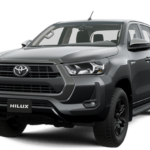 Toyota HiLux Like Cars Australia: Best Alternatives to Consider
The badge on the vehicle matters less than its history.
Do Hilux and Fortuner Engine Parts Interchange?
Some components may be common because the vehicles use engines from the same family, but you should not assume every engine component is interchangeable.
Differences may exist in areas such as:
- wiring harnesses
- ECU programming
- engine mounts
- cooling systems
- exhaust systems
- DPF components
- intake systems
- accessories
- sensors
- transmission interfaces
Even parts within the same engine family can change between production dates.
Before purchasing replacement parts, use the vehicle's VIN and exact engine code to confirm compatibility.
Can You Put a Hilux Engine in a Fortuner?
Technically, an engine swap may be possible when both vehicles use compatible versions of Toyota's 1GD-FTV engine.
However, it is not necessarily a simple plug-and-play replacement.
You may encounter differences involving:
- ECU coding
- immobiliser systems
- wiring
- sensors
- emissions hardware
- turbo systems
- transmission compatibility
- engine mounts
If replacing a Fortuner engine with a Hilux engine—or the other way around—the safest approach is to match the engine by engine code, production year and part numbers, not simply displacement.
A 2.8-litre Toyota diesel from one vehicle is not automatically identical to every other Toyota 2.8 diesel installation.
Does the Toyota Prado Use the Same Engine Too?
Some Toyota LandCruiser Prado models have also used versions of the 1GD-FTV 2.8-litre turbo-diesel.
This demonstrates how widely Toyota has used the GD diesel engine family.
However, the calibration and supporting drivetrain hardware can differ substantially between models.
The fact that a Hilux, Fortuner and Prado may all use a 1GD-FTV does not make their complete powertrains identical.
Is the Hilux 2.8 Diesel a Good Engine?
The 2.8-litre engine is designed around exactly the type of usage expected from a Hilux.
This content may interest you!Toyota HiLux vs LandCruiser Australia: Which One Should You Buy?Its strongest characteristic is torque.
In the latest Australian Hilux automatic, peak torque reaches 500 Nm between approximately 1,600 and 2,800 rpm, while maximum power reaches 150 kW.
That broad low-rpm torque delivery is useful when:
- towing a caravan
- climbing steep roads
- driving off-road
- carrying loads
- overtaking
- travelling at highway speeds
Toyota has continued using the 1GD-FTV in the latest-generation Hilux, which shows how central the engine remains to the model.
Is the Fortuner 2.8 Diesel a Good Engine?
The same fundamental qualities that suit the Hilux also make the 2.8 diesel well suited to an SUV such as the Fortuner.
Its high torque output helps when the vehicle is loaded with passengers and luggage or when towing.
The combination of diesel torque and a low-range four-wheel-drive system also made the Fortuner particularly attractive for buyers who wanted an SUV capable of handling serious off-road driving.
Its character is therefore considerably different from that of a road-focused crossover SUV.
Hilux vs Fortuner Fuel Economy
Fuel economy should not be assumed to be identical just because two vehicles have the same engine.
Aerodynamics, tyres, transmission calibration, gearing and vehicle weight all affect consumption.
Toyota's latest Australian Hilux diesel specifications quote figures around 7.2–7.6 L/100 km depending on variant, while the late Australian Fortuner was quoted at approximately 7.6 L/100 km. These are laboratory figures, and real-world consumption can vary significantly.
Expect fuel consumption to increase considerably when:
- towing
- carrying heavy loads
- driving off-road
- using roof racks
- driving in heavy traffic
- travelling at high speeds
Should You Buy a Hilux or Fortuner?
The shared engine should not be the deciding factor because both vehicles can provide essentially the same 2.8-litre diesel foundation.
Instead, think about how you intend to use the vehicle.
A Hilux Makes More Sense If You Need:
- a tray or pickup bed
- high payload capability
- commercial practicality
- worksite durability
- greater configuration choice
- strong towing capability
A Fortuner Makes More Sense If You Need:
- seven-seat practicality
- enclosed luggage space
- SUV packaging
- family-focused interior
- passenger comfort
- serious off-road capability without owning a ute
In countries where the Fortuner remains available new, it can be a compelling alternative for drivers who like the mechanical durability associated with the Hilux but prefer an SUV body.
This content may interest you!Toyota HiLux vs Prado Australia: Which Toyota 4WD Makes More Sense?Toyota Hilux and Fortuner: Same Engine, Different Vehicles
The Toyota Hilux and Fortuner are a perfect example of how the same basic engine can serve two very different vehicles.
Both have been available with Toyota's 1GD-FTV 2.8-litre turbo-diesel, and certain versions share very similar output figures.
But we should not interpret that to mean everything underneath is identical.
Differences in suspension, body design, gearing, weight, towing limits, calibration and intended purpose create noticeably different driving experiences.
The Hilux remains fundamentally a working ute.
The Fortuner is fundamentally a passenger SUV with strong off-road roots.
Their engines may be close relatives—or even essentially the same unit—but the vehicles surrounding those engines serve very different purposes.
FAQs
Do the Toyota Hilux and Fortuner have the same 2.8 diesel engine?
Yes. Many Hilux and Fortuner models use Toyota's 1GD-FTV 2.8-litre four-cylinder turbo-diesel engine. Specifications can still vary according to market and model year.
Is the Fortuner engine exactly the same as the Hilux engine?
The basic engine can be the same 1GD-FTV unit, but calibration, emissions equipment, drivetrain components and supporting hardware may differ between vehicles and model years.
Does the Hilux have more power than the Fortuner?
Not necessarily. Certain Hilux and Fortuner versions have produced the same 150 kW and 500 Nm from the 2.8-litre turbo-diesel. Older versions may have different outputs.
Can a Hilux engine fit in a Fortuner?
Potentially, especially when both vehicles use compatible 1GD-FTV engines. However, engine swaps may require checking wiring, ECU programming, emissions systems, transmission compatibility and specific part numbers.
Which is better, Toyota Hilux or Fortuner?
They are designed for different purposes. The Hilux prioritises payload, work and ute practicality, while the Fortuner prioritises passenger space and SUV practicality while retaining strong four-wheel-drive capability.
Conclusion
So, do the Toyota Hilux and Fortuner have the same engine?
In many versions, yes.
The most important shared powertrain is Toyota's 2.8-litre 1GD-FTV turbo-diesel, which has powered both the Hilux and Fortuner and, in later specifications, can produce around 150 kW and 500 Nm.
This content may interest you!Toyota HiLux vs Isuzu D-Max Australia: Which Ute Is Better?But the engine is only one part of the story.
Different suspension systems, body designs, vehicle weights, towing ratings, transmissions and calibrations mean a Fortuner does not simply drive like a Hilux with an SUV body.
For buyers, the best approach is therefore to choose based on vehicle type rather than engine alone: Hilux for ute practicality and load carrying, Fortuner for SUV passenger and luggage versatility.
Leave a Reply