
Toyota HiLux vs Prado Australia: Which Toyota 4WD Makes More Sense?

Choosing between the Toyota HiLux and Toyota LandCruiser Prado in Australia can be surprisingly difficult. Both are tough Toyota 4WDs, both use a 2.8-litre turbo-diesel engine, both can tow up to 3.5 tonnes in the right specification, and both are designed to handle conditions that go well beyond suburban streets.
However, they serve very different purposes.
The Toyota HiLux is fundamentally a ute. It is designed around load carrying, towing, work, accessories and the ability to throw dirty equipment into a separate tray. The Toyota Prado, meanwhile, is a body-on-frame SUV focused more heavily on passenger comfort, touring, family use and long-distance off-road travel.
For Australian buyers comparing Toyota HiLux vs Prado, the right choice therefore depends less on which vehicle is more capable and more on what we actually expect the vehicle to do.
In this guide, we compare the latest Australian HiLux and Prado in the areas that matter most.
- Toyota HiLux vs Prado Australia: Quick Comparison
- Toyota HiLux vs Prado Engine
- Toyota HiLux vs Prado Performance
- Toyota HiLux vs Prado Fuel Economy
- Toyota HiLux vs Prado Towing Capacity
- Toyota HiLux vs Prado Payload
- Toyota HiLux vs Prado Off Road
- Prado Off-Road System
- Toyota HiLux vs Prado Ground Clearance and Terrain
- Toyota HiLux vs Prado Size
- Toyota HiLux vs Prado Interior
- Toyota HiLux vs Prado Comfort
- Toyota HiLux vs Prado for Families
- Toyota HiLux vs Prado Boot Space and Cargo
- Toyota HiLux vs Prado for Camping
- Toyota HiLux vs Prado Reliability
- Toyota HiLux vs Prado Price Australia
- Toyota HiLux SR5 vs Prado GXL
- Toyota HiLux Rogue vs Prado
- Toyota HiLux vs Prado for Daily Driving
- Toyota HiLux vs Prado for Australian Conditions
- Toyota HiLux vs Prado: Which Should You Choose?
- Toyota HiLux vs Prado Pros and Cons
- Is a HiLux Better Than a Prado?
- FAQs About Toyota HiLux vs Prado Australia
- Final Thoughts
Toyota HiLux vs Prado Australia: Quick Comparison
The current Australian versions have more in common mechanically than many buyers might expect.
| Specification | Toyota HiLux 4x4 | Toyota LandCruiser Prado |
|---|---|---|
| Engine | 2.8L turbo-diesel four-cylinder | 2.8L turbo-diesel four-cylinder |
| Maximum power | 150kW | 150kW |
| Maximum torque | Up to 500Nm | 500Nm |
| Automatic transmission | 6-speed | 8-speed |
| 4WD system | Part-time 4WD | Full-time 4WD |
| Braked towing | Up to 3500kg | 3500kg |
| Seats | Up to 5 | 5 or 7 depending on grade |
| Body | Ute / cab-chassis | SUV |
| Fuel economy | Varies by configuration | 7.6L/100km claimed |
| Best suited to | Work, towing, payloads, camping | Family touring, comfort, towing |
Toyota currently quotes 150kW and 500Nm for automatic HiLux models, while manual versions produce 420Nm. The Prado produces 150kW and 500Nm and pairs its diesel engine exclusively with an eight-speed automatic transmission.
That makes the difference between them much more about chassis configuration, suspension, interior packaging and intended use than outright engine performance.
Toyota HiLux vs Prado Engine
One of the most interesting parts of this comparison is that both vehicles use Toyota's familiar 2.8-litre 1GD-FTV turbo-diesel four-cylinder engine.
In automatic HiLux models, it develops:
150kW of power and 500Nm of torque.
The latest Prado also produces:
150kW of power and 500Nm of torque.
So if we simply look at the engine figures, neither vehicle has a major advantage.
The difference is how that engine is used.
HiLux Transmission
The HiLux automatic uses a six-speed automatic transmission. Manual versions remain available in parts of the range and produce 420Nm rather than the automatic's 500Nm.
Certain automatic HiLux variants also use Toyota's 48-volt V-Active technology, providing smoother stop-start operation and additional assistance during initial acceleration.
Prado Transmission
The Prado uses an eight-speed automatic transmission across the Australian range.
It also incorporates Toyota's 48-volt V-Active technology.
The extra transmission ratios help the Prado feel better suited to relaxed highway touring, particularly when travelling long distances.
For buyers who spend most of their time carrying passengers rather than equipment, the Prado powertrain generally feels more SUV-like despite sharing its basic engine architecture with the HiLux.
Toyota HiLux vs Prado Performance
Don't expect a dramatic performance difference based purely on power figures.
Both produce the same peak 150kW and 500Nm in automatic form.
The Prado, however, is a considerably heavier vehicle. Depending on grade, Toyota lists Prado kerb weights at roughly 2495kg to 2595kg.
HiLux weight varies much more because there are single-cab, extra-cab, double-cab, cab-chassis and pickup configurations. Current double-cab 4x4 versions can weigh considerably less than a Prado depending on the model.
This content may interest you! Mazda CX-5 vs Subaru Outback: Which One Fits Real Life Better?
Consequently, a lightly loaded HiLux can feel stronger relative to its weight.
Neither vehicle is intended to be a performance car, though. Their 500Nm diesel engines are designed primarily around low-speed pulling ability, towing and off-road driving.
Toyota HiLux vs Prado Fuel Economy
Fuel economy is another surprisingly close contest.
Toyota quotes 7.6L/100km combined for the current Prado under laboratory testing.
For the latest HiLux, claimed consumption varies depending on drivetrain, transmission and body style. Figures for the 2026 diesel range sit around the low-to-mid 7L/100km range for several configurations, including approximately 7.2-7.6L/100km for many 4x4 automatic variants.
Real-world consumption can be substantially affected by tyres, bull bars, roof racks, towing, payload, terrain and driving style.
Which Uses Less Fuel?
On official figures, there isn't enough separation to choose one solely on fuel consumption.
A lightly equipped HiLux may prove economical in everyday driving, while the Prado's eight-speed transmission and 48V system help compensate for its greater weight.
Once we start towing a caravan or fitting large off-road accessories, real-world fuel consumption matters much more than the laboratory number anyway.
Toyota HiLux vs Prado Towing Capacity
For many Australian buyers, this could be the most important part of the comparison.
The current Prado has a 3500kg braked towing capacity across the range.
The HiLux also offers up to 3500kg braked towing capacity on 4x4 models, while certain 4x2 configurations are rated lower.
That means a simple towing-capacity comparison produces a tie at the headline level.
But maximum towing capacity doesn't tell the whole story.
HiLux for Towing
The HiLux's advantage is its ute layout.
We can carry generators, tools, recovery equipment, fuel containers and camping gear in the tray without putting everything inside the passenger compartment.
That can be especially useful when towing:
- caravans
- boats
- horse floats
- work trailers
- camper trailers
Payload, gross vehicle mass and gross combined mass still need to be calculated carefully. A 3500kg tow rating does not mean we can simultaneously tow 3500kg and load the vehicle to its maximum payload.
Prado for Towing
The Prado is arguably the more passenger-friendly tow vehicle.
Its enclosed cabin, full-time 4WD system, longer-distance comfort and SUV suspension configuration make it particularly attractive for caravan touring.
Toyota has increased the current Prado's braked towing capacity to 3500kg, bringing it directly into the territory occupied by popular Australian dual-cab utes.
If our priority is transporting people while towing, the Prado makes a strong case.
If we're transporting equipment while towing, the HiLux layout is difficult to beat.
Toyota HiLux vs Prado Payload
This is one area where the HiLux's commercial-vehicle roots become important.
Depending on configuration, a HiLux can provide substantially more flexibility for heavy loads.
This content may interest you!Toyota LandCruiser Engine Oil: The Complete Selection and Maintenance GuideThe tray also separates cargo from passengers.
Imagine returning from a camping trip with muddy swags, wet recovery boards, firewood and dirty boots. With the HiLux, we can put everything in the back and clean the tray afterwards.
In the Prado, that equipment shares the enclosed vehicle body with us.
For tradespeople, farmers or owners regularly carrying bulky equipment, the HiLux makes considerably more sense.
Toyota HiLux vs Prado Off Road
Both vehicles have genuine off-road credentials, but they approach challenging terrain differently.
HiLux Off-Road System
Australian HiLux 4x4 models use a part-time four-wheel-drive system with high- and low-range gearing. The latest generation also offers a rear locking differential across the 4x4 range, while automatic SR 4x4 models and above gain Multi-Terrain Select.
That gives the HiLux a strong toolkit for:
mud, sand, steep tracks, loose surfaces, rocky terrain and remote-area driving.
Its separate tray can also be modified extensively for serious touring.
Canopies, rooftop tents, drawers, auxiliary batteries, refrigerators, water storage and long-range fuel solutions are common upgrades.
Prado Off-Road System
The Prado takes a different approach.
Every current Prado uses full-time four-wheel drive, low-range gearing and a lockable Torsen centre differential.
Higher grades add increasingly sophisticated off-road systems.
The Prado Altitude is particularly interesting because Toyota equips it with a rear differential lock and its Stabiliser Disconnect Mechanism, allowing greater front suspension articulation on demanding terrain.
HiLux or Prado for Serious Off-Road Driving?
Both are highly capable.
The HiLux makes more sense if we want an off-road touring platform that will be heavily modified and carry substantial equipment.
The Prado suits buyers who want strong off-road capability while retaining greater passenger comfort and refinement.
The Prado Altitude is especially relevant for people who want a factory-oriented off-road SUV rather than building a heavily modified ute.
Toyota HiLux vs Prado Ground Clearance and Terrain
Ground-clearance figures vary by grade and specification, so shoppers should compare the exact versions they are considering rather than relying on a single number.
The Prado offers approximately 210-221mm of unladen ground clearance depending on variant.
However, ground clearance alone doesn't determine off-road performance.
Approach angle, departure angle, ramp-over angle, tyre choice, wheelbase, suspension travel, traction systems and driver skill all matter.
The HiLux's long wheelbase can become noticeable over sharp crests, while its ute rear overhang varies according to configuration.
The Prado's SUV proportions and sophisticated traction systems make it particularly confidence-inspiring over mixed terrain.
Toyota HiLux vs Prado Size
The vehicles are shaped very differently.
This content may interest you!
The current Prado measures approximately 4990mm long and 1980mm wide, with a 2850mm wheelbase. Height ranges from approximately 1925mm to 1935mm depending on grade.
A typical HiLux is longer but narrower. For example, current versions can be around 5320mm long and 1855mm wide, though exact measurements change with body style and grade.
That difference becomes noticeable in Australian cities.
Parking a HiLux vs Prado
The Prado's shorter overall length can make it easier to fit within some parking spaces.
However, the Prado is wider.
The HiLux's extra length can be annoying in tight shopping-centre parking bays, especially when we're driving a dual-cab with accessories.
Both are large vehicles, so neither will feel like a Corolla in inner-city car parks.
Toyota HiLux vs Prado Interior
This is where the Prado begins pulling away from the HiLux for family buyers.
The latest HiLux has made a considerable leap forward in cabin technology. Toyota now provides a 12.3-inch multimedia display across the range, while upper grades receive a 12.3-inch digital instrument display.
Modern HiLux versions therefore no longer feel like purely utilitarian work vehicles.
Even so, the Prado is designed from the beginning as a passenger SUV.
Its seating position, cabin layout, second-row accommodation, insulation and suspension are intended for carrying families across long distances.
The Prado is also available with either five or seven seats depending on grade.
A dual-cab HiLux seats five.
Toyota HiLux vs Prado Comfort
For unloaded everyday driving, we would normally expect the Prado to provide the more refined experience.
The HiLux still uses a rigid rear axle with leaf springs. Toyota has introduced different suspension tuning across the latest range, with WorkMate and SR grades prioritising load carrying and towing and SR5-and-above models receiving a more comfort-oriented tune.
That's an important improvement.
Nevertheless, a ute needs to remain capable of carrying substantial weight, so its suspension must make compromises.
The Prado uses an SUV-oriented suspension arrangement, including independent double-wishbone front suspension and a four-link rigid rear axle. VX and Kakadu grades also receive Adaptive Variable Suspension.
For long family road trips from Melbourne to Adelaide, Sydney to Brisbane or Perth into regional Western Australia, the Prado's extra refinement could become a major advantage.
Toyota HiLux vs Prado for Families
If we don't need a ute tray, the Prado is generally the more family-oriented design.
Seven-seat availability is particularly important.
Current Prado configurations include five-seat and seven-seat versions, whereas a double-cab HiLux accommodates five people.
The Prado also keeps luggage protected inside an enclosed cargo area.
A HiLux can achieve similar weather protection with a hard lid or canopy, but that's an additional consideration and may add cost and weight.
This content may interest you!
Families who camp frequently might actually prefer the HiLux because dirty camping equipment stays outside the cabin.
So even here, lifestyle matters.
Toyota HiLux vs Prado Boot Space and Cargo
Comparing cargo capacity between these vehicles purely in litres doesn't make much sense.
The Prado has a conventional SUV cargo compartment.
The HiLux has a separate tray.
The Prado is better for groceries, suitcases, prams and valuables because everything sits within a secure enclosed cabin.
The HiLux is better for bicycles, tools, camping equipment, building materials and dirty or oversized loads.
Adding a canopy transforms the HiLux considerably, creating a huge enclosed storage area, but also adds weight and expense.
Toyota HiLux vs Prado for Camping
This is one of the closest comparisons.
A HiLux can become an outstanding camping vehicle because its tray provides an almost blank canvas for accessories.
We can install drawer systems, fridge slides, a canopy, rooftop tent, awning, dual battery system and water storage.
The Prado is more convenient for buyers who want to pack the vehicle and leave without building an elaborate touring setup.
Fold seats, load the luggage area, connect the caravan or camper trailer and go.
For elaborate overlanding builds, we'd lean towards the HiLux platform.
For comfortable family touring with occasional camping, the Prado's SUV configuration is extremely appealing.
Toyota HiLux vs Prado Reliability
Both vehicles use versions of Toyota's established 2.8-litre diesel engine, which means there is considerable mechanical familiarity around Australia.
That matters if we travel through regional or remote areas where dealer networks, parts availability and mechanical knowledge can become important.
However, reliability should never be judged purely by the badge.
Modern diesel vehicles contain emissions systems, electronics, turbocharging, complex fuel injection and numerous driver-assistance systems.
Maintenance history matters enormously, particularly when buying used.
For either vehicle, we would want to check service records carefully and inspect any example that has spent significant time towing, working in mines, driving off-road or travelling on beaches.
Toyota HiLux vs Prado Price Australia
Price may decide the comparison before anything else.
The 2026 HiLux range begins at $33,990 before on-road costs for a 4x2 WorkMate single-cab/chassis manual. More desirable 4x4 dual-cab models cost considerably more, with models such as the Rogue and Rugged X reaching $71,990 before on-road costs.
The Prado starts substantially higher.
Current 2026 pricing places the Prado GX at approximately $73,200 before on-road costs, while the range rises through the GXL, VX and Altitude to around $100,690 before on-road costs for the Kakadu.
This content may interest you!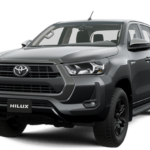 Do the Toyota Hilux and Fortuner Have the Same Engine?
Prices can change and options, registration, dealer delivery and accessories can significantly increase the final amount.
Is a Prado Worth the Extra Money Over a HiLux?
It depends on what we're paying for.
With a Prado, much of the extra money goes towards SUV refinement, passenger accommodation, full-time four-wheel drive, an eight-speed automatic transmission and a more family-oriented interior.
If those features matter, the price difference becomes easier to justify.
If we primarily need a tough 4WD for carrying loads and towing, spending extra on a Prado may not provide much practical benefit.
Toyota HiLux SR5 vs Prado GXL
This is probably one of the more realistic comparisons for private Australian buyers.
The HiLux SR5 4x4 dual cab combines ute practicality with a significantly more comfortable specification than basic commercial grades.
The Prado GXL is one of the natural family-oriented choices in the Prado range and is available in five- and seven-seat configurations in the current Australian lineup.
The SR5 makes sense for buyers who camp, tow, carry recreational equipment or occasionally use their vehicle for work.
The Prado GXL makes more sense when passenger comfort, enclosed storage and family touring dominate.
Toyota HiLux Rogue vs Prado
The HiLux Rogue moves the ute significantly closer to lifestyle-SUV territory.
It offers greater equipment and comfort than work-focused versions while retaining the open tray and ute practicality.
This makes the Rogue interesting for buyers who want one vehicle for weekday commuting and weekend adventures.
However, it still doesn't fundamentally become an SUV.
The Prado offers easier access to enclosed cargo, optional seven-seat capacity and a suspension configuration designed around passenger use.
If we never use the HiLux tray for the things a ute tray does best, the Prado starts making considerably more sense.
Toyota HiLux vs Prado for Daily Driving
For suburban commuting, school runs and highway trips, the Prado is likely to suit more buyers.
It offers SUV packaging without sacrificing genuine four-wheel-drive capability.
The HiLux is completely usable as a daily driver, particularly in SR5, Rogue or Rugged X form, but we still live with ute dimensions and the compromises created by a separate tray and load-oriented chassis.
On the other hand, the HiLux gives us something the Prado cannot replicate: the ability to carry messy, tall or bulky items without putting them inside the vehicle.
That's why this comparison ultimately revolves around lifestyle rather than specifications.
Toyota HiLux vs Prado for Australian Conditions
Australia is exactly the type of market where both vehicles make sense.
Long highway distances favour comfort and fuel range.
Remote areas reward strong off-road ability and mechanical familiarity.
Caravanning requires towing capacity.
This content may interest you!Toyota HiLux Like Cars Australia: Best Alternatives to ConsiderCamping creates a need for cargo space.
Farms and worksites demand payload.
The Prado addresses those needs from the perspective of an off-road SUV.
The HiLux addresses them from the perspective of a ute.
Neither concept replaces the other.
Toyota HiLux vs Prado: Which Should You Choose?
Choose the Toyota HiLux if your priority is carrying equipment, using a tray, building a touring ute, accessing worksites, towing while carrying substantial gear or separating dirty cargo from passengers.
Choose the Toyota Prado if your priorities are family comfort, long-distance touring, enclosed luggage space, full-time four-wheel drive, five- or seven-seat flexibility and SUV refinement.
For tradies and buyers who genuinely need a ute, the HiLux is the logical format.
For families who occasionally tow and explore remote Australia but don't actually need a tray, the Prado's additional comfort and versatility as a passenger vehicle can be more useful.
Toyota HiLux vs Prado Pros and Cons
| Toyota HiLux | Toyota Prado |
|---|---|
| Excellent tray practicality | More comfortable passenger-focused cabin |
| Up to 3500kg braked towing on 4x4 versions | 3500kg braked towing across the range |
| Huge range of configurations | Five- or seven-seat configurations |
| Excellent accessory potential | Full-time four-wheel drive |
| Strong payload capability | Eight-speed automatic |
| Lower entry price | Better suited to family touring |
| Cargo separated from cabin | Enclosed and secure luggage area |
| Can ride more firmly unloaded | Costs substantially more |
| Longer body can make parking difficult | Less suitable for dirty or oversized cargo |
Is a HiLux Better Than a Prado?
Not universally.
The HiLux is better suited to tasks that require a ute, while the Prado is better suited to tasks that require an SUV.
That distinction sounds obvious, but it is the key to the entire Toyota Prado vs HiLux comparison.
Both can tow.
Both can travel off road.
Both can be used for camping.
Both offer strong diesel torque.
The biggest question is whether we value the HiLux's tray and carrying ability more than the Prado's interior space, passenger comfort and SUV versatility.
FAQs About Toyota HiLux vs Prado Australia
1. Does the Toyota HiLux have the same engine as the Prado?
The latest Australian HiLux and LandCruiser Prado both use a 2.8-litre turbo-diesel four-cylinder engine from Toyota's 1GD family. Automatic HiLux models and the Prado produce up to 150kW and 500Nm. The Prado uses an eight-speed automatic, while automatic HiLux models use a six-speed transmission.
2. Can a Toyota HiLux tow as much as a Prado?
Yes, depending on the HiLux variant. Current HiLux 4x4 models can offer up to 3500kg of braked towing capacity, matching the current Prado's 3500kg braked rating. Buyers still need to consider payload, tow-ball mass, GVM and GCM rather than looking only at the maximum towing figure.
3. Is the Prado better than the HiLux for a family?
The Prado is generally more family-oriented because it has an SUV body, enclosed cargo area and five- or seven-seat configurations. A double-cab HiLux can still make a very good family adventure vehicle, particularly when fitted with a canopy.
4. Is a HiLux or Prado better for off-roading?
Both are highly capable. The HiLux uses part-time 4WD with high and low ranges, while the Prado uses full-time 4WD with low range and a lockable centre differential. The Prado Altitude adds particularly useful off-road equipment such as a rear differential lock and Stabiliser Disconnect Mechanism.
5. Should I buy a Toyota HiLux or Prado in Australia?
Buy the HiLux if you genuinely need a ute tray, payload capacity or a platform for a touring build. Buy the Prado if passenger comfort, family practicality, enclosed storage and long-distance SUV touring are more important. Buyers towing heavy caravans should calculate the complete vehicle and trailer weights for the exact variant before deciding.
Final Thoughts
The Toyota HiLux vs Prado Australia debate doesn't produce one universal winner because these two Toyotas solve different problems.
The HiLux remains the more practical tool. Its tray, broad range of configurations, impressive towing ability and extensive accessory ecosystem make it exceptionally useful for work, touring and adventure.
The Prado takes much of Toyota's proven heavy-duty 4WD philosophy and puts it into a more family-friendly package. We still get 150kW, 500Nm, low-range four-wheel drive and 3500kg braked towing, but we also get better passenger accommodation, full-time 4WD, an eight-speed automatic and the option of seven seats.
This content may interest you!Toyota HiLux vs LandCruiser Australia: Which One Should You Buy?If we're going to regularly use the tray, the HiLux is difficult to replace.
If we're buying primarily for family trips, caravanning, highway touring and off-road holidays, the Prado's SUV layout is likely to be the more natural fit.
Ultimately, the smartest way to choose between a Toyota HiLux and LandCruiser Prado is to forget for a moment that they share an engine and a badge. Think about what will be sitting behind the front seats.
If it's people and luggage, the Prado makes more sense.
If it's tools, camping equipment and cargo that we'd rather not put inside the cabin, that's exactly why the HiLux exists.
Leave a Reply