
Audi Q7 vs BMW X7 Australia: Which Luxury SUV Makes More Sense?

When we compare the Audi Q7 vs BMW X7 in Australia, we are not really comparing two identical luxury SUVs. Yes, both wear prestigious German badges. Both offer seven seats. Both combine all-wheel drive with serious road-trip ability. And both can turn an ordinary school run into something that feels considerably more first class.
But their personalities are quite different.
The Audi Q7 is the quieter, more understated choice. It blends into Australian suburbia surprisingly well for a seven-seat luxury SUV, yet underneath that conservative suit sits a genuinely capable family vehicle. The BMW X7 takes another approach. It is longer, taller, more imposing and deliberately more luxurious. Pull one into a hotel entrance and it behaves less like a family SUV and more like a rolling business-class lounge.
That difference also appears in the price.
For the 2026 Australian model year, Q7 pricing starts around $108,742 before on-road costs, while the equivalent X7 range begins around $174,400 before on-road costs. Higher-output Q7 variants reach roughly $136,742 before on-roads, whereas BMW's X7 M60i sits around $212,400.
So is spending significantly more on the BMW justified?
Let's dig into the details.
- Audi Q7 vs BMW X7 Australia: Quick Comparison
- Price: The Biggest Difference Is Impossible to Ignore
- Size and Dimensions
- Interior Space and Seven-Seat Practicality
- Boot Space: Audi Q7 vs BMW X7
- Engines Available in Australia
- Fuel Consumption
- Driving Experience
- Ride Comfort
- Interior Design and Quality
- Infotainment and Technology
- Towing Capacity
- Safety and Driver Assistance
- Warranty and Ownership
- Audi Q7 vs BMW X7 for Families
- Audi Q7 vs BMW X7 for Australian Roads
- Which Audi Q7 Should We Consider?
- Which BMW X7 Should We Consider?
- Audi Q7 vs BMW X7 Australia: Pros and Cons
- Audi Q7 vs BMW X7: Which Should You Buy in Australia?
- Conclusion
- Frequently Asked Questions
Audi Q7 vs BMW X7 Australia: Quick Comparison
The simplest way to understand these SUVs is to look at their basic philosophies.
| Category | Audi Q7 | BMW X7 |
|---|---|---|
| Seating | 7 | 7 |
| Australian 2026 entry price* | About $108,742 | About $174,400 |
| Entry engine | 2.0L turbo petrol | 3.0L turbo inline-six mild hybrid |
| AWD | quattro | xDrive |
| Transmission | 8-speed automatic | 8-speed automatic |
| Maximum cargo capacity | Up to 1,908L | Up to 2,120L |
| Maximum published towing figure | Up to 3,500kg | Up to 3,500kg depending on configuration |
| Character | Understated, practical, versatile | Larger, richer, more imposing |
| Best suited to | Luxury family buyers | Buyers prioritising space and flagship luxury |
*Prices exclude on-road costs and can change according to model, options, location and manufacturer updates. Current Australian specifications should always be confirmed before purchase.
The fascinating part is that the Q7 can accomplish much of what the X7 does while occupying a noticeably lower price bracket.
But there are areas where the BMW makes its extra size and expense obvious.
Price: The Biggest Difference Is Impossible to Ignore
This is where our comparison becomes interesting immediately.
The 2026 Audi Q7 range in Australia includes multiple petrol and diesel configurations. Published pricing places the lineup roughly between $108,742 and $136,742 before on-road costs, depending on variant.
Meanwhile, current 2026 BMW X7 pricing is approximately:
- X7 xDrive40i M Sport: $174,400
- X7 xDrive40d M Sport: $181,400
- X7 M60i xDrive: $212,400
Those prices are also before on-road costs.
That means the cheapest X7 sits tens of thousands of dollars above an entry Q7.
Does the BMW X7 Feel More Expensive?
Yes, in several meaningful ways.
The X7 is effectively BMW's flagship conventional SUV. Its dimensions, cabin presentation and road presence reflect that position. You are stepping into something designed to sit above the X5 rather than directly beside the Q7.
The Audi is more restrained.
Think of the Q7 as an expensive tailored jacket. The X7 is the same jacket accompanied by cufflinks, a luxury watch and a chauffeur waiting outside.
Whether those extras matter depends on what you want from the car.
Where the Audi Q7 Creates Its Value
The Q7 becomes particularly appealing when we focus on what Australian families actually use every day.
We still get seven seats, quattro all-wheel drive, high-quality materials, modern infotainment and strong six-cylinder engine choices without moving into X7 pricing territory.
Consequently, buyers who do not need the sheer scale of the BMW may find the Audi's value proposition difficult to ignore.
Size and Dimensions
The BMW X7 is the bigger vehicle.
BMW lists the X7 at 5,181mm long, 2,000mm wide and 1,835mm high, with a lengthy 3,105mm wheelbase.
Current Australian Q7 specifications vary slightly by model and measurement source, but higher-spec MY26 versions are approximately 5,072mm long and 1,970mm wide, with a wheelbase around 3,005mm.
In other words, the X7 is roughly another 100mm longer and has an extra 100mm of wheelbase.
That sounds modest on paper.
In reality, those millimetres matter.
Which Is Easier to Drive in Australian Cities?
The Q7 feels like the more manageable package.
Neither vehicle is tiny, obviously. Nobody is confusing a Q7 with a Mazda CX-3. But in underground shopping-centre car parks, narrow suburban streets and tight inner-city spaces, the Audi's slightly smaller footprint can make life less stressful.
The X7 demands more awareness.
Its width is particularly noticeable when parking beside concrete pillars or squeezing between SUVs in a crowded Westfield car park.
Parking Technology Softens the Problem
Fortunately, both vehicles offer extensive cameras, parking sensors and assistance technology depending on specification.
That means the X7's dimensions are far less intimidating from behind the wheel than they appear while standing beside it.
Still, physics refuses to negotiate. A larger vehicle requires more physical space.
Interior Space and Seven-Seat Practicality
Here is where the BMW begins earning back some of that extra purchase price.
Both vehicles accommodate seven occupants, but the X7 has been conceived from the start as an especially large luxury SUV.
The third row consequently feels more integrated into the vehicle rather than simply included because the specification sheet requires seven seats.
Audi Q7 Third Row
The Q7's third-row seats are useful, especially for children and teenagers.
For occasional trips with seven occupants, they work well. Families can fold them away when unnecessary and regain significant luggage room.
Adults can also use the rear seats, but longer journeys reveal the compromises inherent in a slightly smaller vehicle.
BMW X7 Third Row
The BMW has more generous proportions.
Its long wheelbase contributes to greater passenger accommodation, while the overall cabin feels broader and more expansive.
If we regularly carry six or seven people rather than simply wanting emergency third-row seats, the X7's additional space deserves serious consideration.
It behaves more like a proper three-row flagship.
Boot Space: Audi Q7 vs BMW X7
Cargo volume provides another good example of their different priorities.
Audi quotes maximum Q7 storage capacity of up to 1,908 litres.
BMW lists 750 to 2,120 litres of luggage capacity in its technical data, depending on seating configuration.
That gives the X7 a larger maximum carrying capacity.
Which Is Better for Family Holidays?
With five people aboard and the third row folded, both are enormously practical.
We can pack suitcases, shopping, sports equipment and the collection of mysterious bags that somehow multiplies whenever children enter a car.
The BMW simply gives us more breathing room.
If road trips between Melbourne and Sydney, long Queensland holidays or regular airport runs define your lifestyle, that additional cargo volume can become genuinely useful.
Engines Available in Australia
Powertrain choice is one of the Q7's strongest advantages.
For 2026, the Australian Q7 range spans multiple power outputs, including a 185kW 2.0-litre turbo petrol, 170kW and 210kW 3.0-litre diesels, and a 250kW 3.0-litre petrol. The six-cylinder versions use mild-hybrid assistance, depending on specification.
BMW keeps the X7 range more concentrated around powerful six- and eight-cylinder engines.
The Australian lineup includes:
- 3.0-litre turbo petrol six-cylinder xDrive40i
- 3.0-litre turbo diesel six-cylinder xDrive40d
- 4.4-litre twin-turbo V8 M60i
BMW lists 259kW and 720Nm for the xDrive40d, while the M60i produces an imposing 390kW and 750Nm.
Q7 TFSI: Smooth Petrol Performance
The 250kW Q7 TFSI S line is arguably the sweet petrol configuration when effortless acceleration matters.
Its 3.0-litre engine has considerably more muscle than the entry four-cylinder, making overtaking and highway merging wonderfully relaxed.
Press the accelerator and the Q7 gathers speed with less drama than expected.
There is no need for theatrical exhaust noise or aggressive behaviour. It simply goes.
Q7 TDI: Excellent for Distance
For long Australian distances, the Q7 TDI deserves special attention.
The 210kW diesel produces 600Nm, with published combined fuel consumption around 7.1L/100km.
That combination makes sense for buyers covering serious kilometres.
Diesel torque arrives early, highway cruising feels effortless, and fuel range can be excellent.
BMW X7 xDrive40i
The xDrive40i takes another step in refinement.
This content may interest you!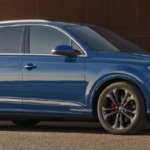 Audi Q7 or VW Touareg Australia: Which Luxury SUV Makes More Sense?
Its 3.0-litre turbocharged inline-six combines muscular performance with the beautifully smooth character BMW six-cylinder engines are known for.
Current Australian specifications list approximately 280kW, while available dealer specifications show 520Nm for MY26 examples.
The engine suits the X7 exceptionally well.
It feels powerful without turning the vehicle into something unnecessarily aggressive.
BMW X7 xDrive40d
Australian buyers who travel long distances may find the xDrive40d even more compelling.
Its 259kW diesel setup produces a substantial 720Nm, accompanied by an official combined consumption figure around 8.2L/100km in BMW technical data.
That mountain of torque is exactly what a vehicle of this size appreciates.
It moves the X7 with the relaxed confidence of a locomotive leaving a station.
BMW X7 M60i
And then there is the M60i.
This is where practicality takes a small holiday and performance joins the conversation.
With 390kW, 750Nm and a claimed 0–100km/h time of 4.7 seconds, the M60i has performance numbers that would have belonged to serious sports cars not long ago.
Do we need a giant seven-seat SUV capable of that acceleration?
Probably not.
Is it entertaining that one exists?
Absolutely.
Fuel Consumption
Australian fuel prices make efficiency relevant even when shopping above $100,000.
The Q7 offers the broader efficiency spectrum because of its engine lineup.
The 210kW diesel is officially rated around 7.1L/100km, while the 250kW petrol uses approximately 9.0L/100km in combined testing.
For the BMW, current technical data places the xDrive40d at approximately 8.2L/100km, while the performance-focused M60i rises to about 12.2L/100km.
Real-world consumption will naturally vary with traffic, load, driving style and towing.
Which One Makes More Sense for Highway Driving?
For serious distance work, we would look closely at the diesels.
Australia's enormous geography plays directly to their strengths.
Whether travelling through regional Victoria, driving Queensland's coastal highways or crossing long stretches of Western Australia, low-rpm diesel torque and extended range remain attractive.
Driving Experience
This is not simply a battle of horsepower.
Chassis character matters.
Audi Q7: Calm and Controlled
The Q7 feels beautifully composed.
Its controls are predictable, its quattro system provides reassuring traction, and the suspension focuses on making kilometres disappear.
There is still enough precision to keep enthusiastic drivers interested, but the Audi rarely encourages us to attack corners.
Its natural rhythm is smoother.
We settle into the seat, select our destination and let the car quietly shrink the road ahead.
BMW X7: Surprisingly Agile for Its Size
The X7 is bigger and heavier, yet BMW manages to hide much of that bulk once the vehicle starts moving.
Steering is responsive for something this large, and the chassis feels impressively disciplined.
Optional or variant-dependent systems such as integral active steering can make the X7 feel smaller at low speed while improving stability at higher speeds.
The result is almost strange.
Our eyes tell us we're piloting a huge SUV. The steering wheel sometimes tells a different story.
Ride Comfort
Luxury SUVs live or die by their suspension.
Nobody buys a vehicle like this hoping to feel every crack in the road.
The Q7 delivers a polished ride, and Audi Australia notes that available adaptive air suspension can further improve comfort and driving dynamics.
The X7, meanwhile, leans heavily into flagship comfort.
Its combination of long wheelbase, sophisticated suspension and substantial body mass gives it a wonderfully settled character on open roads.
Watch the Wheel Size
There is one important caveat.
Huge alloy wheels look fantastic in the showroom but can reduce ride compliance.
That applies to both vehicles.
If our priority is maximum comfort rather than maximum Instagram appeal, choosing a sensible wheel-and-tyre package can be smarter than automatically selecting the largest available rim.
Interior Design and Quality
The Q7 and X7 approach luxury from different directions.
Inside the Audi Q7
Audi interiors traditionally specialise in precision.
Buttons, surfaces, trim pieces and display integration tend to feel carefully organised rather than flamboyant.
The Q7 follows that philosophy.
It feels premium without shouting about its price every five seconds.
We particularly like this approach if the vehicle is going to serve as a genuine family car rather than an occasional luxury statement.
Inside the BMW X7
The X7 feels more theatrical.
Its dashboard, larger cabin and available luxury features push it closer to limousine territory.
Depending on configuration, buyers can add equipment such as ventilated front seats, massage functions, heated seating, panoramic glass features and premium interior packages. Current Australian dealer configurations demonstrate just how extensively the X7 can be optioned.
The BMW cabin therefore creates more of an occasion.
The Audi is elegant.
The BMW wants you to know you've arrived.
Infotainment and Technology
Neither SUV leaves us starving for screens.
Audi uses its modern digital cockpit architecture with touchscreen infotainment, navigation, smartphone connectivity and digital instrumentation.
BMW counters with its latest-generation curved display interface and iDrive ecosystem.
Personal preference becomes important here.
Audi Interface
Audi's system looks clean and sophisticated.
Once familiar with the menus, it becomes intuitive enough for daily use.
Physical-feedback purists may still wish for more traditional controls, but the digital layout suits the Q7's minimalist cabin.
BMW iDrive
BMW's interface is feature rich and visually dramatic.
The curved display dominates the dashboard and helps make the X7 feel newer inside.
It also contains many vehicle functions, which creates a learning curve.
Spend a week with it, though, and the system begins to make sense.
Towing Capacity
Australian buyers often ask one crucial question:
Can it tow?
This content may interest you!Audi Q7 and Q5 Australia: Which Audi SUV Makes More Sense?The Q7 can.
Audi Australia states a 3,500kg braked towing capacity when equipped with the appropriate Audi Genuine trailer towing hitch assembly.
That is serious capability.
Higher-output MY26 Q7 variants are also listed with up to 3,500kg braked capacity and 350kg maximum towball download.
BMW's official technical data likewise references trailer loads of up to 3,500kg when suitably equipped.
However, some individual Australian BMW X7 listings show lower vehicle-specific figures, including 2,700kg. Buyers planning to tow should therefore verify the exact compliance plate, variant, towbar specification, gross combination mass and dealer documentation rather than assuming every X7 configuration carries the maximum published figure.
Which Is Better for Caravanning?
The Q7's combination of 3,500kg maximum braked towing capacity, diesel torque and lower initial purchase price makes it particularly interesting.
The X7 adds extra cabin luxury and enormous torque in diesel form.
For either SUV, remember that maximum towing capacity tells only part of the story. Payload, towball mass, passengers and accessories all influence the legal real-world setup.
Safety and Driver Assistance
Both vehicles are loaded with active safety systems.
Depending on specification, the Q7 provides features including autonomous emergency braking, adaptive driving assistance, lane support, blind-spot monitoring, rear cross-traffic assistance, parking systems and surround-view cameras.
BMW similarly offers an extensive suite of Driving Assistant and Parking Assistant technologies throughout its SUV range, with equipment varying by specification.
In everyday driving, these features matter more than flashy performance numbers.
A good surround-view camera can make a giant SUV significantly easier to live with.
Warranty and Ownership
Audi's current Australian Q7 warranty is five years with unlimited kilometres, and published Australian information also lists five years of roadside assistance.
BMW Australia also provides a five-year warranty for new vehicles and currently advertises three years of roadside assistance.
That means the basic new-car warranty period is broadly comparable.
Maintenance costs will vary according to model, engine, prepaid servicing packages and dealer.
Depreciation Matters Too
With vehicles this expensive, depreciation can easily outweigh small differences in servicing costs.
A $3,000 service difference sounds dramatic until we remember that luxury SUVs can lose tens of thousands of dollars in value over several years.
That is why near-new demonstrators and carefully selected used examples can be interesting alternatives.
Audi Q7 vs BMW X7 for Families
If we have three children, either vehicle works.
If we have five children—or regularly carry grandparents, friends and luggage—the X7's bigger footprint becomes easier to justify.
The distinction is essentially this:
The Audi Q7 is a seven-seat luxury SUV that happens to be extremely refined.
The BMW X7 feels like a luxury flagship that happens to have seven seats.
Those sound similar.
They are not quite the same.
Audi Q7 vs BMW X7 for Australian Roads
Australia presents an unusual mix of environments.
We can drive from dense city traffic into enormous stretches of open highway within the same trip.
The Q7 feels particularly versatile because it remains manageable around town without sacrificing highway comfort.
The X7 shines once space stops being a concern.
Long-distance cruising is exactly where its huge cabin, long wheelbase and powerful six-cylinder engines feel at home.
For Melbourne or Sydney
The Q7's smaller exterior dimensions have an advantage.
For Long Interstate Journeys
The X7's passenger accommodation becomes increasingly attractive.
For Regional Buyers
Both make compelling cases, although buyers far from major cities should consider dealership and specialist servicing accessibility.
Which Audi Q7 Should We Consider?
For buyers watching value, the entry 185kW petrol provides a relatively accessible route into the Q7.
However, drivers regularly carrying passengers or towing may prefer one of the V6 models.
The 210kW TDI S line is especially interesting because its 600Nm diesel engine combines strong pulling power with respectable official fuel consumption.
The 250kW TFSI S line suits buyers who prefer petrol refinement and stronger performance.
Our Q7 Sweet Spot
For long-distance Australian family use, the six-cylinder diesel makes plenty of sense.
It offers the sort of effortless mid-range torque that suits both highways and towing.
Which BMW X7 Should We Consider?
The X7 xDrive40i provides plenty of performance without entering V8 territory.
The xDrive40d arguably aligns even more naturally with the X7's personality. Its 720Nm torque output effortlessly handles the vehicle's considerable mass.
Then we have the M60i.
It is wonderfully excessive.
If performance is central to the experience and the budget can absorb both its purchase price and thirst, it offers something neither mainstream Q7 variant really attempts to replicate.
Audi Q7 vs BMW X7 Australia: Pros and Cons
Audi Q7 Pros
- Significantly lower entry price
- Seven seats as part of its core identity
- Easier dimensions for urban driving
- Excellent V6 diesel option
- Up to 3,500kg braked towing on suitable variants
- Premium cabin without excessive visual drama
- Large cargo area
- Five-year unlimited-kilometre warranty
Audi Q7 Cons
- Third row is less generous than the X7's
- Entry four-cylinder engine may feel modest with a full load
- Cabin design is less theatrical
- Not as spacious overall
- Some desirable equipment depends on packages or options
BMW X7 Pros
- Huge passenger space
- Strong six-cylinder petrol and diesel engines
- Genuine flagship ambience
- More maximum cargo capacity
- Better third-row environment
- Excellent long-distance comfort
- M60i offers extraordinary performance
- Extensive luxury options
BMW X7 Cons
- Much higher purchase price
- Physically enormous in tight car parks
- Options can inflate pricing rapidly
- Large wheels can affect comfort and replacement-tyre costs
- V8 fuel consumption is substantial
Audi Q7 vs BMW X7: Which Should You Buy in Australia?
This comparison ultimately becomes a question of priorities rather than badges.
The Audi Q7 makes the stronger value argument. It delivers seven seats, substantial cargo room, premium materials, strong drivetrain choices and serious towing capability while starting dramatically below the X7.
For many Australian households, that is the smarter balance.
The BMW X7 makes the stronger space-and-luxury argument. Its larger dimensions create a more generous three-row cabin, while its powerful engines and flagship presentation push the experience beyond what we normally expect from a family SUV.
If we rarely use the third row and simply want a beautifully engineered premium seven-seater, paying the substantial X7 premium may be difficult to justify.
If the third row will be regularly occupied by adults, cabin size matters enormously, and we want something approaching limousine comfort, the BMW begins making far more sense.
There is no mystery hiding underneath the comparison.
The Q7 is the rational luxury choice.
The X7 is the indulgent one.
Conclusion
The Audi Q7 vs BMW X7 Australia comparison proves that shopping for a luxury seven-seat SUV involves much more than counting cylinders or measuring touchscreen size.
The Q7 offers an impressive combination of practicality, performance and relative value. Its dimensions suit Australian cities better, its diesel engines work beautifully for long-distance driving, and selected variants provide genuine 3,500kg towing capability.
The BMW X7 moves the experience further upscale. It provides more cabin space, greater maximum luggage volume, stronger six-cylinder outputs and an undeniably flagship atmosphere.
Our decision would therefore depend on how frequently that extra size is actually needed.
For a family seeking a sophisticated seven-seat SUV that can tackle commuting, school runs, holidays and towing without becoming comically large, the Q7 is extremely persuasive.
For buyers who regularly use all three rows and want maximum luxury regardless of footprint or price, the X7 delivers something the smaller Audi cannot completely imitate.
Sometimes more car really does mean more car.
The question is whether we actually need it.
Frequently Asked Questions
1. Is the BMW X7 bigger than the Audi Q7?
Yes. The BMW X7 is approximately 5,181mm long with a 3,105mm wheelbase, while current Q7 variants measure roughly 5,072mm long with a wheelbase around 3,005mm. The difference gives the BMW more interior space, particularly around the third row.
2. Is the Audi Q7 cheaper than the BMW X7 in Australia?
Considerably. Current 2026 Q7 pricing begins around $108,742 before on-road costs, while the X7 starts around $174,400 before on-roads. Exact prices vary according to specification, location, options and dealer charges.
3. Which has more boot space, the Audi Q7 or BMW X7?
The X7 offers the larger maximum cargo volume. BMW lists up to 2,120 litres, compared with up to 1,908 litres for the Audi Q7. Actual usable capacity changes according to how many seats are raised.
4. Can the Audi Q7 and BMW X7 tow 3,500kg?
Audi Australia states up to 3,500kg braked towing capacity for the Q7 when correctly equipped. BMW technical information also references up to 3,500kg, although individual Australian X7 configurations and listings can carry different limits. Always verify the exact vehicle, towbar and compliance documentation before towing.
5. Which is better for a large family, the Audi Q7 or BMW X7?
The Q7 works extremely well as a seven-seat family SUV, especially when the third row is used occasionally. The larger X7 provides more generous accommodation when six or seven seats are regularly occupied. Buyers should therefore focus less on the badge and more on how often the third row will genuinely be used.
This content may interest you!Audi Q7 vs BMW X5 Australia: Which Luxury SUV Makes More Sense?
Leave a Reply