
Best SUV between Mazda CX-5 and Mitsubishi ASX

Choosing between the Mazda CX-5 and the Mitsubishi ASX presents a compelling dilemma for SUV shoppers. Both models offer distinct advantages in the competitive compact crossover segment. The CX-5 is renowned for its upscale interior, agile handling, and refined driving dynamics, often appealing to those prioritizing a premium feel. Conversely, the ASX stakes its claim through value, proven reliability, and a lower starting price, making it a practical choice for budget-conscious buyers. This comparison will delve into key factors including performance, interior comfort, technology, safety features, and overall ownership costs to help determine the best SUV for your specific needs.
- Which is the Best Crossover SUV: The Mazda CX-5 or the Mitsubishi ASX?
- Comprehensive Comparison: Mazda CX-5 vs. Mitsubishi ASX – Which SUV Fits Your Needs?
- Reasons for the Mitsubishi ASX Discontinuation
- How the Mazda CX-5 Outperforms the Mitsubishi ASX in Quality and Driving
- Key Considerations for Choosing Between the ASX and CX-5 as the Best SUVs
- Frequently Asked Questions
- Which SUV offers better fuel economy: Mazda CX-5 or Mitsubishi ASX?
- How do the interior features compare between the Mazda CX-5 and Mitsubishi ASX?
- Which SUV provides better safety features: the Mazda CX-5 or Mitsubishi ASX?
- Is the Mazda CX-5 or Mitsubishi ASX more spacious for passengers and cargo?
Which is the Best Crossover SUV: The Mazda CX-5 or the Mitsubishi ASX?
The decision between the Mazda CX-5 and Mitsubishi ASX largely depends on what you prioritize most: driving dynamics and premium feel versus practicality and affordability. While both are compact SUVs, the CX-5 excels with superior handling, a more refined interior, and stronger engine options, making it the better choice for those who enjoy driving. Meanwhile, the ASX focuses on budget-friendliness, a proven reliable powertrain, and a longer warranty period, appealing to value-conscious buyers. Ultimately, the CX-5 is the overall better vehicle in terms of quality and performance, but the ASX offers a compelling lower entry price.
This content may interest you! Mazda CX-5 Years to Avoid: The Complete Buyer’s Guide to Problematic Model Years
Performance and Driving Experience: Which SUV is More Engaging?
When it comes to power and road manners, the Mazda CX-5 is the clear leader, offering a choice between a 2.5-liter naturally aspirated engine (producing around 187 hp) and a more potent 2.5-liter turbocharged variant (227 hp). The CX-5 is widely praised for its precise steering, responsive handling, and smooth automatic transmission, delivering a sporty and connected feeling behind the wheel. In contrast, the Mitsubishi ASX is limited to a single 2.0-liter engine (148 hp) paired with a CVT, which provides adequate but unexciting acceleration. Its ride is comfortable for city driving but feels less composed on highways and curves. Therefore, for a more engaging and powerful driving experience, the Mazda CX-5 is the superior choice.
The Mazda CX-5's cabin significantly outclasses the Mitsubishi ASX in terms of material quality, design, and overall refinement. From soft-touch surfaces and upscale stitching to a driver-focused layout, the CX-5 feels more like a premium vehicle. It also offers a user-friendly 10.25-inch infotainment screen with standard Apple CarPlay and Android Auto. Conversely, the ASX has a more dated interior with harder plastics and a simpler design, though it is functional. Its infotainment system is smaller (7 or 8 inches) and slower. While the ASX provides a spacious back seat, the CX-5 offers a more quiet, comfortable, and technologically satisfying environment for all occupants.
This content may interest you!Mazda CX-5 Top of the Range: The Ultimate Premium SUV GuideValue, Reliability, and Ownership Costs: Which SUV Offers the Best Long-Term Deal?
The Mitsubishi ASX wins on upfront cost, as its base price is significantly lower, and it comes with a class-leading 10-year/100,000-mile powertrain warranty (with proper servicing), which is a major selling point for budget-conscious owners. It is also known for its rugged simplicity and lower fuel consumption in city driving. The Mazda CX-5, while more expensive to buy, holds its resale value better and offers a more premium ownership experience. Its reliability is also excellent, but fuel economy is slightly worse than the ASX. For the best long-term value considering quality, driving enjoyment, and resale, the CX-5 is the winner; for the lowest initial investment and maximum warranty, the ASX stands out.
| Feature | Mazda CX-5 | Mitsubishi ASX |
|---|---|---|
| Best For | Driving enthusiasts & premium feel | Budget buyers & warranty seekers |
| Engine Options | 2.5L (187 hp) / 2.5L Turbo (227 hp) | 2.0L (148 hp) |
| Fuel Economy (Combined) | ~26-28 mpg | ~28-30 mpg |
| Interior Quality | Premium materials, quiet cabin | Functional, hard plastics |
| Infotainment | 10.25-inch screen, fast interface | 7-8 inch screen, basic features |
| Warranty | 3 years / 36,000 miles | 5 years / 60,000 miles (basic) |
| Starting Price (Estimate) | Higher ($28k+) | Lower ($23k+) |
Comprehensive Comparison: Mazda CX-5 vs. Mitsubishi ASX – Which SUV Fits Your Needs?
Why is the Mitsubishi ASX being discontinued, and how does it compare to the Mazda CX-5 as the best SUV choice?
The Mitsubishi ASX is being discontinued primarily due to its aging platform, declining sales, and Mitsubishi's strategic shift toward electrification and larger SUV models. The ASX, originally launched in 2010, has undergone only minor updates over its lifecycle, making it less competitive against newer rivals. In comparison, the Mazda CX-5 remains a top choice in the compact SUV segment due to its superior driving dynamics, upscale interior, and consistent updates. Below is a detailed comparison and related insights.
This content may interest you!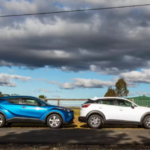 Mazda CX-5 vs Mitsubishi ASX Australia
Reasons for the Mitsubishi ASX Discontinuation
Factors driving Mitsubishi to end ASX production
The Mitsubishi ASX is being phased out due to three key factors. First, its underlying platform and design date back to 2010, which lacks modern safety features, fuel efficiency, and infotainment technology now expected in the compact SUV segment. Second, global sales have declined significantly as consumers gravitate toward larger models like the Mitsubishi Outlander or fully electric vehicles such as the Mitsubishi Eclipse Cross PHEV. Third, Mitsubishi’s corporate strategy under the Nissan-Renault alliance prioritizes electrification, leading to discontinuation of older, less profitable internal combustion models.
- Aging platform from 2010 results in lower crash test ratings and outdated handling compared to competitors.
- Sales dropped over 40% globally between 2020 and 2023, as buyers chose fresher options like the Toyota Corolla Cross or Kia Seltos.
- Mitsubishi reallocates resources to develop EV-focused models, such as the upcoming electric pickup and the redesigned Outlander Hybrid.
How the Mazda CX-5 Outperforms the Mitsubishi ASX in Quality and Driving
Performance and interior design differences
The Mazda CX-5 consistently ranks higher than the ASX in terms of build quality, engine refinement, and road handling. While the ASX offers a basic 2.0-liter engine with modest 148 horsepower and a continuously variable transmission, the CX-5 provides a choice between a 187-horsepower 2.5-liter four-cylinder and a turbocharged 256-horsepower engine, paired with a smooth six-speed automatic. Inside, the CX-5 features premium materials like soft-touch surfaces and available Nappa leather, whereas the ASX has a dated cabin with hard plastics and a smaller touchscreen.
This content may interest you!
- The CX-5 achieves better fuel economy in real-world driving, at 28 mpg combined versus the ASX’s 25 mpg.
- Mazda CX-5 offers standard advanced safety features like blind-spot monitoring and rear cross-traffic alert; the ASX only provides basics like antilock brakes.
- CX-5’s G-Vectoring Control enhances cornering stability, while the ASX lacks such dynamic aids, resulting in a less engaging drive.
Key Considerations for Choosing Between the ASX and CX-5 as the Best SUVs
Practical factors for buyers in 2025
When evaluating these SUVs, buyers should consider three main aspects: long-term reliability, total cost of ownership, and availability of service parts. The CX-5 has a strong reputation for durability, with many models exceeding 200,000 miles without major issues, while the ASX shows higher failure rates in transmissions and air conditioning systems after 100,000 miles. The CX-5 also retains its value better, with a residual value around 55% after five years versus 40% for the ASX. Additionally, Mazda’s broader dealer network ensures easier access to parts and maintenance, especially outside urban areas where Mitsubishi dealerships are scarce.
- CX-5 has a five-year reliability rating of 4.5 out of 5 from J.D. Power, compared to the ASX’s 3.5.
- Average annual maintenance cost for a CX-5 is $450, while the ASX costs approximately $550 due to discontinued parts sourcing.
- Mazda offers a 5-year/60,000-mile warranty with roadside assistance; Mitsubishi’s warranty is now limited to 3 years/36,000 miles on discontinued models.
Frequently Asked Questions
Which SUV offers better fuel economy: Mazda CX-5 or Mitsubishi ASX?
The Mitsubishi ASX generally delivers slightly better fuel economy than the Mazda CX-5, especially in city driving. The ASX achieves around 8.0 L/100 km combined, while the CX-5 averages about 8.5 L/100 km. However, the CX-5’s SkyActiv engine technology provides more consistent efficiency across varying conditions. Your choice may depend on driving habits; for frequent urban commutes, the ASX edges ahead, but for balanced performance, the CX-5 remains competitive.
This content may interest you!
How do the interior features compare between the Mazda CX-5 and Mitsubishi ASX?
The Mazda CX-5 boasts a more premium interior with high-quality materials, a refined dashboard, and an intuitive infotainment system with a 10.25-inch display. In contrast, the Mitsubishi ASX offers a simpler, more utilitarian cabin with a 7-inch touchscreen and basic cloth upholstery. The CX-5 provides advanced features like Apple CarPlay and leather options, while the ASX focuses on affordability without compromising essential comfort. For a luxurious feel, the CX-5 wins.
Which SUV provides better safety features: the Mazda CX-5 or Mitsubishi ASX?
The Mazda CX-5 excels in safety with standard i-Activsense technologies, including adaptive cruise control, blind-spot monitoring, and automatic emergency braking. It earned top crash test ratings from IIHS and NHTSA. The Mitsubishi ASX includes basic safety features like rearview camera and stability control but lacks advanced driver aids. For families prioritizing safety, the CX-5 offers superior protection and peace of mind, making it a standout choice in this segment.
Is the Mazda CX-5 or Mitsubishi ASX more spacious for passengers and cargo?
The Mazda CX-5 offers more passenger space, particularly in rear legroom, and a cargo capacity of 30.8 cubic feet behind the rear seats, expanding to 59.3 cubic feet with seats down. The Mitsubishi ASX has tighter rear seating and only 16.6 cubic feet of cargo space, extending to 37.1 cubic feet. For families needing room for gear or taller passengers, the CX-5 provides significantly greater comfort and practicality, making it the better choice for larger loads.
Leave a Reply