
Ford Ranger Payload: How Much Weight Can It Carry?

The Ford Ranger payload is one of the most important specifications to understand if we plan to use this pickup for work, camping, towing, farming or carrying heavy equipment.
The Ranger has built its reputation around being both a practical work truck and a comfortable everyday vehicle. However, not every Ranger has the same payload capacity. Engine choice, cab style, drivetrain, trim level, accessories and even optional equipment can change how much weight we can legally and safely carry.
For the current Australian Ranger range, Ford states that maximum payload can reach approximately 1,412 kg, depending on body style, grade and configuration. Ford specifically notes that payload includes occupants, cargo, accessories and tow-ball download.
In the United States, the 2026 Ford Ranger has a maximum available payload figure of 1,788 lb, although the exact rating again depends on the engine and drivetrain.
That difference illustrates an important point: there is no single universal Ford Ranger payload number. We need to identify the exact vehicle before determining how much it can carry.
- What Is the Ford Ranger Payload Capacity?
- Ford Ranger Payload in Australia
- Ford Ranger Payload in the USA
- How Is Ford Ranger Payload Calculated?
- What Counts Toward Ford Ranger Payload?
- Ford Ranger Payload vs Towing Capacity
- Does Tow-Ball Weight Reduce Ford Ranger Payload?
- Ford Ranger XL Payload
- Ford Ranger XLT Payload
- Ford Ranger Wildtrak Payload
- Ford Ranger Platinum Payload
- Ford Ranger Raptor Payload
- Does 4x4 Reduce Ford Ranger Payload?
- Does a Canopy Reduce Ranger Payload?
- Do Bull Bars and Winches Affect Payload?
- How Much Can You Put in the Ford Ranger Bed?
- Ford Ranger Payload for Camping
- Ford Ranger Payload for Tradespeople
- Ford Ranger Payload for Towing a Caravan
- How to Find Your Exact Ford Ranger Payload
- Can You Increase Ford Ranger Payload?
- Is the Ford Ranger Good for Heavy Loads?
- What Ford Ranger Has the Highest Payload?
- Ford Ranger Payload: Final Thoughts
- Frequently Asked Questions
What Is the Ford Ranger Payload Capacity?
Payload capacity refers to the maximum amount of additional weight the Ranger can carry while remaining within its permitted vehicle weight.
That additional weight does not mean cargo alone.
Passengers count.
Tools count.
A bull bar counts.
A canopy counts.
Camping equipment counts.
And when towing, the weight applied to the Ranger through the tow ball also counts against payload.
Ford Australia defines payload as the difference between the vehicle's Gross Vehicle Mass and its kerb weight, with the permitted load including occupants, cargo, accessories, added structures and tow-ball download.
This makes payload particularly important for owners who modify their Rangers.
A truck that looks almost empty can potentially be much closer to its payload limit than we might expect once accessories and passengers are included.
Ford Ranger Payload in Australia
The latest Australian Ranger lineup includes numerous configurations, from work-focused XL models through luxury-oriented Platinum versions and the performance-focused Raptor.
Ford currently advertises a maximum payload of up to 1,412 kg across the Ranger range. Actual capacity varies according to grade, body configuration and equipment.
This means we should never assume that because one Ranger can carry more than 1,400 kg, every Ranger can do the same.
Higher-specification vehicles generally weigh more before we load anything into them.
Leather seats, larger wheels, additional technology, off-road equipment, larger engines and other features can increase kerb weight. Because payload is essentially the difference between maximum permitted vehicle mass and actual vehicle weight, additional standard equipment can reduce the remaining carrying capacity.
Ford Ranger Payload in the USA
The American-market Ranger uses different engines and specifications from many international versions.
Ford lists the maximum available payload capacity for the 2026 Ford Ranger at 1,788 lb.
Ford's published engine-specific figures include:
| 2026 Ford Ranger configuration | Maximum available payload |
|---|---|
| 2.3L EcoBoost 4x2 | 1,767 lb |
| 2.3L EcoBoost 4x4 | 1,763 lb |
| 2.7L EcoBoost 4x4 | 1,513 lb |
| 3.0L EcoBoost V6 Raptor 4x4 | 1,373 lb |
Ford nevertheless advertises an overall maximum available payload figure of 1,788 lb for the 2026 Ranger range, so buyers should use the vehicle-specific rating rather than assuming that the headline maximum applies to every configuration.
One interesting pattern is immediately noticeable: the heavier, more powerful configurations do not necessarily offer the highest payload.
That distinction matters when choosing a Ranger for commercial use.
How Is Ford Ranger Payload Calculated?
The basic calculation is straightforward:
Payload = Gross Vehicle Mass – Kerb Weight
Suppose a Ranger has a Gross Vehicle Mass of 3,250 kg and weighs 2,150 kg in its relevant kerb-weight configuration.
This content may interest you!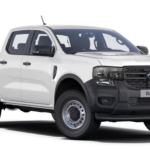 Ford Ranger Service Reset: How to Reset the Service and Oil Change Reminder
Its theoretical payload would be approximately:
3,250 kg – 2,150 kg = 1,100 kg
However, we cannot automatically assume that the entire 1,100 kg can go into the tray.
Everything we add after the vehicle's defined kerb-weight condition uses part of that allowance.
If we install 150 kg of permanent accessories, for example, our usable payload could effectively fall to around 950 kg before passengers and cargo are considered.
That is why serious touring and commercial setups should ideally be weighed rather than estimated.
Ford Australia recommends using a public weighbridge to determine the vehicle's real-world weight, particularly after accessories or other equipment have been installed.
What Counts Toward Ford Ranger Payload?
Understanding what counts toward payload can prevent one of the most common mistakes Ranger owners make.
Imagine that our vehicle has 1,000 kg of available payload.
We might initially think that means we can place 1,000 kg in the bed.
In reality, four adults could account for several hundred kilograms before anything reaches the cargo area.
Add a steel bull bar, winch, canopy, roof rack, refrigerator, tools and recovery gear, and the available capacity can disappear surprisingly quickly.
Ford states that payload includes passengers, cargo, accessories and tow-ball download.
Therefore, payload management should be treated as a whole-vehicle calculation rather than simply a bed-load calculation.
Ford Ranger Payload vs Towing Capacity
Payload and towing capacity are related, but they are not the same thing.
The Ford Ranger payload tells us how much additional weight the vehicle itself can carry.
Towing capacity tells us how much trailer weight the Ranger can tow under the specified conditions.
In Australia, many Ranger versions can tow up to 3,500 kg braked, while the Ranger Raptor has a lower maximum braked towing capacity of 2,500 kg.
The important complication is tow-ball download.
When a trailer pushes downward on the tow ball, that force becomes part of the Ranger's payload.
Consequently, towing a heavy trailer can dramatically reduce the amount of people, camping equipment and other cargo that we can carry inside the vehicle.
Does Tow-Ball Weight Reduce Ford Ranger Payload?
Yes.
This is one of the most important points for anyone using a Ranger to tow a caravan, boat, horse trailer or large equipment trailer.
Ford explicitly includes tow-ball download within payload calculations in Australia.
Suppose our Ranger has 950 kg of available payload.
If the trailer applies 300 kg of downward force through the tow ball, we effectively have about 650 kg remaining for everything else before considering other applicable vehicle limits.
Then we still need to account for passengers, accessories, luggage and cargo.
This is why a Ranger may theoretically be capable of towing a large trailer while still being unable to simultaneously carry a huge amount of equipment.
Ford Ranger XL Payload
The Ranger XL is generally one of the most work-focused variants in the range.
In Australia, Ford offers the current XL in several body styles, including Single Cab Chassis, Super Cab Chassis, Double Cab Chassis and Double Cab Pick-up configurations. The current model is available with a 2.0-litre turbo-diesel, while certain versions can also be configured with the 3.0-litre V6 turbo-diesel.
This content may interest you!Ford Ranger 3.2 Engine Replacement Cost AustraliaThese work-focused configurations can be particularly attractive when payload is a priority because simpler specifications and cab-chassis layouts can reduce vehicle weight compared with highly equipped lifestyle models.
For tradespeople or fleet operators, comparing individual XL configurations rather than simply choosing an engine can therefore make a significant difference.
Ford Ranger XLT Payload
The Ranger XLT adds equipment and comfort while retaining strong utility credentials.
Current Australian XLT configurations include both cab-chassis and pickup variations, depending on engine and drivetrain.
Because payload depends heavily on vehicle weight, an XLT's capacity can differ from an XL even when the two vehicles appear mechanically similar.
If our Ranger will regularly carry tools, equipment, a canopy or a large trailer, the exact XLT vehicle specification should therefore be checked before purchase.
Ford Ranger Wildtrak Payload
The Wildtrak is designed more as a premium lifestyle pickup than a basic commercial work truck.
That means we receive more comfort and convenience equipment, but additional equipment also adds weight.
Ford Australia currently offers the Wildtrak with the 3.0-litre V6 turbo-diesel and Double Cab Pick-up body style.
For owners planning touring builds, this is especially important.
A Wildtrak carrying passengers, a canopy, refrigerator, drawers, auxiliary battery, roof-top tent and trailer can consume payload considerably faster than an unmodified work ute.
Ford Ranger Platinum Payload
The Ranger Platinum sits near the luxury end of the Ranger lineup.
It includes equipment such as larger wheels, premium interior features, electrically adjustable seats, a power roller shutter and Ford's Flexible Rack System in the current Australian specification.
All that equipment contributes to kerb weight.
As a result, a premium Ranger may have less usable payload than a more basic work-focused configuration despite being more expensive and more extensively equipped.
This is worth considering if we intend to build a heavily accessorised touring vehicle.
Ford Ranger Raptor Payload
The Ranger Raptor is a particularly good example of why we cannot judge payload simply by engine performance or price.
The Raptor is engineered primarily for high-performance off-road driving.
Its suspension, tyres, chassis equipment and powerful engine add considerable weight, meaning payload capacity is lower than on many work-oriented Ranger variants.
Ford's U.S. specifications list a maximum available payload of approximately 1,373 lb for the 2026 Ranger Raptor.
Historically published Australian Ford weight tables have similarly demonstrated that the Raptor's payload is significantly below that of lighter Ranger work variants.
So if maximum cargo capacity is our priority, the Raptor is not automatically the logical choice simply because it is one of the most capable and powerful Rangers.
Does 4x4 Reduce Ford Ranger Payload?
Often, yes.
Four-wheel-drive equipment adds weight compared with an equivalent two-wheel-drive drivetrain.
Additional drivetrain components can therefore reduce the amount of remaining payload.
Ford's U.S. figures demonstrate how small this difference can sometimes be. For the 2026 Ranger with the 2.3L EcoBoost, Ford lists 1,767 lb for the 4x2 and 1,763 lb for the 4x4 configuration.
The difference will not always be the same across engines, markets or model years, however.
The important factor remains the certified payload figure for the individual vehicle.
Does a Canopy Reduce Ranger Payload?
Absolutely.
A canopy becomes part of the weight carried by the Ranger.
This content may interest you! Isuzu D-Max Load Capacity: Payload, Limits, and Safe Loading
Depending on material, size and design, a canopy can consume a meaningful portion of the vehicle's payload before we place anything inside it.
Then we may add drawers, tools, a refrigerator, spare wheels, recovery boards and other equipment.
A touring setup can therefore add hundreds of kilograms surprisingly quickly.
Owners planning substantial modifications should estimate accessory weight before buying equipment and ideally weigh the completed vehicle afterward.
Do Bull Bars and Winches Affect Payload?
Yes.
A bull bar, winch, underbody protection, side steps and other heavy accessories all increase vehicle mass.
If we install 200 kg of accessories on a Ranger that originally had 1,000 kg of usable payload, we could theoretically have roughly 800 kg remaining before passengers and cargo.
There can also be axle-load implications.
Simply remaining below total Gross Vehicle Mass does not automatically guarantee that each axle is within its individual permitted limit.
This is another reason why vehicle weighing is preferable when creating heavily modified touring or commercial setups.
How Much Can You Put in the Ford Ranger Bed?
The answer depends on the specific Ranger.
We cannot simply take the advertised maximum payload and assume all of it can be placed in the cargo bed.
Payload includes everything added to the vehicle, and weight distribution also matters.
For example, if a Ranger offers 1,000 kg of payload but we already have 300 kg of passengers and accessories, only approximately 700 kg remains before reaching that theoretical payload limit.
Even then, the load must be positioned correctly and individual axle limits must not be exceeded.
The door-jamb certification label, owner's documentation and official Ford specifications should always take priority over generic online figures.
Ford Ranger Payload for Camping
The Ranger is a popular platform for camping and overland builds because it combines off-road capability with practical cargo capacity.
However, touring equipment is deceptively heavy.
A drawer system, canopy, roof-top tent, water tank, second battery, fridge, spare tyre, recovery gear and camping equipment can collectively consume a substantial part of the Ranger's available payload.
Then we still need room for occupants.
For a heavily equipped touring Ranger, a weighbridge check after the build is one of the simplest ways to understand how much genuine carrying capacity remains.
Ford Ranger Payload for Tradespeople
For tradespeople, payload can matter more than horsepower or interior technology.
A plumber, electrician, builder or landscaper may carry tools and materials every working day.
In this context, the lighter commercial Ranger variants can make considerable sense because additional usable payload provides greater flexibility.
Cab-chassis configurations can also allow us to select specialised trays or service bodies.
However, the finished vehicle must still be evaluated with the installed body and equipment included.
Ford Ranger Payload for Towing a Caravan
Caravan owners should pay especially close attention to payload.
Imagine a Ranger with around 950 kg of payload.
Now add a driver and passenger, aftermarket accessories, luggage, camping gear and substantial trailer ball download.
The remaining margin can become relatively small.
This content may interest you! Toyota HiLux Load Capacity: Payload, GVM and Weight Limits Explained
Maximum towing capacity should therefore never be considered in isolation.
We need to consider the Ranger's payload, GVM, axle ratings and Gross Combined Mass at the same time.
Ford itself recommends weighing the vehicle when determining its real operating condition.
How to Find Your Exact Ford Ranger Payload
The safest approach is to identify the payload of the exact Ranger we own rather than relying on a figure from another trim or model year.
Ford provides model specifications and payload/towing information, while vehicle labels and documentation provide information applicable to individual vehicles.
Once accessories have been installed, a public weighbridge provides an even more useful picture.
Ford Australia specifically recommends a public weighbridge because published vehicle specifications describe a standard configuration, while real vehicles can become heavier after modifications.
We can then compare our measured vehicle weight with the applicable GVM and axle limits.
Can You Increase Ford Ranger Payload?
Possible modifications and regulatory processes vary significantly by country and region.
Some markets allow certified GVM upgrades or suspension modifications that may increase the legal operating mass of certain vehicles.
However, simply installing heavier-duty springs does not automatically increase a vehicle's legal payload.
The legal rating depends on local regulations, approved components and certification requirements.
Anyone considering a payload or GVM upgrade should therefore use an appropriately qualified and authorised vehicle engineer or modification specialist within their jurisdiction.
Is the Ford Ranger Good for Heavy Loads?
The Ranger can be an excellent load-carrying pickup when we select the correct configuration.
The current Australian lineup provides payload capability exceeding one tonne in suitable configurations, with Ford advertising a maximum of up to 1,412 kg.
However, premium and performance variants may sacrifice payload because they carry more equipment and therefore have higher kerb weights.
For regular heavy-load work, we should pay more attention to GVM, kerb weight and available payload than trim prestige or maximum engine output.
What Ford Ranger Has the Highest Payload?
There is no single answer that applies worldwide because Ranger specifications differ by market and model year.
In Australia, Ford currently advertises a Ranger maximum payload of up to 1,412 kg, depending on configuration.
In the United States, Ford advertises a maximum available payload of 1,788 lb for the 2026 Ranger, while the engine-specific figures published on its consumer page range from 1,373 lb to 1,767 lb.
Generally, the configurations designed primarily for commercial work tend to provide the strongest payload figures because they carry less standard equipment.
Ford Ranger Payload: Final Thoughts
The Ford Ranger payload capacity can vary dramatically depending on the Ranger we choose.
That is why using a single generic figure can be misleading.
Australian buyers can currently find Rangers with advertised payload capacities reaching up to 1,412 kg, while U.S. 2026 Ranger models are advertised with maximum available payload of up to 1,788 lb.
More importantly, the manufacturer's maximum is only the beginning of the calculation.
Passengers, accessories, canopies, tools, luggage and trailer ball weight all consume payload.
For an unmodified Ranger carrying relatively light equipment, staying within the limit may be straightforward. For a fully equipped touring vehicle or commercial ute towing a heavy trailer, the calculation becomes much more important.
Our best approach is simple: identify the exact vehicle's official limits, calculate every major addition and use a weighbridge when the Ranger is heavily accessorised or regularly operating near maximum capacity.
Frequently Asked Questions
What is the maximum Ford Ranger payload?
The figure varies by market and configuration. Ford Australia currently advertises up to 1,412 kg for the Ranger range, while Ford's U.S. page lists up to 1,788 lb for the 2026 Ranger.
Does passenger weight count toward Ford Ranger payload?
Yes. Passengers form part of the total load carried by the vehicle and therefore reduce the remaining payload available for cargo and accessories.
This content may interest you! Toyota LandCruiser 200 Series Towing Capacity Australia: Complete Guide
Does tow-ball weight count as Ford Ranger payload?
Yes. Ford Australia specifically states that tow-ball download is included in payload calculations.
Does the Ford Ranger Raptor have less payload?
Generally, yes. Performance-related equipment increases the vehicle's kerb weight. Ford lists the 2026 U.S. Ranger Raptor at up to 1,373 lb of payload, below the figures quoted for several conventional Ranger configurations.
How do I know the payload of my Ford Ranger?
Check the specifications and certification information for your exact model, engine, drivetrain and body style. For a modified vehicle, weighing the Ranger at a public weighbridge provides a better understanding of its real operating weight and remaining capacity. Ford Australia recommends this approach when determining the weight of a vehicle in its current configuration.
Leave a Reply